Ancient Foundations of Pharmacy
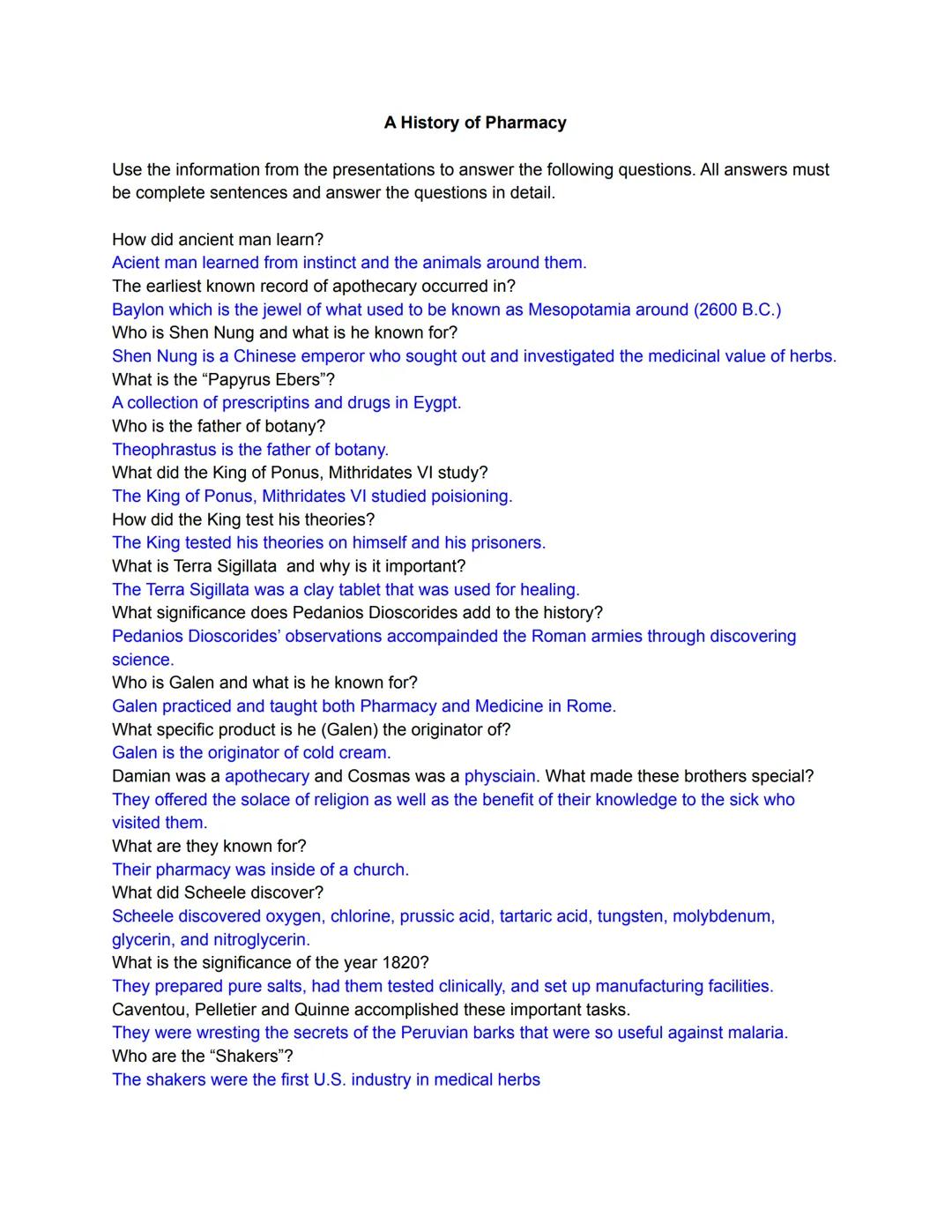
Ever wondered how humans first discovered medicines? Ancient people learned from both instinct and by observing animals around them. The earliest recorded apothecary practices date back to Babylon (around 2600 BCE), the jewel of ancient Mesopotamia, where healing arts began to formalize.
Important figures emerged across civilizations. Chinese Emperor Shen Nung investigated the medicinal value of herbs, while in Egypt, the "Papyrus Ebers" collected early prescriptions and drugs. Theophrastus earned recognition as the father of botany for his plant classifications. Even royalty like King Mithridates VI of Pontus studied poisoning, testing his theories on himself and prisoners!
Early pharmaceutical innovations included Terra Sigillata, important healing clay tablets used in ancient medicine. Pedanios Dioscorides made significant contributions by documenting medicinal plants while traveling with Roman armies. Galen, who practiced both pharmacy and medicine in Rome, created several medicinal preparations including the original cold cream formula.
Did you know? The brothers Damian (an apothecary) and Cosmas (a physician) were unique because they operated their pharmacy inside a church, offering both medical knowledge and religious comfort to the sick!
Later advancements came through scientists like Scheele, who discovered oxygen, chlorine, and numerous compounds including nitroglycerin. By 1820, pharmacy reached a milestone when pure salts were prepared, tested clinically, and manufactured—notably when Caventou and Pelletier extracted quinine to fight malaria. In America, the "Shakers" established the first U.S. medicinal herb industry.



 Health
 AP Biology
 Algebra
 Health & Social Care