Understanding Geometric Sequences
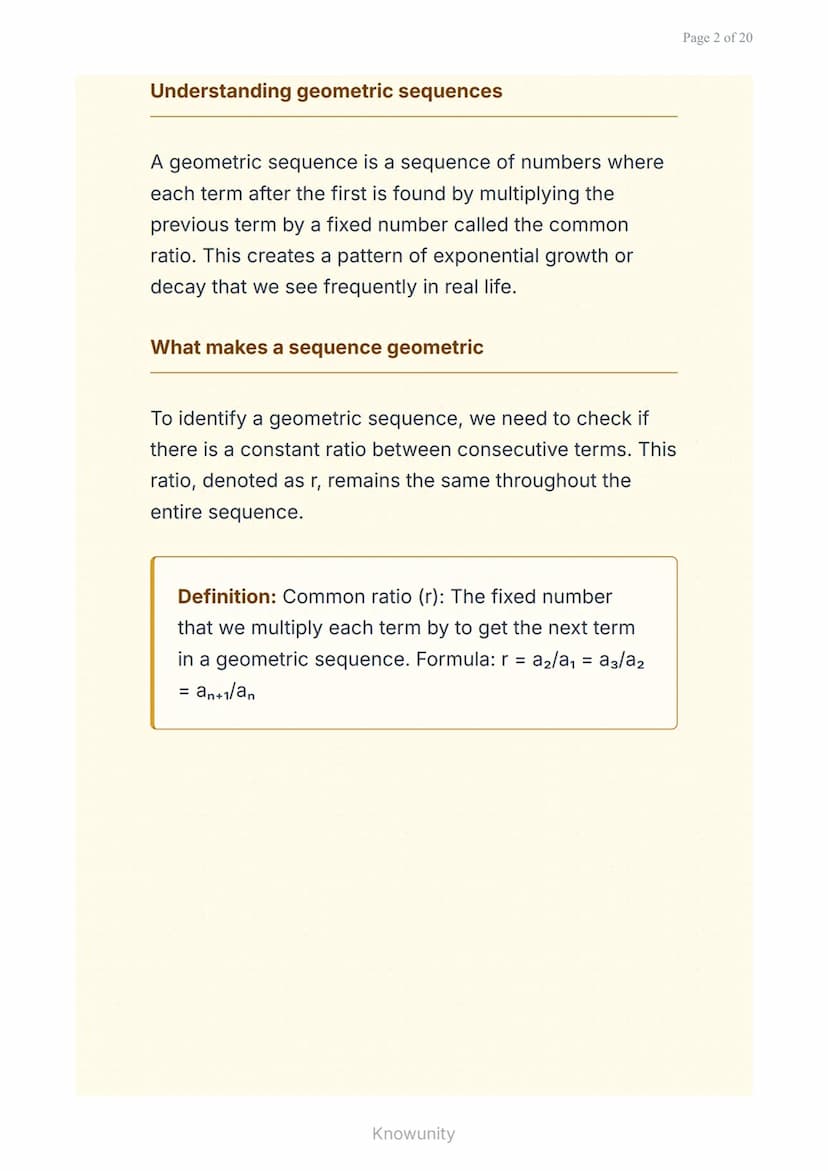
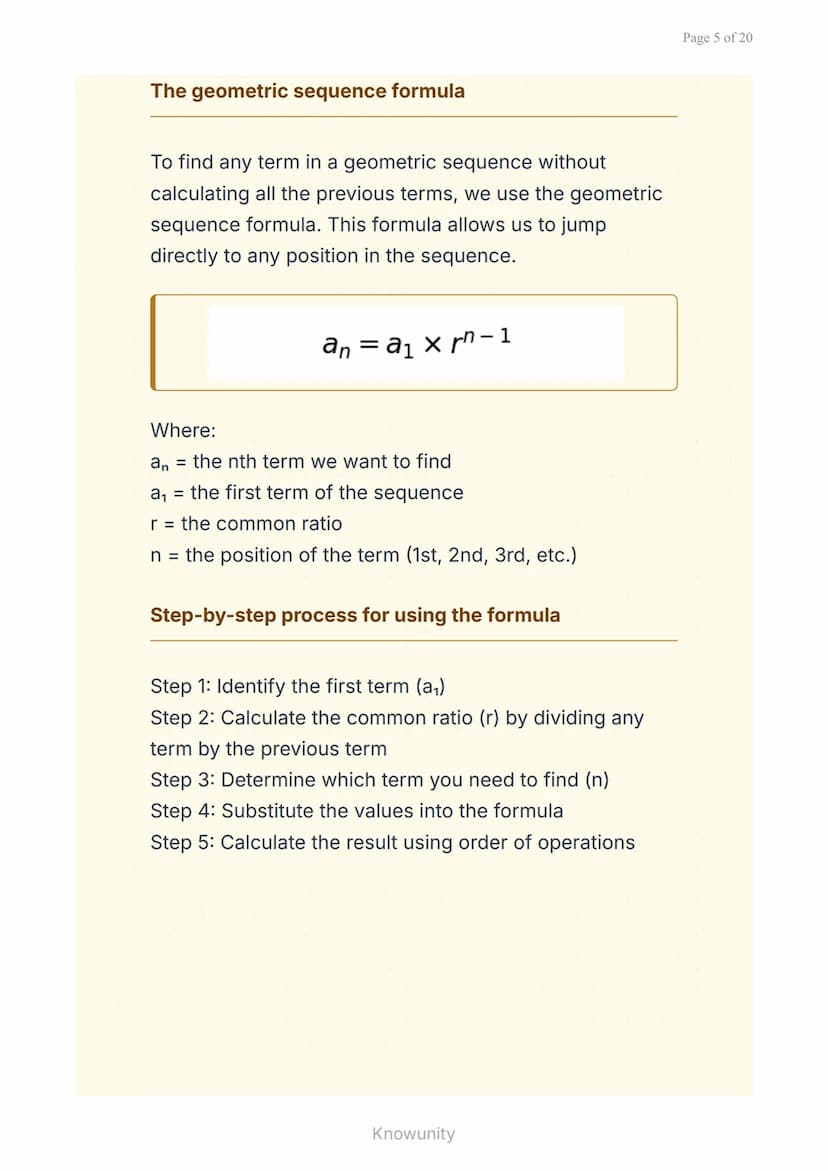
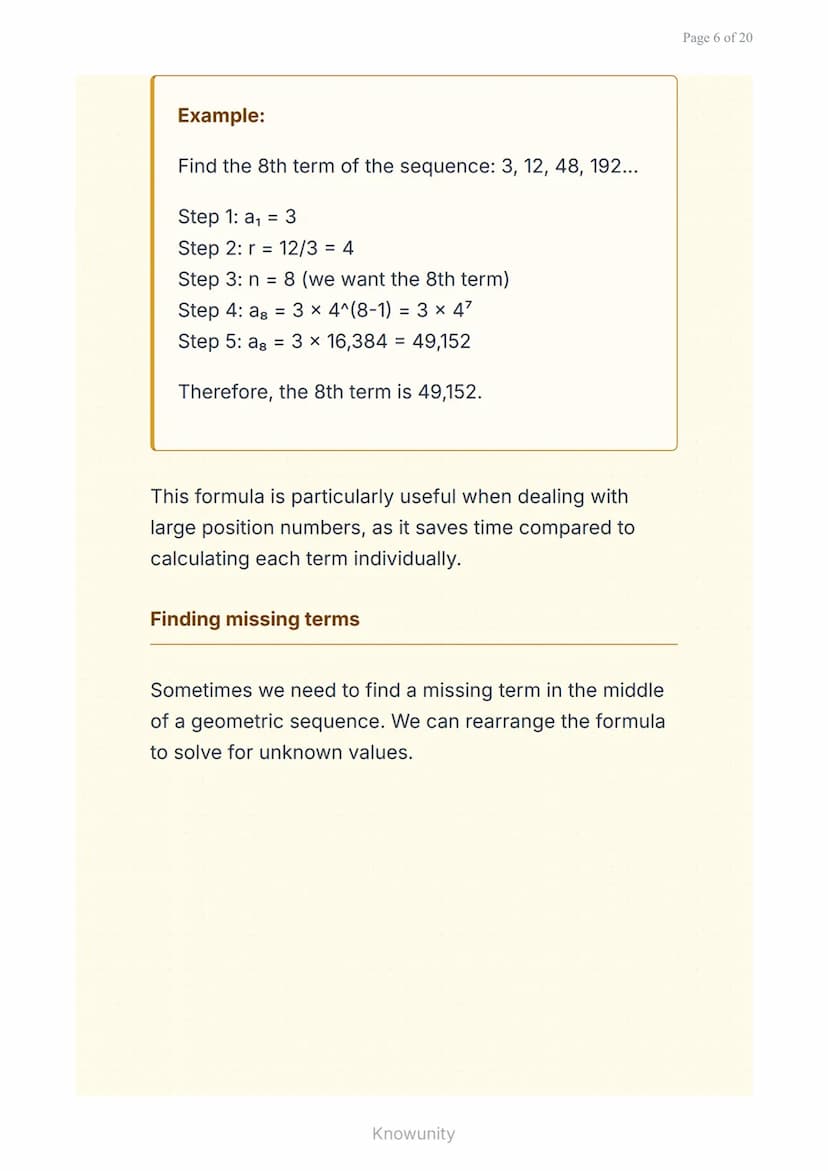
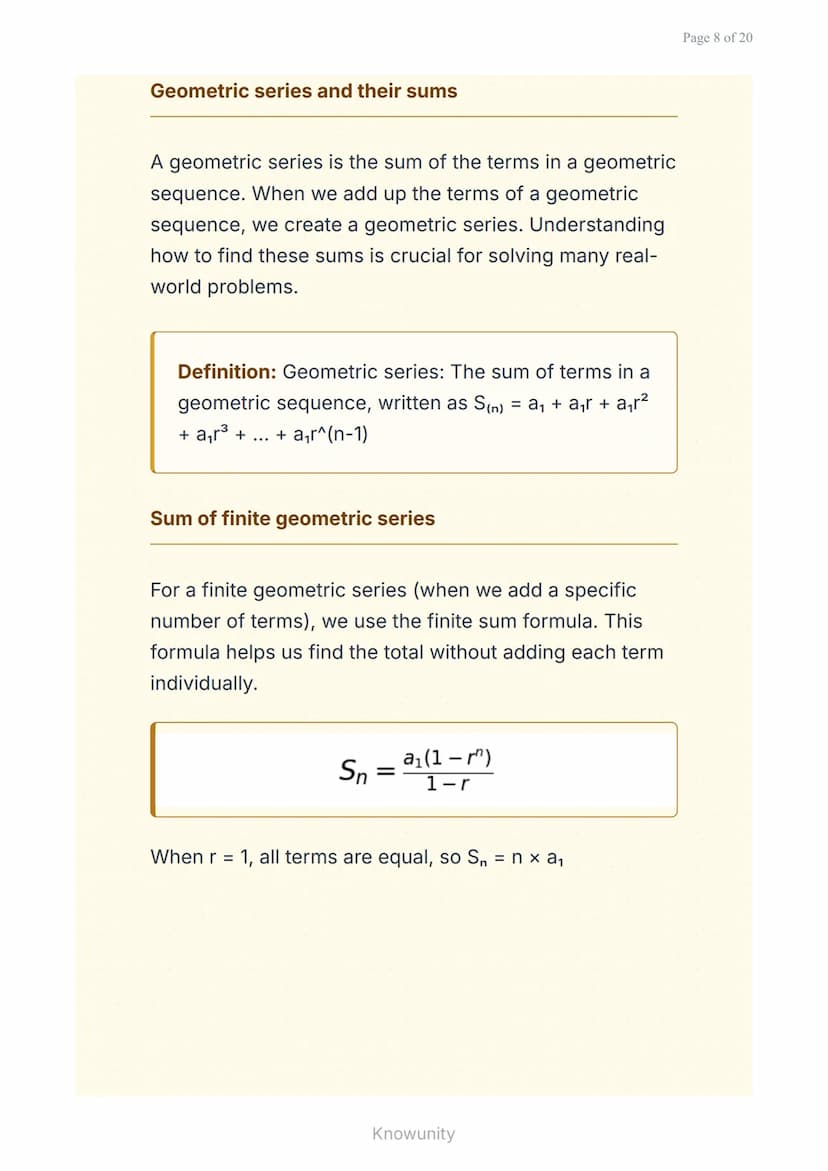
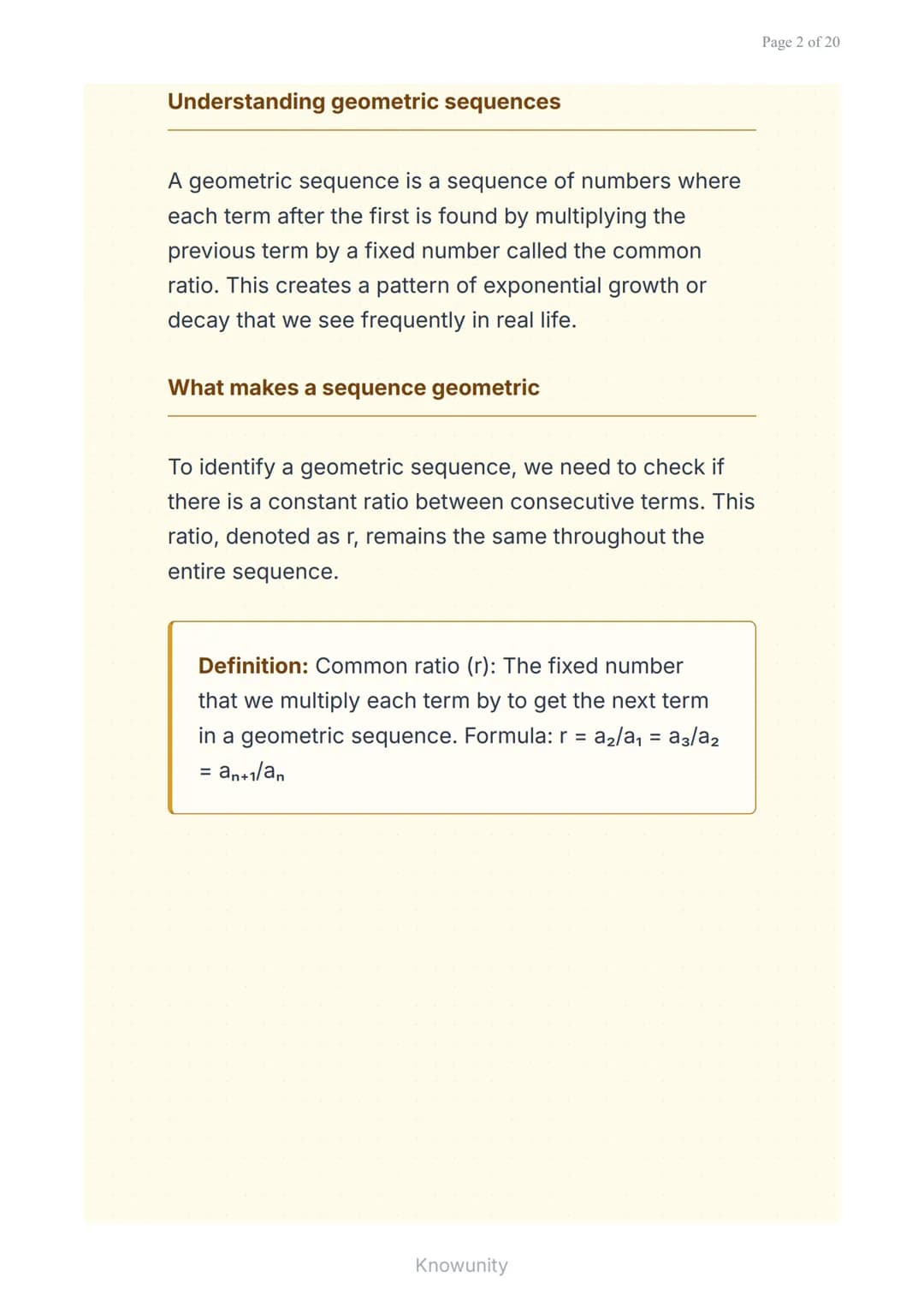
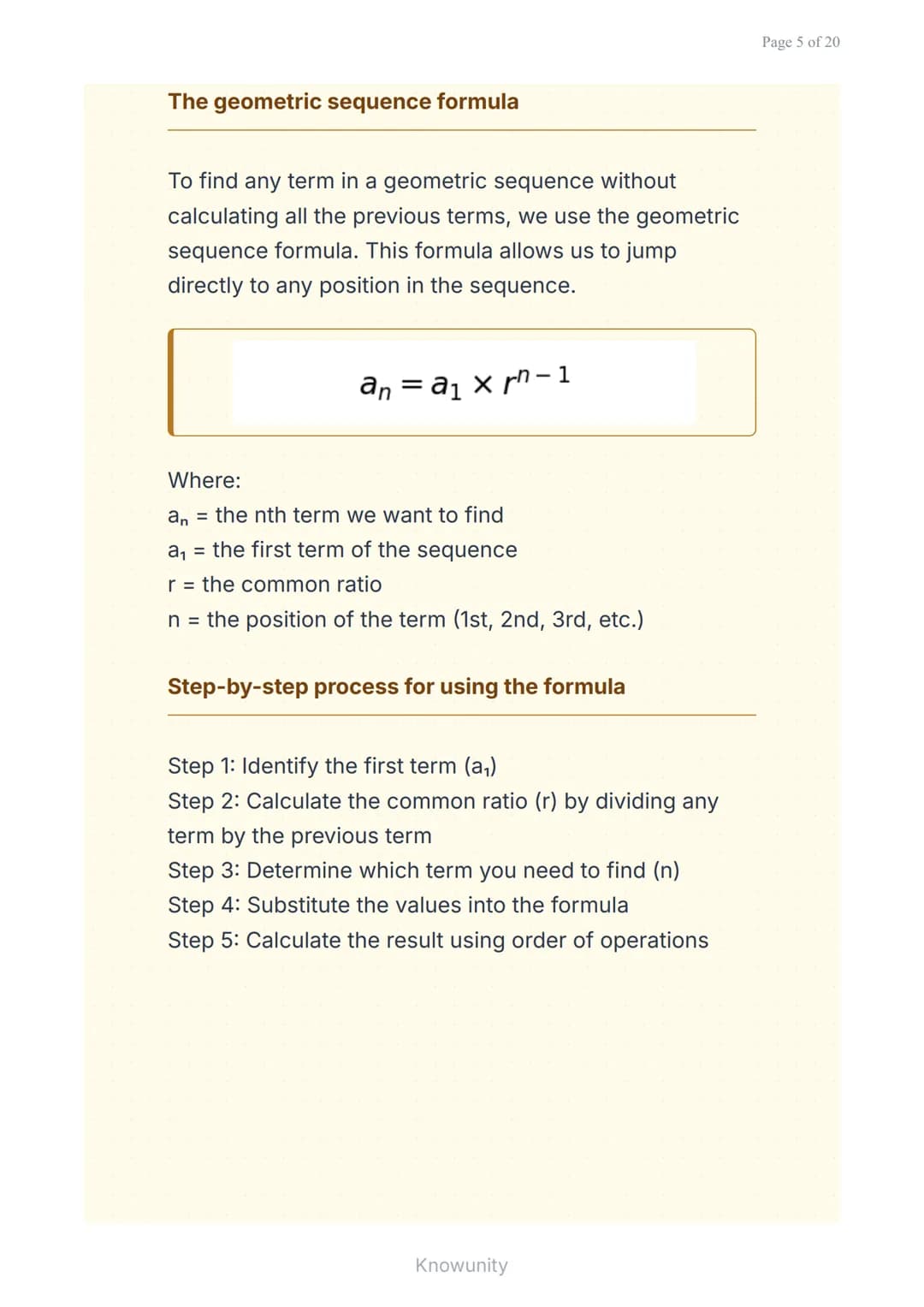
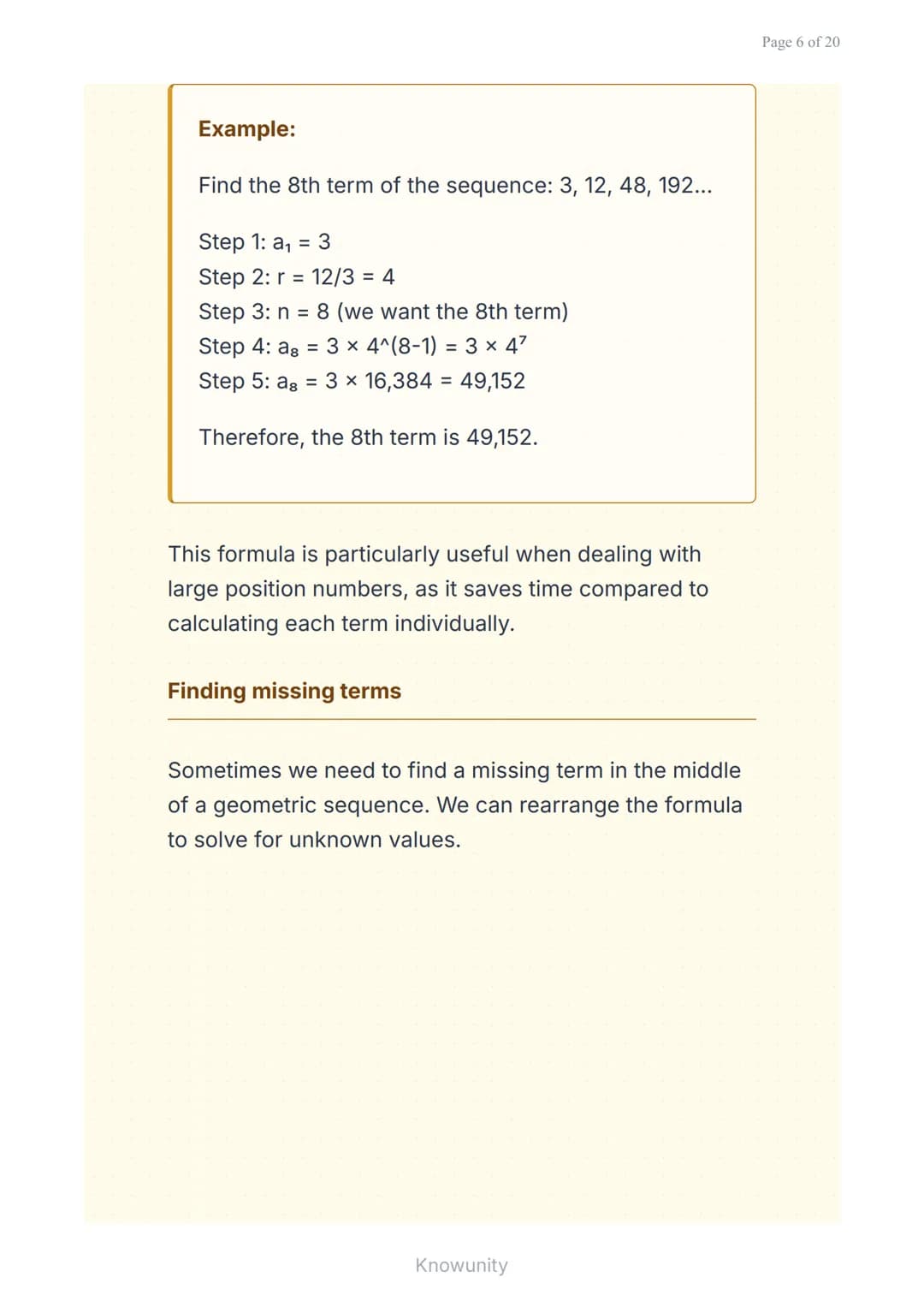
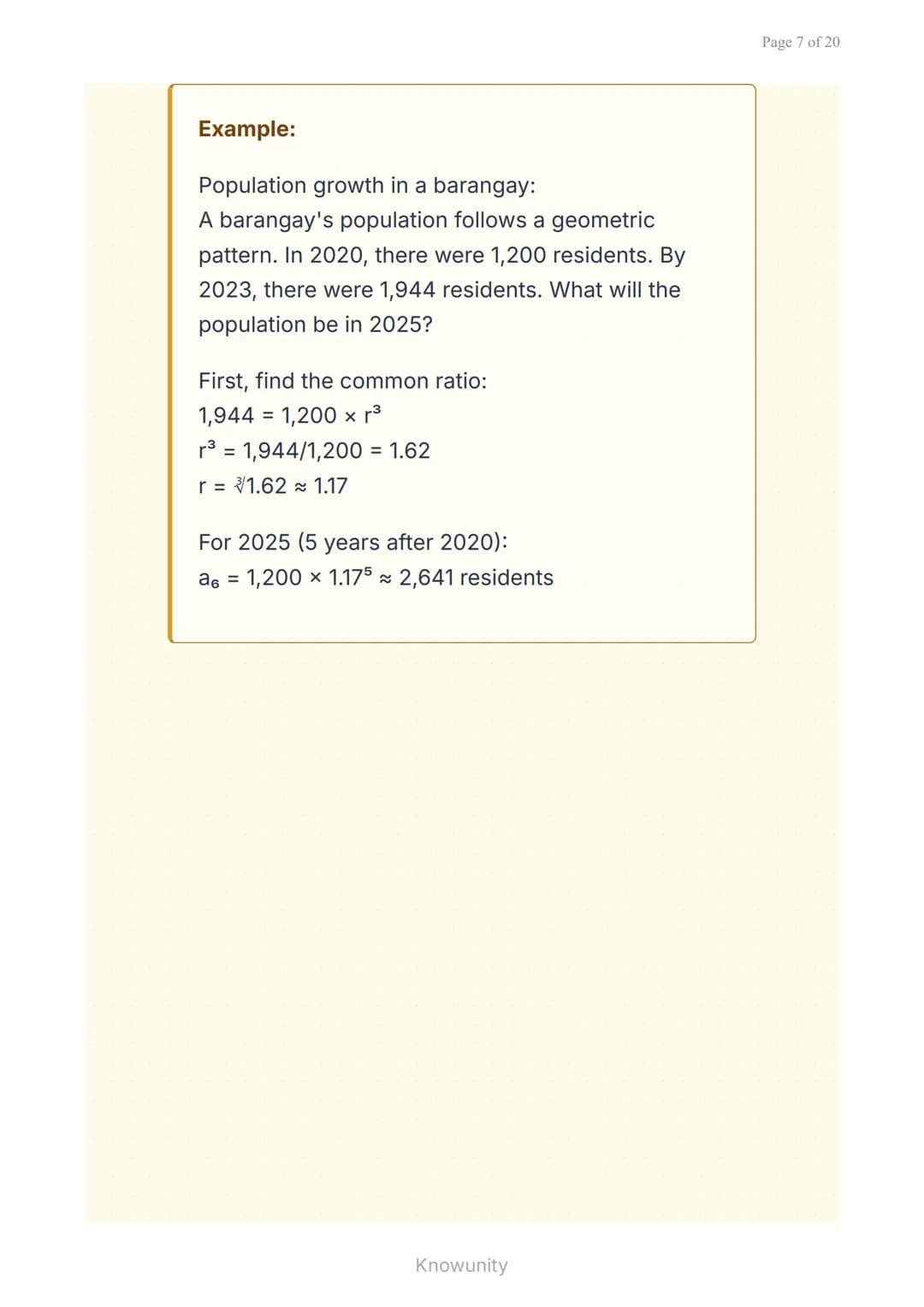
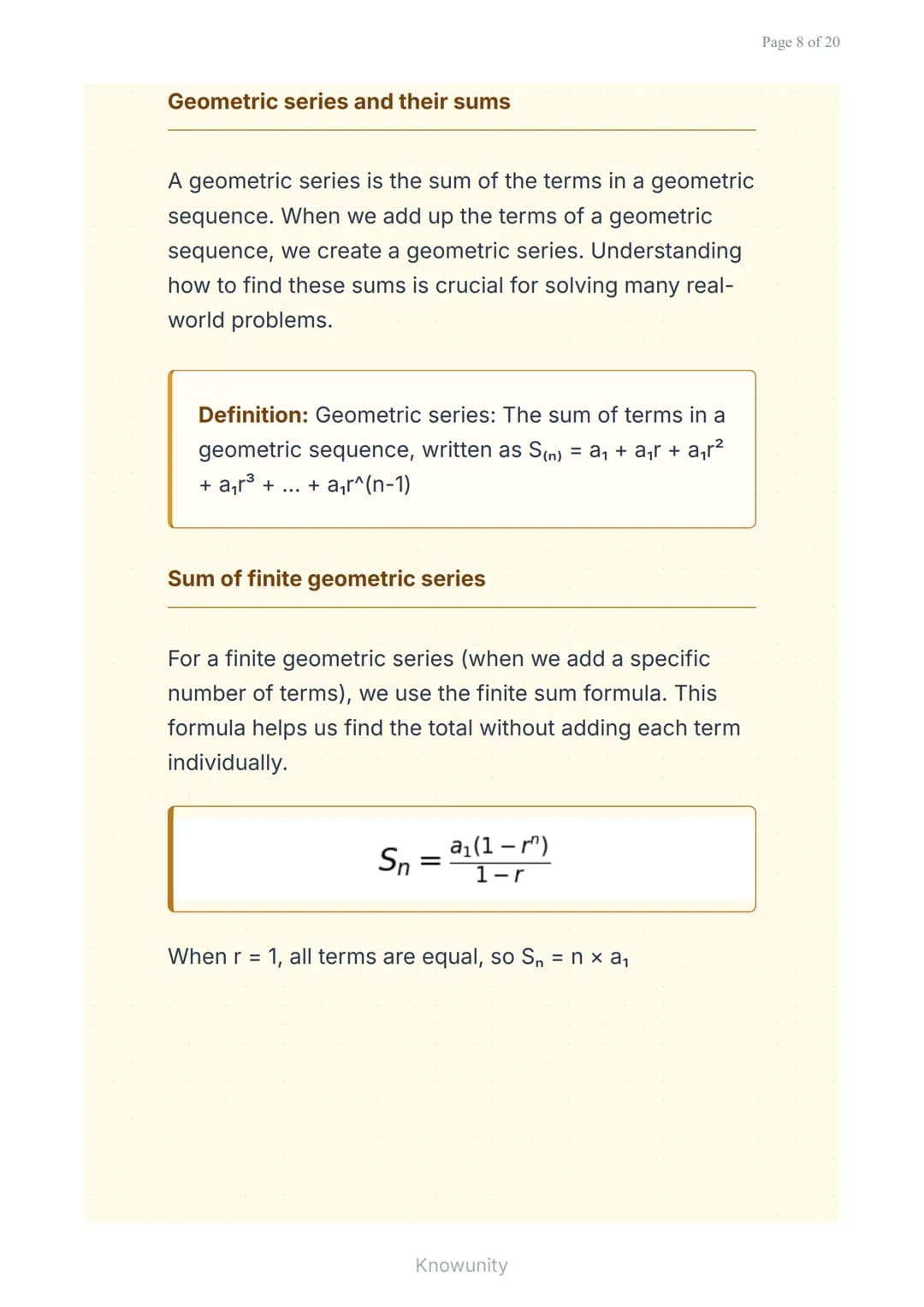
Think of geometric sequences as number patterns where you multiply (not add) to get from one term to the next. The magic number you multiply by is called the common ratio (r), and it stays the same throughout the entire sequence.
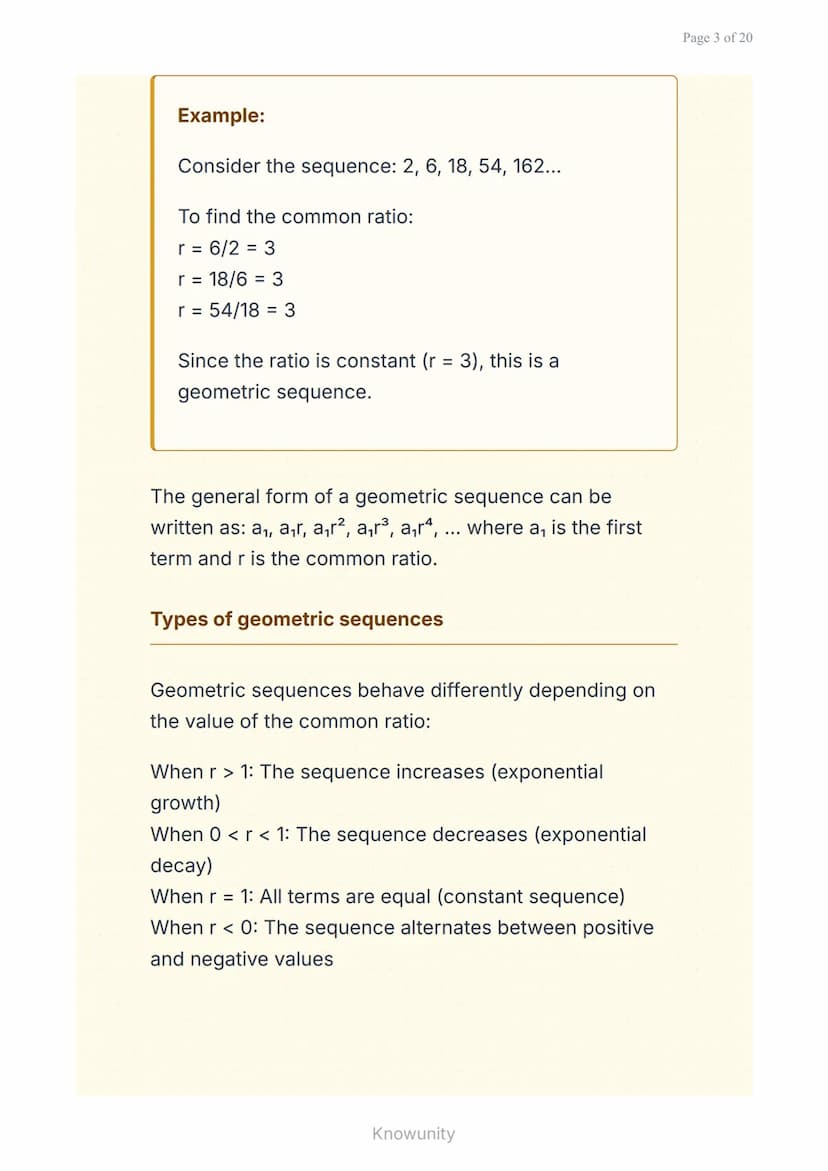
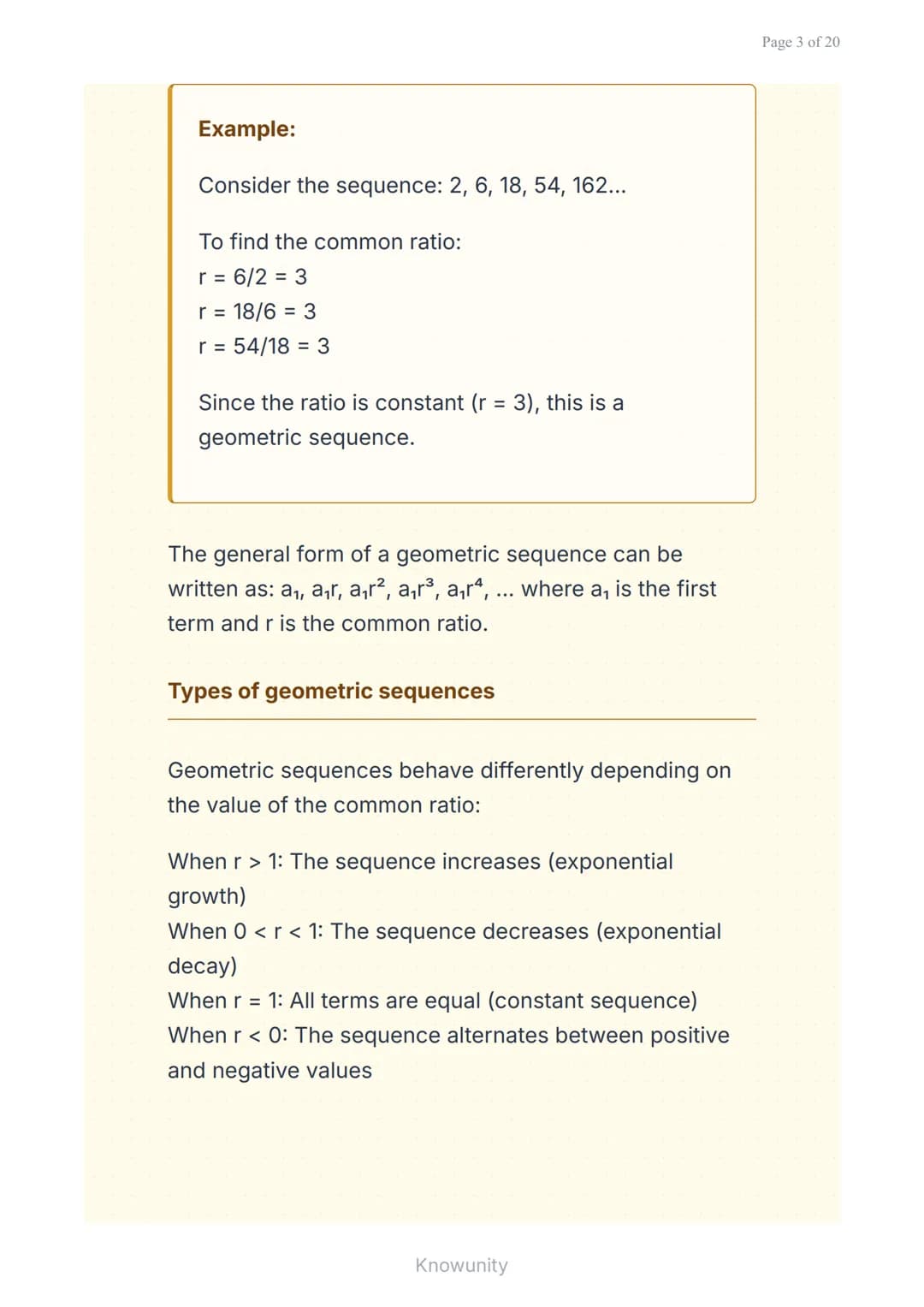
To spot a geometric sequence, check if the ratio between consecutive terms is constant. For example, in the sequence 2, 6, 18, 54, 162..., you'll find r = 6/2 = 3, and 18/6 = 3, and 54/18 = 3. Since the ratio is always 3, this is definitely geometric!
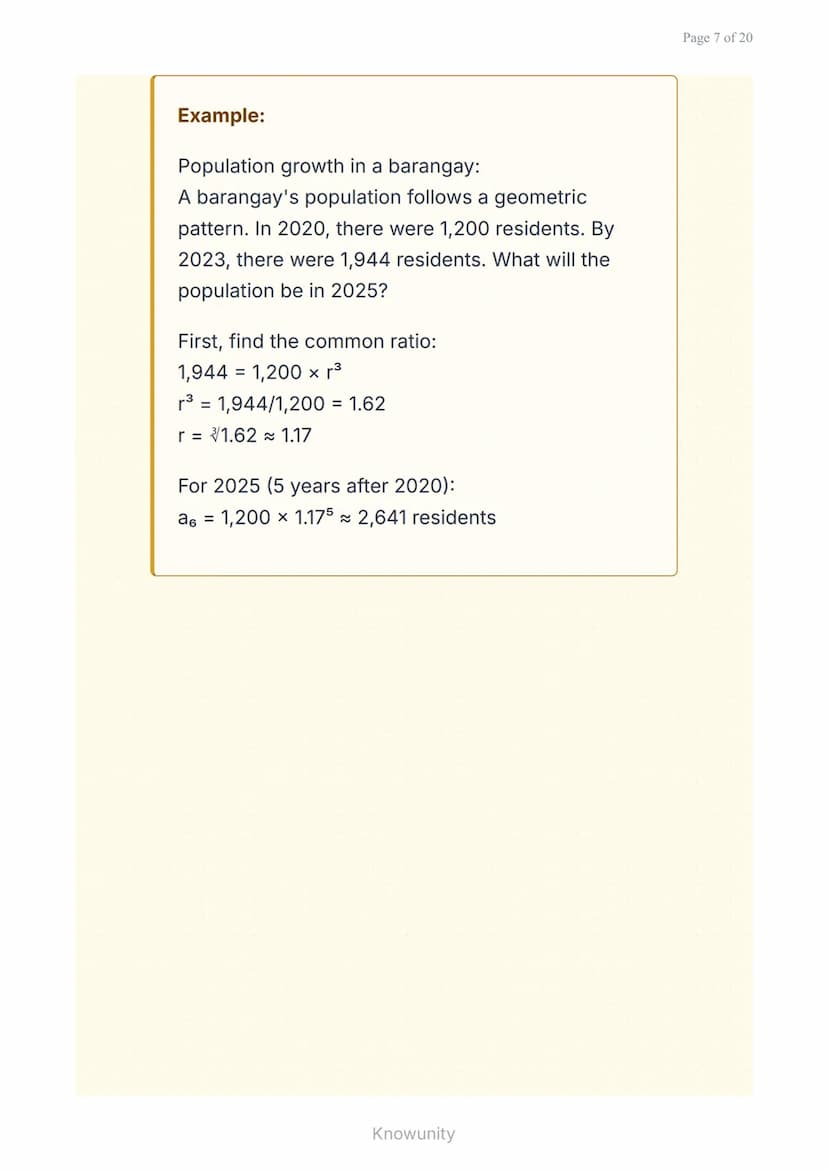
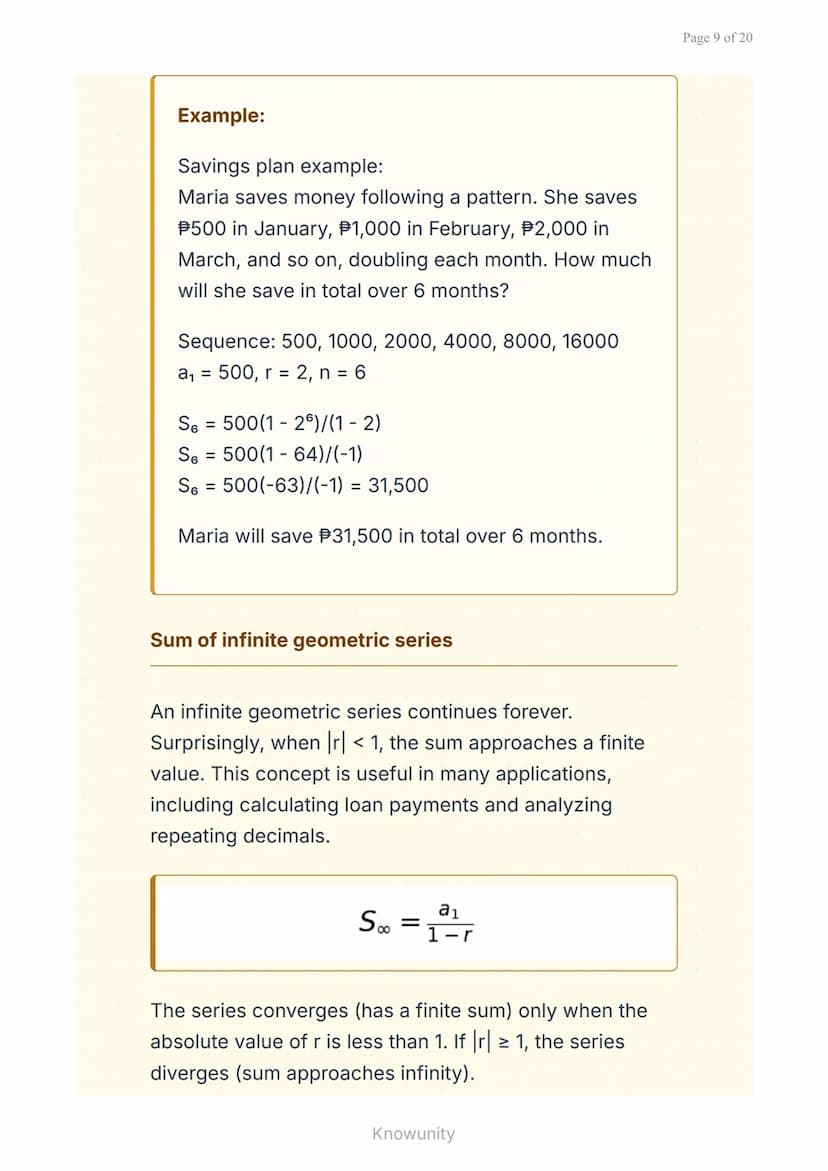
The common ratio determines how your sequence behaves. When r > 1, your numbers grow rapidly (like compound interest). When 0 < r < 1, they shrink (like radioactive decay). When r < 0, your sequence bounces between positive and negative values - quite dramatic!
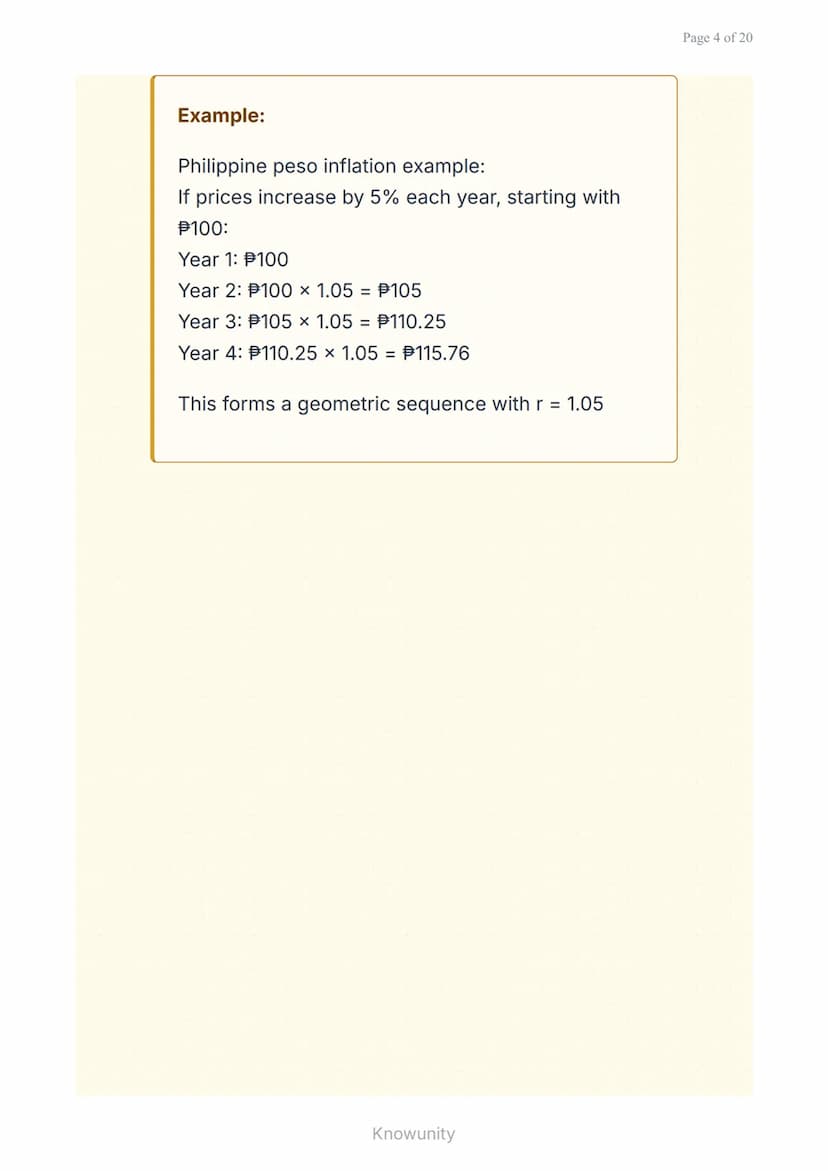
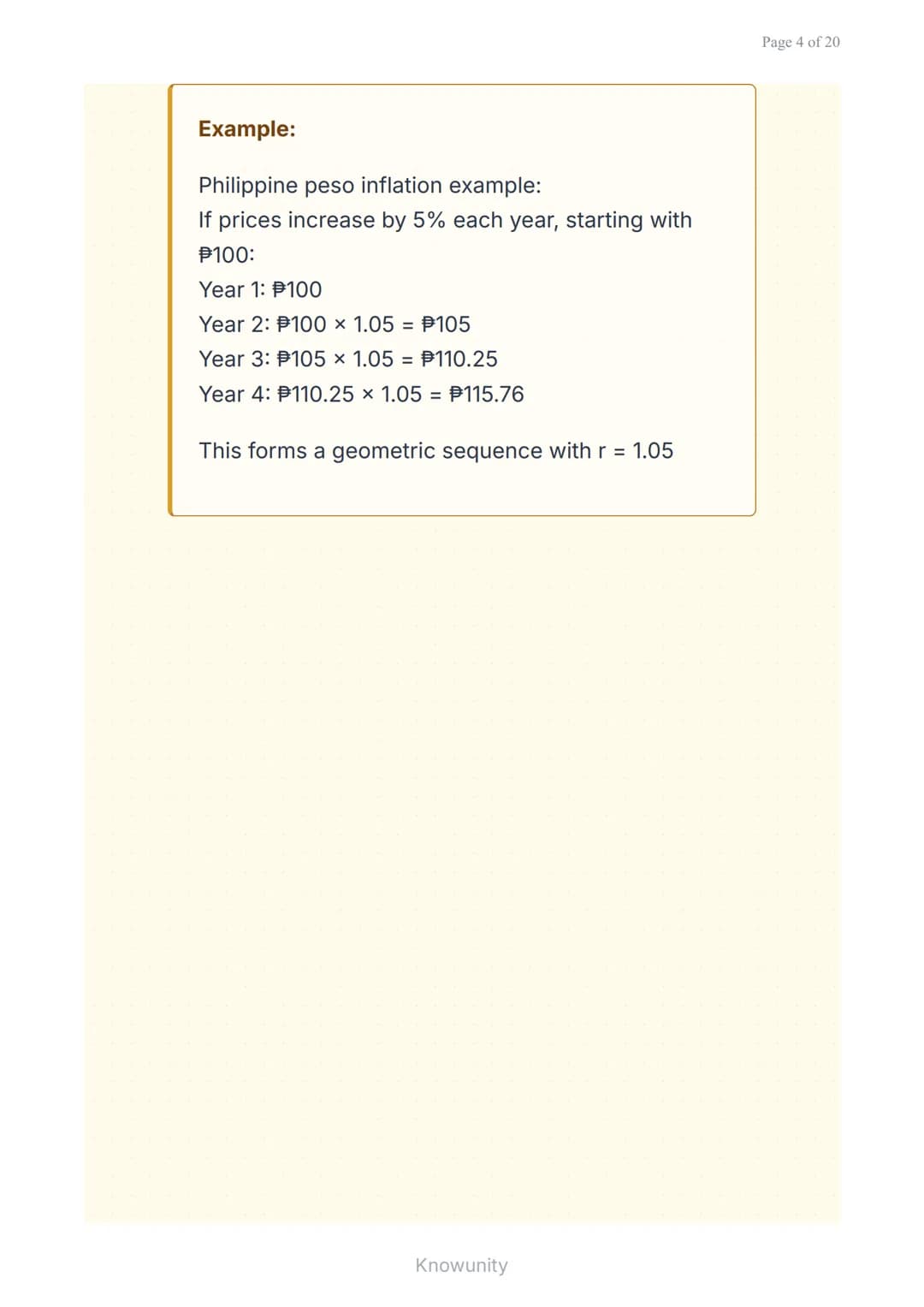
Real-world connection: If prices in the Philippines increase by 5% yearly, starting at ₱100, you get ₱100, ₱105, ₱110.25, ₱115.76... - a perfect geometric sequence with r = 1.05.





 FABM
FABM Business Math
 EmTech
 Science
 Econ
Econ Araling Panlipunan (AP)
 Iba pa
 Practical Research
 DISS
DISS