Error Intervals: Understanding Limits of Accuracy
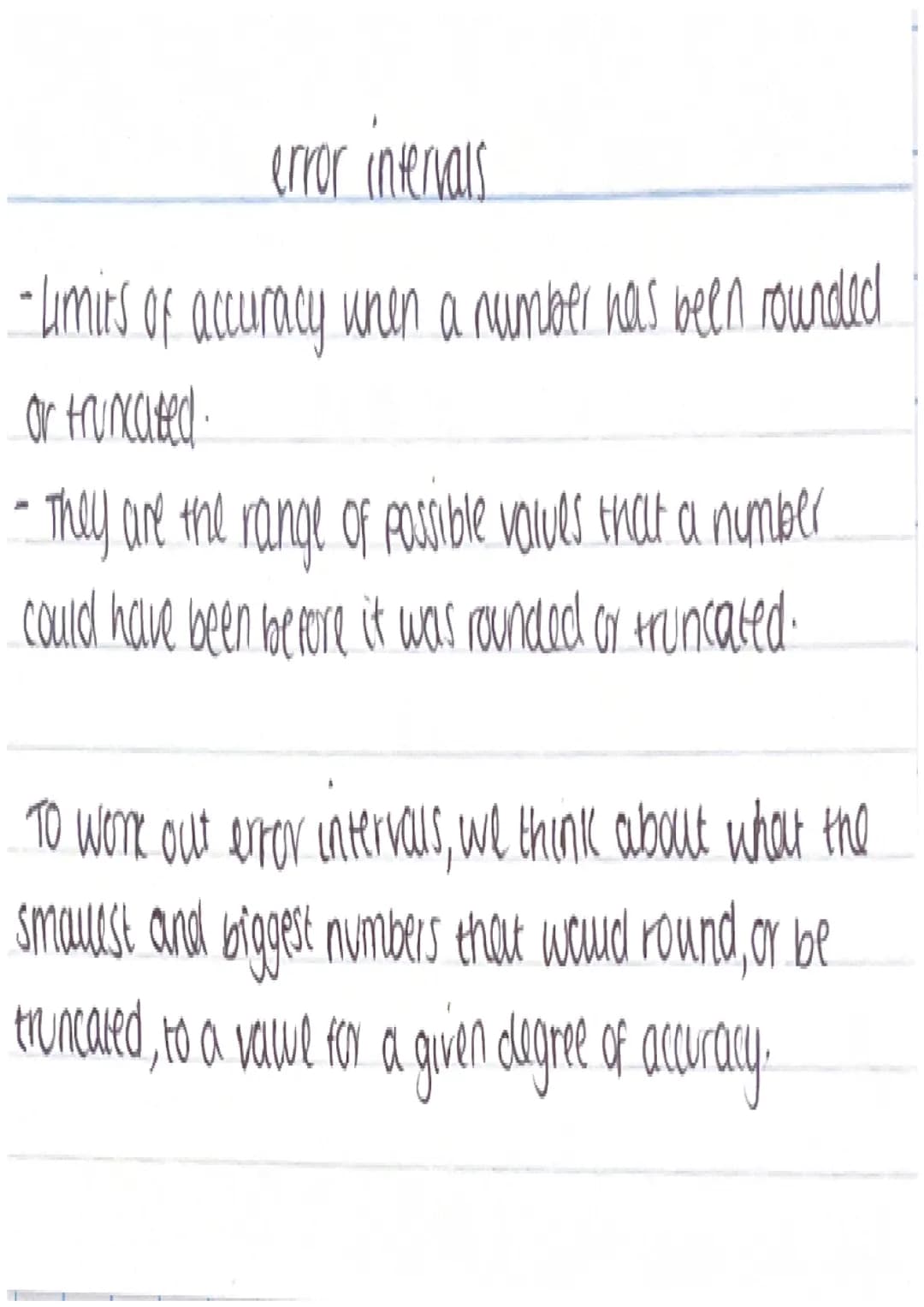
Error intervals are a fundamental concept in mathematics, particularly relevant in GCSE maths, that deal with the limits of accuracy when numbers are rounded or truncated. They represent the range of possible values a number could have had before it was rounded or truncated to a specific degree of accuracy.
Definition: Error intervals are the range of possible values that a number could have been before it was rounded or truncated.
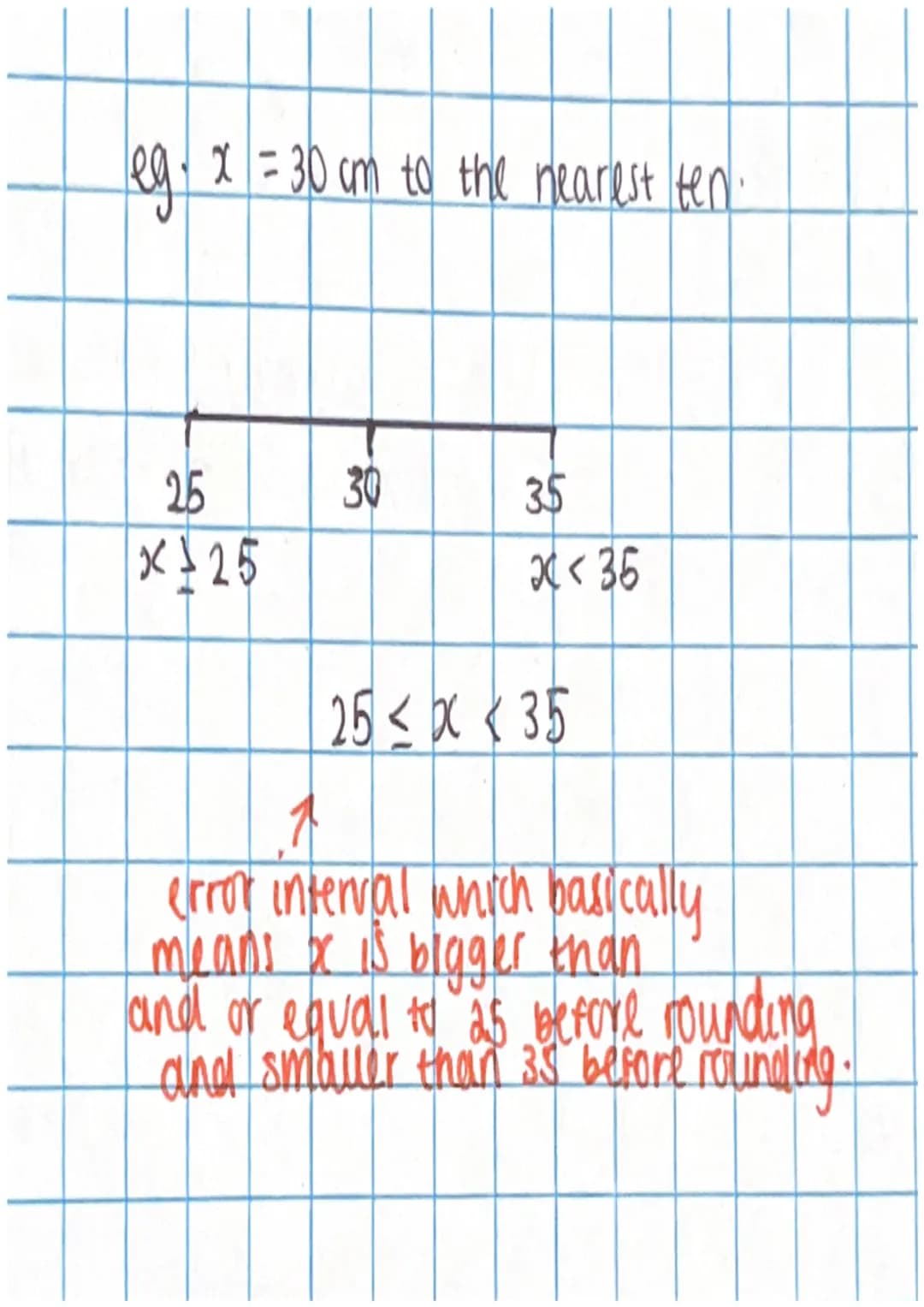
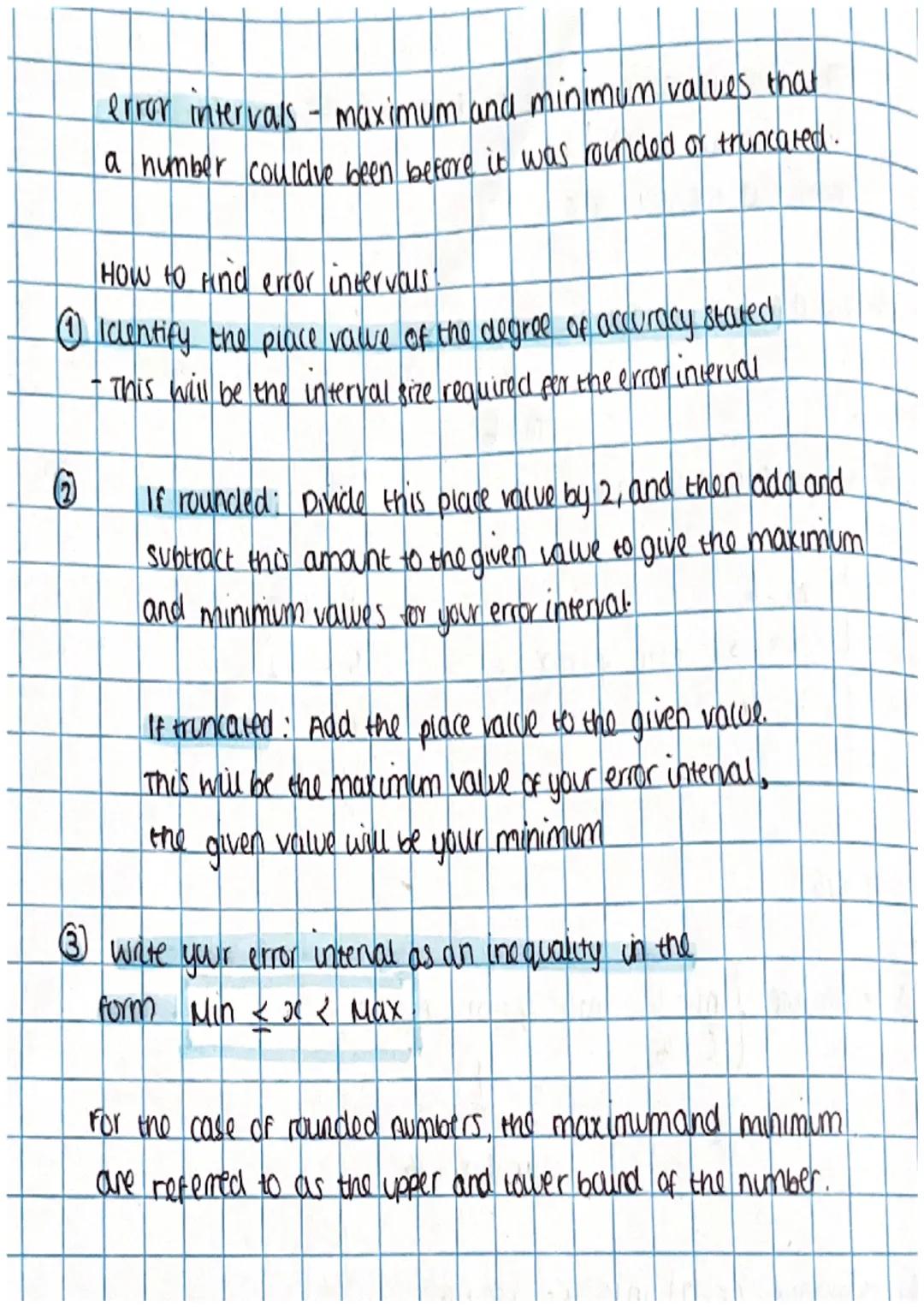
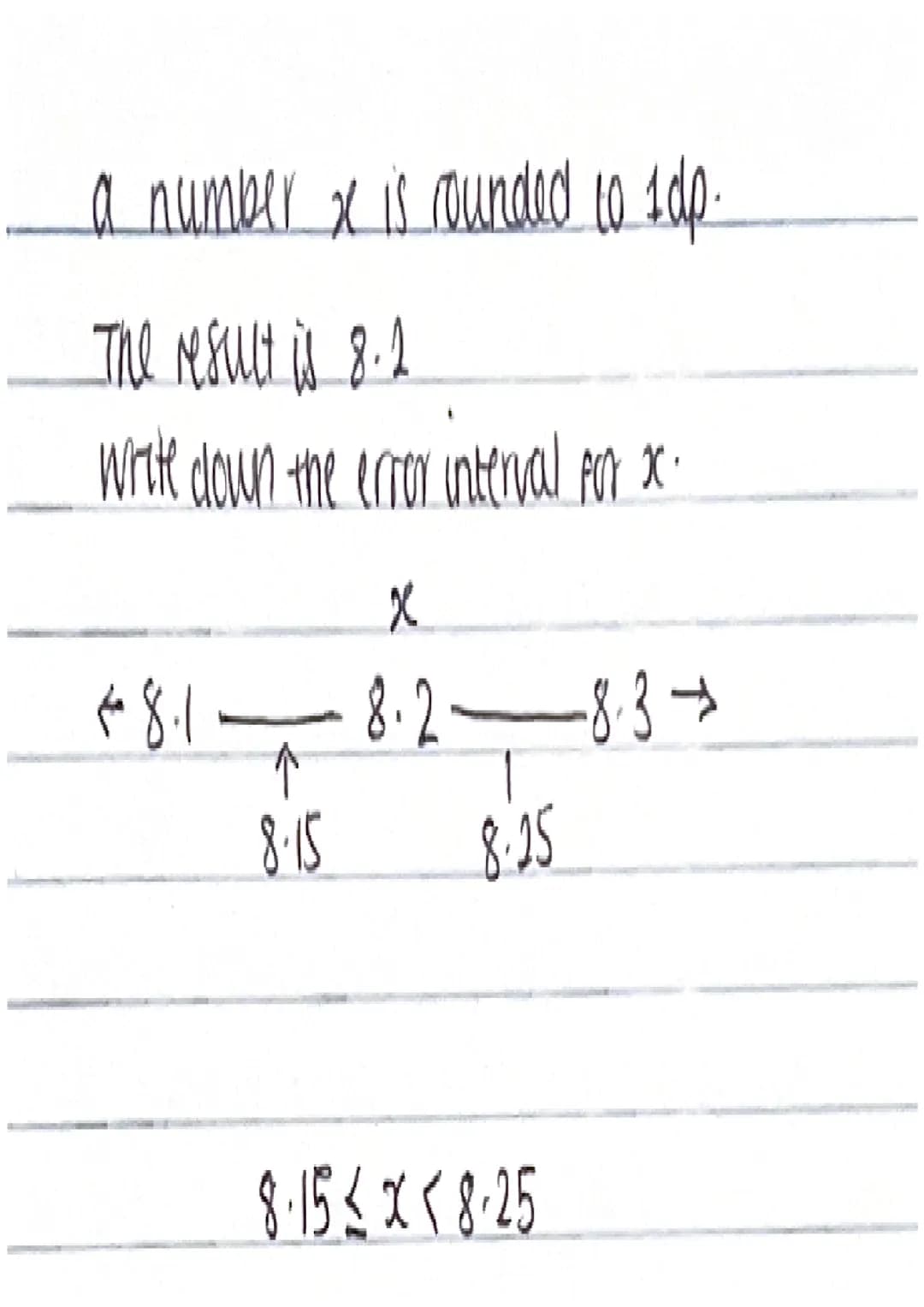
To determine error intervals, we consider the smallest and largest numbers that would round or be truncated to a given value for a specific degree of accuracy. This process involves careful consideration of place value and rounding rules.
Highlight: Understanding error intervals is crucial for assessing the precision of measurements and calculations in various fields of study and practical applications.
The concept of error intervals is particularly useful when working with measurements or calculations where exact values are not known or cannot be determined precisely. It allows for a more accurate representation of data and helps in understanding the potential range of true values.



 Biology
 Sociology