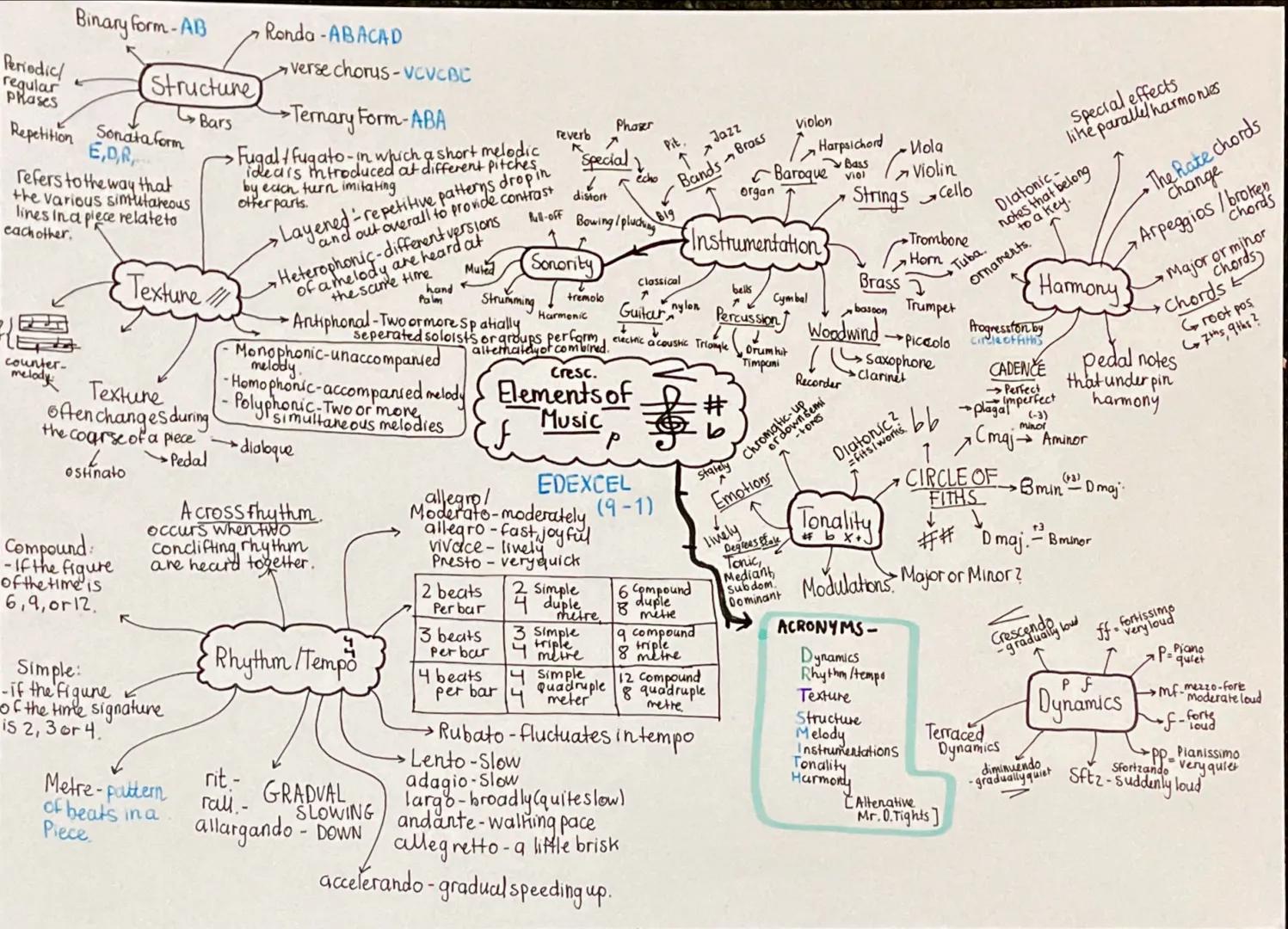
Elements of Music
Music is made up of several key elements that work together to create the sounds we enjoy. When analyzing music, you'll need to recognize how these elements interact.
Structure refers to how a piece of music is organized. Common forms include Binary (AB), Ternary (ABA), Rondo (ABACAD), and Sonata form. These structures give music a sense of journey and organization that's easy to follow once you know what to listen for.
Texture describes how different musical lines relate to each other. This includes monophonic (single melody line), homophonic (melody with accompaniment), and polyphonic (multiple independent melodies). Texture often changes throughout a piece to create interest and contrast.
Tip: When listening to a piece, try to identify whether you're hearing a single melody, a melody with chords, or multiple melodies weaving together - this is your first clue to understanding texture!
Rhythm and Tempo define the movement of music through time. Simple metre (2/4, 3/4, 4/4) has beats divided into two, while compound metre (6/8, 9/8, 12/8) divides beats into three. Tempo terms like allegro (fast), adagio (slow), and moderato (moderate) indicate the speed at which a piece should be played.
Instrumentation involves the specific instruments used in a piece. Different ensembles create distinct sounds - from classical orchestras with strings, woodwinds, brass and percussion to jazz bands and electronic music. Techniques like bowing, plucking, and muting change the tone quality of instruments.
Tonality relates to the key of a piece (major or minor) and how notes relate to each other. The circle of fifths shows relationships between keys, while harmony involves the chords and their progressions. Cadences (perfect, plagal, imperfect) mark musical phrases and create a sense of resolution or tension.
Dynamics indicate volume changes in music. Terms range from pp pianissimo−veryquiet to ff fortissimo−veryloud, with crescendo and diminuendo marking gradual volume changes. These expressive elements bring music to life by adding emotional depth.



 Sociology
 Biology