
Ever wonder why miscommunication happens even though we talk every... Show more
 Oral Communication
 Science
 Econ
Econ Iba pa
 Practical Research
 DISS
DISSSign up to see the contentIt's free!
Access to all documents
Improve your grades
Join milions of students
By signing up you accept Terms of Service and Privacy Policy

Biology

Chemistry
AP Chemistry

English
AP English Literature
20
0

Karen Gella
12/22/2025
Oral Communication
COMMUNICATION
1,191
•
Dec 22, 2025
•
Karen Gella
@cayennexxx
Ever wonder why miscommunication happens even though we talk every... Show more
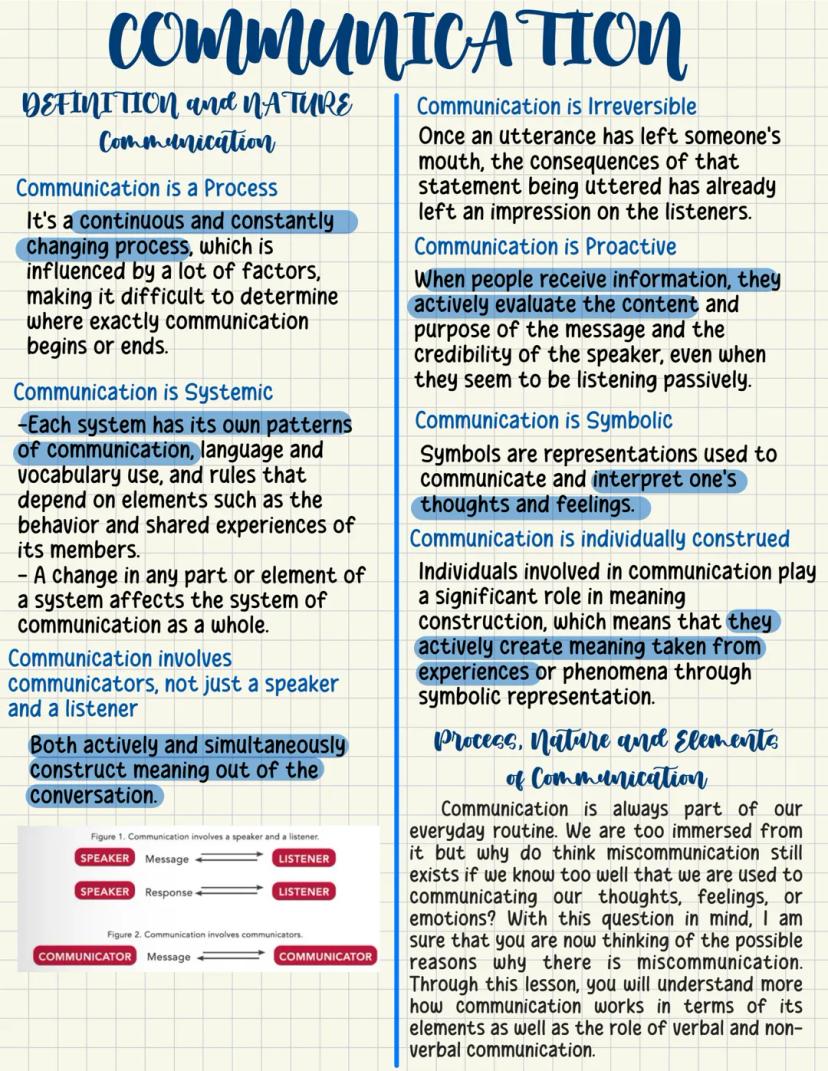
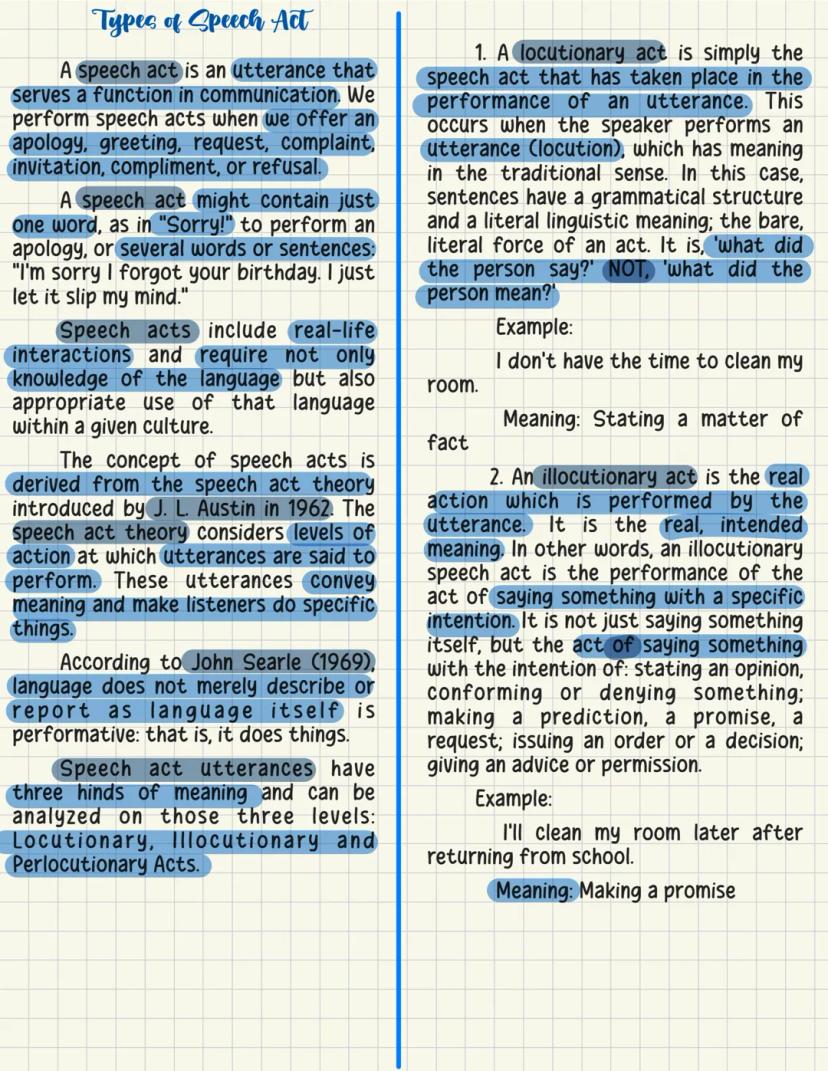
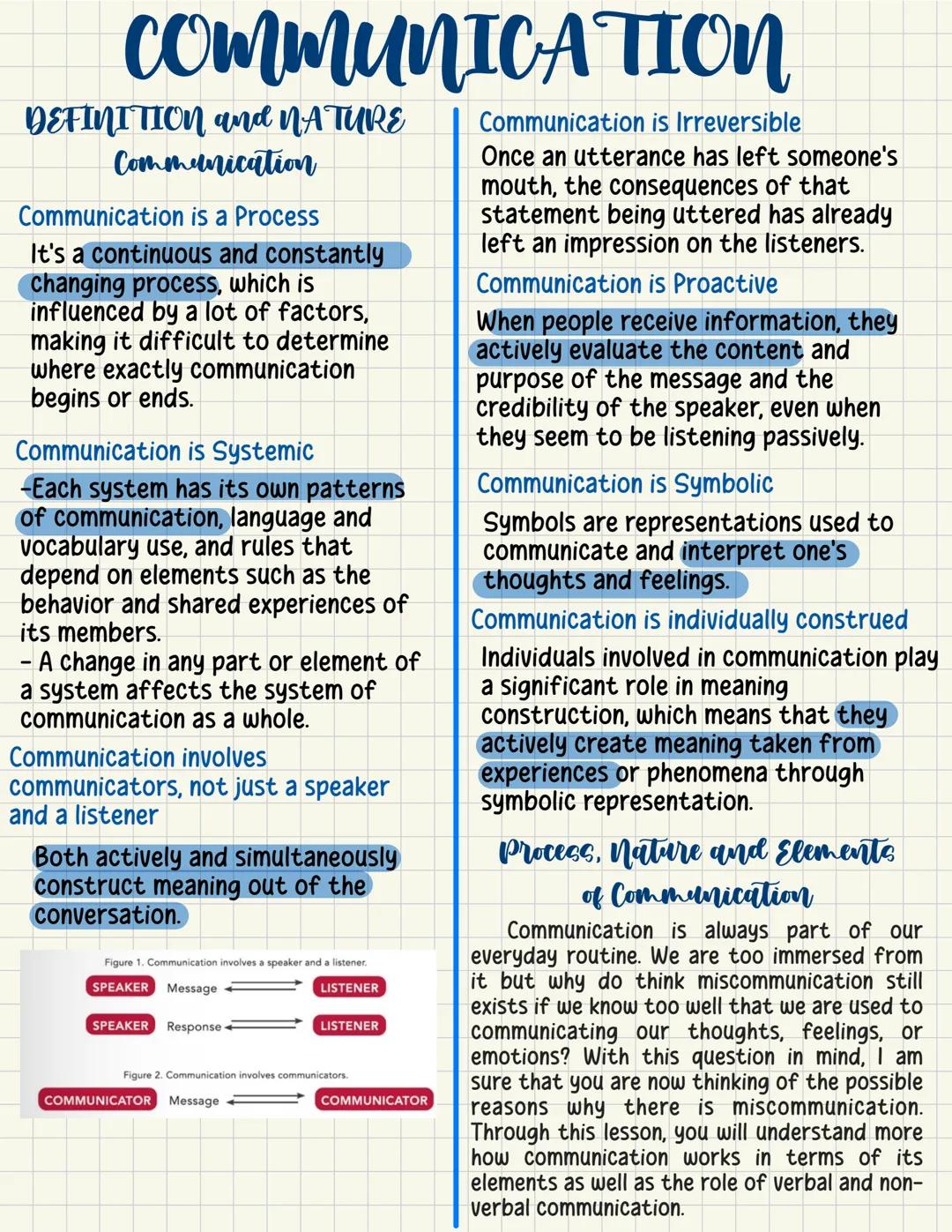
Think about it - you're constantly communicating, but communication is way more complex than just talking and listening. It's actually a continuous process that never really stops, kind of like a river that keeps flowing and changing.
Here's what makes communication tick: it's systemic, meaning every group (your barkada, family, or class) has its own way of talking and sharing ideas. When one person changes how they communicate, it affects everyone else in the group too.
The coolest part? Communication involves communicators, not just a speaker throwing words at a passive listener. You and your friend are both actively creating meaning together when you chat. Plus, communication is irreversible - once you say something, you can't take it back, so choose your words wisely!
Communication is also symbolic (we use words, gestures, and expressions to represent our thoughts) and individually construed (everyone interprets messages based on their own experiences). This explains why your joke might land differently with different people.
Key Insight: Communication is proactive - even when someone seems like they're just listening, they're actually evaluating what you're saying and deciding if they trust you.
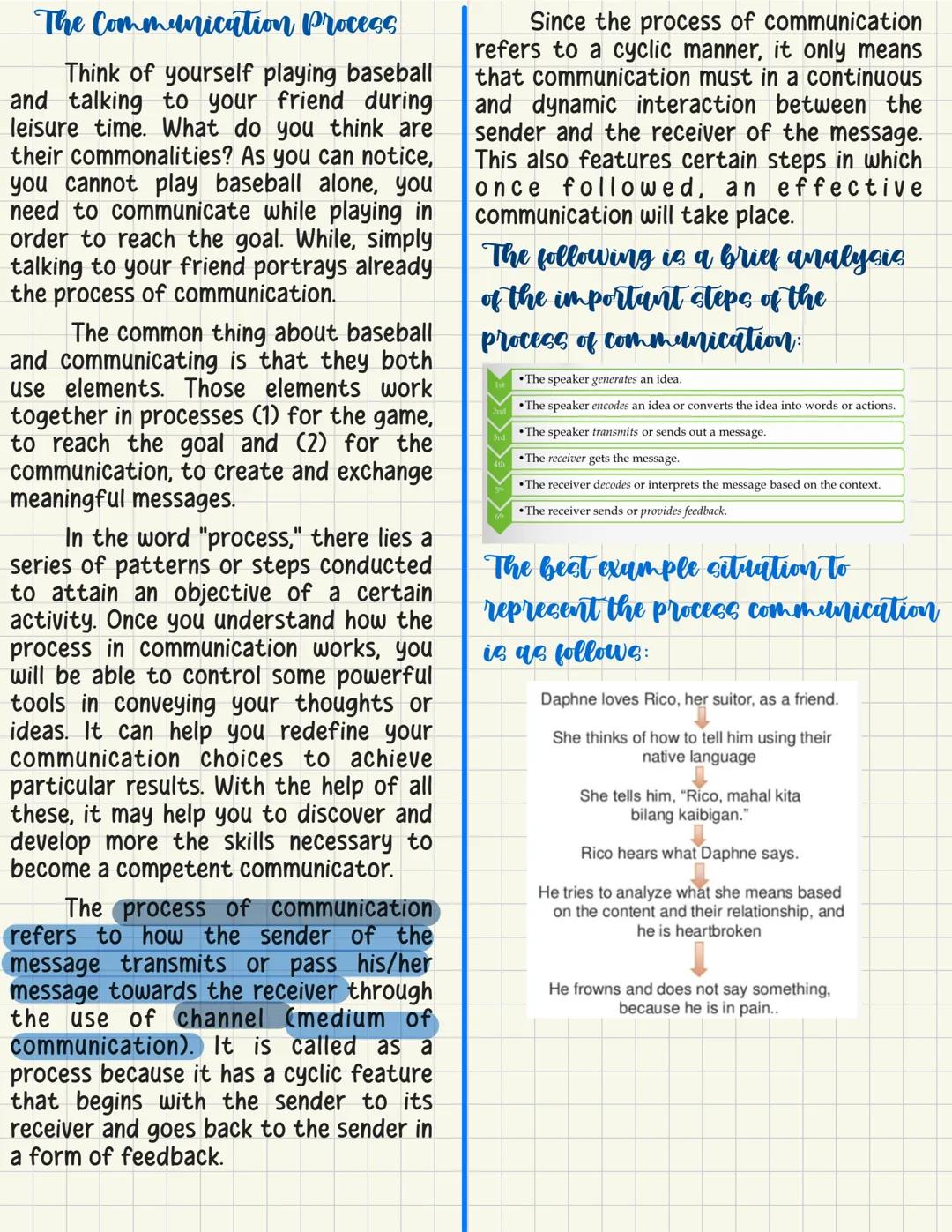
Imagine playing baseball - you can't do it alone, and you need to communicate with teammates to win. Communication works exactly the same way - it needs multiple people working together through a specific process to create meaningful messages.
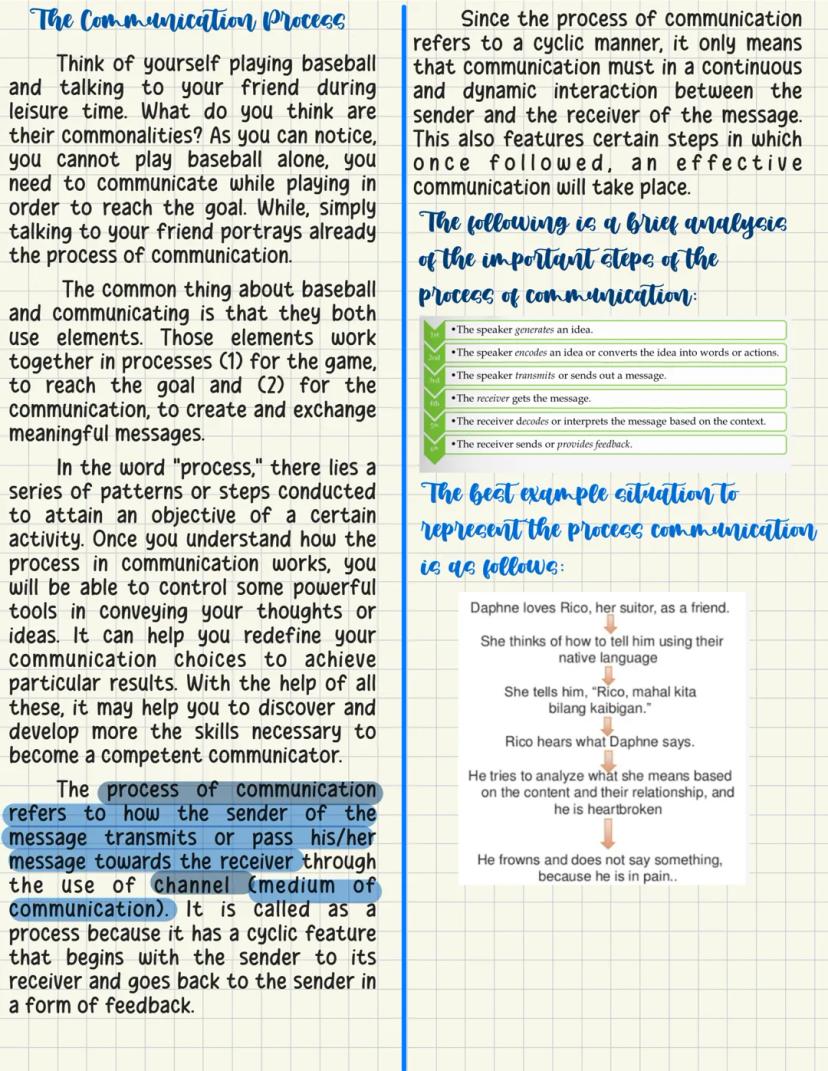
The communication process is like a cycle that starts with the sender and comes back through feedback. It's dynamic and continuous, which means it keeps flowing back and forth between people. Think of it as a conversation loop rather than a one-way street.
Here are the essential steps: the speaker generates an idea, encodes it (puts it into words or actions), transmits the message, the receiver gets and decodes it (interprets based on context), then provides feedback. Each step is crucial for effective communication.
Perfect example: Daphne tells Rico "Mahal kita bilang kaibigan" (I love you as a friend). Rico hears it, analyzes the meaning based on their relationship, gets heartbroken, and responds by frowning silently. That's the complete communication cycle in action!
Pro Tip: Understanding this process helps you control powerful tools for getting your ideas across effectively and achieving the results you want.
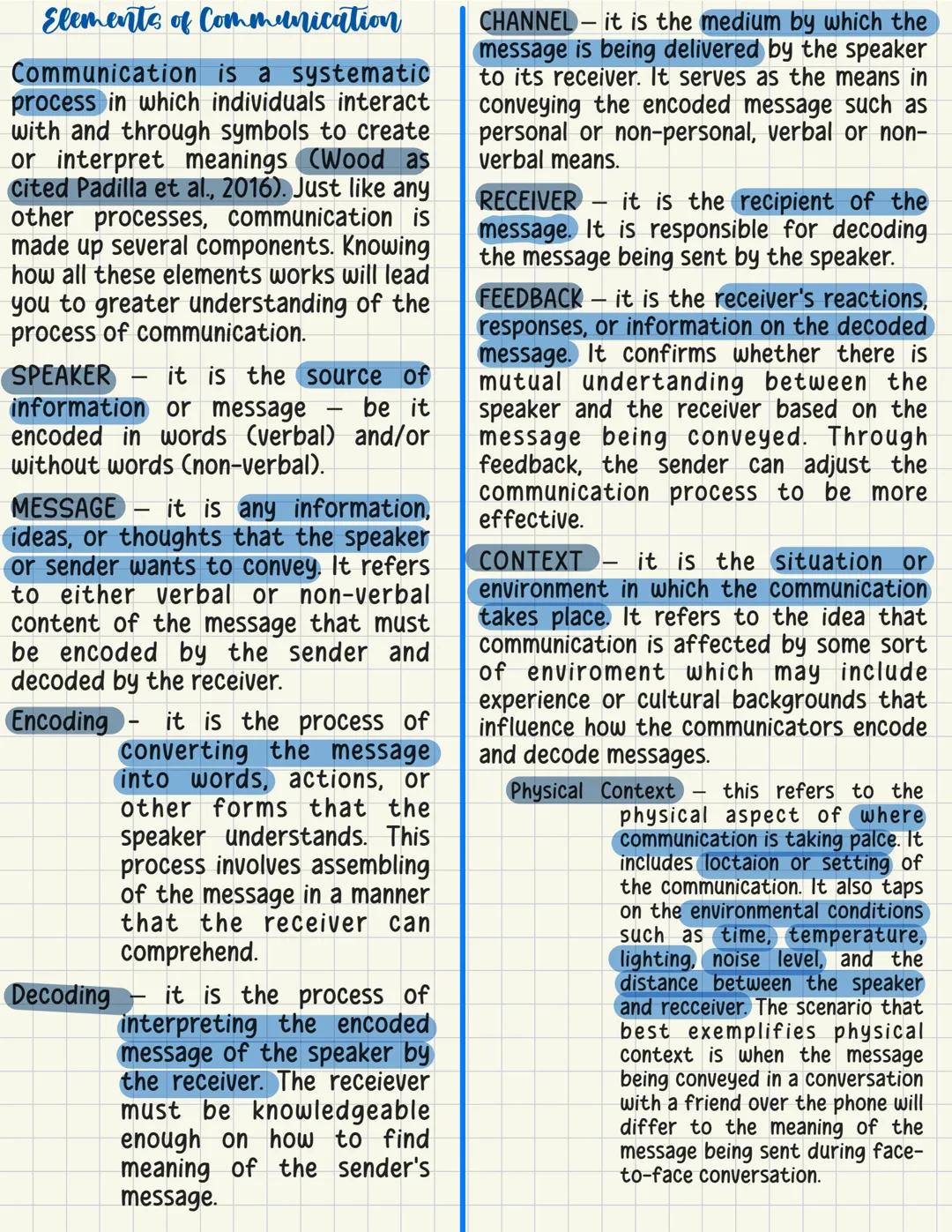
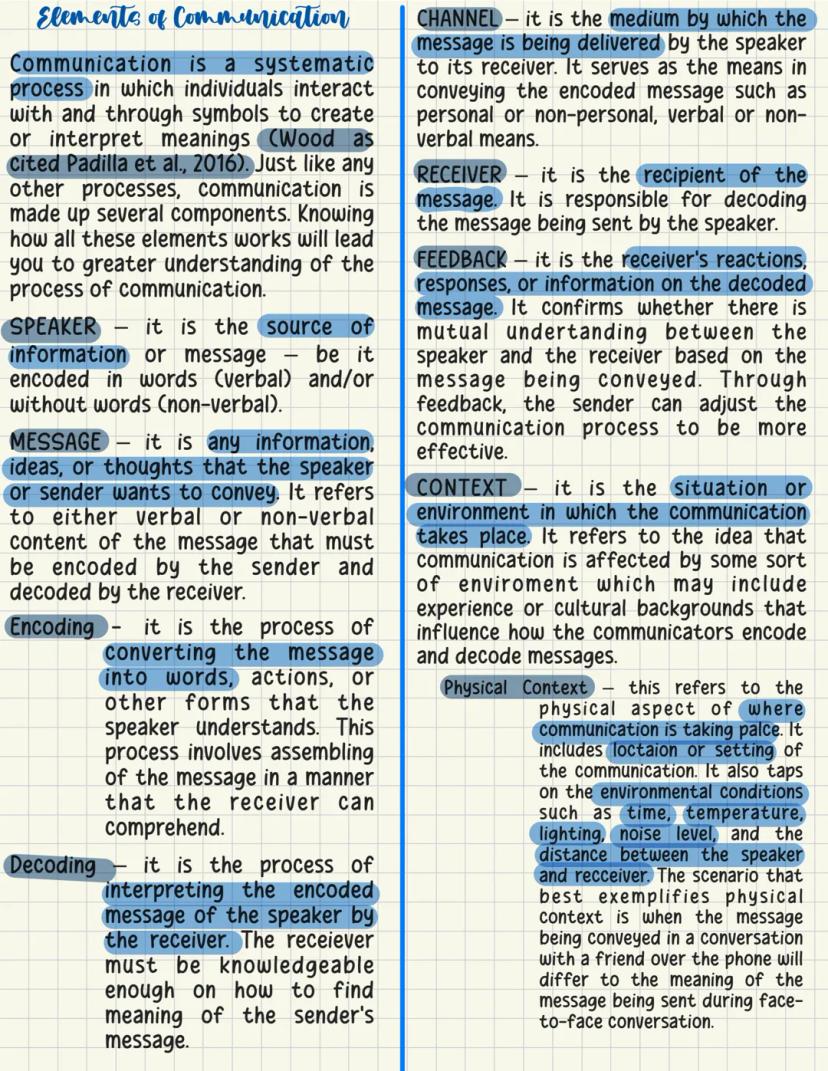
Every communication has specific building blocks that work together like ingredients in your favorite recipe. Master these elements of communication, and you'll understand why some conversations flow smoothly while others crash and burn.
The speaker is your message source, while the message contains the actual information or ideas you want to share. Encoding happens when you convert thoughts into words or actions, and decoding is when your listener interprets what you meant. The channel is your delivery method , and the receiver is whoever gets your message.
Feedback is super important - it's how you know if your message actually got through. Without feedback, you're basically shooting arrows in the dark! The receiver's reactions tell you whether to adjust your approach or keep going.
Context shapes everything about your communication. Physical context includes where you are, the noise level, lighting, and distance between speakers. A phone conversation with your friend hits different than talking face-to-face because the physical context changes how you interpret the message.
Reality Check: Even perfect encoding doesn't guarantee perfect decoding - your receiver needs enough knowledge and context to understand what you really mean.
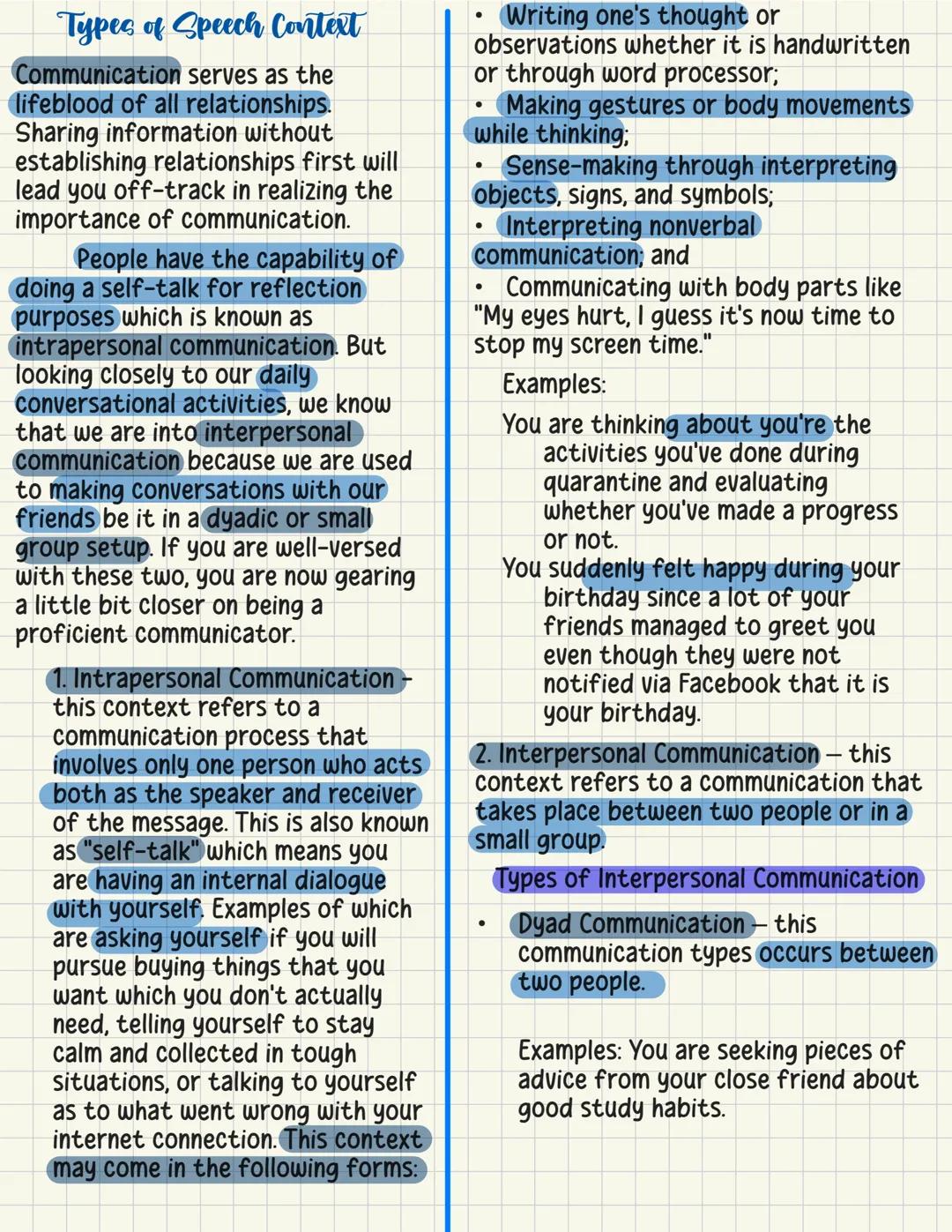
Communication isn't one-size-fits-all - the context totally changes how you should approach different speaking situations. Getting this right separates good communicators from great ones, and it'll definitely help you nail presentations and conversations.
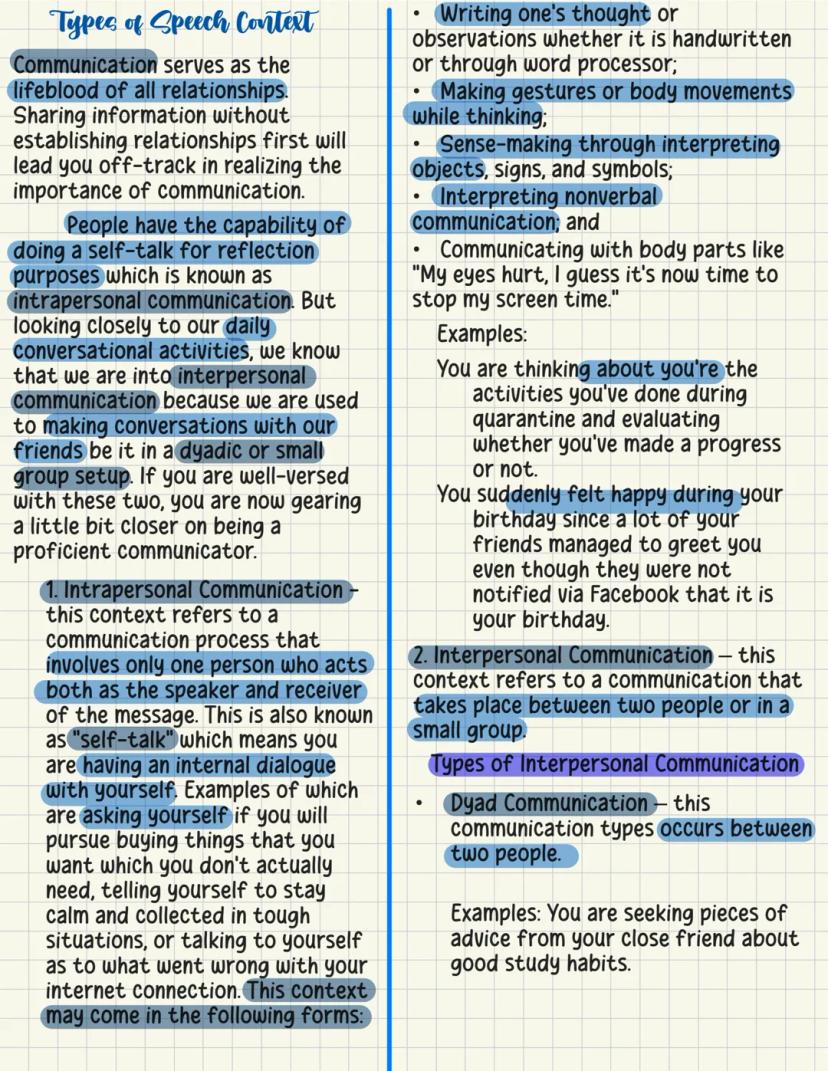
Intrapersonal communication is basically your inner voice - when you're having that internal debate about whether to buy something you want but don't need, or telling yourself to stay calm during a stressful situation. This "self-talk" includes writing your thoughts, making gestures while thinking, and even talking to your body parts like "My eyes hurt, time to stop scrolling."
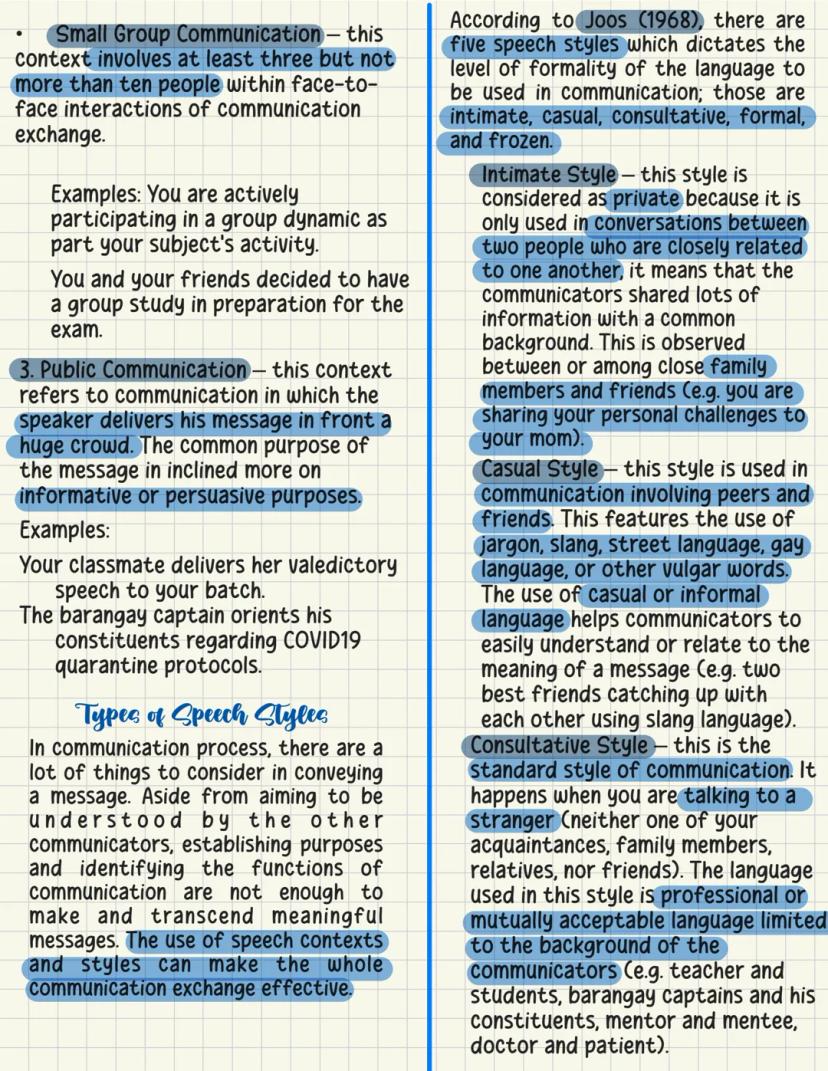
Interpersonal communication happens between people, and it comes in two flavors. Dyad communication is just you and one other person (like getting study advice from your close friend). Small group communication involves three to ten people in face-to-face interactions (think group projects or study sessions with your barkada).
Public communication is when you're addressing a large audience, usually to inform or persuade them. Examples include delivering a valedictory speech to your batch or when the barangay captain explains COVID protocols to residents.
Smart Move: Recognizing which context you're in helps you adjust your communication style automatically, making you way more effective in different situations.
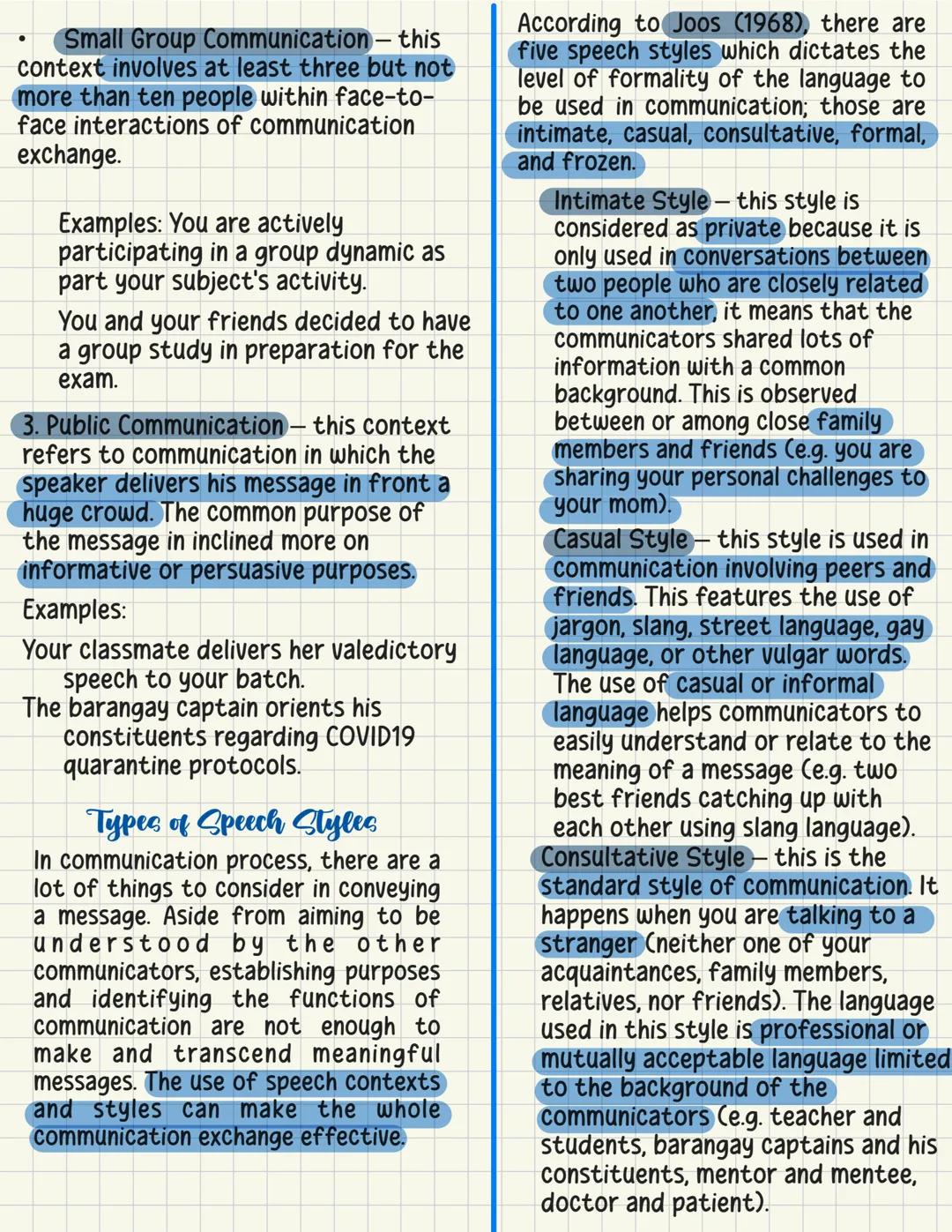
Your speech style needs to match your situation - you wouldn't talk to your principal the same way you chat with your bestie, right? According to expert Martin Joos, there are five distinct levels of formality that dictate how you should communicate.
Intimate style is for close family and friends where you share personal stuff. Casual style features slang, jargon, and street language perfect for catching up with friends. Consultative style is your standard professional language for teachers, doctors, or strangers - it's mutually acceptable and gets the job done.
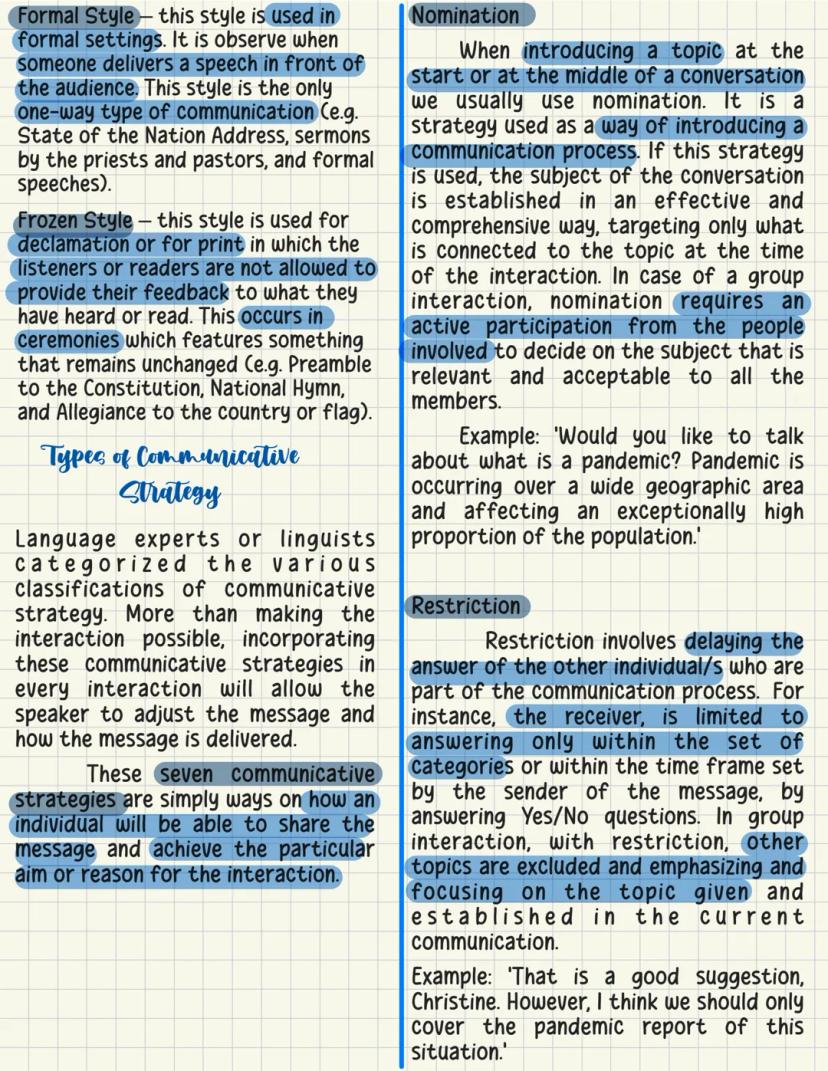
Formal style happens during one-way speeches like graduation addresses or sermons, while frozen style is used for unchanging ceremonial language like the national anthem or constitution. Each style serves specific purposes and audiences.
Communicative strategies help you navigate conversations smoothly. Nomination introduces topics, restriction limits responses to stay focused, and topic control keeps discussions on track by asking relevant questions and managing contributions from everyone involved.
Game Changer: Topic shifting moves conversations naturally, turn-taking gives everyone fair chances to speak, repair fixes misunderstandings, and termination ends conversations gracefully.
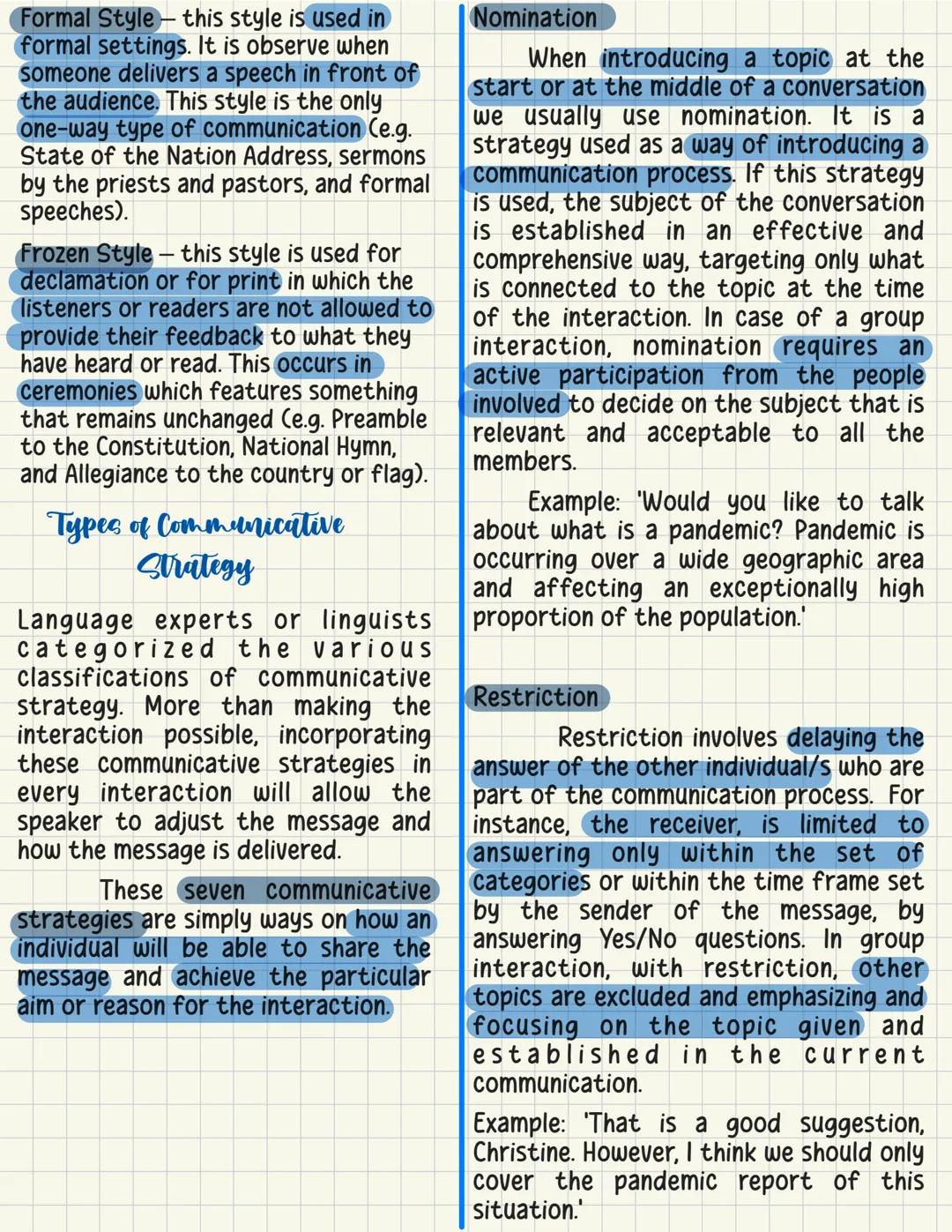
Mastering these remaining communicative strategies will seriously level up your conversation game, whether you're leading group projects or just trying to keep discussions productive and engaging.
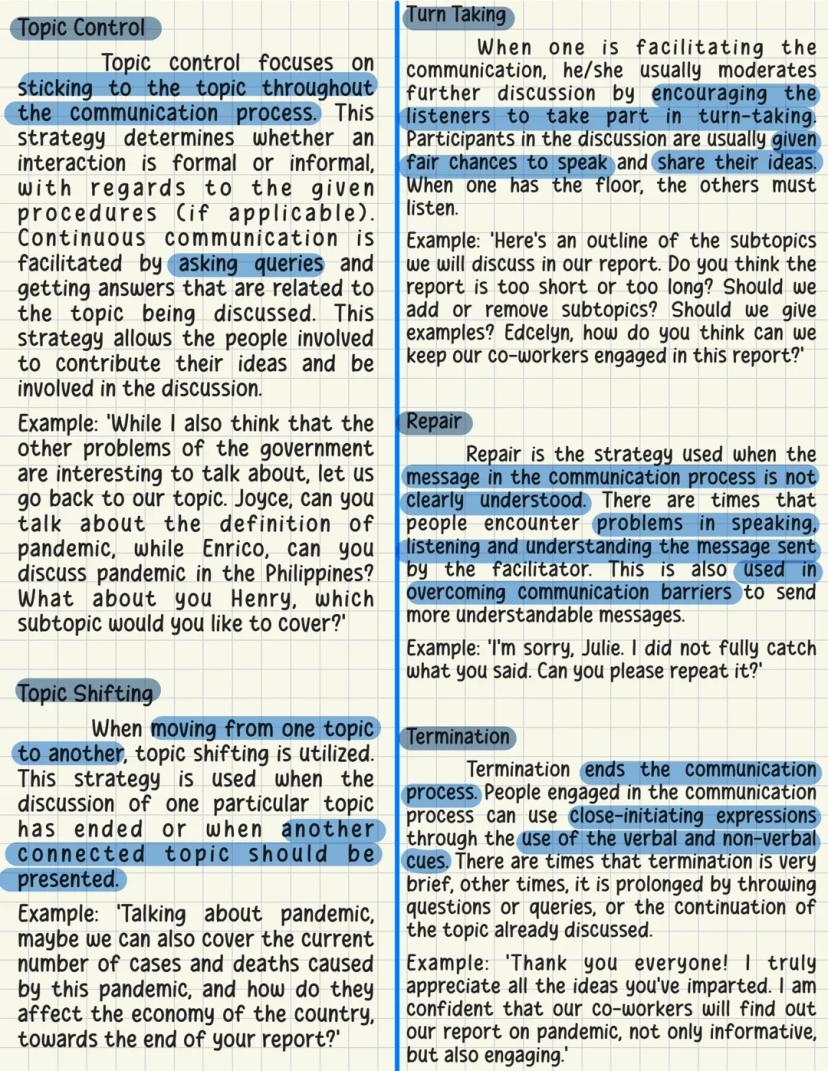
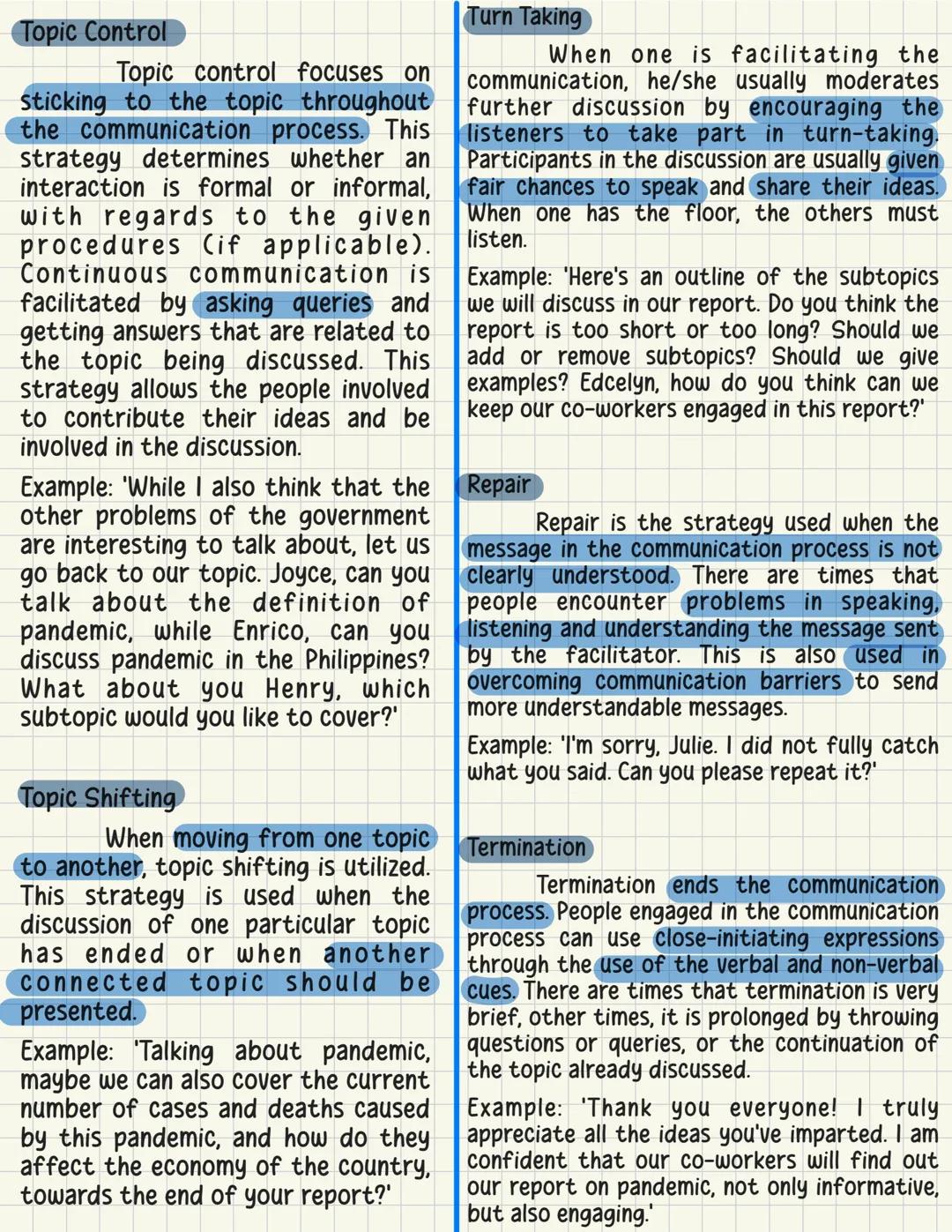
Topic control keeps everyone focused on what matters by asking related questions and making sure contributions actually connect to the main discussion. It's the difference between productive meetings and chaotic time-wasters where nothing gets accomplished.
Topic shifting smoothly transitions between related subjects, like moving from discussing pandemics to covering economic impacts. This strategy helps you explore different angles while maintaining conversational flow and keeping everyone engaged.
Turn-taking ensures fair participation by giving everyone chances to speak while others listen respectfully. Good facilitators use this to create inclusive discussions where all voices get heard, making meetings way more effective and democratic.
Repair saves conversations when misunderstandings happen - and trust me, they will! Simply asking "Can you please repeat that?" or "I didn't catch what you said" prevents small confusion from becoming major communication breakdowns.
Termination gracefully ends conversations using verbal and non-verbal cues. Sometimes it's brief, other times you extend it by asking follow-up questions, but the goal is always leaving participants feeling satisfied and appreciated for their contributions.
Pro Strategy: These seven strategies work together like a toolkit - the more naturally you can use them, the more people will see you as an effective communicator and leader.
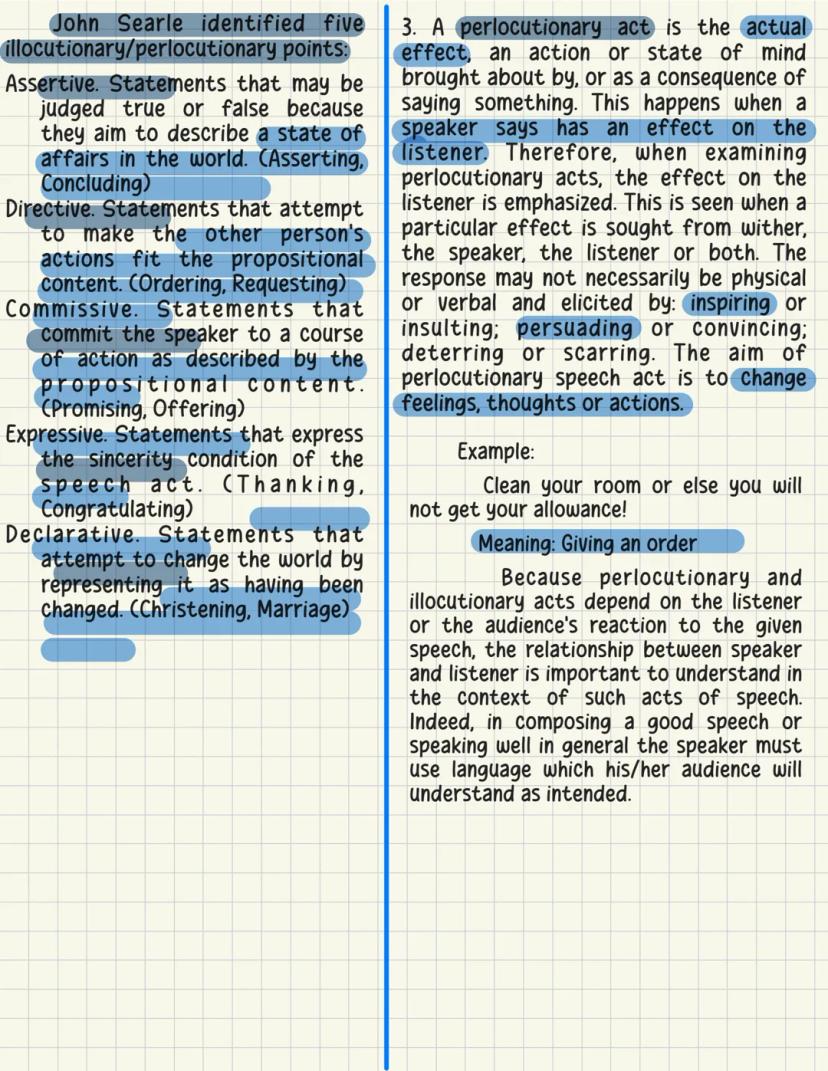
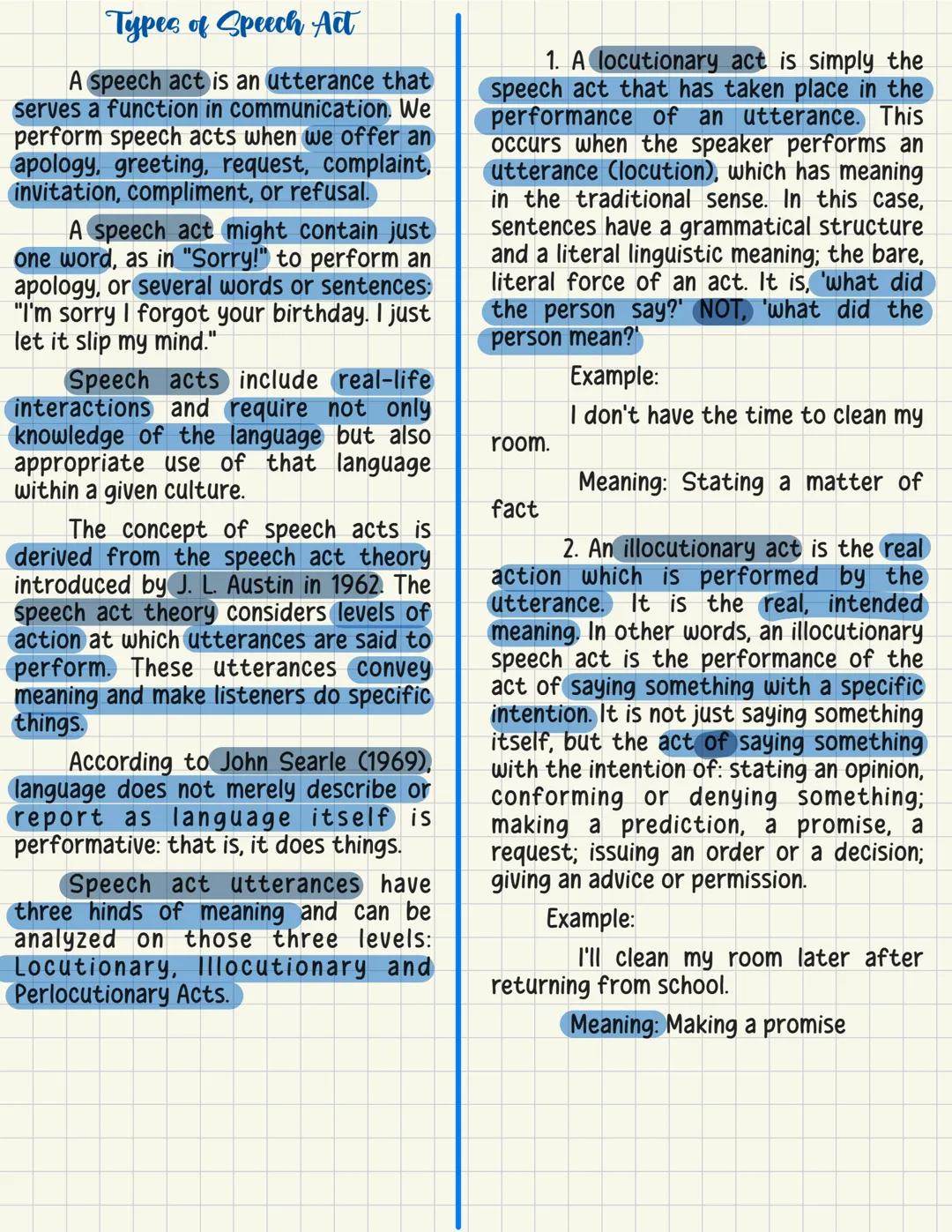
Words don't just describe things - they actually do things and make stuff happen in the real world. This is the core idea behind speech acts, which are utterances that serve specific functions beyond just sharing information.
Speech acts can be as simple as "Sorry!" or complex like "I'm sorry I forgot your birthday, it just slipped my mind." Both perform the same function (apologizing) but with different levels of detail. These acts require understanding both language and culture to work effectively.
J.L. Austin introduced this theory, and John Searle expanded it by showing that language is performative - it actively does things rather than just describing them. Every utterance works on three levels that you should understand.
Locutionary acts are simply what words literally mean - the basic grammatical structure and dictionary definitions. Illocutionary acts are what you actually intend to accomplish (promising, requesting, ordering). Perlocutionary acts are the actual effects your words have on listeners - whether they feel inspired, scared, convinced, or annoyed.
For example: "I don't have time to clean my room" , "I'll clean my room after school" , and "Clean your room or no allowance!" .
Key Insight: Understanding these three levels helps you choose words that not only say what you mean, but actually achieve the results you want from your listeners.
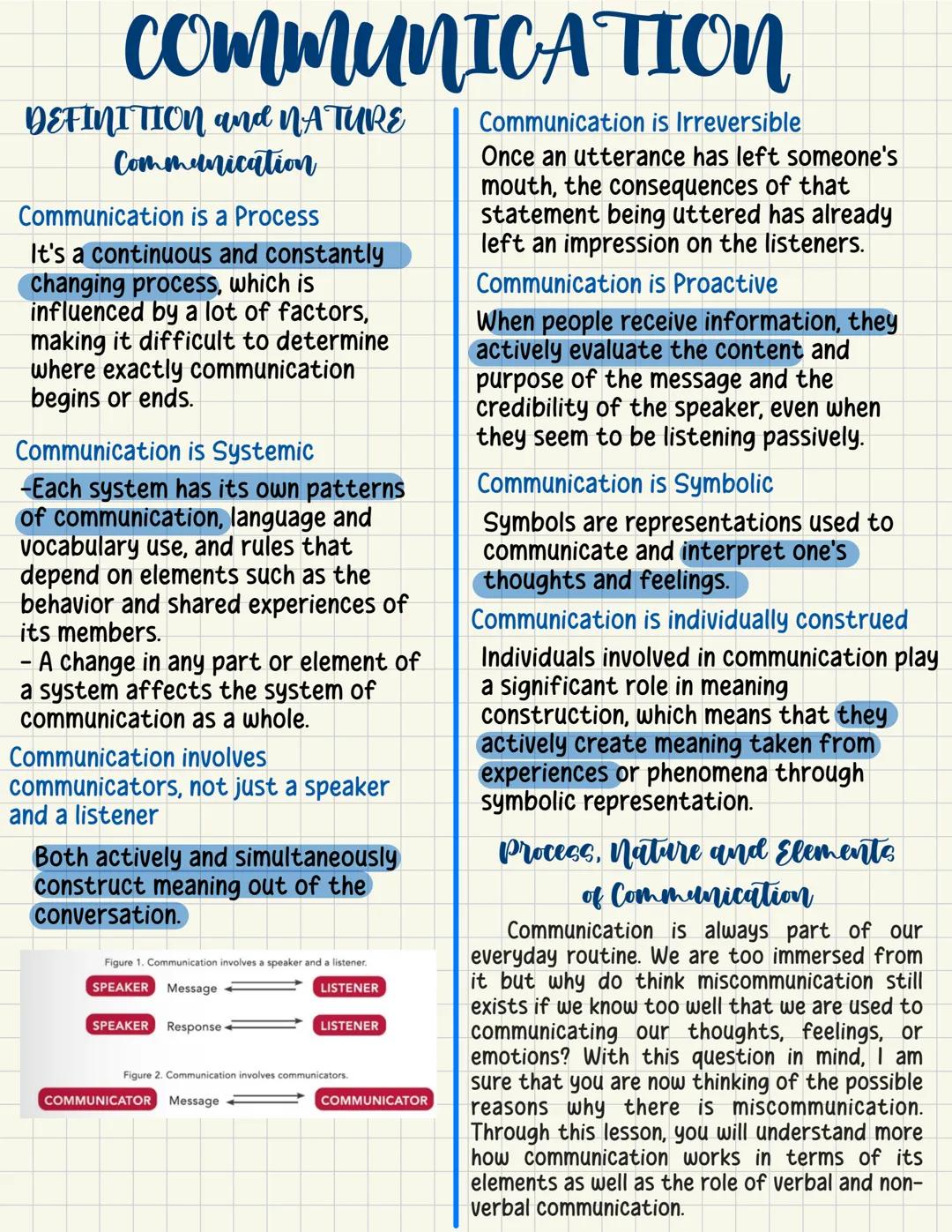
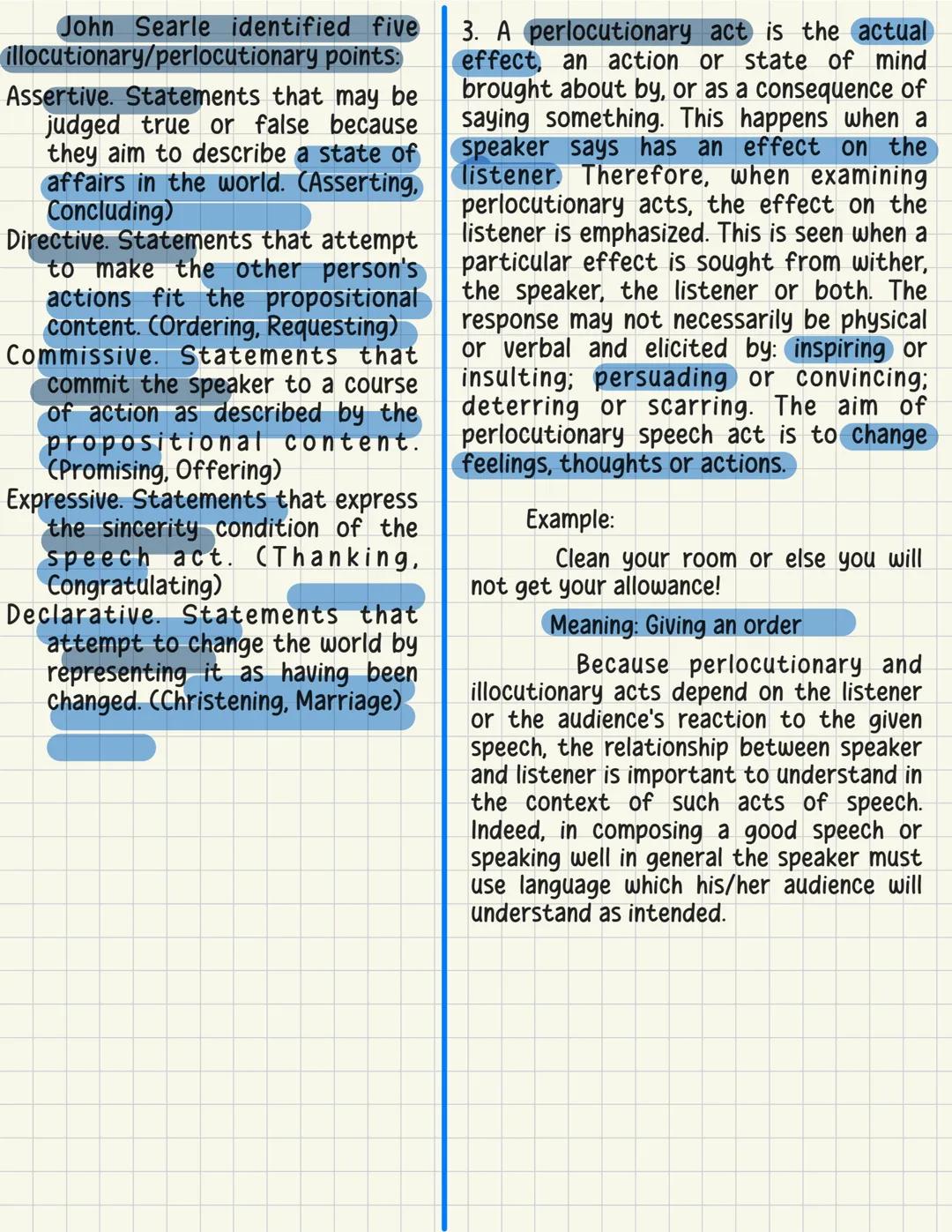
John Searle identified five specific types of speech acts that cover pretty much every way you use language to get things done. Getting familiar with these will help you communicate with much more precision and effectiveness.
Assertive acts state facts or opinions that can be judged true or false - basically when you're describing reality or sharing conclusions. Directive acts try to get people to do something through orders or requests. Commissive acts commit you to future actions through promises or offers.
Expressive acts show your feelings and attitudes through thanking, congratulating, or apologizing. Declarative acts actually change reality by announcing changes - like when someone declares you married or graduates you from school.
The relationship between speaker and listener is super important for illocutionary and perlocutionary acts to work properly. Your audience needs to understand not just your words, but your intentions and the cultural context behind them.
Here's the practical takeaway: when you want to communicate effectively, you need to consider all three levels. What are you literally saying? What do you intend to accomplish? What effect will it actually have on your specific audience?
Success Formula: Great communicators match their speech acts to their audience's ability to understand and respond appropriately - this is what separates awkward interactions from smooth, effective communication.
Our AI companion is specifically built for the needs of students. Based on the millions of content pieces we have on the platform we can provide truly meaningful and relevant answers to students. But its not only about answers, the companion is even more about guiding students through their daily learning challenges, with personalised study plans, quizzes or content pieces in the chat and 100% personalisation based on the students skills and developments.
You can download the app in the Google Play Store and in the Apple App Store.
That's right! Enjoy free access to study content, connect with fellow students, and get instant help – all at your fingertips.
App Store
Google Play
The app is very easy to use and well designed. I have found everything I was looking for so far and have been able to learn a lot from the presentations! I will definitely use the app for a class assignment! And of course it also helps a lot as an inspiration.
Stefan S
iOS user
This app is really great. There are so many study notes and help [...]. My problem subject is French, for example, and the app has so many options for help. Thanks to this app, I have improved my French. I would recommend it to anyone.
Samantha Klich
Android user
Wow, I am really amazed. I just tried the app because I've seen it advertised many times and was absolutely stunned. This app is THE HELP you want for school and above all, it offers so many things, such as workouts and fact sheets, which have been VERY helpful to me personally.
Anna
iOS user
I think it’s very much worth it and you’ll end up using it a lot once you get the hang of it and even after looking at others notes you can still ask your Artificial intelligence buddy the question and ask to simplify it if you still don’t get it!!! In the end I think it’s worth it 😊👍 ⚠️Also DID I MENTION ITS FREEE YOU DON’T HAVE TO PAY FOR ANYTHING AND STILL GET YOUR GRADES IN PERFECTLY❗️❗️⚠️
Thomas R
iOS user
Knowunity is the BEST app I’ve used in a minute. This is not an ai review or anything this is genuinely coming from a 7th grade student (I know 2011 im young) but dude this app is a 10/10 i have maintained a 3.8 gpa and have plenty of time for gaming. I love it and my mom is just happy I got good grades
Brad T
Android user
Not only did it help me find the answer but it also showed me alternative ways to solve it. I was horrible in math and science but now I have an a in both subjects. Thanks for the help🤍🤍
David K
iOS user
The app's just great! All I have to do is enter the topic in the search bar and I get the response real fast. I don't have to watch 10 YouTube videos to understand something, so I'm saving my time. Highly recommended!
Sudenaz Ocak
Android user
In school I was really bad at maths but thanks to the app, I am doing better now. I am so grateful that you made the app.
Greenlight Bonnie
Android user
I found this app a couple years ago and it has only gotten better since then. I really love it because it can help with written questions and photo questions. Also, it can find study guides that other people have made as well as flashcard sets and practice tests. The free version is also amazing for students who might not be able to afford it. Would 100% recommend
Aubrey
iOS user
Best app if you're in Highschool or Junior high. I have been using this app for 2 school years and it's the best, it's good if you don't have anyone to help you with school work.😋🩷🎀
Marco B
iOS user
THE QUIZES AND FLASHCARDS ARE SO USEFUL AND I LOVE THE SCHOOLGPT. IT ALSO IS LITREALLY LIKE CHATGPT BUT SMARTER!! HELPED ME WITH MY MASCARA PROBLEMS TOO!! AS WELL AS MY REAL SUBJECTS ! DUHHH 😍😁😲🤑💗✨🎀😮
Elisha
iOS user
This app is phenomenal down to the correct info and the various topics you can study! I greatly recommend it for people who struggle with procrastination and those who need homework help. It has been perfectly accurate for world 1 history as far as I’ve seen! Geometry too!
Paul T
iOS user
The app is very easy to use and well designed. I have found everything I was looking for so far and have been able to learn a lot from the presentations! I will definitely use the app for a class assignment! And of course it also helps a lot as an inspiration.
Stefan S
iOS user
This app is really great. There are so many study notes and help [...]. My problem subject is French, for example, and the app has so many options for help. Thanks to this app, I have improved my French. I would recommend it to anyone.
Samantha Klich
Android user
Wow, I am really amazed. I just tried the app because I've seen it advertised many times and was absolutely stunned. This app is THE HELP you want for school and above all, it offers so many things, such as workouts and fact sheets, which have been VERY helpful to me personally.
Anna
iOS user
I think it’s very much worth it and you’ll end up using it a lot once you get the hang of it and even after looking at others notes you can still ask your Artificial intelligence buddy the question and ask to simplify it if you still don’t get it!!! In the end I think it’s worth it 😊👍 ⚠️Also DID I MENTION ITS FREEE YOU DON’T HAVE TO PAY FOR ANYTHING AND STILL GET YOUR GRADES IN PERFECTLY❗️❗️⚠️
Thomas R
iOS user
Knowunity is the BEST app I’ve used in a minute. This is not an ai review or anything this is genuinely coming from a 7th grade student (I know 2011 im young) but dude this app is a 10/10 i have maintained a 3.8 gpa and have plenty of time for gaming. I love it and my mom is just happy I got good grades
Brad T
Android user
Not only did it help me find the answer but it also showed me alternative ways to solve it. I was horrible in math and science but now I have an a in both subjects. Thanks for the help🤍🤍
David K
iOS user
The app's just great! All I have to do is enter the topic in the search bar and I get the response real fast. I don't have to watch 10 YouTube videos to understand something, so I'm saving my time. Highly recommended!
Sudenaz Ocak
Android user
In school I was really bad at maths but thanks to the app, I am doing better now. I am so grateful that you made the app.
Greenlight Bonnie
Android user
I found this app a couple years ago and it has only gotten better since then. I really love it because it can help with written questions and photo questions. Also, it can find study guides that other people have made as well as flashcard sets and practice tests. The free version is also amazing for students who might not be able to afford it. Would 100% recommend
Aubrey
iOS user
Best app if you're in Highschool or Junior high. I have been using this app for 2 school years and it's the best, it's good if you don't have anyone to help you with school work.😋🩷🎀
Marco B
iOS user
THE QUIZES AND FLASHCARDS ARE SO USEFUL AND I LOVE THE SCHOOLGPT. IT ALSO IS LITREALLY LIKE CHATGPT BUT SMARTER!! HELPED ME WITH MY MASCARA PROBLEMS TOO!! AS WELL AS MY REAL SUBJECTS ! DUHHH 😍😁😲🤑💗✨🎀😮
Elisha
iOS user
This app is phenomenal down to the correct info and the various topics you can study! I greatly recommend it for people who struggle with procrastination and those who need homework help. It has been perfectly accurate for world 1 history as far as I’ve seen! Geometry too!
Paul T
iOS user
Karen Gella
@cayennexxx
Ever wonder why miscommunication happens even though we talk every day? Understanding how communication really works - from its basic elements to different speaking styles - can help you become a way better communicator in school, with friends, and in... Show more
Access to all documents
Improve your grades
Join milions of students
By signing up you accept Terms of Service and Privacy Policy
Think about it - you're constantly communicating, but communication is way more complex than just talking and listening. It's actually a continuous process that never really stops, kind of like a river that keeps flowing and changing.
Here's what makes communication tick: it's systemic, meaning every group (your barkada, family, or class) has its own way of talking and sharing ideas. When one person changes how they communicate, it affects everyone else in the group too.
The coolest part? Communication involves communicators, not just a speaker throwing words at a passive listener. You and your friend are both actively creating meaning together when you chat. Plus, communication is irreversible - once you say something, you can't take it back, so choose your words wisely!
Communication is also symbolic (we use words, gestures, and expressions to represent our thoughts) and individually construed (everyone interprets messages based on their own experiences). This explains why your joke might land differently with different people.
Key Insight: Communication is proactive - even when someone seems like they're just listening, they're actually evaluating what you're saying and deciding if they trust you.
Access to all documents
Improve your grades
Join milions of students
By signing up you accept Terms of Service and Privacy Policy
Imagine playing baseball - you can't do it alone, and you need to communicate with teammates to win. Communication works exactly the same way - it needs multiple people working together through a specific process to create meaningful messages.
The communication process is like a cycle that starts with the sender and comes back through feedback. It's dynamic and continuous, which means it keeps flowing back and forth between people. Think of it as a conversation loop rather than a one-way street.
Here are the essential steps: the speaker generates an idea, encodes it (puts it into words or actions), transmits the message, the receiver gets and decodes it (interprets based on context), then provides feedback. Each step is crucial for effective communication.
Perfect example: Daphne tells Rico "Mahal kita bilang kaibigan" (I love you as a friend). Rico hears it, analyzes the meaning based on their relationship, gets heartbroken, and responds by frowning silently. That's the complete communication cycle in action!
Pro Tip: Understanding this process helps you control powerful tools for getting your ideas across effectively and achieving the results you want.
Access to all documents
Improve your grades
Join milions of students
By signing up you accept Terms of Service and Privacy Policy
Every communication has specific building blocks that work together like ingredients in your favorite recipe. Master these elements of communication, and you'll understand why some conversations flow smoothly while others crash and burn.
The speaker is your message source, while the message contains the actual information or ideas you want to share. Encoding happens when you convert thoughts into words or actions, and decoding is when your listener interprets what you meant. The channel is your delivery method , and the receiver is whoever gets your message.
Feedback is super important - it's how you know if your message actually got through. Without feedback, you're basically shooting arrows in the dark! The receiver's reactions tell you whether to adjust your approach or keep going.
Context shapes everything about your communication. Physical context includes where you are, the noise level, lighting, and distance between speakers. A phone conversation with your friend hits different than talking face-to-face because the physical context changes how you interpret the message.
Reality Check: Even perfect encoding doesn't guarantee perfect decoding - your receiver needs enough knowledge and context to understand what you really mean.
Access to all documents
Improve your grades
Join milions of students
By signing up you accept Terms of Service and Privacy Policy
Communication isn't one-size-fits-all - the context totally changes how you should approach different speaking situations. Getting this right separates good communicators from great ones, and it'll definitely help you nail presentations and conversations.
Intrapersonal communication is basically your inner voice - when you're having that internal debate about whether to buy something you want but don't need, or telling yourself to stay calm during a stressful situation. This "self-talk" includes writing your thoughts, making gestures while thinking, and even talking to your body parts like "My eyes hurt, time to stop scrolling."
Interpersonal communication happens between people, and it comes in two flavors. Dyad communication is just you and one other person (like getting study advice from your close friend). Small group communication involves three to ten people in face-to-face interactions (think group projects or study sessions with your barkada).
Public communication is when you're addressing a large audience, usually to inform or persuade them. Examples include delivering a valedictory speech to your batch or when the barangay captain explains COVID protocols to residents.
Smart Move: Recognizing which context you're in helps you adjust your communication style automatically, making you way more effective in different situations.
Access to all documents
Improve your grades
Join milions of students
By signing up you accept Terms of Service and Privacy Policy
Your speech style needs to match your situation - you wouldn't talk to your principal the same way you chat with your bestie, right? According to expert Martin Joos, there are five distinct levels of formality that dictate how you should communicate.
Intimate style is for close family and friends where you share personal stuff. Casual style features slang, jargon, and street language perfect for catching up with friends. Consultative style is your standard professional language for teachers, doctors, or strangers - it's mutually acceptable and gets the job done.
Formal style happens during one-way speeches like graduation addresses or sermons, while frozen style is used for unchanging ceremonial language like the national anthem or constitution. Each style serves specific purposes and audiences.
Communicative strategies help you navigate conversations smoothly. Nomination introduces topics, restriction limits responses to stay focused, and topic control keeps discussions on track by asking relevant questions and managing contributions from everyone involved.
Game Changer: Topic shifting moves conversations naturally, turn-taking gives everyone fair chances to speak, repair fixes misunderstandings, and termination ends conversations gracefully.
Access to all documents
Improve your grades
Join milions of students
By signing up you accept Terms of Service and Privacy Policy
Mastering these remaining communicative strategies will seriously level up your conversation game, whether you're leading group projects or just trying to keep discussions productive and engaging.
Topic control keeps everyone focused on what matters by asking related questions and making sure contributions actually connect to the main discussion. It's the difference between productive meetings and chaotic time-wasters where nothing gets accomplished.
Topic shifting smoothly transitions between related subjects, like moving from discussing pandemics to covering economic impacts. This strategy helps you explore different angles while maintaining conversational flow and keeping everyone engaged.
Turn-taking ensures fair participation by giving everyone chances to speak while others listen respectfully. Good facilitators use this to create inclusive discussions where all voices get heard, making meetings way more effective and democratic.
Repair saves conversations when misunderstandings happen - and trust me, they will! Simply asking "Can you please repeat that?" or "I didn't catch what you said" prevents small confusion from becoming major communication breakdowns.
Termination gracefully ends conversations using verbal and non-verbal cues. Sometimes it's brief, other times you extend it by asking follow-up questions, but the goal is always leaving participants feeling satisfied and appreciated for their contributions.
Pro Strategy: These seven strategies work together like a toolkit - the more naturally you can use them, the more people will see you as an effective communicator and leader.
Access to all documents
Improve your grades
Join milions of students
By signing up you accept Terms of Service and Privacy Policy
Words don't just describe things - they actually do things and make stuff happen in the real world. This is the core idea behind speech acts, which are utterances that serve specific functions beyond just sharing information.
Speech acts can be as simple as "Sorry!" or complex like "I'm sorry I forgot your birthday, it just slipped my mind." Both perform the same function (apologizing) but with different levels of detail. These acts require understanding both language and culture to work effectively.
J.L. Austin introduced this theory, and John Searle expanded it by showing that language is performative - it actively does things rather than just describing them. Every utterance works on three levels that you should understand.
Locutionary acts are simply what words literally mean - the basic grammatical structure and dictionary definitions. Illocutionary acts are what you actually intend to accomplish (promising, requesting, ordering). Perlocutionary acts are the actual effects your words have on listeners - whether they feel inspired, scared, convinced, or annoyed.
For example: "I don't have time to clean my room" , "I'll clean my room after school" , and "Clean your room or no allowance!" .
Key Insight: Understanding these three levels helps you choose words that not only say what you mean, but actually achieve the results you want from your listeners.
Access to all documents
Improve your grades
Join milions of students
By signing up you accept Terms of Service and Privacy Policy
John Searle identified five specific types of speech acts that cover pretty much every way you use language to get things done. Getting familiar with these will help you communicate with much more precision and effectiveness.
Assertive acts state facts or opinions that can be judged true or false - basically when you're describing reality or sharing conclusions. Directive acts try to get people to do something through orders or requests. Commissive acts commit you to future actions through promises or offers.
Expressive acts show your feelings and attitudes through thanking, congratulating, or apologizing. Declarative acts actually change reality by announcing changes - like when someone declares you married or graduates you from school.
The relationship between speaker and listener is super important for illocutionary and perlocutionary acts to work properly. Your audience needs to understand not just your words, but your intentions and the cultural context behind them.
Here's the practical takeaway: when you want to communicate effectively, you need to consider all three levels. What are you literally saying? What do you intend to accomplish? What effect will it actually have on your specific audience?
Success Formula: Great communicators match their speech acts to their audience's ability to understand and respond appropriately - this is what separates awkward interactions from smooth, effective communication.
Access to all documents
Improve your grades
Join milions of students
By signing up you accept Terms of Service and Privacy Policy
Our AI companion is specifically built for the needs of students. Based on the millions of content pieces we have on the platform we can provide truly meaningful and relevant answers to students. But its not only about answers, the companion is even more about guiding students through their daily learning challenges, with personalised study plans, quizzes or content pieces in the chat and 100% personalisation based on the students skills and developments.
You can download the app in the Google Play Store and in the Apple App Store.
That's right! Enjoy free access to study content, connect with fellow students, and get instant help – all at your fingertips.
20
Smart Tools NEW
Transform this note into: ✓ 50+ Practice Questions ✓ Interactive Flashcards ✓ Full Mock Exam ✓ Essay Outlines
App Store
Google Play
The app is very easy to use and well designed. I have found everything I was looking for so far and have been able to learn a lot from the presentations! I will definitely use the app for a class assignment! And of course it also helps a lot as an inspiration.
Stefan S
iOS user
This app is really great. There are so many study notes and help [...]. My problem subject is French, for example, and the app has so many options for help. Thanks to this app, I have improved my French. I would recommend it to anyone.
Samantha Klich
Android user
Wow, I am really amazed. I just tried the app because I've seen it advertised many times and was absolutely stunned. This app is THE HELP you want for school and above all, it offers so many things, such as workouts and fact sheets, which have been VERY helpful to me personally.
Anna
iOS user
I think it’s very much worth it and you’ll end up using it a lot once you get the hang of it and even after looking at others notes you can still ask your Artificial intelligence buddy the question and ask to simplify it if you still don’t get it!!! In the end I think it’s worth it 😊👍 ⚠️Also DID I MENTION ITS FREEE YOU DON’T HAVE TO PAY FOR ANYTHING AND STILL GET YOUR GRADES IN PERFECTLY❗️❗️⚠️
Thomas R
iOS user
Knowunity is the BEST app I’ve used in a minute. This is not an ai review or anything this is genuinely coming from a 7th grade student (I know 2011 im young) but dude this app is a 10/10 i have maintained a 3.8 gpa and have plenty of time for gaming. I love it and my mom is just happy I got good grades
Brad T
Android user
Not only did it help me find the answer but it also showed me alternative ways to solve it. I was horrible in math and science but now I have an a in both subjects. Thanks for the help🤍🤍
David K
iOS user
The app's just great! All I have to do is enter the topic in the search bar and I get the response real fast. I don't have to watch 10 YouTube videos to understand something, so I'm saving my time. Highly recommended!
Sudenaz Ocak
Android user
In school I was really bad at maths but thanks to the app, I am doing better now. I am so grateful that you made the app.
Greenlight Bonnie
Android user
I found this app a couple years ago and it has only gotten better since then. I really love it because it can help with written questions and photo questions. Also, it can find study guides that other people have made as well as flashcard sets and practice tests. The free version is also amazing for students who might not be able to afford it. Would 100% recommend
Aubrey
iOS user
Best app if you're in Highschool or Junior high. I have been using this app for 2 school years and it's the best, it's good if you don't have anyone to help you with school work.😋🩷🎀
Marco B
iOS user
THE QUIZES AND FLASHCARDS ARE SO USEFUL AND I LOVE THE SCHOOLGPT. IT ALSO IS LITREALLY LIKE CHATGPT BUT SMARTER!! HELPED ME WITH MY MASCARA PROBLEMS TOO!! AS WELL AS MY REAL SUBJECTS ! DUHHH 😍😁😲🤑💗✨🎀😮
Elisha
iOS user
This app is phenomenal down to the correct info and the various topics you can study! I greatly recommend it for people who struggle with procrastination and those who need homework help. It has been perfectly accurate for world 1 history as far as I’ve seen! Geometry too!
Paul T
iOS user
The app is very easy to use and well designed. I have found everything I was looking for so far and have been able to learn a lot from the presentations! I will definitely use the app for a class assignment! And of course it also helps a lot as an inspiration.
Stefan S
iOS user
This app is really great. There are so many study notes and help [...]. My problem subject is French, for example, and the app has so many options for help. Thanks to this app, I have improved my French. I would recommend it to anyone.
Samantha Klich
Android user
Wow, I am really amazed. I just tried the app because I've seen it advertised many times and was absolutely stunned. This app is THE HELP you want for school and above all, it offers so many things, such as workouts and fact sheets, which have been VERY helpful to me personally.
Anna
iOS user
I think it’s very much worth it and you’ll end up using it a lot once you get the hang of it and even after looking at others notes you can still ask your Artificial intelligence buddy the question and ask to simplify it if you still don’t get it!!! In the end I think it’s worth it 😊👍 ⚠️Also DID I MENTION ITS FREEE YOU DON’T HAVE TO PAY FOR ANYTHING AND STILL GET YOUR GRADES IN PERFECTLY❗️❗️⚠️
Thomas R
iOS user
Knowunity is the BEST app I’ve used in a minute. This is not an ai review or anything this is genuinely coming from a 7th grade student (I know 2011 im young) but dude this app is a 10/10 i have maintained a 3.8 gpa and have plenty of time for gaming. I love it and my mom is just happy I got good grades
Brad T
Android user
Not only did it help me find the answer but it also showed me alternative ways to solve it. I was horrible in math and science but now I have an a in both subjects. Thanks for the help🤍🤍
David K
iOS user
The app's just great! All I have to do is enter the topic in the search bar and I get the response real fast. I don't have to watch 10 YouTube videos to understand something, so I'm saving my time. Highly recommended!
Sudenaz Ocak
Android user
In school I was really bad at maths but thanks to the app, I am doing better now. I am so grateful that you made the app.
Greenlight Bonnie
Android user
I found this app a couple years ago and it has only gotten better since then. I really love it because it can help with written questions and photo questions. Also, it can find study guides that other people have made as well as flashcard sets and practice tests. The free version is also amazing for students who might not be able to afford it. Would 100% recommend
Aubrey
iOS user
Best app if you're in Highschool or Junior high. I have been using this app for 2 school years and it's the best, it's good if you don't have anyone to help you with school work.😋🩷🎀
Marco B
iOS user
THE QUIZES AND FLASHCARDS ARE SO USEFUL AND I LOVE THE SCHOOLGPT. IT ALSO IS LITREALLY LIKE CHATGPT BUT SMARTER!! HELPED ME WITH MY MASCARA PROBLEMS TOO!! AS WELL AS MY REAL SUBJECTS ! DUHHH 😍😁😲🤑💗✨🎀😮
Elisha
iOS user
This app is phenomenal down to the correct info and the various topics you can study! I greatly recommend it for people who struggle with procrastination and those who need homework help. It has been perfectly accurate for world 1 history as far as I’ve seen! Geometry too!
Paul T
iOS user