
Your journey into the world of nursing starts here with... Show more
 Other
Other GenBio
 Econ
Econ Pre-Cal
 Oral Communication
 Practical Research
 DISS
DISSSign up to see the contentIt's free!
Access to all documents
Improve your grades
Join milions of students
By signing up you accept Terms of Service and Privacy Policy
Subjects

Biology

Chemistry
AP Chemistry

English
AP English Literature
64
0

sheshe
12/13/2025
Other
Fundamentals of Nursing Notes
2,006
•
Dec 13, 2025
•
sheshe
@sheshe_
Your journey into the world of nursing starts here with... Show more
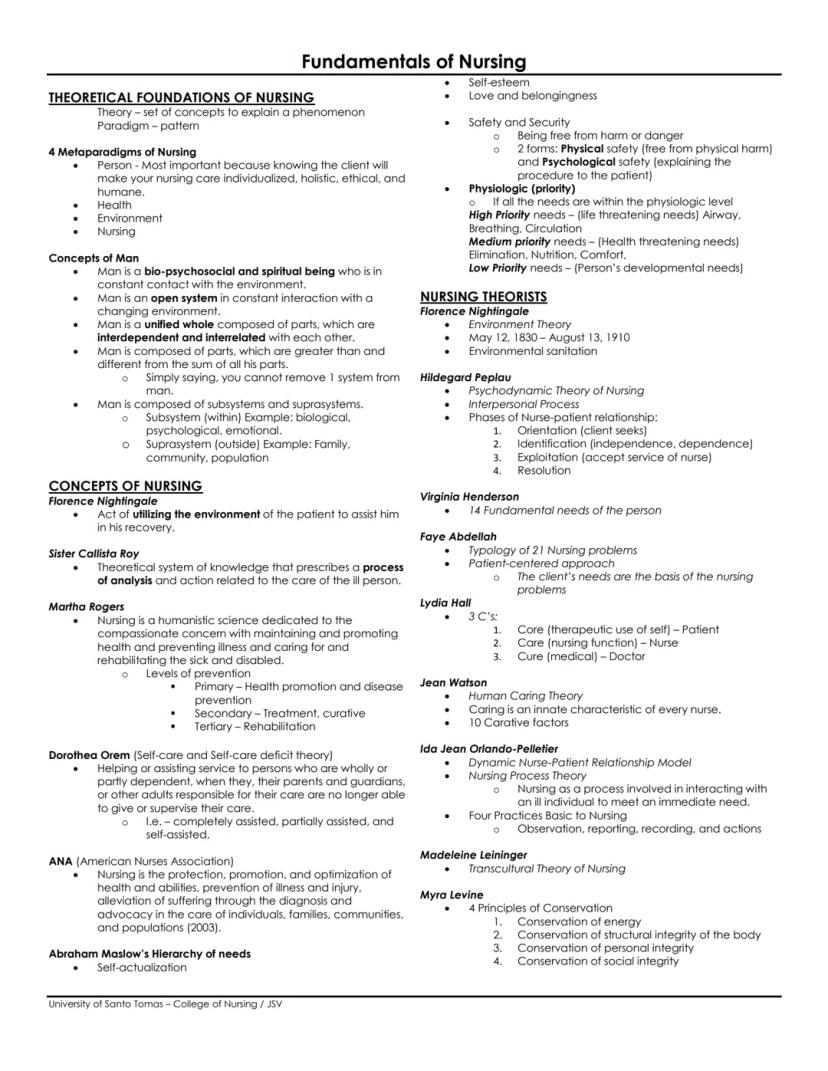
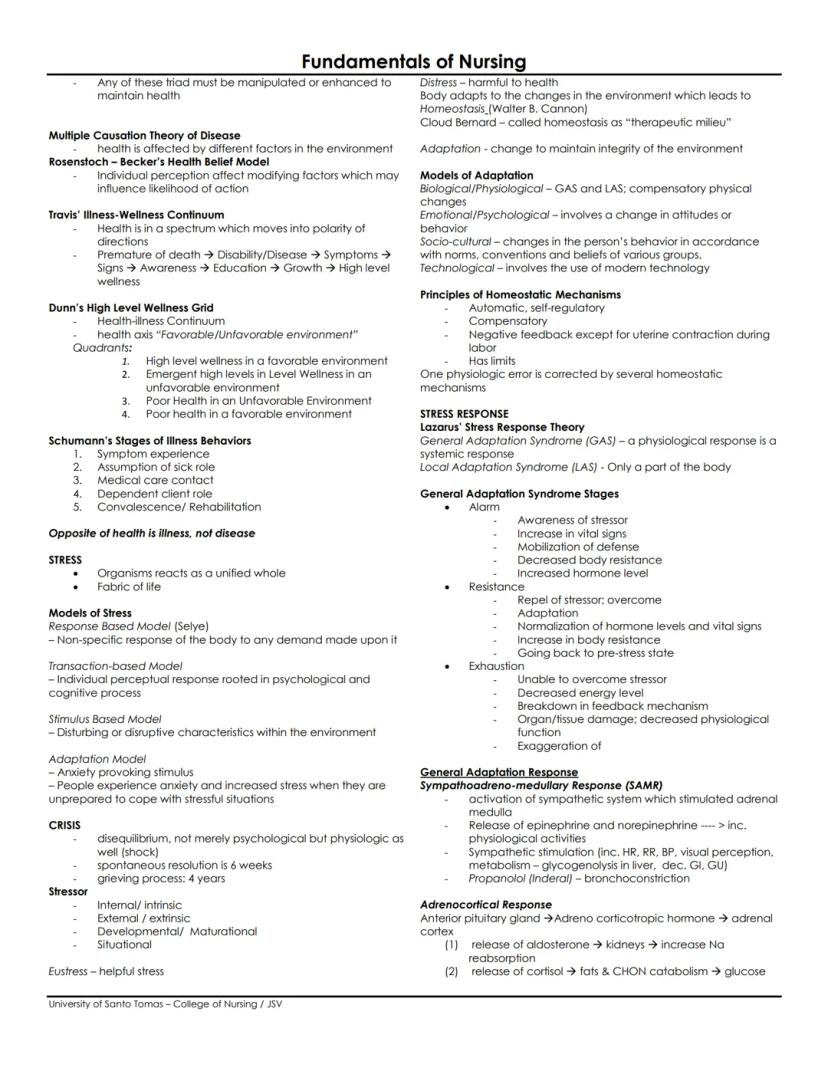
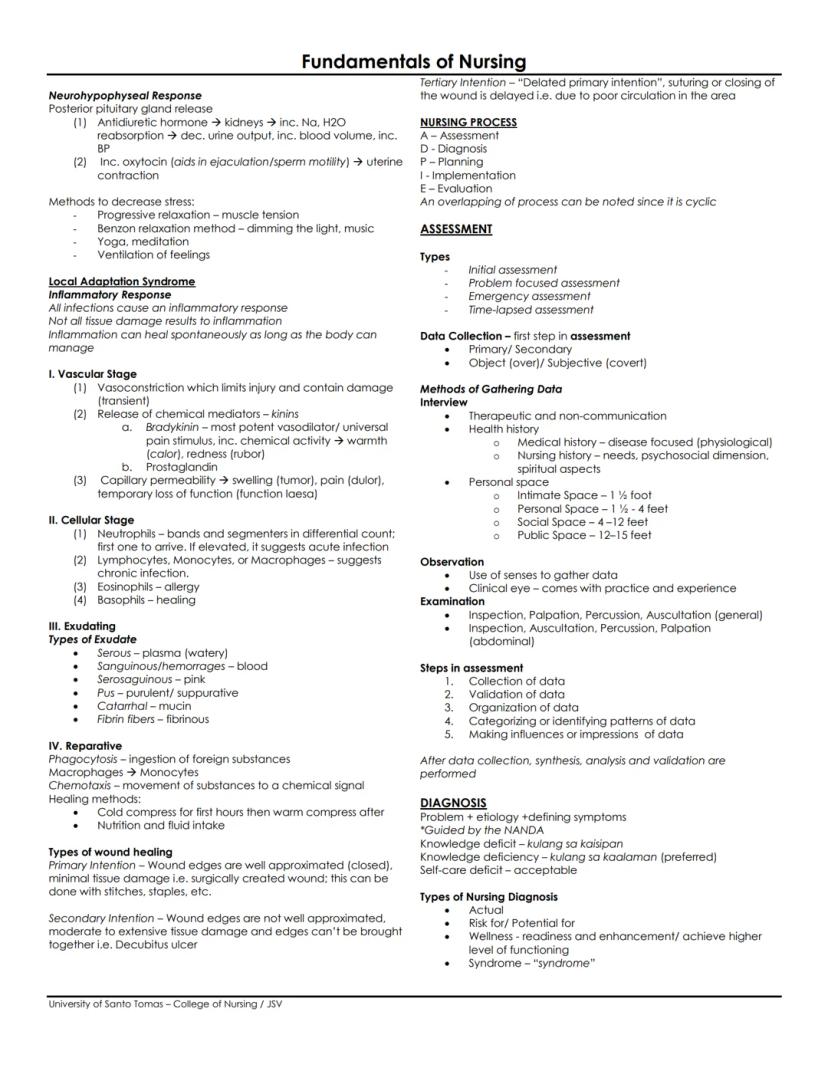
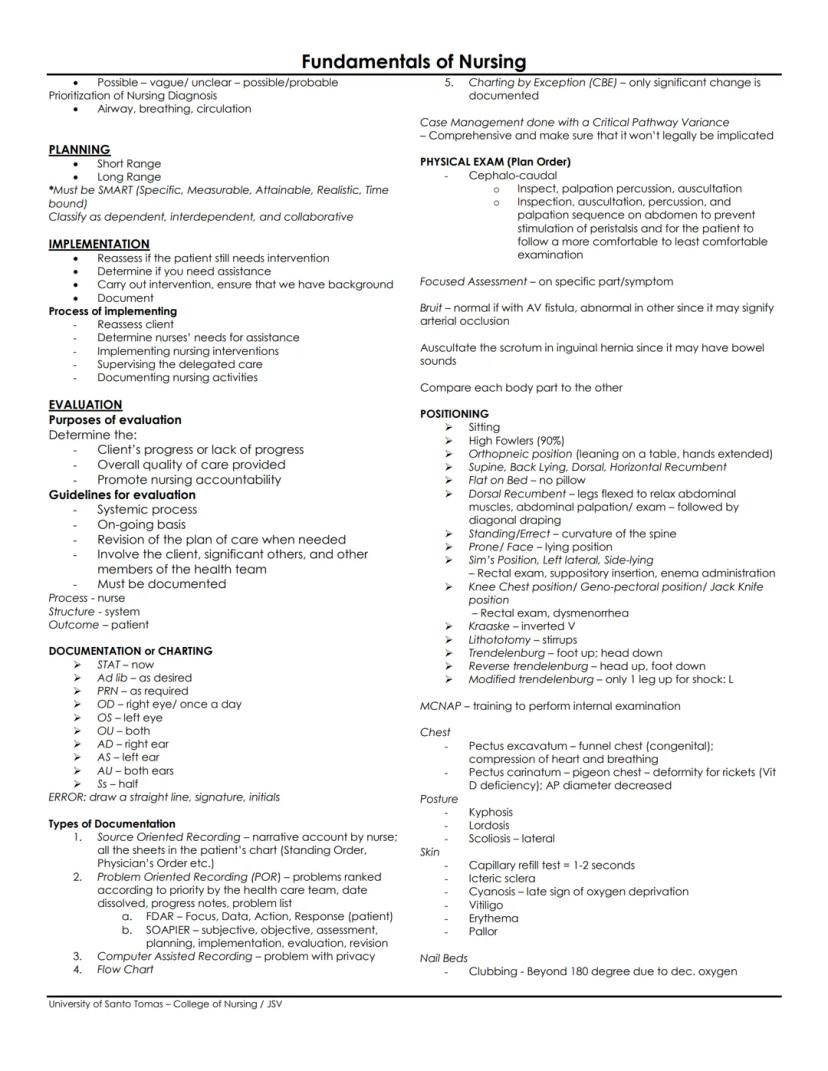
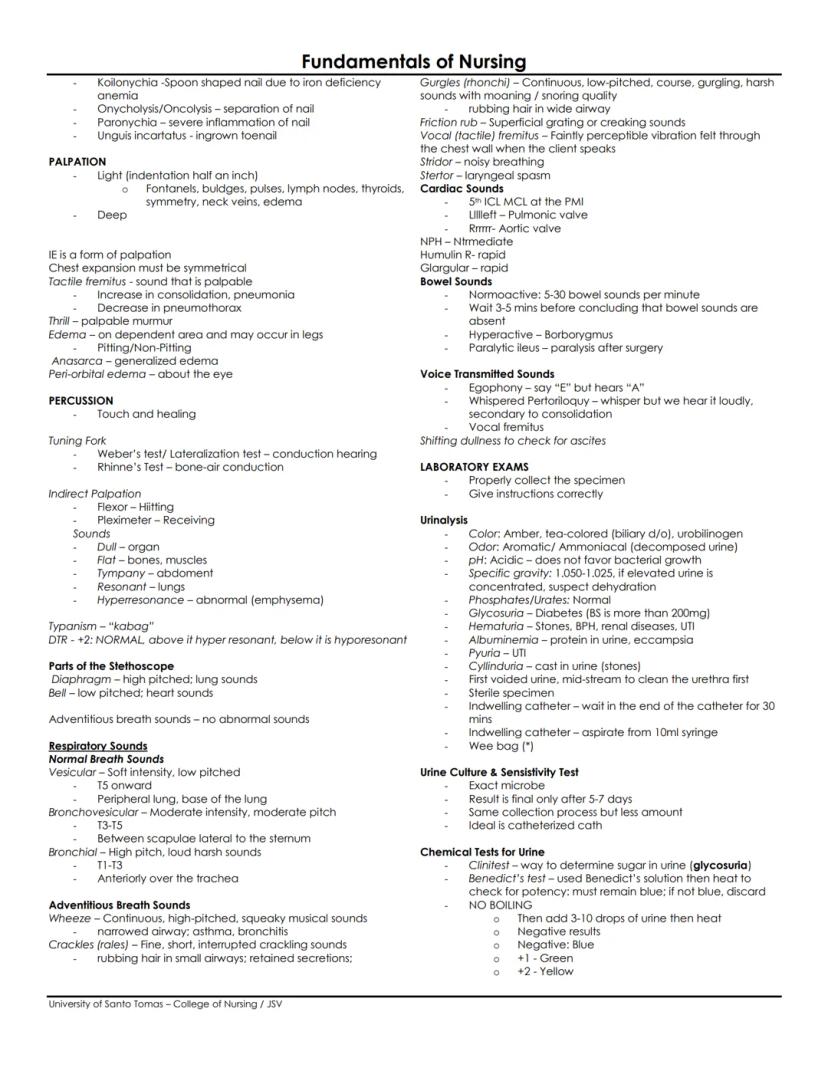
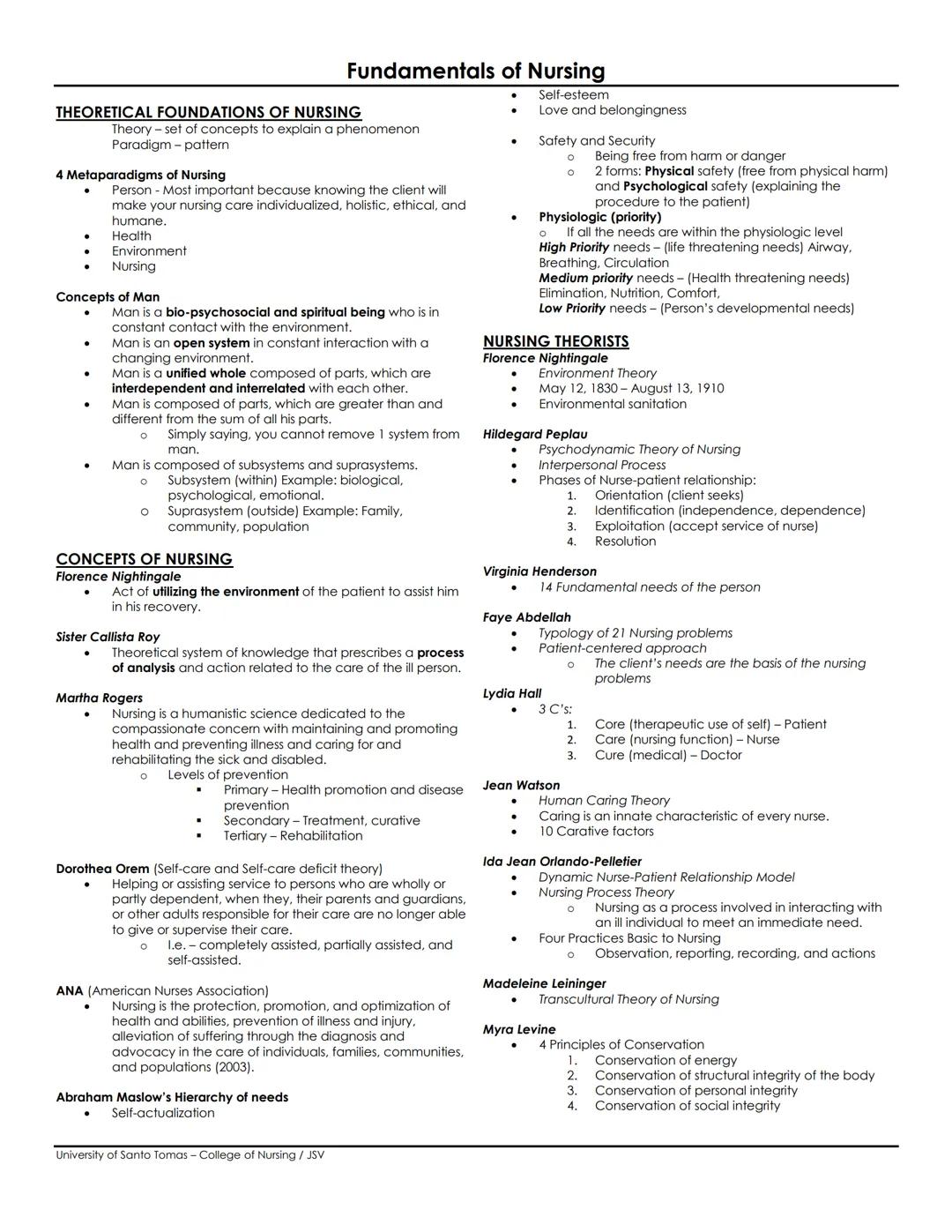
Ever wondered what makes nursing more than just following doctor's orders? Nursing theory gives you the framework to think critically and provide truly personalized care. A theory is simply a set of concepts that explains why things happen the way they do in healthcare.
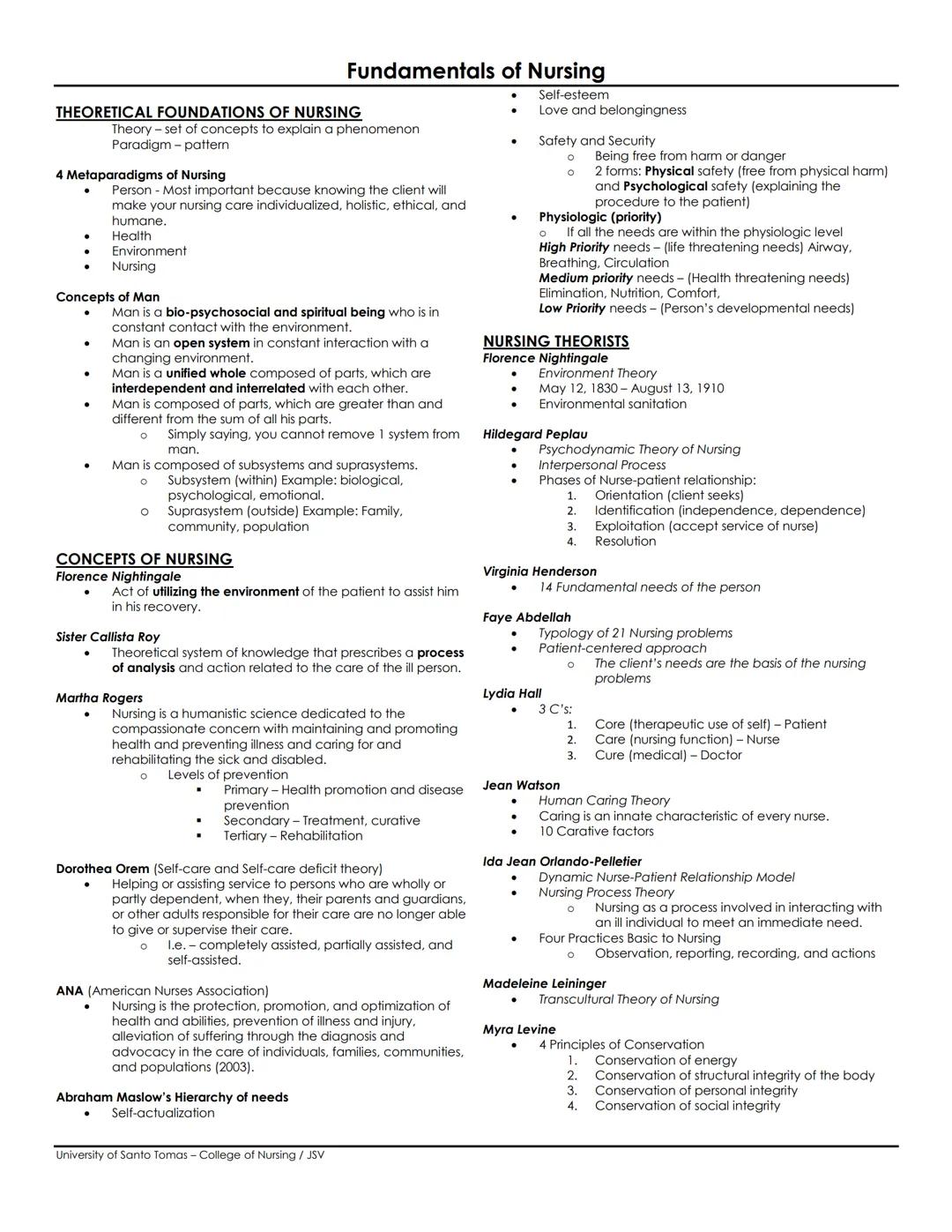
The four metaparadigms of nursing are your foundation: Person , Health, Environment, and Nursing itself. Understanding your patient as a whole person - not just their illness - is what makes your care individualized and effective.
Here's something cool: humans are open systems constantly interacting with their environment. We're made up of interconnected parts (like biological and psychological systems) that work together. You can't just treat someone's broken arm without considering their fears, family situation, or cultural background.
Key Insight: Remember that you're caring for a complete person, not just treating symptoms. This holistic approach is what sets great nurses apart.
Prevention has three levels you'll use throughout your career: Primary (keeping people healthy), Secondary (treating illness), and Tertiary (helping people recover and adapt). Think of Maslow's hierarchy as your priority guide - physiological needs like breathing always come first, but don't forget about safety, love, and self-esteem needs too.
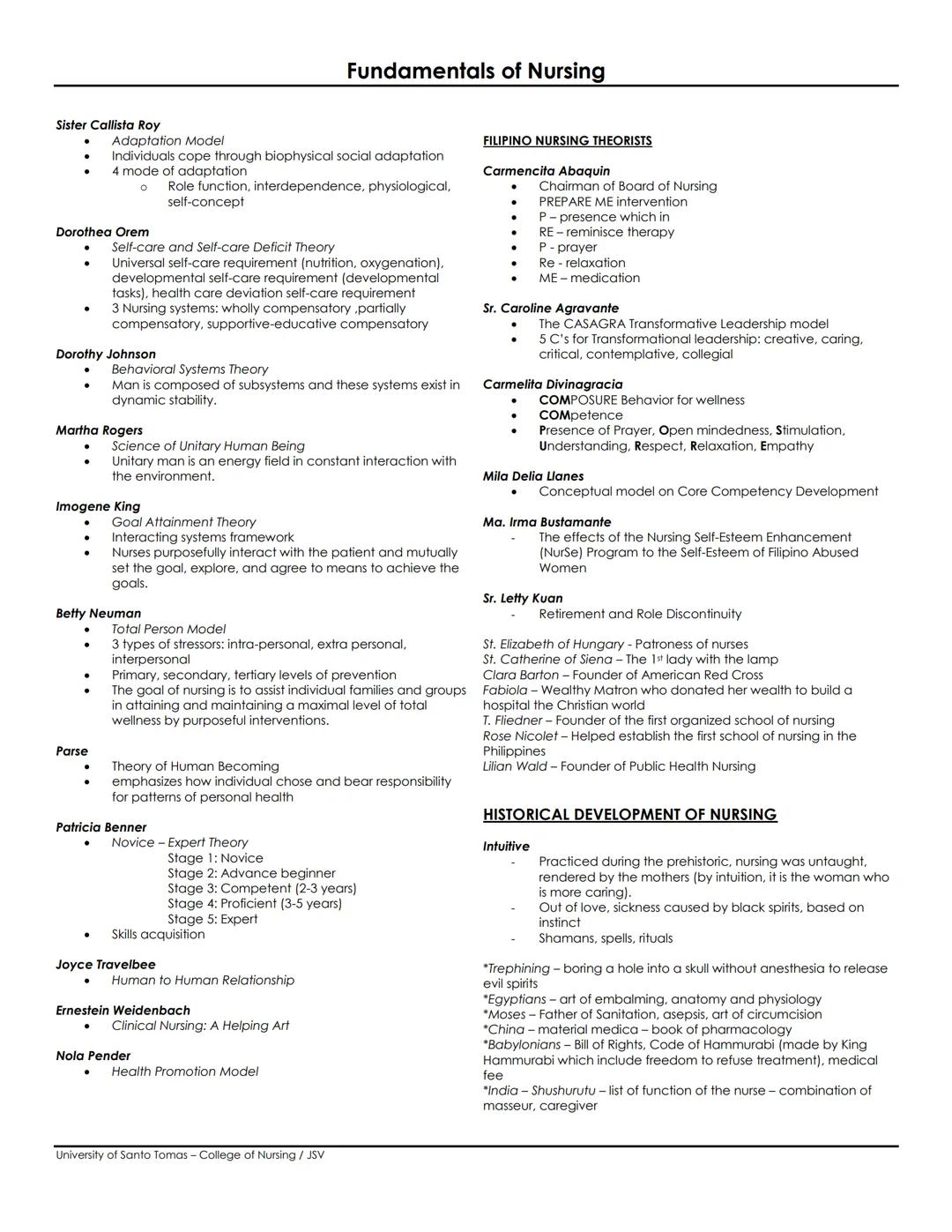
Meet the legends who shaped modern nursing! Florence Nightingale started it all with her Environmental Theory - she proved that clean, well-ventilated spaces help patients heal faster. Her work during the Crimean War earned her the title "Lady with the Lamp."
Hildegard Peplau focused on the nurse-patient relationship, breaking it into four phases: Orientation (getting to know each other), Identification, Exploitation (using the nurse's help), and Resolution. This psychodynamic approach reminds you that building trust is crucial.
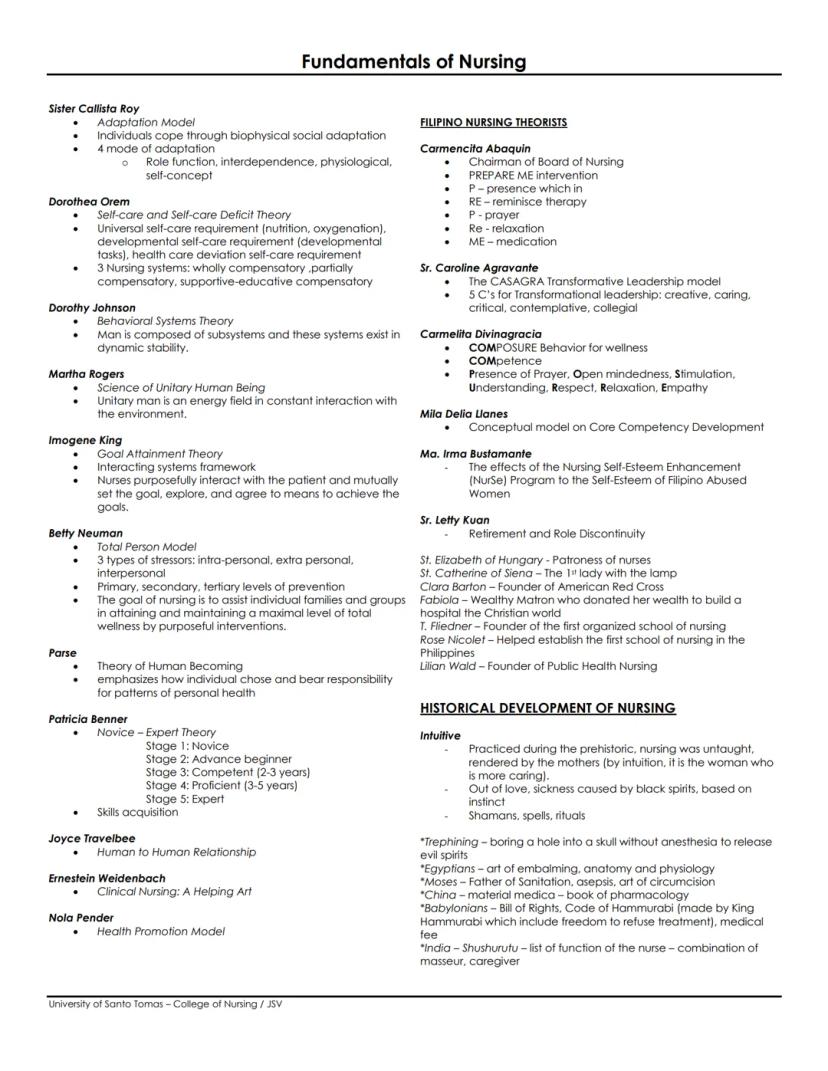
Sister Callista Roy's Adaptation Model shows how people cope through four modes: physiological, self-concept, role function, and interdependence. When patients can't adapt on their own, that's where you step in to help.
Clinical Connection: Roy's model is perfect for understanding how chronic illness affects not just the body, but also self-image, family roles, and relationships.
Dorothea Orem's Self-care Theory is incredibly practical - it identifies three nursing systems: wholly compensatory (you do everything), partially compensatory (you help), and supportive-educative (you teach). This helps you figure out exactly how much assistance each patient needs.
Don't overlook our Filipino nursing theorists! Carmencita Abaquin's PREPARE ME intervention and Sr. Caroline Agravante's transformative leadership model show how Filipino values enhance nursing practice.
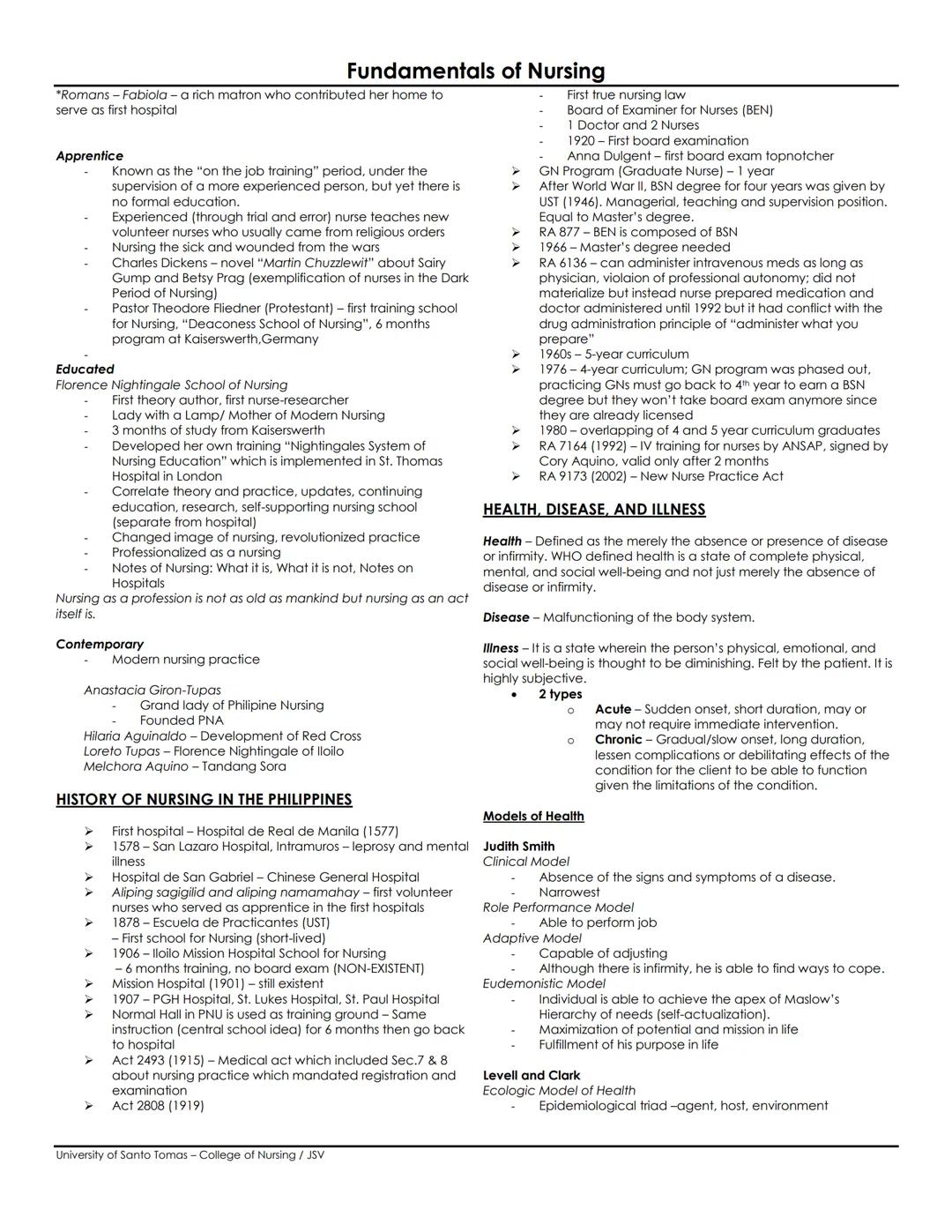
Nursing has come a long way from ancient times! The Intuitive Period was all about instinct - mostly mothers caring for family members using natural remedies and sometimes extreme practices like trephining .
The Apprentice Period introduced "on-the-job training" but still lacked formal education. Think of it like learning to cook by watching your grandmother - lots of trial and error, but no standardized recipes.
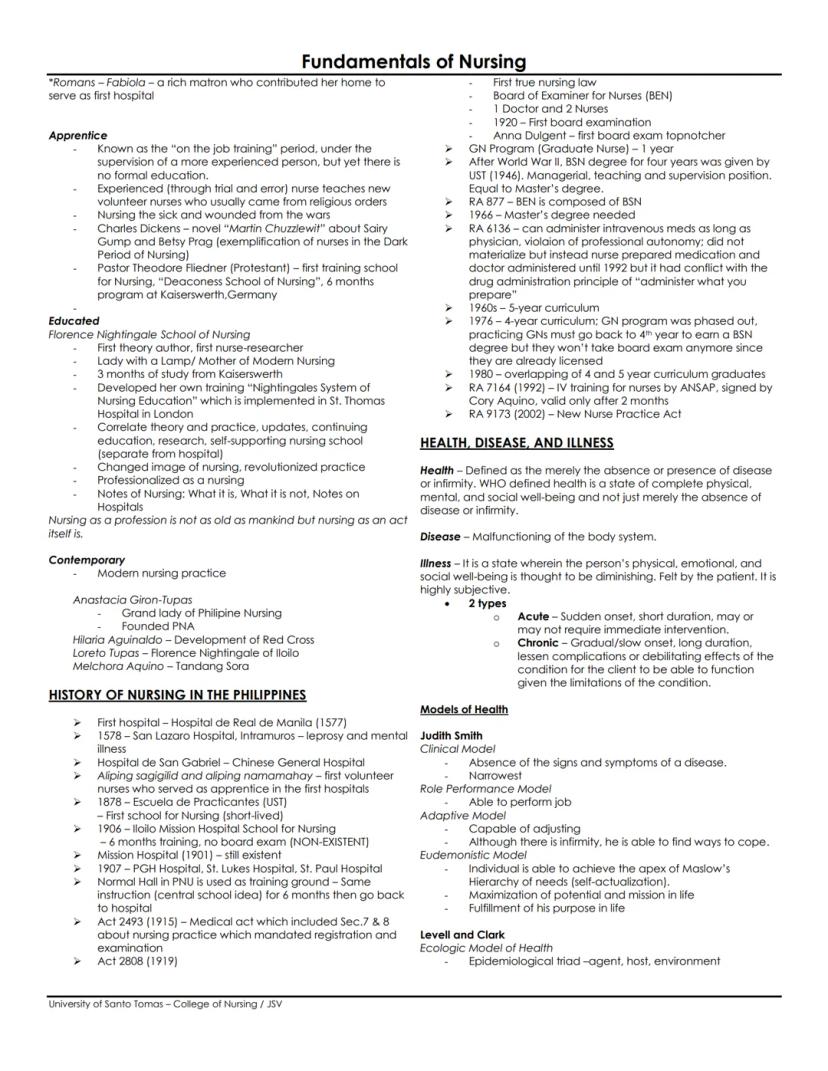
Everything changed with the Educated Period when Florence Nightingale established the first proper nursing school. Her "Nightingale System" emphasized theory combined with practice, continuing education, and research - concepts we still use today.
Historical Highlight: The Philippines got its first nursing school at Iloilo Mission Hospital in 1906, but it only offered 6 months of training with no board exam!
Contemporary nursing began after World War II when UST introduced the 4-year BSN program in 1946. Key legislation like RA 9173 (2002) - our current Nursing Practice Act - continues to shape professional nursing standards.
Understanding this evolution helps you appreciate how far we've come. You're not just following traditions - you're part of a profession that constantly adapts and improves based on evidence and research.
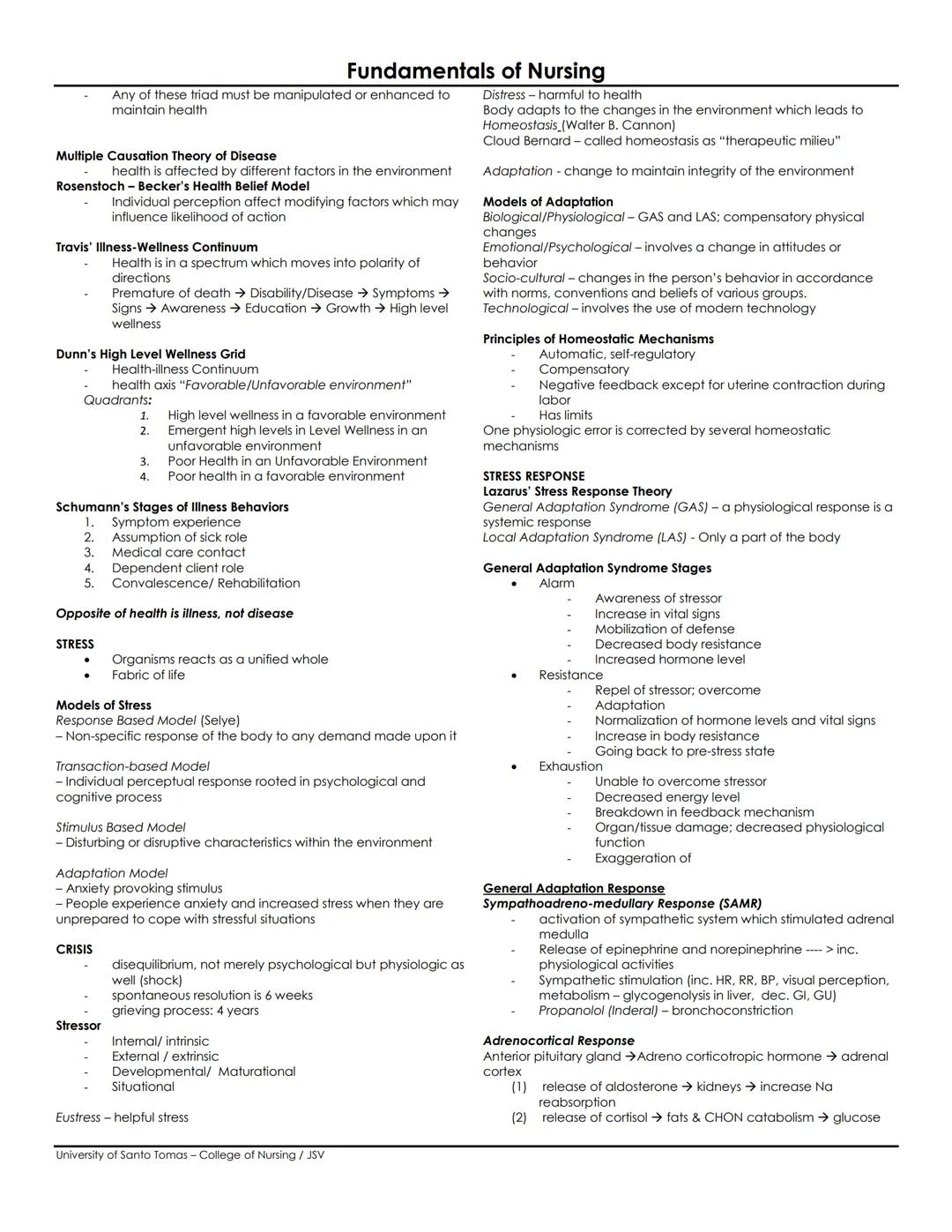
Health isn't just the absence of disease - the WHO definition describes it as complete physical, mental, and social well-being. Understanding different health models helps you assess patients holistically, from the narrow Clinical Model (just looking at symptoms) to the broader Eudemonistic Model (helping people reach their full potential).
Stress is the fabric of life, and your body has amazing ways to handle it. Selye's General Adaptation Syndrome has three stages: Alarm (your body says "Oh no!"), Resistance (fighting back), and Exhaustion (when your body can't cope anymore). Think of it like your phone battery during a busy day.
The Local Adaptation Syndrome focuses on specific body parts. The inflammatory response is your body's security system - it has four stages: vascular changes, cellular response, fluid leakage (exudate), and repair.
Clinical Application: Understanding these stress responses helps you recognize when patients are overwhelmed and need extra support or when their bodies are working hard to heal.
Your body activates two main stress response systems: the sympathetic nervous system and the adrenocortical response (hormone release). These responses increase heart rate, blood pressure, and blood sugar - preparing your body for action.
Crisis intervention is crucial because people can only handle acute stress for about 6 weeks before needing help. Recognizing this helps you provide timely support when patients and families are overwhelmed.
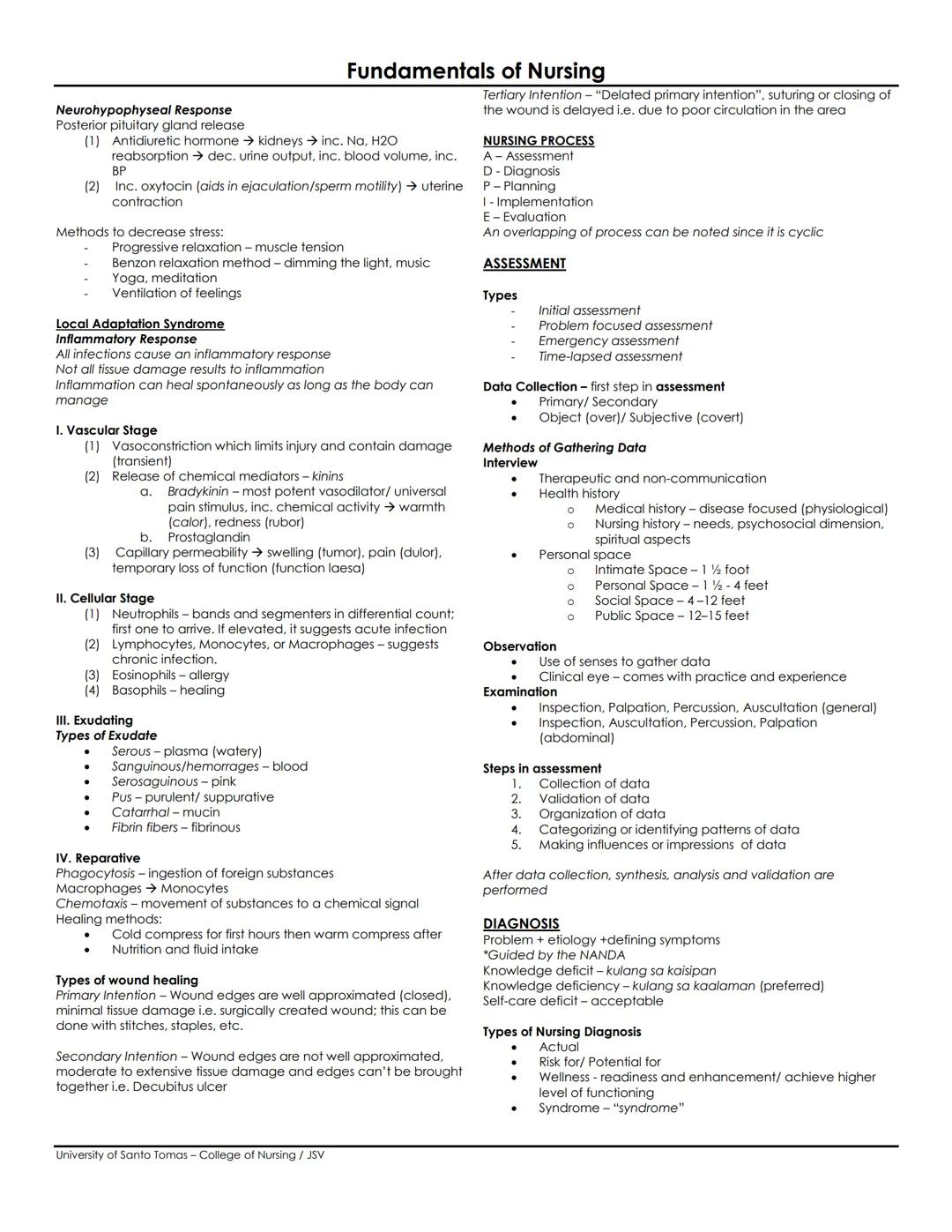
The nursing process - ADPIE (Assessment, Diagnosis, Planning, Implementation, Evaluation) - is your roadmap for providing excellent patient care. It's cyclical and overlapping, meaning you're constantly reassessing and adjusting your approach.
Assessment is like being a detective. You gather data through interviews, observation, and physical examination. Remember your personal space zones: intimate (1½ feet), personal , social , and public . Respecting these boundaries builds trust.
Nursing diagnosis follows NANDA guidelines and has three parts: the problem, what's causing it (etiology), and the signs/symptoms you observe. Prioritize using ABC - Airway, Breathing, Circulation always come first, followed by safety needs, then comfort and developmental needs.
Study Tip: Master Maslow's hierarchy - it's your best friend for prioritizing care and answering NCLEX-style questions correctly.
Planning requires SMART goals: Specific, Measurable, Attainable, Realistic, and Time-bound. Your interventions can be dependent (doctor's orders), independent (nursing actions), or collaborative (team approach).
Documentation is your legal protection and communication tool. Whether you use SOAPIER, Focus charting, or flow sheets, remember: if it's not documented, it didn't happen. Always draw a line through errors and initial them - never use correction fluid.
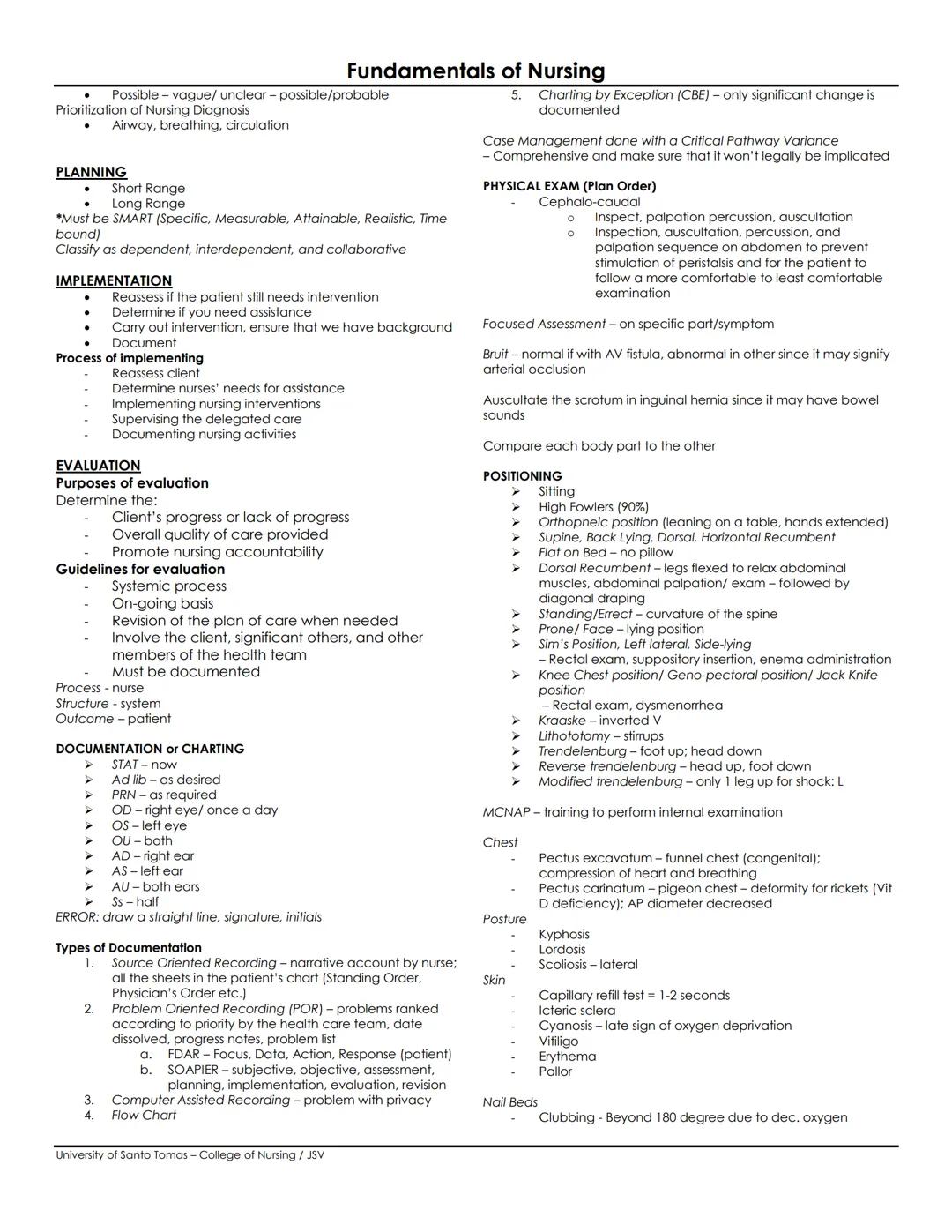
Physical assessment follows a systematic approach - usually head-to-toe using inspection, palpation, percussion, and auscultation. For abdominal exams, change the order to inspection, auscultation, percussion, then palpation to avoid stimulating bowel sounds.
Positioning is both an art and science. High Fowler's position (90°) helps with breathing, while Trendelenburg (head down, feet up) is used for shock. Lithotomy position uses stirrups for gynecological exams, and Sims position is perfect for enemas and rectal medications.
Understanding normal findings helps you spot abnormalities. Capillary refill should be 1-2 seconds, normal bowel sounds occur 5-30 times per minute, and clubbing of nails (beyond 180°) indicates chronic oxygen problems.
Assessment Pearl: Always compare one side of the body to the other - symmetry is usually normal, while differences often indicate problems.
Auscultation techniques require knowing which stethoscope part to use: the diaphragm for high-pitched sounds like lung sounds, and the bell for low-pitched sounds like heart murmurs. Adventitious breath sounds like wheezes (asthma) or crackles (fluid in lungs) tell important stories about your patient's condition.
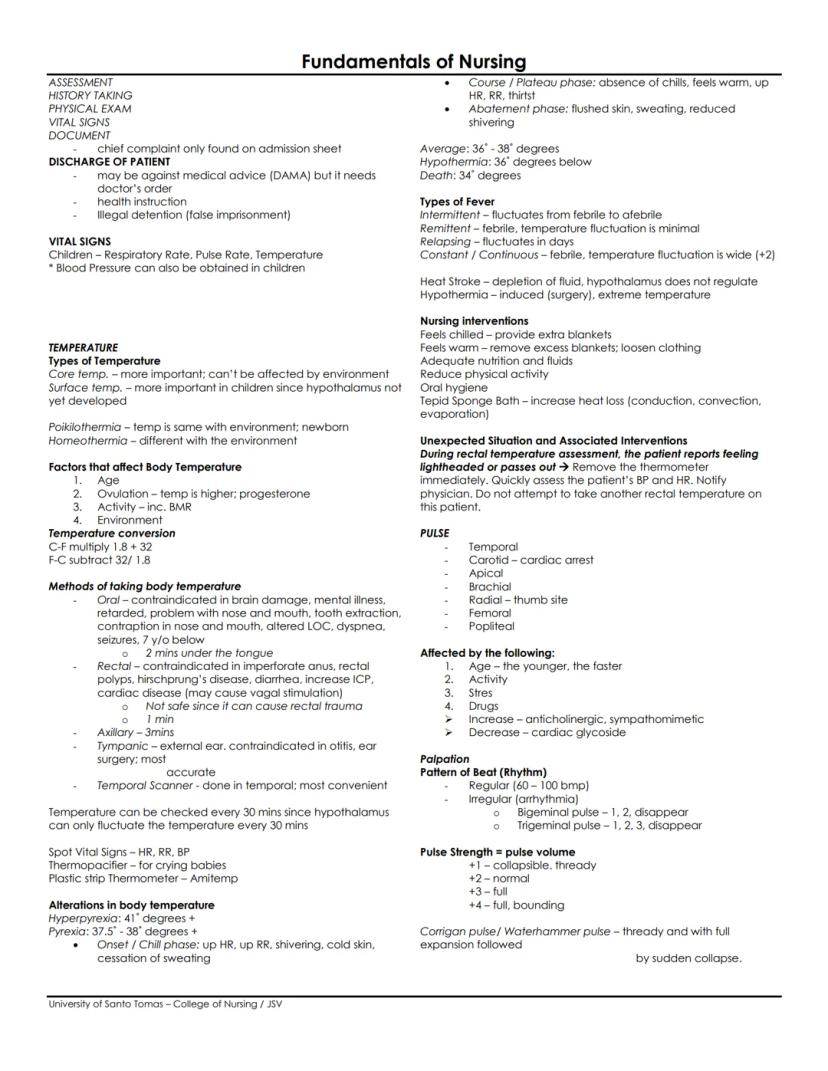
Vital signs are your patient's basic life indicators. Temperature can be taken orally (2 minutes), rectally (1 minute), or axillary (3 minutes), with each method having specific contraindications you need to memorize.
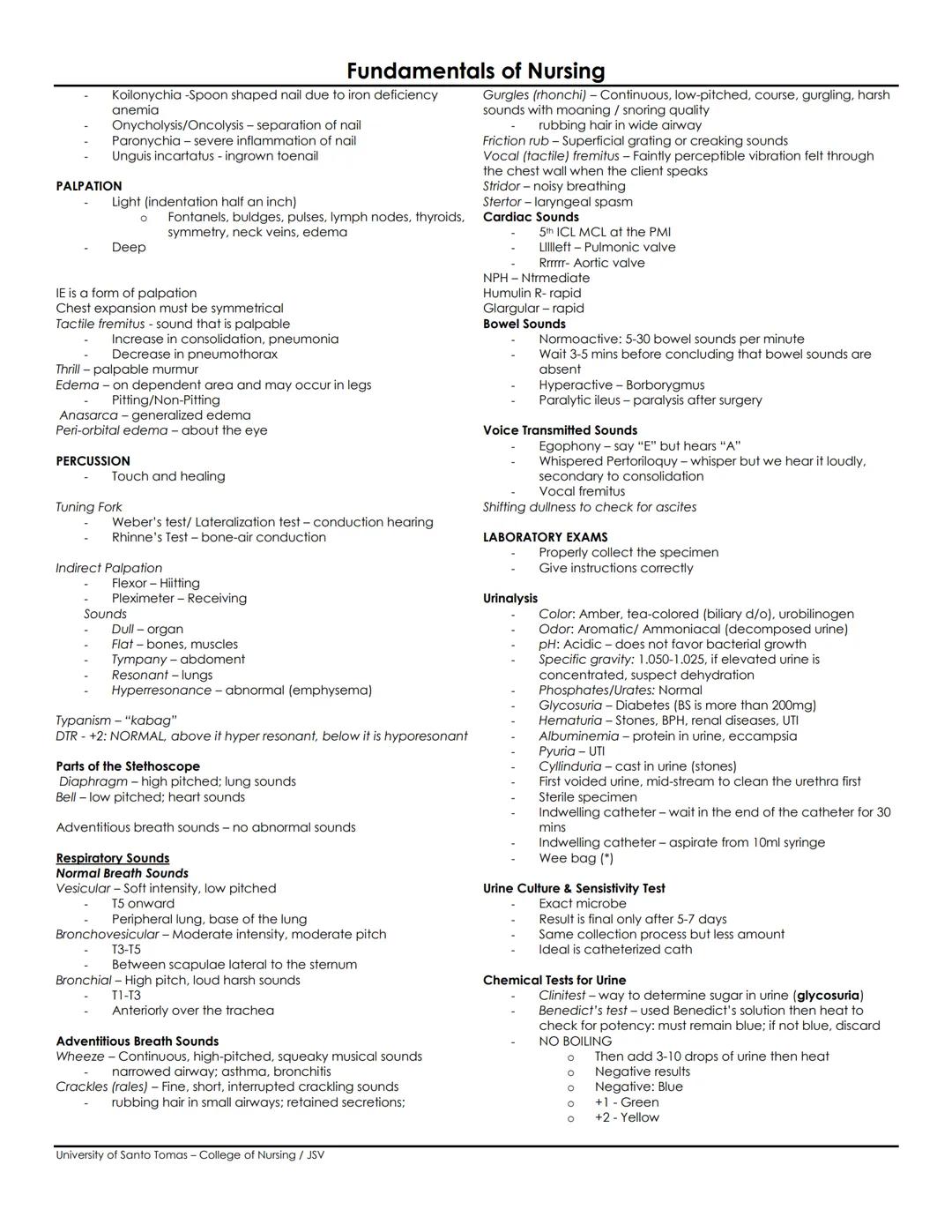
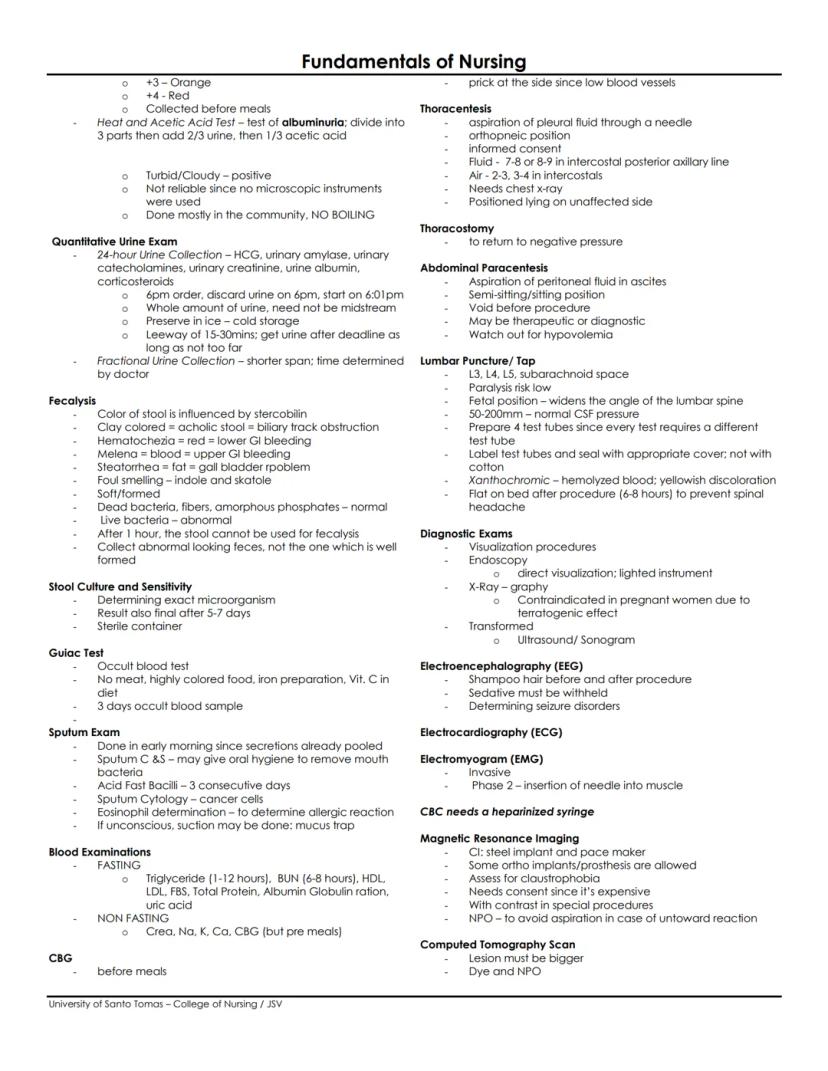
Laboratory tests are your window into what's happening inside your patient's body. Urinalysis tells amazing stories - amber color is normal, but tea-colored urine suggests liver problems. Specific gravity (1.010-1.025) indicates hydration status, while protein in urine might signal kidney problems or pregnancy complications.
Specimen collection technique matters enormously. For urine culture, you need a sterile mid-stream sample, while 24-hour urine collection starts by discarding the first specimen, then collecting everything for exactly 24 hours. Keep specimens on ice and be precise with timing.
Blood tests have different fasting requirements: FBS and lipid profiles need 8-12 hours of fasting, while creatinine and electrolytes don't require fasting. Always verify requirements to avoid having to repeat uncomfortable procedures.
Lab Wisdom: When in doubt about specimen collection, ask! It's better to clarify procedures than to have patients repeat uncomfortable tests because of collection errors.
Lumbar puncture involves accessing spinal fluid between L3-L5 vertebrae with the patient in fetal position. Normal CSF pressure is 50-200mm, and patients must lie flat for 6-8 hours afterward to prevent spinal headaches.
Understanding stool tests helps you assess GI health. Melena (black, tarry stools) indicates upper GI bleeding, while hematochezia (bright red) suggests lower GI bleeding. The guaiac test detects hidden blood but requires dietary restrictions for accurate results.
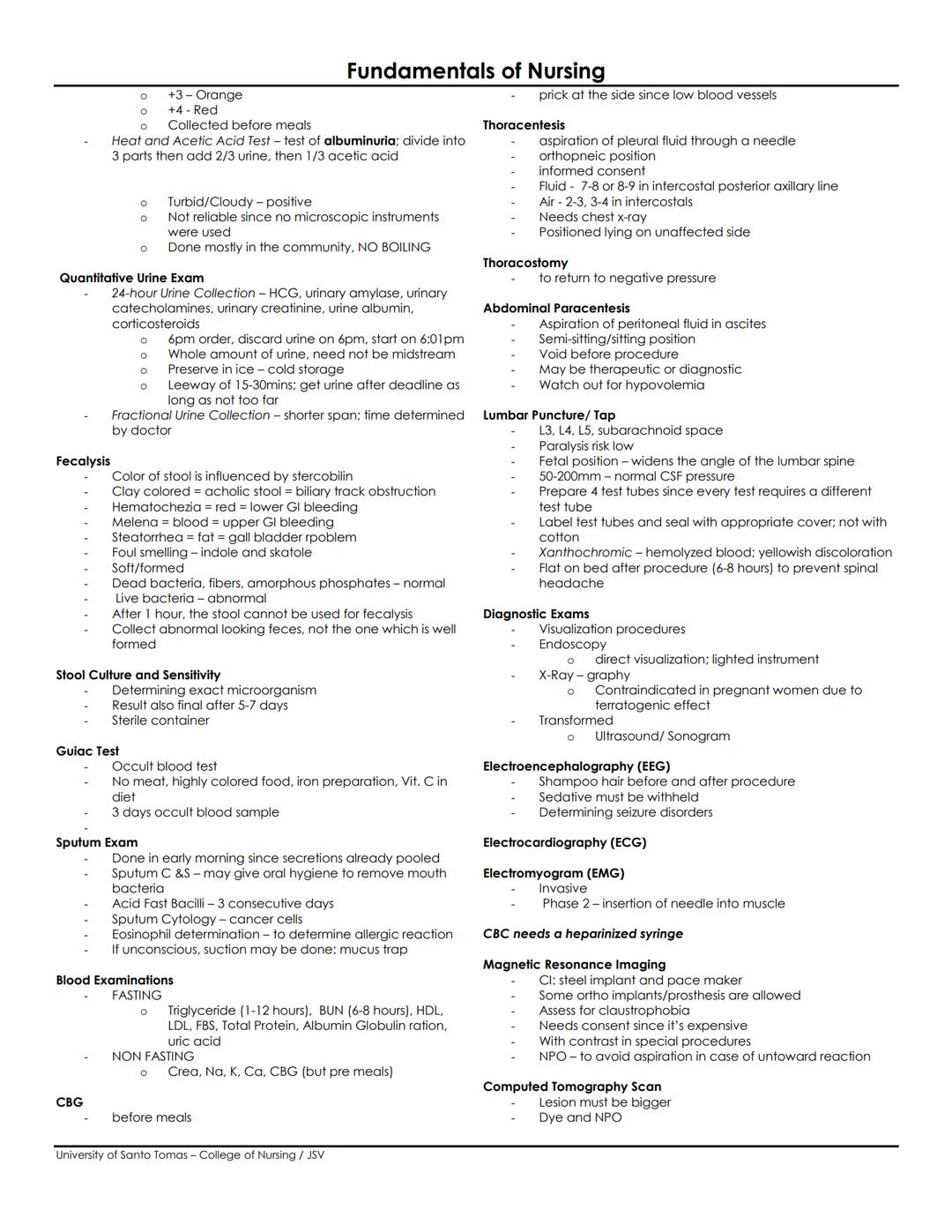
Modern diagnostics give us incredible insight into patient health. CT scans and MRI provide detailed internal images, but remember that MRI is contraindicated with steel implants and pacemakers due to powerful magnets. Always check for metal before scheduling.
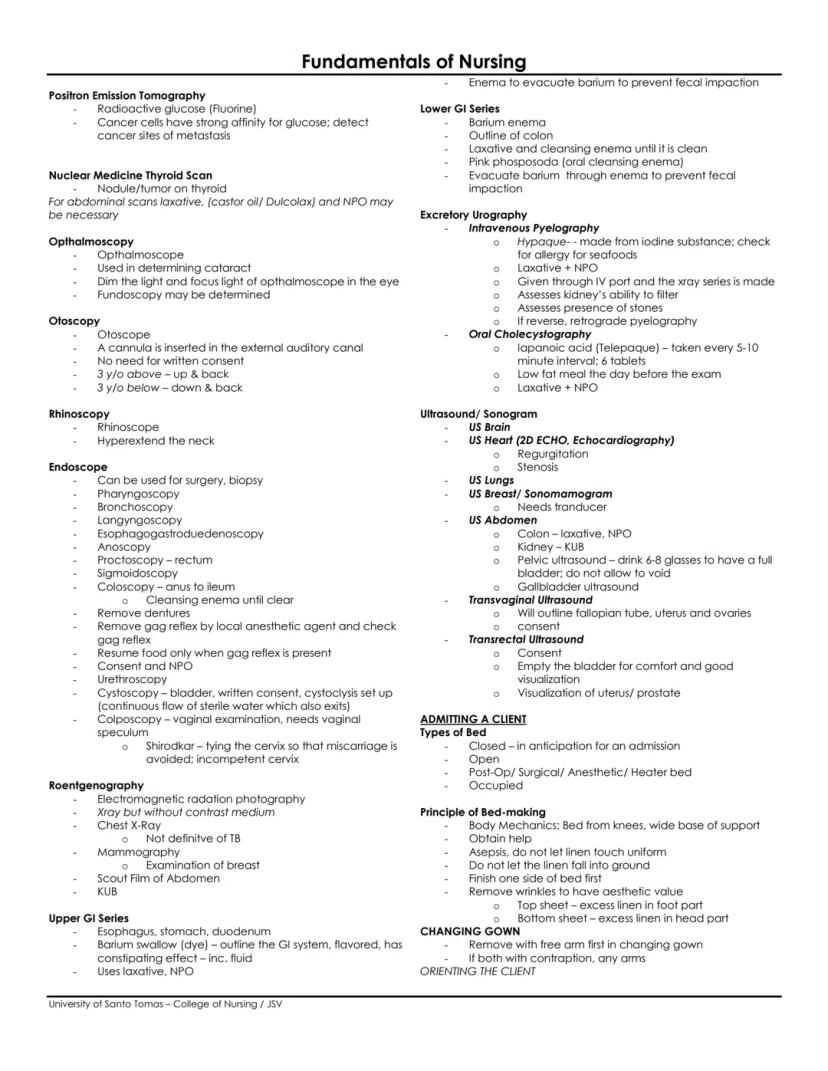
Endoscopic procedures allow direct visualization and can be both diagnostic and therapeutic. Before upper GI endoscopy, patients need to fast and remove dentures. After the procedure, check gag reflex before allowing food or drinks to prevent aspiration.
Contrast studies like IV pyelography use iodine-based dyes, so always assess for seafood allergies. These procedures require laxatives and NPO status to ensure clear visualization. Barium studies need post-procedure enemas to prevent fecal impaction.
Safety Alert: Always verify allergies before contrast procedures - anaphylactic reactions can be life-threatening but are preventable with proper screening.
Nuclear medicine procedures use radioactive substances to detect abnormalities. PET scans use radioactive glucose to identify cancer metastasis since cancer cells consume more glucose than normal cells.
Ultrasound procedures are non-invasive but require specific preparation. Pelvic ultrasounds need a full bladder for better visualization, while gallbladder ultrasounds require fasting. Transvaginal and transrectal ultrasounds need informed consent due to their invasive nature.
Remember that thoracentesis requires orthopneic positioning and informed consent, with chest X-rays needed afterward to check for complications like pneumothorax.
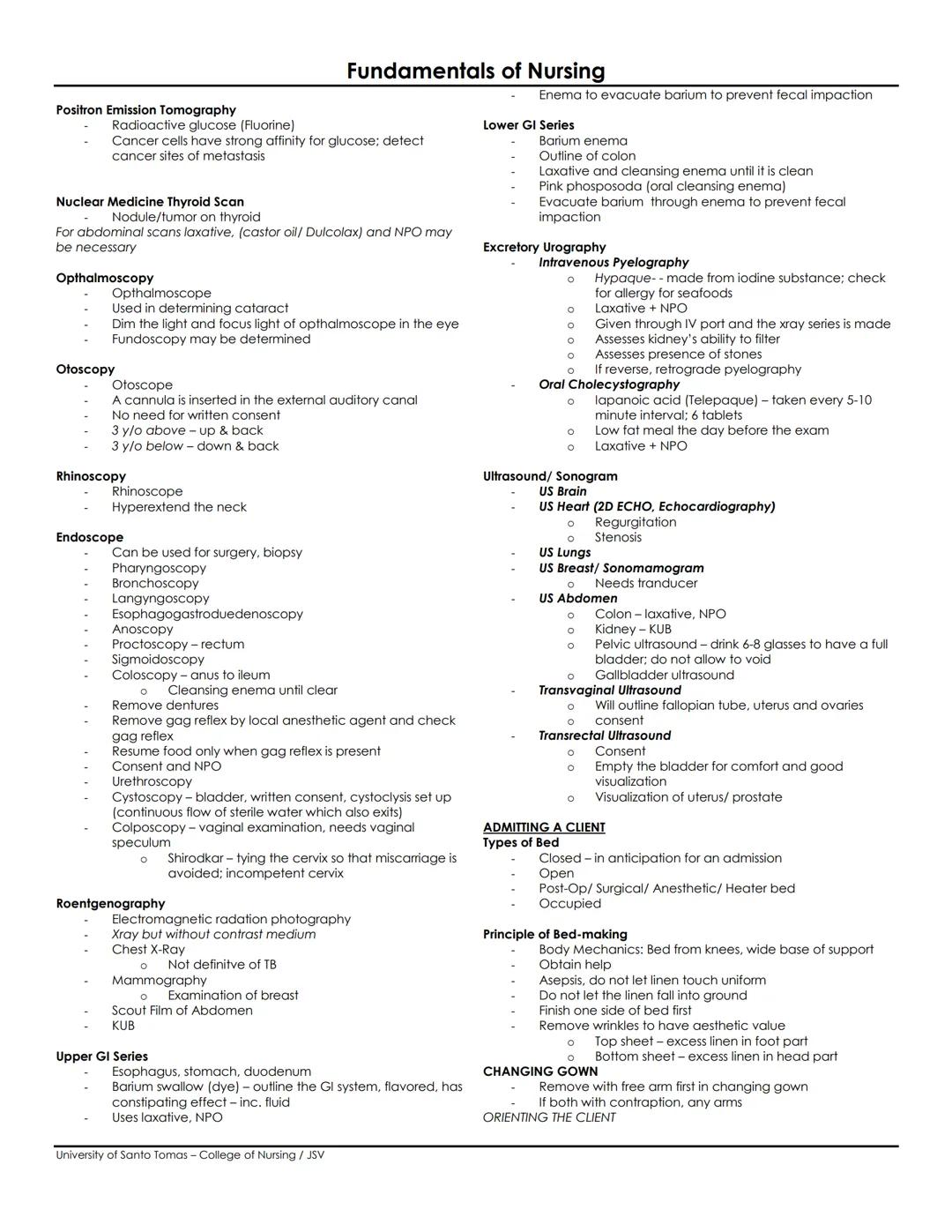
Admitting patients properly sets the tone for their entire hospital experience. Learn different bed types: closed beds await new admissions, open beds are ready for current patients, and post-op beds have special positioning for recovering surgical patients.
Bed-making principles involve proper body mechanics (raise bed to waist height), aseptic technique (don't let linens touch your uniform), and efficiency (complete one side before moving to the other). These basics prevent back injury and maintain infection control.
Gown changes require technique - always remove the free arm first, then carefully maneuver around IV lines or other medical devices. When both arms have equipment, choose either arm but work slowly and carefully.
Comfort Tip: Small details like wrinkle-free sheets and proper room orientation make huge differences in patient satisfaction and healing.
Patient orientation includes explaining room features, call systems, visiting hours, and hospital routines. This reduces anxiety and helps patients feel more in control of their environment.
Discharge planning starts on admission day. Whether it's a normal discharge or against medical advice (DAMA), proper documentation and patient education are essential. Remember that keeping patients against their will constitutes false imprisonment.
Understanding temperature variations helps you interpret findings correctly. Poikilothermia in newborns means their temperature matches the environment, while homeothermia develops as the hypothalamus matures.
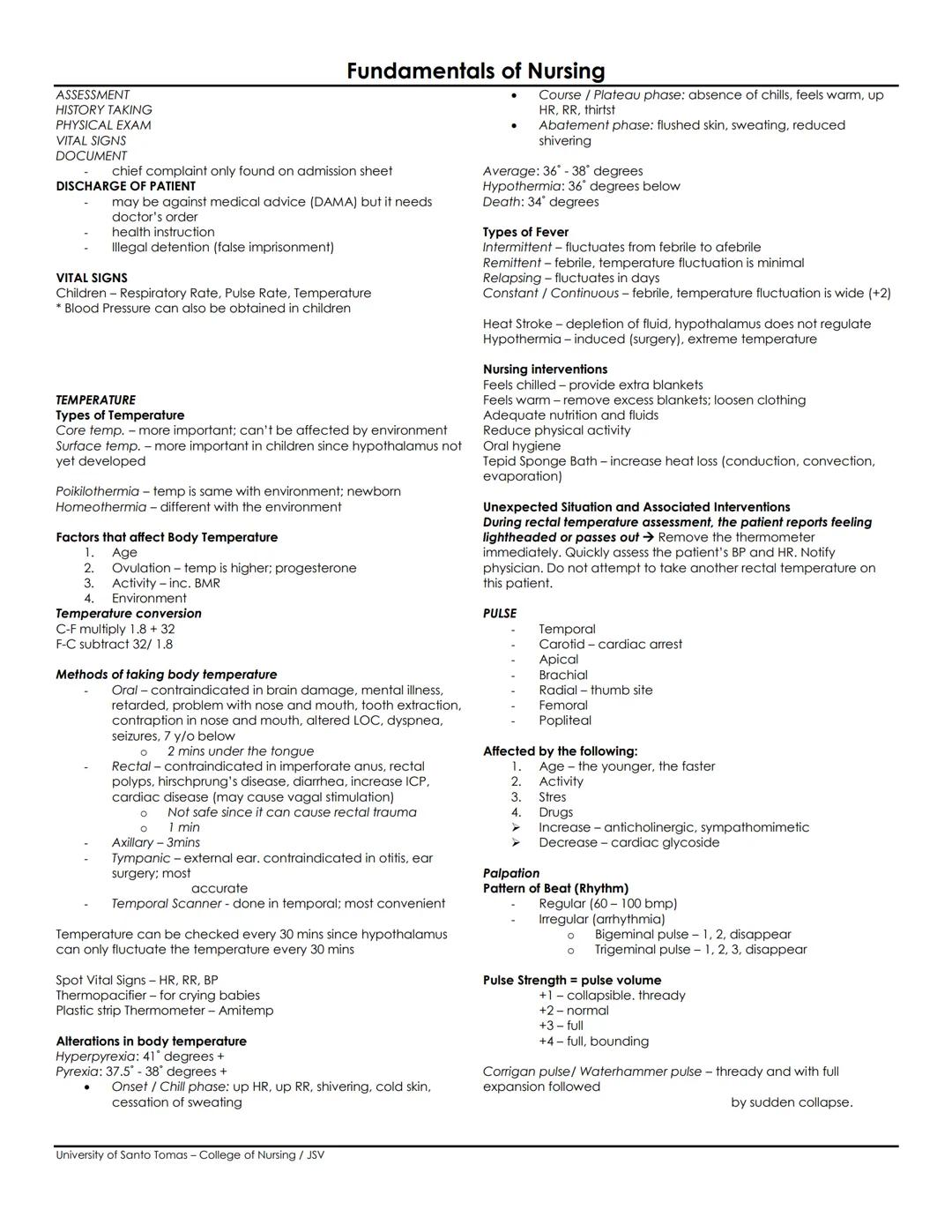
Temperature taking requires understanding contraindications for each method. Oral temperatures are contraindicated in confused patients, those with mouth trauma, or children under 7. Rectal temperatures are dangerous with rectal problems, increased ICP, or cardiac conditions due to vagal stimulation risks.
Fever patterns tell clinical stories: intermittent fever fluctuates between normal and elevated, remittent fever stays elevated with minimal fluctuation, and relapsing fever occurs in cycles over days. Understanding these patterns helps with diagnosis and treatment planning.
Pulse assessment involves more than just counting. Check rhythm (regular vs. irregular), strength , and rate . Pulse deficit occurs when apical rate exceeds radial rate, indicating cardiac problems.
Vital Signs Mastery: Always assess pulse for a full minute when irregular - this ensures accuracy and helps you detect dangerous arrhythmias.
Age affects vital signs significantly - children have faster respiratory and pulse rates because their metabolic needs are higher. Drugs also impact vitals: cardiac glycosides slow heart rate, while anticholinergics increase it.
Blood pressure assessment requires proper cuff size and positioning. Orthostatic vital signs (lying, sitting, standing) help detect volume depletion or cardiac problems. A drop of 20 mmHg systolic or 10 mmHg diastolic with position changes indicates orthostatic hypotension.
Remember that hypothermia below 34°C can be fatal, while hyperpyrexia above 41°C requires immediate intervention. Your assessment skills literally save lives.
Our AI companion is specifically built for the needs of students. Based on the millions of content pieces we have on the platform we can provide truly meaningful and relevant answers to students. But its not only about answers, the companion is even more about guiding students through their daily learning challenges, with personalised study plans, quizzes or content pieces in the chat and 100% personalisation based on the students skills and developments.
You can download the app in the Google Play Store and in the Apple App Store.
That's right! Enjoy free access to study content, connect with fellow students, and get instant help – all at your fingertips.
App Store
Google Play
The app is very easy to use and well designed. I have found everything I was looking for so far and have been able to learn a lot from the presentations! I will definitely use the app for a class assignment! And of course it also helps a lot as an inspiration.
Stefan S
iOS user
This app is really great. There are so many study notes and help [...]. My problem subject is French, for example, and the app has so many options for help. Thanks to this app, I have improved my French. I would recommend it to anyone.
Samantha Klich
Android user
Wow, I am really amazed. I just tried the app because I've seen it advertised many times and was absolutely stunned. This app is THE HELP you want for school and above all, it offers so many things, such as workouts and fact sheets, which have been VERY helpful to me personally.
Anna
iOS user
I think it’s very much worth it and you’ll end up using it a lot once you get the hang of it and even after looking at others notes you can still ask your Artificial intelligence buddy the question and ask to simplify it if you still don’t get it!!! In the end I think it’s worth it 😊👍 ⚠️Also DID I MENTION ITS FREEE YOU DON’T HAVE TO PAY FOR ANYTHING AND STILL GET YOUR GRADES IN PERFECTLY❗️❗️⚠️
Thomas R
iOS user
Knowunity is the BEST app I’ve used in a minute. This is not an ai review or anything this is genuinely coming from a 7th grade student (I know 2011 im young) but dude this app is a 10/10 i have maintained a 3.8 gpa and have plenty of time for gaming. I love it and my mom is just happy I got good grades
Brad T
Android user
Not only did it help me find the answer but it also showed me alternative ways to solve it. I was horrible in math and science but now I have an a in both subjects. Thanks for the help🤍🤍
David K
iOS user
The app's just great! All I have to do is enter the topic in the search bar and I get the response real fast. I don't have to watch 10 YouTube videos to understand something, so I'm saving my time. Highly recommended!
Sudenaz Ocak
Android user
In school I was really bad at maths but thanks to the app, I am doing better now. I am so grateful that you made the app.
Greenlight Bonnie
Android user
I found this app a couple years ago and it has only gotten better since then. I really love it because it can help with written questions and photo questions. Also, it can find study guides that other people have made as well as flashcard sets and practice tests. The free version is also amazing for students who might not be able to afford it. Would 100% recommend
Aubrey
iOS user
Best app if you're in Highschool or Junior high. I have been using this app for 2 school years and it's the best, it's good if you don't have anyone to help you with school work.😋🩷🎀
Marco B
iOS user
THE QUIZES AND FLASHCARDS ARE SO USEFUL AND I LOVE THE SCHOOLGPT. IT ALSO IS LITREALLY LIKE CHATGPT BUT SMARTER!! HELPED ME WITH MY MASCARA PROBLEMS TOO!! AS WELL AS MY REAL SUBJECTS ! DUHHH 😍😁😲🤑💗✨🎀😮
Elisha
iOS user
This app is phenomenal down to the correct info and the various topics you can study! I greatly recommend it for people who struggle with procrastination and those who need homework help. It has been perfectly accurate for world 1 history as far as I’ve seen! Geometry too!
Paul T
iOS user
The app is very easy to use and well designed. I have found everything I was looking for so far and have been able to learn a lot from the presentations! I will definitely use the app for a class assignment! And of course it also helps a lot as an inspiration.
Stefan S
iOS user
This app is really great. There are so many study notes and help [...]. My problem subject is French, for example, and the app has so many options for help. Thanks to this app, I have improved my French. I would recommend it to anyone.
Samantha Klich
Android user
Wow, I am really amazed. I just tried the app because I've seen it advertised many times and was absolutely stunned. This app is THE HELP you want for school and above all, it offers so many things, such as workouts and fact sheets, which have been VERY helpful to me personally.
Anna
iOS user
I think it’s very much worth it and you’ll end up using it a lot once you get the hang of it and even after looking at others notes you can still ask your Artificial intelligence buddy the question and ask to simplify it if you still don’t get it!!! In the end I think it’s worth it 😊👍 ⚠️Also DID I MENTION ITS FREEE YOU DON’T HAVE TO PAY FOR ANYTHING AND STILL GET YOUR GRADES IN PERFECTLY❗️❗️⚠️
Thomas R
iOS user
Knowunity is the BEST app I’ve used in a minute. This is not an ai review or anything this is genuinely coming from a 7th grade student (I know 2011 im young) but dude this app is a 10/10 i have maintained a 3.8 gpa and have plenty of time for gaming. I love it and my mom is just happy I got good grades
Brad T
Android user
Not only did it help me find the answer but it also showed me alternative ways to solve it. I was horrible in math and science but now I have an a in both subjects. Thanks for the help🤍🤍
David K
iOS user
The app's just great! All I have to do is enter the topic in the search bar and I get the response real fast. I don't have to watch 10 YouTube videos to understand something, so I'm saving my time. Highly recommended!
Sudenaz Ocak
Android user
In school I was really bad at maths but thanks to the app, I am doing better now. I am so grateful that you made the app.
Greenlight Bonnie
Android user
I found this app a couple years ago and it has only gotten better since then. I really love it because it can help with written questions and photo questions. Also, it can find study guides that other people have made as well as flashcard sets and practice tests. The free version is also amazing for students who might not be able to afford it. Would 100% recommend
Aubrey
iOS user
Best app if you're in Highschool or Junior high. I have been using this app for 2 school years and it's the best, it's good if you don't have anyone to help you with school work.😋🩷🎀
Marco B
iOS user
THE QUIZES AND FLASHCARDS ARE SO USEFUL AND I LOVE THE SCHOOLGPT. IT ALSO IS LITREALLY LIKE CHATGPT BUT SMARTER!! HELPED ME WITH MY MASCARA PROBLEMS TOO!! AS WELL AS MY REAL SUBJECTS ! DUHHH 😍😁😲🤑💗✨🎀😮
Elisha
iOS user
This app is phenomenal down to the correct info and the various topics you can study! I greatly recommend it for people who struggle with procrastination and those who need homework help. It has been perfectly accurate for world 1 history as far as I’ve seen! Geometry too!
Paul T
iOS user
sheshe
@sheshe_
Your journey into the world of nursing starts here with understanding its solid theoretical foundations. Think of nursing theory as your GPS - it guides every decision you make as a future healthcare professional and helps you provide the best... Show more
Access to all documents
Improve your grades
Join milions of students
By signing up you accept Terms of Service and Privacy Policy
Ever wondered what makes nursing more than just following doctor's orders? Nursing theory gives you the framework to think critically and provide truly personalized care. A theory is simply a set of concepts that explains why things happen the way they do in healthcare.
The four metaparadigms of nursing are your foundation: Person , Health, Environment, and Nursing itself. Understanding your patient as a whole person - not just their illness - is what makes your care individualized and effective.
Here's something cool: humans are open systems constantly interacting with their environment. We're made up of interconnected parts (like biological and psychological systems) that work together. You can't just treat someone's broken arm without considering their fears, family situation, or cultural background.
Key Insight: Remember that you're caring for a complete person, not just treating symptoms. This holistic approach is what sets great nurses apart.
Prevention has three levels you'll use throughout your career: Primary (keeping people healthy), Secondary (treating illness), and Tertiary (helping people recover and adapt). Think of Maslow's hierarchy as your priority guide - physiological needs like breathing always come first, but don't forget about safety, love, and self-esteem needs too.
Access to all documents
Improve your grades
Join milions of students
By signing up you accept Terms of Service and Privacy Policy
Meet the legends who shaped modern nursing! Florence Nightingale started it all with her Environmental Theory - she proved that clean, well-ventilated spaces help patients heal faster. Her work during the Crimean War earned her the title "Lady with the Lamp."
Hildegard Peplau focused on the nurse-patient relationship, breaking it into four phases: Orientation (getting to know each other), Identification, Exploitation (using the nurse's help), and Resolution. This psychodynamic approach reminds you that building trust is crucial.
Sister Callista Roy's Adaptation Model shows how people cope through four modes: physiological, self-concept, role function, and interdependence. When patients can't adapt on their own, that's where you step in to help.
Clinical Connection: Roy's model is perfect for understanding how chronic illness affects not just the body, but also self-image, family roles, and relationships.
Dorothea Orem's Self-care Theory is incredibly practical - it identifies three nursing systems: wholly compensatory (you do everything), partially compensatory (you help), and supportive-educative (you teach). This helps you figure out exactly how much assistance each patient needs.
Don't overlook our Filipino nursing theorists! Carmencita Abaquin's PREPARE ME intervention and Sr. Caroline Agravante's transformative leadership model show how Filipino values enhance nursing practice.
Access to all documents
Improve your grades
Join milions of students
By signing up you accept Terms of Service and Privacy Policy
Nursing has come a long way from ancient times! The Intuitive Period was all about instinct - mostly mothers caring for family members using natural remedies and sometimes extreme practices like trephining .
The Apprentice Period introduced "on-the-job training" but still lacked formal education. Think of it like learning to cook by watching your grandmother - lots of trial and error, but no standardized recipes.
Everything changed with the Educated Period when Florence Nightingale established the first proper nursing school. Her "Nightingale System" emphasized theory combined with practice, continuing education, and research - concepts we still use today.
Historical Highlight: The Philippines got its first nursing school at Iloilo Mission Hospital in 1906, but it only offered 6 months of training with no board exam!
Contemporary nursing began after World War II when UST introduced the 4-year BSN program in 1946. Key legislation like RA 9173 (2002) - our current Nursing Practice Act - continues to shape professional nursing standards.
Understanding this evolution helps you appreciate how far we've come. You're not just following traditions - you're part of a profession that constantly adapts and improves based on evidence and research.
Access to all documents
Improve your grades
Join milions of students
By signing up you accept Terms of Service and Privacy Policy
Health isn't just the absence of disease - the WHO definition describes it as complete physical, mental, and social well-being. Understanding different health models helps you assess patients holistically, from the narrow Clinical Model (just looking at symptoms) to the broader Eudemonistic Model (helping people reach their full potential).
Stress is the fabric of life, and your body has amazing ways to handle it. Selye's General Adaptation Syndrome has three stages: Alarm (your body says "Oh no!"), Resistance (fighting back), and Exhaustion (when your body can't cope anymore). Think of it like your phone battery during a busy day.
The Local Adaptation Syndrome focuses on specific body parts. The inflammatory response is your body's security system - it has four stages: vascular changes, cellular response, fluid leakage (exudate), and repair.
Clinical Application: Understanding these stress responses helps you recognize when patients are overwhelmed and need extra support or when their bodies are working hard to heal.
Your body activates two main stress response systems: the sympathetic nervous system and the adrenocortical response (hormone release). These responses increase heart rate, blood pressure, and blood sugar - preparing your body for action.
Crisis intervention is crucial because people can only handle acute stress for about 6 weeks before needing help. Recognizing this helps you provide timely support when patients and families are overwhelmed.
Access to all documents
Improve your grades
Join milions of students
By signing up you accept Terms of Service and Privacy Policy
The nursing process - ADPIE (Assessment, Diagnosis, Planning, Implementation, Evaluation) - is your roadmap for providing excellent patient care. It's cyclical and overlapping, meaning you're constantly reassessing and adjusting your approach.
Assessment is like being a detective. You gather data through interviews, observation, and physical examination. Remember your personal space zones: intimate (1½ feet), personal , social , and public . Respecting these boundaries builds trust.
Nursing diagnosis follows NANDA guidelines and has three parts: the problem, what's causing it (etiology), and the signs/symptoms you observe. Prioritize using ABC - Airway, Breathing, Circulation always come first, followed by safety needs, then comfort and developmental needs.
Study Tip: Master Maslow's hierarchy - it's your best friend for prioritizing care and answering NCLEX-style questions correctly.
Planning requires SMART goals: Specific, Measurable, Attainable, Realistic, and Time-bound. Your interventions can be dependent (doctor's orders), independent (nursing actions), or collaborative (team approach).
Documentation is your legal protection and communication tool. Whether you use SOAPIER, Focus charting, or flow sheets, remember: if it's not documented, it didn't happen. Always draw a line through errors and initial them - never use correction fluid.
Access to all documents
Improve your grades
Join milions of students
By signing up you accept Terms of Service and Privacy Policy
Physical assessment follows a systematic approach - usually head-to-toe using inspection, palpation, percussion, and auscultation. For abdominal exams, change the order to inspection, auscultation, percussion, then palpation to avoid stimulating bowel sounds.
Positioning is both an art and science. High Fowler's position (90°) helps with breathing, while Trendelenburg (head down, feet up) is used for shock. Lithotomy position uses stirrups for gynecological exams, and Sims position is perfect for enemas and rectal medications.
Understanding normal findings helps you spot abnormalities. Capillary refill should be 1-2 seconds, normal bowel sounds occur 5-30 times per minute, and clubbing of nails (beyond 180°) indicates chronic oxygen problems.
Assessment Pearl: Always compare one side of the body to the other - symmetry is usually normal, while differences often indicate problems.
Auscultation techniques require knowing which stethoscope part to use: the diaphragm for high-pitched sounds like lung sounds, and the bell for low-pitched sounds like heart murmurs. Adventitious breath sounds like wheezes (asthma) or crackles (fluid in lungs) tell important stories about your patient's condition.
Vital signs are your patient's basic life indicators. Temperature can be taken orally (2 minutes), rectally (1 minute), or axillary (3 minutes), with each method having specific contraindications you need to memorize.
Access to all documents
Improve your grades
Join milions of students
By signing up you accept Terms of Service and Privacy Policy
Laboratory tests are your window into what's happening inside your patient's body. Urinalysis tells amazing stories - amber color is normal, but tea-colored urine suggests liver problems. Specific gravity (1.010-1.025) indicates hydration status, while protein in urine might signal kidney problems or pregnancy complications.
Specimen collection technique matters enormously. For urine culture, you need a sterile mid-stream sample, while 24-hour urine collection starts by discarding the first specimen, then collecting everything for exactly 24 hours. Keep specimens on ice and be precise with timing.
Blood tests have different fasting requirements: FBS and lipid profiles need 8-12 hours of fasting, while creatinine and electrolytes don't require fasting. Always verify requirements to avoid having to repeat uncomfortable procedures.
Lab Wisdom: When in doubt about specimen collection, ask! It's better to clarify procedures than to have patients repeat uncomfortable tests because of collection errors.
Lumbar puncture involves accessing spinal fluid between L3-L5 vertebrae with the patient in fetal position. Normal CSF pressure is 50-200mm, and patients must lie flat for 6-8 hours afterward to prevent spinal headaches.
Understanding stool tests helps you assess GI health. Melena (black, tarry stools) indicates upper GI bleeding, while hematochezia (bright red) suggests lower GI bleeding. The guaiac test detects hidden blood but requires dietary restrictions for accurate results.
Access to all documents
Improve your grades
Join milions of students
By signing up you accept Terms of Service and Privacy Policy
Modern diagnostics give us incredible insight into patient health. CT scans and MRI provide detailed internal images, but remember that MRI is contraindicated with steel implants and pacemakers due to powerful magnets. Always check for metal before scheduling.
Endoscopic procedures allow direct visualization and can be both diagnostic and therapeutic. Before upper GI endoscopy, patients need to fast and remove dentures. After the procedure, check gag reflex before allowing food or drinks to prevent aspiration.
Contrast studies like IV pyelography use iodine-based dyes, so always assess for seafood allergies. These procedures require laxatives and NPO status to ensure clear visualization. Barium studies need post-procedure enemas to prevent fecal impaction.
Safety Alert: Always verify allergies before contrast procedures - anaphylactic reactions can be life-threatening but are preventable with proper screening.
Nuclear medicine procedures use radioactive substances to detect abnormalities. PET scans use radioactive glucose to identify cancer metastasis since cancer cells consume more glucose than normal cells.
Ultrasound procedures are non-invasive but require specific preparation. Pelvic ultrasounds need a full bladder for better visualization, while gallbladder ultrasounds require fasting. Transvaginal and transrectal ultrasounds need informed consent due to their invasive nature.
Remember that thoracentesis requires orthopneic positioning and informed consent, with chest X-rays needed afterward to check for complications like pneumothorax.
Access to all documents
Improve your grades
Join milions of students
By signing up you accept Terms of Service and Privacy Policy
Admitting patients properly sets the tone for their entire hospital experience. Learn different bed types: closed beds await new admissions, open beds are ready for current patients, and post-op beds have special positioning for recovering surgical patients.
Bed-making principles involve proper body mechanics (raise bed to waist height), aseptic technique (don't let linens touch your uniform), and efficiency (complete one side before moving to the other). These basics prevent back injury and maintain infection control.
Gown changes require technique - always remove the free arm first, then carefully maneuver around IV lines or other medical devices. When both arms have equipment, choose either arm but work slowly and carefully.
Comfort Tip: Small details like wrinkle-free sheets and proper room orientation make huge differences in patient satisfaction and healing.
Patient orientation includes explaining room features, call systems, visiting hours, and hospital routines. This reduces anxiety and helps patients feel more in control of their environment.
Discharge planning starts on admission day. Whether it's a normal discharge or against medical advice (DAMA), proper documentation and patient education are essential. Remember that keeping patients against their will constitutes false imprisonment.
Understanding temperature variations helps you interpret findings correctly. Poikilothermia in newborns means their temperature matches the environment, while homeothermia develops as the hypothalamus matures.
Access to all documents
Improve your grades
Join milions of students
By signing up you accept Terms of Service and Privacy Policy
Temperature taking requires understanding contraindications for each method. Oral temperatures are contraindicated in confused patients, those with mouth trauma, or children under 7. Rectal temperatures are dangerous with rectal problems, increased ICP, or cardiac conditions due to vagal stimulation risks.
Fever patterns tell clinical stories: intermittent fever fluctuates between normal and elevated, remittent fever stays elevated with minimal fluctuation, and relapsing fever occurs in cycles over days. Understanding these patterns helps with diagnosis and treatment planning.
Pulse assessment involves more than just counting. Check rhythm (regular vs. irregular), strength , and rate . Pulse deficit occurs when apical rate exceeds radial rate, indicating cardiac problems.
Vital Signs Mastery: Always assess pulse for a full minute when irregular - this ensures accuracy and helps you detect dangerous arrhythmias.
Age affects vital signs significantly - children have faster respiratory and pulse rates because their metabolic needs are higher. Drugs also impact vitals: cardiac glycosides slow heart rate, while anticholinergics increase it.
Blood pressure assessment requires proper cuff size and positioning. Orthostatic vital signs (lying, sitting, standing) help detect volume depletion or cardiac problems. A drop of 20 mmHg systolic or 10 mmHg diastolic with position changes indicates orthostatic hypotension.
Remember that hypothermia below 34°C can be fatal, while hyperpyrexia above 41°C requires immediate intervention. Your assessment skills literally save lives.
Our AI companion is specifically built for the needs of students. Based on the millions of content pieces we have on the platform we can provide truly meaningful and relevant answers to students. But its not only about answers, the companion is even more about guiding students through their daily learning challenges, with personalised study plans, quizzes or content pieces in the chat and 100% personalisation based on the students skills and developments.
You can download the app in the Google Play Store and in the Apple App Store.
That's right! Enjoy free access to study content, connect with fellow students, and get instant help – all at your fingertips.
64
Smart Tools NEW
Transform this note into: ✓ 50+ Practice Questions ✓ Interactive Flashcards ✓ Full Mock Exam ✓ Essay Outlines
App Store
Google Play
The app is very easy to use and well designed. I have found everything I was looking for so far and have been able to learn a lot from the presentations! I will definitely use the app for a class assignment! And of course it also helps a lot as an inspiration.
Stefan S
iOS user
This app is really great. There are so many study notes and help [...]. My problem subject is French, for example, and the app has so many options for help. Thanks to this app, I have improved my French. I would recommend it to anyone.
Samantha Klich
Android user
Wow, I am really amazed. I just tried the app because I've seen it advertised many times and was absolutely stunned. This app is THE HELP you want for school and above all, it offers so many things, such as workouts and fact sheets, which have been VERY helpful to me personally.
Anna
iOS user
I think it’s very much worth it and you’ll end up using it a lot once you get the hang of it and even after looking at others notes you can still ask your Artificial intelligence buddy the question and ask to simplify it if you still don’t get it!!! In the end I think it’s worth it 😊👍 ⚠️Also DID I MENTION ITS FREEE YOU DON’T HAVE TO PAY FOR ANYTHING AND STILL GET YOUR GRADES IN PERFECTLY❗️❗️⚠️
Thomas R
iOS user
Knowunity is the BEST app I’ve used in a minute. This is not an ai review or anything this is genuinely coming from a 7th grade student (I know 2011 im young) but dude this app is a 10/10 i have maintained a 3.8 gpa and have plenty of time for gaming. I love it and my mom is just happy I got good grades
Brad T
Android user
Not only did it help me find the answer but it also showed me alternative ways to solve it. I was horrible in math and science but now I have an a in both subjects. Thanks for the help🤍🤍
David K
iOS user
The app's just great! All I have to do is enter the topic in the search bar and I get the response real fast. I don't have to watch 10 YouTube videos to understand something, so I'm saving my time. Highly recommended!
Sudenaz Ocak
Android user
In school I was really bad at maths but thanks to the app, I am doing better now. I am so grateful that you made the app.
Greenlight Bonnie
Android user
I found this app a couple years ago and it has only gotten better since then. I really love it because it can help with written questions and photo questions. Also, it can find study guides that other people have made as well as flashcard sets and practice tests. The free version is also amazing for students who might not be able to afford it. Would 100% recommend
Aubrey
iOS user
Best app if you're in Highschool or Junior high. I have been using this app for 2 school years and it's the best, it's good if you don't have anyone to help you with school work.😋🩷🎀
Marco B
iOS user
THE QUIZES AND FLASHCARDS ARE SO USEFUL AND I LOVE THE SCHOOLGPT. IT ALSO IS LITREALLY LIKE CHATGPT BUT SMARTER!! HELPED ME WITH MY MASCARA PROBLEMS TOO!! AS WELL AS MY REAL SUBJECTS ! DUHHH 😍😁😲🤑💗✨🎀😮
Elisha
iOS user
This app is phenomenal down to the correct info and the various topics you can study! I greatly recommend it for people who struggle with procrastination and those who need homework help. It has been perfectly accurate for world 1 history as far as I’ve seen! Geometry too!
Paul T
iOS user
The app is very easy to use and well designed. I have found everything I was looking for so far and have been able to learn a lot from the presentations! I will definitely use the app for a class assignment! And of course it also helps a lot as an inspiration.
Stefan S
iOS user
This app is really great. There are so many study notes and help [...]. My problem subject is French, for example, and the app has so many options for help. Thanks to this app, I have improved my French. I would recommend it to anyone.
Samantha Klich
Android user
Wow, I am really amazed. I just tried the app because I've seen it advertised many times and was absolutely stunned. This app is THE HELP you want for school and above all, it offers so many things, such as workouts and fact sheets, which have been VERY helpful to me personally.
Anna
iOS user
I think it’s very much worth it and you’ll end up using it a lot once you get the hang of it and even after looking at others notes you can still ask your Artificial intelligence buddy the question and ask to simplify it if you still don’t get it!!! In the end I think it’s worth it 😊👍 ⚠️Also DID I MENTION ITS FREEE YOU DON’T HAVE TO PAY FOR ANYTHING AND STILL GET YOUR GRADES IN PERFECTLY❗️❗️⚠️
Thomas R
iOS user
Knowunity is the BEST app I’ve used in a minute. This is not an ai review or anything this is genuinely coming from a 7th grade student (I know 2011 im young) but dude this app is a 10/10 i have maintained a 3.8 gpa and have plenty of time for gaming. I love it and my mom is just happy I got good grades
Brad T
Android user
Not only did it help me find the answer but it also showed me alternative ways to solve it. I was horrible in math and science but now I have an a in both subjects. Thanks for the help🤍🤍
David K
iOS user
The app's just great! All I have to do is enter the topic in the search bar and I get the response real fast. I don't have to watch 10 YouTube videos to understand something, so I'm saving my time. Highly recommended!
Sudenaz Ocak
Android user
In school I was really bad at maths but thanks to the app, I am doing better now. I am so grateful that you made the app.
Greenlight Bonnie
Android user
I found this app a couple years ago and it has only gotten better since then. I really love it because it can help with written questions and photo questions. Also, it can find study guides that other people have made as well as flashcard sets and practice tests. The free version is also amazing for students who might not be able to afford it. Would 100% recommend
Aubrey
iOS user
Best app if you're in Highschool or Junior high. I have been using this app for 2 school years and it's the best, it's good if you don't have anyone to help you with school work.😋🩷🎀
Marco B
iOS user
THE QUIZES AND FLASHCARDS ARE SO USEFUL AND I LOVE THE SCHOOLGPT. IT ALSO IS LITREALLY LIKE CHATGPT BUT SMARTER!! HELPED ME WITH MY MASCARA PROBLEMS TOO!! AS WELL AS MY REAL SUBJECTS ! DUHHH 😍😁😲🤑💗✨🎀😮
Elisha
iOS user
This app is phenomenal down to the correct info and the various topics you can study! I greatly recommend it for people who struggle with procrastination and those who need homework help. It has been perfectly accurate for world 1 history as far as I’ve seen! Geometry too!
Paul T
iOS user