
Heuristics are mental shortcuts that help us make decisions quickly...
 Psychology12 views·Updated Jul 2, 2026·11 pages
Understanding Heuristics: Meaning and Examples

1 / 10
1
of 10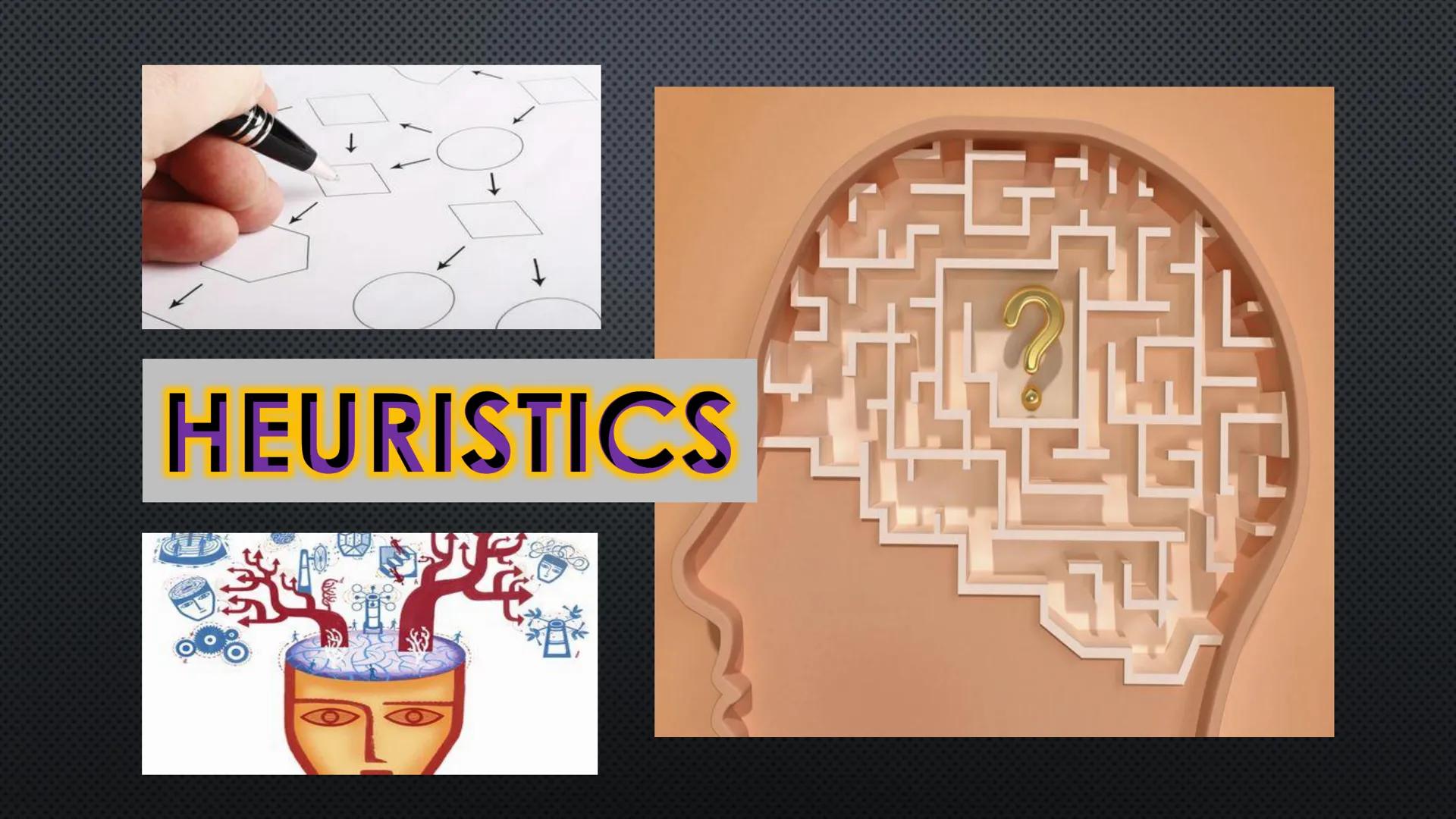
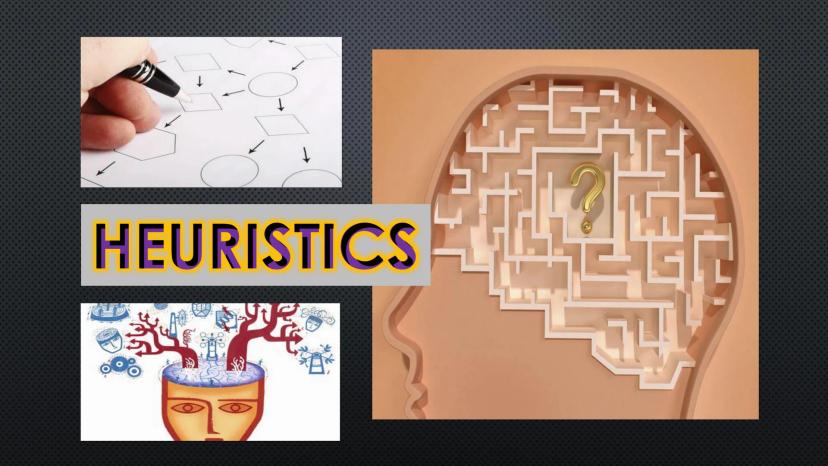
Heuristics
Heuristics are mental shortcuts our brains use to solve problems and make decisions efficiently. Think of them as your brain's way of creating "rules of thumb" that help you navigate life without having to deeply analyze every single choice you face.
These mental shortcuts are incredibly useful in daily life, helping you process information quickly in a world that constantly bombards you with choices. Without heuristics, you'd be paralyzed by analysis, unable to decide even simple things like what to wear or eat.
While heuristics keep us functioning efficiently, they're not perfect. Sometimes these mental shortcuts can lead to mistakes or biases in our thinking when we rely on them too heavily.
Quick Tip: Next time you make a quick decision, try to notice what mental shortcut you used. Being aware of your heuristics is the first step to using them wisely!
2
of 10
Introduction to Heuristics
A heuristic is a mental shortcut that allows you to solve problems and make judgments quickly and efficiently. These rule-of-thumb strategies reduce decision-making time so you can function without constantly stopping to analyze your next move.
Imagine having to thoroughly think through every single decision in your day - from what cereal to eat to which route to take to school. You'd never get anything done! Heuristics help prevent this decision paralysis.
While heuristics are incredibly helpful tools that our brains use all the time, they can sometimes lead us astray. When we rely too heavily on these shortcuts, we can develop cognitive biases that affect how accurately we perceive situations.
Brain Boost: Heuristics aren't just shortcuts—they're survival tools! Your brain developed these strategies to help you process information efficiently in a complex world.
3
of 10
Why Do We Use Heuristics?
Heuristics are crucial for both problem-solving and decision-making in your everyday life. You naturally turn to these mental shortcuts when you need quick solutions without spending hours analyzing options.
Your brain has limits! Despite how amazing your brain is, it simply can't process all the information in your environment. If you tried to analyze every aspect of every situation, you'd be completely overwhelmed and unable to function.
These mental shortcuts allow you to navigate a world filled with endless choices. From choosing what to wear to deciding which math problem approach to use, heuristics help you move through your day efficiently without mental exhaustion.
Fun Fact: You likely use hundreds of different heuristics throughout your day without even realizing it. They're working behind the scenes of your thinking all the time!
4
of 10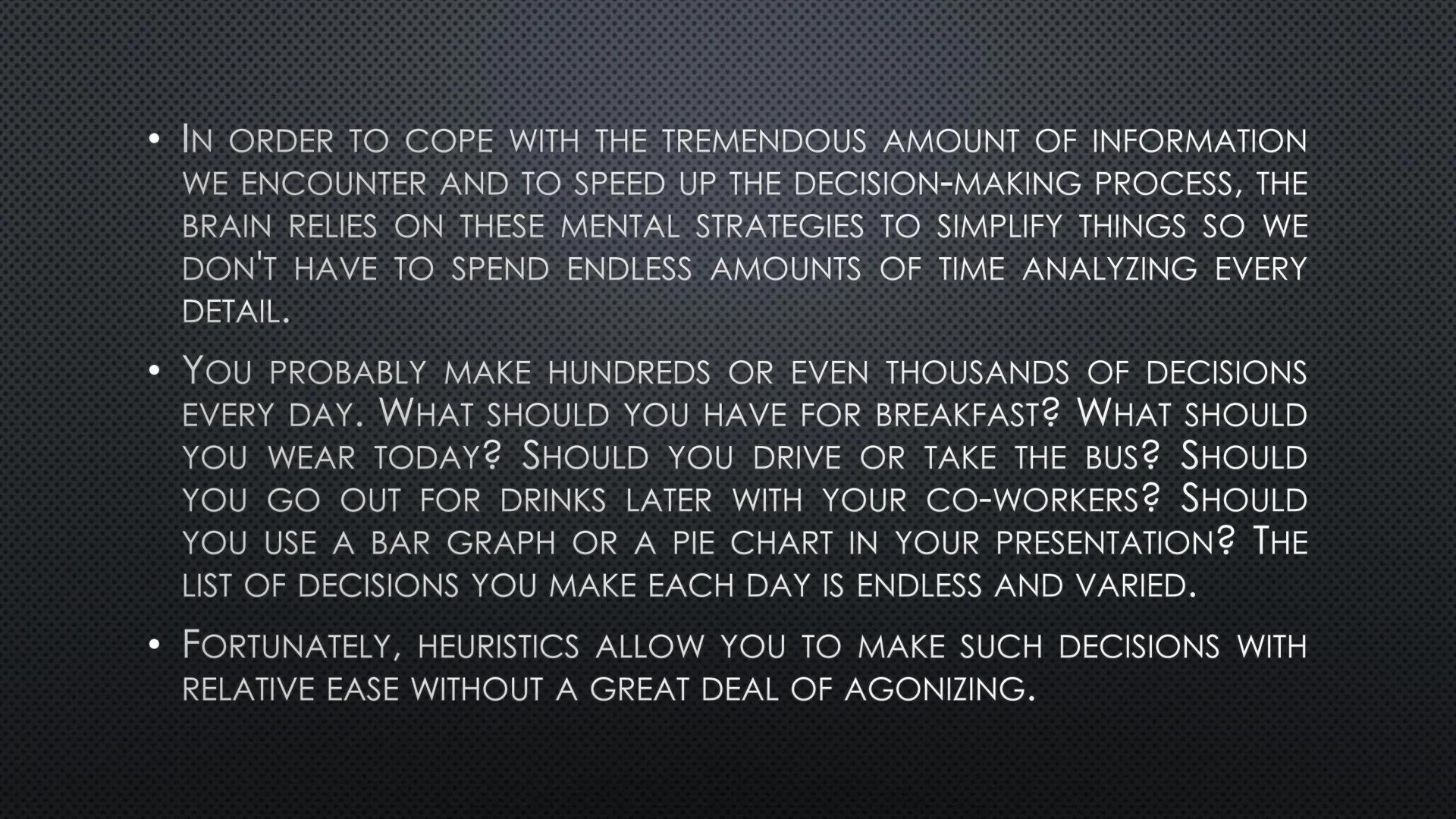
Heuristics in Daily Life
Your brain relies on heuristics to handle the tremendous amount of information you encounter daily. These mental shortcuts simplify complex situations so you don't spend endless time analyzing every detail of every decision.
Think about how many decisions you make every single day—what to eat for breakfast, what to wear, whether to join a study group, which route to take to school. The list is practically endless! Without heuristics, you'd be paralyzed by these choices.
Heuristics allow you to make these decisions quickly and move on with your day. They free up mental energy for more important tasks, like learning new concepts in class or solving complex problems on your math homework.
Reality Check: Count how many decisions you make in just one hour. You'll be surprised how many choices your brain processes using these mental shortcuts!
5
of 10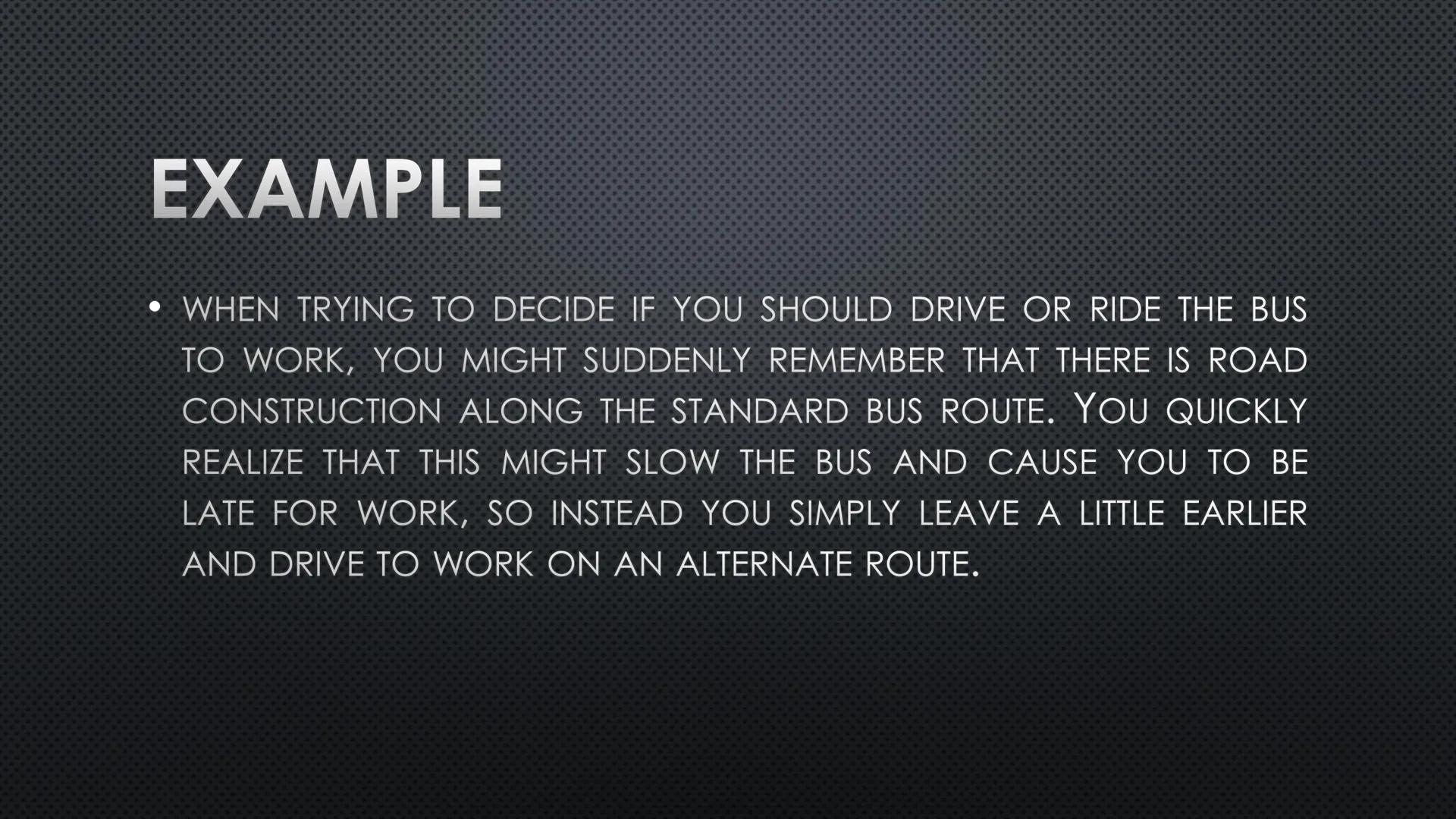
Heuristics Example
Imagine you're deciding whether to take the bus or get a ride to school. You suddenly remember hearing that road construction started along the bus route. Without analyzing traffic patterns or calculating exact times, your brain quickly concludes this might make you late.
Using this mental shortcut, you decide to leave a little earlier and ask for a ride using an alternate route. You didn't need to research traffic statistics or call the bus company—your brain used available information to make a quick, reasonable decision.
This is a perfect example of how heuristics work in everyday life. You used past experiences and readily available information to make a practical decision without extensive analysis.
Try This: Notice when you use quick thinking shortcuts during your day. Being aware of your own heuristics helps you understand how your mind works!
6
of 10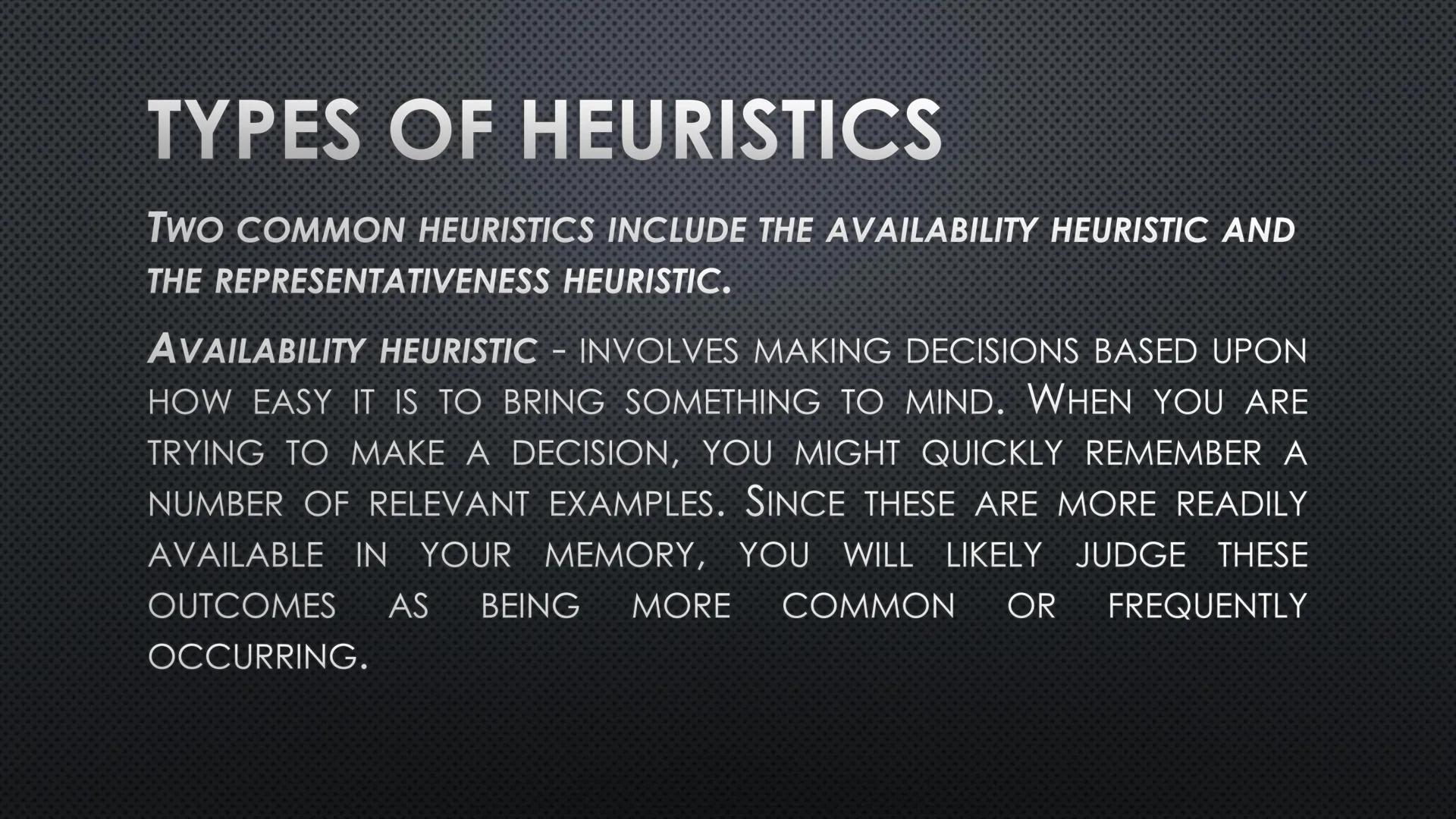
Types of Heuristics
Two common types of mental shortcuts you use regularly are the availability heuristic and the representativeness heuristic. Understanding these can help you recognize when you're using them.
The availability heuristic involves making decisions based on how easily examples come to mind. If you can quickly recall instances of something happening, you'll likely judge it as more common than it actually is. For example, if you easily remember news stories about shark attacks, you might overestimate how dangerous swimming in the ocean really is.
The representativeness heuristic involves comparing situations to your mental prototypes or stereotypes. When meeting someone new, you might compare them to categories of people you already know and make assumptions based on those similarities.
Think Deeper: Which heuristic do you think influences your decisions more often? The availability heuristic or the representativeness heuristic?
7
of 10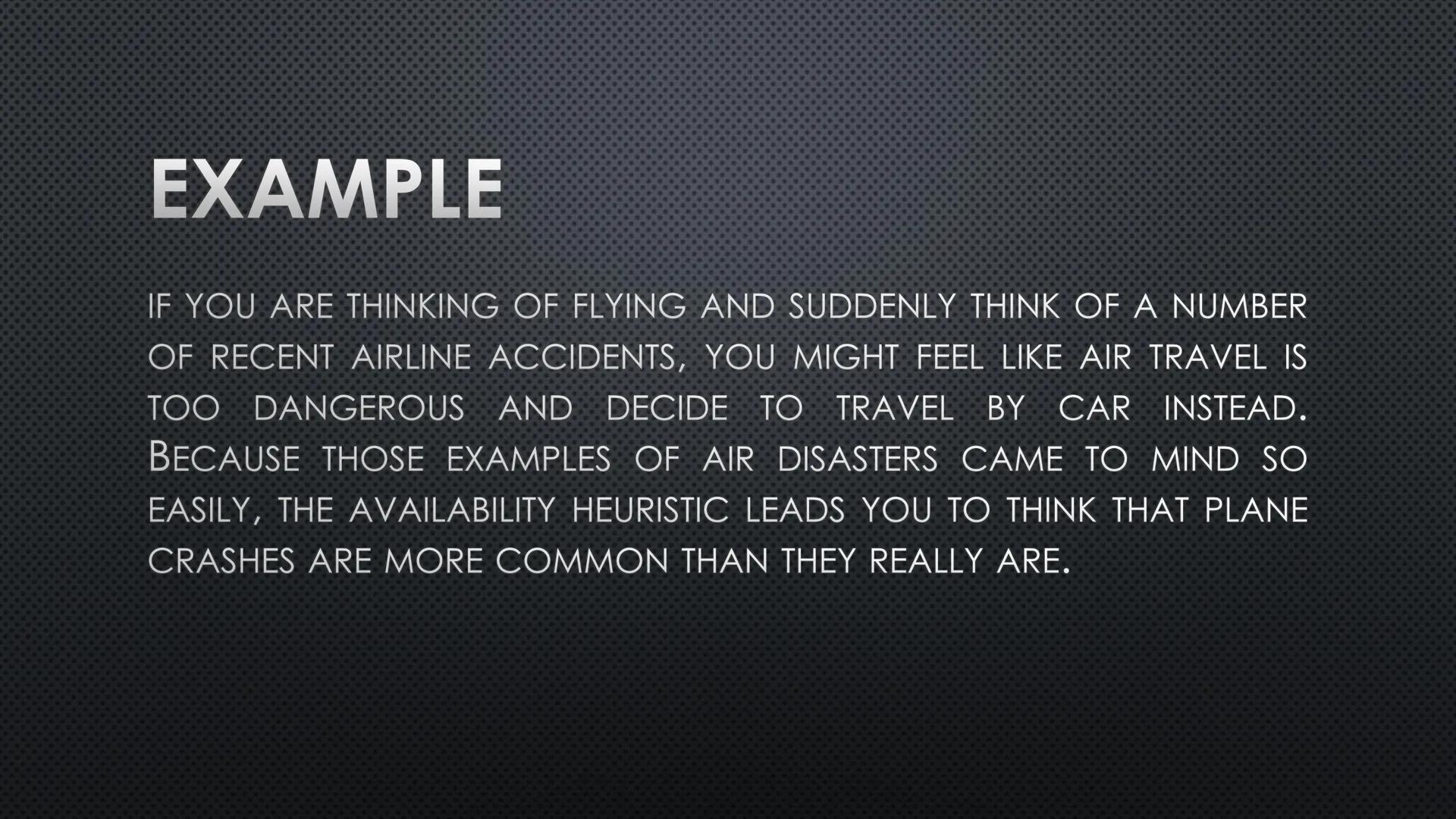
Availability Heuristic Example
Imagine you're planning a trip and considering whether to fly or drive. You suddenly recall several recent news stories about airplane accidents. Even though flying is statistically much safer than driving, those vivid examples of crashes easily come to mind.
Because those airplane disaster examples are so readily available in your memory, the availability heuristic kicks in. You might decide driving is safer, even though statistics show the opposite is true.
This demonstrates how the availability heuristic can lead to incorrect judgments. We tend to believe events are more common when we can easily recall examples, regardless of actual statistical frequency.
Reality Check: Next time you feel afraid of something rare (like shark attacks or plane crashes), ask yourself if you're being influenced by memorable news stories rather than actual statistics.
8
of 10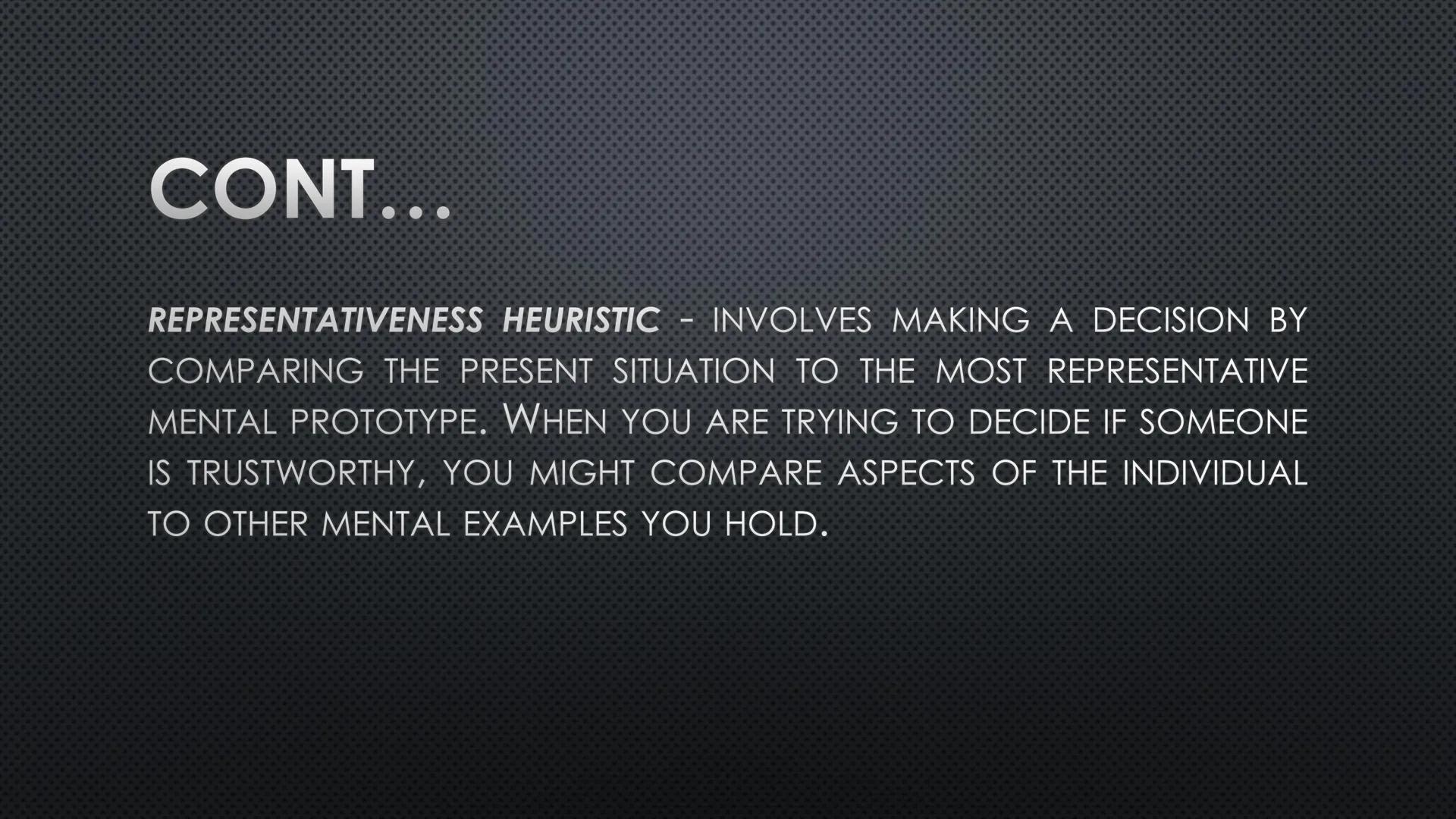
Representativeness Heuristic
The representativeness heuristic involves making decisions by comparing current situations to your mental prototypes. When you encounter someone or something new, your brain quickly compares it to categories you already understand.
This mental shortcut helps you organize new information by matching it to existing patterns. For instance, if someone dresses and acts like what you think a "typical doctor" should be, you might assume they're trustworthy about medical advice even without knowing their credentials.
The danger comes when these mental categories lead to oversimplified judgments. Just because someone fits your mental image of a certain type of person doesn't mean they actually share all the characteristics you associate with that category.
Challenge Yourself: Try to notice when you make assumptions about people based on how they match your mental categories. Could some of these judgments be inaccurate?
9
of 10
Representativeness Heuristic Examples
When you meet a sweet older woman who reminds you of your grandmother, you might immediately assume she's kind and trustworthy. This happens because your brain matches her to your mental prototype of "grandmotherly figure" and applies all associated traits.
Similarly, if you meet someone who practices yoga, talks about spiritual healing, and uses essential oils, you might automatically assume they work as a holistic healer rather than a teacher or nurse. Your brain has matched their characteristics to your mental image of a certain profession.
These examples show how we use mental shortcuts to categorize people based on superficial similarities to our existing mental prototypes. While sometimes accurate, these quick judgments can lead to incorrect assumptions and stereotyping.
Think Critically: How might the representativeness heuristic lead to unfair stereotyping in school settings? Consider how students might be misjudged based on appearance or interests.
10
of 10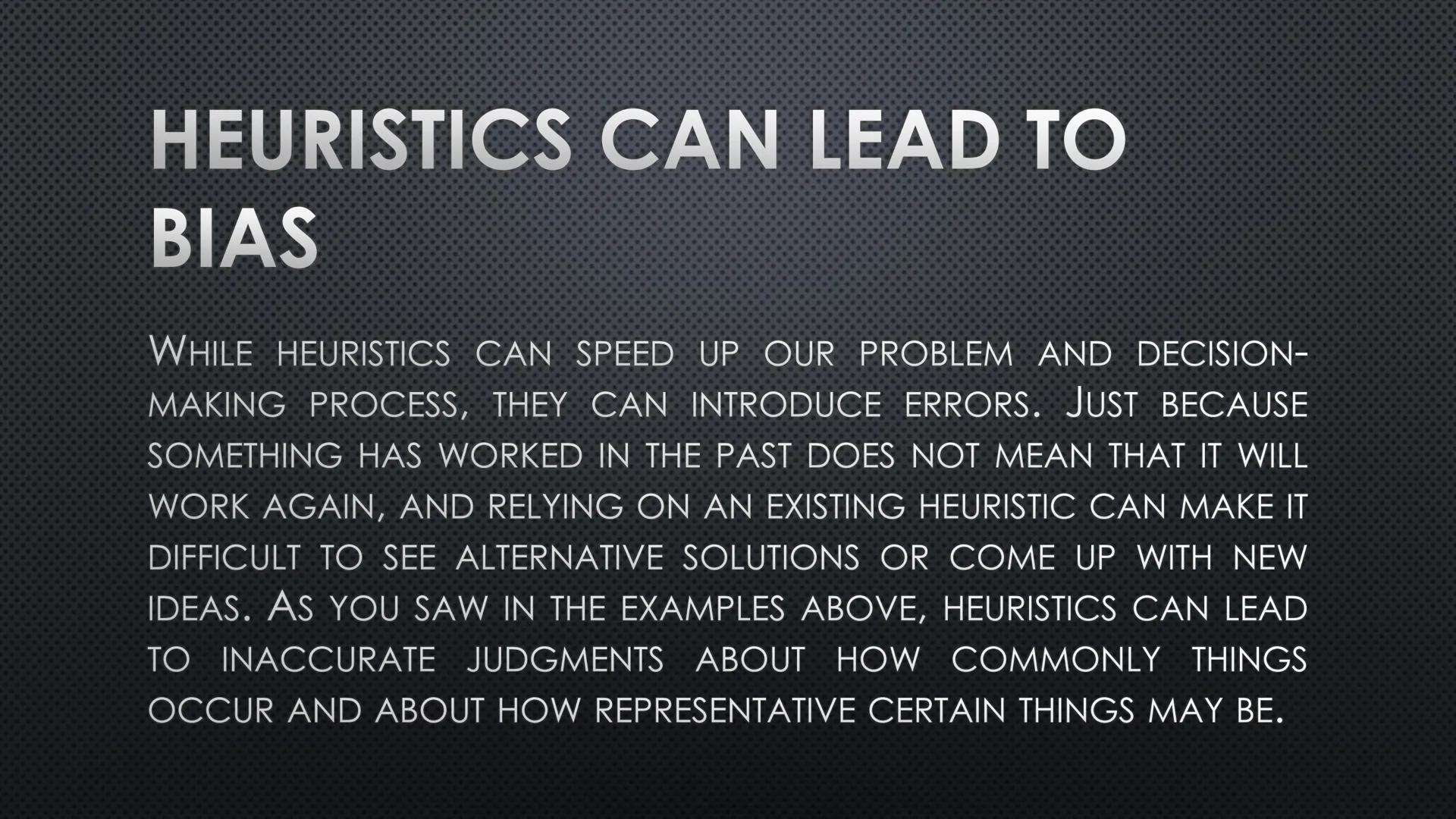
How Heuristics Can Lead to Bias
While heuristics speed up our thinking, they can introduce significant errors into our judgment. Just because an approach worked before doesn't mean it will work again, yet our brains tend to stick with familiar patterns.
Relying too heavily on existing mental shortcuts makes it harder to see creative solutions or consider alternative perspectives. The examples you've seen demonstrate how heuristics can cause us to misjudge how common events are (availability bias) or make incorrect assumptions about people based on superficial similarities (representativeness bias).
These mental shortcuts can be particularly problematic when making important decisions. Your brain might default to what's easy to recall or what seems familiar rather than what's actually most relevant to the current situation.
Power Up: Awareness is your superpower! When making important decisions, pause and ask yourself if you might be relying too heavily on mental shortcuts instead of looking at the specific facts.
We thought you’d never ask...
Our AI companion is specifically built for the needs of students. Based on the millions of content pieces we have on the platform we can provide truly meaningful and relevant answers to students. But its not only about answers, the companion is even more about guiding students through their daily learning challenges, with personalised study plans, quizzes or content pieces in the chat and 100% personalisation based on the students skills and developments.
You can download the app in the Google Play Store and in the Apple App Store.
That's right! Enjoy free access to study content, connect with fellow students, and get instant help – all at your fingertips.
Similar Content
 Desarrollo Personal, Ciudadanía y Cívica
 Psychology
 Filosofía
Most popular content in Psychology
8PsychologyPsychology 101 Notes
Notes: Chapters 1, 2, 3, 5, 6, 7, 8, 9
2,443104
Psychologybipolar disorder psyc353
adult psychopathology lecture notes
875
 AP Psychology
Psychosexual development
Sigmund Freud
1000
PsychologyThe Endocrine System and Nervous System
Unit 2 review
2827
PsychologyPsychology | Chapter 8: Lifespan Development
Study guide on chapter 8, theories on how people develop over a lifetime. Information was from the textbook Introduction to Psychology by Hawkes Learning and supplemented by my professor's resources.
895
PsychologySocial Development
Unit 6 review
531
AP PsychologyJean Piaget & Cognitive Development
This know covers everything you may need to know about Jean Piaget & his theory of Cognitive development, as well as explanations of each step of cognitive development
10th1293
PsychologySummary of the 4 Communication Skills
This is a summary I made for the 4 communication skills: Reading, writing, listening and speaking.
College642
Most popular content
9O
 AP US History
Origins and Dynamics of the Columbian Exchange
Analyze the ecological and economic motivations behind the initial transfer of goods, people, and diseases between the Old and New Worlds.
9th3,1280
I
AP US HistoryIntroduction to Early Cultural Interactions
Analyze the initial social and religious encounters between Europeans, Africans, and Indigenous peoples in the colonial Americas.
9th2,7730
O
 AP World History
Origins of Ancient River Civilizations
Analyze the environmental factors and technological innovations that led to the rise of early states in Mesopotamia, Egypt, and the Indus Valley.
9th3,1870
M
AP US HistoryMotivations for European Exploration
Analyze the economic, religious, and political factors that drove European powers to the Americas during the 15th and 16th centuries.
9th1,7780
F
AP PsychologyFoundations of Ethical Guidelines in Research
Practice the core principles of the APA ethical code including informed consent, debriefing, and the role of Institutional Review Boards.
9th1,3360
I
AP US HistoryIntroduction to Native American Societies
Examine the diverse social, political, and economic structures of North American indigenous groups prior to European contact.
9th1,1100
I
AP US HistoryIntroduction to the Spanish Encomienda System
Explore the fundamental economic and social structures of the Spanish colonial system, focusing on the encomienda and the casta social hierarchy.
9th8890
I
 AP Biology
Introduction to Biological Elements of Life
Practice identifying the essential elements including carbon, nitrogen, phosphorus, and sulfur that compose biological macromolecules.
9th1,7410
O
AP US Government & PoliticsOrigins of the Articles of Confederation
Practice identifying the motivations for a weak central government and the specific powers granted to the states under the first U.S. constitution.
9th9370
Students love us — and so will you.
4.6/5App Store
4.7/5Google Play
The app is very easy to use and well designed. I have found everything I was looking for so far and have been able to learn a lot from the presentations! I will definitely use the app for a class assignment! And of course it also helps a lot as an inspiration.
Stefan SiOS user
This app is really great. There are so many study notes and help [...]. My problem subject is French, for example, and the app has so many options for help. Thanks to this app, I have improved my French. I would recommend it to anyone.
Samantha KlichAndroid user
Wow, I am really amazed. I just tried the app because I've seen it advertised many times and was absolutely stunned. This app is THE HELP you want for school and above all, it offers so many things, such as workouts and fact sheets, which have been VERY helpful to me personally.
AnnaiOS user
Psychology12 views·Updated Jul 2, 2026·11 pagesUnderstanding Heuristics: Meaning and Examples
Heuristics are mental shortcuts that help us make decisions quickly without overthinking. These thinking shortcuts save time and mental energy, but they can sometimes lead us astray. Understanding how heuristics work can help you make better decisions and recognize when...
1
of 10
Sign up to see the content. It's free!
- Access to all documents
- Improve your grades
- Join milions of students
Heuristics
Heuristics are mental shortcuts our brains use to solve problems and make decisions efficiently. Think of them as your brain's way of creating "rules of thumb" that help you navigate life without having to deeply analyze every single choice you face.
These mental shortcuts are incredibly useful in daily life, helping you process information quickly in a world that constantly bombards you with choices. Without heuristics, you'd be paralyzed by analysis, unable to decide even simple things like what to wear or eat.
While heuristics keep us functioning efficiently, they're not perfect. Sometimes these mental shortcuts can lead to mistakes or biases in our thinking when we rely on them too heavily.
Quick Tip: Next time you make a quick decision, try to notice what mental shortcut you used. Being aware of your heuristics is the first step to using them wisely!
2
of 10Sign up to see the content. It's free!
- Access to all documents
- Improve your grades
- Join milions of students
Introduction to Heuristics
A heuristic is a mental shortcut that allows you to solve problems and make judgments quickly and efficiently. These rule-of-thumb strategies reduce decision-making time so you can function without constantly stopping to analyze your next move.
Imagine having to thoroughly think through every single decision in your day - from what cereal to eat to which route to take to school. You'd never get anything done! Heuristics help prevent this decision paralysis.
While heuristics are incredibly helpful tools that our brains use all the time, they can sometimes lead us astray. When we rely too heavily on these shortcuts, we can develop cognitive biases that affect how accurately we perceive situations.
Brain Boost: Heuristics aren't just shortcuts—they're survival tools! Your brain developed these strategies to help you process information efficiently in a complex world.
3
of 10Sign up to see the content. It's free!
- Access to all documents
- Improve your grades
- Join milions of students
Why Do We Use Heuristics?
Heuristics are crucial for both problem-solving and decision-making in your everyday life. You naturally turn to these mental shortcuts when you need quick solutions without spending hours analyzing options.
Your brain has limits! Despite how amazing your brain is, it simply can't process all the information in your environment. If you tried to analyze every aspect of every situation, you'd be completely overwhelmed and unable to function.
These mental shortcuts allow you to navigate a world filled with endless choices. From choosing what to wear to deciding which math problem approach to use, heuristics help you move through your day efficiently without mental exhaustion.
Fun Fact: You likely use hundreds of different heuristics throughout your day without even realizing it. They're working behind the scenes of your thinking all the time!
4
of 10Sign up to see the content. It's free!
- Access to all documents
- Improve your grades
- Join milions of students
Heuristics in Daily Life
Your brain relies on heuristics to handle the tremendous amount of information you encounter daily. These mental shortcuts simplify complex situations so you don't spend endless time analyzing every detail of every decision.
Think about how many decisions you make every single day—what to eat for breakfast, what to wear, whether to join a study group, which route to take to school. The list is practically endless! Without heuristics, you'd be paralyzed by these choices.
Heuristics allow you to make these decisions quickly and move on with your day. They free up mental energy for more important tasks, like learning new concepts in class or solving complex problems on your math homework.
Reality Check: Count how many decisions you make in just one hour. You'll be surprised how many choices your brain processes using these mental shortcuts!
5
of 10Sign up to see the content. It's free!
- Access to all documents
- Improve your grades
- Join milions of students
Heuristics Example
Imagine you're deciding whether to take the bus or get a ride to school. You suddenly remember hearing that road construction started along the bus route. Without analyzing traffic patterns or calculating exact times, your brain quickly concludes this might make you late.
Using this mental shortcut, you decide to leave a little earlier and ask for a ride using an alternate route. You didn't need to research traffic statistics or call the bus company—your brain used available information to make a quick, reasonable decision.
This is a perfect example of how heuristics work in everyday life. You used past experiences and readily available information to make a practical decision without extensive analysis.
Try This: Notice when you use quick thinking shortcuts during your day. Being aware of your own heuristics helps you understand how your mind works!
6
of 10Sign up to see the content. It's free!
- Access to all documents
- Improve your grades
- Join milions of students
Types of Heuristics
Two common types of mental shortcuts you use regularly are the availability heuristic and the representativeness heuristic. Understanding these can help you recognize when you're using them.
The availability heuristic involves making decisions based on how easily examples come to mind. If you can quickly recall instances of something happening, you'll likely judge it as more common than it actually is. For example, if you easily remember news stories about shark attacks, you might overestimate how dangerous swimming in the ocean really is.
The representativeness heuristic involves comparing situations to your mental prototypes or stereotypes. When meeting someone new, you might compare them to categories of people you already know and make assumptions based on those similarities.
Think Deeper: Which heuristic do you think influences your decisions more often? The availability heuristic or the representativeness heuristic?
7
of 10Sign up to see the content. It's free!
- Access to all documents
- Improve your grades
- Join milions of students
Availability Heuristic Example
Imagine you're planning a trip and considering whether to fly or drive. You suddenly recall several recent news stories about airplane accidents. Even though flying is statistically much safer than driving, those vivid examples of crashes easily come to mind.
Because those airplane disaster examples are so readily available in your memory, the availability heuristic kicks in. You might decide driving is safer, even though statistics show the opposite is true.
This demonstrates how the availability heuristic can lead to incorrect judgments. We tend to believe events are more common when we can easily recall examples, regardless of actual statistical frequency.
Reality Check: Next time you feel afraid of something rare (like shark attacks or plane crashes), ask yourself if you're being influenced by memorable news stories rather than actual statistics.
8
of 10Sign up to see the content. It's free!
- Access to all documents
- Improve your grades
- Join milions of students
Representativeness Heuristic
The representativeness heuristic involves making decisions by comparing current situations to your mental prototypes. When you encounter someone or something new, your brain quickly compares it to categories you already understand.
This mental shortcut helps you organize new information by matching it to existing patterns. For instance, if someone dresses and acts like what you think a "typical doctor" should be, you might assume they're trustworthy about medical advice even without knowing their credentials.
The danger comes when these mental categories lead to oversimplified judgments. Just because someone fits your mental image of a certain type of person doesn't mean they actually share all the characteristics you associate with that category.
Challenge Yourself: Try to notice when you make assumptions about people based on how they match your mental categories. Could some of these judgments be inaccurate?
9
of 10Sign up to see the content. It's free!
- Access to all documents
- Improve your grades
- Join milions of students
Representativeness Heuristic Examples
When you meet a sweet older woman who reminds you of your grandmother, you might immediately assume she's kind and trustworthy. This happens because your brain matches her to your mental prototype of "grandmotherly figure" and applies all associated traits.
Similarly, if you meet someone who practices yoga, talks about spiritual healing, and uses essential oils, you might automatically assume they work as a holistic healer rather than a teacher or nurse. Your brain has matched their characteristics to your mental image of a certain profession.
These examples show how we use mental shortcuts to categorize people based on superficial similarities to our existing mental prototypes. While sometimes accurate, these quick judgments can lead to incorrect assumptions and stereotyping.
Think Critically: How might the representativeness heuristic lead to unfair stereotyping in school settings? Consider how students might be misjudged based on appearance or interests.
10
of 10Sign up to see the content. It's free!
- Access to all documents
- Improve your grades
- Join milions of students
How Heuristics Can Lead to Bias
While heuristics speed up our thinking, they can introduce significant errors into our judgment. Just because an approach worked before doesn't mean it will work again, yet our brains tend to stick with familiar patterns.
Relying too heavily on existing mental shortcuts makes it harder to see creative solutions or consider alternative perspectives. The examples you've seen demonstrate how heuristics can cause us to misjudge how common events are (availability bias) or make incorrect assumptions about people based on superficial similarities (representativeness bias).
These mental shortcuts can be particularly problematic when making important decisions. Your brain might default to what's easy to recall or what seems familiar rather than what's actually most relevant to the current situation.
Power Up: Awareness is your superpower! When making important decisions, pause and ask yourself if you might be relying too heavily on mental shortcuts instead of looking at the specific facts.
We thought you’d never ask...
Our AI companion is specifically built for the needs of students. Based on the millions of content pieces we have on the platform we can provide truly meaningful and relevant answers to students. But its not only about answers, the companion is even more about guiding students through their daily learning challenges, with personalised study plans, quizzes or content pieces in the chat and 100% personalisation based on the students skills and developments.
You can download the app in the Google Play Store and in the Apple App Store.
That's right! Enjoy free access to study content, connect with fellow students, and get instant help – all at your fingertips.
Similar Content
Most popular content in Psychology
8PsychologyPsychology 101 Notes
Notes: Chapters 1, 2, 3, 5, 6, 7, 8, 9
2,443104
Psychologybipolar disorder psyc353
adult psychopathology lecture notes
875
AP PsychologyPsychosexual development
Sigmund Freud
1000
PsychologyThe Endocrine System and Nervous System
Unit 2 review
2827
PsychologyPsychology | Chapter 8: Lifespan Development
Study guide on chapter 8, theories on how people develop over a lifetime. Information was from the textbook Introduction to Psychology by Hawkes Learning and supplemented by my professor's resources.
895
PsychologySocial Development
Unit 6 review
531
AP PsychologyJean Piaget & Cognitive Development
This know covers everything you may need to know about Jean Piaget & his theory of Cognitive development, as well as explanations of each step of cognitive development
10th1293
PsychologySummary of the 4 Communication Skills
This is a summary I made for the 4 communication skills: Reading, writing, listening and speaking.
College642
Most popular content
9O
AP US HistoryOrigins and Dynamics of the Columbian Exchange
Analyze the ecological and economic motivations behind the initial transfer of goods, people, and diseases between the Old and New Worlds.
9th3,1280
I
AP US HistoryIntroduction to Early Cultural Interactions
Analyze the initial social and religious encounters between Europeans, Africans, and Indigenous peoples in the colonial Americas.
9th2,7730
O
AP World HistoryOrigins of Ancient River Civilizations
Analyze the environmental factors and technological innovations that led to the rise of early states in Mesopotamia, Egypt, and the Indus Valley.
9th3,1870
M
AP US HistoryMotivations for European Exploration
Analyze the economic, religious, and political factors that drove European powers to the Americas during the 15th and 16th centuries.
9th1,7780
F
AP PsychologyFoundations of Ethical Guidelines in Research
Practice the core principles of the APA ethical code including informed consent, debriefing, and the role of Institutional Review Boards.
9th1,3360
I
AP US HistoryIntroduction to Native American Societies
Examine the diverse social, political, and economic structures of North American indigenous groups prior to European contact.
9th1,1100
I
AP US HistoryIntroduction to the Spanish Encomienda System
Explore the fundamental economic and social structures of the Spanish colonial system, focusing on the encomienda and the casta social hierarchy.
9th8890
I
AP BiologyIntroduction to Biological Elements of Life
Practice identifying the essential elements including carbon, nitrogen, phosphorus, and sulfur that compose biological macromolecules.
9th1,7410
O
AP US Government & PoliticsOrigins of the Articles of Confederation
Practice identifying the motivations for a weak central government and the specific powers granted to the states under the first U.S. constitution.
9th9370
Students love us — and so will you.
4.6/5App Store
4.7/5Google Play
The app is very easy to use and well designed. I have found everything I was looking for so far and have been able to learn a lot from the presentations! I will definitely use the app for a class assignment! And of course it also helps a lot as an inspiration.
Stefan SiOS user
This app is really great. There are so many study notes and help [...]. My problem subject is French, for example, and the app has so many options for help. Thanks to this app, I have improved my French. I would recommend it to anyone.
Samantha KlichAndroid user
Wow, I am really amazed. I just tried the app because I've seen it advertised many times and was absolutely stunned. This app is THE HELP you want for school and above all, it offers so many things, such as workouts and fact sheets, which have been VERY helpful to me personally.
AnnaiOS user