Marriage, Family, and Relationships
Your generation faces more relationship choices than ever before, and religious teachings still influence many people's decisions about love, marriage, and family life. Understanding these perspectives helps explain different attitudes you'll encounter.
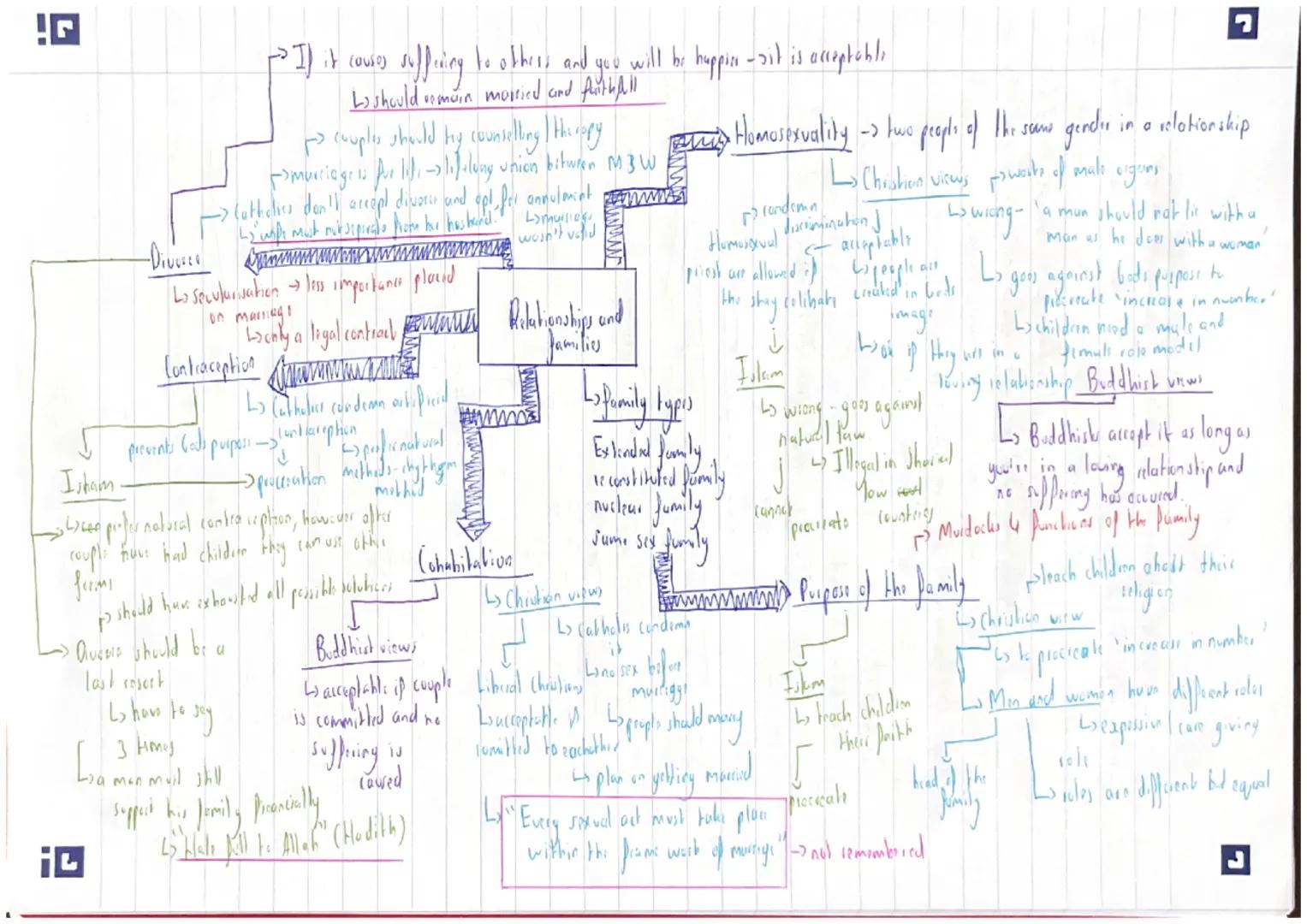
Marriage traditionally meant a lifelong union between man and woman in most religions. Catholics don't accept divorce, preferring annulment (declaring the marriage wasn't valid). However, secularisation means society places less importance on religious marriage rules, and many Christians now accept divorce when it reduces suffering.
Homosexuality and same-sex relationships divide religious communities. Conservative Christians and Muslims often condemn them, citing scriptures about natural law and God's intended purpose. However, liberal Christians and Buddhists increasingly accept loving, committed same-sex relationships, prioritising compassion over traditional interpretations.
Contraception and family planning reveal interesting differences. Catholics condemn artificial contraception but accept natural methods after couples have had children. Muslims permit various contraceptive methods once couples have children, showing more flexibility.
Modern family structures like single-parent families, cohabitation, and same-sex parents challenge traditional nuclear family ideals. Religious responses vary - some insist children need both male and female role models, whilst others prioritise loving, stable relationships regardless of structure.
Key Point: These religious views directly impact laws about marriage equality, adoption rights, and sex education in schools - issues that affect your generation significantly.



 Sociology
 Biology