Chemistry is like the ultimate detective story - it's all... Show more
Sign up to see the contentIt's free!
Access to all documents
Improve your grades
Join milions of students
By signing up you accept Terms of Service and Privacy Policy
Subjects

80
1
sam โ๐โหโนโก
11/27/2025
Science
Gen Chem 1 Notes
2,506
โข
Nov 27, 2025
โข
sam โ๐โหโนโก
@samantha.badiola_
Chemistry is like the ultimate detective story - it's all... Show more


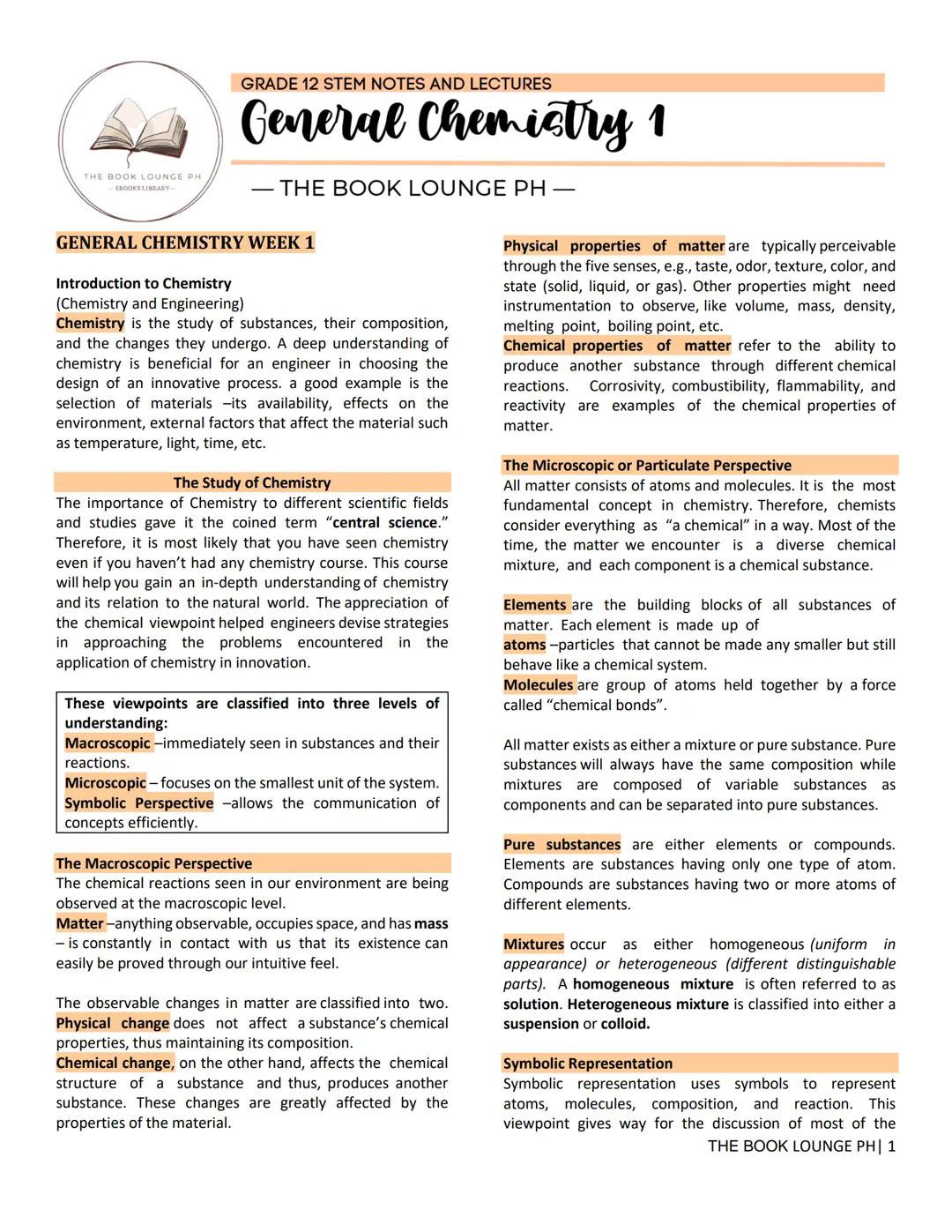
Ever wonder why engineers choose specific materials for buildings or why your phone doesn't melt in your pocket? Chemistry is the study of substances and their changes, making it the "central science" that connects to everything around you.
You'll explore chemistry through three key perspectives. The macroscopic perspective shows what you can observe directly - like ice melting or iron rusting. The microscopic perspective dives into atoms and molecules, the tiny building blocks you can't see. The symbolic perspective uses chemical formulas and equations to communicate efficiently.
Matter is anything that takes up space and has mass. It undergoes physical changes (like melting ice) that don't change the substance's identity, or chemical changes (like burning wood) that create entirely new substances. Physical properties include things like color, texture, and melting point, while chemical properties describe how substances react - like flammability or corrosivity.
Everything is made of atoms and molecules. Elements contain only one type of atom, while compounds have multiple types bonded together. Mixtures can be separated physically and come in two types: homogeneous (uniform like saltwater) and heterogeneous (distinct parts like oil and water).
Key Insight: Once you understand these three perspectives, you'll start seeing the chemistry behind everyday phenomena - from cooking to cleaning to how your body works!

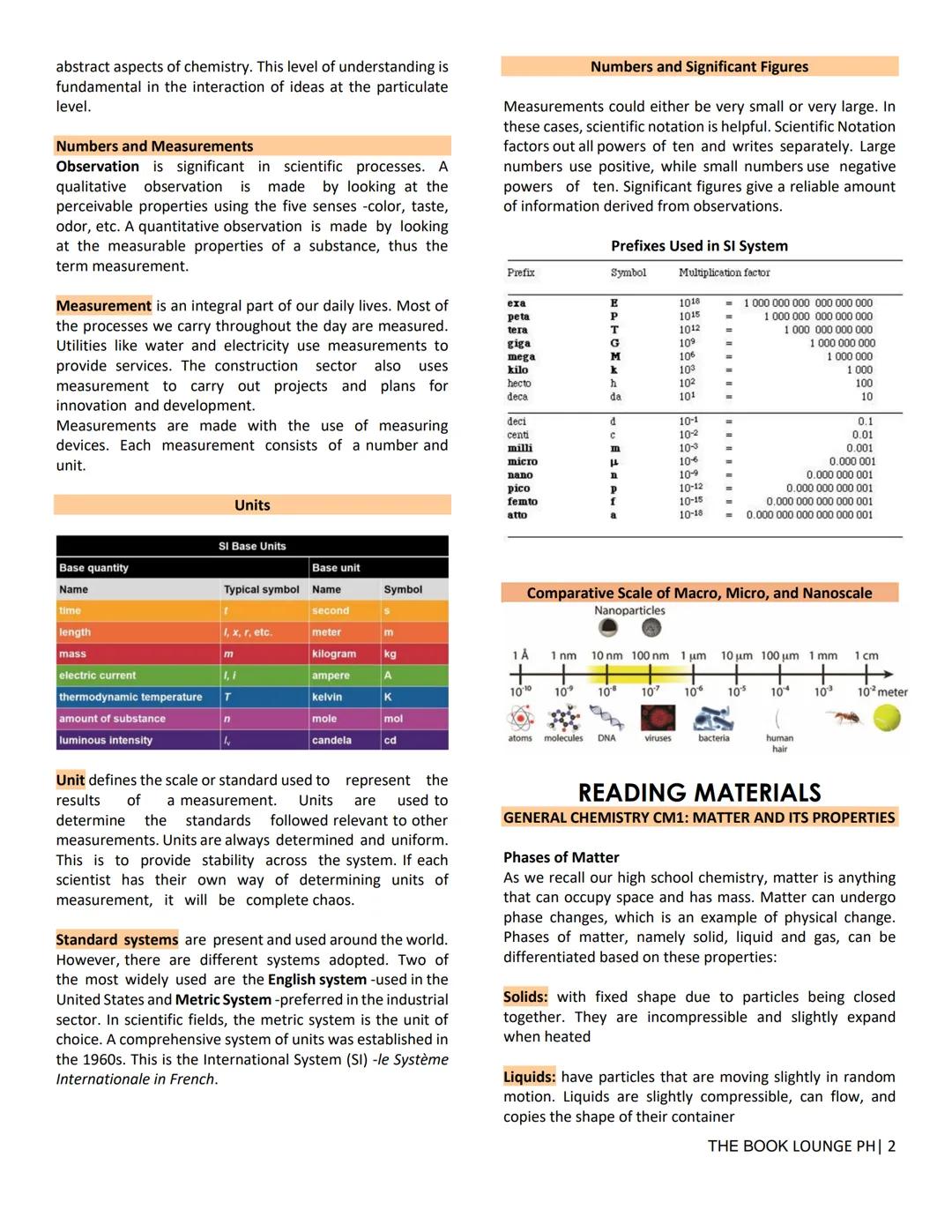
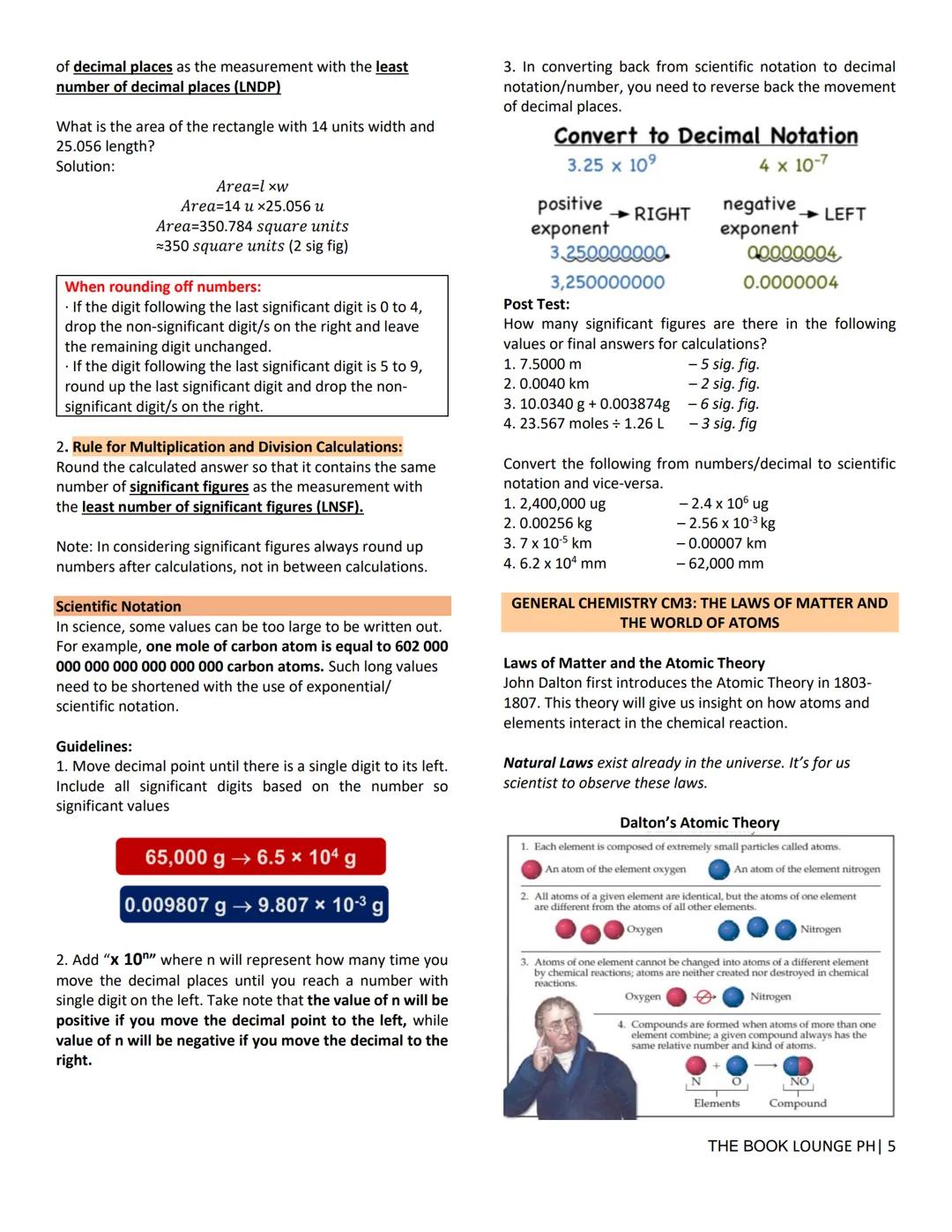
Dealing with super tiny atoms or massive distances in space? Scientific notation is your best friend for handling extreme numbers without getting lost in zeros.
The SI system gives us standard units that scientists worldwide use. You'll work mainly with meters (length), kilograms (mass), seconds (time), and moles (amount of substance). Prefixes like kilo-, milli-, and nano- help you scale these units up or down.
Scientific notation moves the decimal point to create a number between 1 and 10, then multiplies by a power of 10. Large numbers get positive exponents (6,500 = 6.5 ร 10ยณ), while small numbers get negative exponents (0.0025 = 2.5 ร 10โปยณ).
Matter exists in three main phases: solids (fixed shape, particles close together), liquids (take container shape, particles moving slightly), and gases (fill entire container, particles moving freely). These differences come from how tightly packed and energetic the particles are.
Pro Tip: Master scientific notation now - it'll save you tons of time in calculations and help you avoid embarrassing math errors on exams!

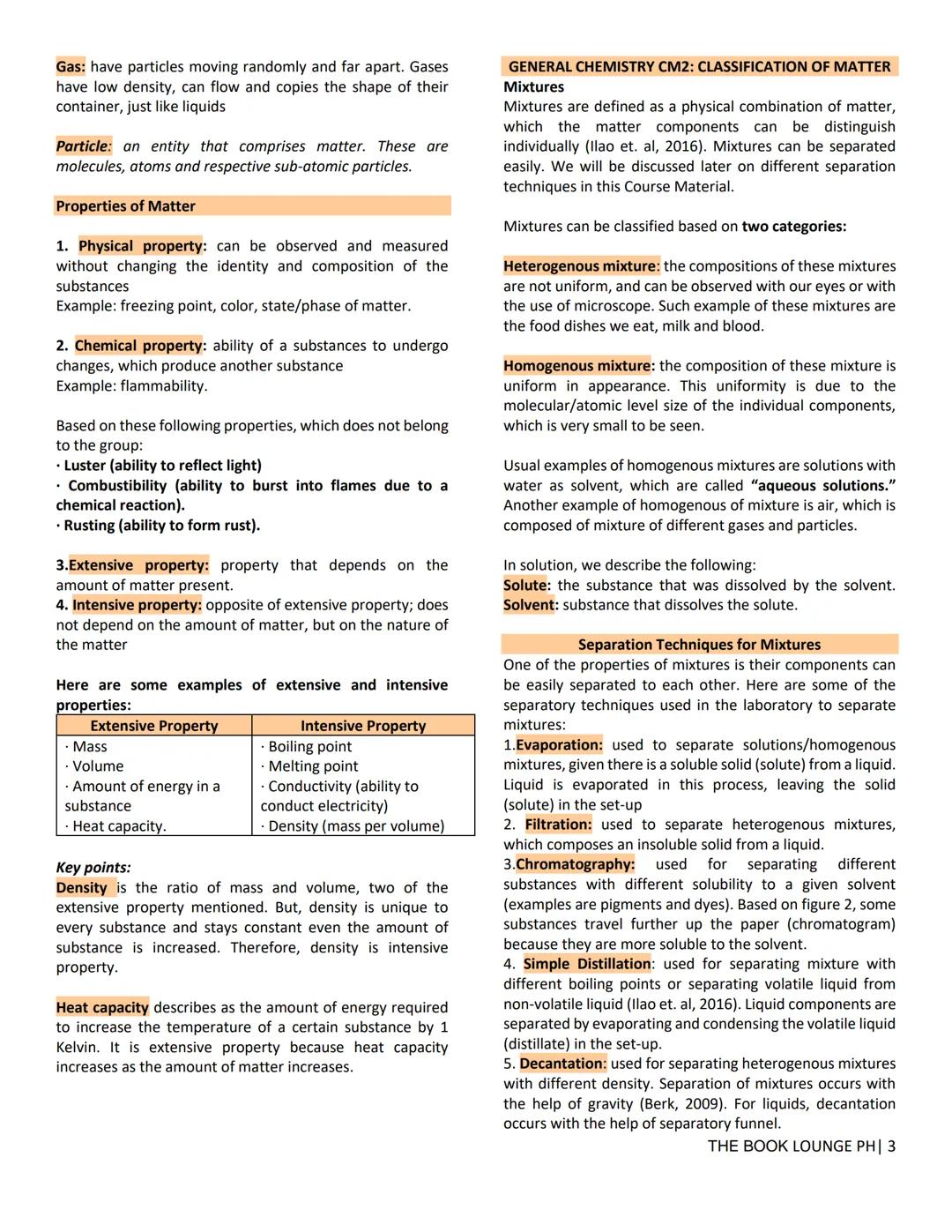
Think of matter like a family tree - everything branches out from two main categories: mixtures and pure substances. This classification system helps you predict how to separate and identify different materials.
Mixtures are physical combinations where you can still distinguish individual components. Heterogeneous mixtures have visible different parts (like a salad), while homogeneous mixtures look uniform throughout (like air or sugar water, called solutions).
Scientists have clever ways to separate mixtures. Filtration removes insoluble solids from liquids. Distillation separates liquids with different boiling points. Chromatography separates substances based on how well they dissolve in a solvent. Centrifugation uses spinning force to separate materials by density.
Pure substances include elements (single type of atom) and compounds (multiple elements in fixed ratios). Elements can be metals (shiny, conduct electricity), non-metals (gases or brittle solids), or metalloids (properties of both). Compounds form through ionic bonds (electron transfer) or covalent bonds (electron sharing).
Lab Connection: These separation techniques aren't just theory - you'll actually use them in lab to purify substances and analyze what's in unknown samples!

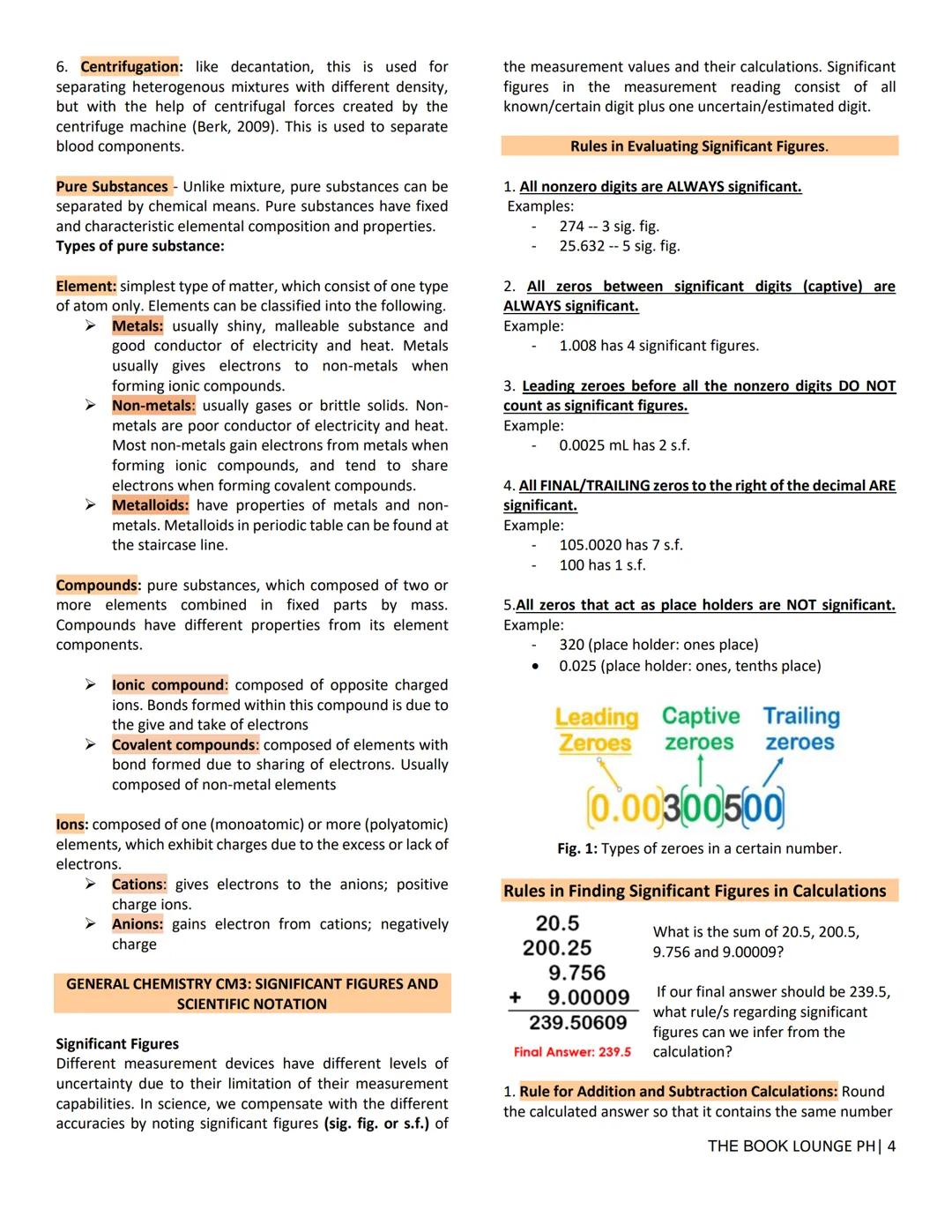
Your measurements are only as good as your instrument allows, and significant figures help you show exactly how precise your data really is. This isn't just busy work - it's how scientists communicate the reliability of their results.
Counting significant figures follows clear rules. All non-zero digits count (274 has 3 sig figs). Zeros between non-zero digits count (1008 has 4 sig figs). Leading zeros don't count (0.0025 has 2 sig figs). Trailing zeros after a decimal point do count (105.00 has 5 sig figs).
For calculations, addition and subtraction round to the least number of decimal places, while multiplication and division round to the least number of significant figures. Always round at the end of your calculation, not during intermediate steps.
Converting scientific notation back to regular numbers means moving the decimal point. Positive exponents move right (3.25 ร 10โน = 3,250,000,000), while negative exponents move left (4 ร 10โปโท = 0.0000004).
Study Hack: Practice identifying significant figures until it becomes automatic - you'll use this skill in every chemistry calculation for the rest of the course!

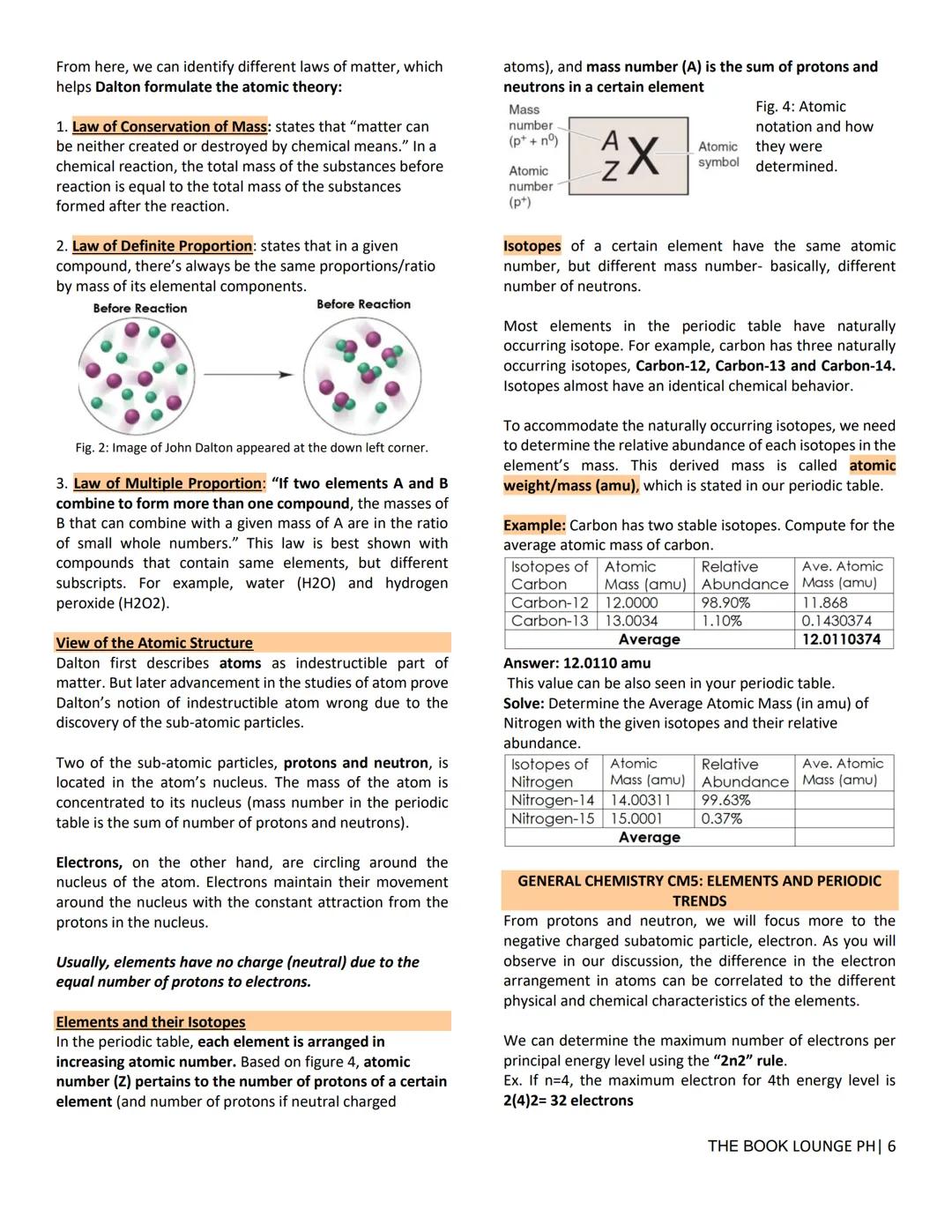
John Dalton's atomic theory from 1803-1807 revolutionized how we understand matter. Though some parts have been updated, his core ideas still guide modern chemistry.
Dalton's key ideas: All matter consists of tiny, indivisible atoms. Atoms of the same element are identical but different from other elements. Chemical reactions rearrange atoms but don't create or destroy them. Compounds always contain the same ratio of different atoms.
Three fundamental laws support atomic theory. The Law of Conservation of Mass states that mass can't be created or destroyed in reactions - what goes in equals what comes out. The Law of Definite Proportion means compounds always have the same mass ratios of their elements. The Law of Multiple Proportions explains why the same elements can form different compounds with simple whole-number ratios.
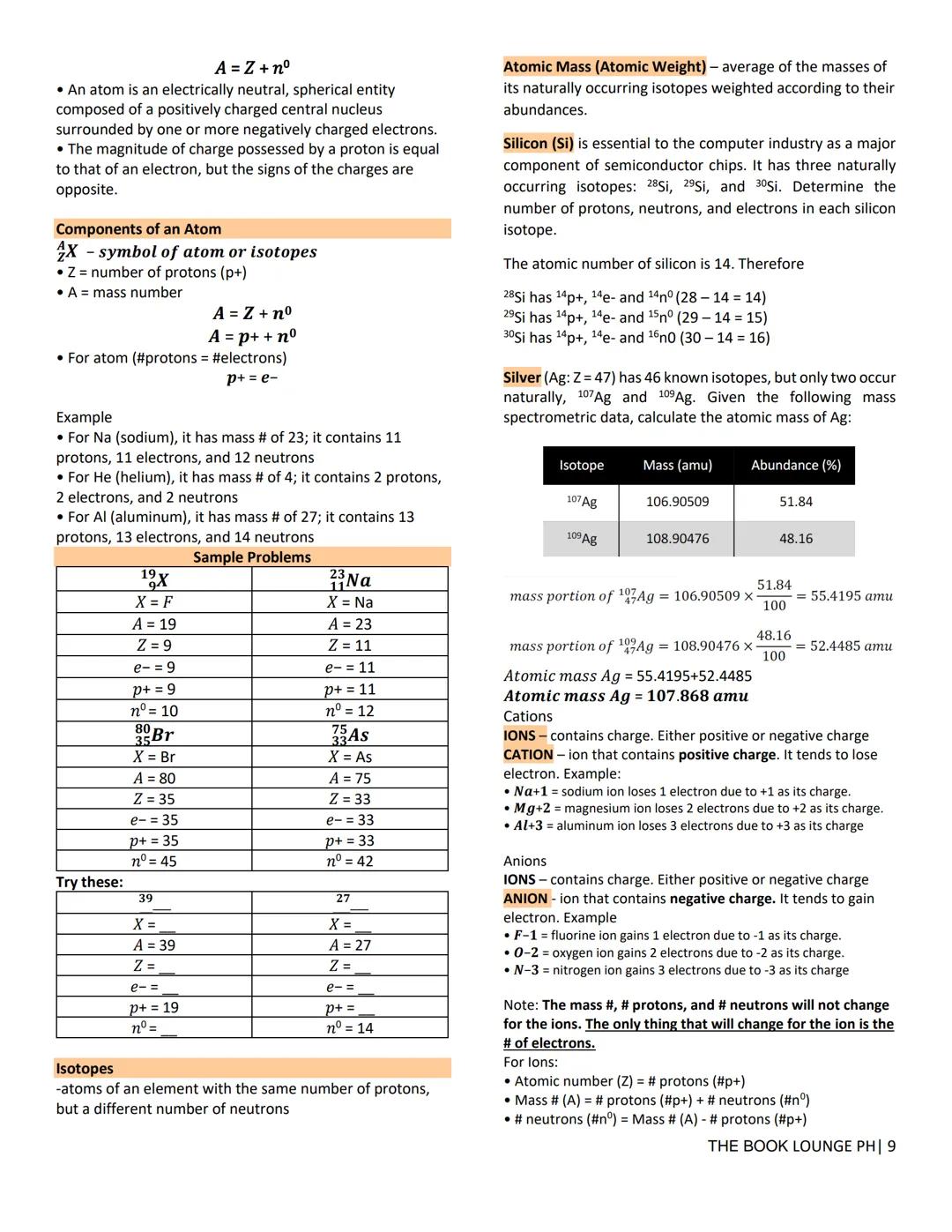
Modern atomic structure shows atoms aren't indivisible. The dense nucleus contains positively charged protons and neutral neutrons. Negatively charged electrons orbit the nucleus. Atomic number (number of protons) defines the element, while mass number (protons plus neutrons) accounts for isotopes - atoms with same protons but different neutrons.
Atomic mass on the periodic table represents the weighted average of all naturally occurring isotopes based on their abundance.
Real-World Connection: Understanding isotopes explains why carbon dating works and how nuclear medicine helps diagnose diseases!

Electrons aren't randomly scattered around the nucleus - they occupy specific energy levels and shapes called orbitals. Understanding this electron arrangement explains why elements behave so differently.
Energy levels determine distance from the nucleus, with higher levels farther out. Each level contains sublevels (s, p, d, f) with different shapes and capacities: s holds 2 electrons, p holds 6, d holds 10, and f holds 14.
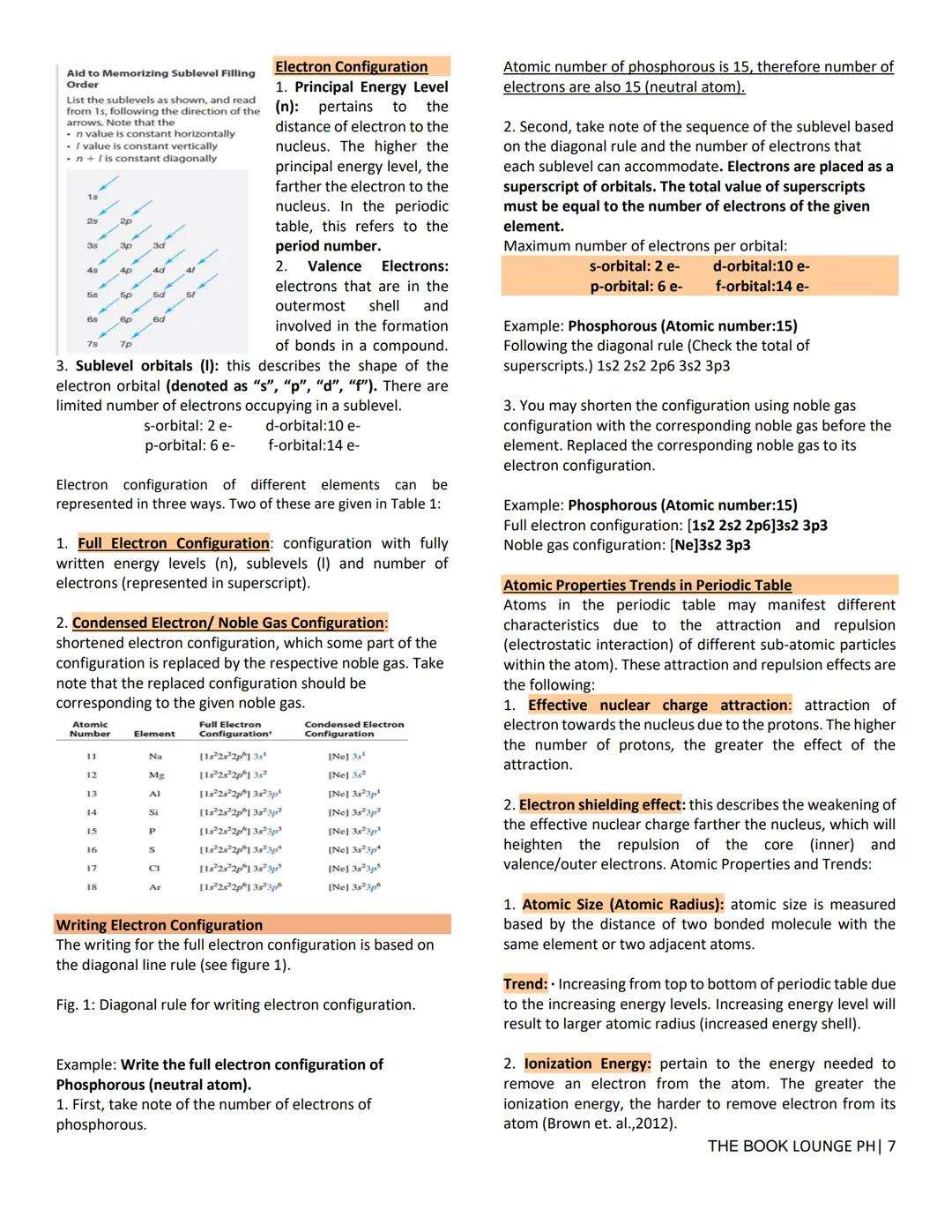
Writing electron configurations follows the diagonal rule, filling lowest energy orbitals first. For example, phosphorus (15 electrons) is 1sยฒ 2sยฒ 2pโถ 3sยฒ 3pยณ. Noble gas notation shortens this to 3sยฒ 3pยณ by replacing inner electrons with the previous noble gas.
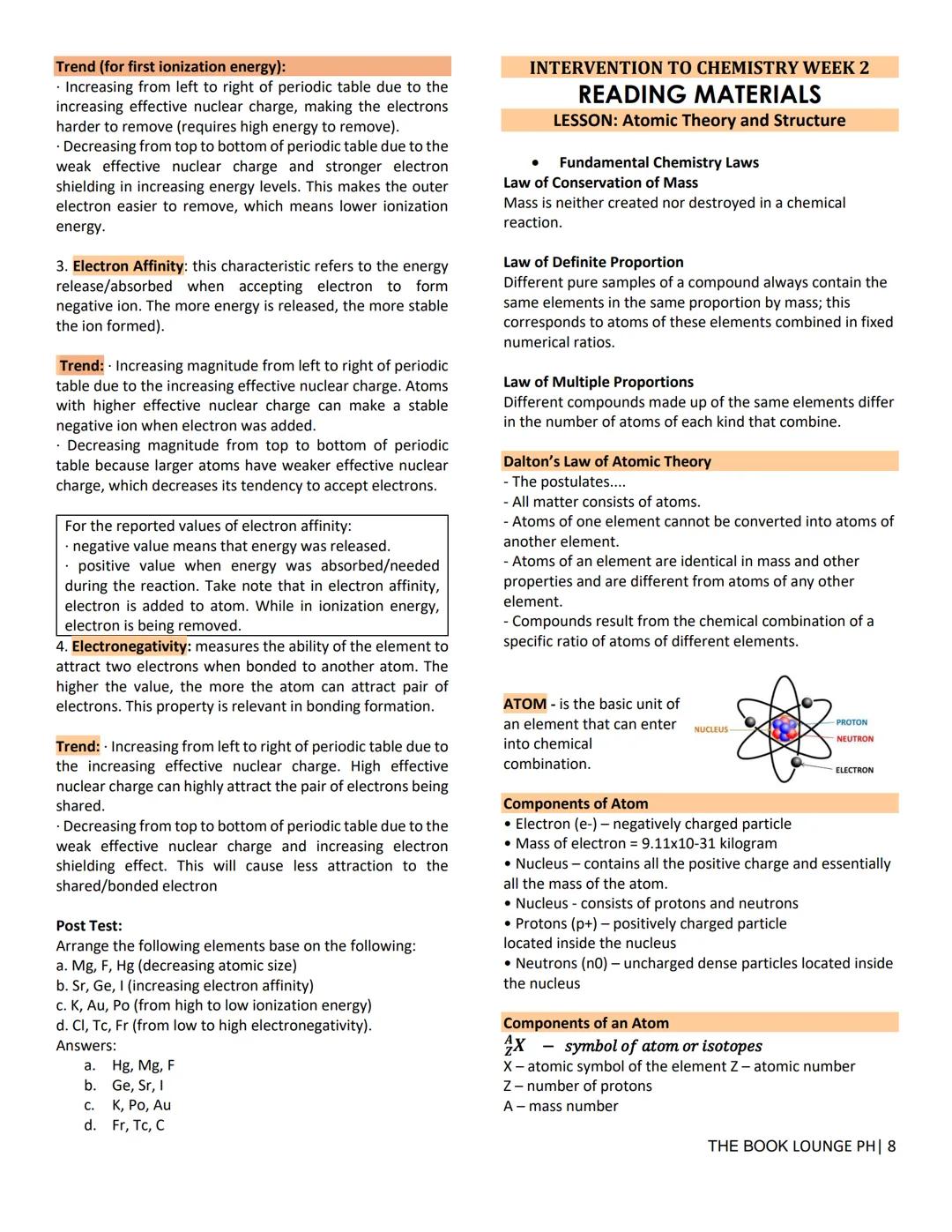
Periodic trends result from electron-nucleus interactions. Atomic size increases down groups (more energy levels) and decreases across periods (stronger nuclear pull). Ionization energy (energy to remove an electron) increases across periods and decreases down groups. Electronegativity (attraction for bonding electrons) follows the same pattern as ionization energy.
Memory Trick: Think of nuclear charge like a magnet - the stronger it gets (more protons), the tighter it holds electrons, making atoms smaller and harder to ionize!

The diagonal rule for filling orbitals follows a specific pattern: 1s, 2s, 2p, 3s, 3p, 4s, 3d, 4p, and so on. This order determines how electrons occupy available spaces in atoms.
Electron configuration notation can be written in full form or condensed using noble gas cores. The condensed form replaces inner electron configurations with the symbol of the nearest preceding noble gas in brackets.
Atomic properties show predictable trends across the periodic table. Effective nuclear charge represents the actual pull electrons feel from the nucleus after accounting for electron shielding by inner electrons. Valence electrons in the outermost shell determine chemical behavior.
Ionization energy trends increase from left to right due to stronger nuclear attraction, and decrease from top to bottom due to increased distance and shielding. Electron affinity measures energy change when atoms gain electrons. Electronegativity predicts how strongly atoms attract shared electrons in bonds.
These trends help predict chemical behavior. Elements with low ionization energies (like sodium) easily lose electrons to form positive ions, while elements with high electron affinities (like chlorine) readily gain electrons to form negative ions.
Exam Strategy: Focus on understanding WHY trends occur rather than memorizing them - this helps you predict properties of unfamiliar elements and avoid common mistakes!

Conservation of mass, definite proportions, and multiple proportions form the foundation of atomic theory. These aren't just abstract concepts - they explain why chemical formulas work and how to balance equations.
Dalton's atomic theory established that all matter consists of atoms, atoms of each element are unique, and chemical reactions simply rearrange existing atoms without creating or destroying them. Compounds result from atoms combining in specific, fixed ratios.
Modern atomic structure reveals atoms contain three main particles. Protons (positive charge) and neutrons (no charge) occupy the dense central nucleus. Electrons (negative charge) surround the nucleus. The atomic number (Z) equals the number of protons and defines the element.
Isotope notation uses แดฌX format where A is mass number , Z is atomic number (protons), and X is the element symbol. Neutral atoms have equal protons and electrons. Average atomic mass accounts for naturally occurring isotopes weighted by their abundance.
Calculation Tip: When finding average atomic mass, multiply each isotope's mass by its decimal abundance, then add all products together - just like calculating a weighted grade average!

Ions form when atoms gain or lose electrons, creating charged particles that behave very differently from neutral atoms. Understanding ions is crucial for predicting how elements will bond and form compounds.
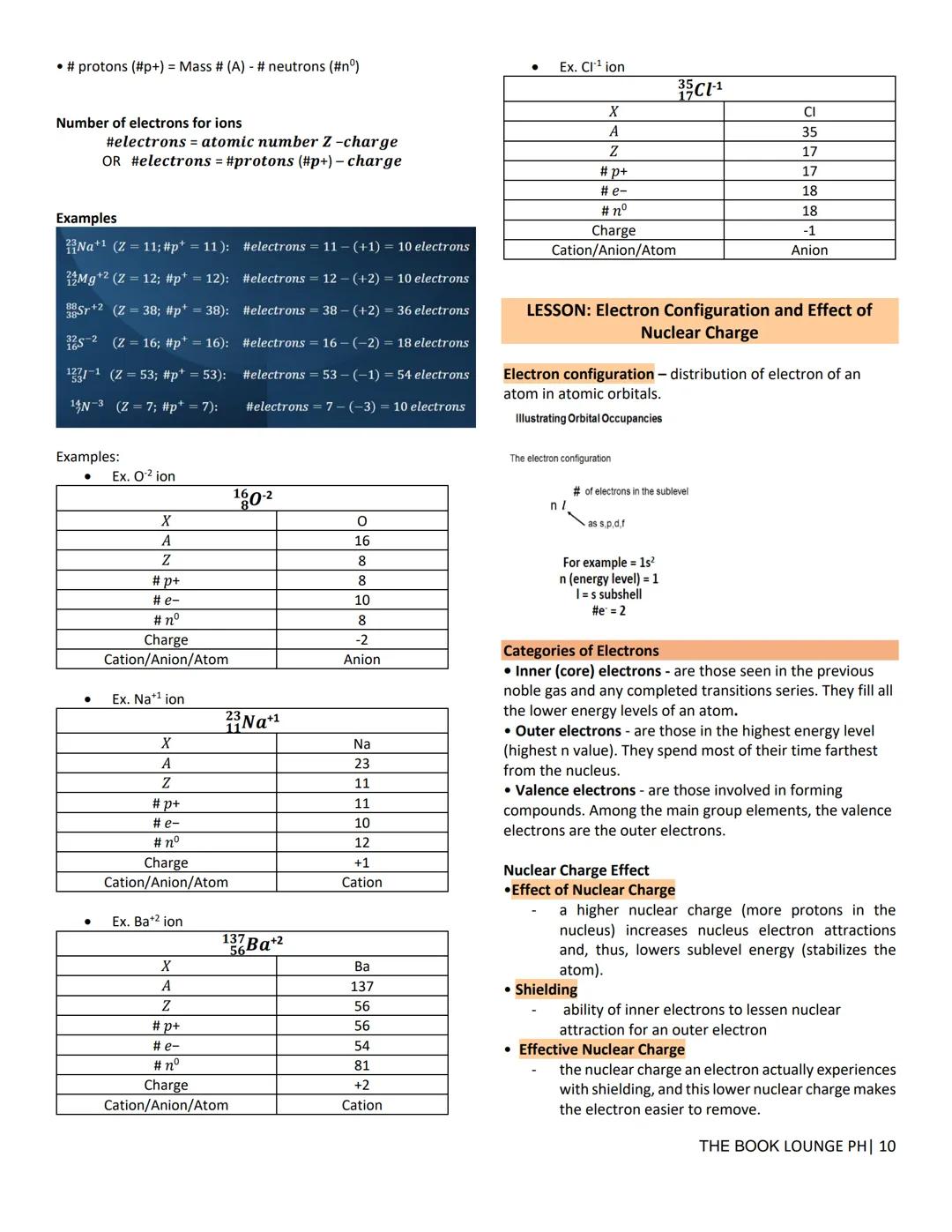
Cations are positively charged ions formed when atoms lose electrons. For example, Naโบยน means sodium lost one electron. Anions are negatively charged ions formed when atoms gain electrons. For example, Clโปยน means chlorine gained one electron.
Calculating electrons in ions uses the formula: number of electrons = atomic number - charge. For Naโบยน : electrons = 11 - (+1) = 10. For Clโปยน : electrons = 17 - (-1) = 18. Remember that protons and neutrons never change when forming ions.
Electron configuration describes how electrons distribute among orbitals. The notation shows energy level, sublevel type, and electron count as superscripts (like 1sยฒ2sยฒ2pโถ). Core electrons occupy inner levels, outer electrons occupy the highest energy level, and valence electrons participate in bonding.
Nuclear charge effects and electron shielding determine how tightly electrons are held. Higher nuclear charge pulls electrons closer, while inner electrons shield outer ones from the full nuclear attraction.
Study Strategy: Practice writing electron configurations for both neutral atoms and ions - this skill connects atomic structure to chemical bonding and periodic trends!

Electron configuration shows exactly how electrons arrange themselves around the nucleus, following specific rules that determine chemical properties. This systematic arrangement explains why the periodic table works so perfectly.
Orbital notation uses the format nlหฃ where n is the energy level, l is the sublevel (s, p, d, f), and x is the number of electrons. For example, 1sยฒ means two electrons in the 1s orbital.
Categories of electrons include inner (core) electrons from completed lower levels, outer electrons in the highest energy level, and valence electrons that participate in bonding. For main group elements, outer and valence electrons are the same.
Nuclear charge effects create the driving force behind electron behavior. Higher nuclear charge (more protons) pulls electrons closer and makes them harder to remove. Electron shielding occurs when inner electrons reduce the nuclear attraction felt by outer electrons.
Effective nuclear charge represents the actual nuclear pull experienced by an electron after accounting for shielding. This concept explains periodic trends - elements on the right have higher effective nuclear charge, making their atoms smaller and electrons harder to remove.
Connection Point: Everything you learn about electron configuration directly connects to chemical bonding, molecular shapes, and reaction mechanisms in later chapters - master this foundation now!
Our AI companion is specifically built for the needs of students. Based on the millions of content pieces we have on the platform we can provide truly meaningful and relevant answers to students. But its not only about answers, the companion is even more about guiding students through their daily learning challenges, with personalised study plans, quizzes or content pieces in the chat and 100% personalisation based on the students skills and developments.
You can download the app in the Google Play Store and in the Apple App Store.
That's right! Enjoy free access to study content, connect with fellow students, and get instant help โ all at your fingertips.
App Store
Google Play
The app is very easy to use and well designed. I have found everything I was looking for so far and have been able to learn a lot from the presentations! I will definitely use the app for a class assignment! And of course it also helps a lot as an inspiration.
Stefan S
iOS user
This app is really great. There are so many study notes and help [...]. My problem subject is French, for example, and the app has so many options for help. Thanks to this app, I have improved my French. I would recommend it to anyone.
Samantha Klich
Android user
Wow, I am really amazed. I just tried the app because I've seen it advertised many times and was absolutely stunned. This app is THE HELP you want for school and above all, it offers so many things, such as workouts and fact sheets, which have been VERY helpful to me personally.
Anna
iOS user
I think itโs very much worth it and youโll end up using it a lot once you get the hang of it and even after looking at others notes you can still ask your Artificial intelligence buddy the question and ask to simplify it if you still donโt get it!!! In the end I think itโs worth it ๐๐ โ ๏ธAlso DID I MENTION ITS FREEE YOU DONโT HAVE TO PAY FOR ANYTHING AND STILL GET YOUR GRADES IN PERFECTLYโ๏ธโ๏ธโ ๏ธ
Thomas R
iOS user
Knowunity is the BEST app Iโve used in a minute. This is not an ai review or anything this is genuinely coming from a 7th grade student (I know 2011 im young) but dude this app is a 10/10 i have maintained a 3.8 gpa and have plenty of time for gaming. I love it and my mom is just happy I got good grades
Brad T
Android user
Not only did it help me find the answer but it also showed me alternative ways to solve it. I was horrible in math and science but now I have an a in both subjects. Thanks for the help๐ค๐ค
David K
iOS user
The app's just great! All I have to do is enter the topic in the search bar and I get the response real fast. I don't have to watch 10 YouTube videos to understand something, so I'm saving my time. Highly recommended!
Sudenaz Ocak
Android user
In school I was really bad at maths but thanks to the app, I am doing better now. I am so grateful that you made the app.
Greenlight Bonnie
Android user
I found this app a couple years ago and it has only gotten better since then. I really love it because it can help with written questions and photo questions. Also, it can find study guides that other people have made as well as flashcard sets and practice tests. The free version is also amazing for students who might not be able to afford it. Would 100% recommend
Aubrey
iOS user
Best app if you're in Highschool or Junior high. I have been using this app for 2 school years and it's the best, it's good if you don't have anyone to help you with school work.๐๐ฉท๐
Marco B
iOS user
THE QUIZES AND FLASHCARDS ARE SO USEFUL AND I LOVE THE SCHOOLGPT. IT ALSO IS LITREALLY LIKE CHATGPT BUT SMARTER!! HELPED ME WITH MY MASCARA PROBLEMS TOO!! AS WELL AS MY REAL SUBJECTS ! DUHHH ๐๐๐ฒ๐ค๐โจ๐๐ฎ
Elisha
iOS user
This app is phenomenal down to the correct info and the various topics you can study! I greatly recommend it for people who struggle with procrastination and those who need homework help. It has been perfectly accurate for world 1 history as far as Iโve seen! Geometry too!
Paul T
iOS user
The app is very easy to use and well designed. I have found everything I was looking for so far and have been able to learn a lot from the presentations! I will definitely use the app for a class assignment! And of course it also helps a lot as an inspiration.
Stefan S
iOS user
This app is really great. There are so many study notes and help [...]. My problem subject is French, for example, and the app has so many options for help. Thanks to this app, I have improved my French. I would recommend it to anyone.
Samantha Klich
Android user
Wow, I am really amazed. I just tried the app because I've seen it advertised many times and was absolutely stunned. This app is THE HELP you want for school and above all, it offers so many things, such as workouts and fact sheets, which have been VERY helpful to me personally.
Anna
iOS user
I think itโs very much worth it and youโll end up using it a lot once you get the hang of it and even after looking at others notes you can still ask your Artificial intelligence buddy the question and ask to simplify it if you still donโt get it!!! In the end I think itโs worth it ๐๐ โ ๏ธAlso DID I MENTION ITS FREEE YOU DONโT HAVE TO PAY FOR ANYTHING AND STILL GET YOUR GRADES IN PERFECTLYโ๏ธโ๏ธโ ๏ธ
Thomas R
iOS user
Knowunity is the BEST app Iโve used in a minute. This is not an ai review or anything this is genuinely coming from a 7th grade student (I know 2011 im young) but dude this app is a 10/10 i have maintained a 3.8 gpa and have plenty of time for gaming. I love it and my mom is just happy I got good grades
Brad T
Android user
Not only did it help me find the answer but it also showed me alternative ways to solve it. I was horrible in math and science but now I have an a in both subjects. Thanks for the help๐ค๐ค
David K
iOS user
The app's just great! All I have to do is enter the topic in the search bar and I get the response real fast. I don't have to watch 10 YouTube videos to understand something, so I'm saving my time. Highly recommended!
Sudenaz Ocak
Android user
In school I was really bad at maths but thanks to the app, I am doing better now. I am so grateful that you made the app.
Greenlight Bonnie
Android user
I found this app a couple years ago and it has only gotten better since then. I really love it because it can help with written questions and photo questions. Also, it can find study guides that other people have made as well as flashcard sets and practice tests. The free version is also amazing for students who might not be able to afford it. Would 100% recommend
Aubrey
iOS user
Best app if you're in Highschool or Junior high. I have been using this app for 2 school years and it's the best, it's good if you don't have anyone to help you with school work.๐๐ฉท๐
Marco B
iOS user
THE QUIZES AND FLASHCARDS ARE SO USEFUL AND I LOVE THE SCHOOLGPT. IT ALSO IS LITREALLY LIKE CHATGPT BUT SMARTER!! HELPED ME WITH MY MASCARA PROBLEMS TOO!! AS WELL AS MY REAL SUBJECTS ! DUHHH ๐๐๐ฒ๐ค๐โจ๐๐ฎ
Elisha
iOS user
This app is phenomenal down to the correct info and the various topics you can study! I greatly recommend it for people who struggle with procrastination and those who need homework help. It has been perfectly accurate for world 1 history as far as Iโve seen! Geometry too!
Paul T
iOS user
sam โ๐โหโนโก
@samantha.badiola_
Chemistry is like the ultimate detective story - it's all about understanding what matter is made of and how it changes. This course will help you see chemistry everywhere, from the air you breathe to your smartphone's materials, giving you... Show more

Access to all documents
Improve your grades
Join milions of students
By signing up you accept Terms of Service and Privacy Policy
Ever wonder why engineers choose specific materials for buildings or why your phone doesn't melt in your pocket? Chemistry is the study of substances and their changes, making it the "central science" that connects to everything around you.
You'll explore chemistry through three key perspectives. The macroscopic perspective shows what you can observe directly - like ice melting or iron rusting. The microscopic perspective dives into atoms and molecules, the tiny building blocks you can't see. The symbolic perspective uses chemical formulas and equations to communicate efficiently.
Matter is anything that takes up space and has mass. It undergoes physical changes (like melting ice) that don't change the substance's identity, or chemical changes (like burning wood) that create entirely new substances. Physical properties include things like color, texture, and melting point, while chemical properties describe how substances react - like flammability or corrosivity.
Everything is made of atoms and molecules. Elements contain only one type of atom, while compounds have multiple types bonded together. Mixtures can be separated physically and come in two types: homogeneous (uniform like saltwater) and heterogeneous (distinct parts like oil and water).
Key Insight: Once you understand these three perspectives, you'll start seeing the chemistry behind everyday phenomena - from cooking to cleaning to how your body works!

Access to all documents
Improve your grades
Join milions of students
By signing up you accept Terms of Service and Privacy Policy
Dealing with super tiny atoms or massive distances in space? Scientific notation is your best friend for handling extreme numbers without getting lost in zeros.
The SI system gives us standard units that scientists worldwide use. You'll work mainly with meters (length), kilograms (mass), seconds (time), and moles (amount of substance). Prefixes like kilo-, milli-, and nano- help you scale these units up or down.
Scientific notation moves the decimal point to create a number between 1 and 10, then multiplies by a power of 10. Large numbers get positive exponents (6,500 = 6.5 ร 10ยณ), while small numbers get negative exponents (0.0025 = 2.5 ร 10โปยณ).
Matter exists in three main phases: solids (fixed shape, particles close together), liquids (take container shape, particles moving slightly), and gases (fill entire container, particles moving freely). These differences come from how tightly packed and energetic the particles are.
Pro Tip: Master scientific notation now - it'll save you tons of time in calculations and help you avoid embarrassing math errors on exams!

Access to all documents
Improve your grades
Join milions of students
By signing up you accept Terms of Service and Privacy Policy
Think of matter like a family tree - everything branches out from two main categories: mixtures and pure substances. This classification system helps you predict how to separate and identify different materials.
Mixtures are physical combinations where you can still distinguish individual components. Heterogeneous mixtures have visible different parts (like a salad), while homogeneous mixtures look uniform throughout (like air or sugar water, called solutions).
Scientists have clever ways to separate mixtures. Filtration removes insoluble solids from liquids. Distillation separates liquids with different boiling points. Chromatography separates substances based on how well they dissolve in a solvent. Centrifugation uses spinning force to separate materials by density.
Pure substances include elements (single type of atom) and compounds (multiple elements in fixed ratios). Elements can be metals (shiny, conduct electricity), non-metals (gases or brittle solids), or metalloids (properties of both). Compounds form through ionic bonds (electron transfer) or covalent bonds (electron sharing).
Lab Connection: These separation techniques aren't just theory - you'll actually use them in lab to purify substances and analyze what's in unknown samples!

Access to all documents
Improve your grades
Join milions of students
By signing up you accept Terms of Service and Privacy Policy
Your measurements are only as good as your instrument allows, and significant figures help you show exactly how precise your data really is. This isn't just busy work - it's how scientists communicate the reliability of their results.
Counting significant figures follows clear rules. All non-zero digits count (274 has 3 sig figs). Zeros between non-zero digits count (1008 has 4 sig figs). Leading zeros don't count (0.0025 has 2 sig figs). Trailing zeros after a decimal point do count (105.00 has 5 sig figs).
For calculations, addition and subtraction round to the least number of decimal places, while multiplication and division round to the least number of significant figures. Always round at the end of your calculation, not during intermediate steps.
Converting scientific notation back to regular numbers means moving the decimal point. Positive exponents move right (3.25 ร 10โน = 3,250,000,000), while negative exponents move left (4 ร 10โปโท = 0.0000004).
Study Hack: Practice identifying significant figures until it becomes automatic - you'll use this skill in every chemistry calculation for the rest of the course!

Access to all documents
Improve your grades
Join milions of students
By signing up you accept Terms of Service and Privacy Policy
John Dalton's atomic theory from 1803-1807 revolutionized how we understand matter. Though some parts have been updated, his core ideas still guide modern chemistry.
Dalton's key ideas: All matter consists of tiny, indivisible atoms. Atoms of the same element are identical but different from other elements. Chemical reactions rearrange atoms but don't create or destroy them. Compounds always contain the same ratio of different atoms.
Three fundamental laws support atomic theory. The Law of Conservation of Mass states that mass can't be created or destroyed in reactions - what goes in equals what comes out. The Law of Definite Proportion means compounds always have the same mass ratios of their elements. The Law of Multiple Proportions explains why the same elements can form different compounds with simple whole-number ratios.
Modern atomic structure shows atoms aren't indivisible. The dense nucleus contains positively charged protons and neutral neutrons. Negatively charged electrons orbit the nucleus. Atomic number (number of protons) defines the element, while mass number (protons plus neutrons) accounts for isotopes - atoms with same protons but different neutrons.
Atomic mass on the periodic table represents the weighted average of all naturally occurring isotopes based on their abundance.
Real-World Connection: Understanding isotopes explains why carbon dating works and how nuclear medicine helps diagnose diseases!

Access to all documents
Improve your grades
Join milions of students
By signing up you accept Terms of Service and Privacy Policy
Electrons aren't randomly scattered around the nucleus - they occupy specific energy levels and shapes called orbitals. Understanding this electron arrangement explains why elements behave so differently.
Energy levels determine distance from the nucleus, with higher levels farther out. Each level contains sublevels (s, p, d, f) with different shapes and capacities: s holds 2 electrons, p holds 6, d holds 10, and f holds 14.
Writing electron configurations follows the diagonal rule, filling lowest energy orbitals first. For example, phosphorus (15 electrons) is 1sยฒ 2sยฒ 2pโถ 3sยฒ 3pยณ. Noble gas notation shortens this to 3sยฒ 3pยณ by replacing inner electrons with the previous noble gas.
Periodic trends result from electron-nucleus interactions. Atomic size increases down groups (more energy levels) and decreases across periods (stronger nuclear pull). Ionization energy (energy to remove an electron) increases across periods and decreases down groups. Electronegativity (attraction for bonding electrons) follows the same pattern as ionization energy.
Memory Trick: Think of nuclear charge like a magnet - the stronger it gets (more protons), the tighter it holds electrons, making atoms smaller and harder to ionize!

Access to all documents
Improve your grades
Join milions of students
By signing up you accept Terms of Service and Privacy Policy
The diagonal rule for filling orbitals follows a specific pattern: 1s, 2s, 2p, 3s, 3p, 4s, 3d, 4p, and so on. This order determines how electrons occupy available spaces in atoms.
Electron configuration notation can be written in full form or condensed using noble gas cores. The condensed form replaces inner electron configurations with the symbol of the nearest preceding noble gas in brackets.
Atomic properties show predictable trends across the periodic table. Effective nuclear charge represents the actual pull electrons feel from the nucleus after accounting for electron shielding by inner electrons. Valence electrons in the outermost shell determine chemical behavior.
Ionization energy trends increase from left to right due to stronger nuclear attraction, and decrease from top to bottom due to increased distance and shielding. Electron affinity measures energy change when atoms gain electrons. Electronegativity predicts how strongly atoms attract shared electrons in bonds.
These trends help predict chemical behavior. Elements with low ionization energies (like sodium) easily lose electrons to form positive ions, while elements with high electron affinities (like chlorine) readily gain electrons to form negative ions.
Exam Strategy: Focus on understanding WHY trends occur rather than memorizing them - this helps you predict properties of unfamiliar elements and avoid common mistakes!

Access to all documents
Improve your grades
Join milions of students
By signing up you accept Terms of Service and Privacy Policy
Conservation of mass, definite proportions, and multiple proportions form the foundation of atomic theory. These aren't just abstract concepts - they explain why chemical formulas work and how to balance equations.
Dalton's atomic theory established that all matter consists of atoms, atoms of each element are unique, and chemical reactions simply rearrange existing atoms without creating or destroying them. Compounds result from atoms combining in specific, fixed ratios.
Modern atomic structure reveals atoms contain three main particles. Protons (positive charge) and neutrons (no charge) occupy the dense central nucleus. Electrons (negative charge) surround the nucleus. The atomic number (Z) equals the number of protons and defines the element.
Isotope notation uses แดฌX format where A is mass number , Z is atomic number (protons), and X is the element symbol. Neutral atoms have equal protons and electrons. Average atomic mass accounts for naturally occurring isotopes weighted by their abundance.
Calculation Tip: When finding average atomic mass, multiply each isotope's mass by its decimal abundance, then add all products together - just like calculating a weighted grade average!

Access to all documents
Improve your grades
Join milions of students
By signing up you accept Terms of Service and Privacy Policy
Ions form when atoms gain or lose electrons, creating charged particles that behave very differently from neutral atoms. Understanding ions is crucial for predicting how elements will bond and form compounds.
Cations are positively charged ions formed when atoms lose electrons. For example, Naโบยน means sodium lost one electron. Anions are negatively charged ions formed when atoms gain electrons. For example, Clโปยน means chlorine gained one electron.
Calculating electrons in ions uses the formula: number of electrons = atomic number - charge. For Naโบยน : electrons = 11 - (+1) = 10. For Clโปยน : electrons = 17 - (-1) = 18. Remember that protons and neutrons never change when forming ions.
Electron configuration describes how electrons distribute among orbitals. The notation shows energy level, sublevel type, and electron count as superscripts (like 1sยฒ2sยฒ2pโถ). Core electrons occupy inner levels, outer electrons occupy the highest energy level, and valence electrons participate in bonding.
Nuclear charge effects and electron shielding determine how tightly electrons are held. Higher nuclear charge pulls electrons closer, while inner electrons shield outer ones from the full nuclear attraction.
Study Strategy: Practice writing electron configurations for both neutral atoms and ions - this skill connects atomic structure to chemical bonding and periodic trends!

Access to all documents
Improve your grades
Join milions of students
By signing up you accept Terms of Service and Privacy Policy
Electron configuration shows exactly how electrons arrange themselves around the nucleus, following specific rules that determine chemical properties. This systematic arrangement explains why the periodic table works so perfectly.
Orbital notation uses the format nlหฃ where n is the energy level, l is the sublevel (s, p, d, f), and x is the number of electrons. For example, 1sยฒ means two electrons in the 1s orbital.
Categories of electrons include inner (core) electrons from completed lower levels, outer electrons in the highest energy level, and valence electrons that participate in bonding. For main group elements, outer and valence electrons are the same.
Nuclear charge effects create the driving force behind electron behavior. Higher nuclear charge (more protons) pulls electrons closer and makes them harder to remove. Electron shielding occurs when inner electrons reduce the nuclear attraction felt by outer electrons.
Effective nuclear charge represents the actual nuclear pull experienced by an electron after accounting for shielding. This concept explains periodic trends - elements on the right have higher effective nuclear charge, making their atoms smaller and electrons harder to remove.
Connection Point: Everything you learn about electron configuration directly connects to chemical bonding, molecular shapes, and reaction mechanisms in later chapters - master this foundation now!
Our AI companion is specifically built for the needs of students. Based on the millions of content pieces we have on the platform we can provide truly meaningful and relevant answers to students. But its not only about answers, the companion is even more about guiding students through their daily learning challenges, with personalised study plans, quizzes or content pieces in the chat and 100% personalisation based on the students skills and developments.
You can download the app in the Google Play Store and in the Apple App Store.
That's right! Enjoy free access to study content, connect with fellow students, and get instant help โ all at your fingertips.
80
Smart Tools NEW
Transform this note into: โ 50+ Practice Questions โ Interactive Flashcards โ Full Mock Exam โ Essay Outlines
App Store
Google Play
The app is very easy to use and well designed. I have found everything I was looking for so far and have been able to learn a lot from the presentations! I will definitely use the app for a class assignment! And of course it also helps a lot as an inspiration.
Stefan S
iOS user
This app is really great. There are so many study notes and help [...]. My problem subject is French, for example, and the app has so many options for help. Thanks to this app, I have improved my French. I would recommend it to anyone.
Samantha Klich
Android user
Wow, I am really amazed. I just tried the app because I've seen it advertised many times and was absolutely stunned. This app is THE HELP you want for school and above all, it offers so many things, such as workouts and fact sheets, which have been VERY helpful to me personally.
Anna
iOS user
I think itโs very much worth it and youโll end up using it a lot once you get the hang of it and even after looking at others notes you can still ask your Artificial intelligence buddy the question and ask to simplify it if you still donโt get it!!! In the end I think itโs worth it ๐๐ โ ๏ธAlso DID I MENTION ITS FREEE YOU DONโT HAVE TO PAY FOR ANYTHING AND STILL GET YOUR GRADES IN PERFECTLYโ๏ธโ๏ธโ ๏ธ
Thomas R
iOS user
Knowunity is the BEST app Iโve used in a minute. This is not an ai review or anything this is genuinely coming from a 7th grade student (I know 2011 im young) but dude this app is a 10/10 i have maintained a 3.8 gpa and have plenty of time for gaming. I love it and my mom is just happy I got good grades
Brad T
Android user
Not only did it help me find the answer but it also showed me alternative ways to solve it. I was horrible in math and science but now I have an a in both subjects. Thanks for the help๐ค๐ค
David K
iOS user
The app's just great! All I have to do is enter the topic in the search bar and I get the response real fast. I don't have to watch 10 YouTube videos to understand something, so I'm saving my time. Highly recommended!
Sudenaz Ocak
Android user
In school I was really bad at maths but thanks to the app, I am doing better now. I am so grateful that you made the app.
Greenlight Bonnie
Android user
I found this app a couple years ago and it has only gotten better since then. I really love it because it can help with written questions and photo questions. Also, it can find study guides that other people have made as well as flashcard sets and practice tests. The free version is also amazing for students who might not be able to afford it. Would 100% recommend
Aubrey
iOS user
Best app if you're in Highschool or Junior high. I have been using this app for 2 school years and it's the best, it's good if you don't have anyone to help you with school work.๐๐ฉท๐
Marco B
iOS user
THE QUIZES AND FLASHCARDS ARE SO USEFUL AND I LOVE THE SCHOOLGPT. IT ALSO IS LITREALLY LIKE CHATGPT BUT SMARTER!! HELPED ME WITH MY MASCARA PROBLEMS TOO!! AS WELL AS MY REAL SUBJECTS ! DUHHH ๐๐๐ฒ๐ค๐โจ๐๐ฎ
Elisha
iOS user
This app is phenomenal down to the correct info and the various topics you can study! I greatly recommend it for people who struggle with procrastination and those who need homework help. It has been perfectly accurate for world 1 history as far as Iโve seen! Geometry too!
Paul T
iOS user
The app is very easy to use and well designed. I have found everything I was looking for so far and have been able to learn a lot from the presentations! I will definitely use the app for a class assignment! And of course it also helps a lot as an inspiration.
Stefan S
iOS user
This app is really great. There are so many study notes and help [...]. My problem subject is French, for example, and the app has so many options for help. Thanks to this app, I have improved my French. I would recommend it to anyone.
Samantha Klich
Android user
Wow, I am really amazed. I just tried the app because I've seen it advertised many times and was absolutely stunned. This app is THE HELP you want for school and above all, it offers so many things, such as workouts and fact sheets, which have been VERY helpful to me personally.
Anna
iOS user
I think itโs very much worth it and youโll end up using it a lot once you get the hang of it and even after looking at others notes you can still ask your Artificial intelligence buddy the question and ask to simplify it if you still donโt get it!!! In the end I think itโs worth it ๐๐ โ ๏ธAlso DID I MENTION ITS FREEE YOU DONโT HAVE TO PAY FOR ANYTHING AND STILL GET YOUR GRADES IN PERFECTLYโ๏ธโ๏ธโ ๏ธ
Thomas R
iOS user
Knowunity is the BEST app Iโve used in a minute. This is not an ai review or anything this is genuinely coming from a 7th grade student (I know 2011 im young) but dude this app is a 10/10 i have maintained a 3.8 gpa and have plenty of time for gaming. I love it and my mom is just happy I got good grades
Brad T
Android user
Not only did it help me find the answer but it also showed me alternative ways to solve it. I was horrible in math and science but now I have an a in both subjects. Thanks for the help๐ค๐ค
David K
iOS user
The app's just great! All I have to do is enter the topic in the search bar and I get the response real fast. I don't have to watch 10 YouTube videos to understand something, so I'm saving my time. Highly recommended!
Sudenaz Ocak
Android user
In school I was really bad at maths but thanks to the app, I am doing better now. I am so grateful that you made the app.
Greenlight Bonnie
Android user
I found this app a couple years ago and it has only gotten better since then. I really love it because it can help with written questions and photo questions. Also, it can find study guides that other people have made as well as flashcard sets and practice tests. The free version is also amazing for students who might not be able to afford it. Would 100% recommend
Aubrey
iOS user
Best app if you're in Highschool or Junior high. I have been using this app for 2 school years and it's the best, it's good if you don't have anyone to help you with school work.๐๐ฉท๐
Marco B
iOS user
THE QUIZES AND FLASHCARDS ARE SO USEFUL AND I LOVE THE SCHOOLGPT. IT ALSO IS LITREALLY LIKE CHATGPT BUT SMARTER!! HELPED ME WITH MY MASCARA PROBLEMS TOO!! AS WELL AS MY REAL SUBJECTS ! DUHHH ๐๐๐ฒ๐ค๐โจ๐๐ฎ
Elisha
iOS user
This app is phenomenal down to the correct info and the various topics you can study! I greatly recommend it for people who struggle with procrastination and those who need homework help. It has been perfectly accurate for world 1 history as far as Iโve seen! Geometry too!
Paul T
iOS user