The Locarno Treaties and International Agreements
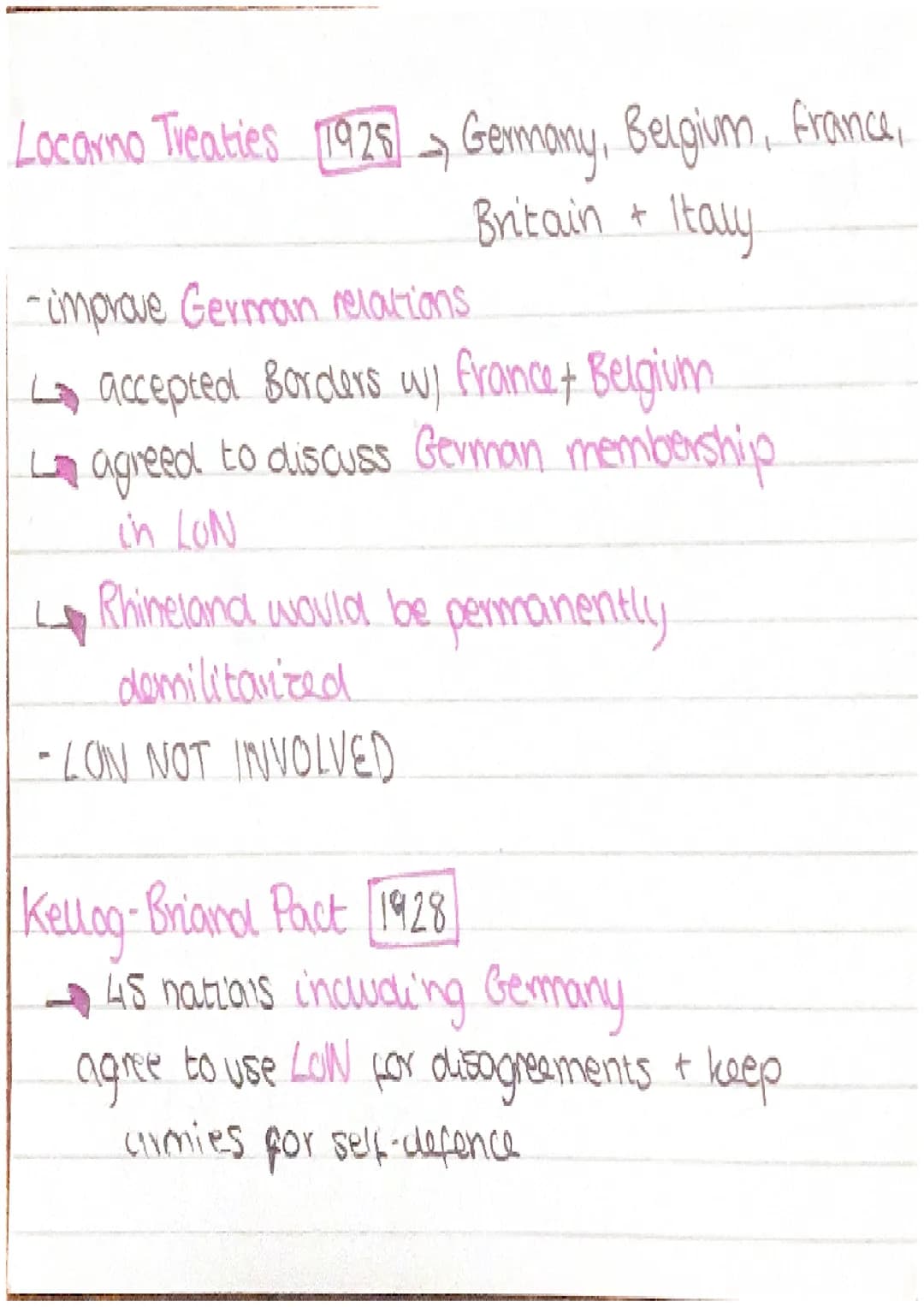
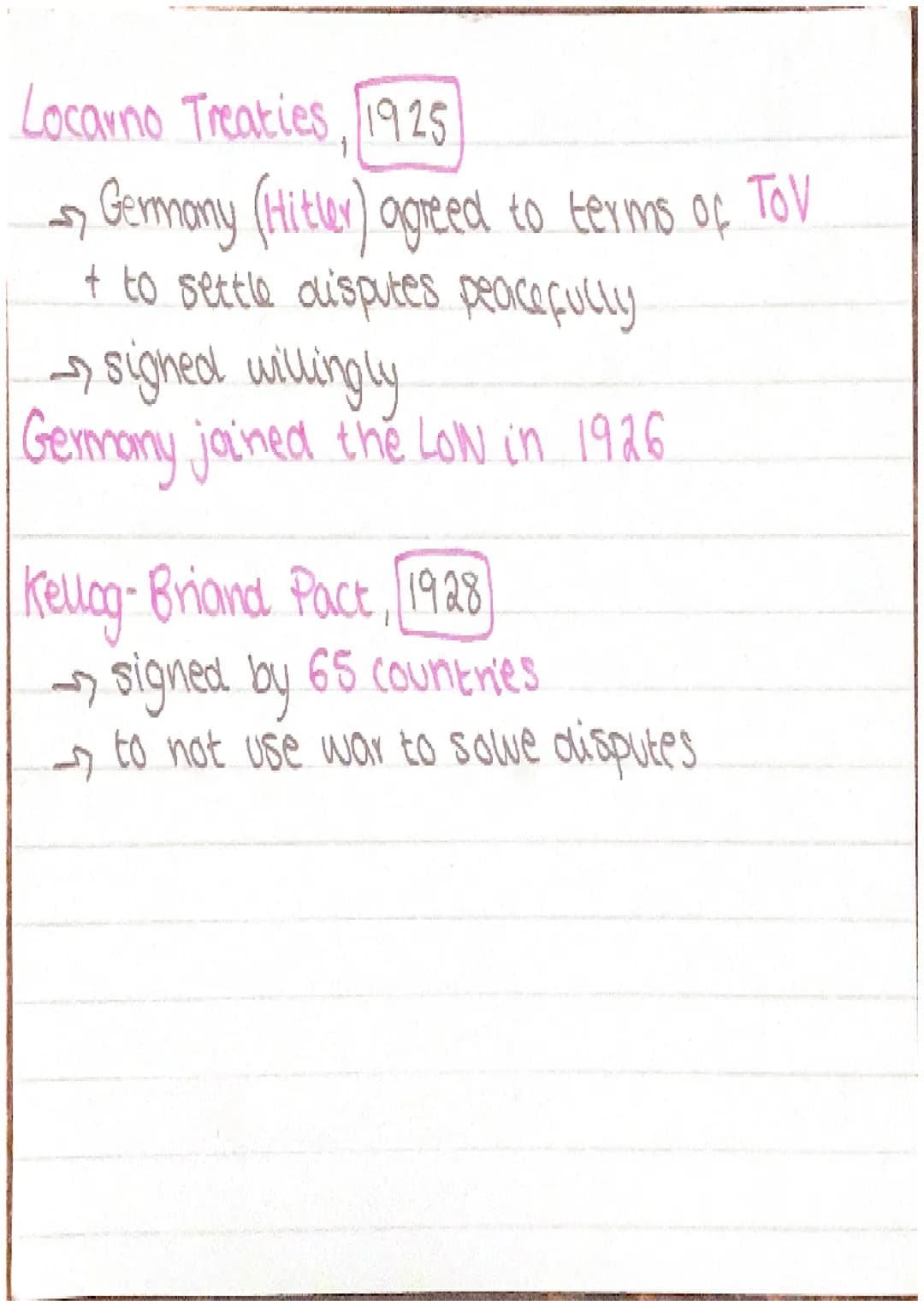
The Locarno Treaties of 1925 marked a significant attempt to improve European relations, particularly with Germany. These agreements, signed by Germany, Belgium, France, Britain, and Italy, aimed to stabilize post-war Europe by accepting specific borders and establishing the permanent demilitarization of the Rhineland.
Highlight: The Locarno Treaties represented a crucial step toward European reconciliation after World War I, though the League of Nations was notably not directly involved.
The Kellogg-Briand Pact of 1928 further expanded international peace efforts, with 45 nations, including Germany, agreeing to use diplomatic means for dispute resolution and maintain armies solely for self-defense. This agreement represented an important milestone in international relations, though its practical effectiveness would later be questioned.
These diplomatic initiatives demonstrated both the potential and limitations of international cooperation in the interwar period. While they showed promise for peaceful resolution of conflicts, their lack of enforcement mechanisms would ultimately prove problematic.