Implications and Evaluation of Cultural Bias
The prevalence of cultural bias in psychology has significant implications for the field and its applications.
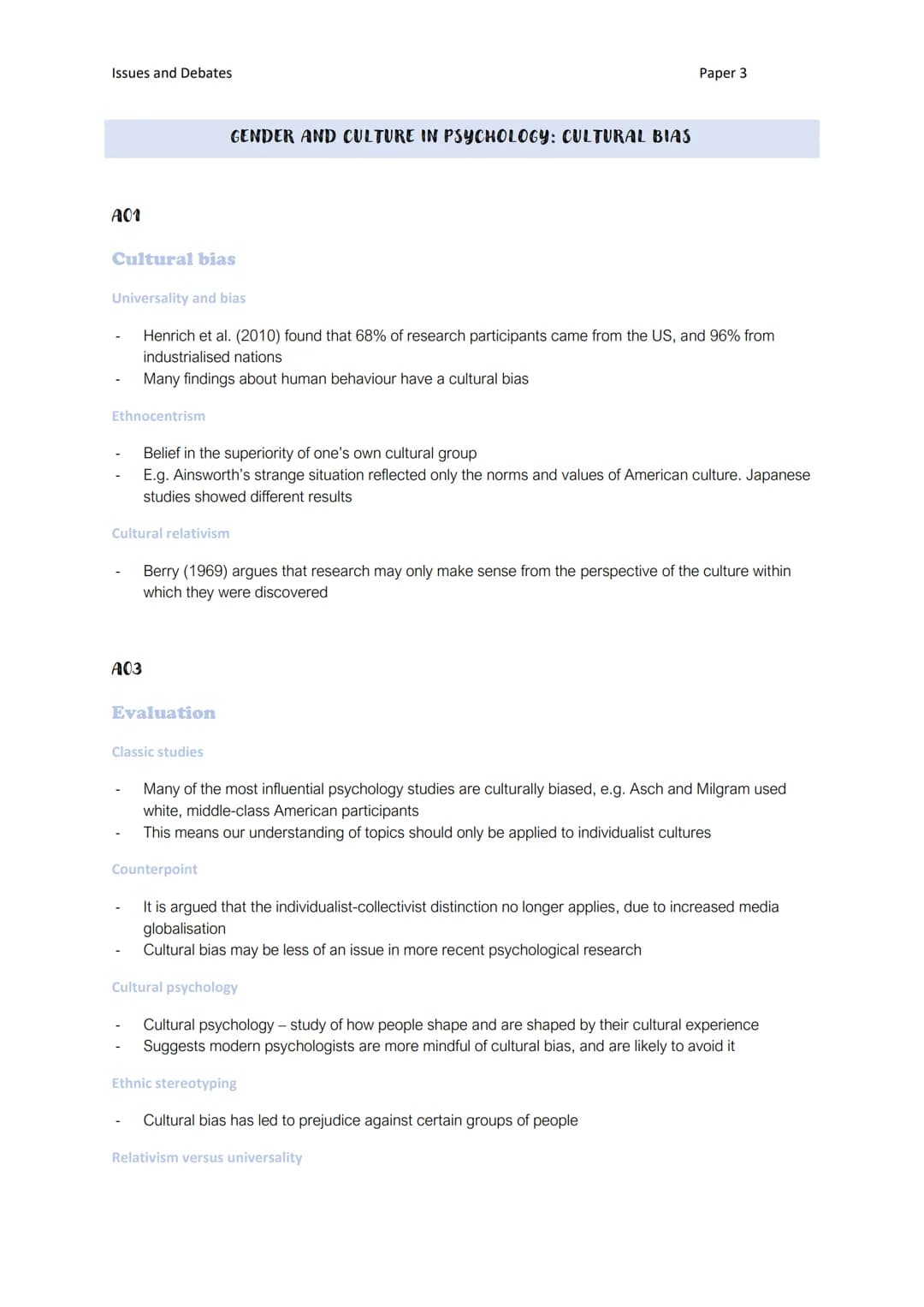
Many classic and influential studies in psychology suffer from cultural bias:
Example: Studies by Asch and Milgram, which are foundational in social psychology, primarily used white, middle-class American participants.
This bias limits the applicability of findings:
Highlight: Our understanding of many psychological topics should only be applied to individualist cultures, as they may not accurately represent collectivist societies.
However, some argue that cultural bias may be becoming less of an issue:
- Increased media globalization may be reducing the relevance of the individualist-collectivist distinction.
- Modern psychologists are more aware of cultural bias and actively work to avoid it in their research.
The impact of cultural bias extends beyond research validity:
Highlight: Cultural bias in psychology has contributed to ethnic stereotyping and prejudice against certain groups of people.
To address these issues, psychologists are increasingly turning to cross-cultural research:
Quote: "Cross-cultural research may provide a better understanding of human nature."
However, it's important to note that not all psychological phenomena are culturally relative, and there is no such thing as truly universal human behavior. This understanding highlights the complexity of addressing cultural bias in psychology and the need for nuanced, culturally-sensitive approaches to research and practice.



 Psychology