

A comprehensive guide to crafting a literary analysis essay,... Show more
 English377 views·Updated Jun 3, 2026·9 pages
How to Write a Strong Literary Analysis: Examples and Tips for Kids
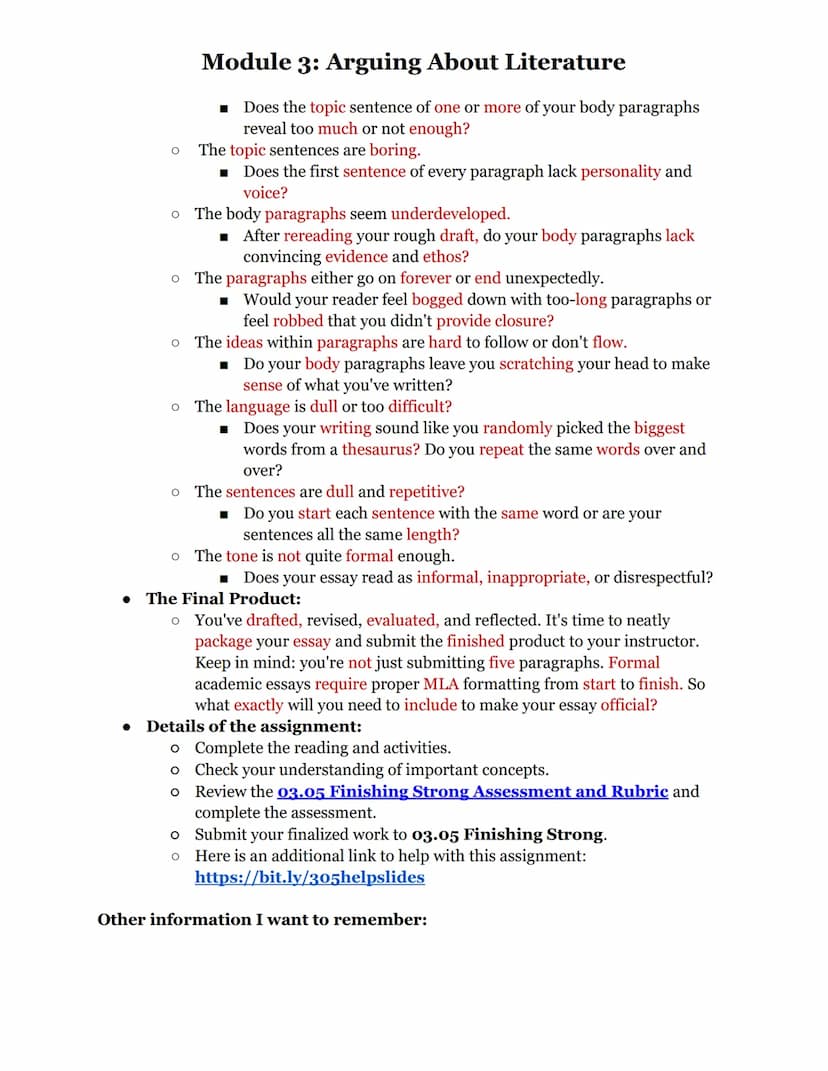
1 / 9
1
of 9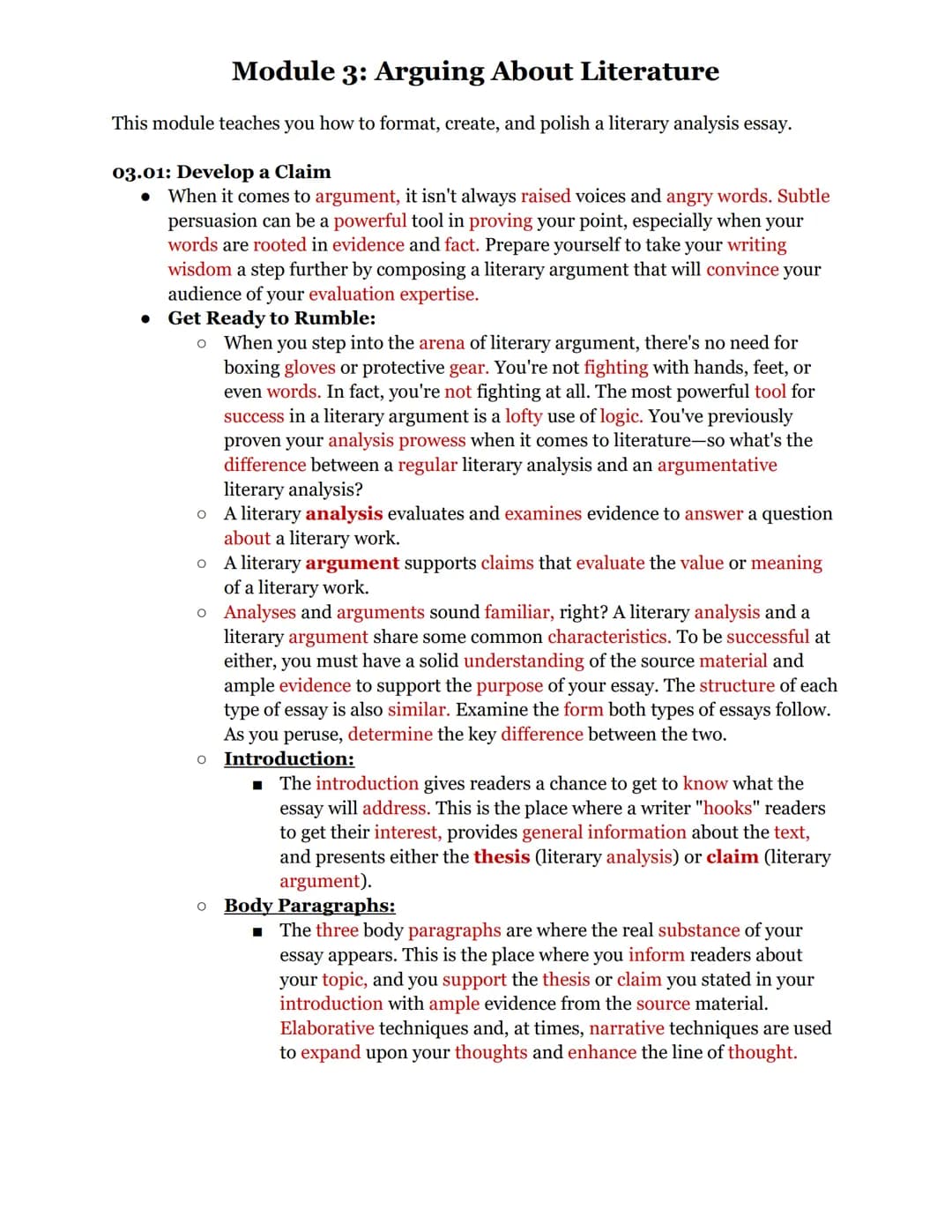
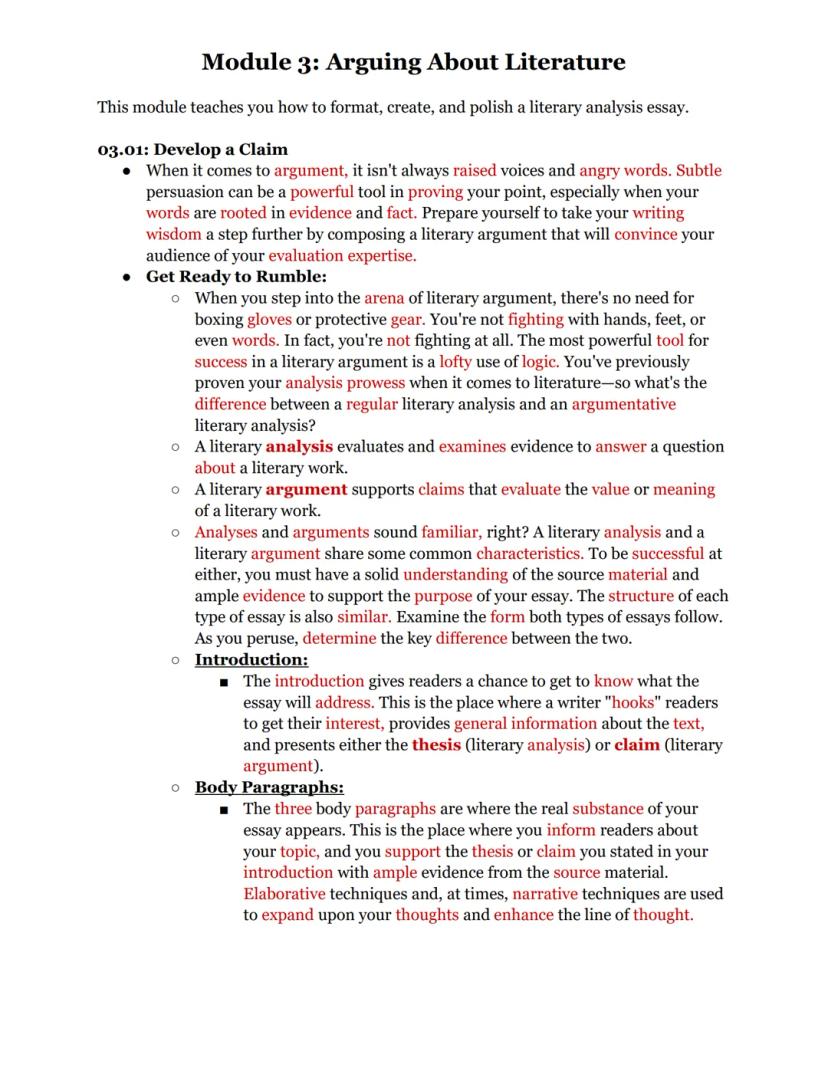
Developing Claims in Literary Analysis
This section focuses on the crucial skill of developing strong claims for literary analysis essays. It emphasizes the importance of logical argumentation and evidence-based reasoning.
Key concepts covered:
- Difference between analysis and argument in literary essays
- Common structure of literary analysis and argumentative essays
- Importance of solid understanding of source material
- Using evidence to support claims
Quote: "The most powerful tool for success in a literary argument is a lofty use of logic."
Vocabulary: Thesis - The main idea or argument of an essay, typically stated in the introduction.
Highlight: Both literary analysis and literary arguments require a solid understanding of the source material and ample evidence to support the essay's purpose.
2
of 9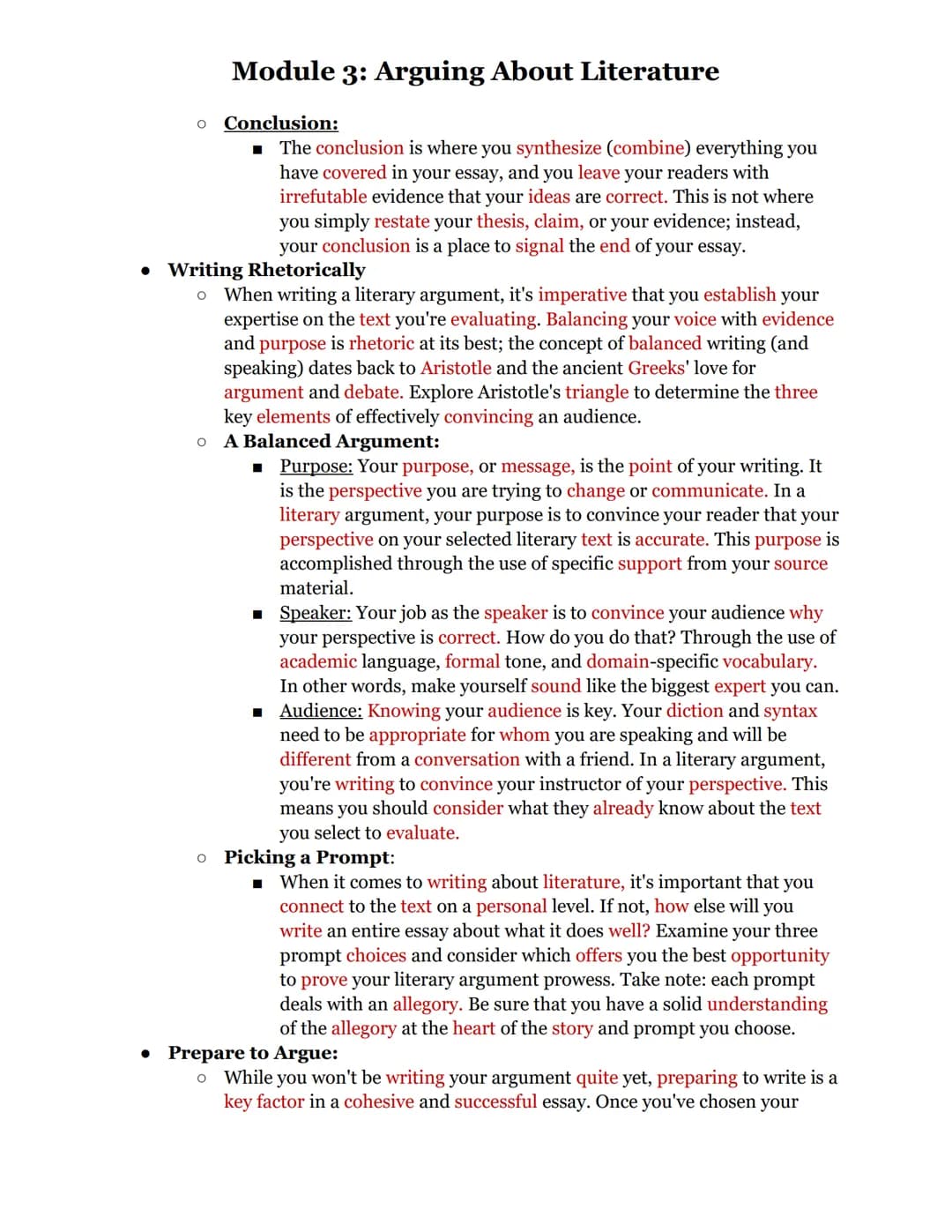
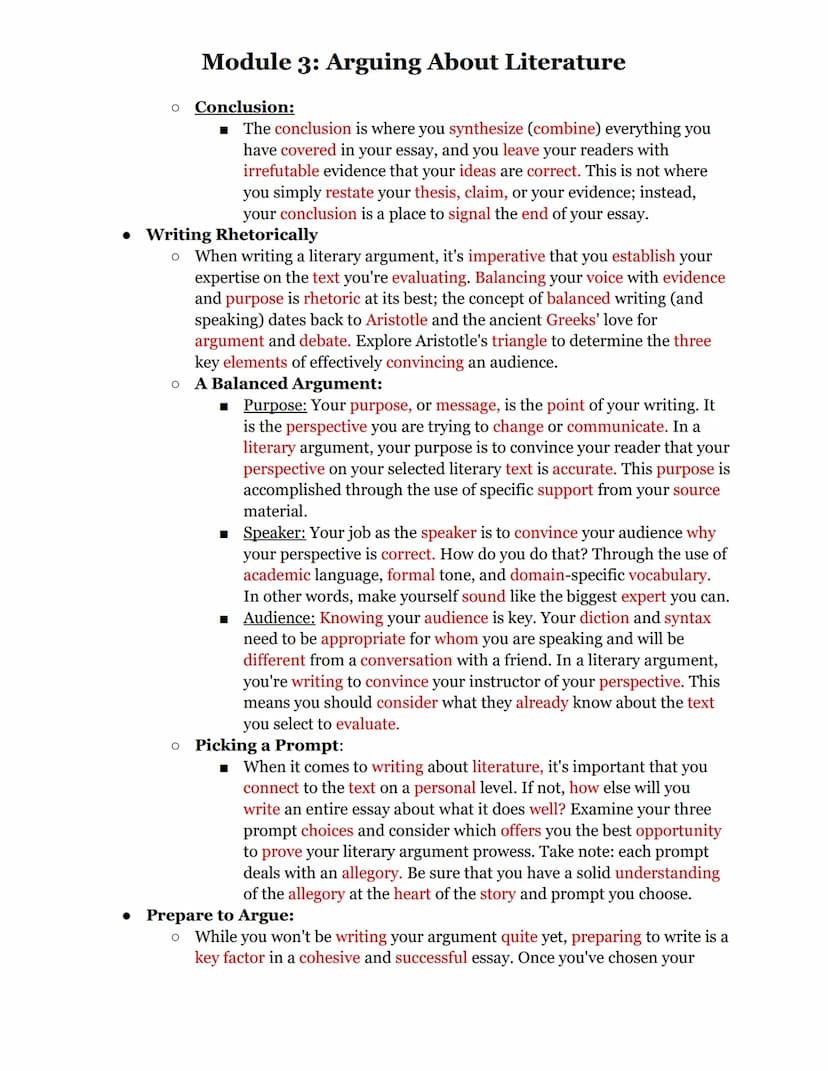
Writing Rhetorically in Literary Arguments
This section delves into the rhetorical aspects of writing argumentative literary essays. It introduces Aristotle's rhetorical triangle and its application in literary argumentation.
Key points:
- Establishing expertise on the text being evaluated
- Balancing voice, evidence, and purpose
- Aristotle's rhetorical triangle: Purpose, Speaker, Audience
- Importance of academic language and formal tone
Definition: Rhetoric - The art of effective or persuasive speaking or writing, especially the use of figures of speech and other compositional techniques.
Highlight: In a literary argument, your purpose is to convince your reader that your perspective on your selected literary text is accurate.
Example: Use of academic language, formal tone, and domain-specific vocabulary to establish expertise as the speaker.
3
of 9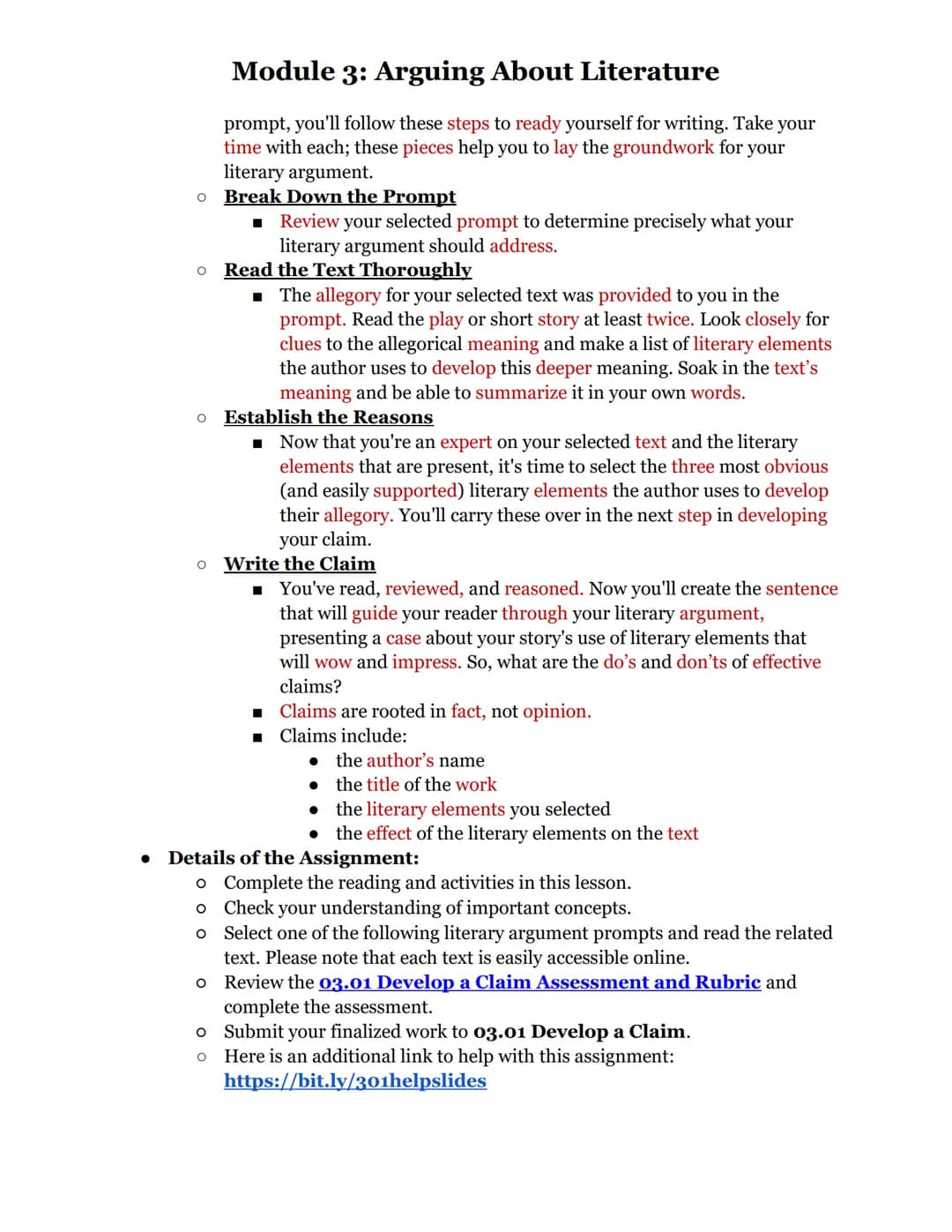
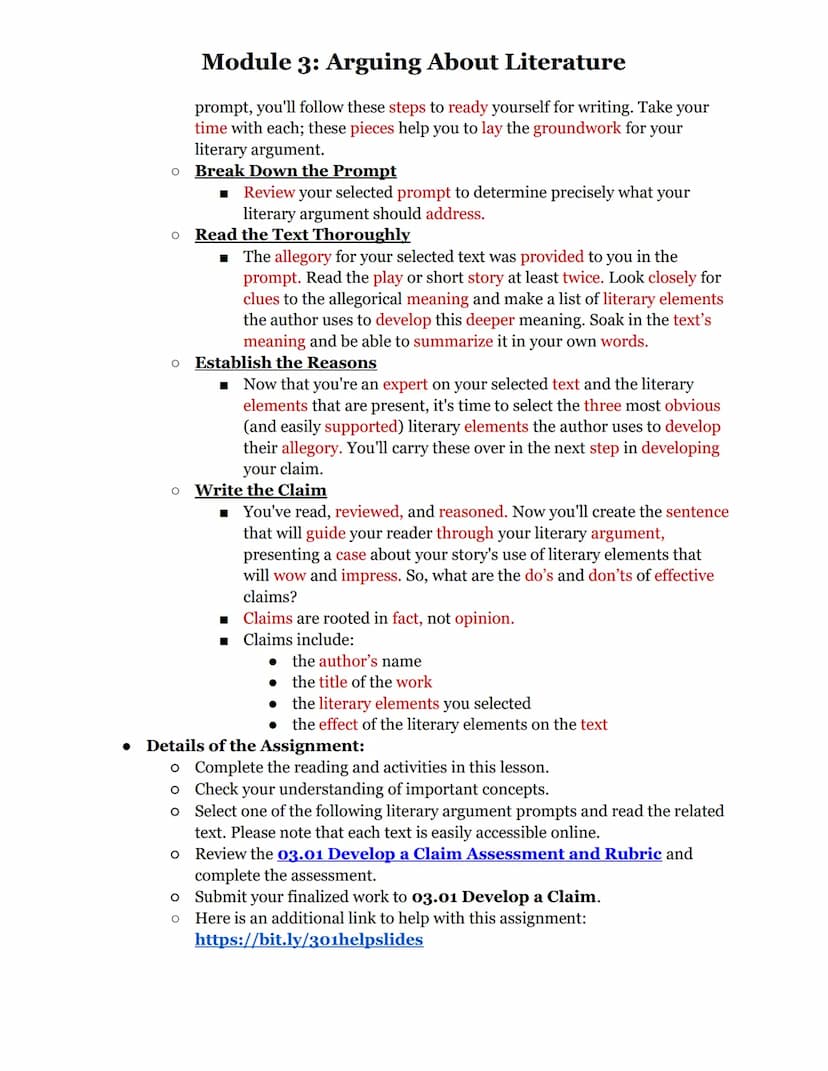
Selecting Prompts and Preparing to Write
This section guides students through the process of choosing appropriate prompts and preparing to write their literary analysis essays.
Key steps covered:
- Connecting personally with the text
- Understanding the allegory in the chosen prompt
- Breaking down the prompt
- Laying groundwork for the literary argument
Vocabulary: Allegory - A story, poem, or picture that can be interpreted to reveal a hidden meaning, typically a moral or political one.
Highlight: Preparing to write is a key factor in creating a cohesive and successful essay.
Example: When choosing a prompt, consider which offers the best opportunity to prove your literary argument prowess.
4
of 9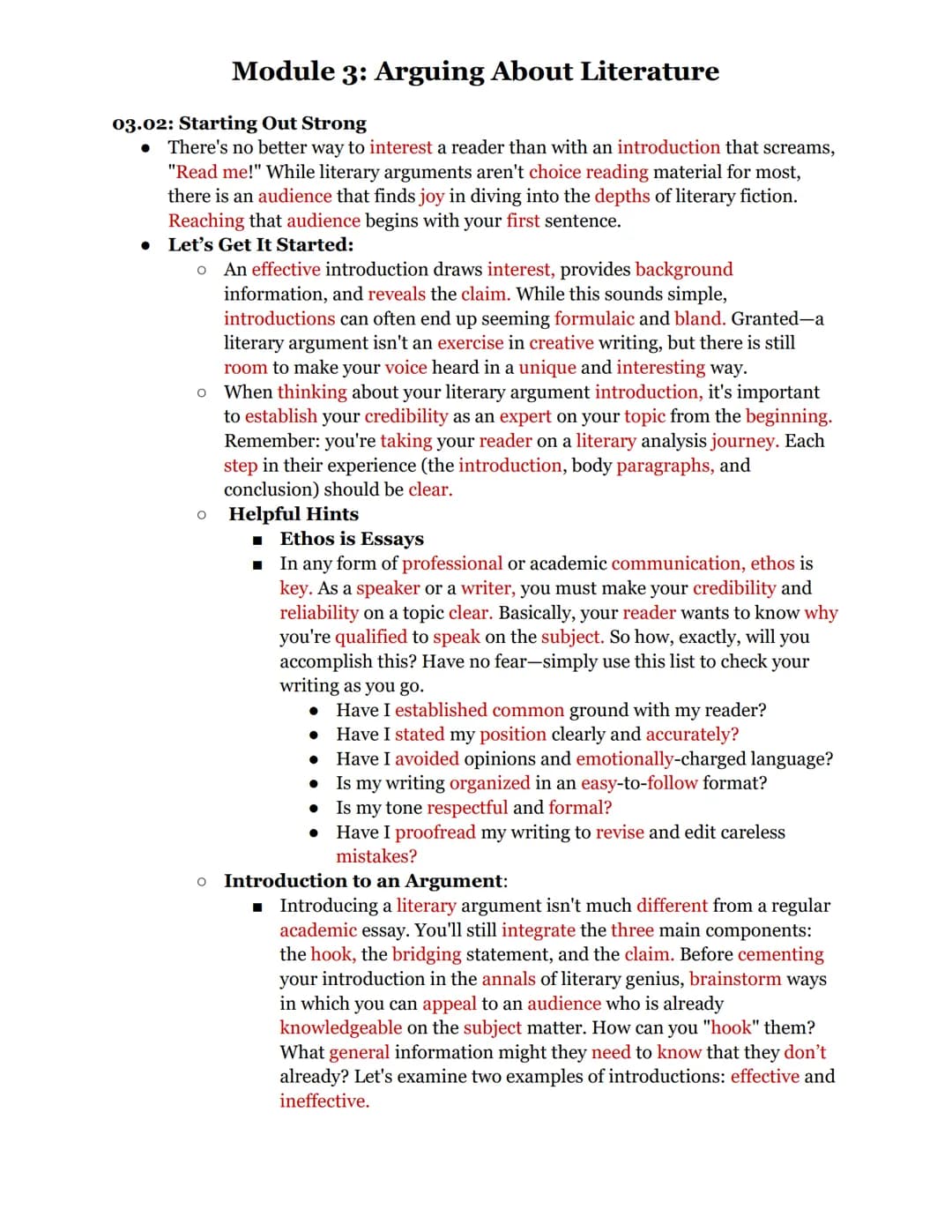
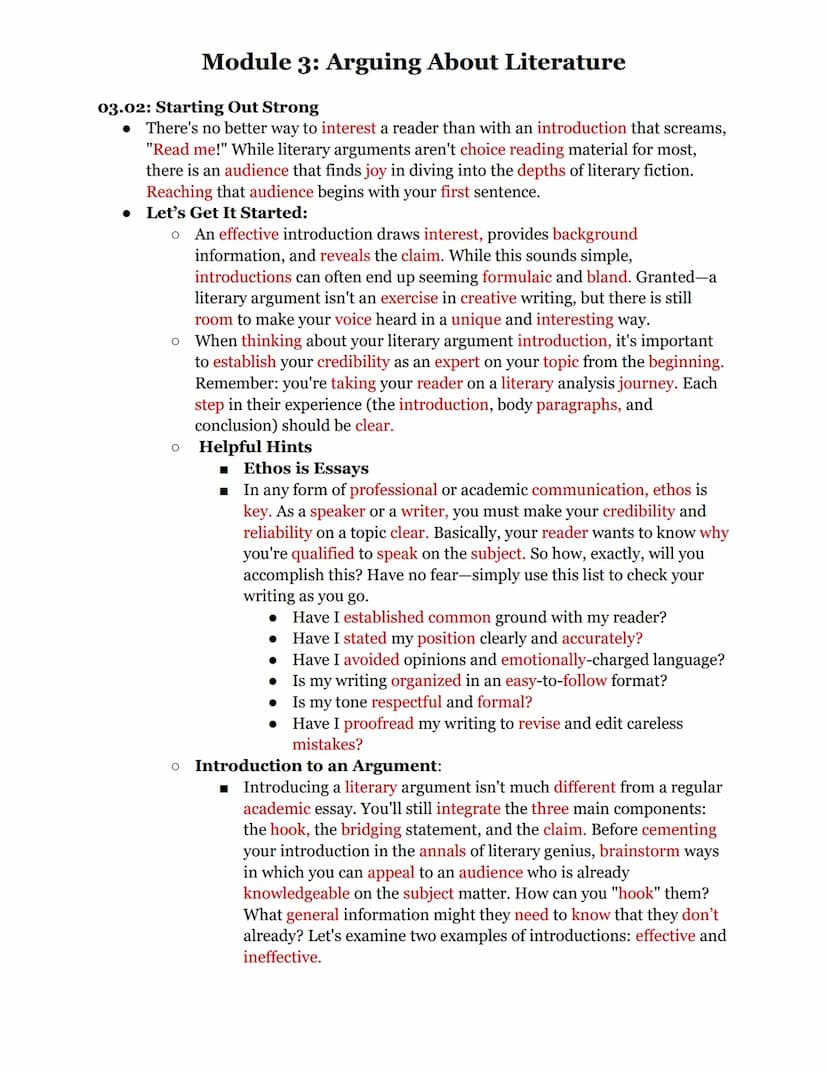
Page 4: Crafting Strong Introductions
The page details techniques for writing engaging introductions in literary analysis essay examples PDF. It emphasizes the importance of capturing reader interest while maintaining academic rigor.
Highlight: An effective introduction must draw interest, provide background information, and reveal the claim.
5
of 9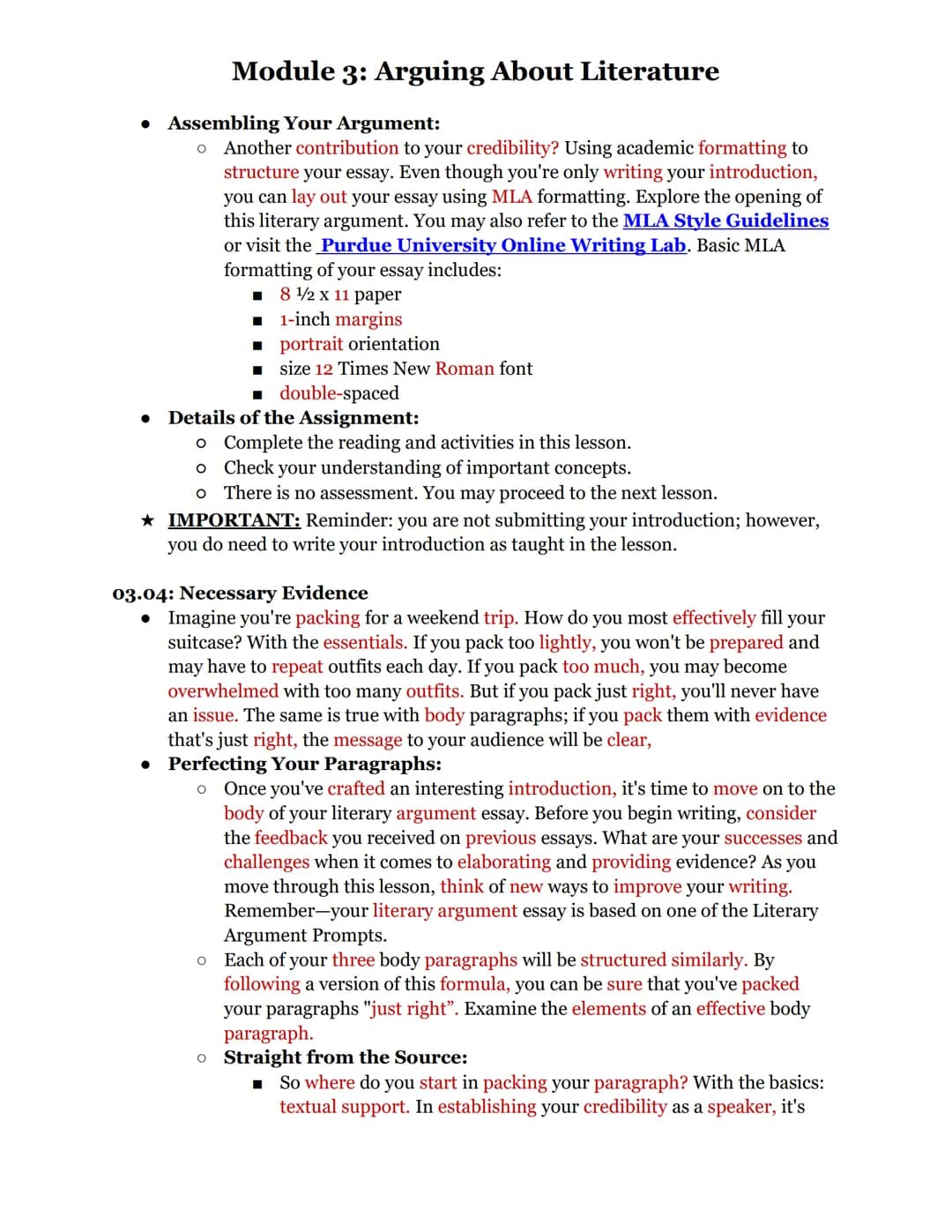
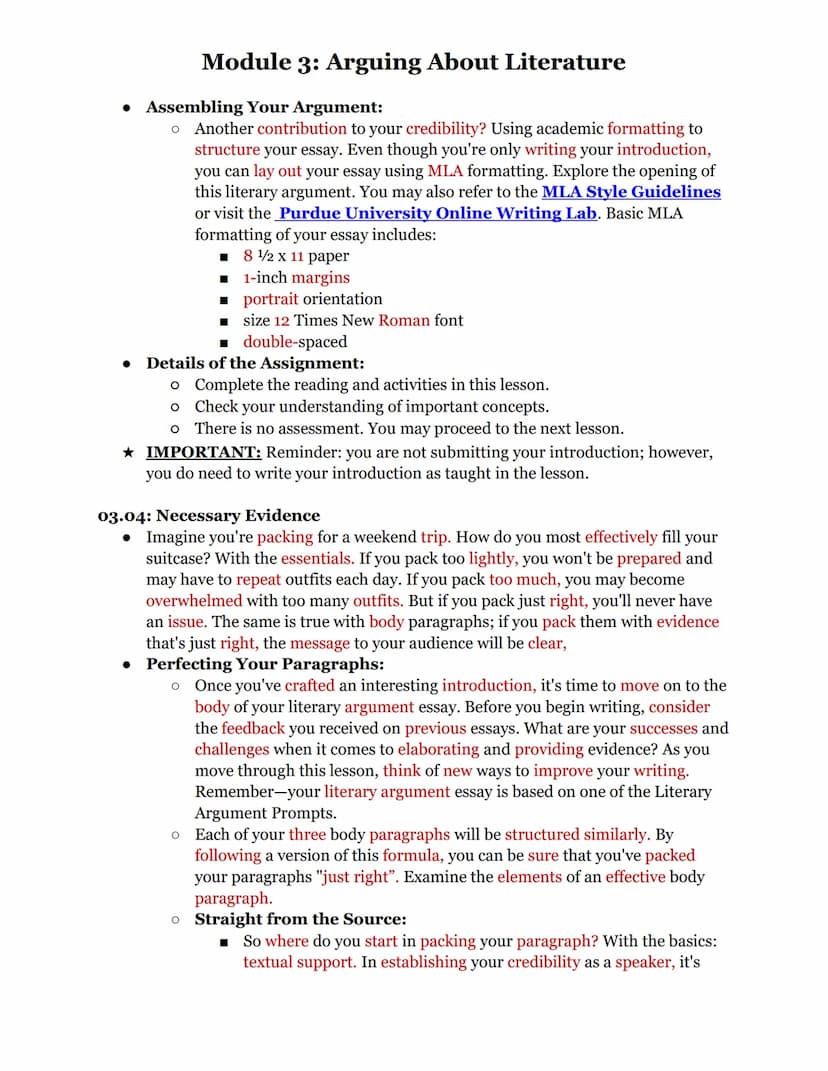
Page 5: MLA Formatting Guidelines
This section provides comprehensive formatting guidelines for literary argument examples, focusing on MLA style requirements.
Definition: MLA (Modern Language Association) style is the standardized formatting used for literary and academic writing.
Example: Basic MLA requirements include 1-inch margins, 12-point Times New Roman font, and double-spacing.
6
of 9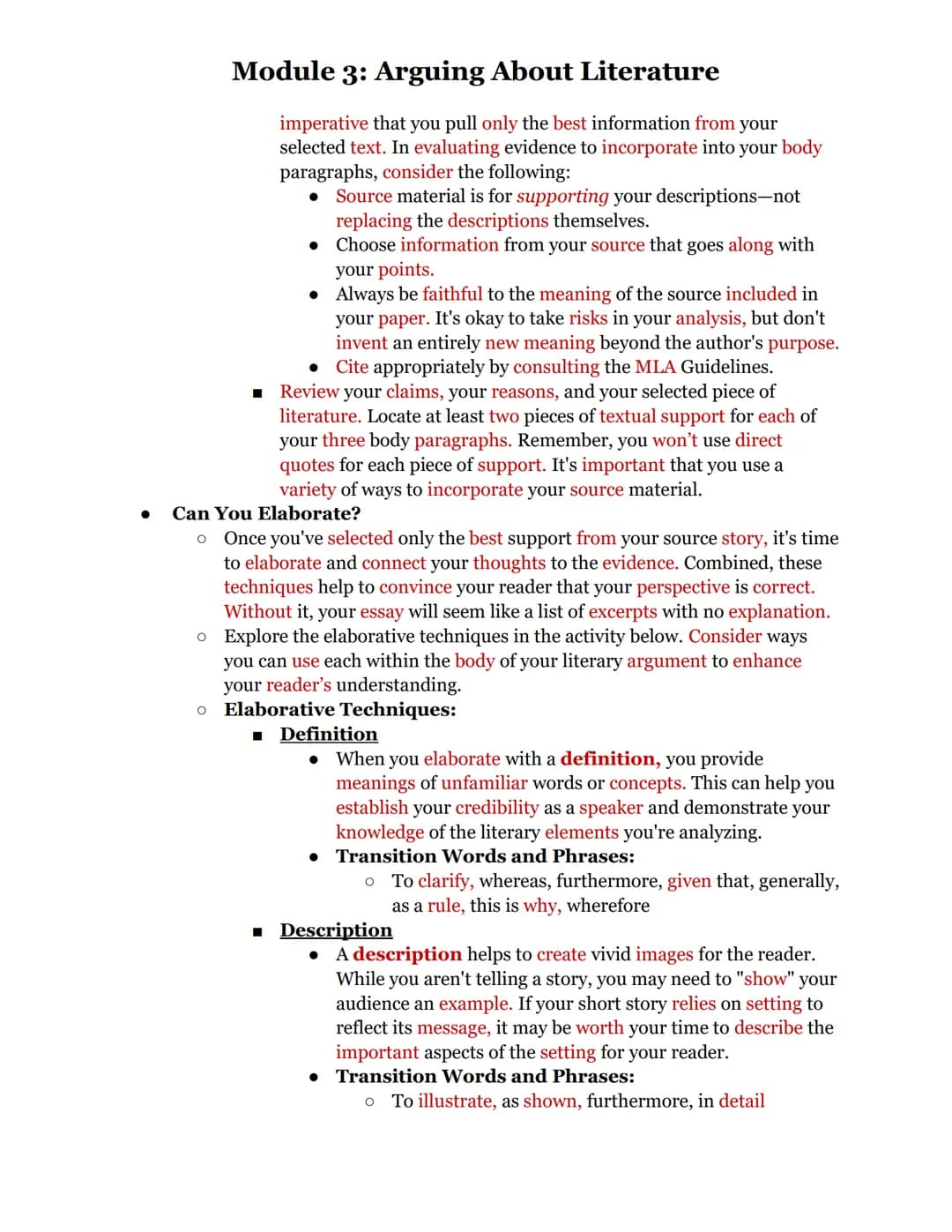
Page 6: Evidence Selection
The page discusses strategies for selecting and incorporating evidence in necessary evidence for strong literary arguments.
Highlight: Source material should support descriptions rather than replace them.
Quote: "Always be faithful to the meaning of the source included in your paper."
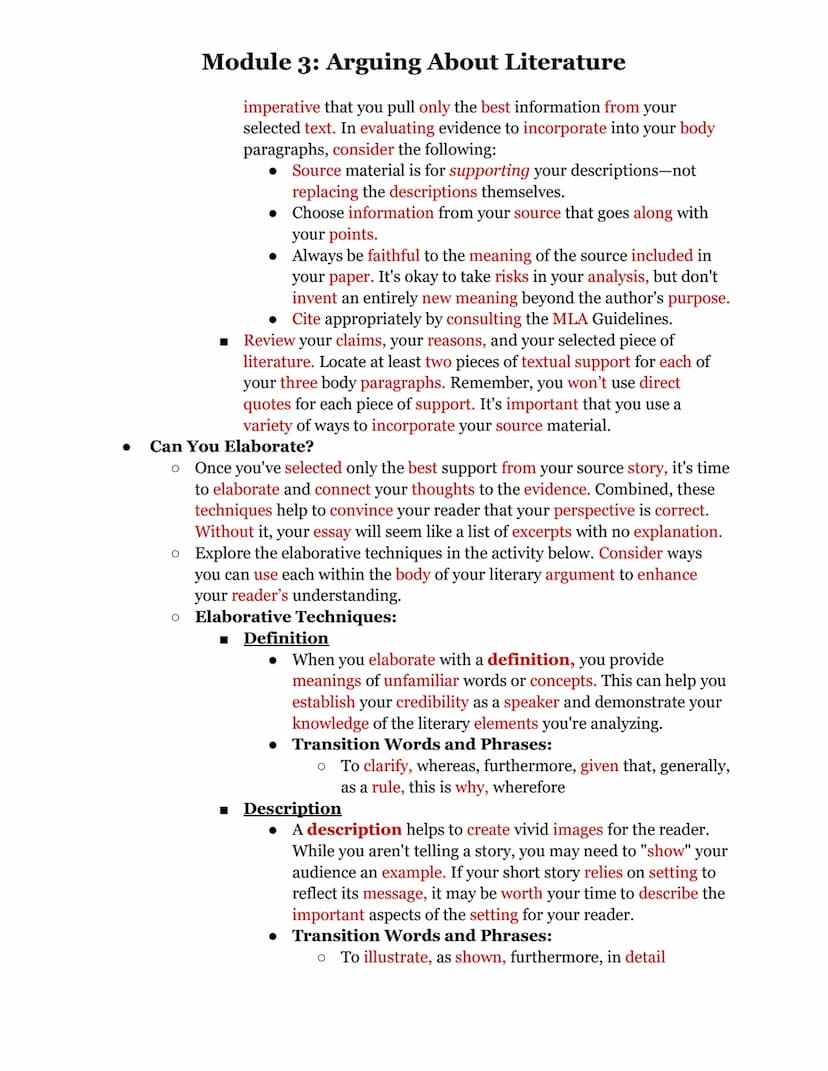
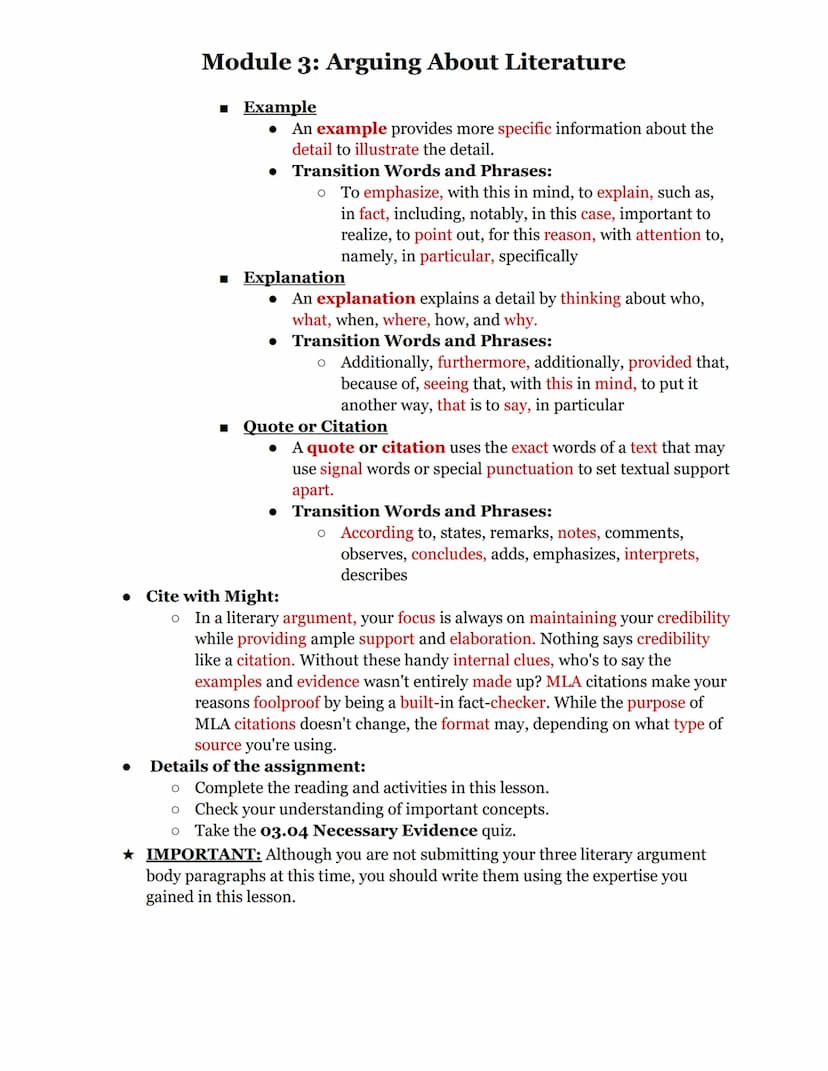
7
of 9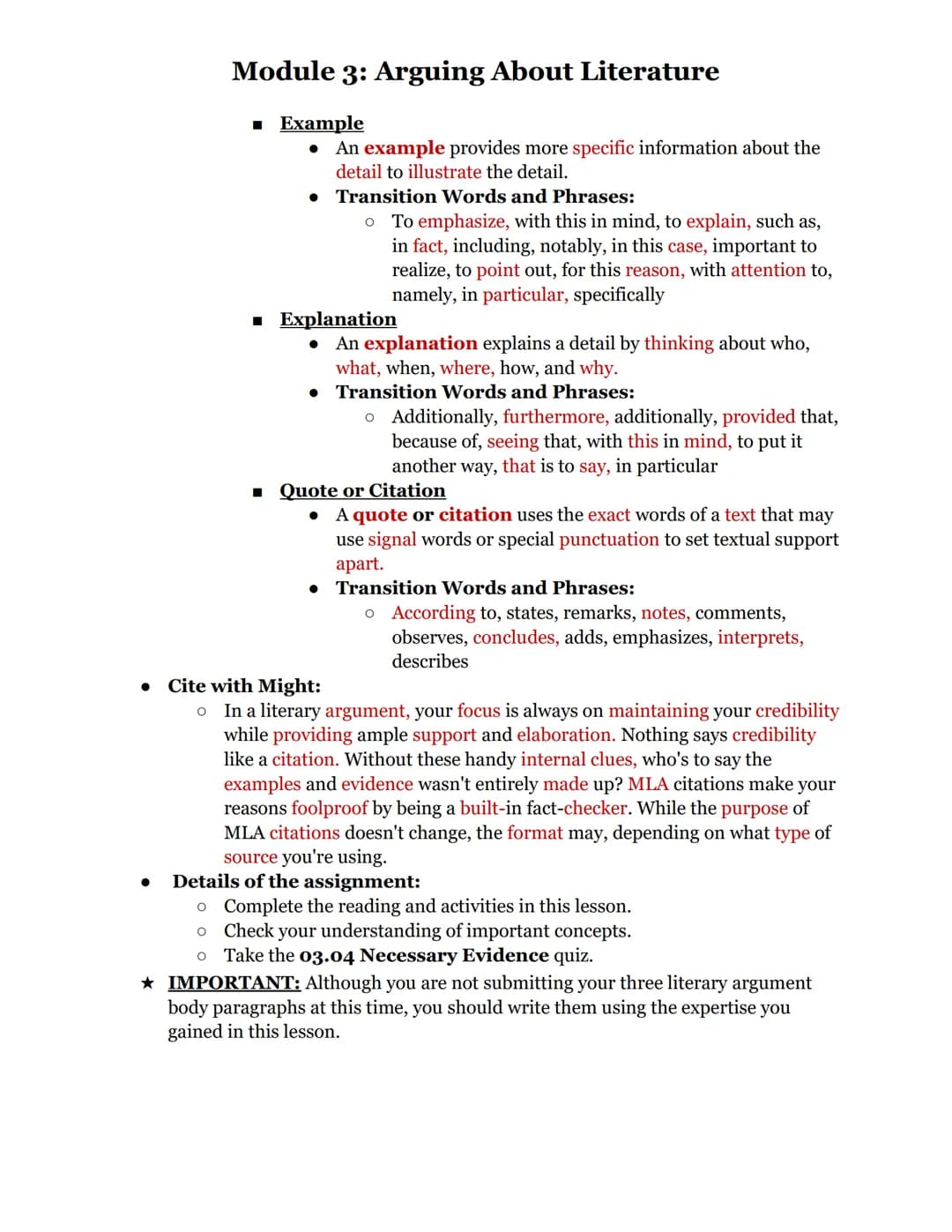
Page 7: Using Evidence Effectively
This section provides guidance on incorporating different types of evidence and transition words in argument and evidence example writing.
Example: Transition words like "to emphasize," "namely," and "specifically" help connect ideas and evidence.
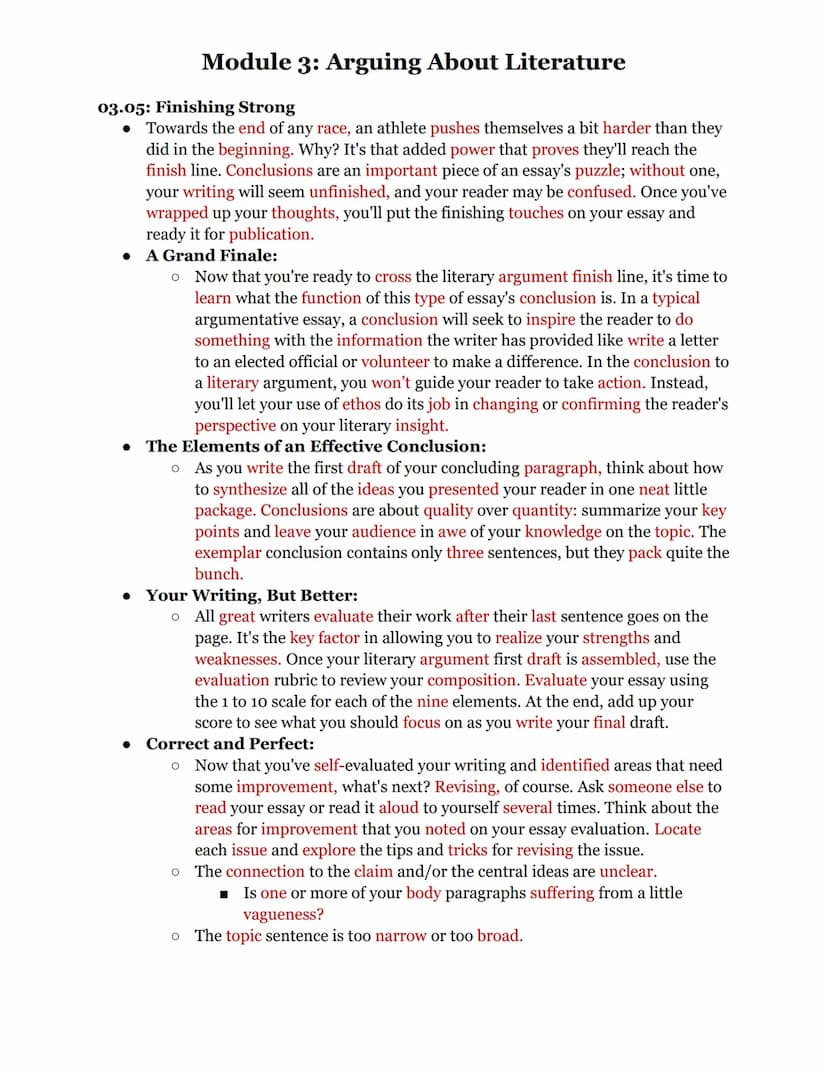
8
of 9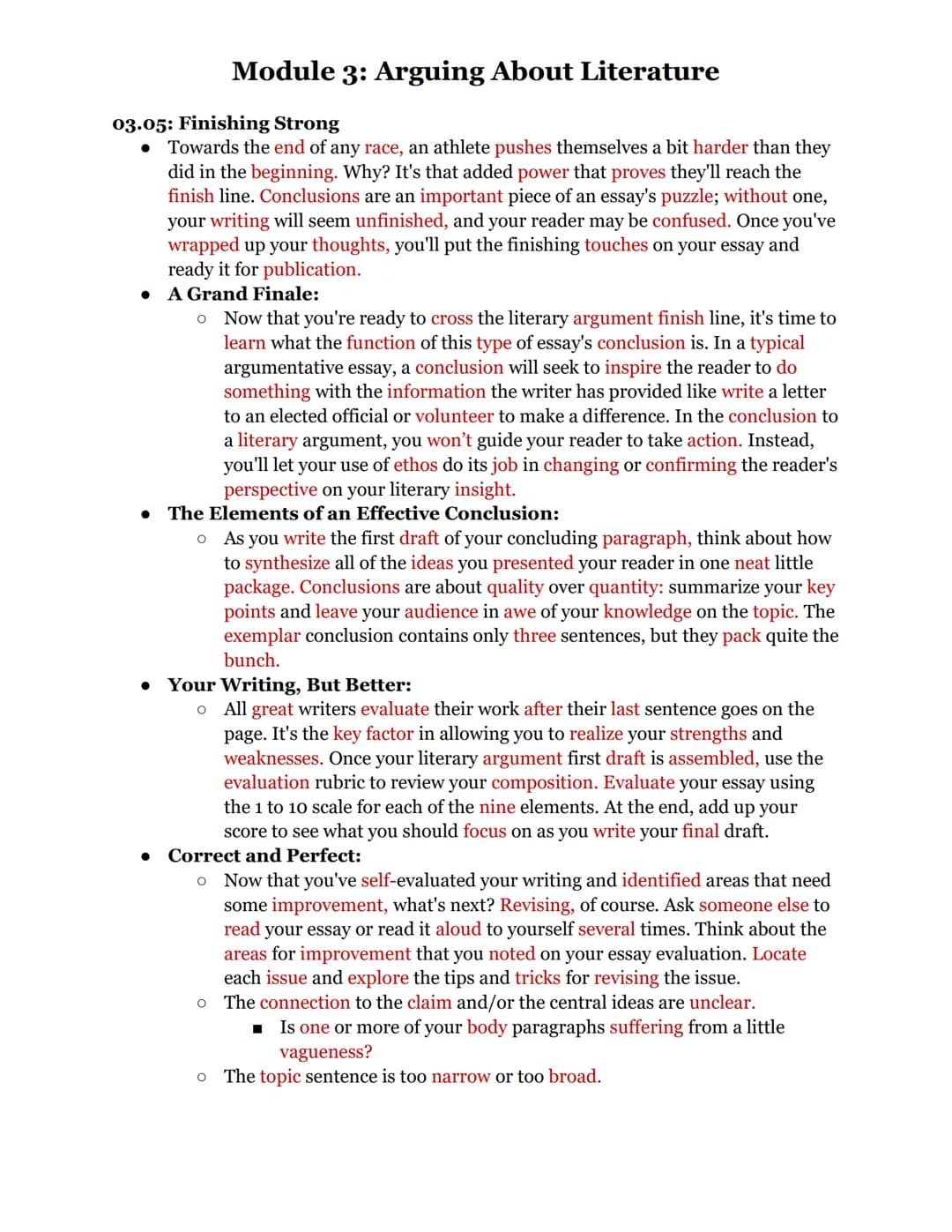
Page 8: Writing Conclusions
The page focuses on crafting effective conclusions for literary analysis claim examples.
Highlight: Conclusions are crucial for providing closure and reinforcing the essay's main arguments.
9
of 9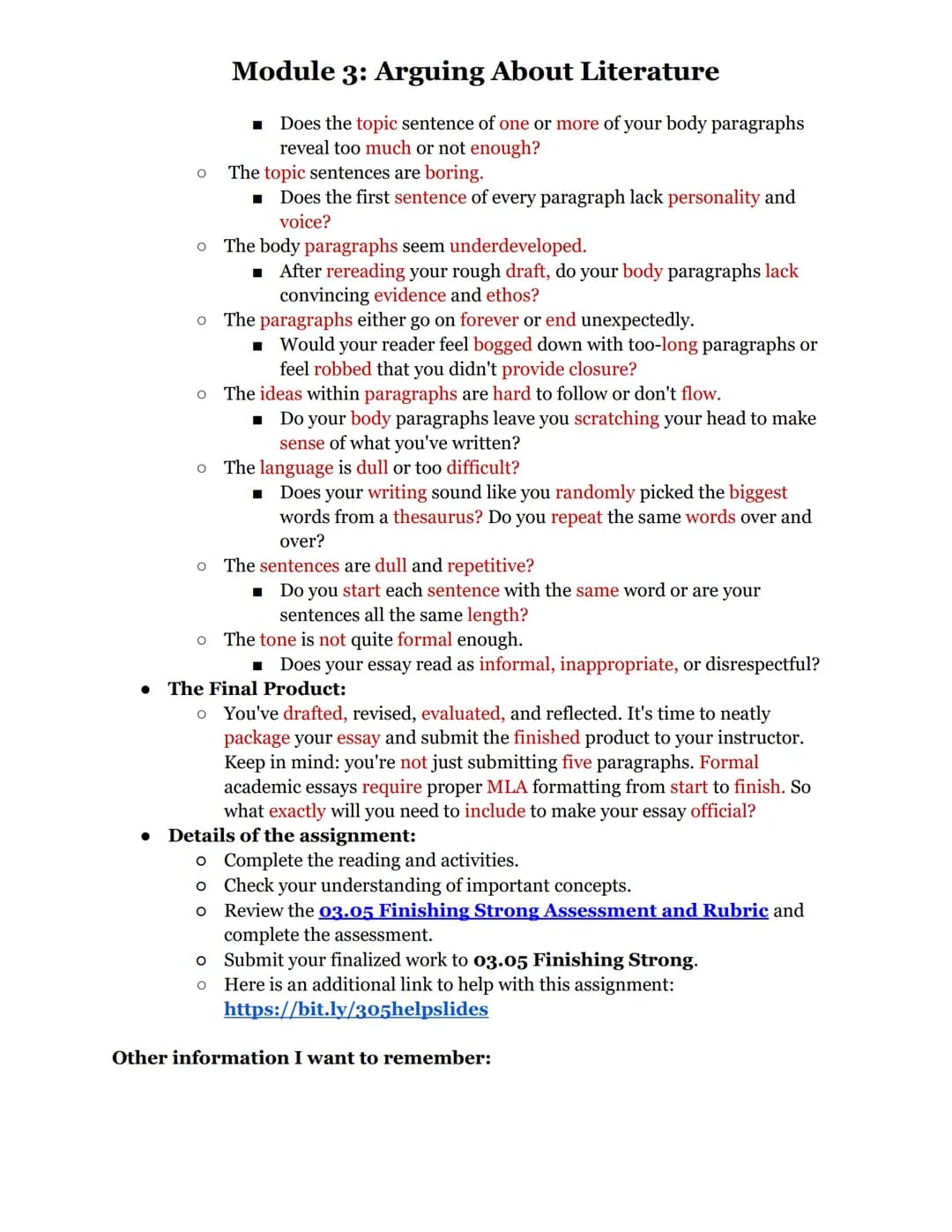
Module 3: Arguing About Literature
This module provides an in-depth guide on how to format, create, and refine a literary analysis essay. It focuses on developing strong claims and constructing persuasive arguments about literature.
Key points covered:
- Difference between literary analysis and literary argument
- Structure of literary essays (introduction, body paragraphs, conclusion)
- Rhetorical techniques for effective argumentation
- Selecting appropriate essay prompts
- Preparing to write a literary argument
Definition: A literary analysis evaluates evidence to answer questions about a literary work, while a literary argument supports claims that evaluate the value or meaning of a literary work.
Highlight: The most powerful tool for success in a literary argument is a lofty use of logic, not confrontation.
Example: The essay structure includes an introduction with a hook and thesis/claim, body paragraphs with evidence and elaboration, and a conclusion that synthesizes the key points.
We thought you’d never ask...
What is the Knowunity AI companion?
Our AI companion is specifically built for the needs of students. Based on the millions of content pieces we have on the platform we can provide truly meaningful and relevant answers to students. But its not only about answers, the companion is even more about guiding students through their daily learning challenges, with personalised study plans, quizzes or content pieces in the chat and 100% personalisation based on the students skills and developments.
Where can I download the Knowunity app?
You can download the app in the Google Play Store and in the Apple App Store.
Is Knowunity really free of charge?
That's right! Enjoy free access to study content, connect with fellow students, and get instant help – all at your fingertips.
Similar Content
Most popular content: Textual Evidence
1Most popular content in English
9Most popular content
9Can't find what you're looking for? Explore other subjects.
Students love us — and so will you.
4.6/5App Store
4.7/5Google Play
The app is very easy to use and well designed. I have found everything I was looking for so far and have been able to learn a lot from the presentations! I will definitely use the app for a class assignment! And of course it also helps a lot as an inspiration.
Stefan SiOS user
This app is really great. There are so many study notes and help [...]. My problem subject is French, for example, and the app has so many options for help. Thanks to this app, I have improved my French. I would recommend it to anyone.
Samantha KlichAndroid user
Wow, I am really amazed. I just tried the app because I've seen it advertised many times and was absolutely stunned. This app is THE HELP you want for school and above all, it offers so many things, such as workouts and fact sheets, which have been VERY helpful to me personally.
AnnaiOS user
English377 views·Updated Jun 3, 2026·9 pagesHow to Write a Strong Literary Analysis: Examples and Tips for Kids
A comprehensive guide to crafting a literary analysis essay, focusing on developing strong arguments, structuring evidence, and creating compelling introductions and conclusions. The module provides detailed instructions for formatting, creating claims, and polishing academic writing with emphasis on how... Show more
1
of 9Sign up to see the content. It's free!
- Access to all documents
- Improve your grades
- Join milions of students
Developing Claims in Literary Analysis
This section focuses on the crucial skill of developing strong claims for literary analysis essays. It emphasizes the importance of logical argumentation and evidence-based reasoning.
Key concepts covered:
- Difference between analysis and argument in literary essays
- Common structure of literary analysis and argumentative essays
- Importance of solid understanding of source material
- Using evidence to support claims
Quote: "The most powerful tool for success in a literary argument is a lofty use of logic."
Vocabulary: Thesis - The main idea or argument of an essay, typically stated in the introduction.
Highlight: Both literary analysis and literary arguments require a solid understanding of the source material and ample evidence to support the essay's purpose.
2
of 9Sign up to see the content. It's free!
- Access to all documents
- Improve your grades
- Join milions of students
Writing Rhetorically in Literary Arguments
This section delves into the rhetorical aspects of writing argumentative literary essays. It introduces Aristotle's rhetorical triangle and its application in literary argumentation.
Key points:
- Establishing expertise on the text being evaluated
- Balancing voice, evidence, and purpose
- Aristotle's rhetorical triangle: Purpose, Speaker, Audience
- Importance of academic language and formal tone
Definition: Rhetoric - The art of effective or persuasive speaking or writing, especially the use of figures of speech and other compositional techniques.
Highlight: In a literary argument, your purpose is to convince your reader that your perspective on your selected literary text is accurate.
Example: Use of academic language, formal tone, and domain-specific vocabulary to establish expertise as the speaker.
3
of 9Sign up to see the content. It's free!
- Access to all documents
- Improve your grades
- Join milions of students
Selecting Prompts and Preparing to Write
This section guides students through the process of choosing appropriate prompts and preparing to write their literary analysis essays.
Key steps covered:
- Connecting personally with the text
- Understanding the allegory in the chosen prompt
- Breaking down the prompt
- Laying groundwork for the literary argument
Vocabulary: Allegory - A story, poem, or picture that can be interpreted to reveal a hidden meaning, typically a moral or political one.
Highlight: Preparing to write is a key factor in creating a cohesive and successful essay.
Example: When choosing a prompt, consider which offers the best opportunity to prove your literary argument prowess.
4
of 9Sign up to see the content. It's free!
- Access to all documents
- Improve your grades
- Join milions of students
Page 4: Crafting Strong Introductions
The page details techniques for writing engaging introductions in literary analysis essay examples PDF. It emphasizes the importance of capturing reader interest while maintaining academic rigor.
Highlight: An effective introduction must draw interest, provide background information, and reveal the claim.
5
of 9Sign up to see the content. It's free!
- Access to all documents
- Improve your grades
- Join milions of students
Page 5: MLA Formatting Guidelines
This section provides comprehensive formatting guidelines for literary argument examples, focusing on MLA style requirements.
Definition: MLA (Modern Language Association) style is the standardized formatting used for literary and academic writing.
Example: Basic MLA requirements include 1-inch margins, 12-point Times New Roman font, and double-spacing.
6
of 9Sign up to see the content. It's free!
- Access to all documents
- Improve your grades
- Join milions of students
Page 6: Evidence Selection
The page discusses strategies for selecting and incorporating evidence in necessary evidence for strong literary arguments.
Highlight: Source material should support descriptions rather than replace them.
Quote: "Always be faithful to the meaning of the source included in your paper."
7
of 9Sign up to see the content. It's free!
- Access to all documents
- Improve your grades
- Join milions of students
Page 7: Using Evidence Effectively
This section provides guidance on incorporating different types of evidence and transition words in argument and evidence example writing.
Example: Transition words like "to emphasize," "namely," and "specifically" help connect ideas and evidence.
8
of 9Sign up to see the content. It's free!
- Access to all documents
- Improve your grades
- Join milions of students
Page 8: Writing Conclusions
The page focuses on crafting effective conclusions for literary analysis claim examples.
Highlight: Conclusions are crucial for providing closure and reinforcing the essay's main arguments.
9
of 9Sign up to see the content. It's free!
- Access to all documents
- Improve your grades
- Join milions of students
Module 3: Arguing About Literature
This module provides an in-depth guide on how to format, create, and refine a literary analysis essay. It focuses on developing strong claims and constructing persuasive arguments about literature.
Key points covered:
- Difference between literary analysis and literary argument
- Structure of literary essays (introduction, body paragraphs, conclusion)
- Rhetorical techniques for effective argumentation
- Selecting appropriate essay prompts
- Preparing to write a literary argument
Definition: A literary analysis evaluates evidence to answer questions about a literary work, while a literary argument supports claims that evaluate the value or meaning of a literary work.
Highlight: The most powerful tool for success in a literary argument is a lofty use of logic, not confrontation.
Example: The essay structure includes an introduction with a hook and thesis/claim, body paragraphs with evidence and elaboration, and a conclusion that synthesizes the key points.
We thought you’d never ask...
What is the Knowunity AI companion?
Our AI companion is specifically built for the needs of students. Based on the millions of content pieces we have on the platform we can provide truly meaningful and relevant answers to students. But its not only about answers, the companion is even more about guiding students through their daily learning challenges, with personalised study plans, quizzes or content pieces in the chat and 100% personalisation based on the students skills and developments.
Where can I download the Knowunity app?
You can download the app in the Google Play Store and in the Apple App Store.
Is Knowunity really free of charge?
That's right! Enjoy free access to study content, connect with fellow students, and get instant help – all at your fingertips.
Similar Content
Most popular content: Textual Evidence
1Most popular content in English
9Most popular content
9Can't find what you're looking for? Explore other subjects.
Students love us — and so will you.
4.6/5App Store
4.7/5Google Play
The app is very easy to use and well designed. I have found everything I was looking for so far and have been able to learn a lot from the presentations! I will definitely use the app for a class assignment! And of course it also helps a lot as an inspiration.
Stefan SiOS user
This app is really great. There are so many study notes and help [...]. My problem subject is French, for example, and the app has so many options for help. Thanks to this app, I have improved my French. I would recommend it to anyone.
Samantha KlichAndroid user
Wow, I am really amazed. I just tried the app because I've seen it advertised many times and was absolutely stunned. This app is THE HELP you want for school and above all, it offers so many things, such as workouts and fact sheets, which have been VERY helpful to me personally.
AnnaiOS user