

Antonio Pigafetta's eyewitness account of the Battle of Mactan provides... Show more
 AP World History
 Algebra
 Biology
Sign up to see the contentIt's free!
Access to all documents
Improve your grades
Join milions of students
Knowunity AI
Subjects
Triangle Congruence and Similarity Theorems
Triangle Properties and Classification
Linear Equations and Graphs
Geometric Angle Relationships
Trigonometric Functions and Identities
Equation Solving Techniques
Circle Geometry Fundamentals
Division Operations and Methods
Basic Differentiation Rules
Exponent and Logarithm Properties
Show all topics
Human Organ Systems
Reproductive Cell Cycles
Biological Sciences Subdisciplines
Cellular Energy Metabolism
Autotrophic Energy Processes
Inheritance Patterns and Principles
Biomolecular Structure and Organization
Cell Cycle and Division Mechanics
Cellular Organization and Development
Biological Structural Organization
Show all topics
Chemical Sciences and Applications
Atomic Structure and Composition
Molecular Electron Structure Representation
Atomic Electron Behavior
Matter Properties and Water
Mole Concept and Calculations
Gas Laws and Behavior
Periodic Table Organization
Chemical Thermodynamics Fundamentals
Chemical Bond Types and Properties
Show all topics
European Renaissance and Enlightenment
European Cultural Movements 800-1920
American Revolution Era 1763-1797
American Civil War 1861-1865
Global Imperial Systems
Mongol and Chinese Dynasties
U.S. Presidents and World Leaders
Historical Sources and Documentation
World Wars Era and Impact
World Religious Systems
Show all topics
Classic and Contemporary Novels
Literary Character Analysis
Rhetorical Theory and Practice
Classic Literary Narratives
Reading Analysis and Interpretation
Narrative Structure and Techniques
English Language Components
Influential English-Language Authors
Basic Sentence Structure
Narrative Voice and Perspective
Show all topics
84
•
Updated Mar 20, 2026
•
Antonio Pigafetta's eyewitness account of the Battle of Mactan provides... Show more
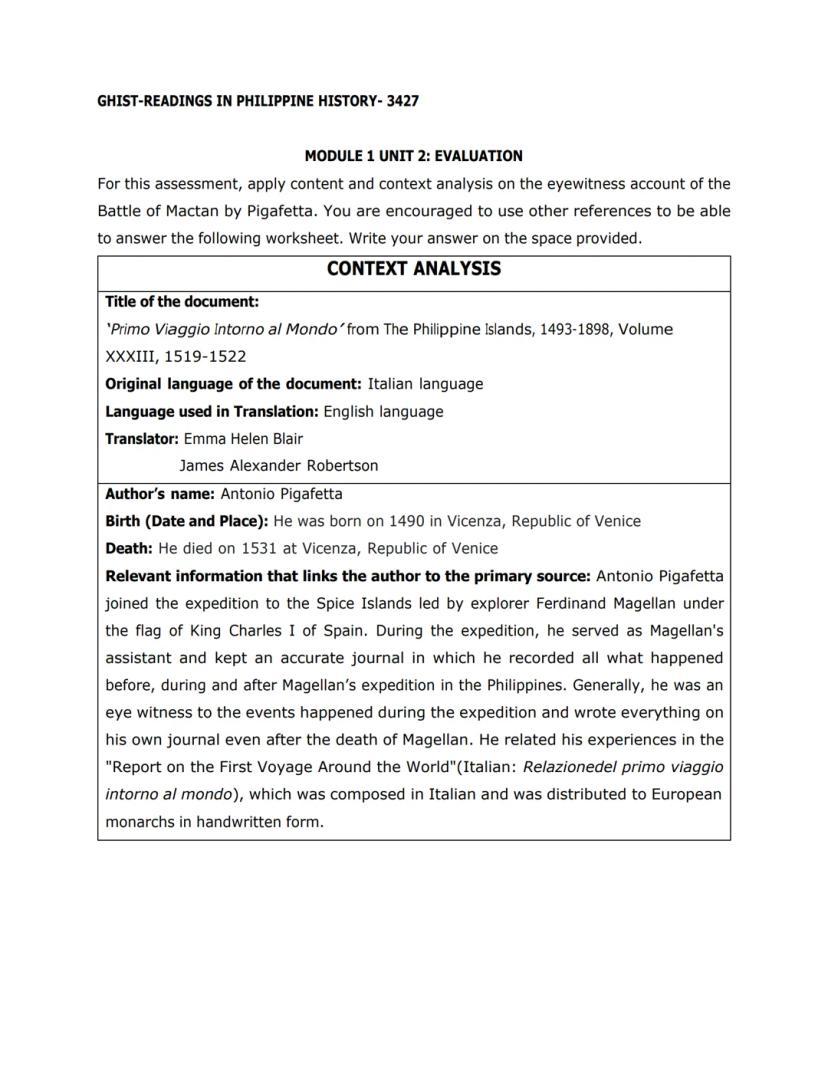
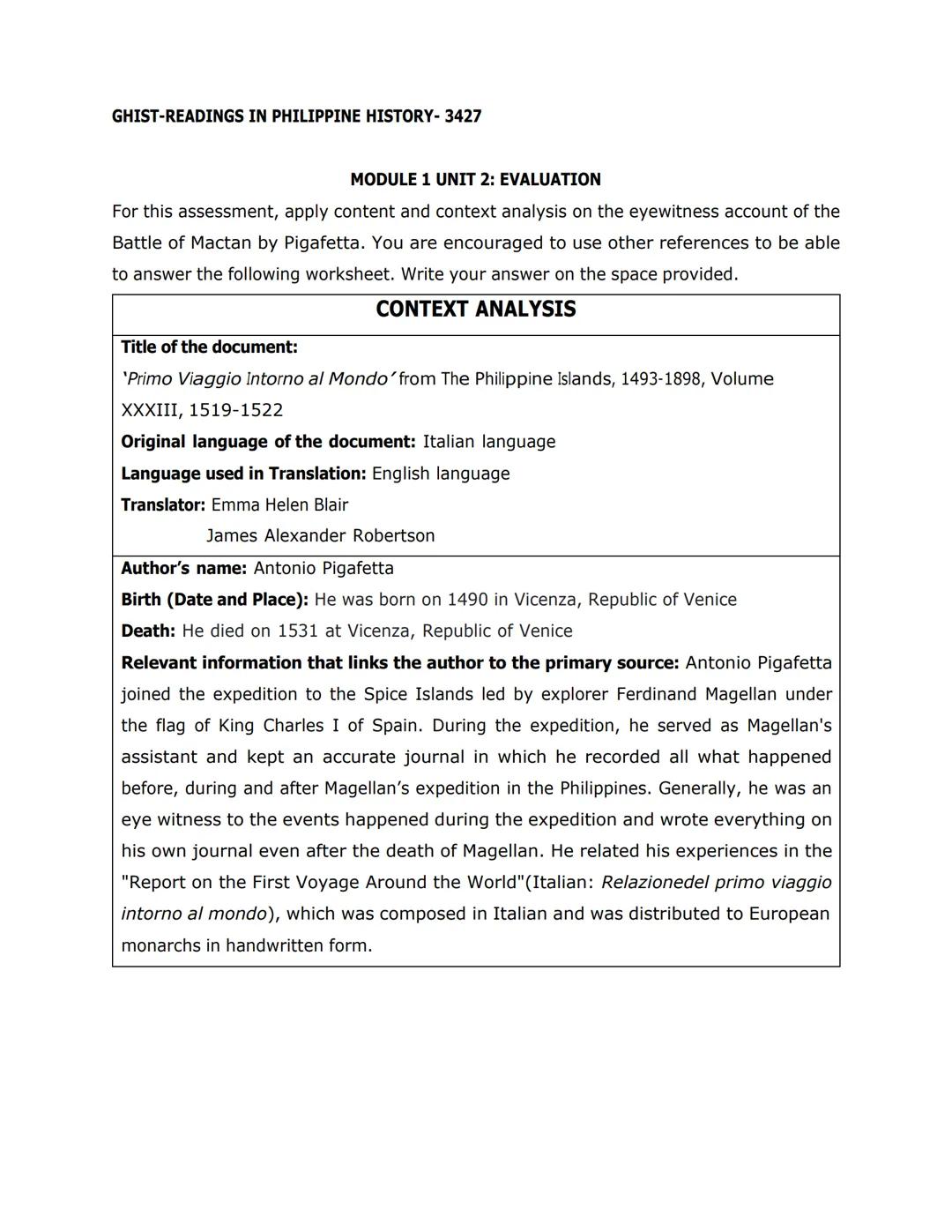
Antonio Pigafetta served as Magellan's personal assistant during the famous expedition to find a western route to the Spice Islands. As an eyewitness to history, he meticulously recorded everything that happened before, during, and after their arrival in the Philippines in his journal "Primo Viaggio Intorno al Mondo" (First Voyage Around the World).
Pigafetta was born in 1490 in the Republic of Venice and joined Magellan's expedition under the Spanish flag. His detailed observations weren't just about the voyage itself—they also included some of the earliest Western descriptions of the people, languages, and geography they encountered.
After Magellan's death, Pigafetta continued documenting their journey. He eventually compiled his notes into a comprehensive report that was distributed to European monarchs in handwritten form before being officially published in Italian in the 1550s.
Did you know? Pigafetta's journal is considered the most reliable source for the Battle of Mactan. Without his detailed account, this crucial moment in Philippine history might have been lost to time!
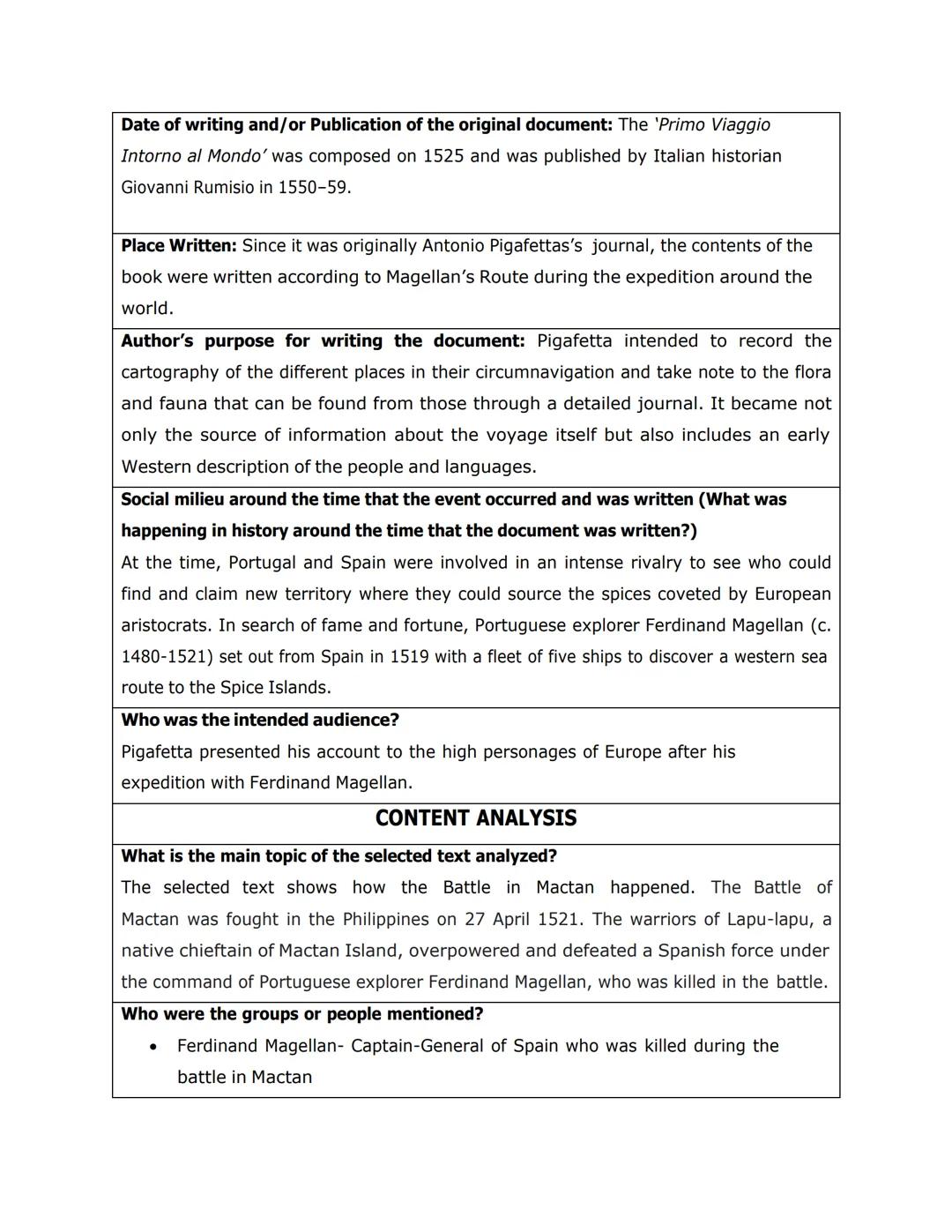
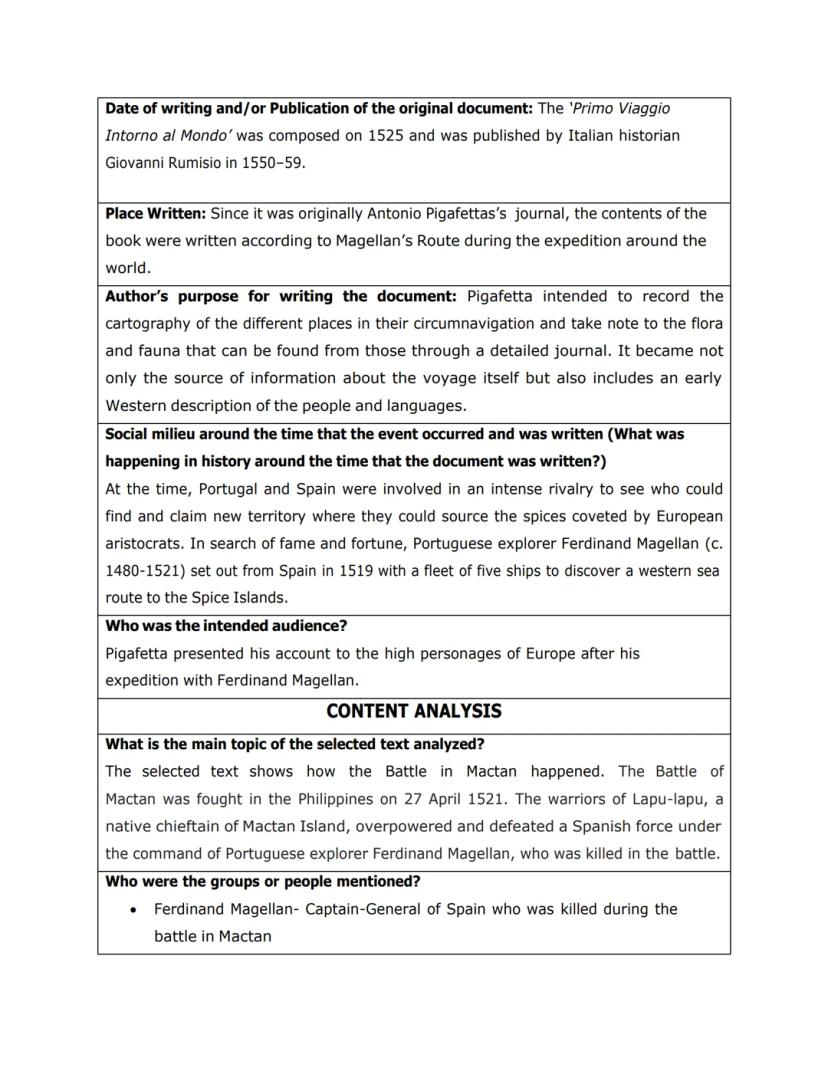
When Pigafetta wrote his account, Spain and Portugal were fierce rivals in the race to claim new territories for the spice trade. European aristocrats craved these exotic flavors, making the discovery of new trade routes incredibly valuable. This competition drove explorers like Magellan to undertake dangerous voyages around the world.
Pigafetta's primary purpose wasn't just to record their adventures—he was documenting cartography (mapmaking) and cataloging new plants and animals they discovered. This scientific approach made his journal especially valuable to European leaders, who were his intended audience.
The journal was originally written in Italian during the expedition itself, following Magellan's route around the world. It was later translated into English by Emma Helen Blair and James Alexander Robertson, making this important historical document accessible to a wider audience.
The Battle of Mactan, which took place on April 27, 1521, became the centerpiece of Pigafetta's account. This confrontation between Lapu-Lapu's warriors and Magellan's forces resulted in the explorer's death and marked the first documented resistance by Filipinos against European colonizers.
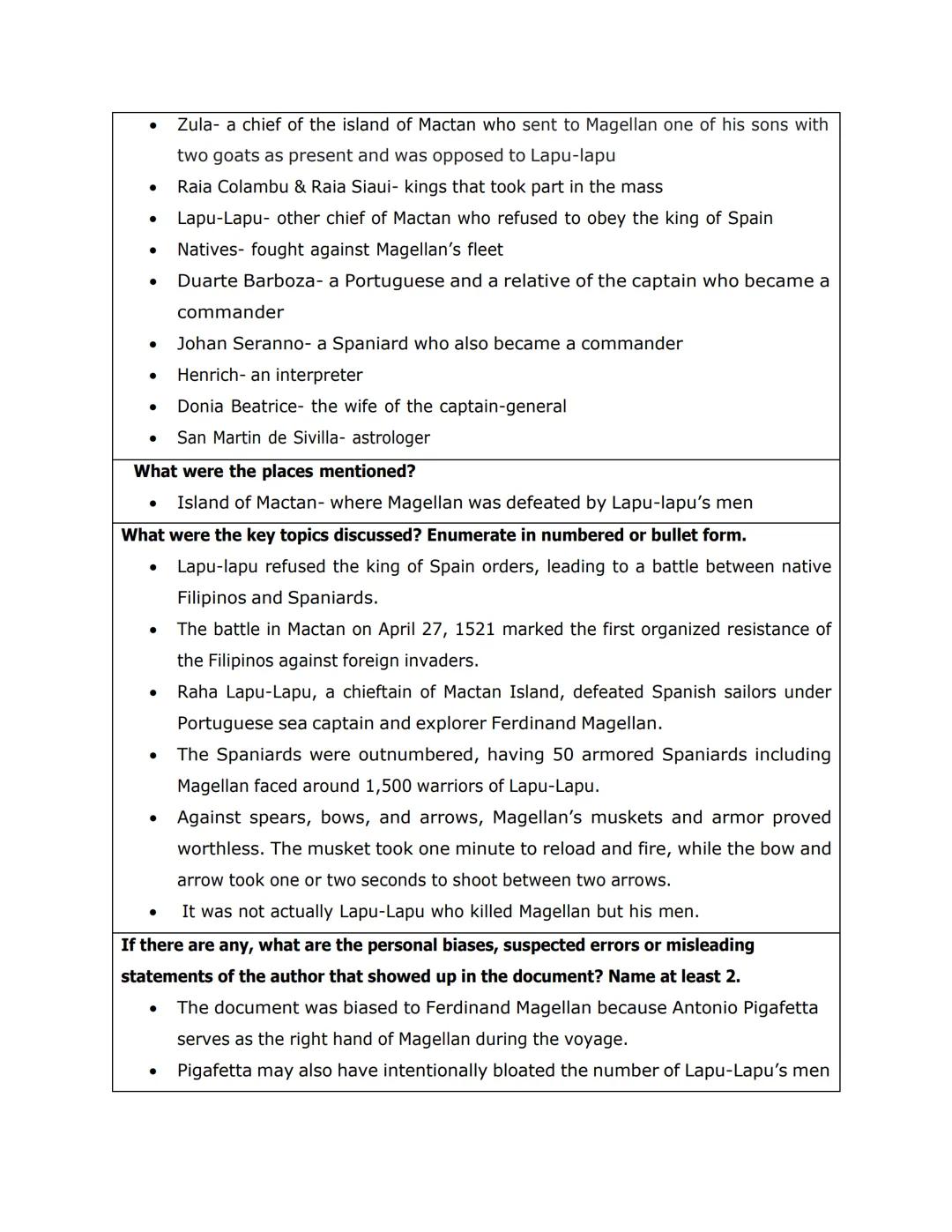
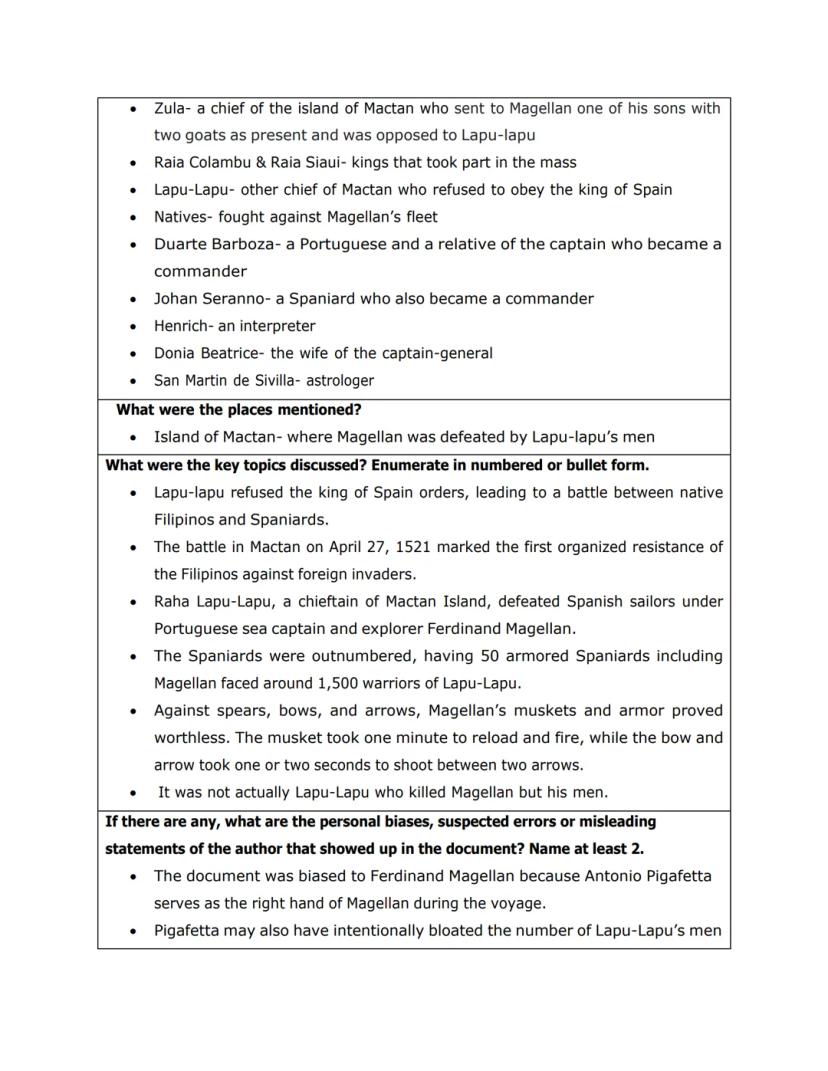
The Battle of Mactan featured several important figures. Ferdinand Magellan led the Spanish forces as Captain-General but met his end during the conflict. Lapu-Lapu, a local chief who refused to submit to Spanish authority, commanded the opposing warriors who successfully defended their homeland.
Not all local leaders opposed the Spanish. Chief Zula of Mactan sent gifts to Magellan and appeared friendly to the Europeans. Other figures mentioned include Raia Colambu and Raia Siaui (kings who participated in Catholic mass), as well as Magellan's commanders Duarte Barboza and Johan Seranno.
The battle was incredibly uneven. About 50 armored Spaniards faced approximately 1,500 of Lapu-Lapu's warriors. Despite their technological advantages, the Spanish weapons proved ineffective—muskets took a full minute to reload while the natives could fire several arrows in seconds.
Battle fact: Pigafetta noted that it wasn't actually Lapu-Lapu himself who killed Magellan, but rather his warriors who overwhelmed the explorer during the intense fighting.
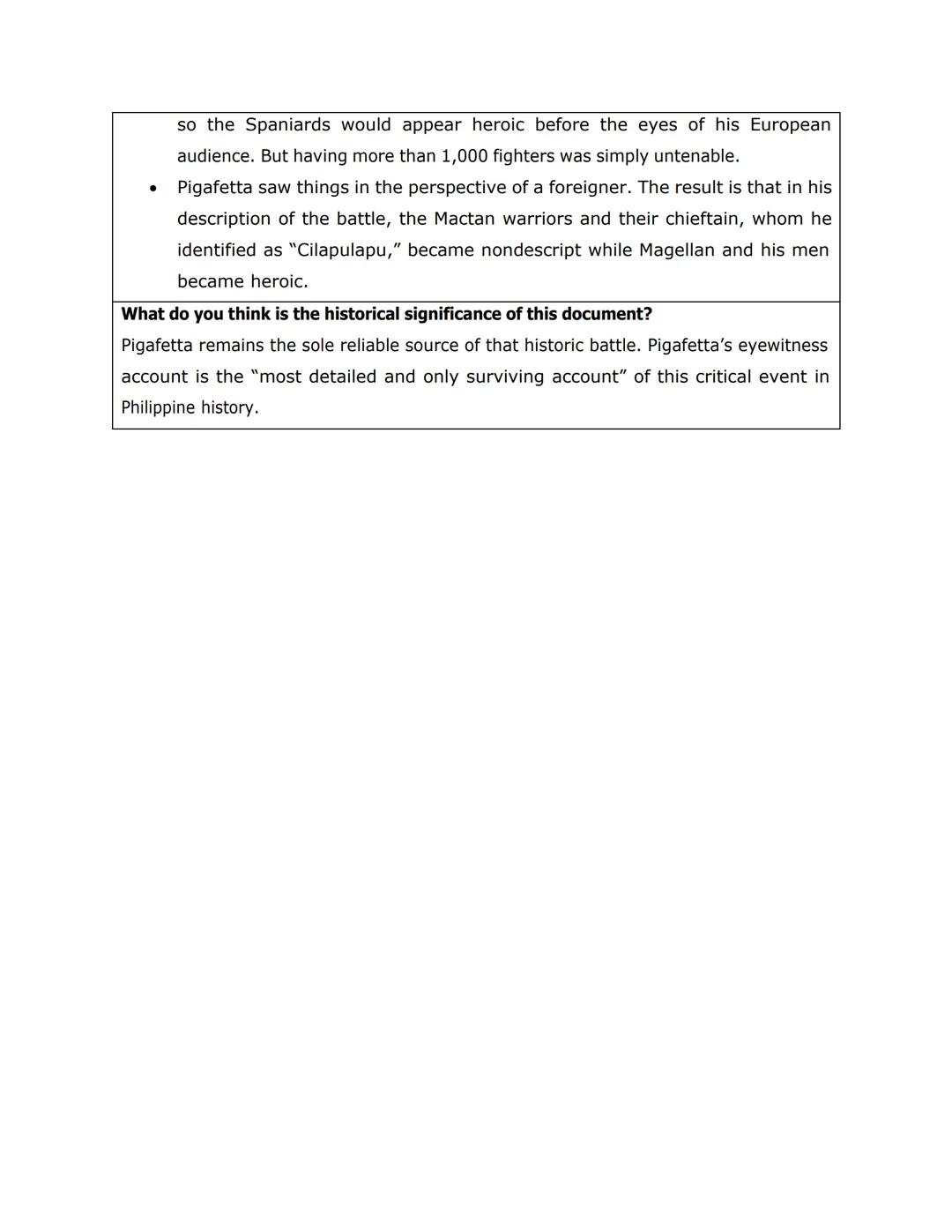
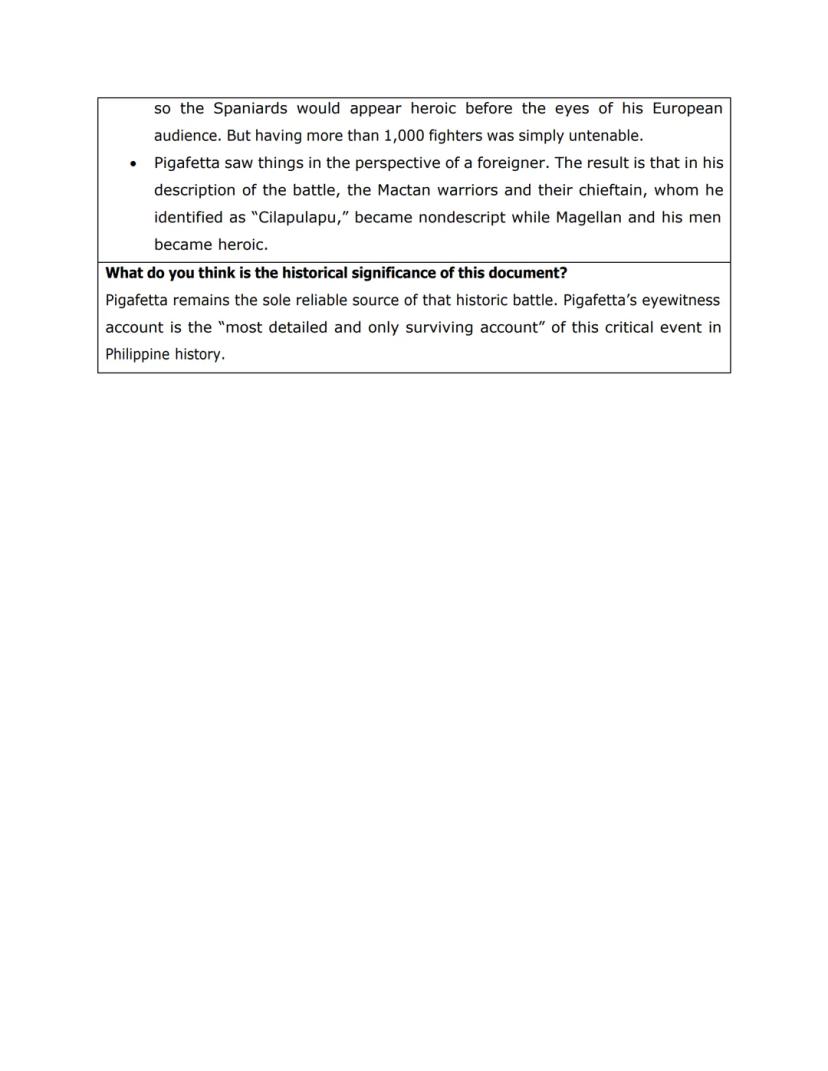
Pigafetta's account contains several biases we should recognize. As Magellan's right-hand man, he naturally portrayed the Spanish forces in a heroic light. He likely exaggerated the number of Lapu-Lapu's warriors to make the Spanish appear more valiant to his European audience—having over 1,000 fighters on a small island seems improbable.
His foreign perspective also shaped the narrative. Lapu-Lapu (whom he called "Cilapulapu") and the Mactan warriors were described with minimal detail, while Magellan and his men were portrayed as heroic despite their defeat.
Despite these limitations, Pigafetta's eyewitness account remains invaluable. As the only surviving detailed record of this critical event, it helps us understand an important moment of indigenous resistance in Philippine history.
The Battle of Mactan, as documented by Pigafetta, represents the first recorded organized resistance by Filipinos against foreign invaders. This makes his journal not just historically significant but foundational to understanding Philippine national identity and the beginning of colonial encounters in the region.
Critical thinking note: When reading primary sources like Pigafetta's account, always consider the author's perspective and potential biases. Ask yourself: How might his loyalty to Magellan and European values have colored his description of events?
Our AI companion is specifically built for the needs of students. Based on the millions of content pieces we have on the platform we can provide truly meaningful and relevant answers to students. But its not only about answers, the companion is even more about guiding students through their daily learning challenges, with personalised study plans, quizzes or content pieces in the chat and 100% personalisation based on the students skills and developments.
You can download the app in the Google Play Store and in the Apple App Store.
That's right! Enjoy free access to study content, connect with fellow students, and get instant help – all at your fingertips.
App Store
Google Play
The app is very easy to use and well designed. I have found everything I was looking for so far and have been able to learn a lot from the presentations! I will definitely use the app for a class assignment! And of course it also helps a lot as an inspiration.
Stefan S
iOS user
This app is really great. There are so many study notes and help [...]. My problem subject is French, for example, and the app has so many options for help. Thanks to this app, I have improved my French. I would recommend it to anyone.
Samantha Klich
Android user
Wow, I am really amazed. I just tried the app because I've seen it advertised many times and was absolutely stunned. This app is THE HELP you want for school and above all, it offers so many things, such as workouts and fact sheets, which have been VERY helpful to me personally.
Anna
iOS user
I think it’s very much worth it and you’ll end up using it a lot once you get the hang of it and even after looking at others notes you can still ask your Artificial intelligence buddy the question and ask to simplify it if you still don’t get it!!! In the end I think it’s worth it 😊👍 ⚠️Also DID I MENTION ITS FREEE YOU DON’T HAVE TO PAY FOR ANYTHING AND STILL GET YOUR GRADES IN PERFECTLY❗️❗️⚠️
Thomas R
iOS user
Knowunity is the BEST app I’ve used in a minute. This is not an ai review or anything this is genuinely coming from a 7th grade student (I know 2011 im young) but dude this app is a 10/10 i have maintained a 3.8 gpa and have plenty of time for gaming. I love it and my mom is just happy I got good grades
Brad T
Android user
Not only did it help me find the answer but it also showed me alternative ways to solve it. I was horrible in math and science but now I have an a in both subjects. Thanks for the help🤍🤍
David K
iOS user
The app's just great! All I have to do is enter the topic in the search bar and I get the response real fast. I don't have to watch 10 YouTube videos to understand something, so I'm saving my time. Highly recommended!
Sudenaz Ocak
Android user
In school I was really bad at maths but thanks to the app, I am doing better now. I am so grateful that you made the app.
Greenlight Bonnie
Android user
I found this app a couple years ago and it has only gotten better since then. I really love it because it can help with written questions and photo questions. Also, it can find study guides that other people have made as well as flashcard sets and practice tests. The free version is also amazing for students who might not be able to afford it. Would 100% recommend
Aubrey
iOS user
Best app if you're in Highschool or Junior high. I have been using this app for 2 school years and it's the best, it's good if you don't have anyone to help you with school work.😋🩷🎀
Marco B
iOS user
THE QUIZES AND FLASHCARDS ARE SO USEFUL AND I LOVE Knowunity AI. IT ALSO IS LITREALLY LIKE CHATGPT BUT SMARTER!! HELPED ME WITH MY MASCARA PROBLEMS TOO!! AS WELL AS MY REAL SUBJECTS ! DUHHH 😍😁😲🤑💗✨🎀😮
Elisha
iOS user
This app is phenomenal down to the correct info and the various topics you can study! I greatly recommend it for people who struggle with procrastination and those who need homework help. It has been perfectly accurate for world 1 history as far as I’ve seen! Geometry too!
Paul T
iOS user
The app is very easy to use and well designed. I have found everything I was looking for so far and have been able to learn a lot from the presentations! I will definitely use the app for a class assignment! And of course it also helps a lot as an inspiration.
Stefan S
iOS user
This app is really great. There are so many study notes and help [...]. My problem subject is French, for example, and the app has so many options for help. Thanks to this app, I have improved my French. I would recommend it to anyone.
Samantha Klich
Android user
Wow, I am really amazed. I just tried the app because I've seen it advertised many times and was absolutely stunned. This app is THE HELP you want for school and above all, it offers so many things, such as workouts and fact sheets, which have been VERY helpful to me personally.
Anna
iOS user
I think it’s very much worth it and you’ll end up using it a lot once you get the hang of it and even after looking at others notes you can still ask your Artificial intelligence buddy the question and ask to simplify it if you still don’t get it!!! In the end I think it’s worth it 😊👍 ⚠️Also DID I MENTION ITS FREEE YOU DON’T HAVE TO PAY FOR ANYTHING AND STILL GET YOUR GRADES IN PERFECTLY❗️❗️⚠️
Thomas R
iOS user
Knowunity is the BEST app I’ve used in a minute. This is not an ai review or anything this is genuinely coming from a 7th grade student (I know 2011 im young) but dude this app is a 10/10 i have maintained a 3.8 gpa and have plenty of time for gaming. I love it and my mom is just happy I got good grades
Brad T
Android user
Not only did it help me find the answer but it also showed me alternative ways to solve it. I was horrible in math and science but now I have an a in both subjects. Thanks for the help🤍🤍
David K
iOS user
The app's just great! All I have to do is enter the topic in the search bar and I get the response real fast. I don't have to watch 10 YouTube videos to understand something, so I'm saving my time. Highly recommended!
Sudenaz Ocak
Android user
In school I was really bad at maths but thanks to the app, I am doing better now. I am so grateful that you made the app.
Greenlight Bonnie
Android user
I found this app a couple years ago and it has only gotten better since then. I really love it because it can help with written questions and photo questions. Also, it can find study guides that other people have made as well as flashcard sets and practice tests. The free version is also amazing for students who might not be able to afford it. Would 100% recommend
Aubrey
iOS user
Best app if you're in Highschool or Junior high. I have been using this app for 2 school years and it's the best, it's good if you don't have anyone to help you with school work.😋🩷🎀
Marco B
iOS user
THE QUIZES AND FLASHCARDS ARE SO USEFUL AND I LOVE Knowunity AI. IT ALSO IS LITREALLY LIKE CHATGPT BUT SMARTER!! HELPED ME WITH MY MASCARA PROBLEMS TOO!! AS WELL AS MY REAL SUBJECTS ! DUHHH 😍😁😲🤑💗✨🎀😮
Elisha
iOS user
This app is phenomenal down to the correct info and the various topics you can study! I greatly recommend it for people who struggle with procrastination and those who need homework help. It has been perfectly accurate for world 1 history as far as I’ve seen! Geometry too!
Paul T
iOS user
Antonio Pigafetta's eyewitness account of the Battle of Mactan provides us with our most detailed look at this pivotal moment in Philippine history. His journal documents the first recorded resistance of Filipinos against foreign invaders and captures the fateful confrontation... Show more
Access to all documents
Improve your grades
Join milions of students
Antonio Pigafetta served as Magellan's personal assistant during the famous expedition to find a western route to the Spice Islands. As an eyewitness to history, he meticulously recorded everything that happened before, during, and after their arrival in the Philippines in his journal "Primo Viaggio Intorno al Mondo" (First Voyage Around the World).
Pigafetta was born in 1490 in the Republic of Venice and joined Magellan's expedition under the Spanish flag. His detailed observations weren't just about the voyage itself—they also included some of the earliest Western descriptions of the people, languages, and geography they encountered.
After Magellan's death, Pigafetta continued documenting their journey. He eventually compiled his notes into a comprehensive report that was distributed to European monarchs in handwritten form before being officially published in Italian in the 1550s.
Did you know? Pigafetta's journal is considered the most reliable source for the Battle of Mactan. Without his detailed account, this crucial moment in Philippine history might have been lost to time!
Access to all documents
Improve your grades
Join milions of students
When Pigafetta wrote his account, Spain and Portugal were fierce rivals in the race to claim new territories for the spice trade. European aristocrats craved these exotic flavors, making the discovery of new trade routes incredibly valuable. This competition drove explorers like Magellan to undertake dangerous voyages around the world.
Pigafetta's primary purpose wasn't just to record their adventures—he was documenting cartography (mapmaking) and cataloging new plants and animals they discovered. This scientific approach made his journal especially valuable to European leaders, who were his intended audience.
The journal was originally written in Italian during the expedition itself, following Magellan's route around the world. It was later translated into English by Emma Helen Blair and James Alexander Robertson, making this important historical document accessible to a wider audience.
The Battle of Mactan, which took place on April 27, 1521, became the centerpiece of Pigafetta's account. This confrontation between Lapu-Lapu's warriors and Magellan's forces resulted in the explorer's death and marked the first documented resistance by Filipinos against European colonizers.
Access to all documents
Improve your grades
Join milions of students
The Battle of Mactan featured several important figures. Ferdinand Magellan led the Spanish forces as Captain-General but met his end during the conflict. Lapu-Lapu, a local chief who refused to submit to Spanish authority, commanded the opposing warriors who successfully defended their homeland.
Not all local leaders opposed the Spanish. Chief Zula of Mactan sent gifts to Magellan and appeared friendly to the Europeans. Other figures mentioned include Raia Colambu and Raia Siaui (kings who participated in Catholic mass), as well as Magellan's commanders Duarte Barboza and Johan Seranno.
The battle was incredibly uneven. About 50 armored Spaniards faced approximately 1,500 of Lapu-Lapu's warriors. Despite their technological advantages, the Spanish weapons proved ineffective—muskets took a full minute to reload while the natives could fire several arrows in seconds.
Battle fact: Pigafetta noted that it wasn't actually Lapu-Lapu himself who killed Magellan, but rather his warriors who overwhelmed the explorer during the intense fighting.
Access to all documents
Improve your grades
Join milions of students
Pigafetta's account contains several biases we should recognize. As Magellan's right-hand man, he naturally portrayed the Spanish forces in a heroic light. He likely exaggerated the number of Lapu-Lapu's warriors to make the Spanish appear more valiant to his European audience—having over 1,000 fighters on a small island seems improbable.
His foreign perspective also shaped the narrative. Lapu-Lapu (whom he called "Cilapulapu") and the Mactan warriors were described with minimal detail, while Magellan and his men were portrayed as heroic despite their defeat.
Despite these limitations, Pigafetta's eyewitness account remains invaluable. As the only surviving detailed record of this critical event, it helps us understand an important moment of indigenous resistance in Philippine history.
The Battle of Mactan, as documented by Pigafetta, represents the first recorded organized resistance by Filipinos against foreign invaders. This makes his journal not just historically significant but foundational to understanding Philippine national identity and the beginning of colonial encounters in the region.
Critical thinking note: When reading primary sources like Pigafetta's account, always consider the author's perspective and potential biases. Ask yourself: How might his loyalty to Magellan and European values have colored his description of events?
Our AI companion is specifically built for the needs of students. Based on the millions of content pieces we have on the platform we can provide truly meaningful and relevant answers to students. But its not only about answers, the companion is even more about guiding students through their daily learning challenges, with personalised study plans, quizzes or content pieces in the chat and 100% personalisation based on the students skills and developments.
You can download the app in the Google Play Store and in the Apple App Store.
That's right! Enjoy free access to study content, connect with fellow students, and get instant help – all at your fingertips.
0
Smart Tools NEW
Transform this note into: ✓ 50+ Practice Questions ✓ Interactive Flashcards ✓ Full Practice Test ✓ Essay Outlines
App Store
Google Play
The app is very easy to use and well designed. I have found everything I was looking for so far and have been able to learn a lot from the presentations! I will definitely use the app for a class assignment! And of course it also helps a lot as an inspiration.
Stefan S
iOS user
This app is really great. There are so many study notes and help [...]. My problem subject is French, for example, and the app has so many options for help. Thanks to this app, I have improved my French. I would recommend it to anyone.
Samantha Klich
Android user
Wow, I am really amazed. I just tried the app because I've seen it advertised many times and was absolutely stunned. This app is THE HELP you want for school and above all, it offers so many things, such as workouts and fact sheets, which have been VERY helpful to me personally.
Anna
iOS user
I think it’s very much worth it and you’ll end up using it a lot once you get the hang of it and even after looking at others notes you can still ask your Artificial intelligence buddy the question and ask to simplify it if you still don’t get it!!! In the end I think it’s worth it 😊👍 ⚠️Also DID I MENTION ITS FREEE YOU DON’T HAVE TO PAY FOR ANYTHING AND STILL GET YOUR GRADES IN PERFECTLY❗️❗️⚠️
Thomas R
iOS user
Knowunity is the BEST app I’ve used in a minute. This is not an ai review or anything this is genuinely coming from a 7th grade student (I know 2011 im young) but dude this app is a 10/10 i have maintained a 3.8 gpa and have plenty of time for gaming. I love it and my mom is just happy I got good grades
Brad T
Android user
Not only did it help me find the answer but it also showed me alternative ways to solve it. I was horrible in math and science but now I have an a in both subjects. Thanks for the help🤍🤍
David K
iOS user
The app's just great! All I have to do is enter the topic in the search bar and I get the response real fast. I don't have to watch 10 YouTube videos to understand something, so I'm saving my time. Highly recommended!
Sudenaz Ocak
Android user
In school I was really bad at maths but thanks to the app, I am doing better now. I am so grateful that you made the app.
Greenlight Bonnie
Android user
I found this app a couple years ago and it has only gotten better since then. I really love it because it can help with written questions and photo questions. Also, it can find study guides that other people have made as well as flashcard sets and practice tests. The free version is also amazing for students who might not be able to afford it. Would 100% recommend
Aubrey
iOS user
Best app if you're in Highschool or Junior high. I have been using this app for 2 school years and it's the best, it's good if you don't have anyone to help you with school work.😋🩷🎀
Marco B
iOS user
THE QUIZES AND FLASHCARDS ARE SO USEFUL AND I LOVE Knowunity AI. IT ALSO IS LITREALLY LIKE CHATGPT BUT SMARTER!! HELPED ME WITH MY MASCARA PROBLEMS TOO!! AS WELL AS MY REAL SUBJECTS ! DUHHH 😍😁😲🤑💗✨🎀😮
Elisha
iOS user
This app is phenomenal down to the correct info and the various topics you can study! I greatly recommend it for people who struggle with procrastination and those who need homework help. It has been perfectly accurate for world 1 history as far as I’ve seen! Geometry too!
Paul T
iOS user
The app is very easy to use and well designed. I have found everything I was looking for so far and have been able to learn a lot from the presentations! I will definitely use the app for a class assignment! And of course it also helps a lot as an inspiration.
Stefan S
iOS user
This app is really great. There are so many study notes and help [...]. My problem subject is French, for example, and the app has so many options for help. Thanks to this app, I have improved my French. I would recommend it to anyone.
Samantha Klich
Android user
Wow, I am really amazed. I just tried the app because I've seen it advertised many times and was absolutely stunned. This app is THE HELP you want for school and above all, it offers so many things, such as workouts and fact sheets, which have been VERY helpful to me personally.
Anna
iOS user
I think it’s very much worth it and you’ll end up using it a lot once you get the hang of it and even after looking at others notes you can still ask your Artificial intelligence buddy the question and ask to simplify it if you still don’t get it!!! In the end I think it’s worth it 😊👍 ⚠️Also DID I MENTION ITS FREEE YOU DON’T HAVE TO PAY FOR ANYTHING AND STILL GET YOUR GRADES IN PERFECTLY❗️❗️⚠️
Thomas R
iOS user
Knowunity is the BEST app I’ve used in a minute. This is not an ai review or anything this is genuinely coming from a 7th grade student (I know 2011 im young) but dude this app is a 10/10 i have maintained a 3.8 gpa and have plenty of time for gaming. I love it and my mom is just happy I got good grades
Brad T
Android user
Not only did it help me find the answer but it also showed me alternative ways to solve it. I was horrible in math and science but now I have an a in both subjects. Thanks for the help🤍🤍
David K
iOS user
The app's just great! All I have to do is enter the topic in the search bar and I get the response real fast. I don't have to watch 10 YouTube videos to understand something, so I'm saving my time. Highly recommended!
Sudenaz Ocak
Android user
In school I was really bad at maths but thanks to the app, I am doing better now. I am so grateful that you made the app.
Greenlight Bonnie
Android user
I found this app a couple years ago and it has only gotten better since then. I really love it because it can help with written questions and photo questions. Also, it can find study guides that other people have made as well as flashcard sets and practice tests. The free version is also amazing for students who might not be able to afford it. Would 100% recommend
Aubrey
iOS user
Best app if you're in Highschool or Junior high. I have been using this app for 2 school years and it's the best, it's good if you don't have anyone to help you with school work.😋🩷🎀
Marco B
iOS user
THE QUIZES AND FLASHCARDS ARE SO USEFUL AND I LOVE Knowunity AI. IT ALSO IS LITREALLY LIKE CHATGPT BUT SMARTER!! HELPED ME WITH MY MASCARA PROBLEMS TOO!! AS WELL AS MY REAL SUBJECTS ! DUHHH 😍😁😲🤑💗✨🎀😮
Elisha
iOS user
This app is phenomenal down to the correct info and the various topics you can study! I greatly recommend it for people who struggle with procrastination and those who need homework help. It has been perfectly accurate for world 1 history as far as I’ve seen! Geometry too!
Paul T
iOS user