
Dive into the fascinating world of biology where we'll explore... Show more
 Physics
 Algebra
Sign up to see the contentIt's free!
Access to all documents
Improve your grades
Join milions of students
Knowunity AI
Subjects
Triangle Congruence and Similarity Theorems
Triangle Properties and Classification
Linear Equations and Graphs
Geometric Angle Relationships
Trigonometric Functions and Identities
Equation Solving Techniques
Circle Geometry Fundamentals
Division Operations and Methods
Basic Differentiation Rules
Exponent and Logarithm Properties
Show all topics
Human Organ Systems
Reproductive Cell Cycles
Biological Sciences Subdisciplines
Cellular Energy Metabolism
Autotrophic Energy Processes
Inheritance Patterns and Principles
Biomolecular Structure and Organization
Cell Cycle and Division Mechanics
Cellular Organization and Development
Biological Structural Organization
Show all topics
Chemical Sciences and Applications
Atomic Structure and Composition
Molecular Electron Structure Representation
Atomic Electron Behavior
Matter Properties and Water
Mole Concept and Calculations
Gas Laws and Behavior
Periodic Table Organization
Chemical Thermodynamics Fundamentals
Chemical Bond Types and Properties
Show all topics
European Renaissance and Enlightenment
European Cultural Movements 800-1920
American Revolution Era 1763-1797
American Civil War 1861-1865
Global Imperial Systems
Mongol and Chinese Dynasties
U.S. Presidents and World Leaders
Historical Sources and Documentation
World Wars Era and Impact
World Religious Systems
Show all topics
Classic and Contemporary Novels
Literary Character Analysis
Rhetorical Theory and Practice
Classic Literary Narratives
Reading Analysis and Interpretation
Narrative Structure and Techniques
English Language Components
Influential English-Language Authors
Basic Sentence Structure
Narrative Voice and Perspective
Show all topics
577
•
Updated Mar 18, 2026
•
John
@john_jaln
Dive into the fascinating world of biology where we'll explore... Show more
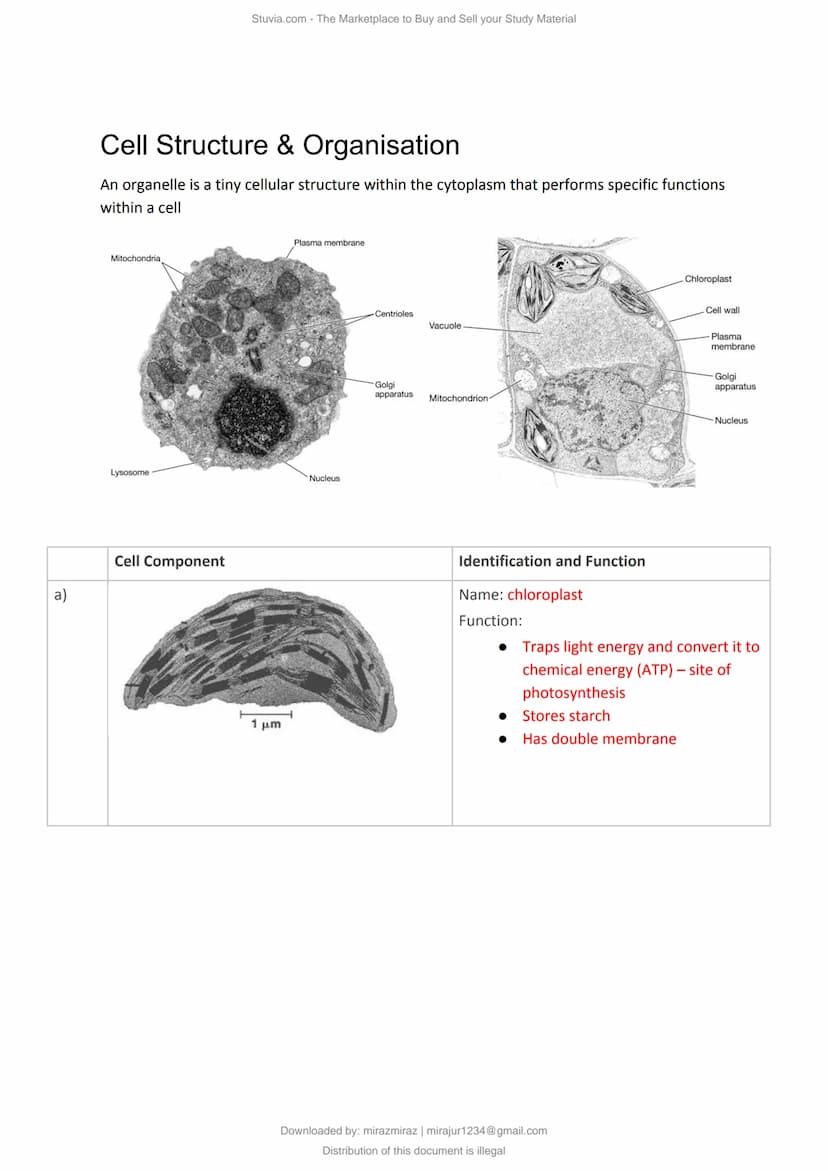
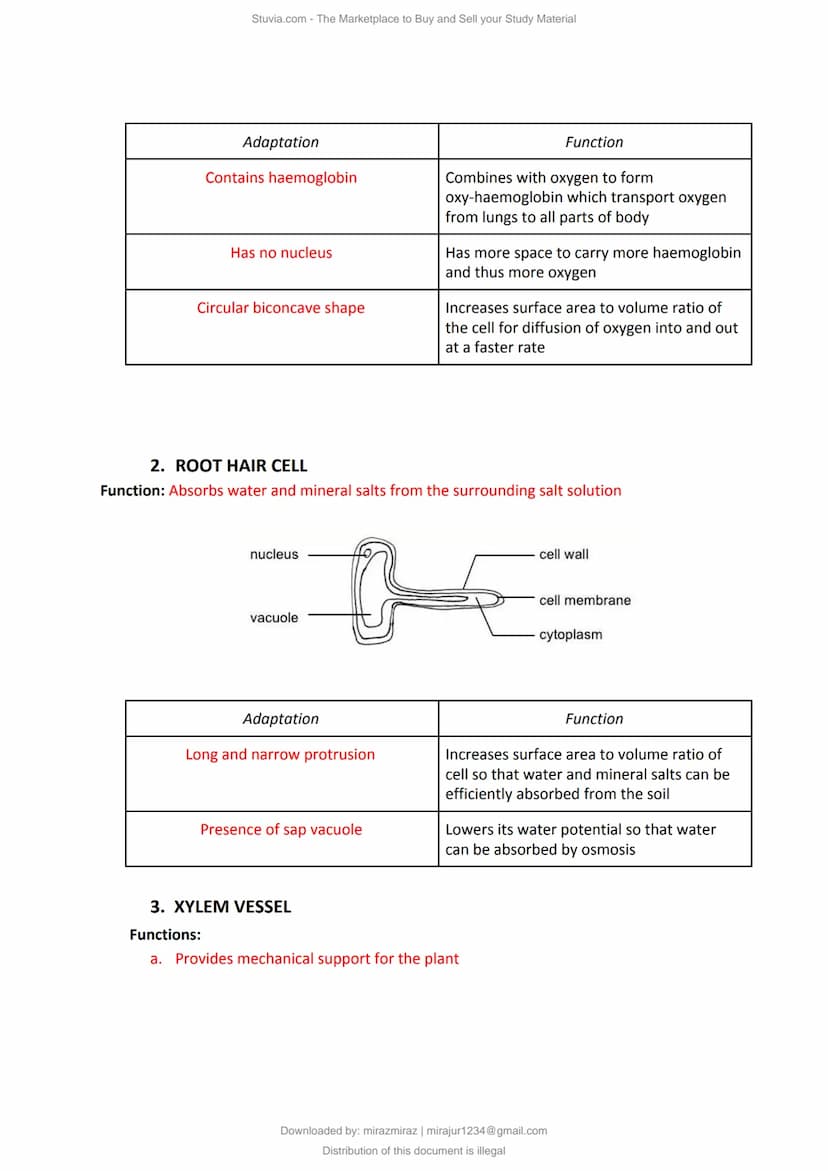
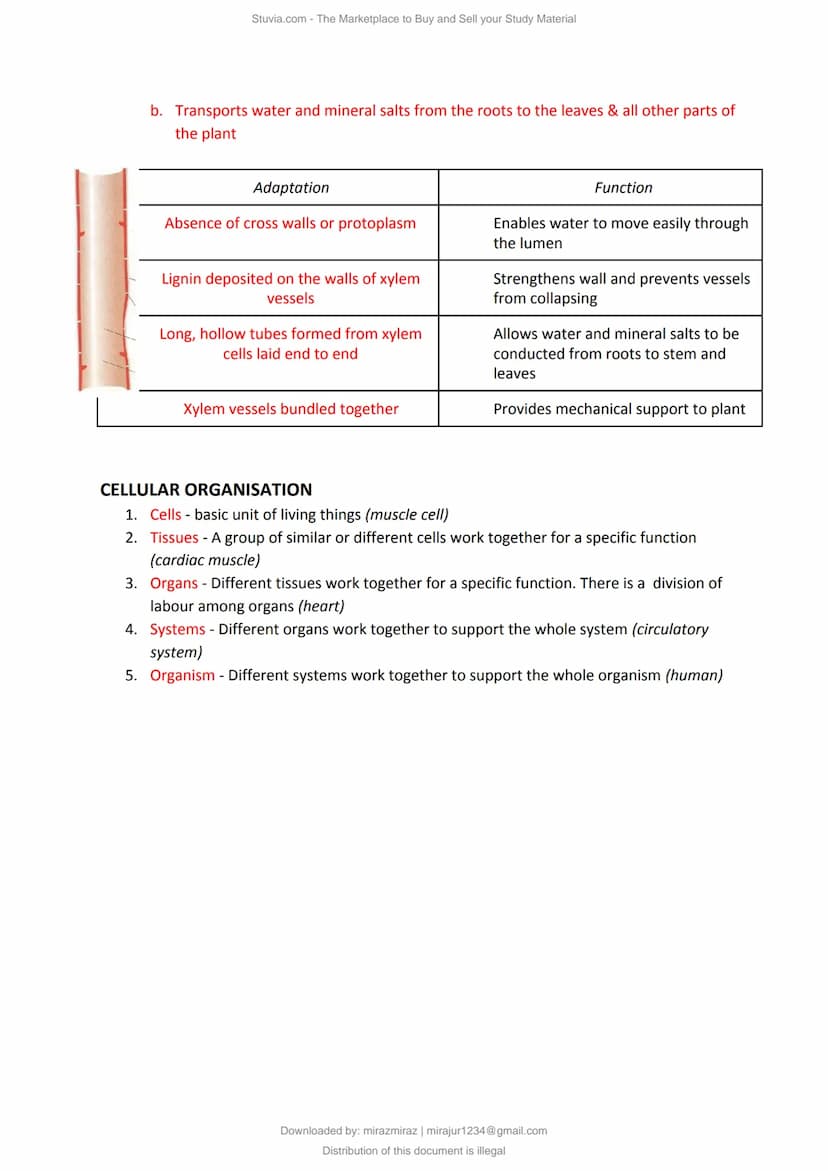
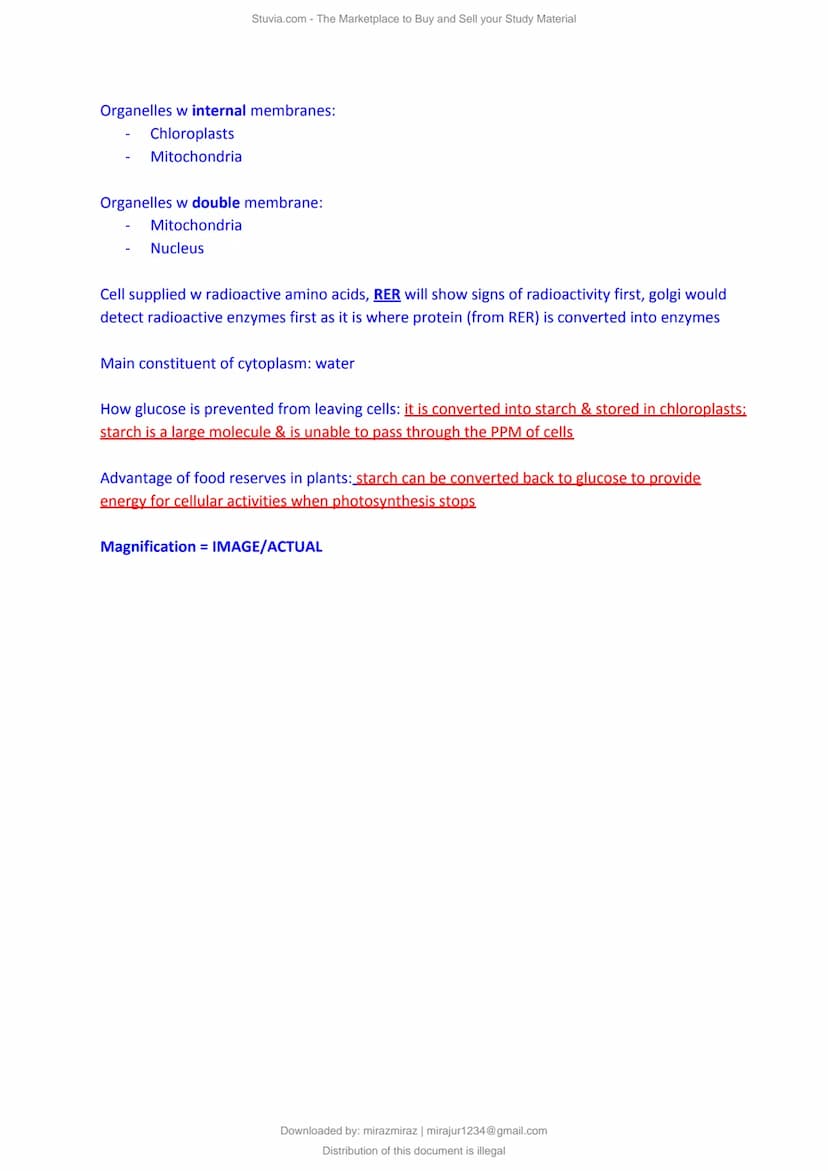
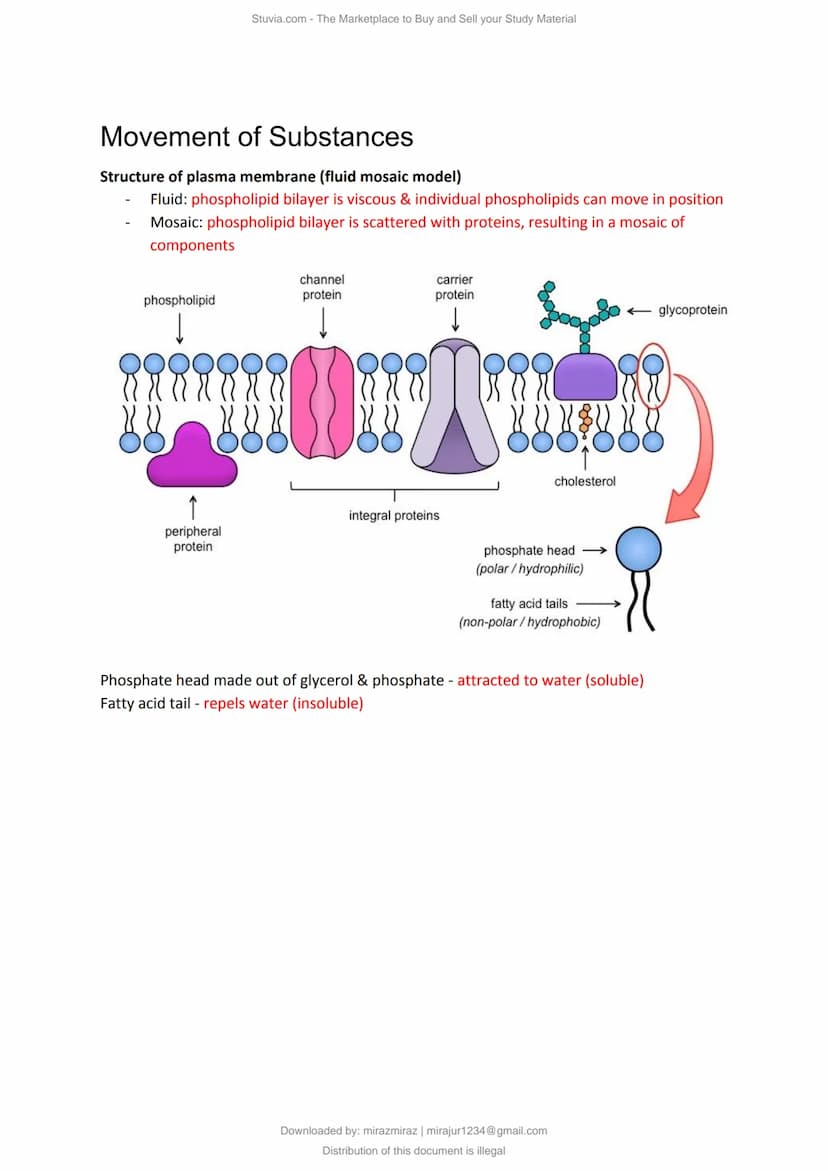
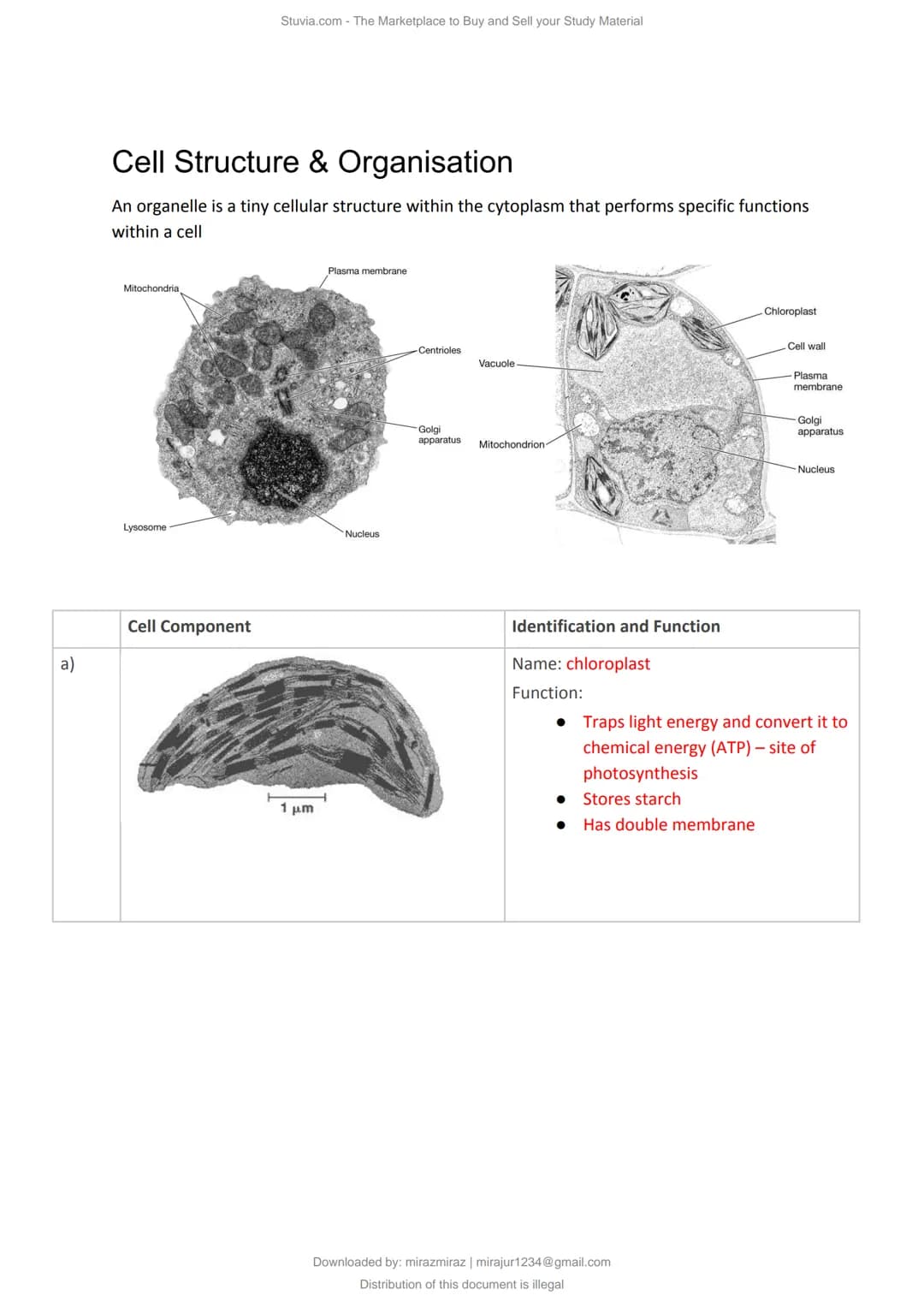
Ever wondered what makes up the tiny building blocks of life? Cells contain specialized structures called organelles that perform specific functions to keep the cell alive and functioning.
The most important organelles include the nucleus (the control center that directs cell activities), mitochondria (powerhouses that release energy through respiration), and chloroplasts (found in plant cells for photosynthesis). Each organelle is perfectly designed for its job!
For example, chloroplasts trap light energy and convert it to chemical energy during photosynthesis. They also store starch and have a characteristic double membrane structure that helps them function efficiently.
Fun Fact: If you could line up 1,000 average human cells side by side, they would only stretch about one centimeter! Yet each tiny cell contains all these complex organelles working together.
Think of a cell like a tiny factory with different departments - each organelle has its specific role, but they all work together to keep the cell (and ultimately you) alive.
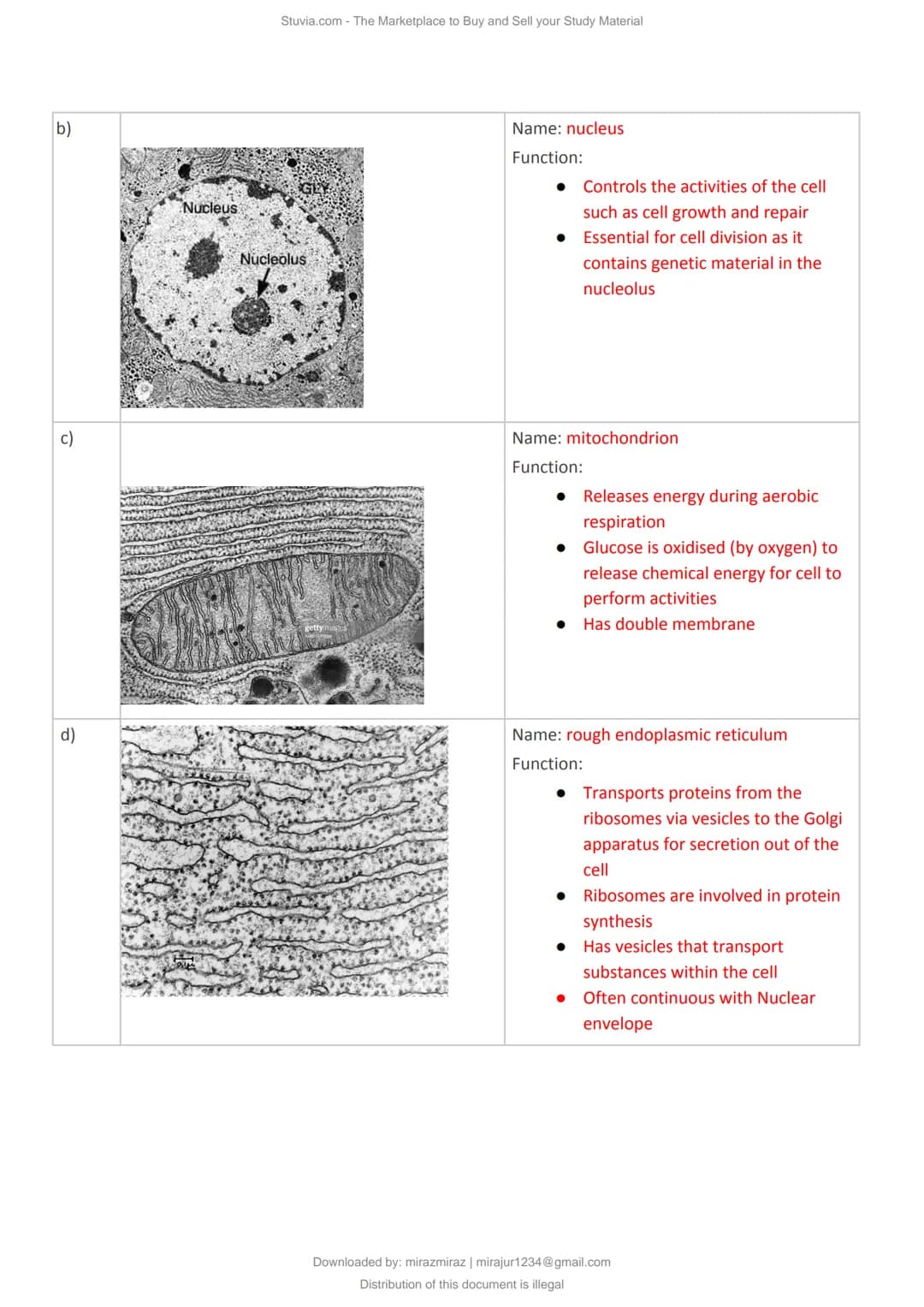
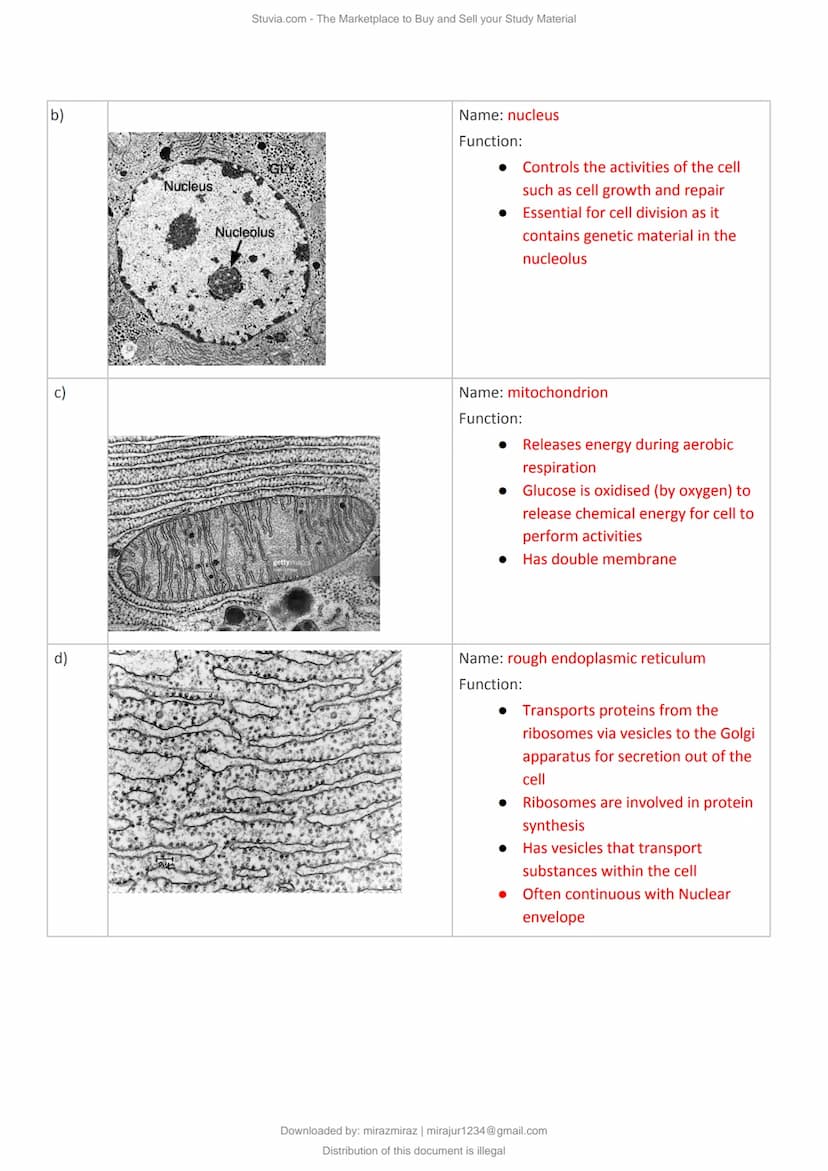
The nucleus is truly the brain of the cell. It controls all cellular activities including growth and repair, and contains genetic material in the nucleolus. This genetic material is essential for cell division, making the nucleus incredibly important.
Mitochondria are the powerhouses where cellular respiration happens. These double-membraned structures release energy by oxidizing glucose with oxygen. This process creates the chemical energy (ATP) that powers virtually everything your cells do - from muscle contractions to protein synthesis.
The rough endoplasmic reticulum (RER) acts like the cell's shipping system. It's covered with ribosomes that make proteins, which are then transported via vesicles to the Golgi apparatus for secretion out of the cell. The RER is often connected to the nuclear envelope, creating a continuous network.
Did you know? Your cells contain so many mitochondria that they make up about 25% of your body's volume! Active cells like muscle cells can contain thousands of mitochondria to meet their high energy demands.
These organelles might be microscopic, but understanding how they function helps explain everything from how your muscles move to why plants can make their own food!
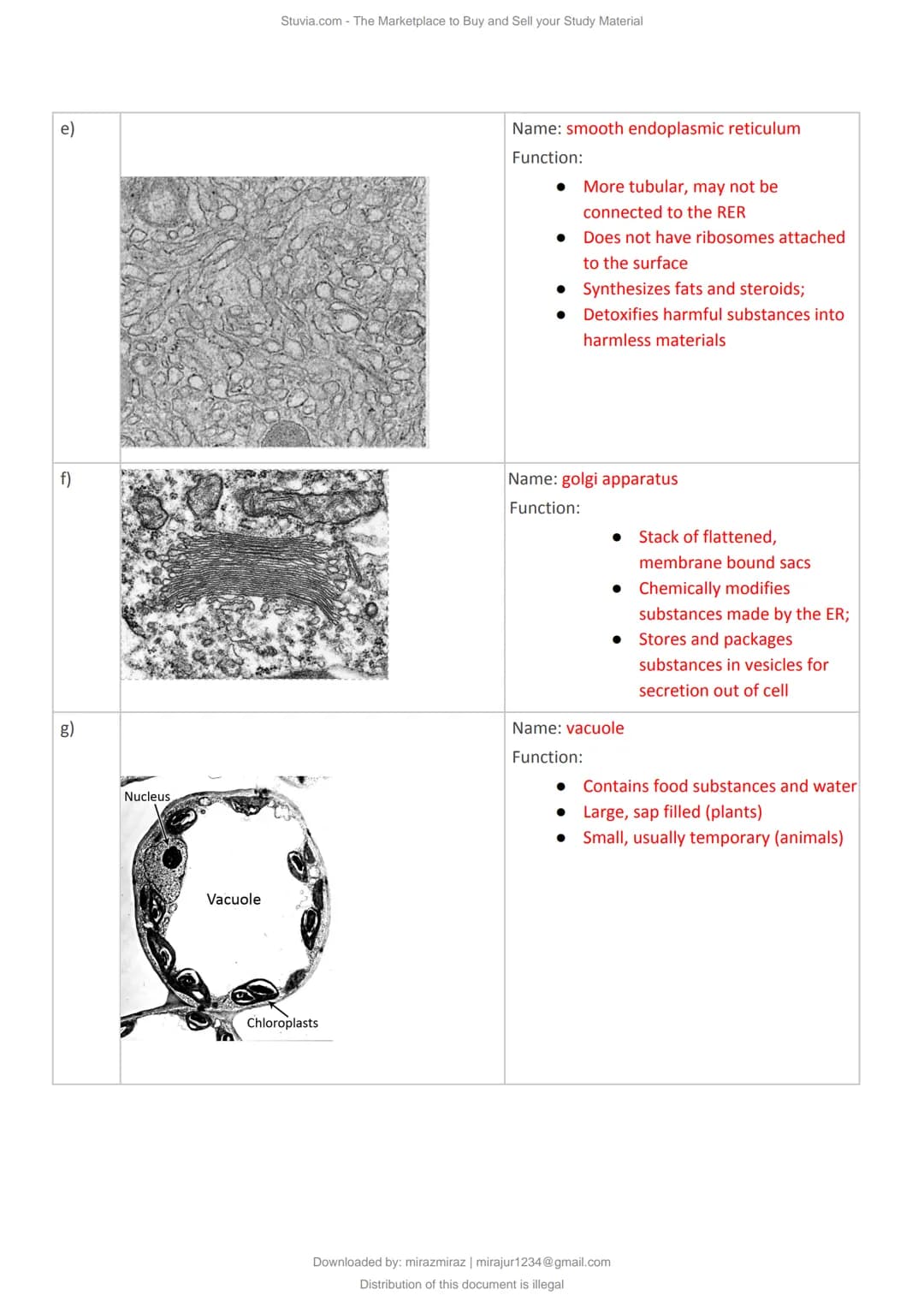
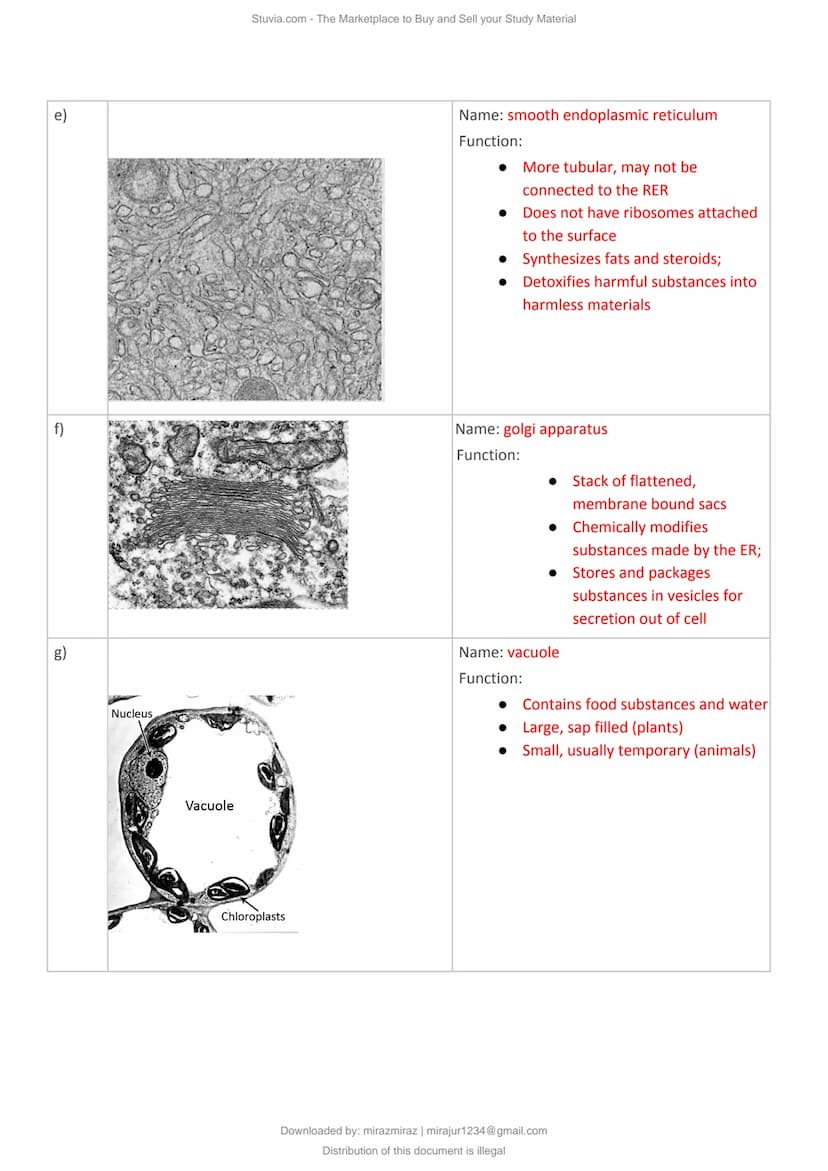
The smooth endoplasmic reticulum (SER) is like the cell's chemical factory. Unlike its rough counterpart, the SER doesn't have ribosomes on its surface. Instead, it specializes in synthesizing fats and steroids, and detoxifies harmful substances into harmless materials - kind of like your body's own detox system!
The Golgi apparatus resembles a stack of flattened, membrane-bound sacs. Think of it as the cell's packaging and shipping department - it chemically modifies substances made by the ER, then stores and packages these materials in vesicles for secretion out of the cell. It's essentially the cell's UPS service!
Vacuoles are storage containers within cells. In plant cells, they're typically large and sap-filled, helping maintain cell structure and storing nutrients. Animal cells have smaller, usually temporary vacuoles. In the image, you can see a large vacuole alongside chloroplasts and the nucleus in a plant cell.
Biology Pro Tip: When studying cell organelles, create a mental image of a city where each organelle is a different building with a specific function. This visualization can help you remember the role of each structure!
Understanding these organelles helps explain how cells can perform complex functions despite their microscopic size.
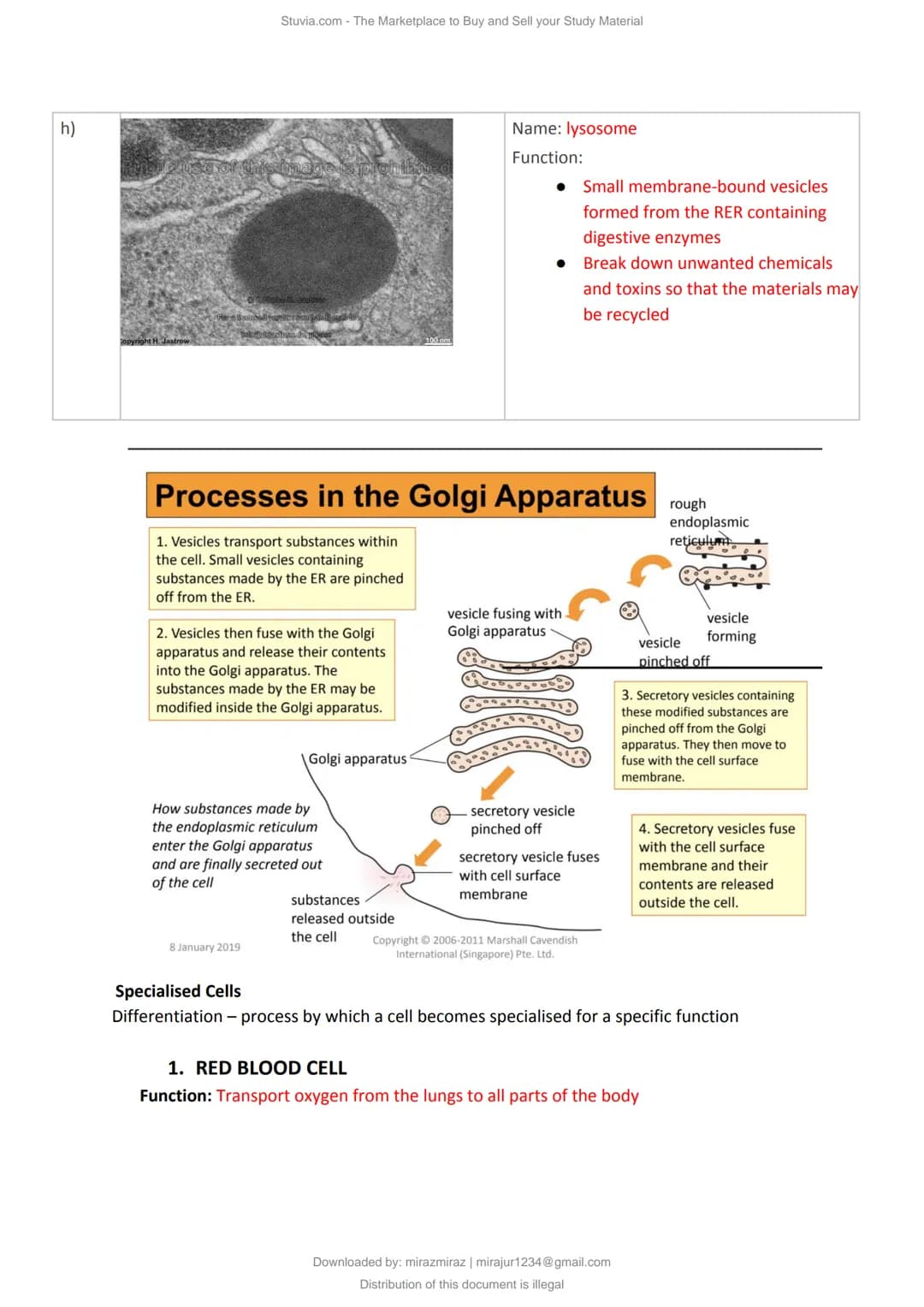
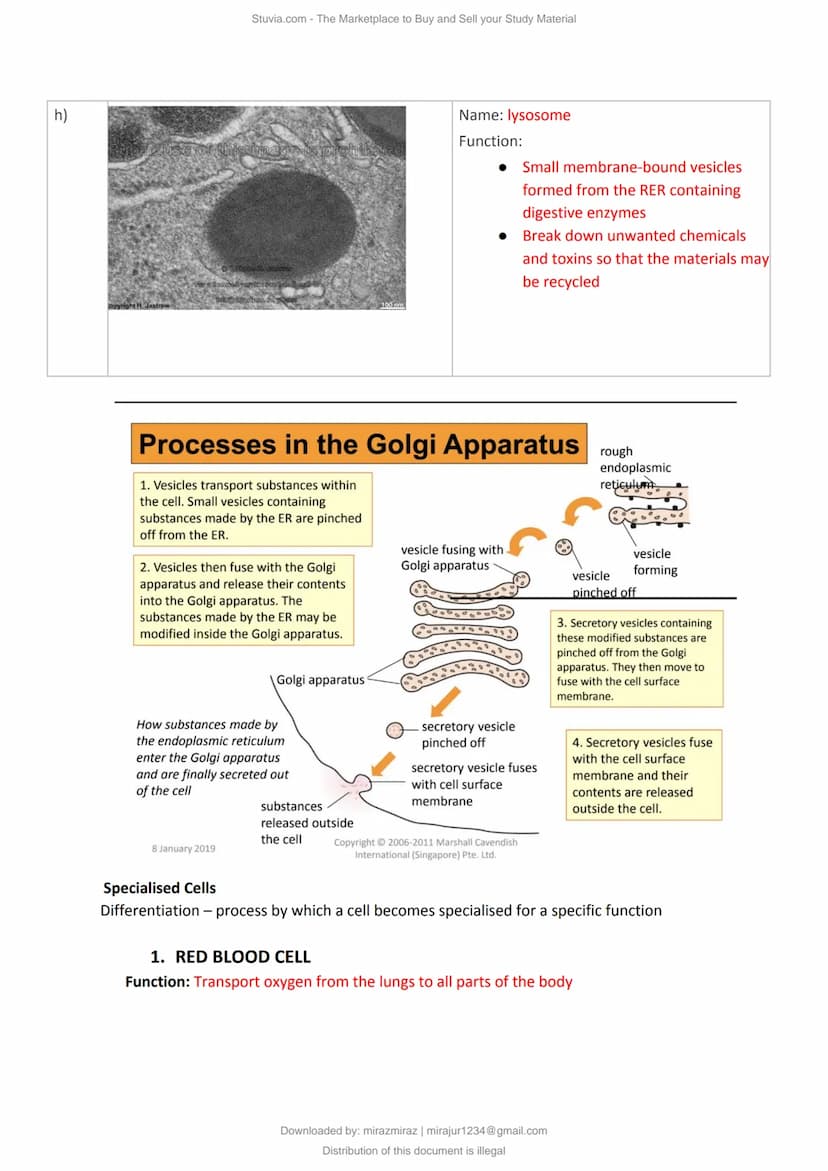
Lysosomes are like the cell's recycling and waste management system. These small membrane-bound vesicles contain powerful digestive enzymes that break down unwanted chemicals and toxins. They essentially "eat" cellular waste so the materials can be recycled and reused - super efficient!
The Golgi apparatus works as a processing and distribution center through a fascinating sequence. First, vesicles containing substances from the ER fuse with the Golgi apparatus. Inside, these substances may be modified before being packaged into secretory vesicles that are pinched off. Finally, these vesicles fuse with the cell surface membrane, releasing their contents outside the cell.
Cell differentiation is the process by which cells become specialized for specific functions. For example, a red blood cell is specialized for oxygen transport from the lungs to all parts of the body. This specialization happens as cells develop from unspecialized stem cells into cells with specific structures and functions.
Amazing Fact: Your body contains about 200 different types of specialized cells, all originating from the same fertilized egg cell. Cell differentiation is what allows multicellular organisms like humans to have specialized organs and tissues!
Understanding how cells process and transport materials helps explain everything from how medicines work to how cells communicate with each other.
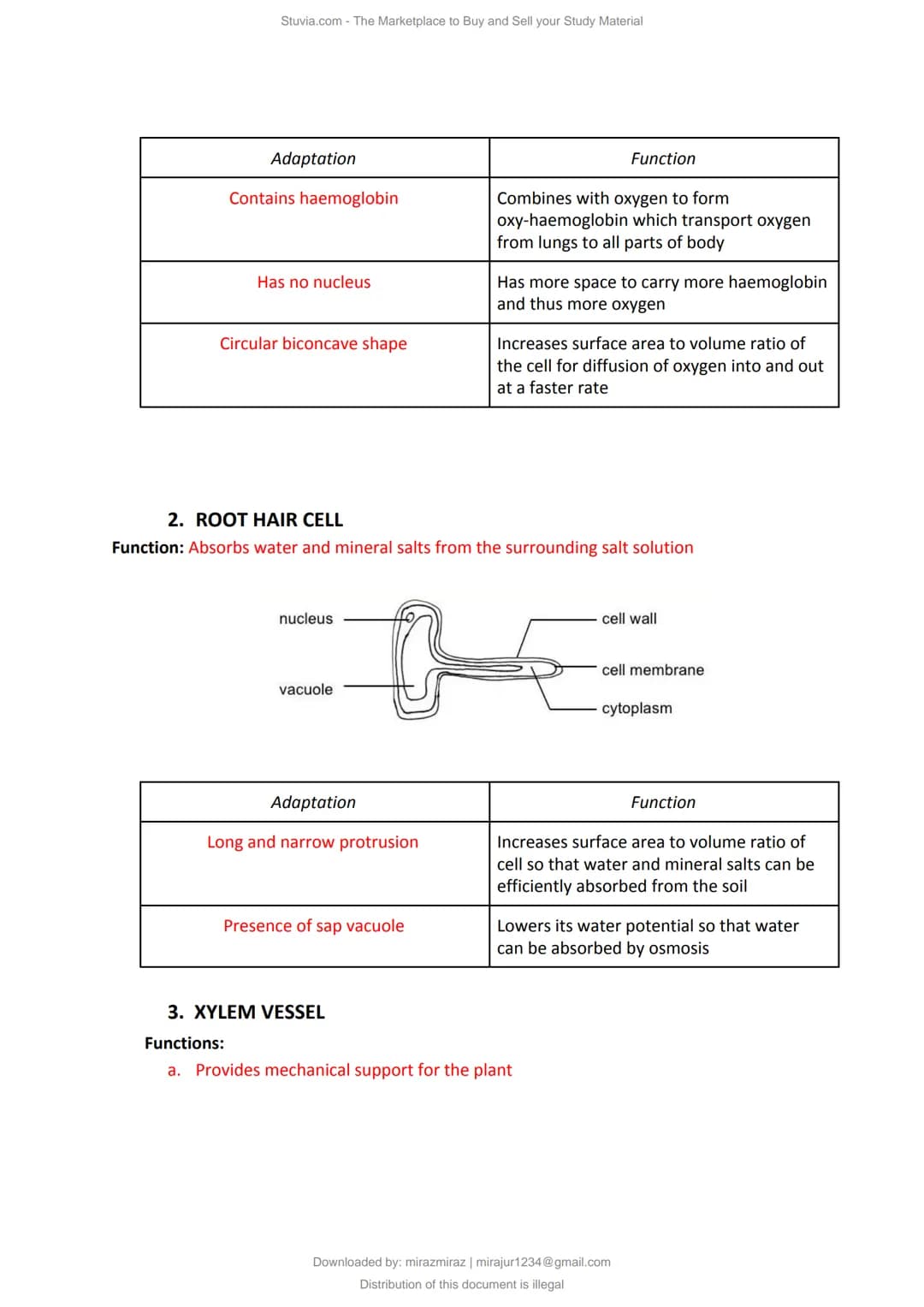
Specialized cells have incredible adaptations that make them perfect for their jobs. Red blood cells have several clever features: they contain hemoglobin that binds to oxygen, lack a nucleus (giving more space for hemoglobin), and have a distinctive biconcave shape that increases surface area for faster oxygen diffusion. It's like they evolved to be perfect oxygen transporters!
Root hair cells in plants are designed specifically for absorption. Their long, narrow protrusions dramatically increase surface area for absorbing water and minerals from soil. They also contain a sap vacuole that lowers water potential, helping water move into the cell through osmosis - like a microscopic water pump!
Xylem vessels serve dual purposes in plants. They provide mechanical support while transporting water and minerals from roots to leaves. Their walls are strengthened with lignin to prevent collapse, and they lack cross walls, forming long hollow tubes that allow efficient water movement.
Try This: Look at your hand and consider that each different type of cell (skin, bone, blood, muscle) started as identical cells but differentiated to perform specific functions. Amazing, right?
These specialized cells demonstrate how structure perfectly matches function in biology, a principle you'll see throughout all living systems.
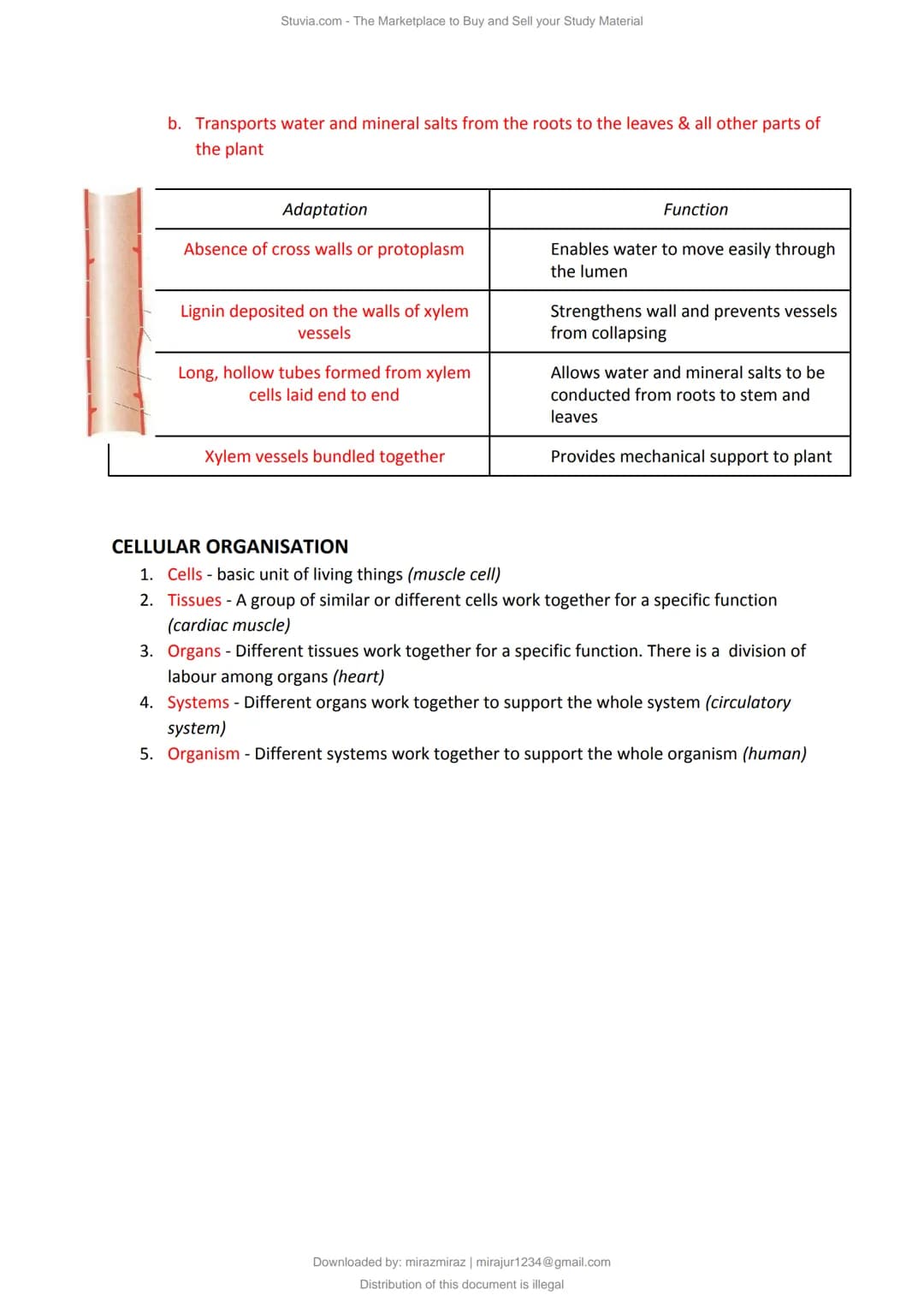
Biology is organized in levels of increasing complexity, starting with the microscopic and building up to the whole organism. This hierarchical organization helps explain how simple units combine to create complex living things.
Cells are the basic units of living things (like a muscle cell). They're the fundamental building blocks of all organisms, containing organelles that perform specific functions.
Tissues form when similar cells work together for a specific function (like cardiac muscle tissue). Tissues represent the next level of organization, with cells coordinating their activities.
Organs are formed when different tissues work together with a division of labor (like the heart). Each tissue contributes its specialized function to the overall purpose of the organ.
Systems arise when different organs collaborate to support a larger function (like the circulatory system). These connected organs work in harmony to maintain body processes.
An organism is the complete living being where different systems work together (like a human). All systems must function properly for the organism to survive and thrive.
Remember This: The relationship between these levels is like a set of nesting dolls - each larger structure contains and depends on the proper functioning of the smaller structures within it.
This organizational hierarchy explains how billions of microscopic cells can create and sustain a complex organism like you!
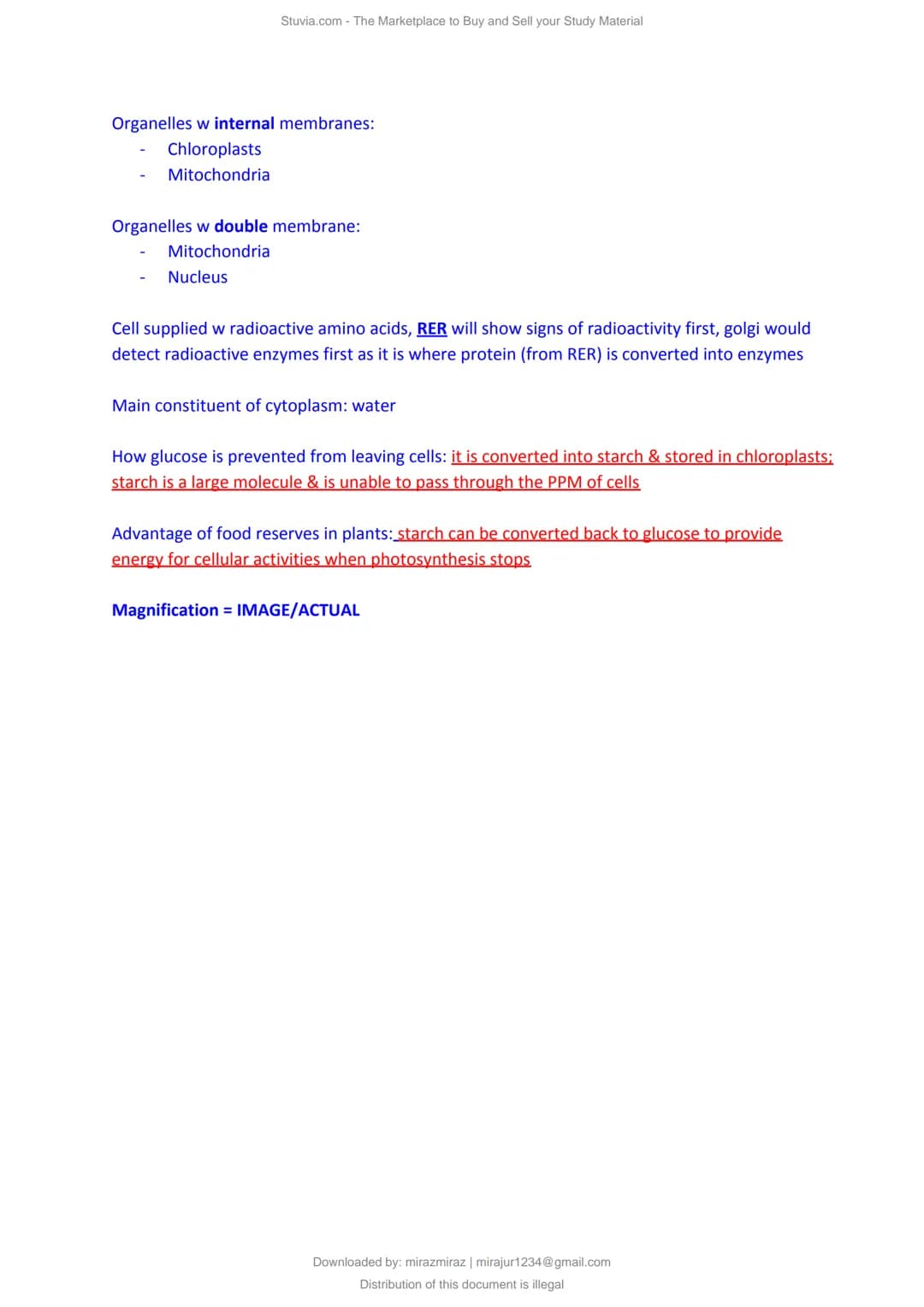
Certain organelles have internal membranes that help compartmentalize their functions. Chloroplasts and mitochondria both contain these internal membrane systems, allowing them to create specialized environments for specific chemical reactions.
Some organelles are surrounded by double membranes, including mitochondria and the nucleus. This double-layer structure provides additional protection and control over what enters and exits these critical organelles.
Water is the main constituent of cytoplasm, creating the fluid environment where cellular reactions occur. The cytoplasm acts like a cellular soup where organelles float and biochemical reactions take place.
Cells have clever ways of storing materials. For instance, plants prevent glucose from leaving cells by converting it into starch and storing it in chloroplasts. Since starch molecules are too large to pass through the plasma membrane, this keeps the energy safely stored until needed.
Measurement Tip: When calculating magnification in microscopy, remember the simple formula: Magnification = Image size ÷ Actual size. This helps you understand the scale of what you're observing!
Understanding these cellular principles helps explain how cells maintain their internal environments and store energy for future use - critical concepts in biology!
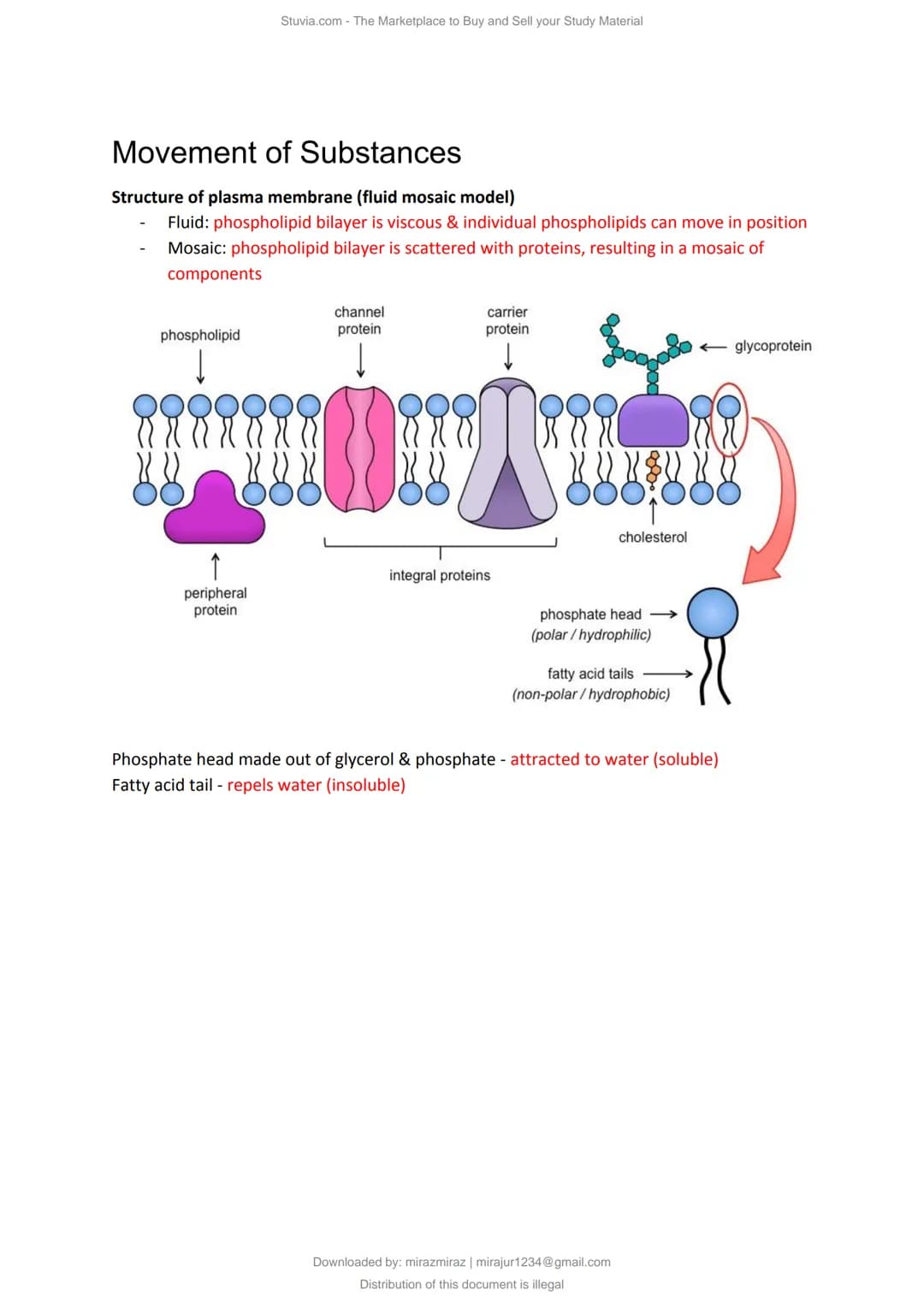
The cell membrane is your introduction to one of biology's most elegant structures - the fluid mosaic model. This model describes how the cell membrane is both fluid (phospholipids can move) and a mosaic (proteins scattered throughout) - creating a dynamic barrier that controls what enters and exits the cell.
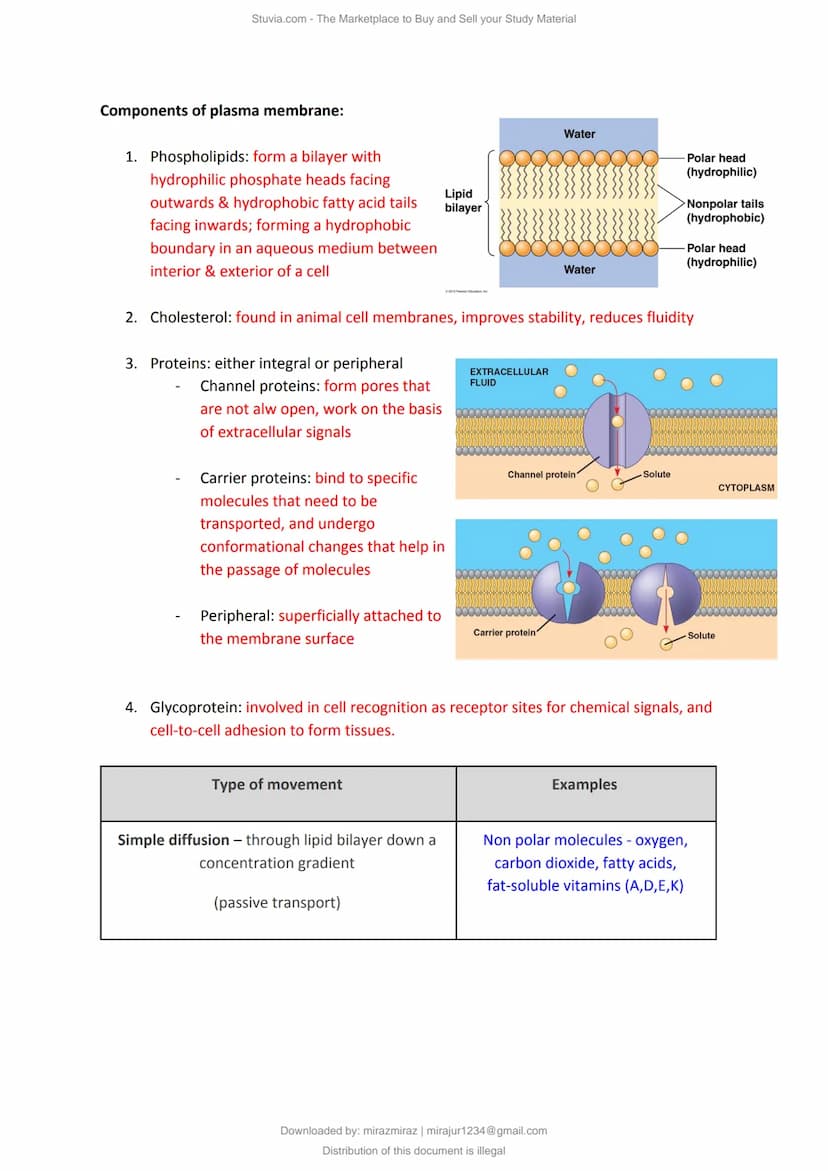
The membrane's main component is a phospholipid bilayer. Each phospholipid has a hydrophilic phosphate head that faces outward toward watery environments, and hydrophobic fatty acid tails that face inward, away from water. This arrangement creates a stable boundary between the cell's interior and exterior.
Various proteins are embedded in or attached to this bilayer. Channel proteins form pores for molecules to pass through, while carrier proteins bind to specific molecules and change shape to transport them across the membrane. Glycoproteins on the cell surface act as identity markers and receptor sites.
Visualization Trick: Imagine the cell membrane as a sea of oil (phospholipids) with floating icebergs (proteins) of different shapes and sizes. Some icebergs have tunnels through them (channel proteins), while others can grab things and pull them across (carrier proteins).
This sophisticated membrane structure explains how cells can be selective about what enters and exits - essential for maintaining the internal environment needed for life!
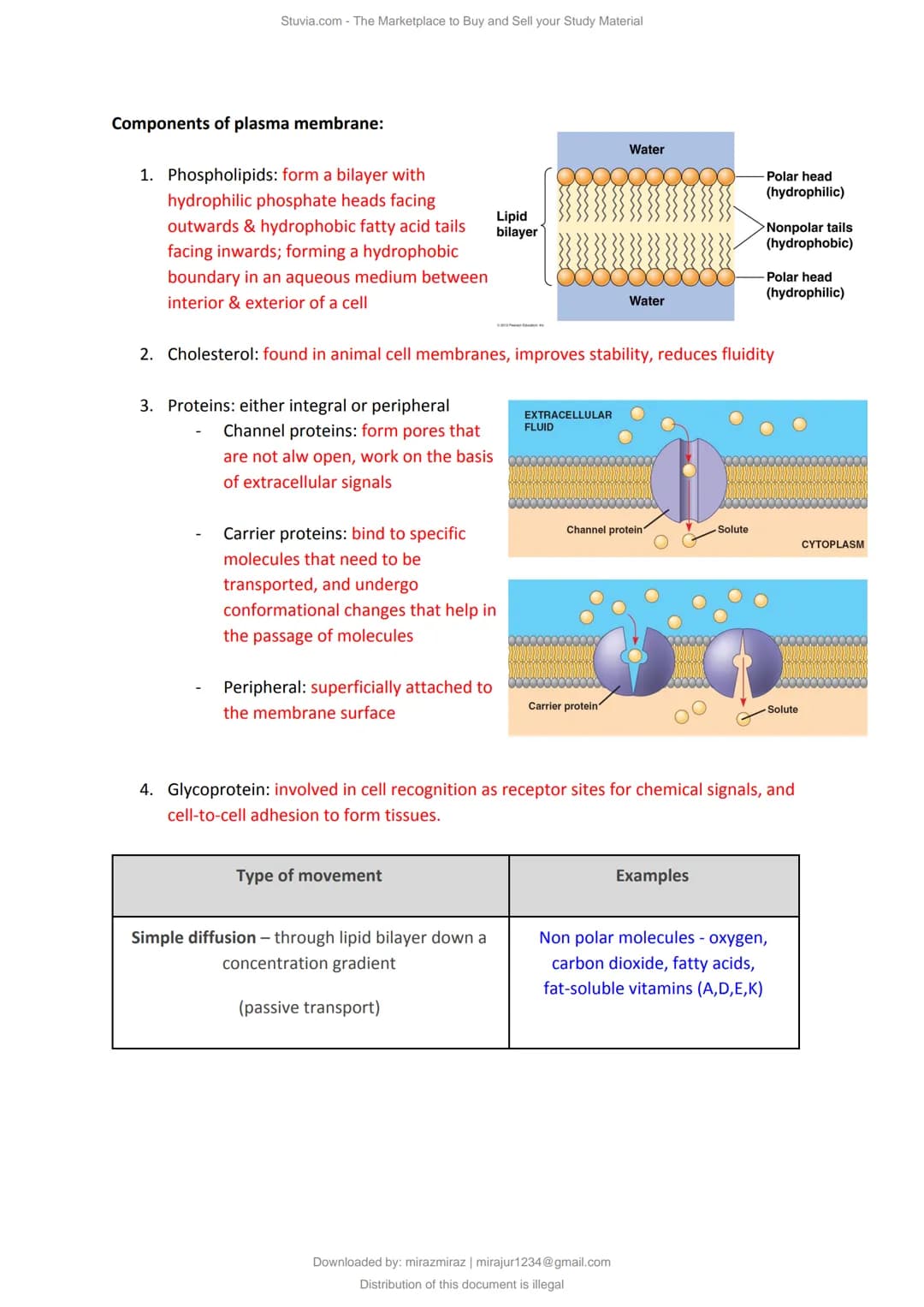
Cells use different transport mechanisms to move substances across their membranes, depending on the size and type of molecule. Understanding these mechanisms helps explain how cells maintain their internal environment.
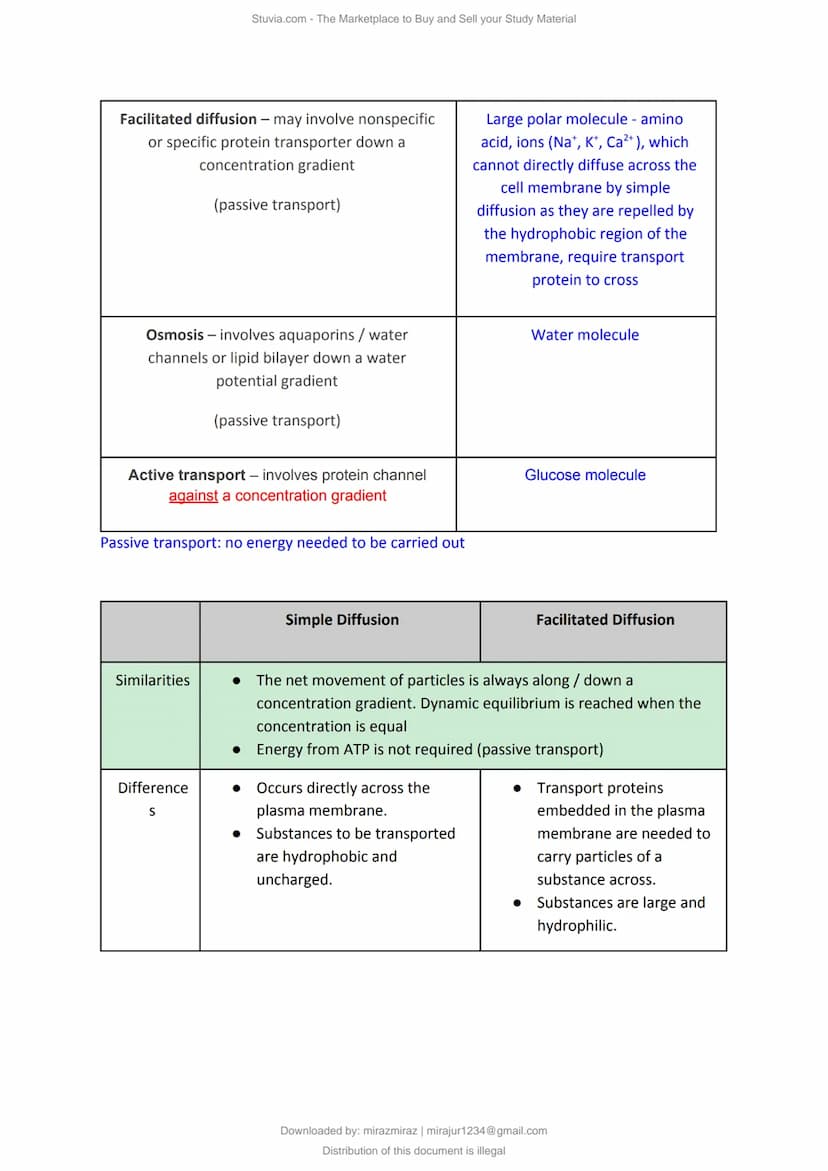
Simple diffusion allows non-polar molecules like oxygen, carbon dioxide, and fatty acids to move directly through the lipid bilayer. These substances simply pass between the fatty acid tails of the phospholipids, moving from an area of higher concentration to lower concentration - no energy required!
Facilitated diffusion uses special protein transporters to help larger polar molecules like amino acids and ions (Na⁺, K⁺, Ca²⁺) cross the membrane. These molecules can't pass through the hydrophobic region of the membrane on their own, so they need protein "doorways" to help them through.
Osmosis is the movement of water molecules across a selectively permeable membrane. Water moves from a region of higher water potential (lower solute concentration) to a region of lower water potential (higher solute concentration), often through special water channels called aquaporins.
Real-World Application: Think about how a sports drink works - when you're dehydrated, the drink's solute concentration is designed to optimize the rate at which water enters your cells through osmosis!
These transport mechanisms are fundamental to cellular survival, allowing nutrients in and wastes out while maintaining the cell's delicate internal balance.
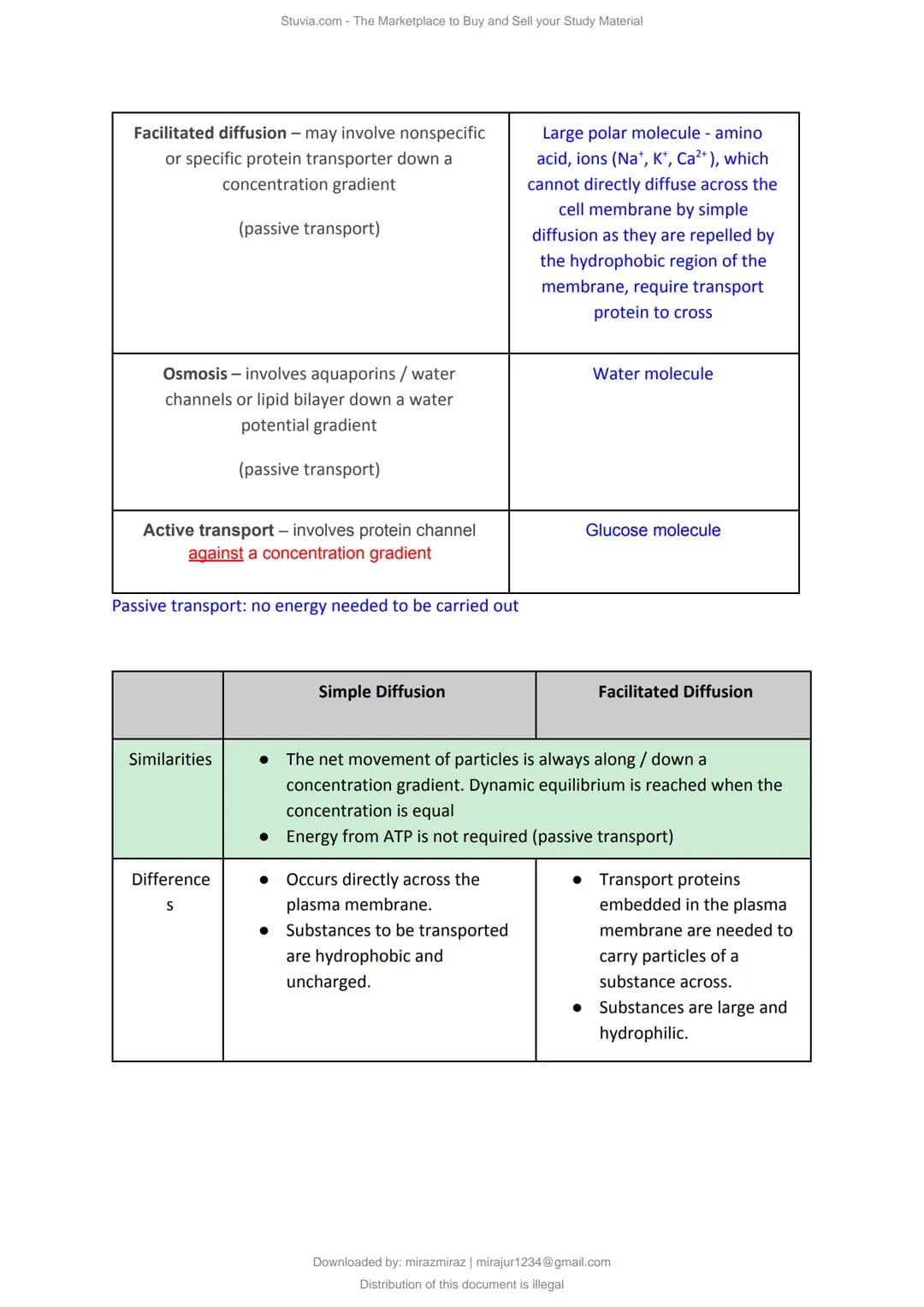
Cell membranes are selective gatekeepers, using different transport methods based on the substances involved and their concentration gradients. Understanding these differences is key to grasping how cells maintain their internal environment.
Simple diffusion and facilitated diffusion share important similarities: both move substances down concentration gradients (from high to low concentration) and neither requires energy. However, they differ in how substances cross the membrane - simple diffusion moves directly through the lipid bilayer, while facilitated diffusion uses specialized transport proteins.
The rate of passive transport processes is affected by several factors:
When substances need to move against their concentration gradient, cells must use active transport. Unlike passive transport methods, active transport requires energy from ATP to power protein channels that pump substances from areas of low concentration to high concentration.
Think About It: Your cells perform active transport constantly - when nerve cells pump sodium ions out and potassium ions in, or when your stomach cells create a highly acidic environment by pumping hydrogen ions against their concentration gradient.
These transport mechanisms explain everything from how nutrients enter your cells to how your nerves transmit signals!
Our AI companion is specifically built for the needs of students. Based on the millions of content pieces we have on the platform we can provide truly meaningful and relevant answers to students. But its not only about answers, the companion is even more about guiding students through their daily learning challenges, with personalised study plans, quizzes or content pieces in the chat and 100% personalisation based on the students skills and developments.
You can download the app in the Google Play Store and in the Apple App Store.
That's right! Enjoy free access to study content, connect with fellow students, and get instant help – all at your fingertips.
App Store
Google Play
The app is very easy to use and well designed. I have found everything I was looking for so far and have been able to learn a lot from the presentations! I will definitely use the app for a class assignment! And of course it also helps a lot as an inspiration.
Stefan S
iOS user
This app is really great. There are so many study notes and help [...]. My problem subject is French, for example, and the app has so many options for help. Thanks to this app, I have improved my French. I would recommend it to anyone.
Samantha Klich
Android user
Wow, I am really amazed. I just tried the app because I've seen it advertised many times and was absolutely stunned. This app is THE HELP you want for school and above all, it offers so many things, such as workouts and fact sheets, which have been VERY helpful to me personally.
Anna
iOS user
I think it’s very much worth it and you’ll end up using it a lot once you get the hang of it and even after looking at others notes you can still ask your Artificial intelligence buddy the question and ask to simplify it if you still don’t get it!!! In the end I think it’s worth it 😊👍 ⚠️Also DID I MENTION ITS FREEE YOU DON’T HAVE TO PAY FOR ANYTHING AND STILL GET YOUR GRADES IN PERFECTLY❗️❗️⚠️
Thomas R
iOS user
Knowunity is the BEST app I’ve used in a minute. This is not an ai review or anything this is genuinely coming from a 7th grade student (I know 2011 im young) but dude this app is a 10/10 i have maintained a 3.8 gpa and have plenty of time for gaming. I love it and my mom is just happy I got good grades
Brad T
Android user
Not only did it help me find the answer but it also showed me alternative ways to solve it. I was horrible in math and science but now I have an a in both subjects. Thanks for the help🤍🤍
David K
iOS user
The app's just great! All I have to do is enter the topic in the search bar and I get the response real fast. I don't have to watch 10 YouTube videos to understand something, so I'm saving my time. Highly recommended!
Sudenaz Ocak
Android user
In school I was really bad at maths but thanks to the app, I am doing better now. I am so grateful that you made the app.
Greenlight Bonnie
Android user
I found this app a couple years ago and it has only gotten better since then. I really love it because it can help with written questions and photo questions. Also, it can find study guides that other people have made as well as flashcard sets and practice tests. The free version is also amazing for students who might not be able to afford it. Would 100% recommend
Aubrey
iOS user
Best app if you're in Highschool or Junior high. I have been using this app for 2 school years and it's the best, it's good if you don't have anyone to help you with school work.😋🩷🎀
Marco B
iOS user
THE QUIZES AND FLASHCARDS ARE SO USEFUL AND I LOVE Knowunity AI. IT ALSO IS LITREALLY LIKE CHATGPT BUT SMARTER!! HELPED ME WITH MY MASCARA PROBLEMS TOO!! AS WELL AS MY REAL SUBJECTS ! DUHHH 😍😁😲🤑💗✨🎀😮
Elisha
iOS user
This app is phenomenal down to the correct info and the various topics you can study! I greatly recommend it for people who struggle with procrastination and those who need homework help. It has been perfectly accurate for world 1 history as far as I’ve seen! Geometry too!
Paul T
iOS user
The app is very easy to use and well designed. I have found everything I was looking for so far and have been able to learn a lot from the presentations! I will definitely use the app for a class assignment! And of course it also helps a lot as an inspiration.
Stefan S
iOS user
This app is really great. There are so many study notes and help [...]. My problem subject is French, for example, and the app has so many options for help. Thanks to this app, I have improved my French. I would recommend it to anyone.
Samantha Klich
Android user
Wow, I am really amazed. I just tried the app because I've seen it advertised many times and was absolutely stunned. This app is THE HELP you want for school and above all, it offers so many things, such as workouts and fact sheets, which have been VERY helpful to me personally.
Anna
iOS user
I think it’s very much worth it and you’ll end up using it a lot once you get the hang of it and even after looking at others notes you can still ask your Artificial intelligence buddy the question and ask to simplify it if you still don’t get it!!! In the end I think it’s worth it 😊👍 ⚠️Also DID I MENTION ITS FREEE YOU DON’T HAVE TO PAY FOR ANYTHING AND STILL GET YOUR GRADES IN PERFECTLY❗️❗️⚠️
Thomas R
iOS user
Knowunity is the BEST app I’ve used in a minute. This is not an ai review or anything this is genuinely coming from a 7th grade student (I know 2011 im young) but dude this app is a 10/10 i have maintained a 3.8 gpa and have plenty of time for gaming. I love it and my mom is just happy I got good grades
Brad T
Android user
Not only did it help me find the answer but it also showed me alternative ways to solve it. I was horrible in math and science but now I have an a in both subjects. Thanks for the help🤍🤍
David K
iOS user
The app's just great! All I have to do is enter the topic in the search bar and I get the response real fast. I don't have to watch 10 YouTube videos to understand something, so I'm saving my time. Highly recommended!
Sudenaz Ocak
Android user
In school I was really bad at maths but thanks to the app, I am doing better now. I am so grateful that you made the app.
Greenlight Bonnie
Android user
I found this app a couple years ago and it has only gotten better since then. I really love it because it can help with written questions and photo questions. Also, it can find study guides that other people have made as well as flashcard sets and practice tests. The free version is also amazing for students who might not be able to afford it. Would 100% recommend
Aubrey
iOS user
Best app if you're in Highschool or Junior high. I have been using this app for 2 school years and it's the best, it's good if you don't have anyone to help you with school work.😋🩷🎀
Marco B
iOS user
THE QUIZES AND FLASHCARDS ARE SO USEFUL AND I LOVE Knowunity AI. IT ALSO IS LITREALLY LIKE CHATGPT BUT SMARTER!! HELPED ME WITH MY MASCARA PROBLEMS TOO!! AS WELL AS MY REAL SUBJECTS ! DUHHH 😍😁😲🤑💗✨🎀😮
Elisha
iOS user
This app is phenomenal down to the correct info and the various topics you can study! I greatly recommend it for people who struggle with procrastination and those who need homework help. It has been perfectly accurate for world 1 history as far as I’ve seen! Geometry too!
Paul T
iOS user
John
@john_jaln
Dive into the fascinating world of biology where we'll explore how cells function as the basic units of life, and how complex organisms maintain their internal processes. From microscopic cell structures to the intricate systems of plants and humans, this... Show more
Access to all documents
Improve your grades
Join milions of students
Ever wondered what makes up the tiny building blocks of life? Cells contain specialized structures called organelles that perform specific functions to keep the cell alive and functioning.
The most important organelles include the nucleus (the control center that directs cell activities), mitochondria (powerhouses that release energy through respiration), and chloroplasts (found in plant cells for photosynthesis). Each organelle is perfectly designed for its job!
For example, chloroplasts trap light energy and convert it to chemical energy during photosynthesis. They also store starch and have a characteristic double membrane structure that helps them function efficiently.
Fun Fact: If you could line up 1,000 average human cells side by side, they would only stretch about one centimeter! Yet each tiny cell contains all these complex organelles working together.
Think of a cell like a tiny factory with different departments - each organelle has its specific role, but they all work together to keep the cell (and ultimately you) alive.
Access to all documents
Improve your grades
Join milions of students
The nucleus is truly the brain of the cell. It controls all cellular activities including growth and repair, and contains genetic material in the nucleolus. This genetic material is essential for cell division, making the nucleus incredibly important.
Mitochondria are the powerhouses where cellular respiration happens. These double-membraned structures release energy by oxidizing glucose with oxygen. This process creates the chemical energy (ATP) that powers virtually everything your cells do - from muscle contractions to protein synthesis.
The rough endoplasmic reticulum (RER) acts like the cell's shipping system. It's covered with ribosomes that make proteins, which are then transported via vesicles to the Golgi apparatus for secretion out of the cell. The RER is often connected to the nuclear envelope, creating a continuous network.
Did you know? Your cells contain so many mitochondria that they make up about 25% of your body's volume! Active cells like muscle cells can contain thousands of mitochondria to meet their high energy demands.
These organelles might be microscopic, but understanding how they function helps explain everything from how your muscles move to why plants can make their own food!
Access to all documents
Improve your grades
Join milions of students
The smooth endoplasmic reticulum (SER) is like the cell's chemical factory. Unlike its rough counterpart, the SER doesn't have ribosomes on its surface. Instead, it specializes in synthesizing fats and steroids, and detoxifies harmful substances into harmless materials - kind of like your body's own detox system!
The Golgi apparatus resembles a stack of flattened, membrane-bound sacs. Think of it as the cell's packaging and shipping department - it chemically modifies substances made by the ER, then stores and packages these materials in vesicles for secretion out of the cell. It's essentially the cell's UPS service!
Vacuoles are storage containers within cells. In plant cells, they're typically large and sap-filled, helping maintain cell structure and storing nutrients. Animal cells have smaller, usually temporary vacuoles. In the image, you can see a large vacuole alongside chloroplasts and the nucleus in a plant cell.
Biology Pro Tip: When studying cell organelles, create a mental image of a city where each organelle is a different building with a specific function. This visualization can help you remember the role of each structure!
Understanding these organelles helps explain how cells can perform complex functions despite their microscopic size.
Access to all documents
Improve your grades
Join milions of students
Lysosomes are like the cell's recycling and waste management system. These small membrane-bound vesicles contain powerful digestive enzymes that break down unwanted chemicals and toxins. They essentially "eat" cellular waste so the materials can be recycled and reused - super efficient!
The Golgi apparatus works as a processing and distribution center through a fascinating sequence. First, vesicles containing substances from the ER fuse with the Golgi apparatus. Inside, these substances may be modified before being packaged into secretory vesicles that are pinched off. Finally, these vesicles fuse with the cell surface membrane, releasing their contents outside the cell.
Cell differentiation is the process by which cells become specialized for specific functions. For example, a red blood cell is specialized for oxygen transport from the lungs to all parts of the body. This specialization happens as cells develop from unspecialized stem cells into cells with specific structures and functions.
Amazing Fact: Your body contains about 200 different types of specialized cells, all originating from the same fertilized egg cell. Cell differentiation is what allows multicellular organisms like humans to have specialized organs and tissues!
Understanding how cells process and transport materials helps explain everything from how medicines work to how cells communicate with each other.
Access to all documents
Improve your grades
Join milions of students
Specialized cells have incredible adaptations that make them perfect for their jobs. Red blood cells have several clever features: they contain hemoglobin that binds to oxygen, lack a nucleus (giving more space for hemoglobin), and have a distinctive biconcave shape that increases surface area for faster oxygen diffusion. It's like they evolved to be perfect oxygen transporters!
Root hair cells in plants are designed specifically for absorption. Their long, narrow protrusions dramatically increase surface area for absorbing water and minerals from soil. They also contain a sap vacuole that lowers water potential, helping water move into the cell through osmosis - like a microscopic water pump!
Xylem vessels serve dual purposes in plants. They provide mechanical support while transporting water and minerals from roots to leaves. Their walls are strengthened with lignin to prevent collapse, and they lack cross walls, forming long hollow tubes that allow efficient water movement.
Try This: Look at your hand and consider that each different type of cell (skin, bone, blood, muscle) started as identical cells but differentiated to perform specific functions. Amazing, right?
These specialized cells demonstrate how structure perfectly matches function in biology, a principle you'll see throughout all living systems.
Access to all documents
Improve your grades
Join milions of students
Biology is organized in levels of increasing complexity, starting with the microscopic and building up to the whole organism. This hierarchical organization helps explain how simple units combine to create complex living things.
Cells are the basic units of living things (like a muscle cell). They're the fundamental building blocks of all organisms, containing organelles that perform specific functions.
Tissues form when similar cells work together for a specific function (like cardiac muscle tissue). Tissues represent the next level of organization, with cells coordinating their activities.
Organs are formed when different tissues work together with a division of labor (like the heart). Each tissue contributes its specialized function to the overall purpose of the organ.
Systems arise when different organs collaborate to support a larger function (like the circulatory system). These connected organs work in harmony to maintain body processes.
An organism is the complete living being where different systems work together (like a human). All systems must function properly for the organism to survive and thrive.
Remember This: The relationship between these levels is like a set of nesting dolls - each larger structure contains and depends on the proper functioning of the smaller structures within it.
This organizational hierarchy explains how billions of microscopic cells can create and sustain a complex organism like you!
Access to all documents
Improve your grades
Join milions of students
Certain organelles have internal membranes that help compartmentalize their functions. Chloroplasts and mitochondria both contain these internal membrane systems, allowing them to create specialized environments for specific chemical reactions.
Some organelles are surrounded by double membranes, including mitochondria and the nucleus. This double-layer structure provides additional protection and control over what enters and exits these critical organelles.
Water is the main constituent of cytoplasm, creating the fluid environment where cellular reactions occur. The cytoplasm acts like a cellular soup where organelles float and biochemical reactions take place.
Cells have clever ways of storing materials. For instance, plants prevent glucose from leaving cells by converting it into starch and storing it in chloroplasts. Since starch molecules are too large to pass through the plasma membrane, this keeps the energy safely stored until needed.
Measurement Tip: When calculating magnification in microscopy, remember the simple formula: Magnification = Image size ÷ Actual size. This helps you understand the scale of what you're observing!
Understanding these cellular principles helps explain how cells maintain their internal environments and store energy for future use - critical concepts in biology!
Access to all documents
Improve your grades
Join milions of students
The cell membrane is your introduction to one of biology's most elegant structures - the fluid mosaic model. This model describes how the cell membrane is both fluid (phospholipids can move) and a mosaic (proteins scattered throughout) - creating a dynamic barrier that controls what enters and exits the cell.
The membrane's main component is a phospholipid bilayer. Each phospholipid has a hydrophilic phosphate head that faces outward toward watery environments, and hydrophobic fatty acid tails that face inward, away from water. This arrangement creates a stable boundary between the cell's interior and exterior.
Various proteins are embedded in or attached to this bilayer. Channel proteins form pores for molecules to pass through, while carrier proteins bind to specific molecules and change shape to transport them across the membrane. Glycoproteins on the cell surface act as identity markers and receptor sites.
Visualization Trick: Imagine the cell membrane as a sea of oil (phospholipids) with floating icebergs (proteins) of different shapes and sizes. Some icebergs have tunnels through them (channel proteins), while others can grab things and pull them across (carrier proteins).
This sophisticated membrane structure explains how cells can be selective about what enters and exits - essential for maintaining the internal environment needed for life!
Access to all documents
Improve your grades
Join milions of students
Cells use different transport mechanisms to move substances across their membranes, depending on the size and type of molecule. Understanding these mechanisms helps explain how cells maintain their internal environment.
Simple diffusion allows non-polar molecules like oxygen, carbon dioxide, and fatty acids to move directly through the lipid bilayer. These substances simply pass between the fatty acid tails of the phospholipids, moving from an area of higher concentration to lower concentration - no energy required!
Facilitated diffusion uses special protein transporters to help larger polar molecules like amino acids and ions (Na⁺, K⁺, Ca²⁺) cross the membrane. These molecules can't pass through the hydrophobic region of the membrane on their own, so they need protein "doorways" to help them through.
Osmosis is the movement of water molecules across a selectively permeable membrane. Water moves from a region of higher water potential (lower solute concentration) to a region of lower water potential (higher solute concentration), often through special water channels called aquaporins.
Real-World Application: Think about how a sports drink works - when you're dehydrated, the drink's solute concentration is designed to optimize the rate at which water enters your cells through osmosis!
These transport mechanisms are fundamental to cellular survival, allowing nutrients in and wastes out while maintaining the cell's delicate internal balance.
Access to all documents
Improve your grades
Join milions of students
Cell membranes are selective gatekeepers, using different transport methods based on the substances involved and their concentration gradients. Understanding these differences is key to grasping how cells maintain their internal environment.
Simple diffusion and facilitated diffusion share important similarities: both move substances down concentration gradients (from high to low concentration) and neither requires energy. However, they differ in how substances cross the membrane - simple diffusion moves directly through the lipid bilayer, while facilitated diffusion uses specialized transport proteins.
The rate of passive transport processes is affected by several factors:
When substances need to move against their concentration gradient, cells must use active transport. Unlike passive transport methods, active transport requires energy from ATP to power protein channels that pump substances from areas of low concentration to high concentration.
Think About It: Your cells perform active transport constantly - when nerve cells pump sodium ions out and potassium ions in, or when your stomach cells create a highly acidic environment by pumping hydrogen ions against their concentration gradient.
These transport mechanisms explain everything from how nutrients enter your cells to how your nerves transmit signals!
Our AI companion is specifically built for the needs of students. Based on the millions of content pieces we have on the platform we can provide truly meaningful and relevant answers to students. But its not only about answers, the companion is even more about guiding students through their daily learning challenges, with personalised study plans, quizzes or content pieces in the chat and 100% personalisation based on the students skills and developments.
You can download the app in the Google Play Store and in the Apple App Store.
That's right! Enjoy free access to study content, connect with fellow students, and get instant help – all at your fingertips.
25
Smart Tools NEW
Transform this note into: ✓ 50+ Practice Questions ✓ Interactive Flashcards ✓ Full Practice Test ✓ Essay Outlines
The cell membrane consists of a lipid bilayer that is semipermeable. The cell membrane regulates the transport of materials entering and exiting the cell.
 AP Biology
Understanding the arrangement of electrons in atom shells and how chemical bonds form through valence electrons.
AP BiologyAll notes from AP Classroom slides and videos
AP BiologyIB Biology Unit 1.1 Cell Biology summary study notes.
AP BiologyAnatomy Unit 1: Directional Terms (superior, inferior, ventral, dorsal, etc.) and Organ Systems
AP BiologyAP Bio topic 2.9
AP BiologyApp Store
Google Play
The app is very easy to use and well designed. I have found everything I was looking for so far and have been able to learn a lot from the presentations! I will definitely use the app for a class assignment! And of course it also helps a lot as an inspiration.
Stefan S
iOS user
This app is really great. There are so many study notes and help [...]. My problem subject is French, for example, and the app has so many options for help. Thanks to this app, I have improved my French. I would recommend it to anyone.
Samantha Klich
Android user
Wow, I am really amazed. I just tried the app because I've seen it advertised many times and was absolutely stunned. This app is THE HELP you want for school and above all, it offers so many things, such as workouts and fact sheets, which have been VERY helpful to me personally.
Anna
iOS user
I think it’s very much worth it and you’ll end up using it a lot once you get the hang of it and even after looking at others notes you can still ask your Artificial intelligence buddy the question and ask to simplify it if you still don’t get it!!! In the end I think it’s worth it 😊👍 ⚠️Also DID I MENTION ITS FREEE YOU DON’T HAVE TO PAY FOR ANYTHING AND STILL GET YOUR GRADES IN PERFECTLY❗️❗️⚠️
Thomas R
iOS user
Knowunity is the BEST app I’ve used in a minute. This is not an ai review or anything this is genuinely coming from a 7th grade student (I know 2011 im young) but dude this app is a 10/10 i have maintained a 3.8 gpa and have plenty of time for gaming. I love it and my mom is just happy I got good grades
Brad T
Android user
Not only did it help me find the answer but it also showed me alternative ways to solve it. I was horrible in math and science but now I have an a in both subjects. Thanks for the help🤍🤍
David K
iOS user
The app's just great! All I have to do is enter the topic in the search bar and I get the response real fast. I don't have to watch 10 YouTube videos to understand something, so I'm saving my time. Highly recommended!
Sudenaz Ocak
Android user
In school I was really bad at maths but thanks to the app, I am doing better now. I am so grateful that you made the app.
Greenlight Bonnie
Android user
I found this app a couple years ago and it has only gotten better since then. I really love it because it can help with written questions and photo questions. Also, it can find study guides that other people have made as well as flashcard sets and practice tests. The free version is also amazing for students who might not be able to afford it. Would 100% recommend
Aubrey
iOS user
Best app if you're in Highschool or Junior high. I have been using this app for 2 school years and it's the best, it's good if you don't have anyone to help you with school work.😋🩷🎀
Marco B
iOS user
THE QUIZES AND FLASHCARDS ARE SO USEFUL AND I LOVE Knowunity AI. IT ALSO IS LITREALLY LIKE CHATGPT BUT SMARTER!! HELPED ME WITH MY MASCARA PROBLEMS TOO!! AS WELL AS MY REAL SUBJECTS ! DUHHH 😍😁😲🤑💗✨🎀😮
Elisha
iOS user
This app is phenomenal down to the correct info and the various topics you can study! I greatly recommend it for people who struggle with procrastination and those who need homework help. It has been perfectly accurate for world 1 history as far as I’ve seen! Geometry too!
Paul T
iOS user
The app is very easy to use and well designed. I have found everything I was looking for so far and have been able to learn a lot from the presentations! I will definitely use the app for a class assignment! And of course it also helps a lot as an inspiration.
Stefan S
iOS user
This app is really great. There are so many study notes and help [...]. My problem subject is French, for example, and the app has so many options for help. Thanks to this app, I have improved my French. I would recommend it to anyone.
Samantha Klich
Android user
Wow, I am really amazed. I just tried the app because I've seen it advertised many times and was absolutely stunned. This app is THE HELP you want for school and above all, it offers so many things, such as workouts and fact sheets, which have been VERY helpful to me personally.
Anna
iOS user
I think it’s very much worth it and you’ll end up using it a lot once you get the hang of it and even after looking at others notes you can still ask your Artificial intelligence buddy the question and ask to simplify it if you still don’t get it!!! In the end I think it’s worth it 😊👍 ⚠️Also DID I MENTION ITS FREEE YOU DON’T HAVE TO PAY FOR ANYTHING AND STILL GET YOUR GRADES IN PERFECTLY❗️❗️⚠️
Thomas R
iOS user
Knowunity is the BEST app I’ve used in a minute. This is not an ai review or anything this is genuinely coming from a 7th grade student (I know 2011 im young) but dude this app is a 10/10 i have maintained a 3.8 gpa and have plenty of time for gaming. I love it and my mom is just happy I got good grades
Brad T
Android user
Not only did it help me find the answer but it also showed me alternative ways to solve it. I was horrible in math and science but now I have an a in both subjects. Thanks for the help🤍🤍
David K
iOS user
The app's just great! All I have to do is enter the topic in the search bar and I get the response real fast. I don't have to watch 10 YouTube videos to understand something, so I'm saving my time. Highly recommended!
Sudenaz Ocak
Android user
In school I was really bad at maths but thanks to the app, I am doing better now. I am so grateful that you made the app.
Greenlight Bonnie
Android user
I found this app a couple years ago and it has only gotten better since then. I really love it because it can help with written questions and photo questions. Also, it can find study guides that other people have made as well as flashcard sets and practice tests. The free version is also amazing for students who might not be able to afford it. Would 100% recommend
Aubrey
iOS user
Best app if you're in Highschool or Junior high. I have been using this app for 2 school years and it's the best, it's good if you don't have anyone to help you with school work.😋🩷🎀
Marco B
iOS user
THE QUIZES AND FLASHCARDS ARE SO USEFUL AND I LOVE Knowunity AI. IT ALSO IS LITREALLY LIKE CHATGPT BUT SMARTER!! HELPED ME WITH MY MASCARA PROBLEMS TOO!! AS WELL AS MY REAL SUBJECTS ! DUHHH 😍😁😲🤑💗✨🎀😮
Elisha
iOS user
This app is phenomenal down to the correct info and the various topics you can study! I greatly recommend it for people who struggle with procrastination and those who need homework help. It has been perfectly accurate for world 1 history as far as I’ve seen! Geometry too!
Paul T
iOS user