
John Steinbeck's masterpiece Of Mice and Menexplores complex themes... Show more
 Biology
 Sociology
Sign up to see the contentIt's free!
Access to all documents
Improve your grades
Join milions of students
By signing up you accept Terms of Service and Privacy Policy
Subjects

Biology

Chemistry
AP Chemistry

English
AP English Literature
4,919
•
Dec 25, 2025
•

mia grace
@miagrace222
John Steinbeck's masterpiece Of Mice and Menexplores complex themes... Show more
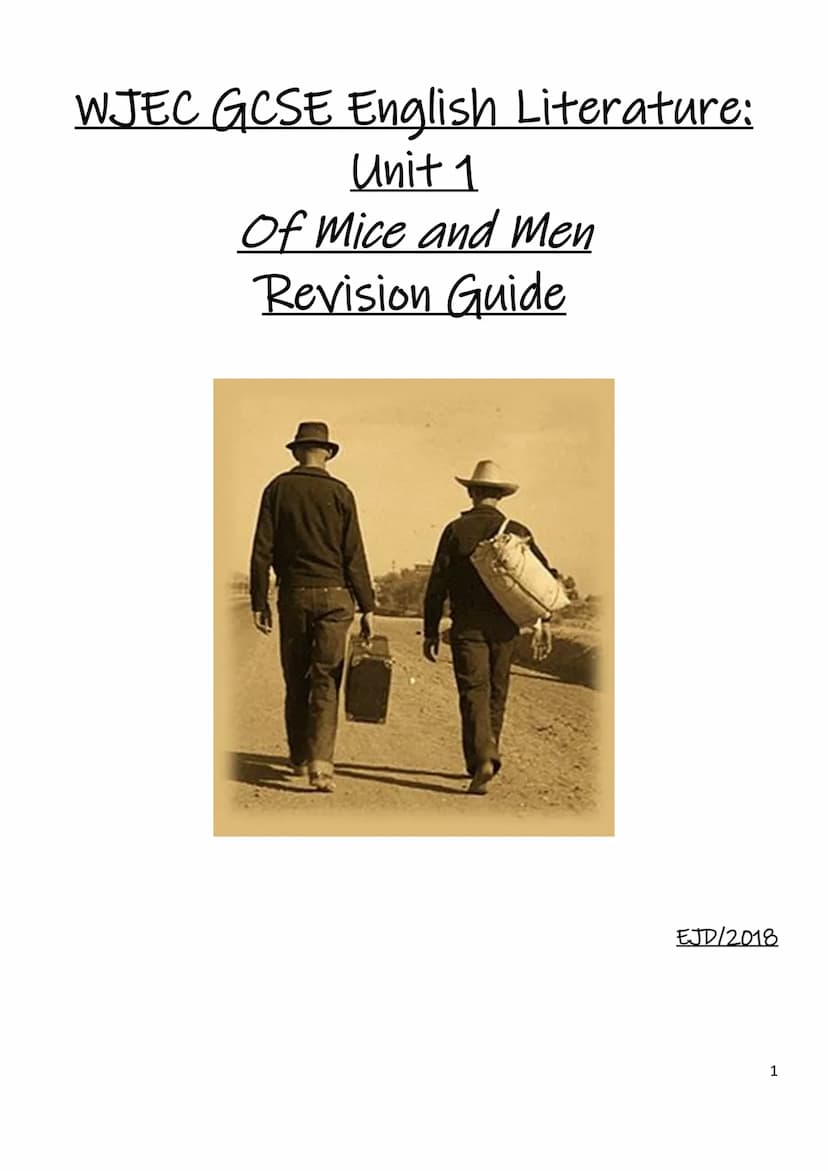
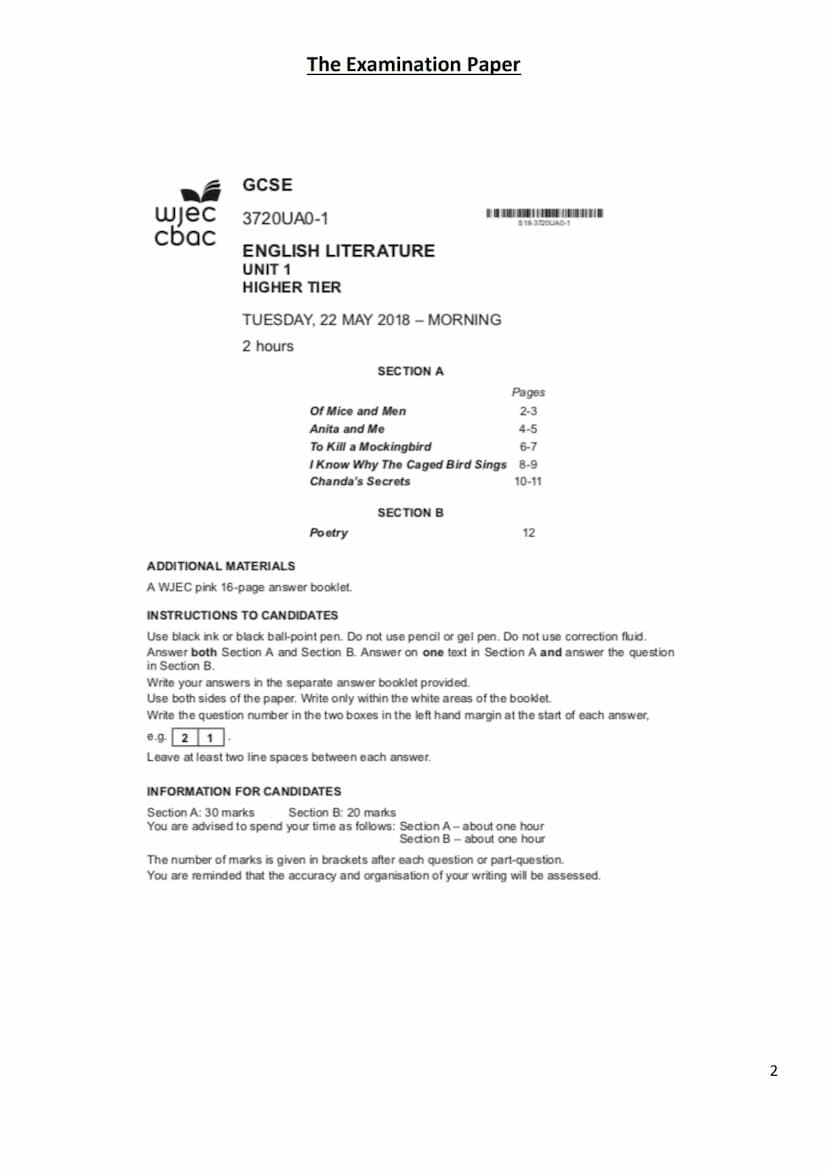

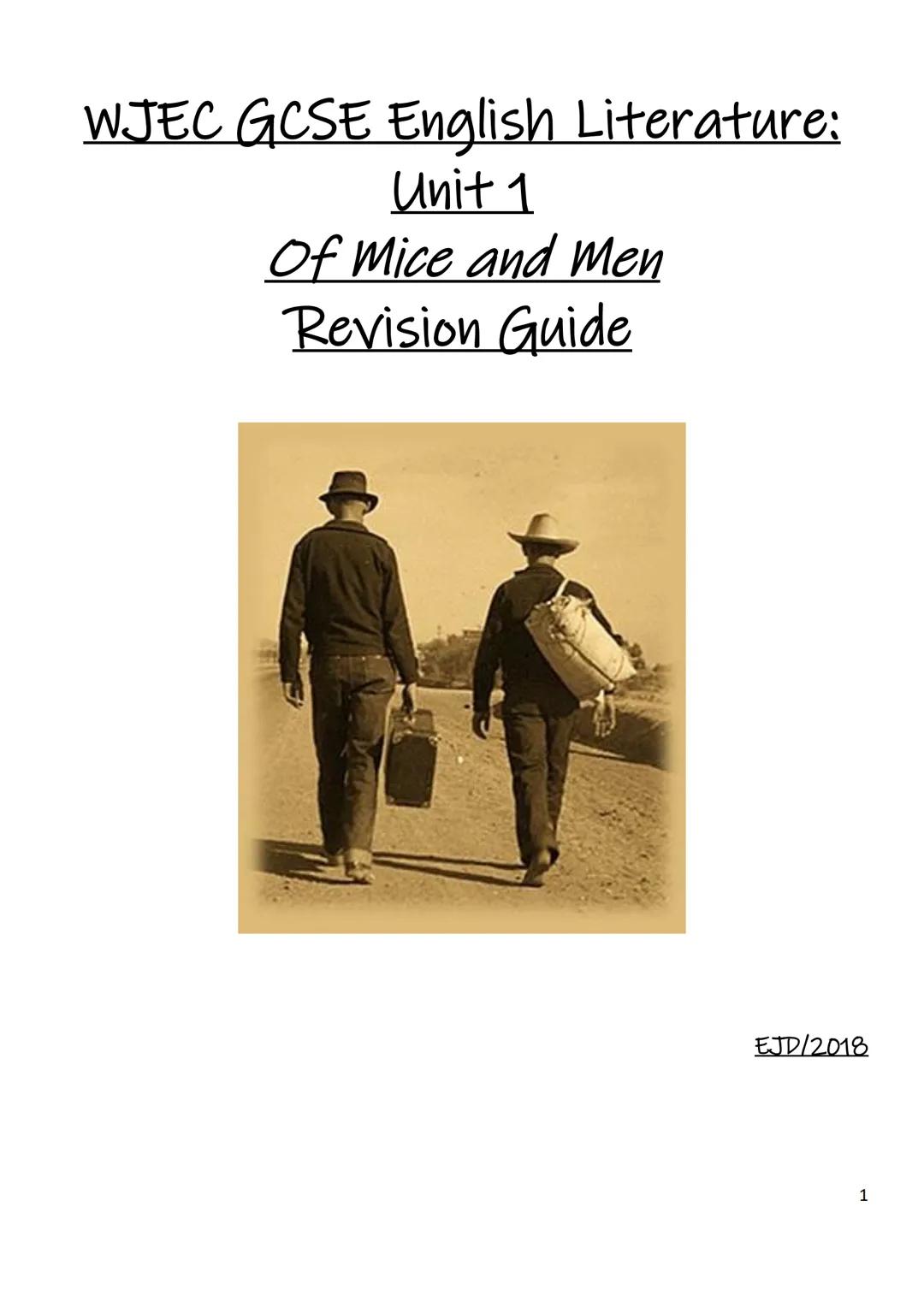
The WJEC GCSE English Literature examination for Of Mice and Men requires careful preparation and understanding of both character analysis and broader themes. This comprehensive guide breaks down the key components students need to master for success in their examinations.
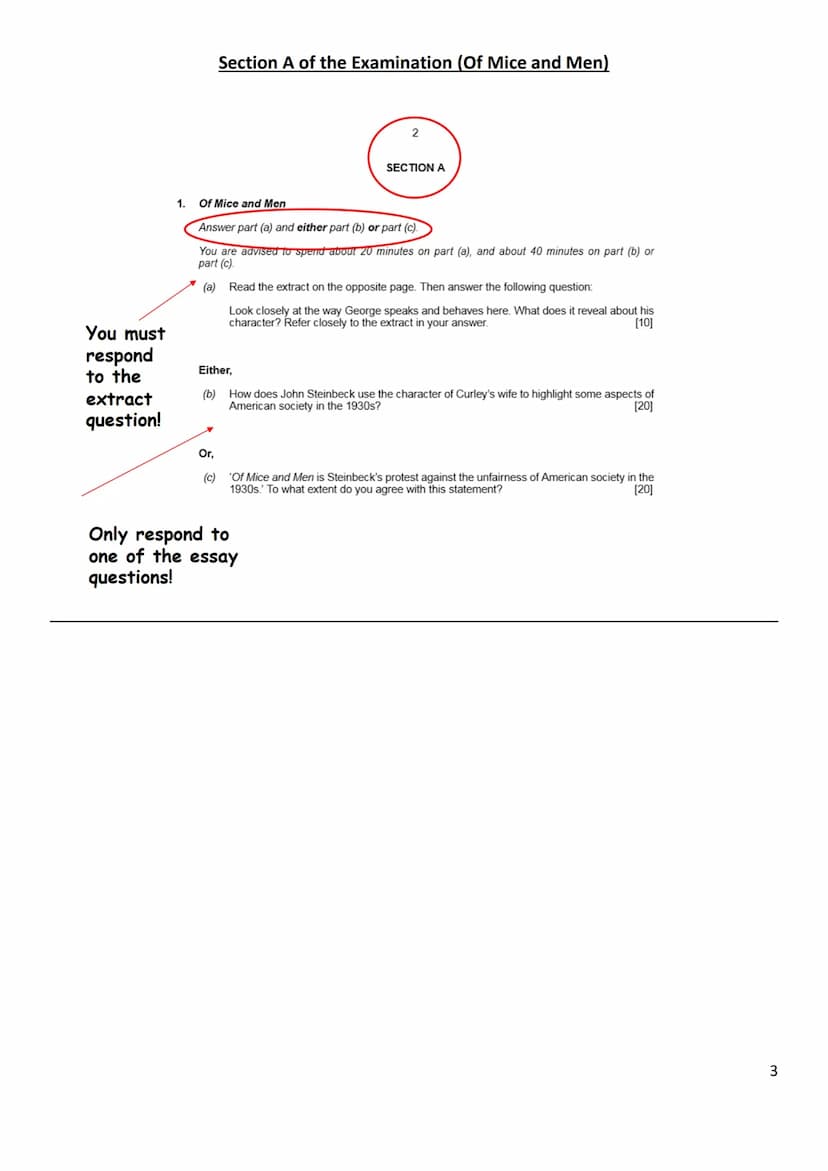
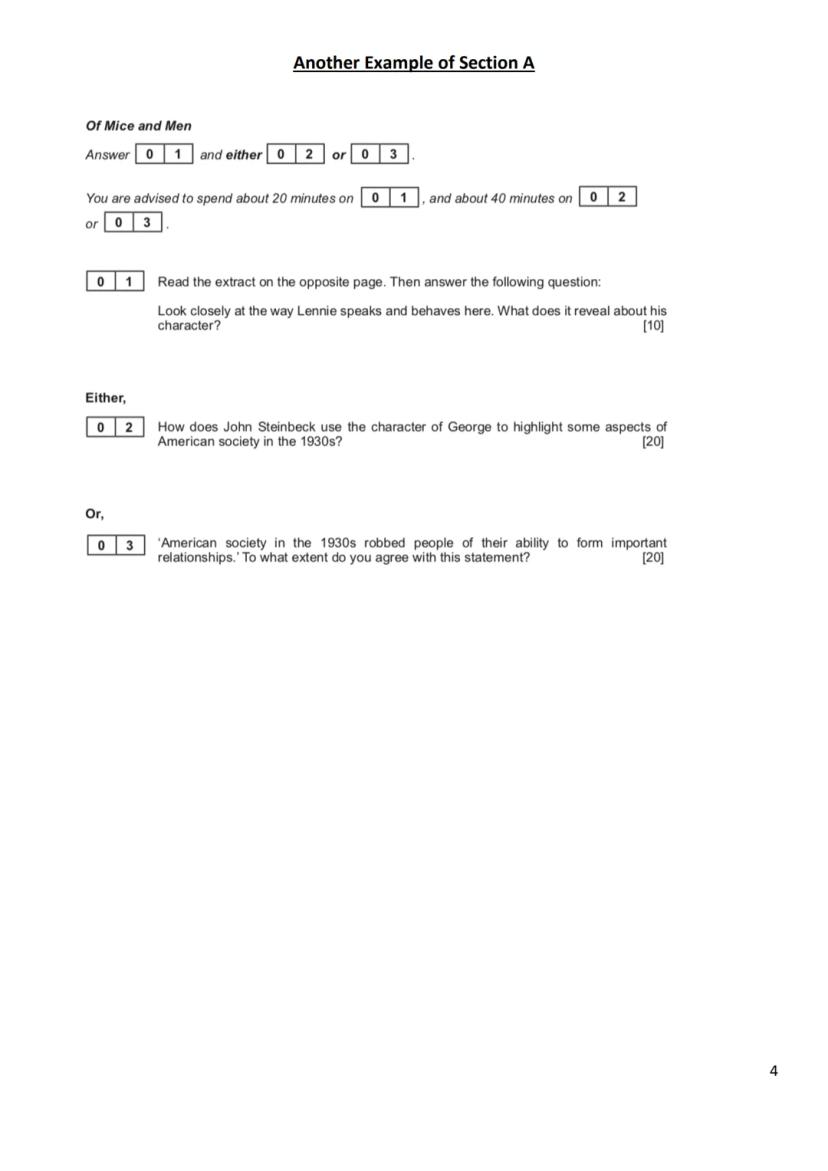
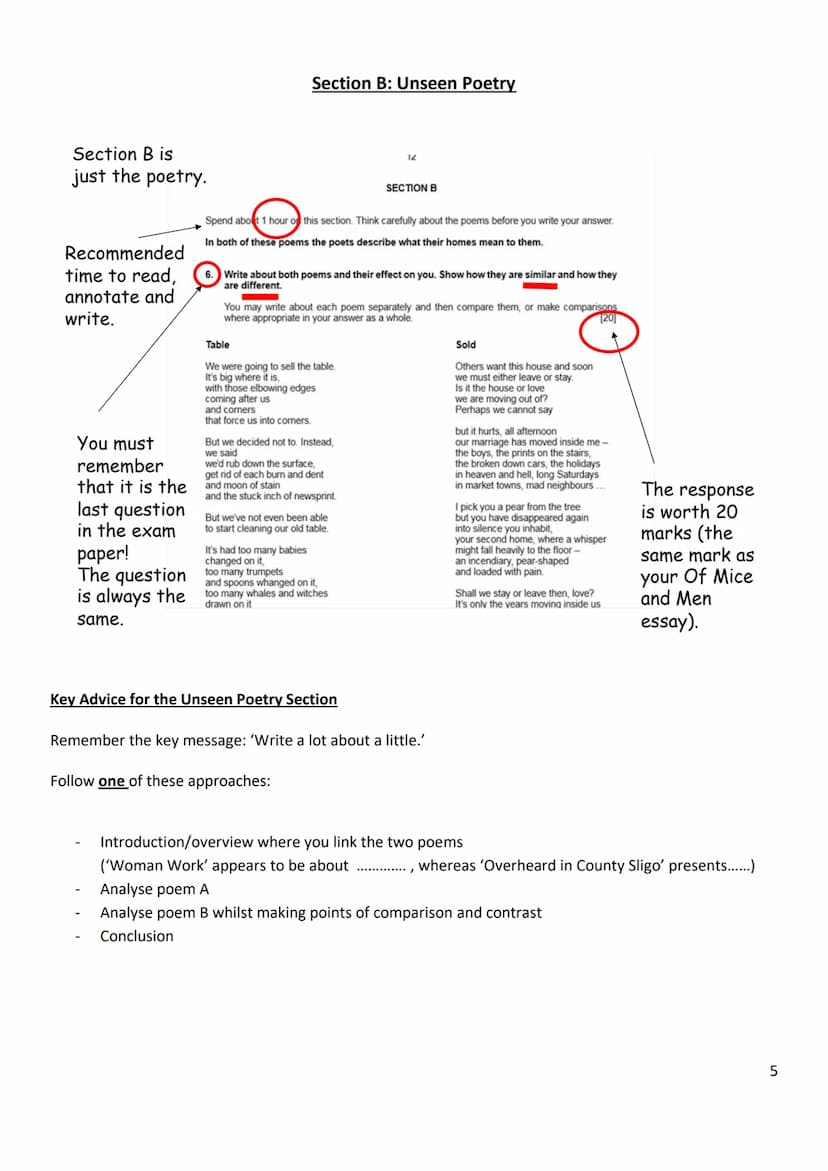
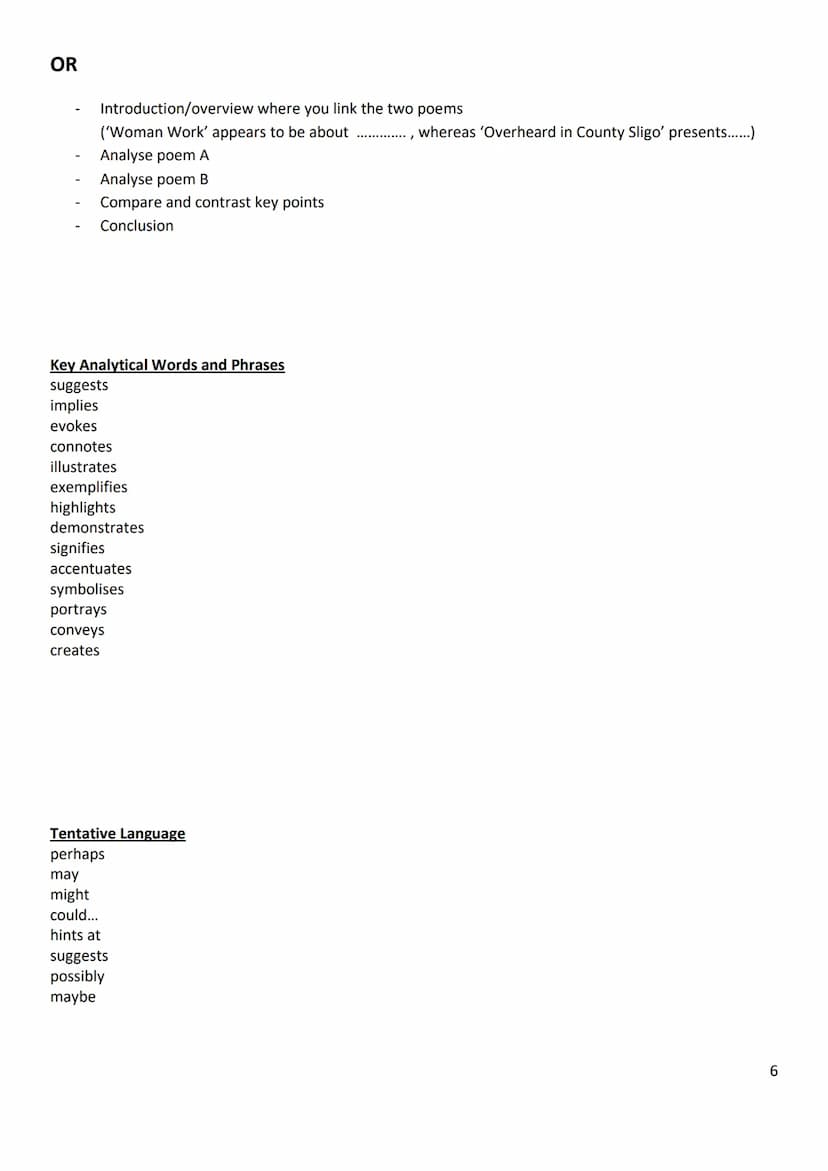
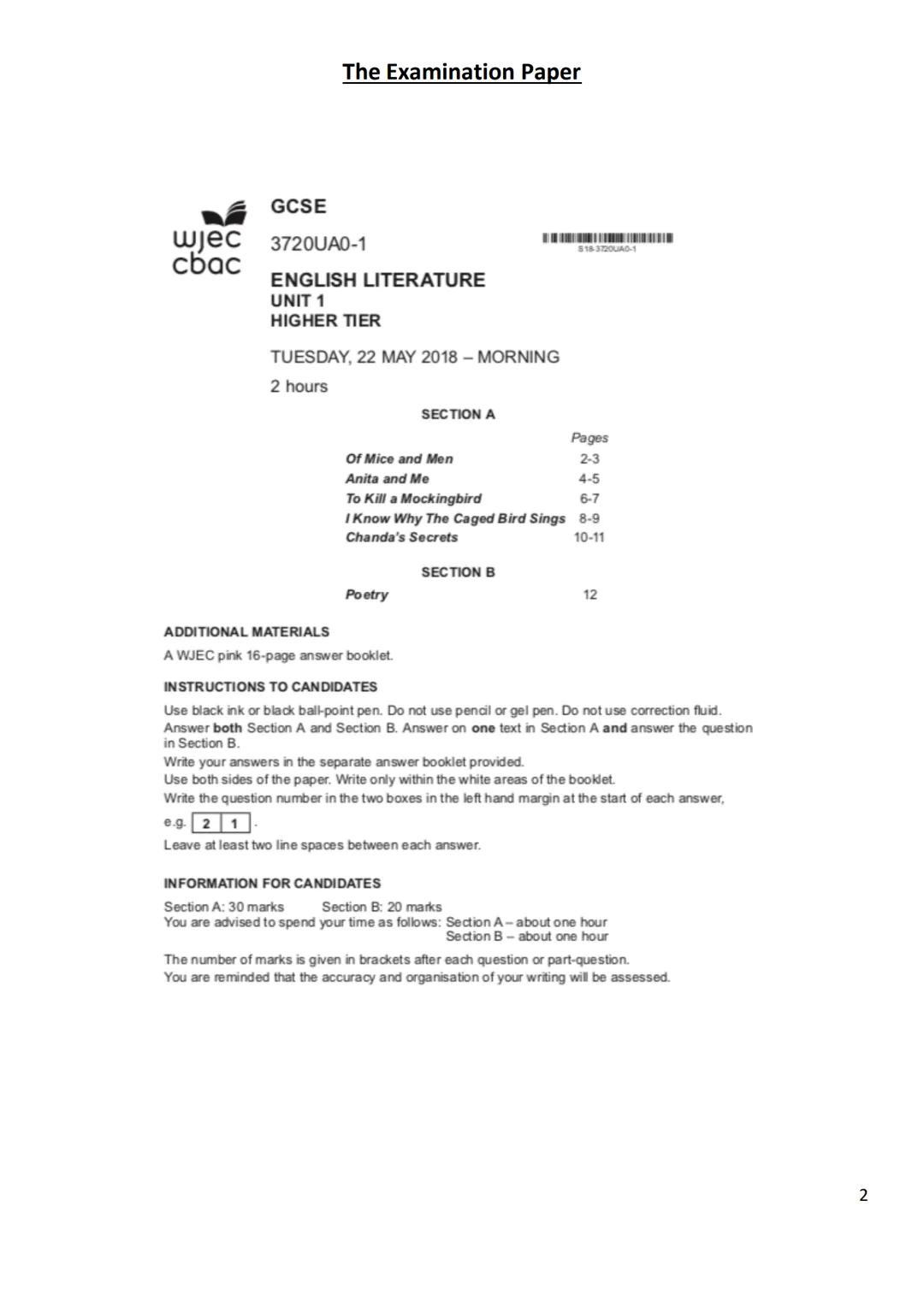
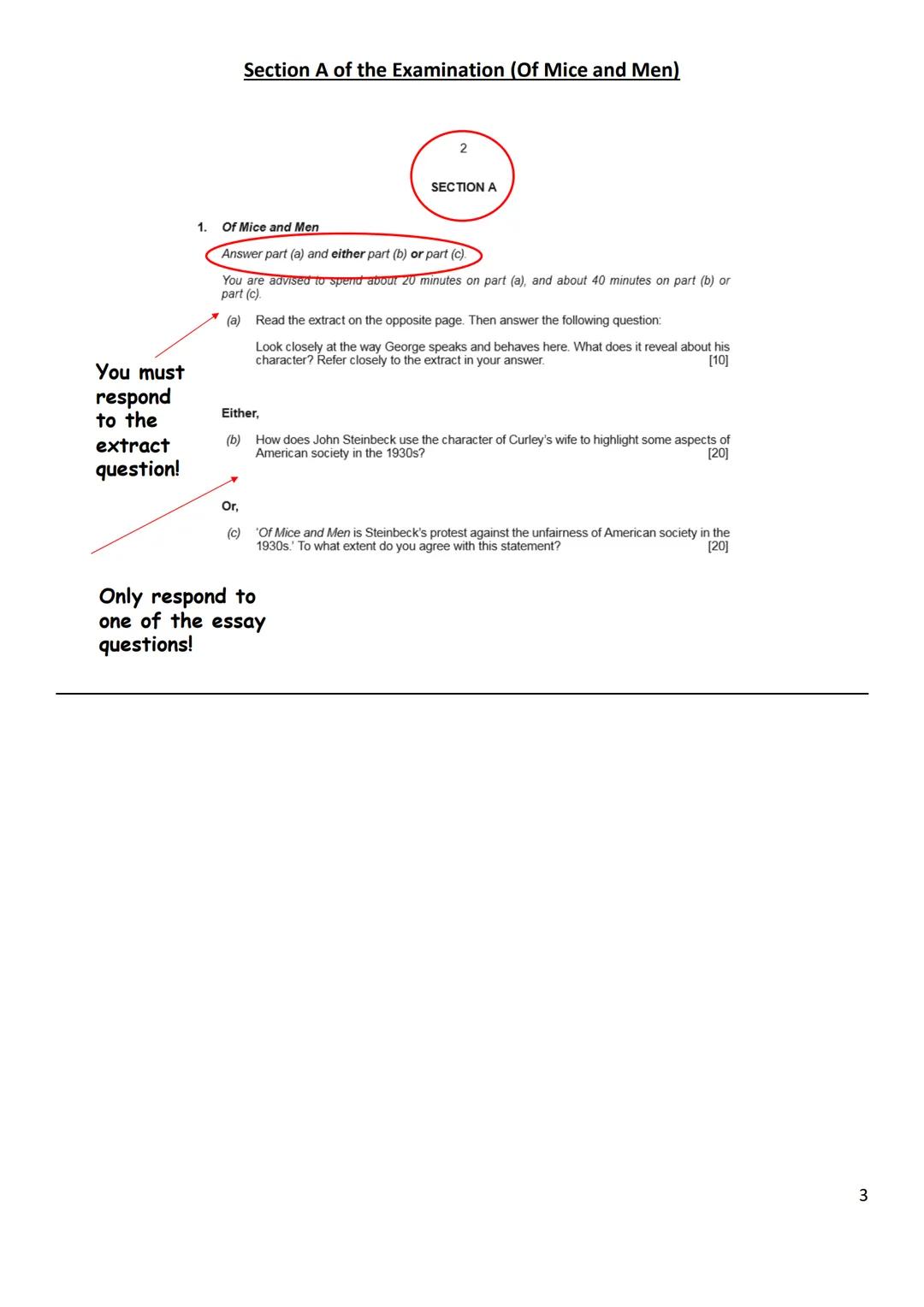
The examination consists of two main sections, with Section A focusing specifically on Of Mice and Men. Students must complete both an extract-based question and an essay question, with careful time management being crucial - approximately 20 minutes for the extract analysis and 40 minutes for the essay response.
For the extract-based question, candidates must demonstrate close reading skills and detailed character analysis. When examining characters like George or Lennie, students should focus on language choices, behavior patterns, and their wider significance within the novel.
Definition: Extract analysis requires students to examine specific passages in detail, analyzing language, form, and structure while linking observations to wider themes and character development.
Of Mice and Men analysis centers heavily on character studies and their representation of 1930s American society. Key characters like Curley's wife serve as vehicles for Steinbeck's social commentary, highlighting issues of isolation, discrimination, and the limitations placed on individuals during the Great Depression.
The essay questions often require students to explore how Steinbeck uses characters to illuminate broader societal themes. For example, analyzing George's character reveals insights into friendship, responsibility, and the struggles of migrant workers during this challenging historical period.
When approaching character-based questions, students should consider both personality traits and symbolic significance. Lennie character analysis with quotes should explore his innocence, physical strength, and dependency on George, while connecting these characteristics to broader themes of dreams and vulnerability.
Highlight: Characters in Of Mice and Men function both as individuals and as representatives of larger social groups or issues in 1930s America.
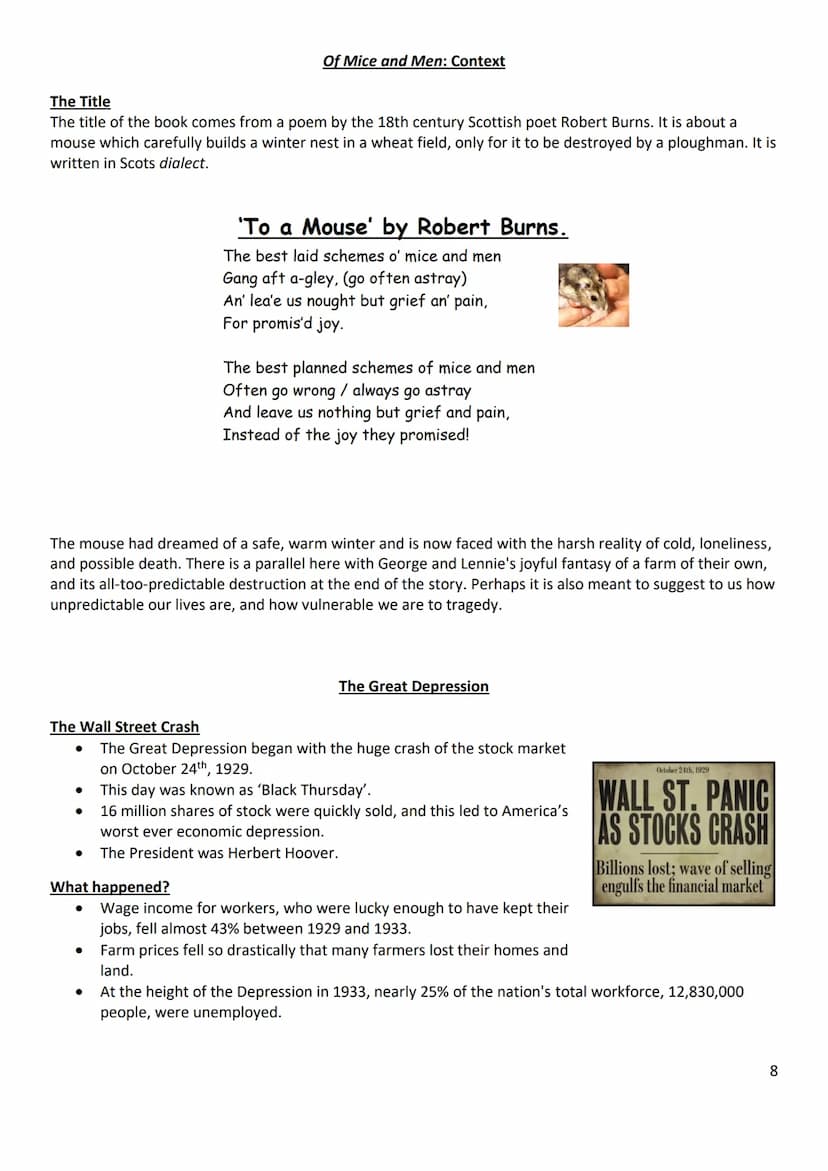
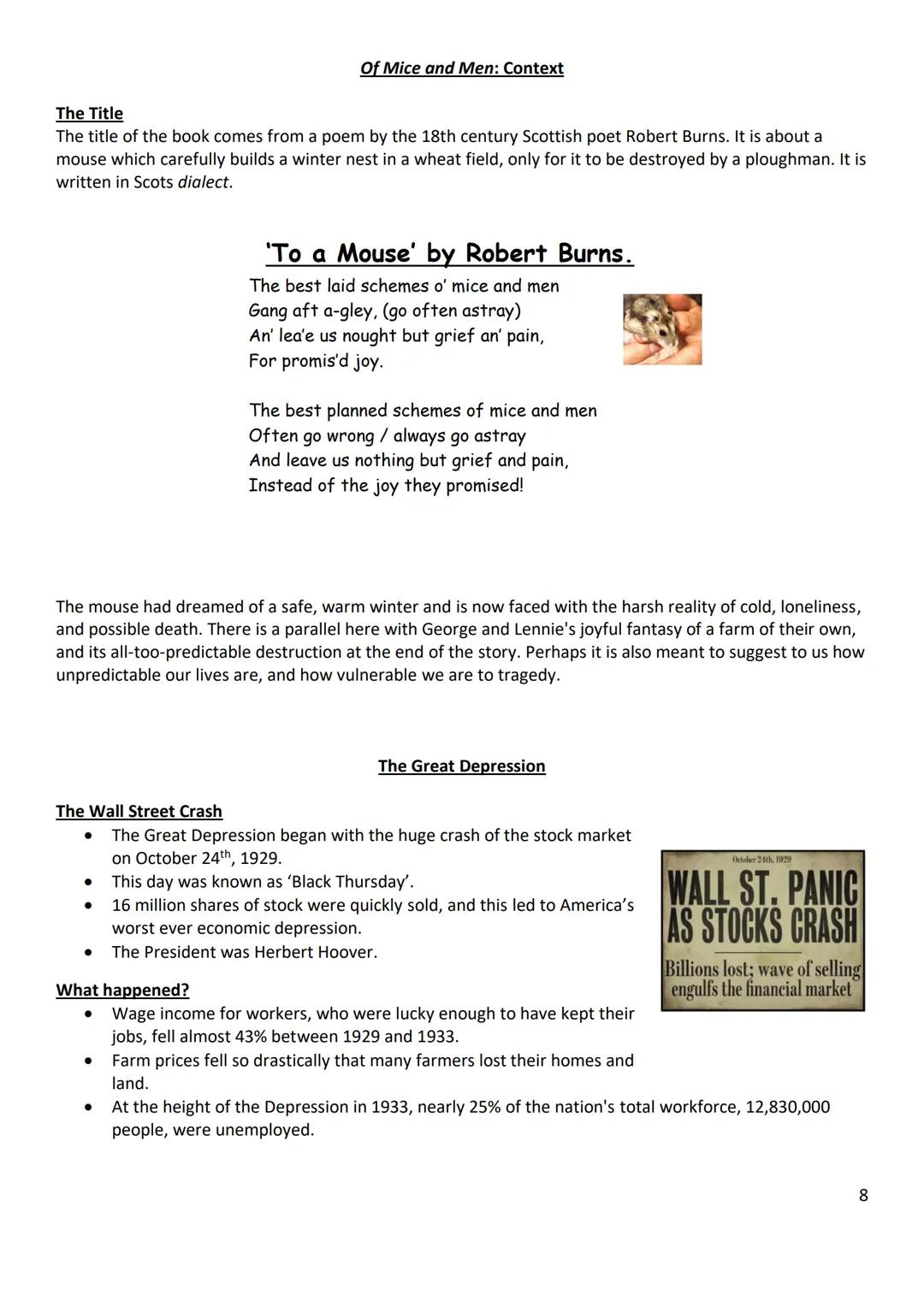
Understanding the historical context is crucial for analyzing Of Mice and Men. The novel serves as Steinbeck's critique of American society during the Great Depression, exploring themes of economic hardship, discrimination, and the death of the American Dream.
Essay questions often ask students to evaluate Steinbeck's social commentary. When addressing these questions, candidates should consider multiple perspectives and support their arguments with specific textual evidence. The relationship between characters and their social circumstances should be carefully examined.
The novel's treatment of friendship, particularly through George and Lennie's relationship, provides insight into how social conditions affected human connections during this period. Students should be prepared to discuss how economic hardship and social instability influenced personal relationships.
Example: When discussing the novel as social protest, consider how Steinbeck portrays various forms of discrimination - against the elderly (Candy), the disabled (Lennie), women (Curley's wife), and racial minorities (Crooks).
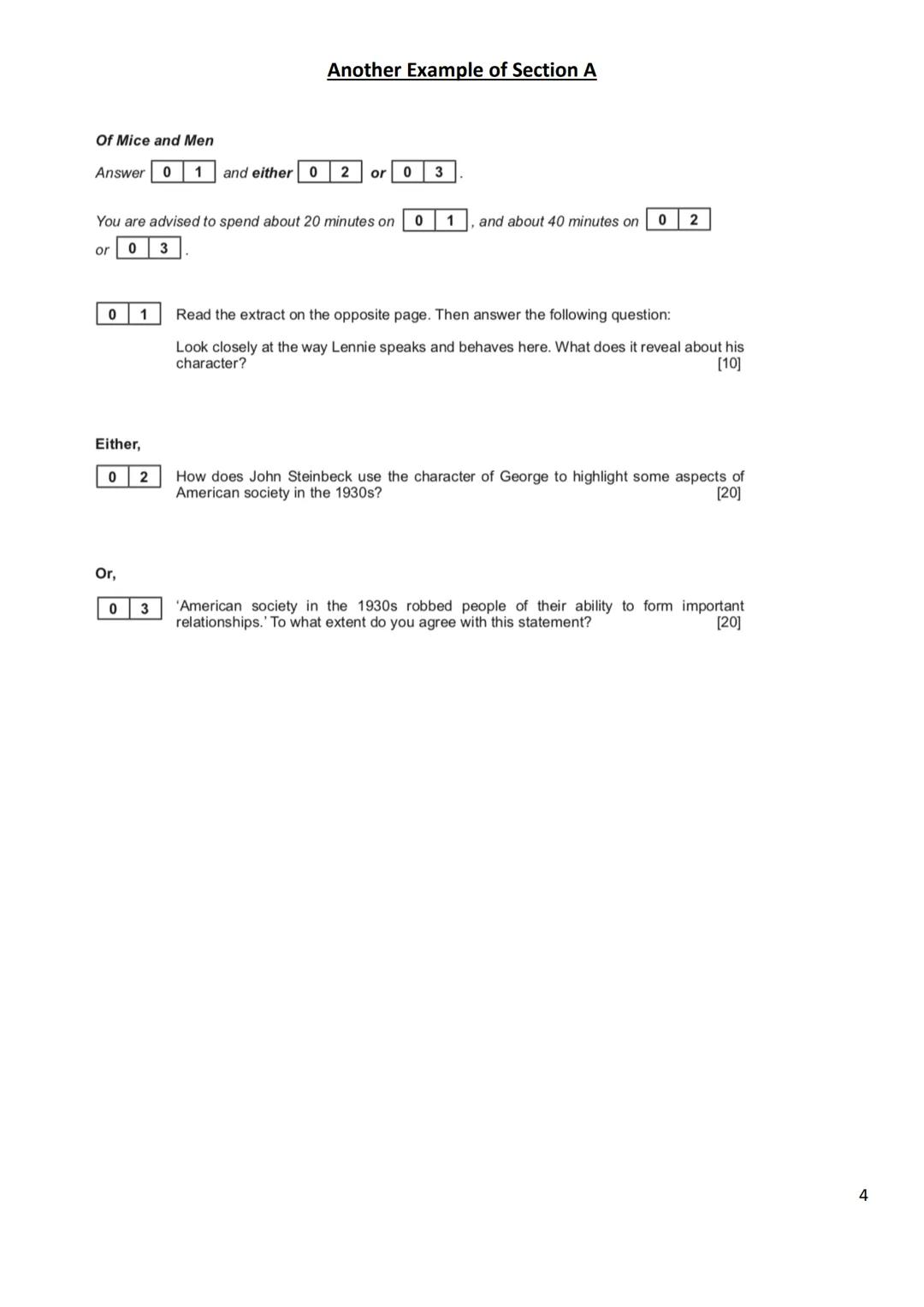
Successful responses in the WJEC GCSE English Literature examination require careful structuring and thorough textual knowledge. For extract questions, students should analyze language and behavior in detail, linking observations to wider character development and themes.
Essay responses need to demonstrate both depth of analysis and breadth of knowledge across the entire novel. When discussing characters like the boss of mice and men-character personality traits or exploring broader themes, students should integrate relevant quotations and specific examples throughout their response.
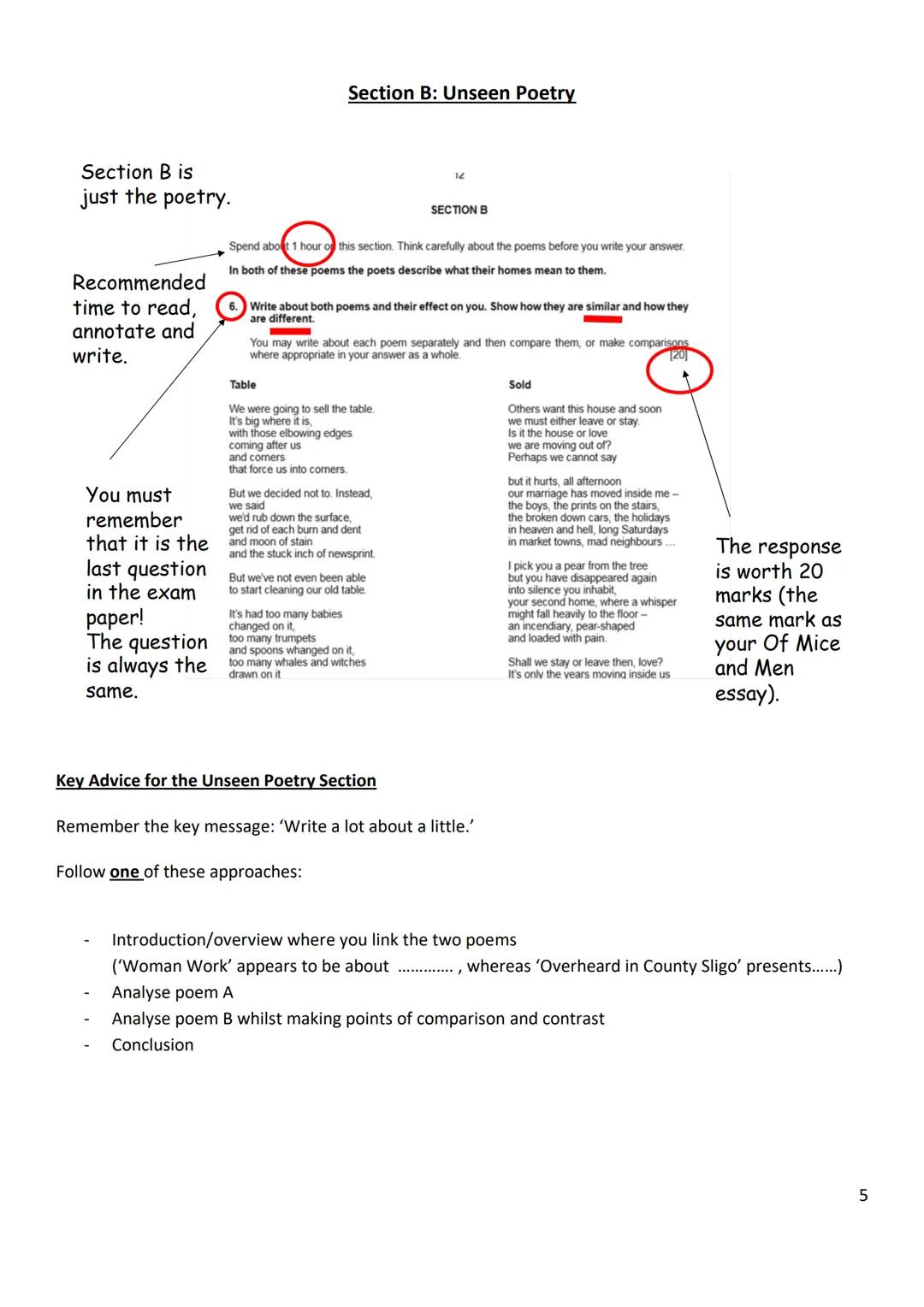
Time management is crucial - students should allocate their time carefully between sections to ensure complete and well-developed responses. Conclusions should synthesize arguments and demonstrate understanding of the novel's broader significance.
Quote: "Guys like us, that work on ranches, are the loneliest guys in the world." This quote exemplifies how Steinbeck uses character dialogue to explore broader social themes.
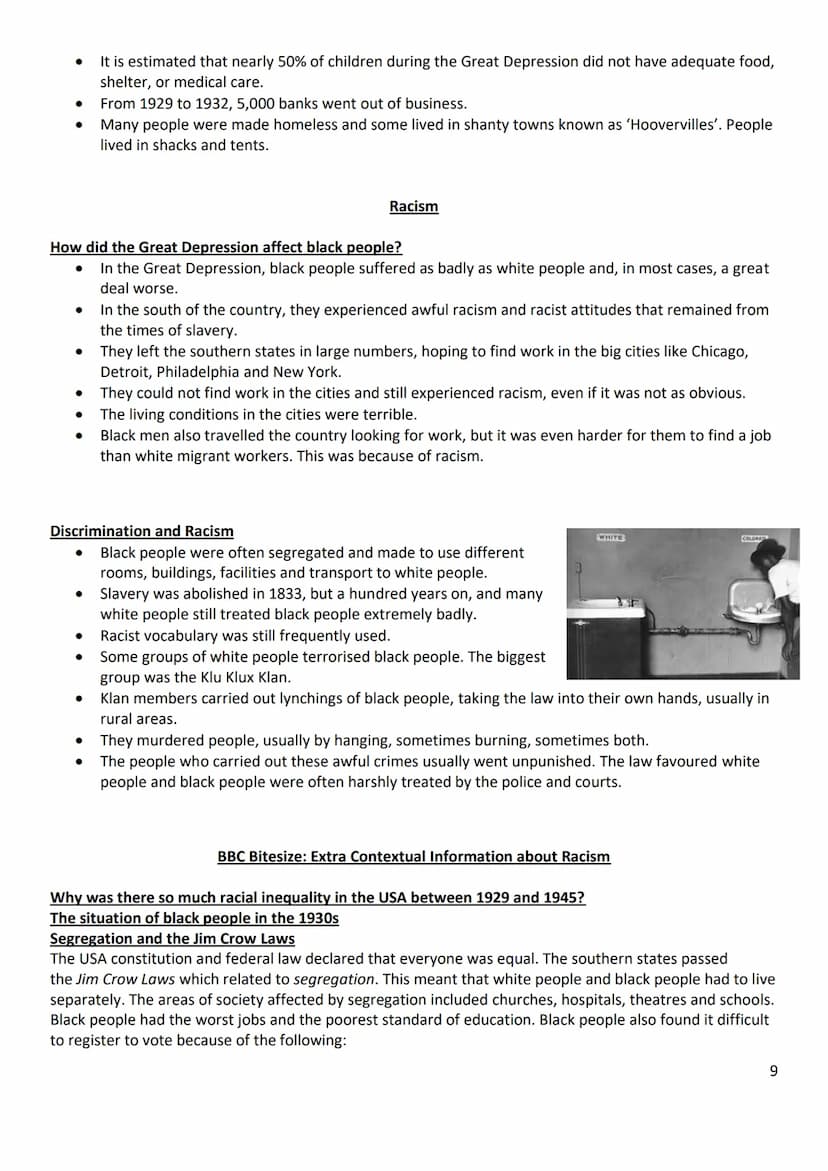
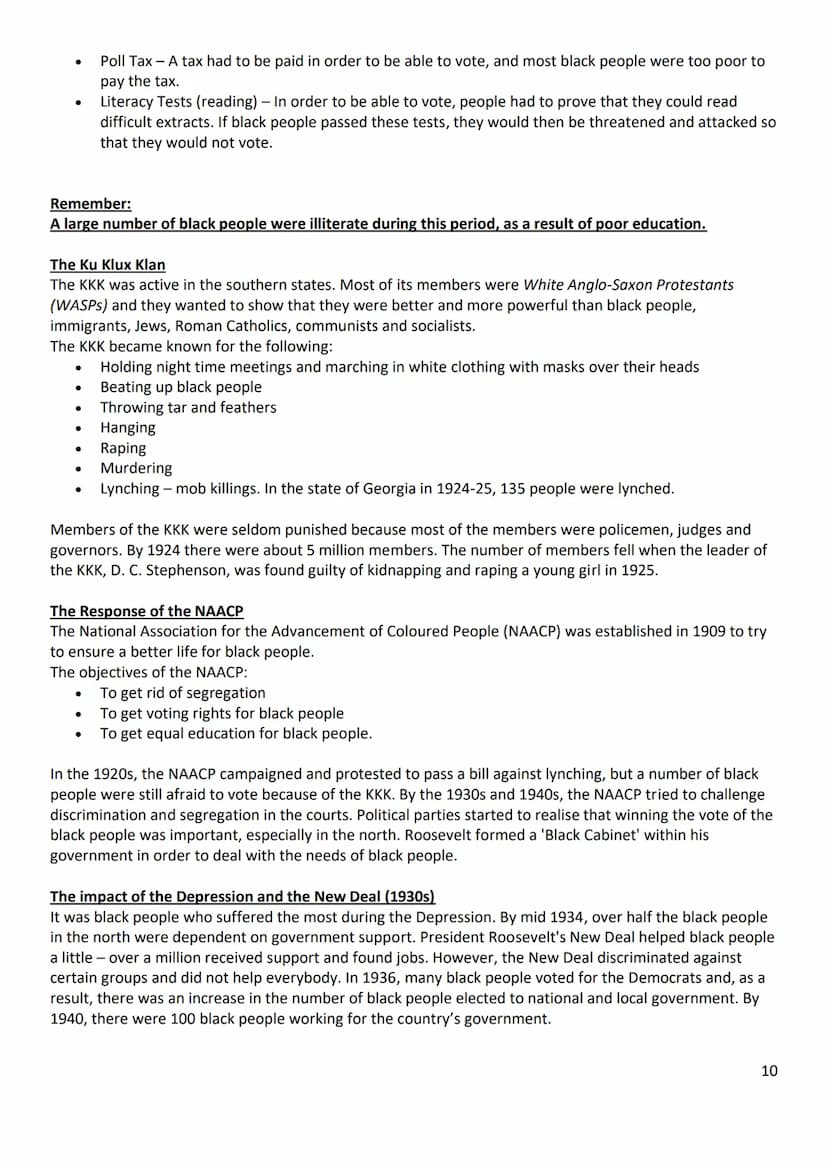
The 1920s marked a pivotal period in American civil rights history, characterized by racial tension and organized resistance. During this time, many African Americans faced severe educational disadvantages, with widespread illiteracy due to systematic discrimination in schooling opportunities.
Definition: The Ku Klux Klan (KKK) was a white supremacist organization that primarily consisted of White Anglo-Saxon Protestants (WASPs) who targeted African Americans, immigrants, Jews, Catholics, communists, and socialists through violent intimidation tactics.
The KKK employed various methods to suppress African American voting rights and maintain racial segregation. They implemented poll taxes that required payment before voting, effectively disenfranchising impoverished black communities. Additionally, they enforced literacy tests with deliberately complex reading passages, and even when African Americans successfully passed these tests, they faced violent threats and attacks to prevent them from exercising their right to vote. The organization's brutal tactics included night raids, physical assault, tar and feathering, lynching, rape, and murder. In Georgia alone, 135 people were lynched between 1924-1925. The KKK's influence was particularly insidious because many of its estimated 5 million members by 1924 were law enforcement officers, judges, and government officials, making prosecution nearly impossible.
Highlight: The National Association for the Advancement of Colored People (NAACP), founded in 1909, emerged as a crucial counterforce to racial oppression. Their primary objectives included:
The Great Depression of the 1930s disproportionately affected African American communities, with over half of northern black populations requiring government assistance by mid-1934. President Roosevelt's New Deal provided some relief, helping over a million African Americans find employment and receive support. This period saw increased political engagement from the African American community, leading to more black representatives in both national and local government positions. By 1940, approximately 100 African Americans held federal government positions, marking a significant though limited progress in civil rights advancement.
The NAACP's strategy evolved significantly during the 1920s through 1940s, shifting from anti-lynching campaigns to challenging discrimination through legal channels. Despite ongoing intimidation from groups like the KKK, the organization persistently fought for civil rights through the court system, achieving incremental but important victories.
Quote: "Political parties started to realize that winning the vote of the black people was important, especially in the north." This recognition led to President Roosevelt's formation of a 'Black Cabinet' within his administration to address African American concerns.
The impact of the New Deal, while beneficial to some extent, revealed the persistent nature of institutional racism. Though it provided crucial support during the Depression, the program's implementation often discriminated against minority communities. However, this period marked a crucial shift in African American political participation, with many black voters supporting the Democratic Party in 1936, leading to increased representation in government positions.
Example: The transformation of African American political engagement can be seen in these key developments:
This period laid crucial groundwork for the modern civil rights movement, demonstrating both the persistent nature of racial discrimination and the power of organized resistance through legal and political channels. The combined efforts of civil rights organizations and gradual political reforms began to chip away at institutionalized racism, though significant challenges remained.

Our AI companion is specifically built for the needs of students. Based on the millions of content pieces we have on the platform we can provide truly meaningful and relevant answers to students. But its not only about answers, the companion is even more about guiding students through their daily learning challenges, with personalised study plans, quizzes or content pieces in the chat and 100% personalisation based on the students skills and developments.
You can download the app in the Google Play Store and in the Apple App Store.
That's right! Enjoy free access to study content, connect with fellow students, and get instant help – all at your fingertips.
App Store
Google Play
The app is very easy to use and well designed. I have found everything I was looking for so far and have been able to learn a lot from the presentations! I will definitely use the app for a class assignment! And of course it also helps a lot as an inspiration.
Stefan S
iOS user
This app is really great. There are so many study notes and help [...]. My problem subject is French, for example, and the app has so many options for help. Thanks to this app, I have improved my French. I would recommend it to anyone.
Samantha Klich
Android user
Wow, I am really amazed. I just tried the app because I've seen it advertised many times and was absolutely stunned. This app is THE HELP you want for school and above all, it offers so many things, such as workouts and fact sheets, which have been VERY helpful to me personally.
Anna
iOS user
I think it’s very much worth it and you’ll end up using it a lot once you get the hang of it and even after looking at others notes you can still ask your Artificial intelligence buddy the question and ask to simplify it if you still don’t get it!!! In the end I think it’s worth it 😊👍 ⚠️Also DID I MENTION ITS FREEE YOU DON’T HAVE TO PAY FOR ANYTHING AND STILL GET YOUR GRADES IN PERFECTLY❗️❗️⚠️
Thomas R
iOS user
Knowunity is the BEST app I’ve used in a minute. This is not an ai review or anything this is genuinely coming from a 7th grade student (I know 2011 im young) but dude this app is a 10/10 i have maintained a 3.8 gpa and have plenty of time for gaming. I love it and my mom is just happy I got good grades
Brad T
Android user
Not only did it help me find the answer but it also showed me alternative ways to solve it. I was horrible in math and science but now I have an a in both subjects. Thanks for the help🤍🤍
David K
iOS user
The app's just great! All I have to do is enter the topic in the search bar and I get the response real fast. I don't have to watch 10 YouTube videos to understand something, so I'm saving my time. Highly recommended!
Sudenaz Ocak
Android user
In school I was really bad at maths but thanks to the app, I am doing better now. I am so grateful that you made the app.
Greenlight Bonnie
Android user
I found this app a couple years ago and it has only gotten better since then. I really love it because it can help with written questions and photo questions. Also, it can find study guides that other people have made as well as flashcard sets and practice tests. The free version is also amazing for students who might not be able to afford it. Would 100% recommend
Aubrey
iOS user
Best app if you're in Highschool or Junior high. I have been using this app for 2 school years and it's the best, it's good if you don't have anyone to help you with school work.😋🩷🎀
Marco B
iOS user
THE QUIZES AND FLASHCARDS ARE SO USEFUL AND I LOVE THE SCHOOLGPT. IT ALSO IS LITREALLY LIKE CHATGPT BUT SMARTER!! HELPED ME WITH MY MASCARA PROBLEMS TOO!! AS WELL AS MY REAL SUBJECTS ! DUHHH 😍😁😲🤑💗✨🎀😮
Elisha
iOS user
This app is phenomenal down to the correct info and the various topics you can study! I greatly recommend it for people who struggle with procrastination and those who need homework help. It has been perfectly accurate for world 1 history as far as I’ve seen! Geometry too!
Paul T
iOS user
The app is very easy to use and well designed. I have found everything I was looking for so far and have been able to learn a lot from the presentations! I will definitely use the app for a class assignment! And of course it also helps a lot as an inspiration.
Stefan S
iOS user
This app is really great. There are so many study notes and help [...]. My problem subject is French, for example, and the app has so many options for help. Thanks to this app, I have improved my French. I would recommend it to anyone.
Samantha Klich
Android user
Wow, I am really amazed. I just tried the app because I've seen it advertised many times and was absolutely stunned. This app is THE HELP you want for school and above all, it offers so many things, such as workouts and fact sheets, which have been VERY helpful to me personally.
Anna
iOS user
I think it’s very much worth it and you’ll end up using it a lot once you get the hang of it and even after looking at others notes you can still ask your Artificial intelligence buddy the question and ask to simplify it if you still don’t get it!!! In the end I think it’s worth it 😊👍 ⚠️Also DID I MENTION ITS FREEE YOU DON’T HAVE TO PAY FOR ANYTHING AND STILL GET YOUR GRADES IN PERFECTLY❗️❗️⚠️
Thomas R
iOS user
Knowunity is the BEST app I’ve used in a minute. This is not an ai review or anything this is genuinely coming from a 7th grade student (I know 2011 im young) but dude this app is a 10/10 i have maintained a 3.8 gpa and have plenty of time for gaming. I love it and my mom is just happy I got good grades
Brad T
Android user
Not only did it help me find the answer but it also showed me alternative ways to solve it. I was horrible in math and science but now I have an a in both subjects. Thanks for the help🤍🤍
David K
iOS user
The app's just great! All I have to do is enter the topic in the search bar and I get the response real fast. I don't have to watch 10 YouTube videos to understand something, so I'm saving my time. Highly recommended!
Sudenaz Ocak
Android user
In school I was really bad at maths but thanks to the app, I am doing better now. I am so grateful that you made the app.
Greenlight Bonnie
Android user
I found this app a couple years ago and it has only gotten better since then. I really love it because it can help with written questions and photo questions. Also, it can find study guides that other people have made as well as flashcard sets and practice tests. The free version is also amazing for students who might not be able to afford it. Would 100% recommend
Aubrey
iOS user
Best app if you're in Highschool or Junior high. I have been using this app for 2 school years and it's the best, it's good if you don't have anyone to help you with school work.😋🩷🎀
Marco B
iOS user
THE QUIZES AND FLASHCARDS ARE SO USEFUL AND I LOVE THE SCHOOLGPT. IT ALSO IS LITREALLY LIKE CHATGPT BUT SMARTER!! HELPED ME WITH MY MASCARA PROBLEMS TOO!! AS WELL AS MY REAL SUBJECTS ! DUHHH 😍😁😲🤑💗✨🎀😮
Elisha
iOS user
This app is phenomenal down to the correct info and the various topics you can study! I greatly recommend it for people who struggle with procrastination and those who need homework help. It has been perfectly accurate for world 1 history as far as I’ve seen! Geometry too!
Paul T
iOS user
mia grace
@miagrace222
John Steinbeck's masterpiece Of Mice and Menexplores complex themes through memorable characters and their relationships. The novel centers on two migrant workers - the intelligent but weary George Milton and his mentally disabled friend Lennie Small - as they... Show more
Access to all documents
Improve your grades
Join milions of students
By signing up you accept Terms of Service and Privacy Policy
The WJEC GCSE English Literature examination for Of Mice and Men requires careful preparation and understanding of both character analysis and broader themes. This comprehensive guide breaks down the key components students need to master for success in their examinations.
The examination consists of two main sections, with Section A focusing specifically on Of Mice and Men. Students must complete both an extract-based question and an essay question, with careful time management being crucial - approximately 20 minutes for the extract analysis and 40 minutes for the essay response.
For the extract-based question, candidates must demonstrate close reading skills and detailed character analysis. When examining characters like George or Lennie, students should focus on language choices, behavior patterns, and their wider significance within the novel.
Definition: Extract analysis requires students to examine specific passages in detail, analyzing language, form, and structure while linking observations to wider themes and character development.
Access to all documents
Improve your grades
Join milions of students
By signing up you accept Terms of Service and Privacy Policy
Of Mice and Men analysis centers heavily on character studies and their representation of 1930s American society. Key characters like Curley's wife serve as vehicles for Steinbeck's social commentary, highlighting issues of isolation, discrimination, and the limitations placed on individuals during the Great Depression.
The essay questions often require students to explore how Steinbeck uses characters to illuminate broader societal themes. For example, analyzing George's character reveals insights into friendship, responsibility, and the struggles of migrant workers during this challenging historical period.
When approaching character-based questions, students should consider both personality traits and symbolic significance. Lennie character analysis with quotes should explore his innocence, physical strength, and dependency on George, while connecting these characteristics to broader themes of dreams and vulnerability.
Highlight: Characters in Of Mice and Men function both as individuals and as representatives of larger social groups or issues in 1930s America.
Access to all documents
Improve your grades
Join milions of students
By signing up you accept Terms of Service and Privacy Policy
Understanding the historical context is crucial for analyzing Of Mice and Men. The novel serves as Steinbeck's critique of American society during the Great Depression, exploring themes of economic hardship, discrimination, and the death of the American Dream.
Essay questions often ask students to evaluate Steinbeck's social commentary. When addressing these questions, candidates should consider multiple perspectives and support their arguments with specific textual evidence. The relationship between characters and their social circumstances should be carefully examined.
The novel's treatment of friendship, particularly through George and Lennie's relationship, provides insight into how social conditions affected human connections during this period. Students should be prepared to discuss how economic hardship and social instability influenced personal relationships.
Example: When discussing the novel as social protest, consider how Steinbeck portrays various forms of discrimination - against the elderly (Candy), the disabled (Lennie), women (Curley's wife), and racial minorities (Crooks).
Access to all documents
Improve your grades
Join milions of students
By signing up you accept Terms of Service and Privacy Policy
Successful responses in the WJEC GCSE English Literature examination require careful structuring and thorough textual knowledge. For extract questions, students should analyze language and behavior in detail, linking observations to wider character development and themes.
Essay responses need to demonstrate both depth of analysis and breadth of knowledge across the entire novel. When discussing characters like the boss of mice and men-character personality traits or exploring broader themes, students should integrate relevant quotations and specific examples throughout their response.
Time management is crucial - students should allocate their time carefully between sections to ensure complete and well-developed responses. Conclusions should synthesize arguments and demonstrate understanding of the novel's broader significance.
Quote: "Guys like us, that work on ranches, are the loneliest guys in the world." This quote exemplifies how Steinbeck uses character dialogue to explore broader social themes.
Access to all documents
Improve your grades
Join milions of students
By signing up you accept Terms of Service and Privacy Policy
The 1920s marked a pivotal period in American civil rights history, characterized by racial tension and organized resistance. During this time, many African Americans faced severe educational disadvantages, with widespread illiteracy due to systematic discrimination in schooling opportunities.
Definition: The Ku Klux Klan (KKK) was a white supremacist organization that primarily consisted of White Anglo-Saxon Protestants (WASPs) who targeted African Americans, immigrants, Jews, Catholics, communists, and socialists through violent intimidation tactics.
The KKK employed various methods to suppress African American voting rights and maintain racial segregation. They implemented poll taxes that required payment before voting, effectively disenfranchising impoverished black communities. Additionally, they enforced literacy tests with deliberately complex reading passages, and even when African Americans successfully passed these tests, they faced violent threats and attacks to prevent them from exercising their right to vote. The organization's brutal tactics included night raids, physical assault, tar and feathering, lynching, rape, and murder. In Georgia alone, 135 people were lynched between 1924-1925. The KKK's influence was particularly insidious because many of its estimated 5 million members by 1924 were law enforcement officers, judges, and government officials, making prosecution nearly impossible.
Highlight: The National Association for the Advancement of Colored People (NAACP), founded in 1909, emerged as a crucial counterforce to racial oppression. Their primary objectives included:
The Great Depression of the 1930s disproportionately affected African American communities, with over half of northern black populations requiring government assistance by mid-1934. President Roosevelt's New Deal provided some relief, helping over a million African Americans find employment and receive support. This period saw increased political engagement from the African American community, leading to more black representatives in both national and local government positions. By 1940, approximately 100 African Americans held federal government positions, marking a significant though limited progress in civil rights advancement.
Access to all documents
Improve your grades
Join milions of students
By signing up you accept Terms of Service and Privacy Policy
The NAACP's strategy evolved significantly during the 1920s through 1940s, shifting from anti-lynching campaigns to challenging discrimination through legal channels. Despite ongoing intimidation from groups like the KKK, the organization persistently fought for civil rights through the court system, achieving incremental but important victories.
Quote: "Political parties started to realize that winning the vote of the black people was important, especially in the north." This recognition led to President Roosevelt's formation of a 'Black Cabinet' within his administration to address African American concerns.
The impact of the New Deal, while beneficial to some extent, revealed the persistent nature of institutional racism. Though it provided crucial support during the Depression, the program's implementation often discriminated against minority communities. However, this period marked a crucial shift in African American political participation, with many black voters supporting the Democratic Party in 1936, leading to increased representation in government positions.
Example: The transformation of African American political engagement can be seen in these key developments:
This period laid crucial groundwork for the modern civil rights movement, demonstrating both the persistent nature of racial discrimination and the power of organized resistance through legal and political channels. The combined efforts of civil rights organizations and gradual political reforms began to chip away at institutionalized racism, though significant challenges remained.
Access to all documents
Improve your grades
Join milions of students
By signing up you accept Terms of Service and Privacy Policy
Access to all documents
Improve your grades
Join milions of students
By signing up you accept Terms of Service and Privacy Policy
Access to all documents
Improve your grades
Join milions of students
By signing up you accept Terms of Service and Privacy Policy
Access to all documents
Improve your grades
Join milions of students
By signing up you accept Terms of Service and Privacy Policy
Our AI companion is specifically built for the needs of students. Based on the millions of content pieces we have on the platform we can provide truly meaningful and relevant answers to students. But its not only about answers, the companion is even more about guiding students through their daily learning challenges, with personalised study plans, quizzes or content pieces in the chat and 100% personalisation based on the students skills and developments.
You can download the app in the Google Play Store and in the Apple App Store.
That's right! Enjoy free access to study content, connect with fellow students, and get instant help – all at your fingertips.
241
Smart Tools NEW
Transform this note into: ✓ 50+ Practice Questions ✓ Interactive Flashcards ✓ Full Mock Exam ✓ Essay Outlines
Explore 15 pivotal quotations from 'An Inspector Calls' with in-depth analysis of key characters including Gerald, Sheila, Eric, and the Inspector. This resource highlights themes of social responsibility, class differences, and gender inequalities, providing essential context for understanding Priestley's critique of early 20th-century society.
English LiteratureExplore the complex character of Eric Birling from 'An Inspector Calls'. This analysis delves into his sympathetic nature towards the working class, his emotional struggles, and the consequences of his actions, including his relationship with Eva Smith. Key themes include guilt, capitalism, and moral responsibility. Ideal for students studying character development and social commentary in literature.
English LiteratureThis analytical essay delves into the theme of reputation in Robert Louis Stevenson's 'The Strange Case of Dr Jekyll and Mr Hyde'. It examines the societal pressures of Victorian England, the duality of Jekyll's character, and the moral implications of reputation on personal relationships. Ideal for students seeking to understand the psychological and social dynamics within the novella, this essay employs advanced vocabulary and critical insights to enhance exam performance.
English LiteratureExplore in-depth character analyses of Utterson, Jekyll, Hyde, and Lanyon in 'Dr. Jekyll and Mr. Hyde'. This study guide covers key themes, historical context, and significant quotes, providing essential insights for exam preparation. Ideal for students seeking to understand character development and thematic connections in this classic novella.
English LiteratureExplore a detailed analysis of Curley from 'Of Mice and Men', focusing on his egoism, aggression, and insecurities. This characterization highlights key traits such as his privileged background, violent tendencies, and neglectful relationship with his wife. Ideal for exam preparation and understanding character dynamics in literature.
English LiteratureExplore the character of Gerald Croft in J.B. Priestley's 'An Inspector Calls'. This analysis delves into his relationships, class privilege, and gender dynamics, highlighting key quotes and their implications. Understand how Gerald's actions reflect societal attitudes towards responsibility and the treatment of women. Ideal for literature students studying character development and thematic elements.
English LiteratureApp Store
Google Play
The app is very easy to use and well designed. I have found everything I was looking for so far and have been able to learn a lot from the presentations! I will definitely use the app for a class assignment! And of course it also helps a lot as an inspiration.
Stefan S
iOS user
This app is really great. There are so many study notes and help [...]. My problem subject is French, for example, and the app has so many options for help. Thanks to this app, I have improved my French. I would recommend it to anyone.
Samantha Klich
Android user
Wow, I am really amazed. I just tried the app because I've seen it advertised many times and was absolutely stunned. This app is THE HELP you want for school and above all, it offers so many things, such as workouts and fact sheets, which have been VERY helpful to me personally.
Anna
iOS user
I think it’s very much worth it and you’ll end up using it a lot once you get the hang of it and even after looking at others notes you can still ask your Artificial intelligence buddy the question and ask to simplify it if you still don’t get it!!! In the end I think it’s worth it 😊👍 ⚠️Also DID I MENTION ITS FREEE YOU DON’T HAVE TO PAY FOR ANYTHING AND STILL GET YOUR GRADES IN PERFECTLY❗️❗️⚠️
Thomas R
iOS user
Knowunity is the BEST app I’ve used in a minute. This is not an ai review or anything this is genuinely coming from a 7th grade student (I know 2011 im young) but dude this app is a 10/10 i have maintained a 3.8 gpa and have plenty of time for gaming. I love it and my mom is just happy I got good grades
Brad T
Android user
Not only did it help me find the answer but it also showed me alternative ways to solve it. I was horrible in math and science but now I have an a in both subjects. Thanks for the help🤍🤍
David K
iOS user
The app's just great! All I have to do is enter the topic in the search bar and I get the response real fast. I don't have to watch 10 YouTube videos to understand something, so I'm saving my time. Highly recommended!
Sudenaz Ocak
Android user
In school I was really bad at maths but thanks to the app, I am doing better now. I am so grateful that you made the app.
Greenlight Bonnie
Android user
I found this app a couple years ago and it has only gotten better since then. I really love it because it can help with written questions and photo questions. Also, it can find study guides that other people have made as well as flashcard sets and practice tests. The free version is also amazing for students who might not be able to afford it. Would 100% recommend
Aubrey
iOS user
Best app if you're in Highschool or Junior high. I have been using this app for 2 school years and it's the best, it's good if you don't have anyone to help you with school work.😋🩷🎀
Marco B
iOS user
THE QUIZES AND FLASHCARDS ARE SO USEFUL AND I LOVE THE SCHOOLGPT. IT ALSO IS LITREALLY LIKE CHATGPT BUT SMARTER!! HELPED ME WITH MY MASCARA PROBLEMS TOO!! AS WELL AS MY REAL SUBJECTS ! DUHHH 😍😁😲🤑💗✨🎀😮
Elisha
iOS user
This app is phenomenal down to the correct info and the various topics you can study! I greatly recommend it for people who struggle with procrastination and those who need homework help. It has been perfectly accurate for world 1 history as far as I’ve seen! Geometry too!
Paul T
iOS user
The app is very easy to use and well designed. I have found everything I was looking for so far and have been able to learn a lot from the presentations! I will definitely use the app for a class assignment! And of course it also helps a lot as an inspiration.
Stefan S
iOS user
This app is really great. There are so many study notes and help [...]. My problem subject is French, for example, and the app has so many options for help. Thanks to this app, I have improved my French. I would recommend it to anyone.
Samantha Klich
Android user
Wow, I am really amazed. I just tried the app because I've seen it advertised many times and was absolutely stunned. This app is THE HELP you want for school and above all, it offers so many things, such as workouts and fact sheets, which have been VERY helpful to me personally.
Anna
iOS user
I think it’s very much worth it and you’ll end up using it a lot once you get the hang of it and even after looking at others notes you can still ask your Artificial intelligence buddy the question and ask to simplify it if you still don’t get it!!! In the end I think it’s worth it 😊👍 ⚠️Also DID I MENTION ITS FREEE YOU DON’T HAVE TO PAY FOR ANYTHING AND STILL GET YOUR GRADES IN PERFECTLY❗️❗️⚠️
Thomas R
iOS user
Knowunity is the BEST app I’ve used in a minute. This is not an ai review or anything this is genuinely coming from a 7th grade student (I know 2011 im young) but dude this app is a 10/10 i have maintained a 3.8 gpa and have plenty of time for gaming. I love it and my mom is just happy I got good grades
Brad T
Android user
Not only did it help me find the answer but it also showed me alternative ways to solve it. I was horrible in math and science but now I have an a in both subjects. Thanks for the help🤍🤍
David K
iOS user
The app's just great! All I have to do is enter the topic in the search bar and I get the response real fast. I don't have to watch 10 YouTube videos to understand something, so I'm saving my time. Highly recommended!
Sudenaz Ocak
Android user
In school I was really bad at maths but thanks to the app, I am doing better now. I am so grateful that you made the app.
Greenlight Bonnie
Android user
I found this app a couple years ago and it has only gotten better since then. I really love it because it can help with written questions and photo questions. Also, it can find study guides that other people have made as well as flashcard sets and practice tests. The free version is also amazing for students who might not be able to afford it. Would 100% recommend
Aubrey
iOS user
Best app if you're in Highschool or Junior high. I have been using this app for 2 school years and it's the best, it's good if you don't have anyone to help you with school work.😋🩷🎀
Marco B
iOS user
THE QUIZES AND FLASHCARDS ARE SO USEFUL AND I LOVE THE SCHOOLGPT. IT ALSO IS LITREALLY LIKE CHATGPT BUT SMARTER!! HELPED ME WITH MY MASCARA PROBLEMS TOO!! AS WELL AS MY REAL SUBJECTS ! DUHHH 😍😁😲🤑💗✨🎀😮
Elisha
iOS user
This app is phenomenal down to the correct info and the various topics you can study! I greatly recommend it for people who struggle with procrastination and those who need homework help. It has been perfectly accurate for world 1 history as far as I’ve seen! Geometry too!
Paul T
iOS user