Acceleration Calculations
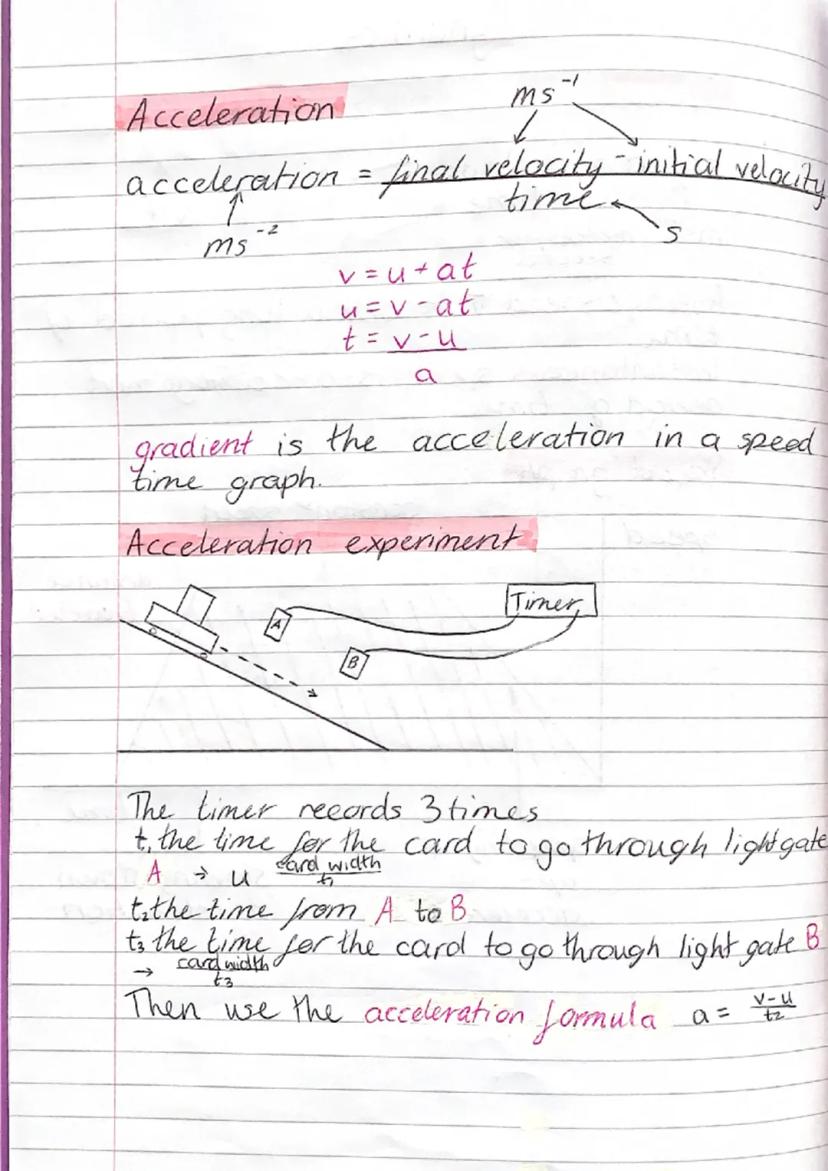
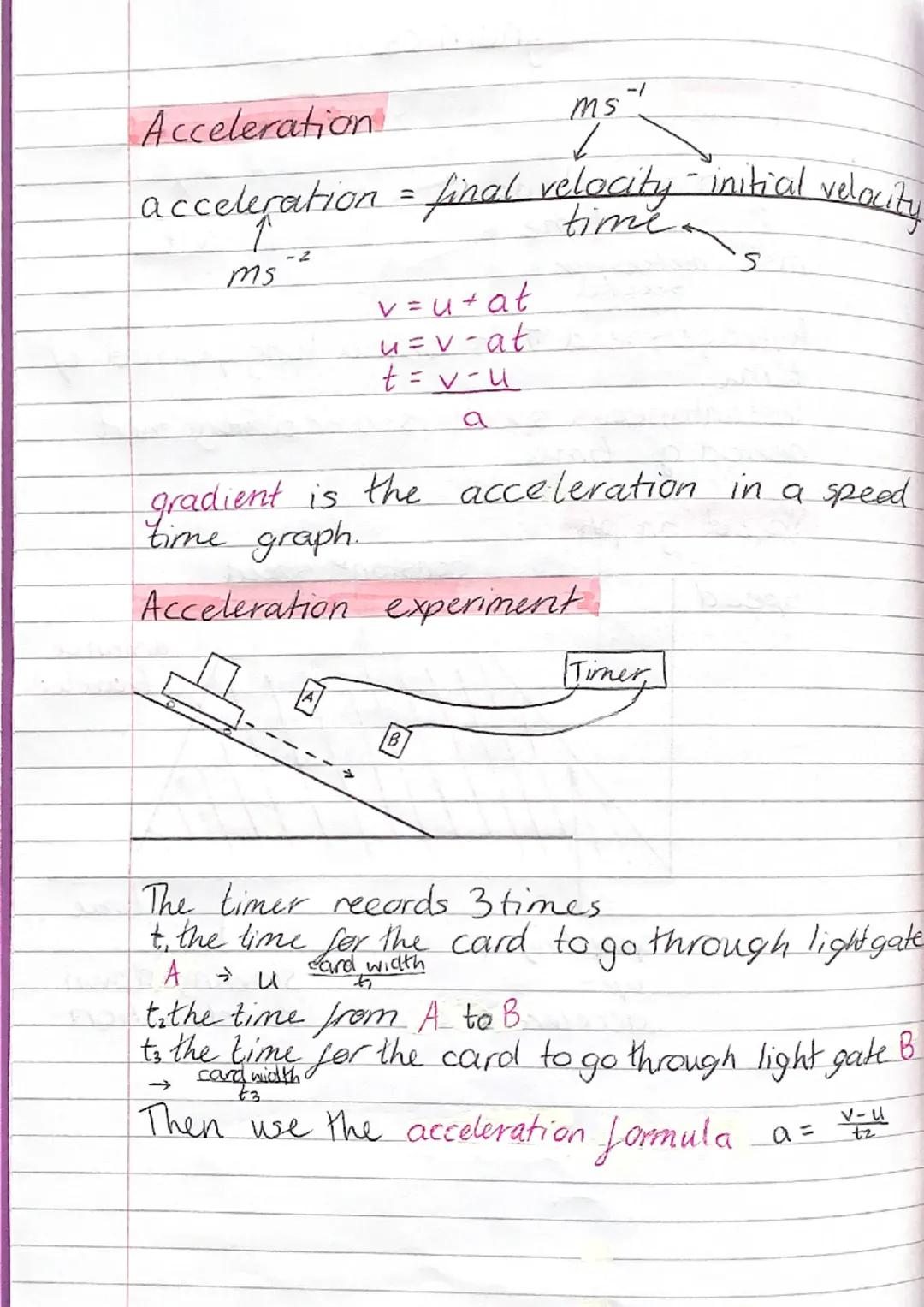
Acceleration measures how quickly speed changes, calculated using: acceleration = finalvelocity−initialvelocity ÷ time. The units are metres per second squared m/s2, which might look odd but makes perfect sense.
The key equation v = u + at becomes your best friend in physics. Here, v is final velocity, u is initial velocity, a is acceleration, and t is time. You can rearrange this formula to find any missing variable.
In acceleration experiments, you'll use light gates to measure precise timings. The card's width divided by the time gives you velocity at each gate, then you apply the acceleration formula using the time between gates.
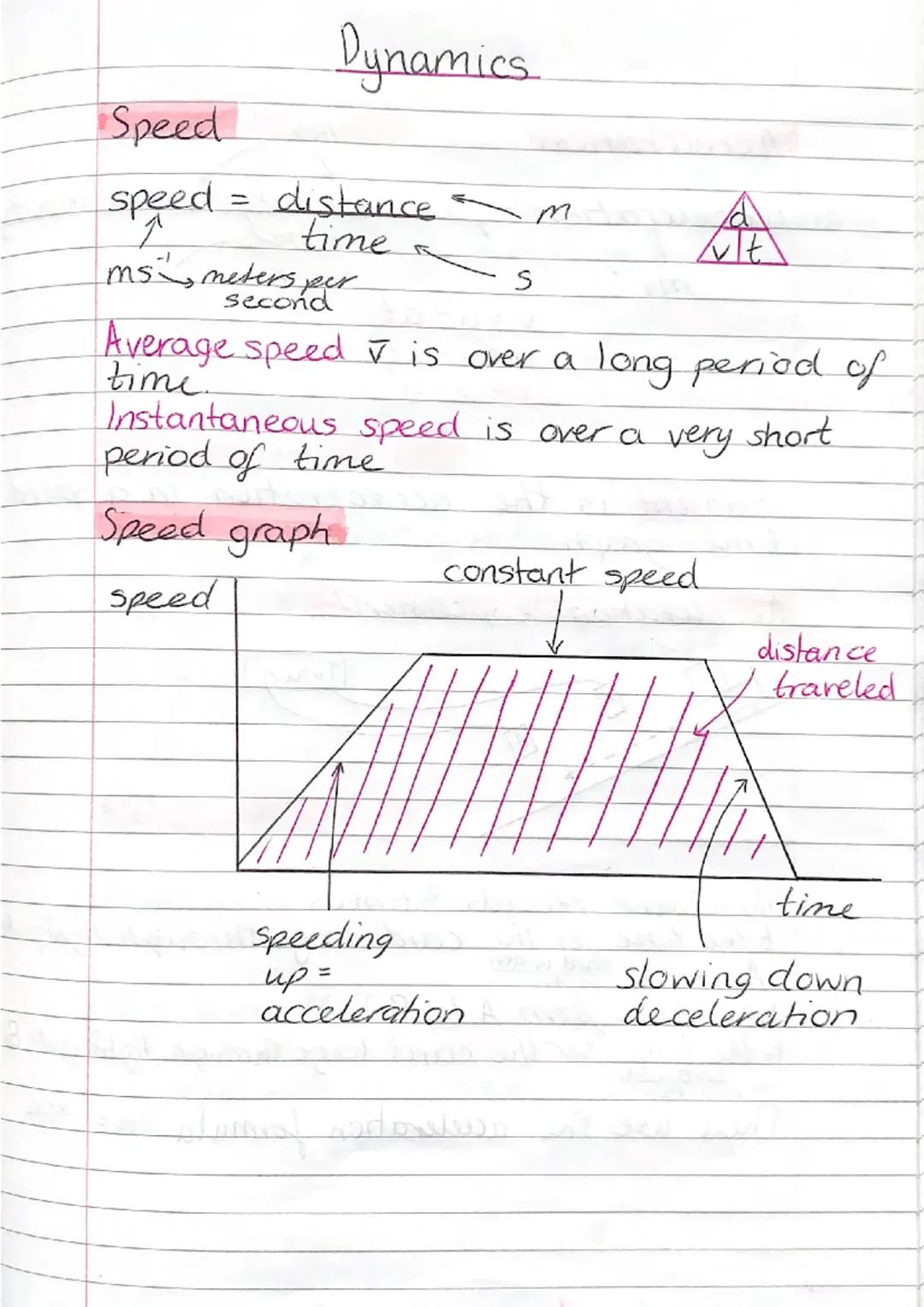
Exam Success: Remember that the gradient of a speed-time graph directly gives you the acceleration - no calculation needed!



 Physics
 Sociology
 Biology