

Gibbs Free Energy is a fundamental concept in thermodynamics that...
 AP Physics 169 views·Updated Jul 18, 2026·28 pages
Understanding Gibbs Free Energy: Definition, Formula, and Examples


1 / 10
1
of 10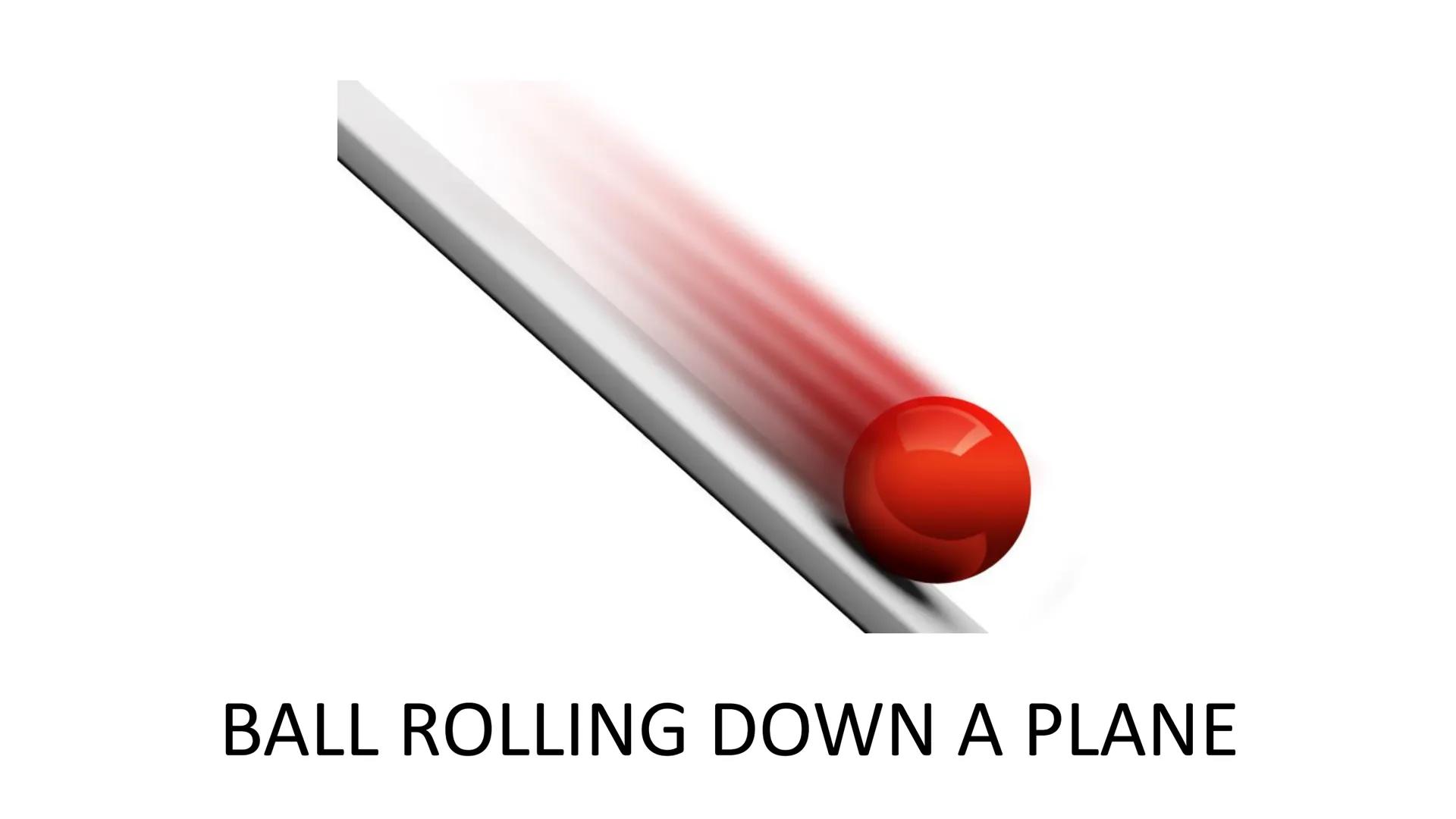
Ball Rolling Down a Plane
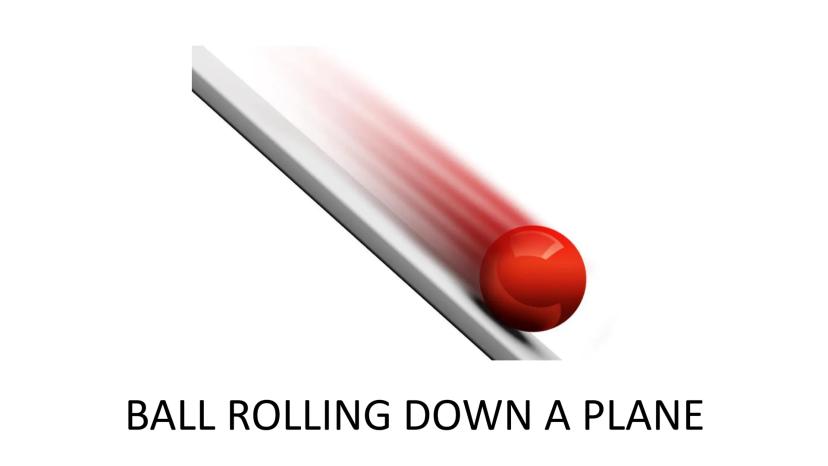
When a ball rolls down an inclined plane, it demonstrates energy conversion principles related to Gibbs Free Energy. The ball naturally moves from a position of higher potential energy to lower potential energy.
This spontaneous movement happens without requiring any additional energy input. In fact, energy is released during this process, similar to how exergonic chemical reactions release energy.
Think of this as a simple model for understanding why some chemical reactions happen on their own while others need energy to get started!
Quick Insight: Spontaneous processes like a rolling ball always move toward states of lower energy - this same principle applies to chemical reactions!
2
of 10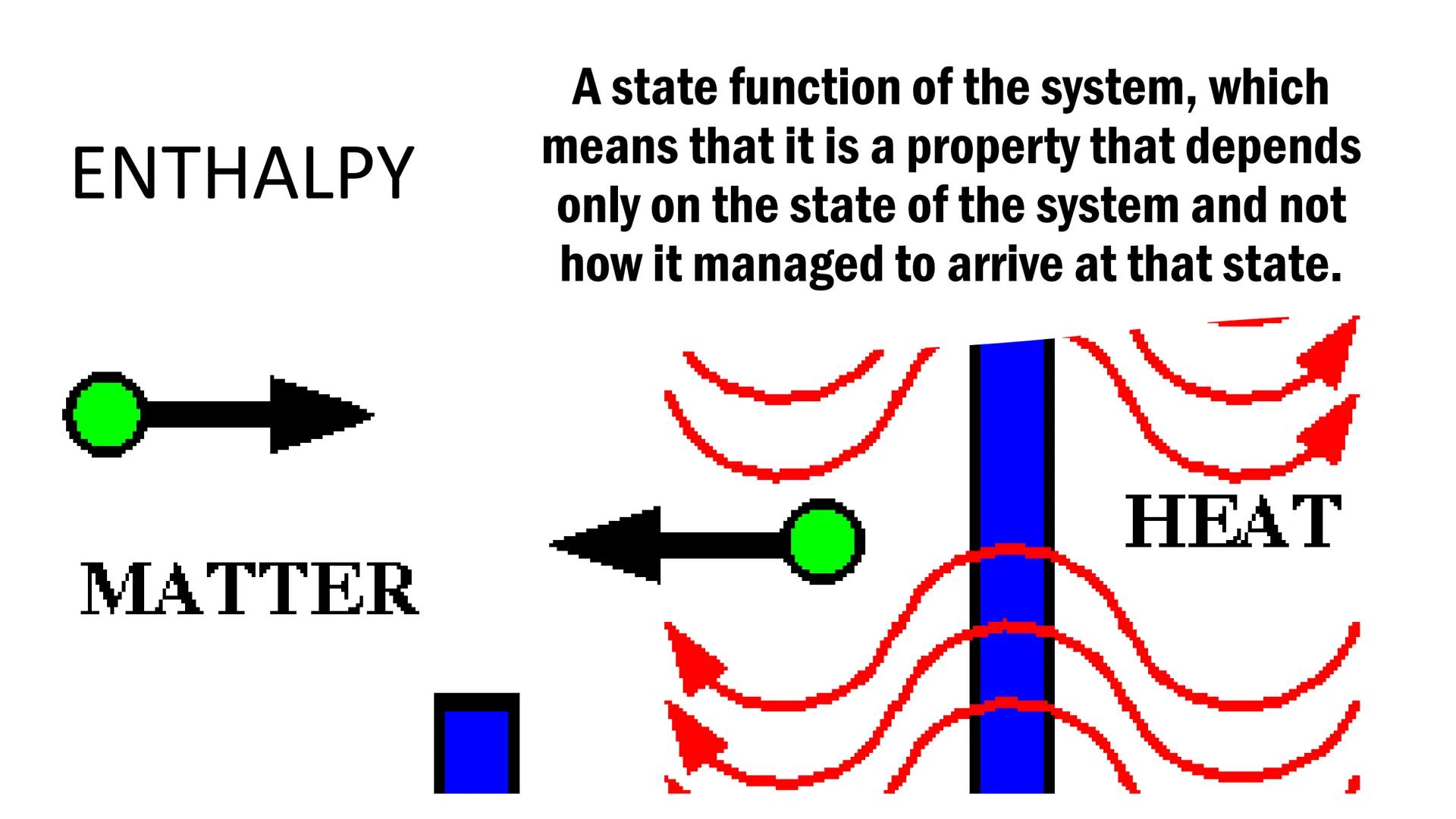
Enthalpy and Matter
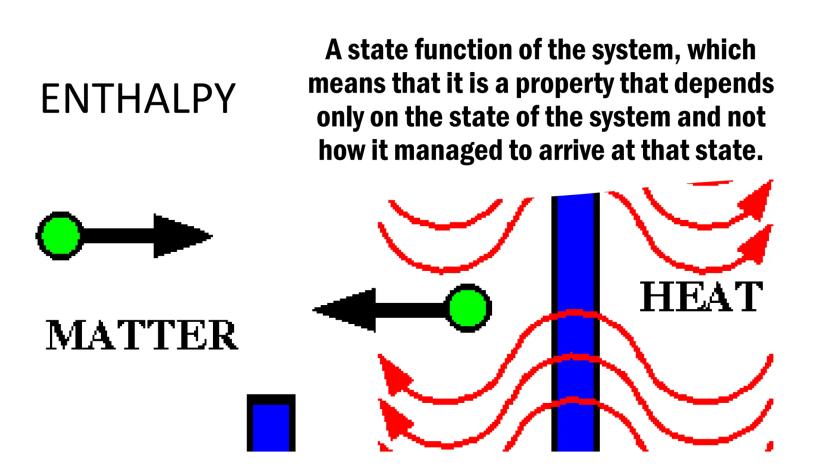
Enthalpy is a state function of a system, meaning it depends only on the current state of the system, not on how it got there. It's like checking your bank balance - the amount matters, not how the money got there.
Enthalpy relates to the heat content of matter. When chemical reactions occur, bonds break and form, causing either the release of heat (exothermic) or the absorption of heat (endothermic).
Understanding enthalpy helps us track energy flow during chemical changes. When you feel warmth from a hand warmer or cold from an ice pack, you're experiencing enthalpy changes in action!
Remember: Enthalpy (H) tracks heat energy in a system, and its changes (ΔH) tell us whether reactions release or absorb heat.
3
of 10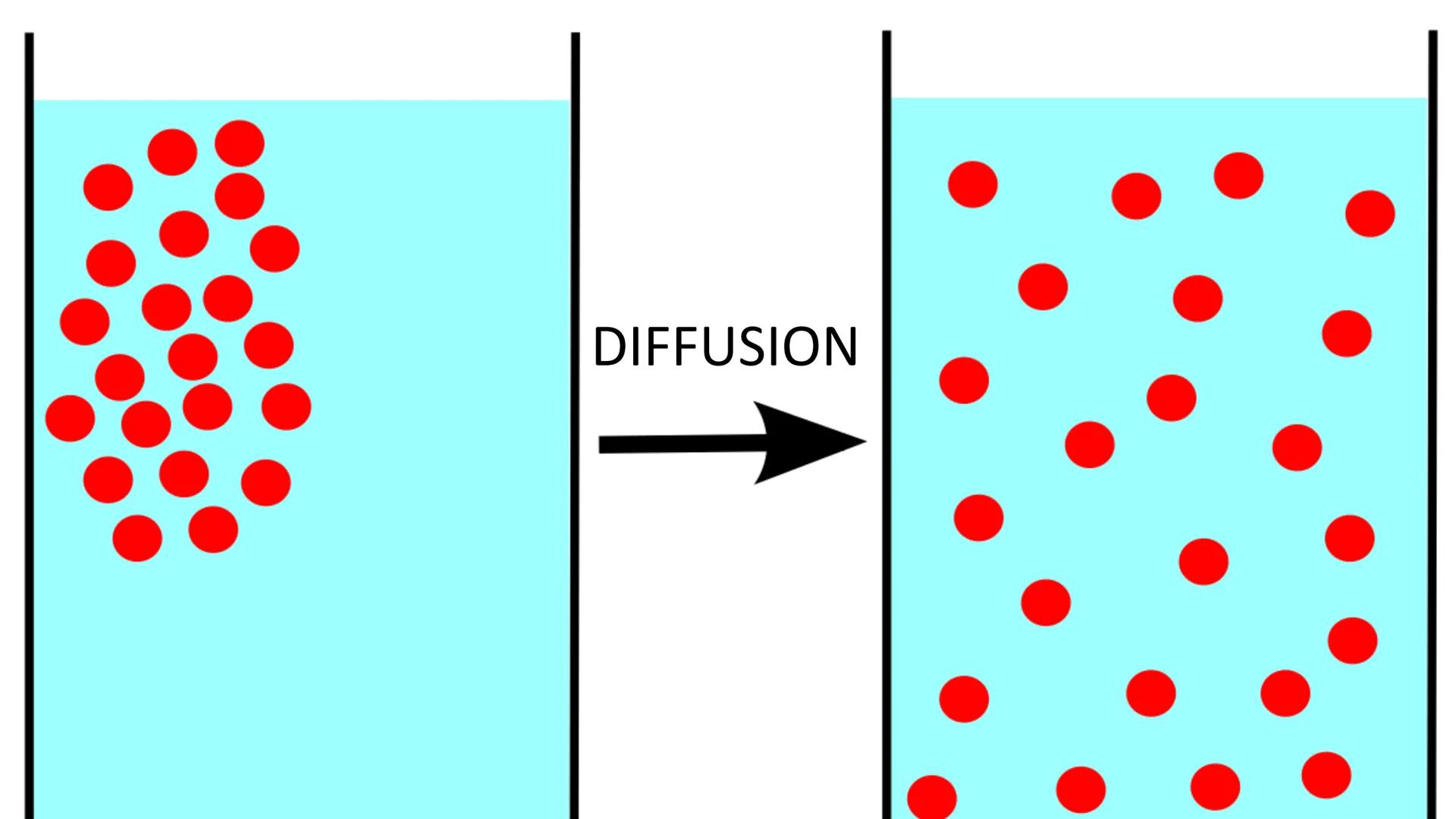
Diffusion
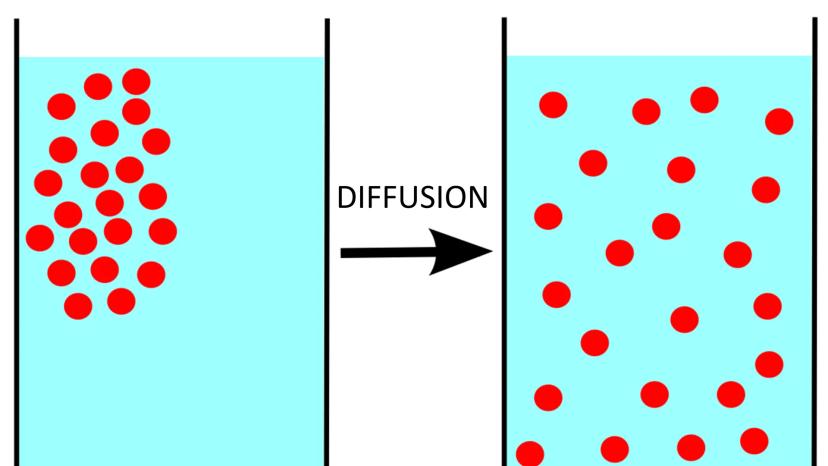
Diffusion occurs when particles spread from areas of high concentration to low concentration. It's like how the smell of perfume gradually fills a room.
This spontaneous process happens because particles naturally move toward more disordered arrangements. The movement increases overall entropy in the system without requiring energy input.
Diffusion is a perfect example of how systems naturally tend toward greater disorder. This tendency drives many processes in chemistry, biology, and even in everyday life!
Fun fact: Diffusion is responsible for how oxygen enters your bloodstream from your lungs and how nutrients enter your cells!
4
of 10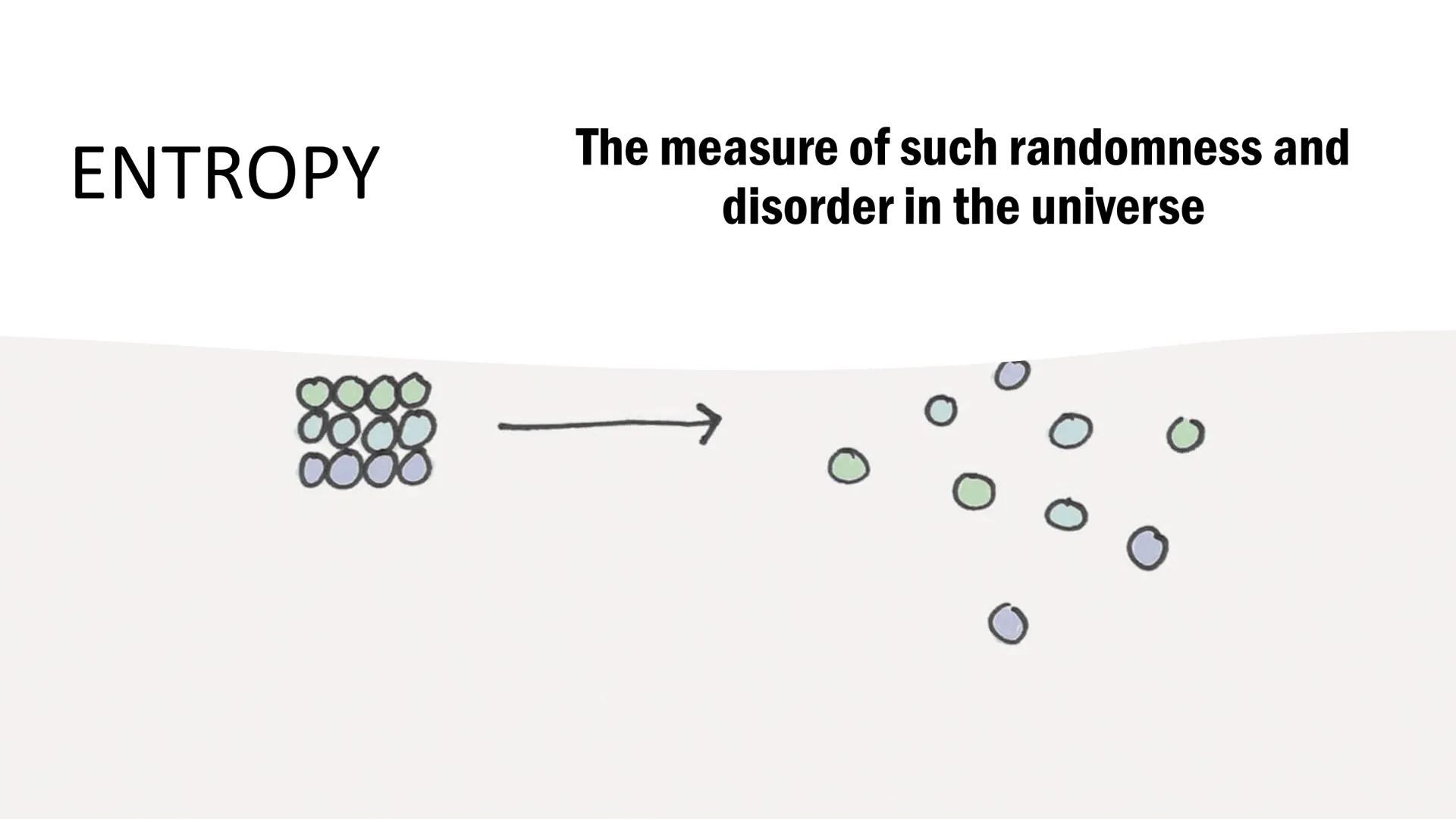
Entropy
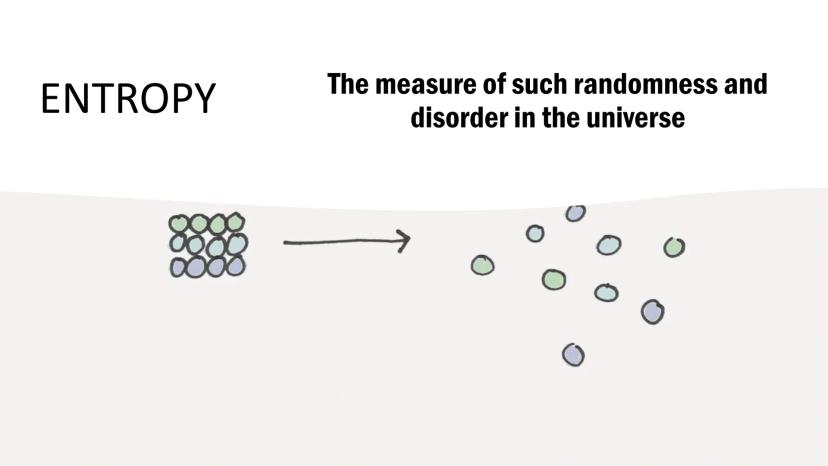
Entropy measures the randomness and disorder in the universe. Think of it as nature's tendency to become increasingly disorganized over time, like how a clean room naturally becomes messy.
Higher entropy means greater disorder. When a solid melts into a liquid or a liquid vaporizes into a gas, entropy increases because molecules move more freely and randomly.
Understanding entropy helps explain why some processes happen spontaneously. Nature always moves toward greater disorder unless energy is added to create order.
Quick tip: When you see the symbol S in equations, remember it's measuring how random or disordered a system is!
5
of 10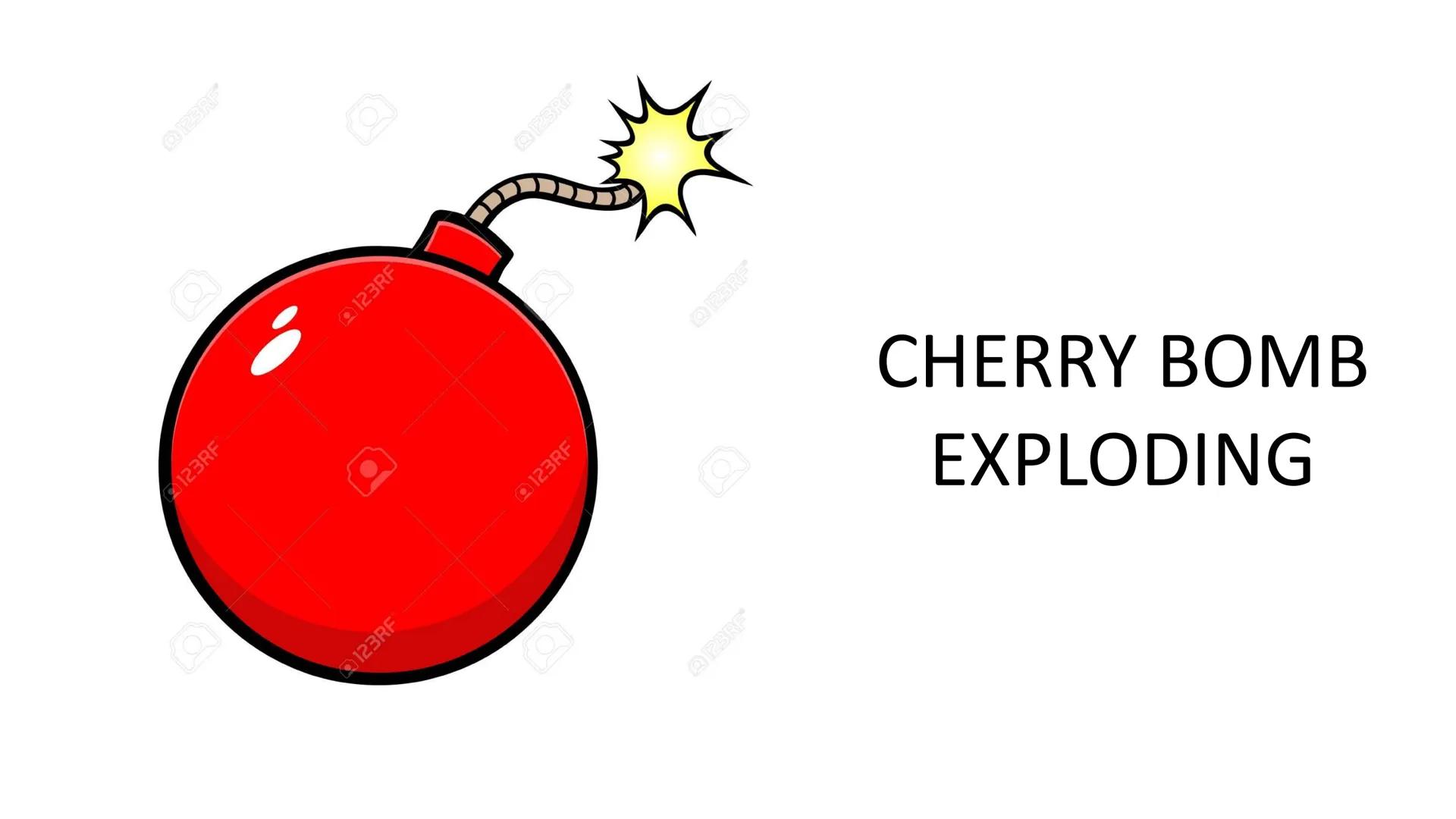
Cherry Bomb Exploding
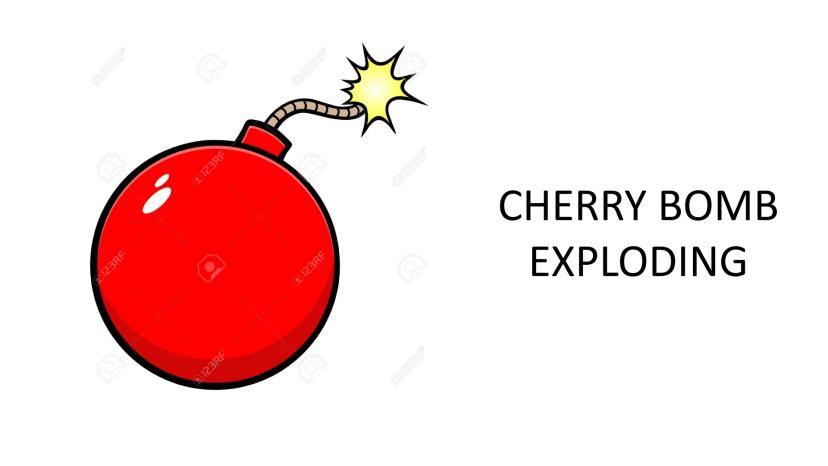
A cherry bomb explosion dramatically demonstrates entropy increase. The controlled, ordered arrangement of chemicals inside the firecracker transforms instantly into scattered gases, heat, and sound.
This explosive reaction releases stored chemical energy (negative ΔH) while dramatically increasing disorder (positive ΔS). Both factors make this process highly spontaneous with a very negative Gibbs Free Energy value.
The explosion can't be reversed naturally - you can't collect the scattered gases and energy to reassemble the cherry bomb. This illustrates how spontaneous processes with large entropy increases tend to be irreversible.
Safety note: While explosions perfectly demonstrate entropy principles, remember that firecrackers are dangerous and should only be handled by professionals!
6
of 10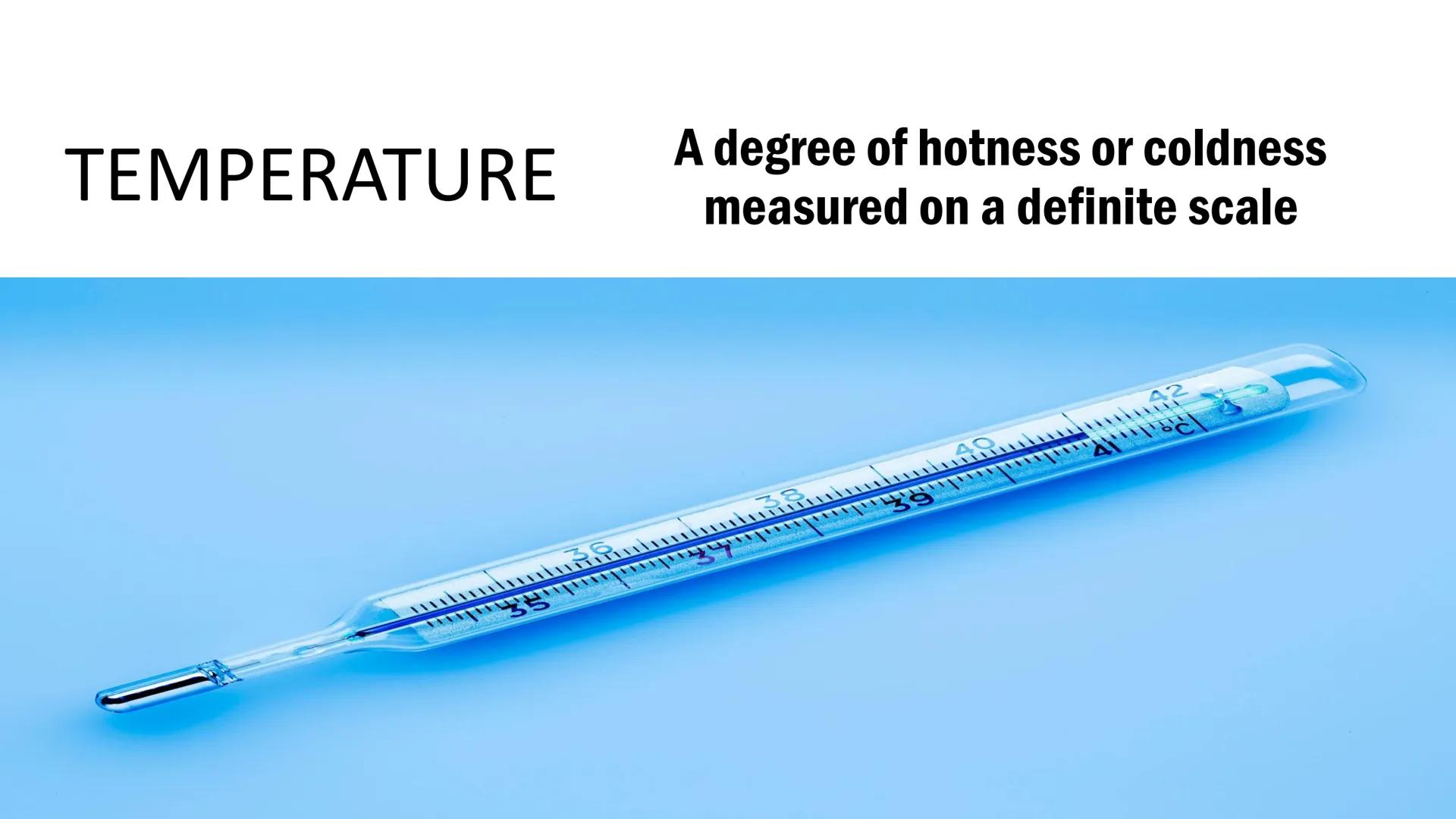
Temperature
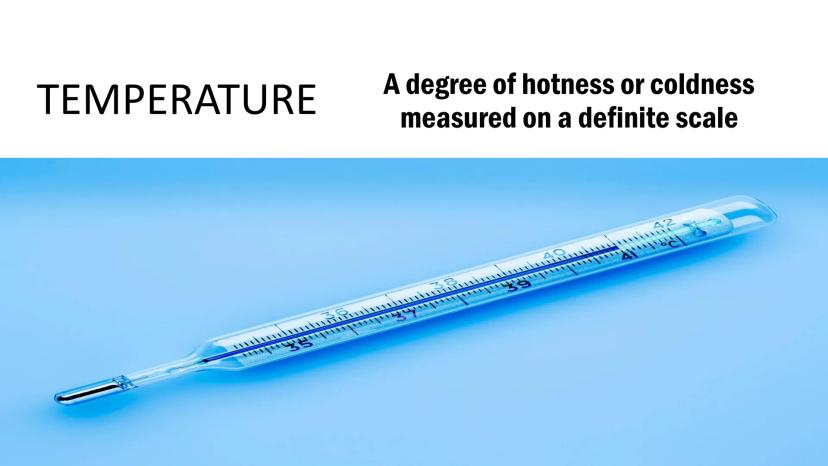
Temperature is a measurement of how hot or cold something is on a defined scale. But in chemistry, it's much more than just a comfort reading—it's a crucial factor in determining reaction spontaneity.
Temperature directly affects the entropy term in the Gibbs Free Energy equation. As temperature increases, the impact of entropy (ΔS) becomes more significant in determining whether a reaction will occur spontaneously.
When using the Gibbs equation (ΔG = ΔH - TΔS), temperature must be in Kelvin (K), not Celsius or Fahrenheit. Remember that 0°C = 273.15 K to make accurate calculations.
Interesting fact: Some reactions that aren't spontaneous at room temperature become spontaneous at higher temperatures because the TΔS term grows large enough to overcome a positive ΔH!
7
of 10
Gibbs Free Energy
Gibbs Free Energy is the key thermodynamic concept that predicts whether chemical reactions will happen spontaneously. It combines both enthalpy and entropy effects into a single value.
When Gibbs Free Energy (ΔG) is negative, a reaction will occur on its own. When ΔG is positive, the reaction needs energy input to proceed. This simple rule helps chemists predict reaction behavior under specific conditions.
The beauty of Gibbs Free Energy is how it balances competing factors - the tendency to minimize energy (enthalpy) and maximize disorder (entropy). This balance explains why some endothermic reactions can still happen spontaneously!
Pro tip: The sign of ΔG is your quick indicator - negative means "go" and positive means "no" for spontaneous reactions.
8
of 10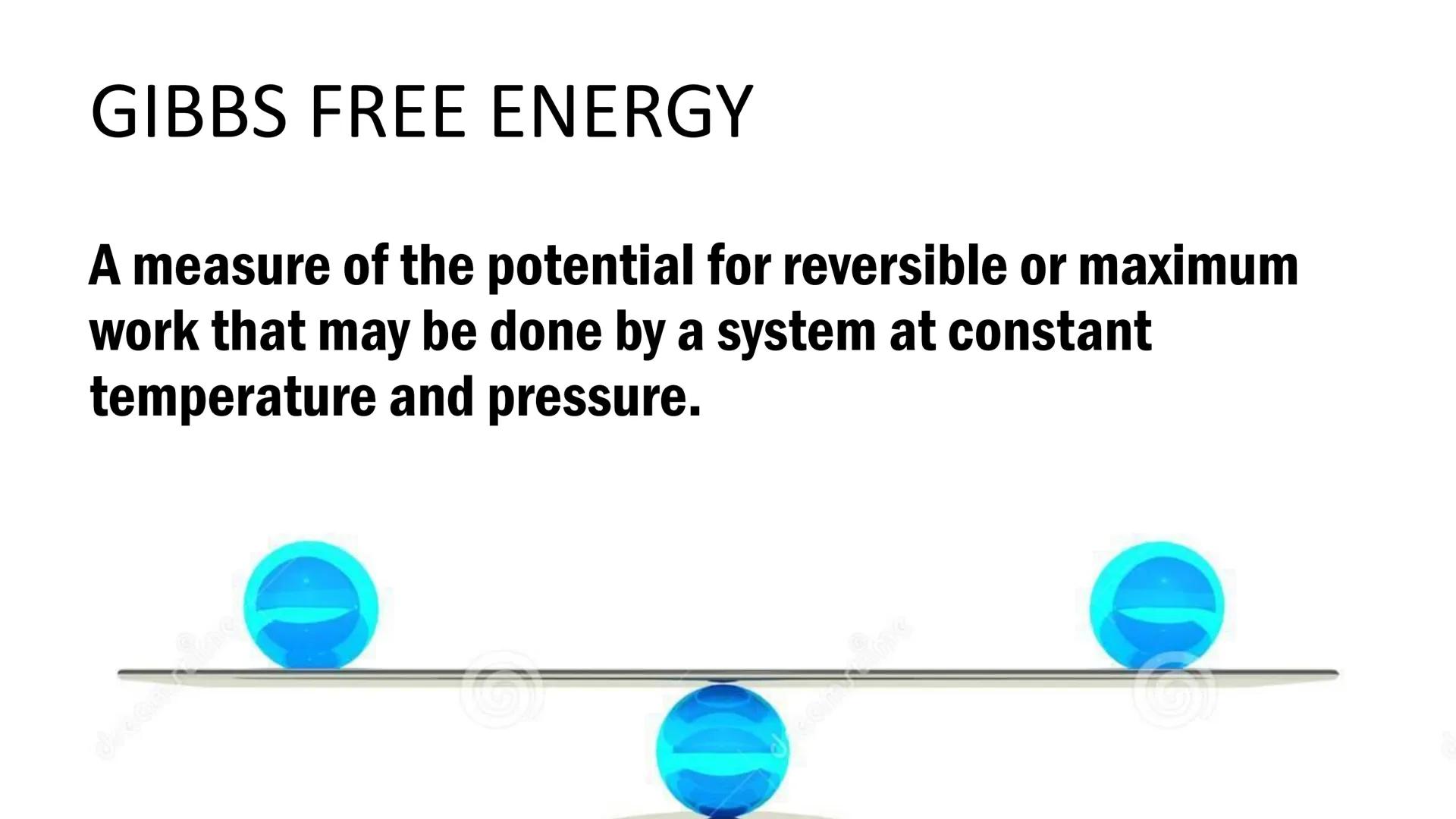
Gibbs Free Energy Explained
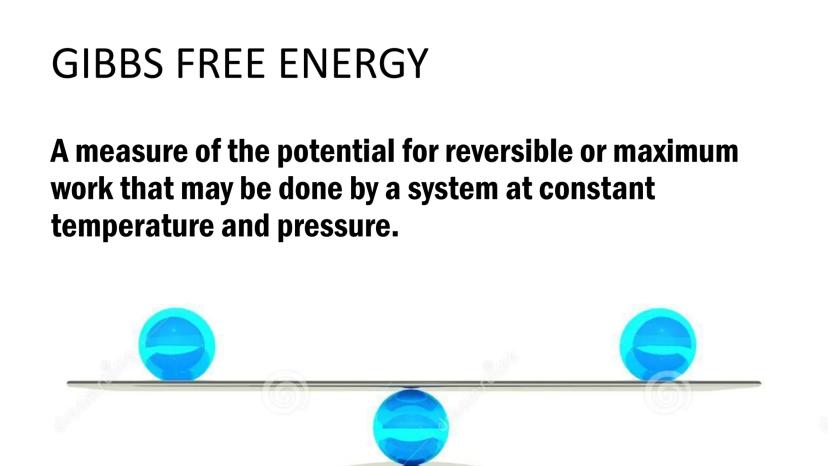
Gibbs Free Energy measures the maximum reversible work a system can perform at constant temperature and pressure. It's like a chemical reaction's "budget" for doing useful work.
When a reaction has negative ΔG, it releases free energy that can be harnessed to do work. This explains why exergonic (energy-releasing) reactions can power processes in both laboratory settings and living organisms.
The remarkable thing about Gibbs Free Energy is that it combines two competing natural tendencies - minimizing energy and maximizing disorder - into a single predictive value that tells us what will happen in the real world.
Key insight: Think of Gibbs Free Energy as nature's way of determining which direction processes will flow spontaneously, just like water flows downhill.
9
of 10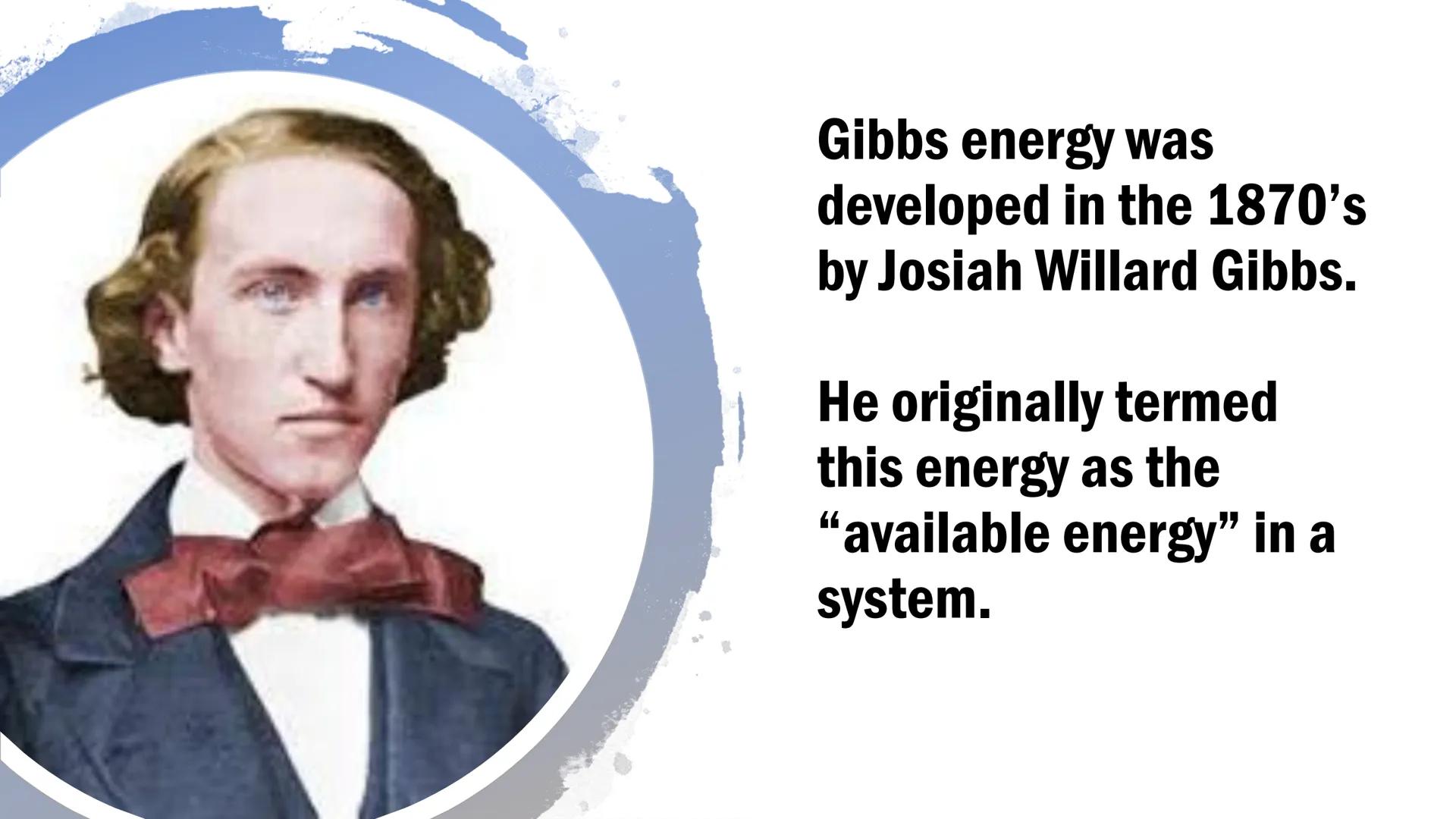
Historical Context
Josiah Willard Gibbs developed what we now call Gibbs Free Energy in the 1870s. He initially termed it "available energy" in a system, highlighting its practical significance.
Gibbs was remarkably ahead of his time. His work on thermodynamics laid the foundation for modern chemical engineering, physical chemistry, and even quantum physics, though it wasn't widely recognized during his lifetime.
The concept of "available energy" perfectly captures the essence of Gibbs Free Energy - it's the energy in a system that's actually available to do useful work, not just the total energy present.
Historical note: Gibbs was the first American to earn a Ph.D. in engineering, and his contributions to science were so significant that Einstein called him "the greatest mind in American history."
10
of 10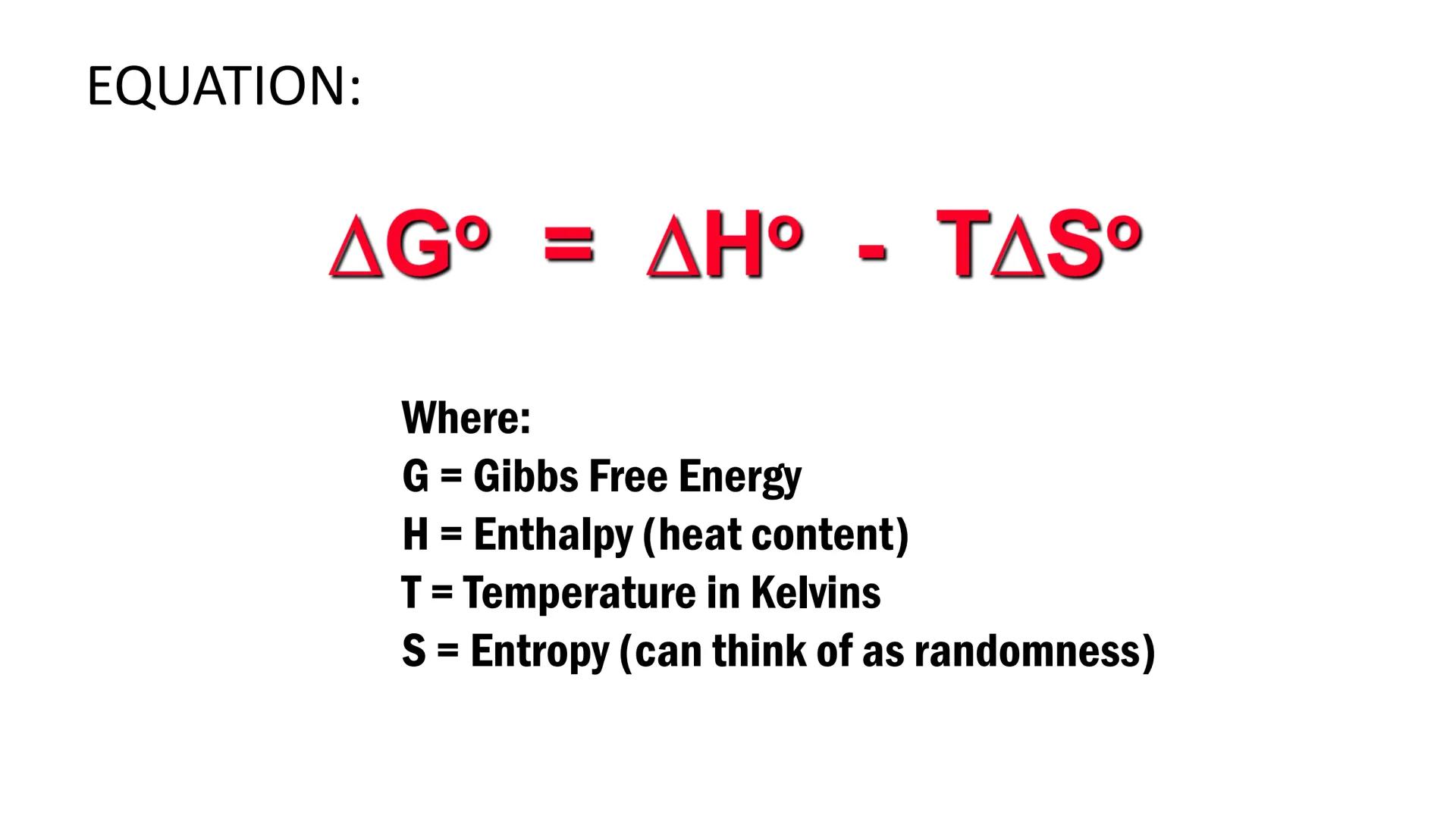
The Gibbs Equation
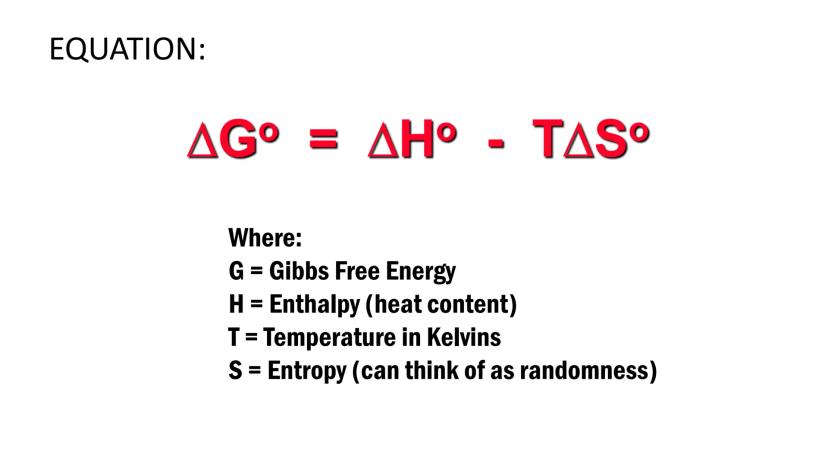
The Gibbs Free Energy equation is expressed as: ΔG° = ΔH° - TΔS°. This elegantly combines heat energy (enthalpy), disorder (entropy), and temperature into one powerful predictive tool.
Each component plays a crucial role: ΔH° represents the heat released or absorbed, ΔS° tracks changes in randomness, and T (temperature in Kelvin) determines how much weight entropy carries in the equation.
The beauty of this equation is its predictive power - it tells you immediately if a reaction will happen spontaneously (when ΔG is negative) or requires energy input (when ΔG is positive).
Visualization tip: Picture the equation as a balance scale with ΔH on one side and TΔS on the other. Whichever side weighs more determines the sign of ΔG!
We thought you’d never ask...
Our AI companion is specifically built for the needs of students. Based on the millions of content pieces we have on the platform we can provide truly meaningful and relevant answers to students. But its not only about answers, the companion is even more about guiding students through their daily learning challenges, with personalised study plans, quizzes or content pieces in the chat and 100% personalisation based on the students skills and developments.
You can download the app in the Google Play Store and in the Apple App Store.
That's right! Enjoy free access to study content, connect with fellow students, and get instant help – all at your fingertips.
Similar Content
Most popular content in AP Physics 1
9I
AP Physics 1Introduction to One-Dimensional Motion
Practice defining and distinguishing between scalar and vector quantities like distance, displacement, speed, and velocity in linear scenarios.
9th6620
AP Physics 1Newton's Second Law of Motion
A detailed explanation of Concept of Newton's Second Law of Motion, Examples, Formulas, and Sample Problems with solution.
43014
I
AP Physics 1Introduction to Kinematic Equations
Practice identifying variables and selecting the appropriate kinematic equation for objects moving with constant acceleration in one dimension.
9th5670
AP Physics 1Gravitational Acceleration, Forces, and Newton's Laws
more physics!
10th440
AP Physics 1AP Physics 1: Unit 1 Kinematics
Notes for the first unit of AP Physics I
10th1,58860
AP Physics 1General Physics (Free-falling Objects)
A presentation about the concept of Free-falling Objects in Physics-Formulas, Sample Problems, and Exercises.
1587
AP Physics 1Moment of Inertia
A catalog of common shapes and their moment of inertia.
10th1211
AP Physics 1Physics Notes (Study Notes)
Study notes on Physics.
1451
AP Physics 1Electrostatic Charge and Transfer
Summary of the study of charges, transfer methods, static discharge, lightning, and Coulomb's law in electrostatics.
10th710
Most popular content
9O
 AP US History
Origins and Dynamics of the Columbian Exchange
Analyze the ecological and economic motivations behind the initial transfer of goods, people, and diseases between the Old and New Worlds.
9th3,1280
I
AP US HistoryIntroduction to Early Cultural Interactions
Analyze the initial social and religious encounters between Europeans, Africans, and Indigenous peoples in the colonial Americas.
9th2,7730
F
 AP Psychology
Foundations of Ethical Guidelines in Research
Practice the core principles of the APA ethical code including informed consent, debriefing, and the role of Institutional Review Boards.
9th1,3360
M
AP US HistoryMotivations for European Exploration
Analyze the economic, religious, and political factors that drove European powers to the Americas during the 15th and 16th centuries.
9th1,7780
O
 AP World History
Origins of Ancient River Civilizations
Analyze the environmental factors and technological innovations that led to the rise of early states in Mesopotamia, Egypt, and the Indus Valley.
9th3,1870
F
AP PsychologyFoundations of Research Design and Methodology
Practice distinguishing between different research methods including experiments, correlations, and case studies while identifying key variables.
9th6670
I
AP US HistoryIntroduction to Native American Societies
Examine the diverse social, political, and economic structures of North American indigenous groups prior to European contact.
9th1,1100
I
 SAT®
SAT®Introduction to SAT Error Pattern Analysis
Practice identifying common reasoning traps and misinterpretations in SAT reading and math stimuli to understand why distractors are plausible.
9th2,0350
H
AP PsychologyHistorical Foundations of Psychology
Practice distinguishing between structuralism, functionalism, and the early philosophical roots of psychological science.
9th1,0940
Students love us — and so will you.
4.6/5App Store
4.7/5Google Play
The app is very easy to use and well designed. I have found everything I was looking for so far and have been able to learn a lot from the presentations! I will definitely use the app for a class assignment! And of course it also helps a lot as an inspiration.
Stefan SiOS user
This app is really great. There are so many study notes and help [...]. My problem subject is French, for example, and the app has so many options for help. Thanks to this app, I have improved my French. I would recommend it to anyone.
Samantha KlichAndroid user
Wow, I am really amazed. I just tried the app because I've seen it advertised many times and was absolutely stunned. This app is THE HELP you want for school and above all, it offers so many things, such as workouts and fact sheets, which have been VERY helpful to me personally.
AnnaiOS user
AP Physics 169 views·Updated Jul 18, 2026·28 pagesUnderstanding Gibbs Free Energy: Definition, Formula, and Examples
Gibbs Free Energy is a fundamental concept in thermodynamics that helps predict whether chemical reactions will occur spontaneously. It combines the effects of enthalpy (heat energy) and entropy (disorder) to determine if a reaction will happen on its own or...
1
of 10
Sign up to see the content. It's free!
- Access to all documents
- Improve your grades
- Join milions of students
Ball Rolling Down a Plane
When a ball rolls down an inclined plane, it demonstrates energy conversion principles related to Gibbs Free Energy. The ball naturally moves from a position of higher potential energy to lower potential energy.
This spontaneous movement happens without requiring any additional energy input. In fact, energy is released during this process, similar to how exergonic chemical reactions release energy.
Think of this as a simple model for understanding why some chemical reactions happen on their own while others need energy to get started!
Quick Insight: Spontaneous processes like a rolling ball always move toward states of lower energy - this same principle applies to chemical reactions!
2
of 10Sign up to see the content. It's free!
- Access to all documents
- Improve your grades
- Join milions of students
Enthalpy and Matter
Enthalpy is a state function of a system, meaning it depends only on the current state of the system, not on how it got there. It's like checking your bank balance - the amount matters, not how the money got there.
Enthalpy relates to the heat content of matter. When chemical reactions occur, bonds break and form, causing either the release of heat (exothermic) or the absorption of heat (endothermic).
Understanding enthalpy helps us track energy flow during chemical changes. When you feel warmth from a hand warmer or cold from an ice pack, you're experiencing enthalpy changes in action!
Remember: Enthalpy (H) tracks heat energy in a system, and its changes (ΔH) tell us whether reactions release or absorb heat.
3
of 10Sign up to see the content. It's free!
- Access to all documents
- Improve your grades
- Join milions of students
Diffusion
Diffusion occurs when particles spread from areas of high concentration to low concentration. It's like how the smell of perfume gradually fills a room.
This spontaneous process happens because particles naturally move toward more disordered arrangements. The movement increases overall entropy in the system without requiring energy input.
Diffusion is a perfect example of how systems naturally tend toward greater disorder. This tendency drives many processes in chemistry, biology, and even in everyday life!
Fun fact: Diffusion is responsible for how oxygen enters your bloodstream from your lungs and how nutrients enter your cells!
4
of 10Sign up to see the content. It's free!
- Access to all documents
- Improve your grades
- Join milions of students
Entropy
Entropy measures the randomness and disorder in the universe. Think of it as nature's tendency to become increasingly disorganized over time, like how a clean room naturally becomes messy.
Higher entropy means greater disorder. When a solid melts into a liquid or a liquid vaporizes into a gas, entropy increases because molecules move more freely and randomly.
Understanding entropy helps explain why some processes happen spontaneously. Nature always moves toward greater disorder unless energy is added to create order.
Quick tip: When you see the symbol S in equations, remember it's measuring how random or disordered a system is!
5
of 10Sign up to see the content. It's free!
- Access to all documents
- Improve your grades
- Join milions of students
Cherry Bomb Exploding
A cherry bomb explosion dramatically demonstrates entropy increase. The controlled, ordered arrangement of chemicals inside the firecracker transforms instantly into scattered gases, heat, and sound.
This explosive reaction releases stored chemical energy (negative ΔH) while dramatically increasing disorder (positive ΔS). Both factors make this process highly spontaneous with a very negative Gibbs Free Energy value.
The explosion can't be reversed naturally - you can't collect the scattered gases and energy to reassemble the cherry bomb. This illustrates how spontaneous processes with large entropy increases tend to be irreversible.
Safety note: While explosions perfectly demonstrate entropy principles, remember that firecrackers are dangerous and should only be handled by professionals!
6
of 10Sign up to see the content. It's free!
- Access to all documents
- Improve your grades
- Join milions of students
Temperature
Temperature is a measurement of how hot or cold something is on a defined scale. But in chemistry, it's much more than just a comfort reading—it's a crucial factor in determining reaction spontaneity.
Temperature directly affects the entropy term in the Gibbs Free Energy equation. As temperature increases, the impact of entropy (ΔS) becomes more significant in determining whether a reaction will occur spontaneously.
When using the Gibbs equation (ΔG = ΔH - TΔS), temperature must be in Kelvin (K), not Celsius or Fahrenheit. Remember that 0°C = 273.15 K to make accurate calculations.
Interesting fact: Some reactions that aren't spontaneous at room temperature become spontaneous at higher temperatures because the TΔS term grows large enough to overcome a positive ΔH!
7
of 10Sign up to see the content. It's free!
- Access to all documents
- Improve your grades
- Join milions of students
Gibbs Free Energy
Gibbs Free Energy is the key thermodynamic concept that predicts whether chemical reactions will happen spontaneously. It combines both enthalpy and entropy effects into a single value.
When Gibbs Free Energy (ΔG) is negative, a reaction will occur on its own. When ΔG is positive, the reaction needs energy input to proceed. This simple rule helps chemists predict reaction behavior under specific conditions.
The beauty of Gibbs Free Energy is how it balances competing factors - the tendency to minimize energy (enthalpy) and maximize disorder (entropy). This balance explains why some endothermic reactions can still happen spontaneously!
Pro tip: The sign of ΔG is your quick indicator - negative means "go" and positive means "no" for spontaneous reactions.
8
of 10Sign up to see the content. It's free!
- Access to all documents
- Improve your grades
- Join milions of students
Gibbs Free Energy Explained
Gibbs Free Energy measures the maximum reversible work a system can perform at constant temperature and pressure. It's like a chemical reaction's "budget" for doing useful work.
When a reaction has negative ΔG, it releases free energy that can be harnessed to do work. This explains why exergonic (energy-releasing) reactions can power processes in both laboratory settings and living organisms.
The remarkable thing about Gibbs Free Energy is that it combines two competing natural tendencies - minimizing energy and maximizing disorder - into a single predictive value that tells us what will happen in the real world.
Key insight: Think of Gibbs Free Energy as nature's way of determining which direction processes will flow spontaneously, just like water flows downhill.
9
of 10Sign up to see the content. It's free!
- Access to all documents
- Improve your grades
- Join milions of students
Historical Context
Josiah Willard Gibbs developed what we now call Gibbs Free Energy in the 1870s. He initially termed it "available energy" in a system, highlighting its practical significance.
Gibbs was remarkably ahead of his time. His work on thermodynamics laid the foundation for modern chemical engineering, physical chemistry, and even quantum physics, though it wasn't widely recognized during his lifetime.
The concept of "available energy" perfectly captures the essence of Gibbs Free Energy - it's the energy in a system that's actually available to do useful work, not just the total energy present.
Historical note: Gibbs was the first American to earn a Ph.D. in engineering, and his contributions to science were so significant that Einstein called him "the greatest mind in American history."
10
of 10Sign up to see the content. It's free!
- Access to all documents
- Improve your grades
- Join milions of students
The Gibbs Equation
The Gibbs Free Energy equation is expressed as: ΔG° = ΔH° - TΔS°. This elegantly combines heat energy (enthalpy), disorder (entropy), and temperature into one powerful predictive tool.
Each component plays a crucial role: ΔH° represents the heat released or absorbed, ΔS° tracks changes in randomness, and T (temperature in Kelvin) determines how much weight entropy carries in the equation.
The beauty of this equation is its predictive power - it tells you immediately if a reaction will happen spontaneously (when ΔG is negative) or requires energy input (when ΔG is positive).
Visualization tip: Picture the equation as a balance scale with ΔH on one side and TΔS on the other. Whichever side weighs more determines the sign of ΔG!
We thought you’d never ask...
Our AI companion is specifically built for the needs of students. Based on the millions of content pieces we have on the platform we can provide truly meaningful and relevant answers to students. But its not only about answers, the companion is even more about guiding students through their daily learning challenges, with personalised study plans, quizzes or content pieces in the chat and 100% personalisation based on the students skills and developments.
You can download the app in the Google Play Store and in the Apple App Store.
That's right! Enjoy free access to study content, connect with fellow students, and get instant help – all at your fingertips.
Similar Content
Most popular content in AP Physics 1
9I
AP Physics 1Introduction to One-Dimensional Motion
Practice defining and distinguishing between scalar and vector quantities like distance, displacement, speed, and velocity in linear scenarios.
9th6620
AP Physics 1Newton's Second Law of Motion
A detailed explanation of Concept of Newton's Second Law of Motion, Examples, Formulas, and Sample Problems with solution.
43014
I
AP Physics 1Introduction to Kinematic Equations
Practice identifying variables and selecting the appropriate kinematic equation for objects moving with constant acceleration in one dimension.
9th5670
AP Physics 1Gravitational Acceleration, Forces, and Newton's Laws
more physics!
10th440
AP Physics 1AP Physics 1: Unit 1 Kinematics
Notes for the first unit of AP Physics I
10th1,58860
AP Physics 1General Physics (Free-falling Objects)
A presentation about the concept of Free-falling Objects in Physics-Formulas, Sample Problems, and Exercises.
1587
AP Physics 1Moment of Inertia
A catalog of common shapes and their moment of inertia.
10th1211
AP Physics 1Physics Notes (Study Notes)
Study notes on Physics.
1451
AP Physics 1Electrostatic Charge and Transfer
Summary of the study of charges, transfer methods, static discharge, lightning, and Coulomb's law in electrostatics.
10th710
Most popular content
9O
AP US HistoryOrigins and Dynamics of the Columbian Exchange
Analyze the ecological and economic motivations behind the initial transfer of goods, people, and diseases between the Old and New Worlds.
9th3,1280
I
AP US HistoryIntroduction to Early Cultural Interactions
Analyze the initial social and religious encounters between Europeans, Africans, and Indigenous peoples in the colonial Americas.
9th2,7730
F
AP PsychologyFoundations of Ethical Guidelines in Research
Practice the core principles of the APA ethical code including informed consent, debriefing, and the role of Institutional Review Boards.
9th1,3360
M
AP US HistoryMotivations for European Exploration
Analyze the economic, religious, and political factors that drove European powers to the Americas during the 15th and 16th centuries.
9th1,7780
O
AP World HistoryOrigins of Ancient River Civilizations
Analyze the environmental factors and technological innovations that led to the rise of early states in Mesopotamia, Egypt, and the Indus Valley.
9th3,1870
F
AP PsychologyFoundations of Research Design and Methodology
Practice distinguishing between different research methods including experiments, correlations, and case studies while identifying key variables.
9th6670
I
AP US HistoryIntroduction to Native American Societies
Examine the diverse social, political, and economic structures of North American indigenous groups prior to European contact.
9th1,1100
I
SAT®Introduction to SAT Error Pattern Analysis
Practice identifying common reasoning traps and misinterpretations in SAT reading and math stimuli to understand why distractors are plausible.
9th2,0350
H
AP PsychologyHistorical Foundations of Psychology
Practice distinguishing between structuralism, functionalism, and the early philosophical roots of psychological science.
9th1,0940
Students love us — and so will you.
4.6/5App Store
4.7/5Google Play
The app is very easy to use and well designed. I have found everything I was looking for so far and have been able to learn a lot from the presentations! I will definitely use the app for a class assignment! And of course it also helps a lot as an inspiration.
Stefan SiOS user
This app is really great. There are so many study notes and help [...]. My problem subject is French, for example, and the app has so many options for help. Thanks to this app, I have improved my French. I would recommend it to anyone.
Samantha KlichAndroid user
Wow, I am really amazed. I just tried the app because I've seen it advertised many times and was absolutely stunned. This app is THE HELP you want for school and above all, it offers so many things, such as workouts and fact sheets, which have been VERY helpful to me personally.
AnnaiOS user