Split-Brain Research: When Hemispheres Can't Talk
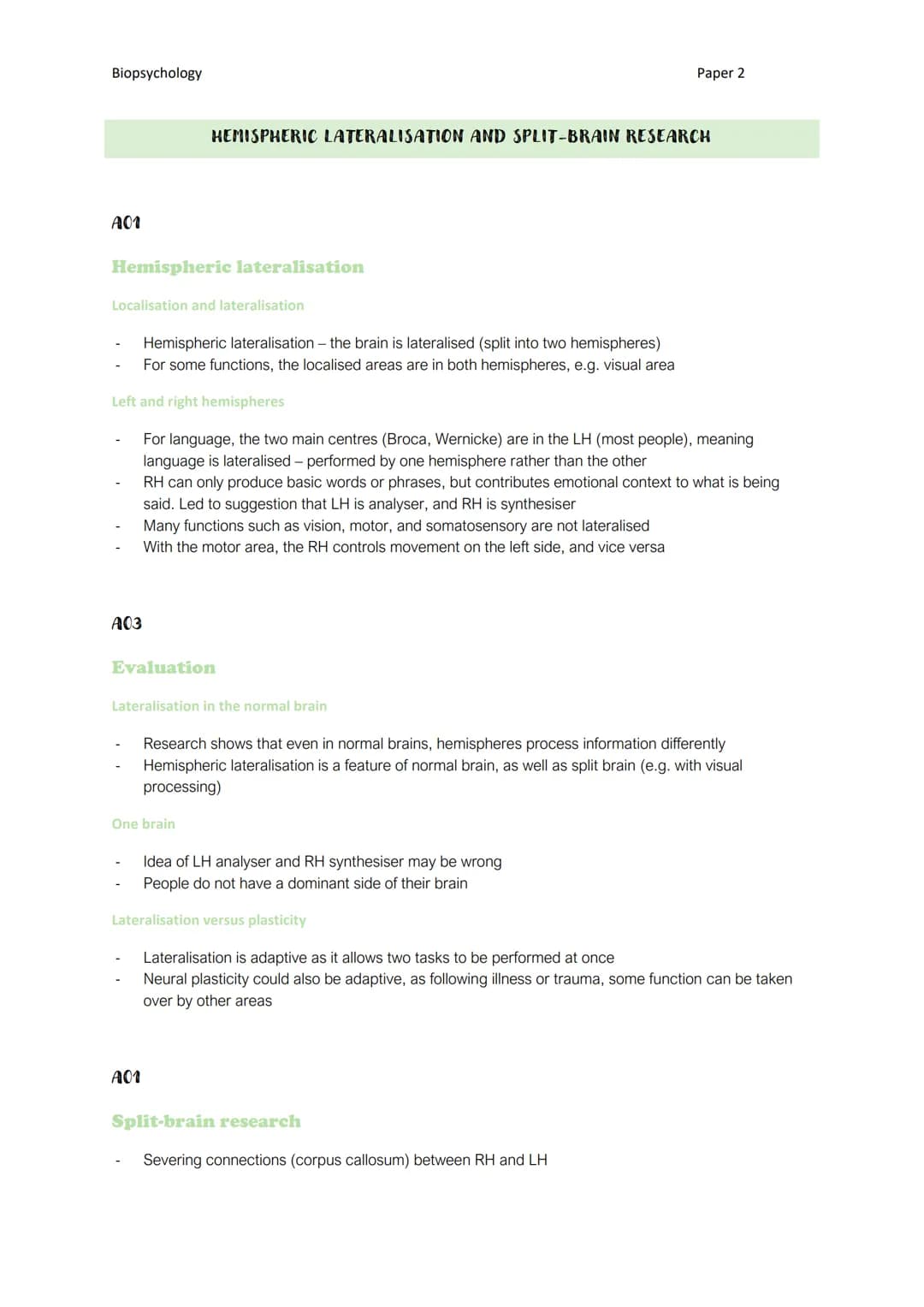
Split-brain research studies people who've had their corpus callosum surgically cut to treat severe epilepsy. This procedure stops electrical storms from spreading between hemispheres but creates a unique opportunity to study each hemisphere independently.
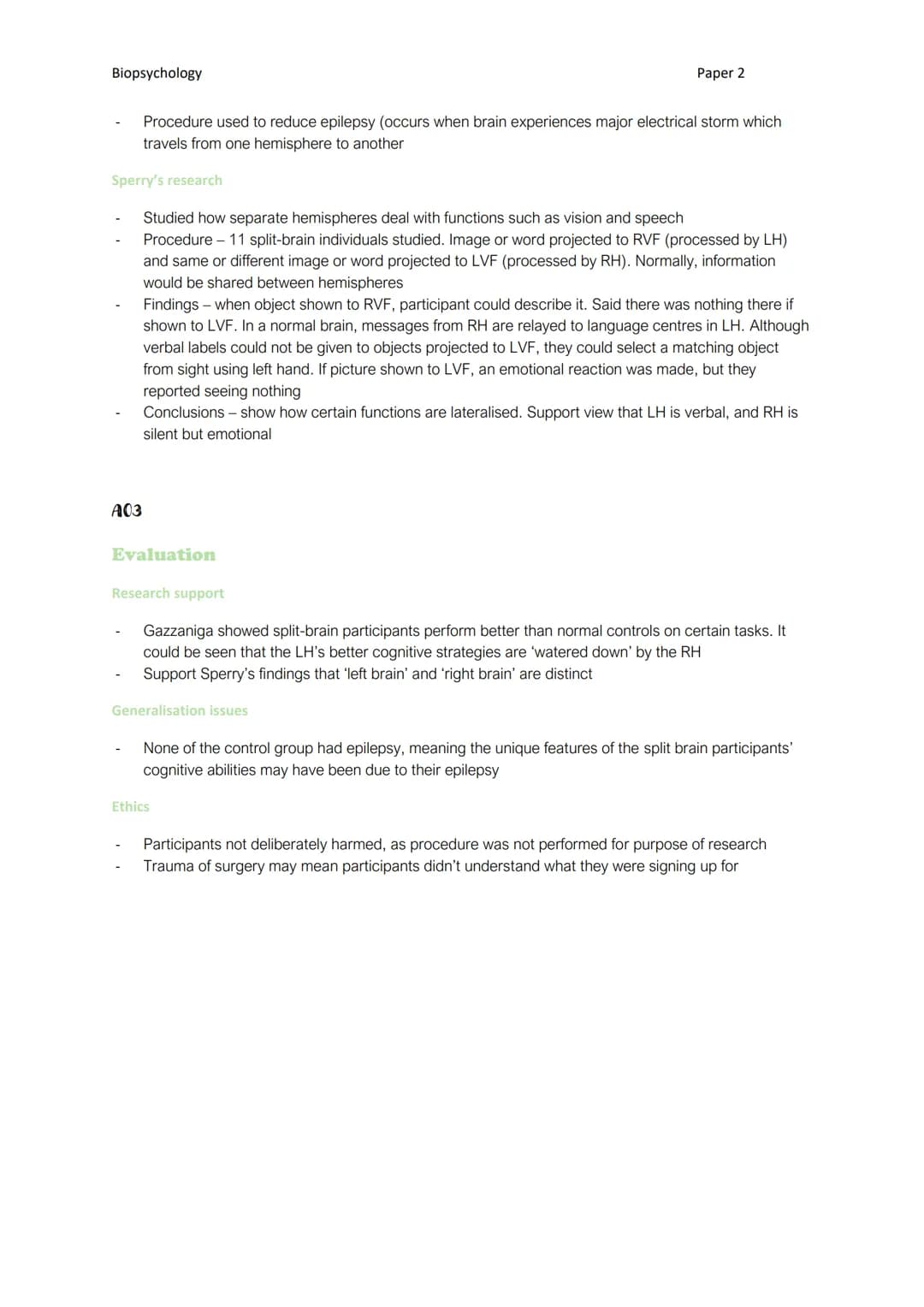
Sperry's groundbreaking research involved 11 split-brain participants. He projected images to either the right visual field (processed by left hemisphere) or left visual field (processed by right hemisphere). The results were remarkable: participants could describe objects shown to their right visual field but claimed to see "nothing" when the same objects appeared in their left visual field.
Even more fascinating, when objects were shown to the left visual field, participants couldn't name them but could select matching objects with their left hand. They'd even show emotional reactions to images they claimed not to see.
Research Insight: Gazzaniga found that split-brain participants actually performed better than normal controls on certain tasks, suggesting the left hemisphere's strategies sometimes get "watered down" by the right hemisphere.
These findings support the idea that the left hemisphere is verbal whilst the right hemisphere is silent but emotional.


 AP Psychology
 Sociology
 Biology