
Welcome to your Agricultural Science guide! In this summary, we'll... Show more
 Biology243 views·Updated Jun 13, 2026·9 pages
Grade 9 Agriscience Notes

Lány Santiago@datlatinabi14

1 / 9
1
of 9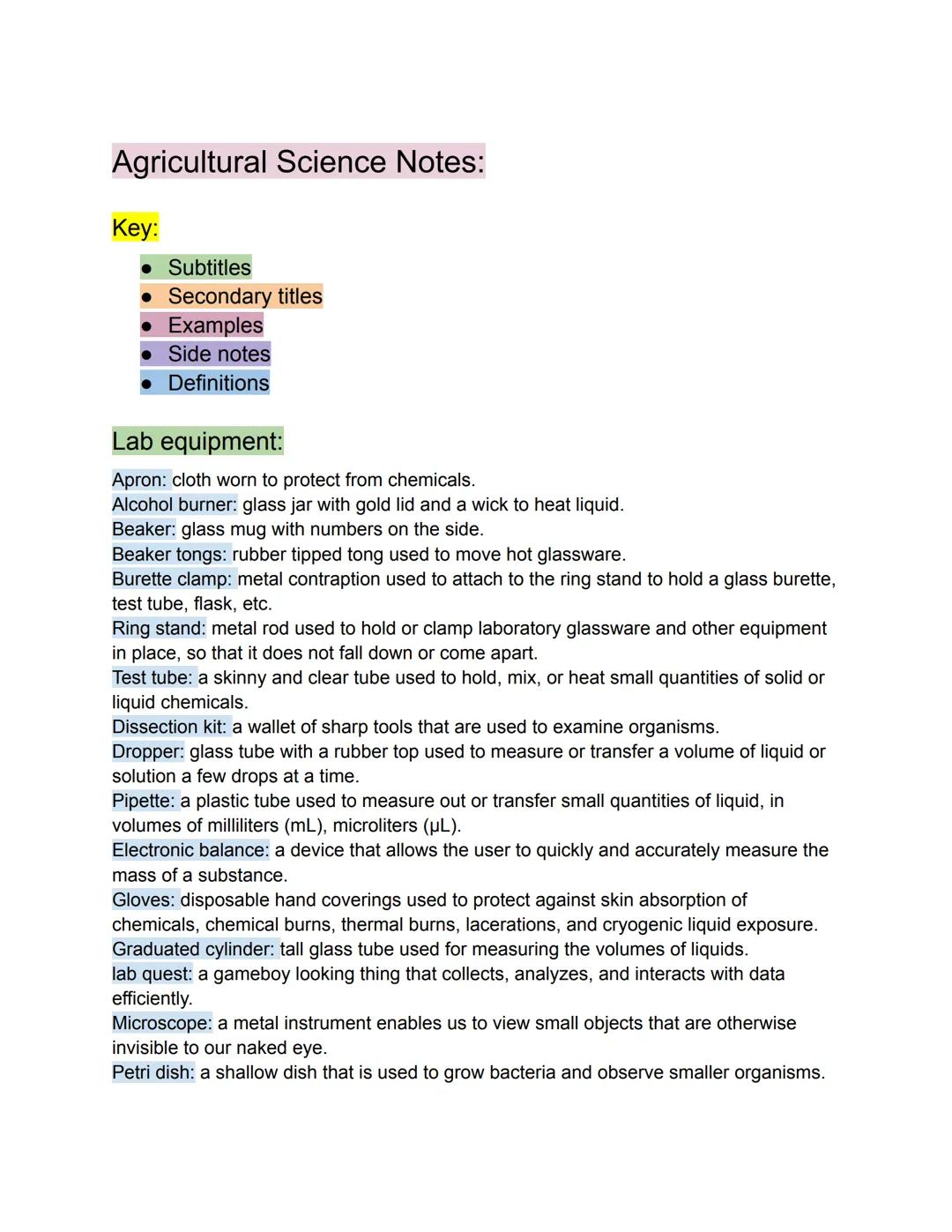
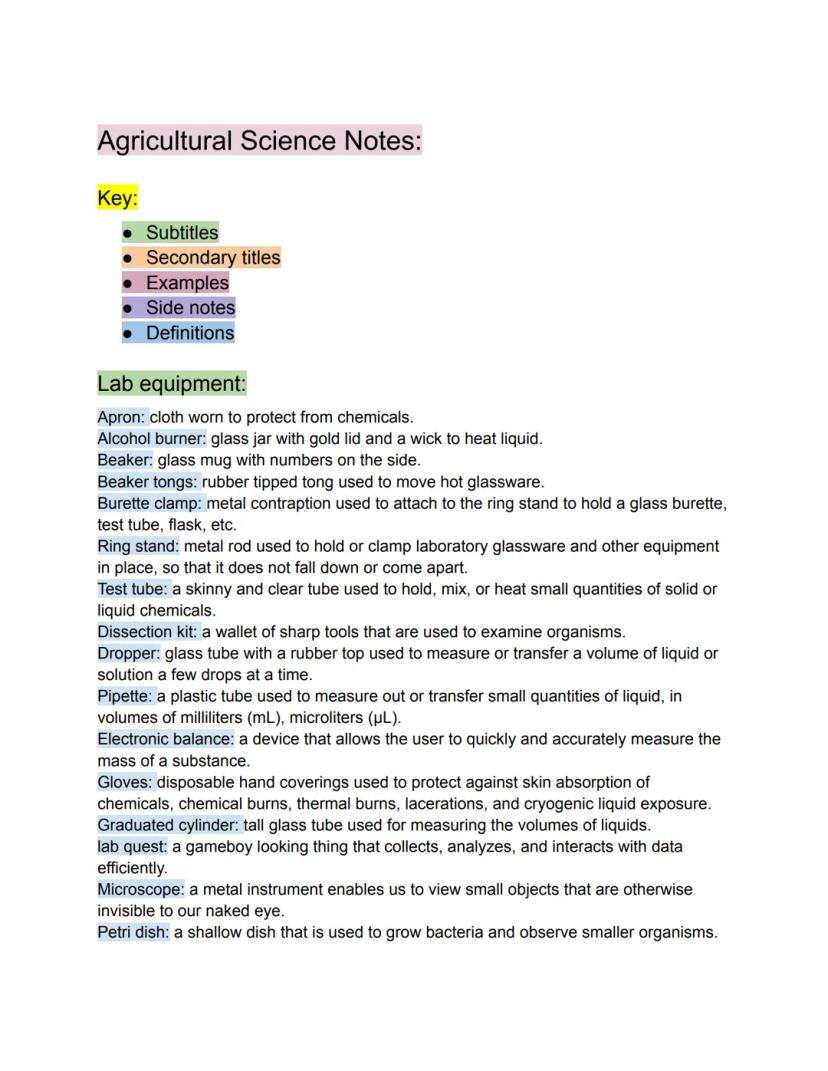
Laboratory Equipment in Agricultural Science
Ever wondered what all those strange tools in the science lab are for? Lab equipment helps scientists conduct experiments safely and accurately. Let's explore the essentials!
Safety equipment includes aprons to protect your clothes from chemicals and safety glasses to shield your eyes from splashes. For handling materials, you'll use gloves to protect your skin and various tools to measure liquids like droppers, pipettes, and graduated cylinders.
Heating equipment includes alcohol burners (glass jars with wicks) for warming liquids. For containing substances, you'll use beakers (glass mugs with measurement markings), test tubes (skinny clear tubes for small amounts), and Petri dishes (shallow containers for growing bacteria).
Pro Tip: Always check your equipment before starting an experiment. Damaged glassware like cracked beakers or test tubes can be dangerous when heated!
Measuring tools are crucial in agricultural science. The electronic balance helps you accurately measure mass, while tools like the lab quest device collect and analyze data efficiently. For observing tiny specimens, the microscope lets you see what's invisible to the naked eye.
2
of 9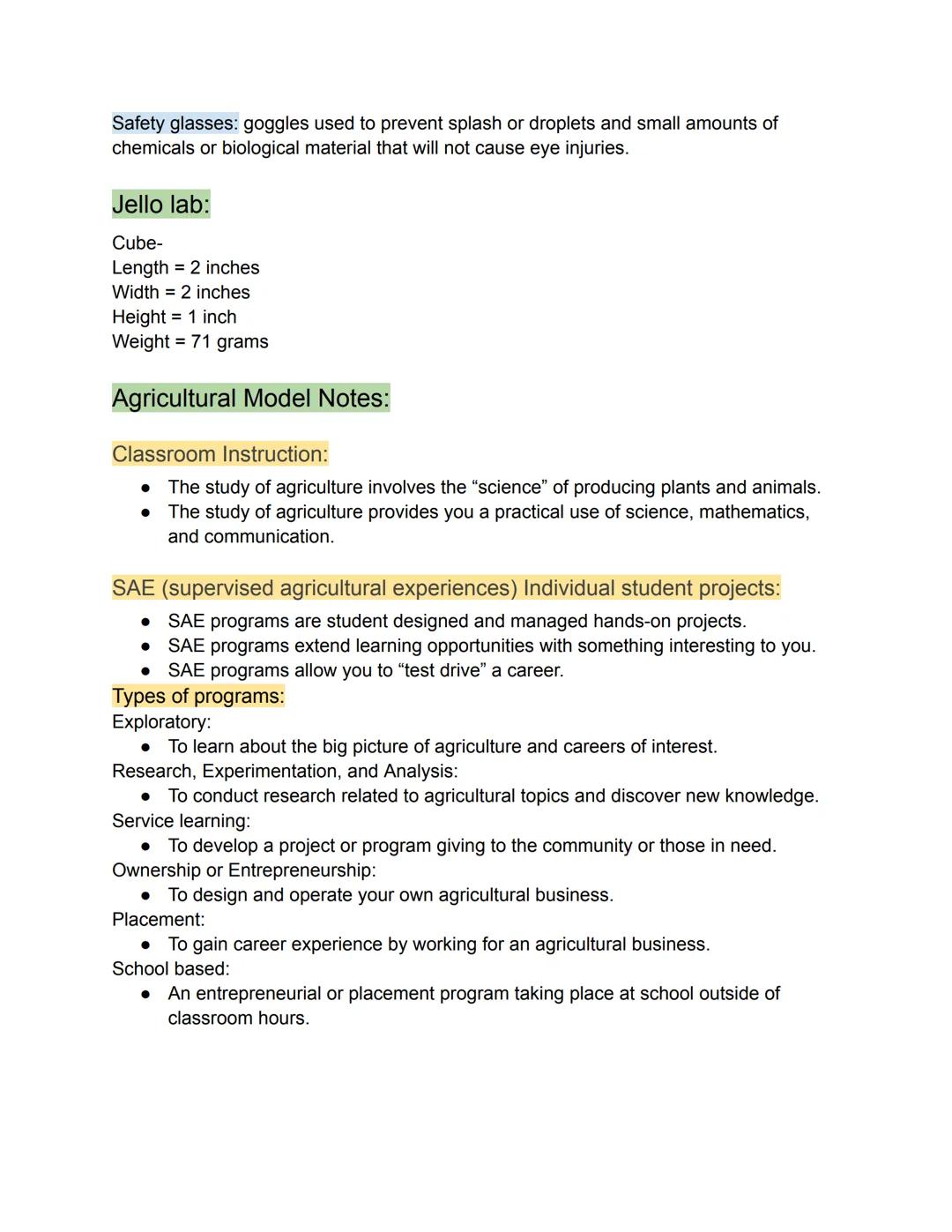
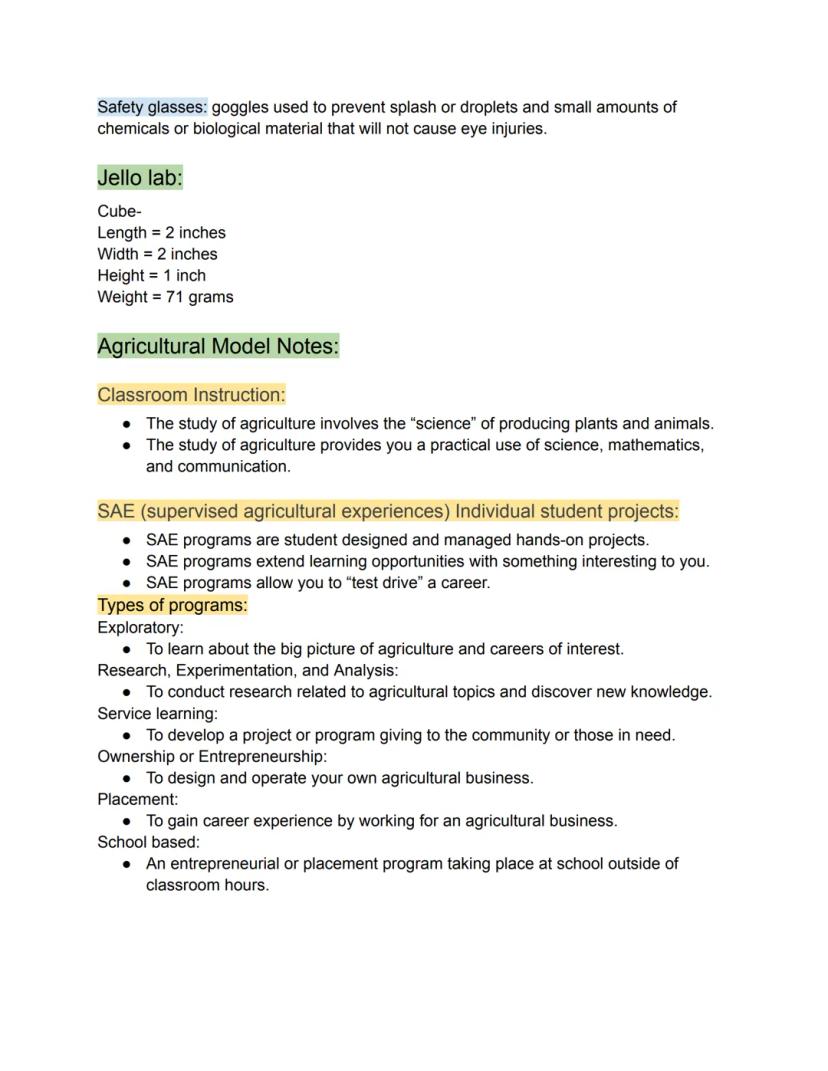
Agricultural Models and Supervised Experiences
Agriculture isn't just farming—it's applying science and math to grow plants and raise animals! In agricultural education, you'll learn through both classroom instruction and hands-on projects.
Supervised Agricultural Experiences (SAE) are student-designed projects that let you explore agriculture in ways that interest you. Think of them as test-driving a career! You can choose from several types of SAEs including exploratory programs (learning about agricultural careers), research projects (conducting experiments), service learning (helping your community), entrepreneurship (starting your own ag business), or placement (working for an agricultural company).
Your SAE project gives you real-world experience that classroom learning alone can't provide. Whether you're breeding rabbits, researching plant diseases, or working at a local farm, you'll develop valuable skills that colleges and employers look for.
Remember: Choose an SAE that matches your interests—when you enjoy what you're doing, learning happens naturally!
The agricultural education model has three connected parts: classroom learning, SAE projects, and FFA participation. Each component strengthens the others, giving you a complete agricultural education experience.
3
of 9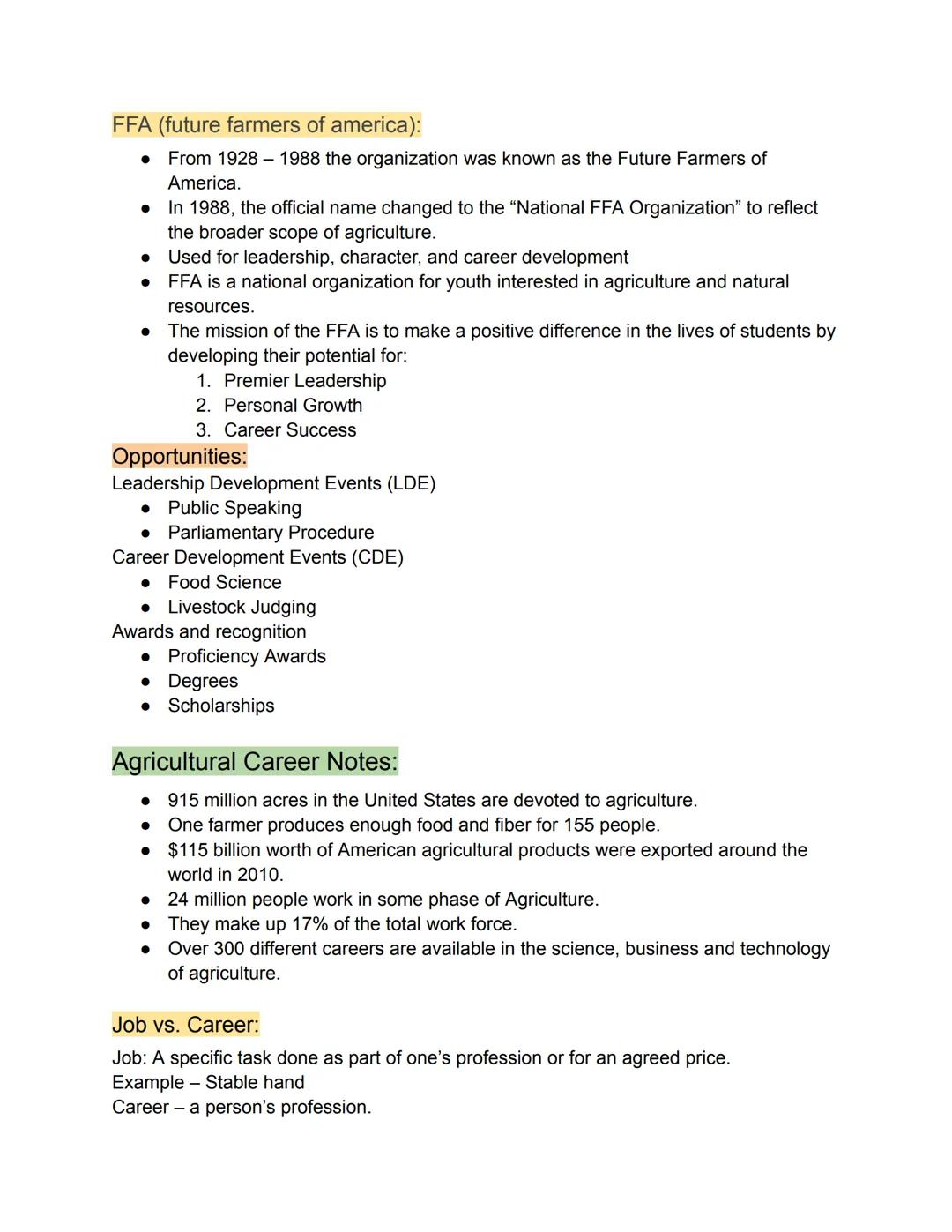
FFA and Agricultural Careers
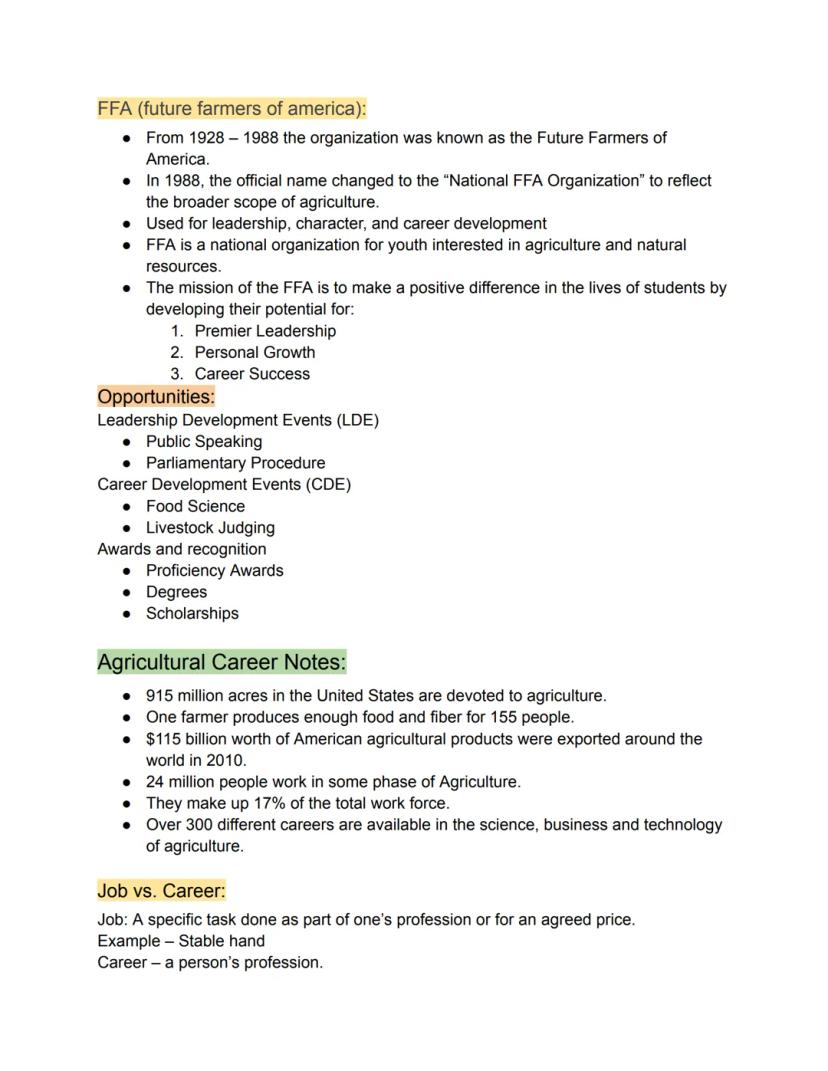
The FFA (formerly Future Farmers of America) isn't just for students planning to be farmers! It's a national organization that helps develop leadership, personal growth, and career skills for anyone interested in agriculture and natural resources.
Through FFA, you can compete in Leadership Development Events (like public speaking competitions) and Career Development Events (like food science or livestock judging contests). These competitions help you build skills that will serve you in any career. FFA also offers recognition through proficiency awards, degrees, and scholarships.
Agriculture is a massive industry with incredible career opportunities! Did you know that agriculture employs 24 million Americans (17% of the workforce) across over 300 different careers? Only 2% of these jobs involve actual farming—the rest are in science, business, and technology.
Career Insight: The difference between a job and a career matters! A job is a specific task (like being a stable hand), while a career is your profession (like becoming an animal trainer). Throughout your career, you might have several different jobs.
Agricultural careers span diverse fields including agribusiness, animal systems, environmental services, food processing, plant systems, natural resources management, and agricultural technology. With the industry growing and evolving, there's likely a perfect fit for your interests and talents!
4
of 9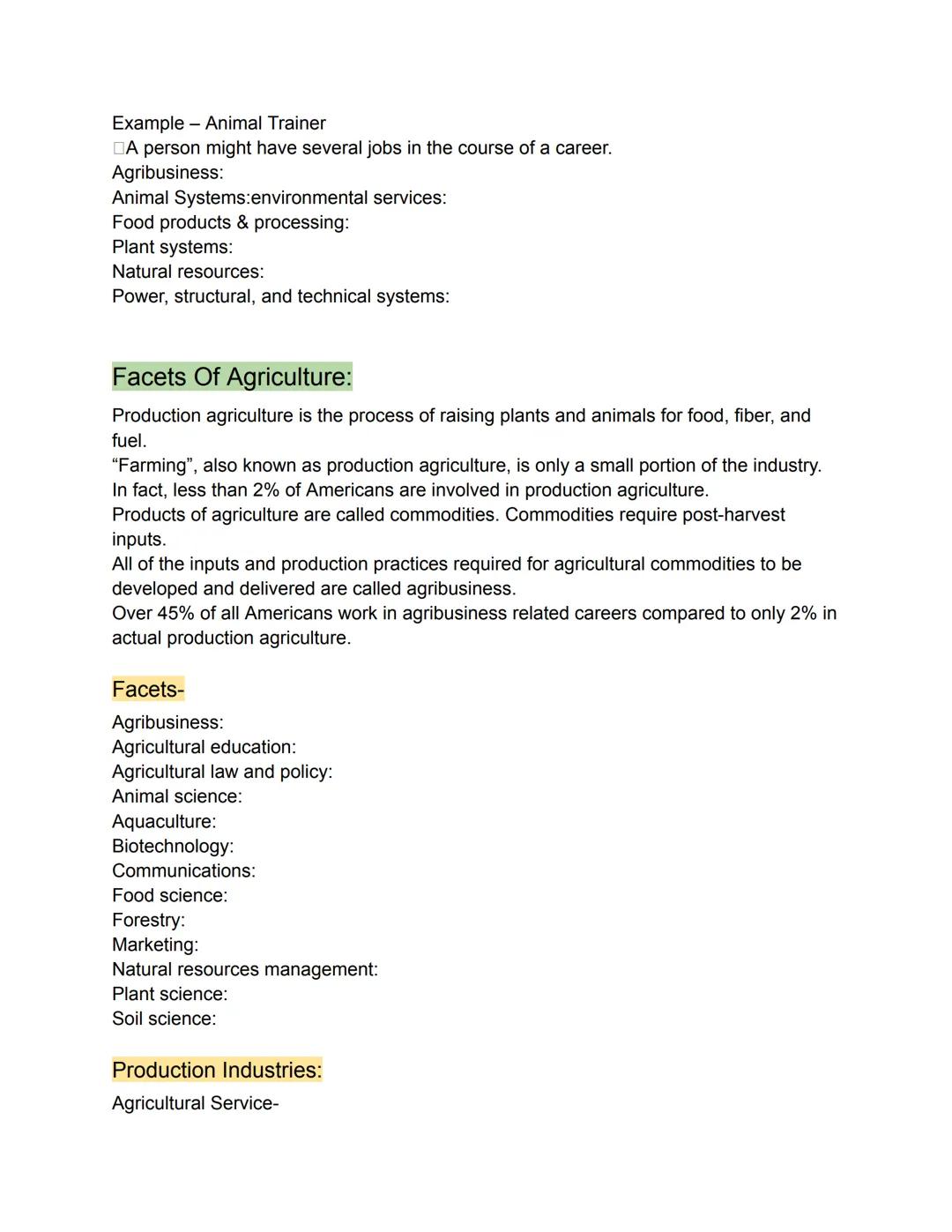
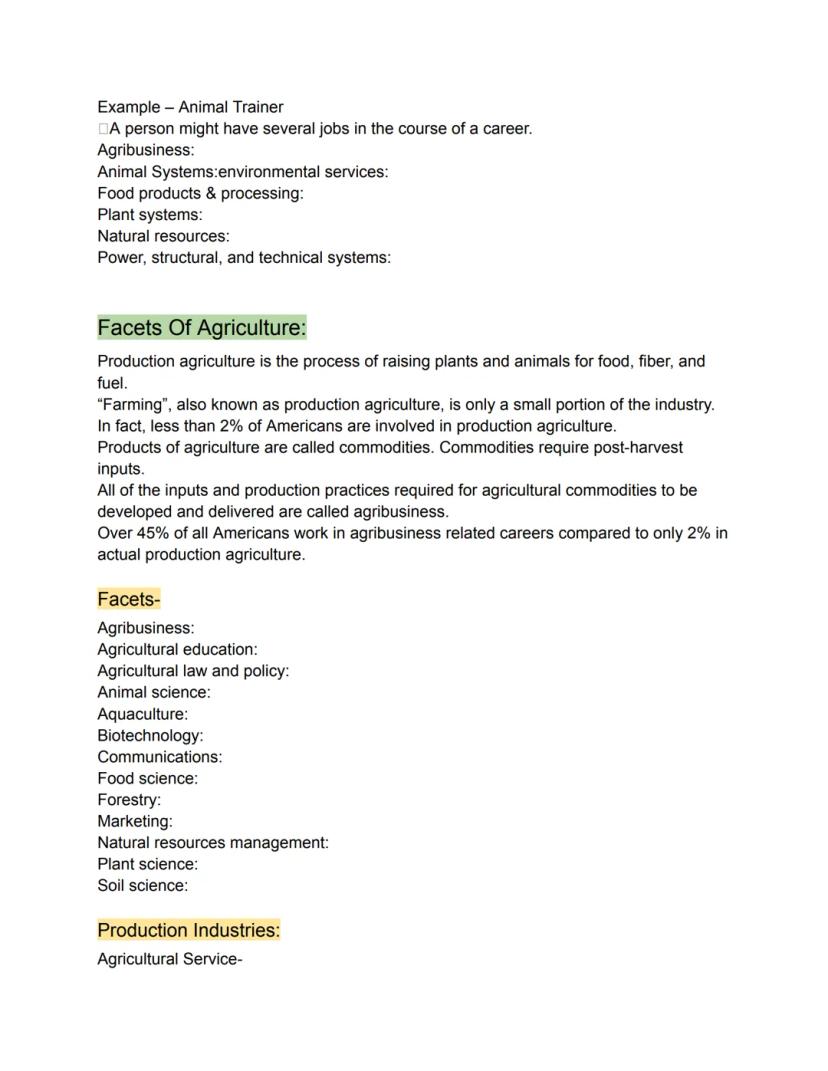
The Agricultural Industry
Agriculture is much bigger than just farming! While production agriculture (raising plants and animals for food, fiber, and fuel) is what most people think of, it's only a small part of the industry—less than 2% of Americans work directly in farming.
The agricultural products we grow are called commodities, and they require many steps after harvest before reaching consumers. All the businesses, services, and processes involved in getting agricultural products from the farm to your table are part of agribusiness—where over 45% of all Americans work!
Agriculture has many facets beyond farming. These include agricultural education, law and policy, animal science, aquaculture, biotechnology, communications, food science, forestry, marketing, natural resources management, plant science, and soil science. Each area offers unique career opportunities.
Fun Fact: One American farmer produces enough food and fiber for 155 people! This incredible productivity is possible because of advances in agricultural science and technology.
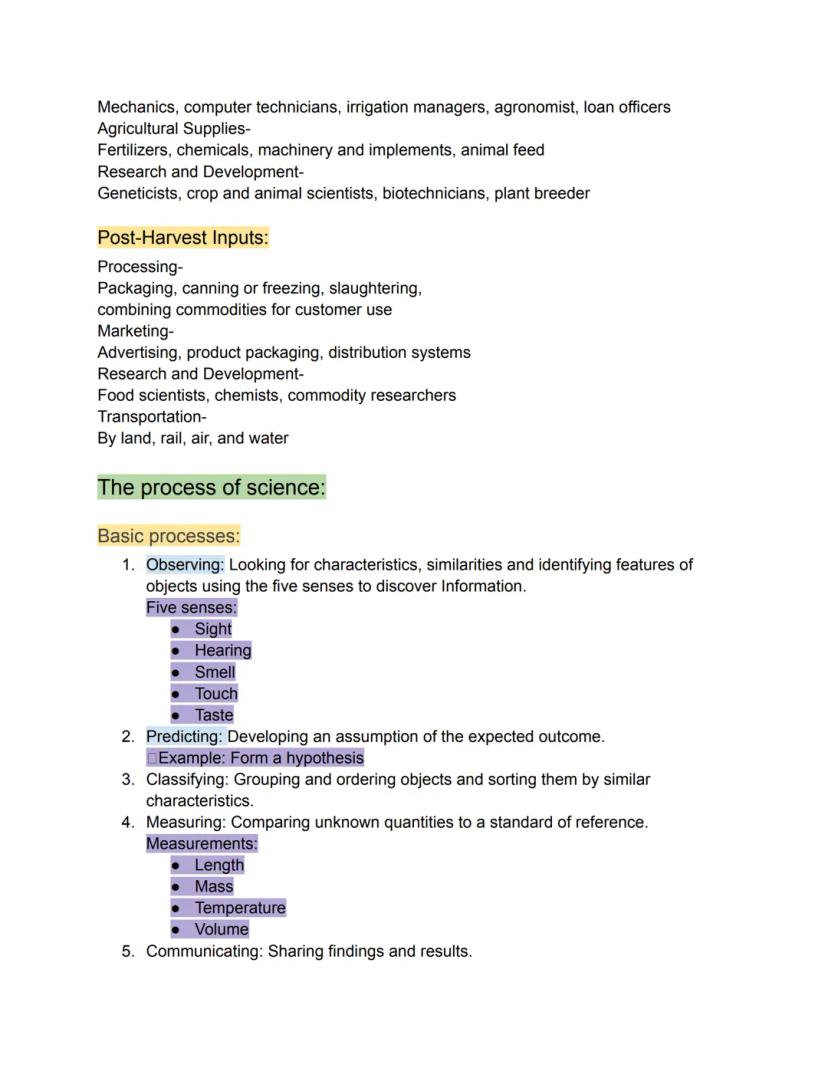
The production side of agriculture includes services (mechanics, irrigation managers, loan officers), supplies (fertilizers, chemicals, machinery), and research (geneticists, scientists). Post-harvest activities include processing (packaging, canning, freezing), marketing, research (food scientists, chemists), and transportation of products around the world.
5
of 9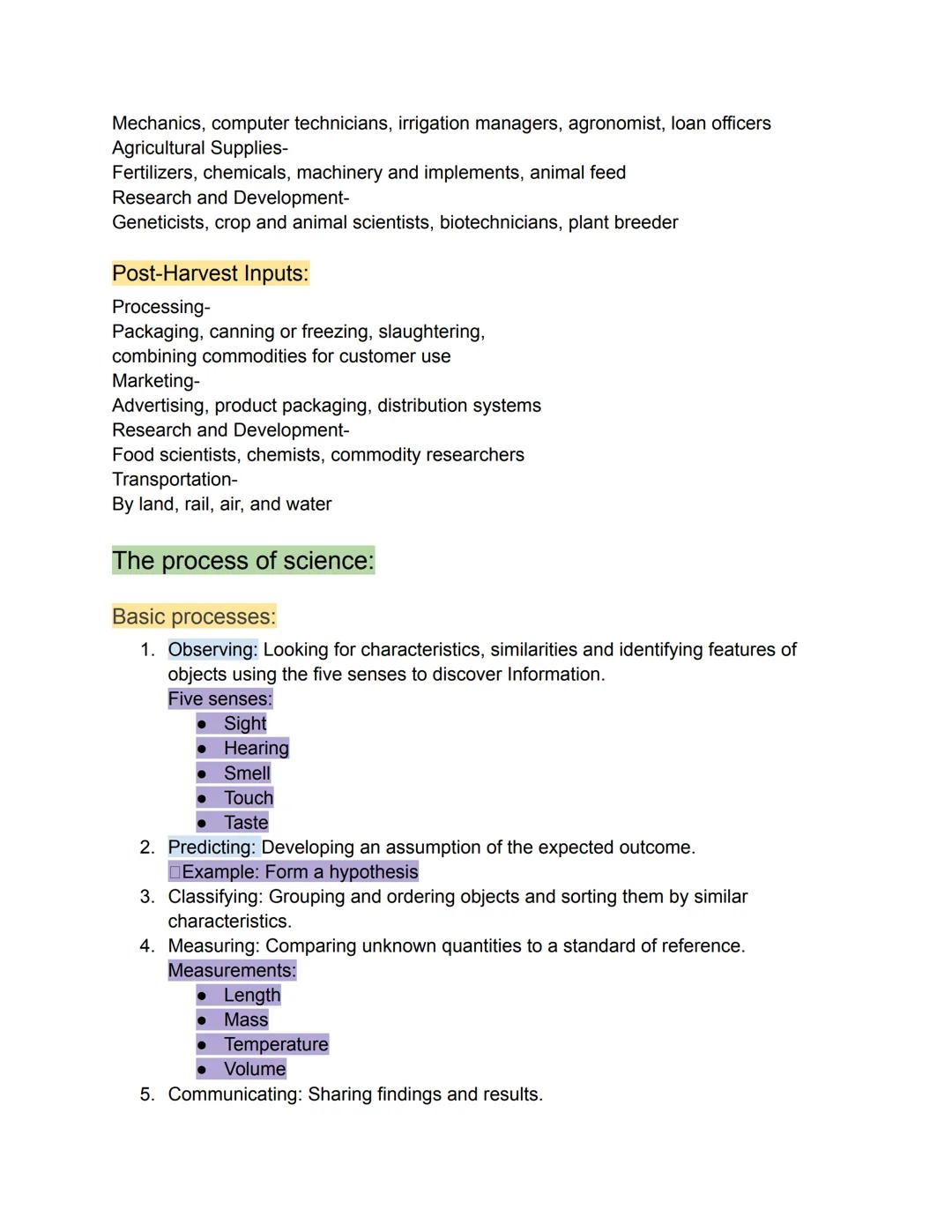
The Scientific Process in Agriculture
Science is at the heart of modern agriculture! To become a good agricultural scientist, you need to master seven basic scientific processes.
First is observing—using your five senses to gather information about objects and phenomena. Next comes predicting, where you form a hypothesis about what might happen. Classifying helps you organize objects by their characteristics, while measuring lets you compare unknown quantities to standard references.
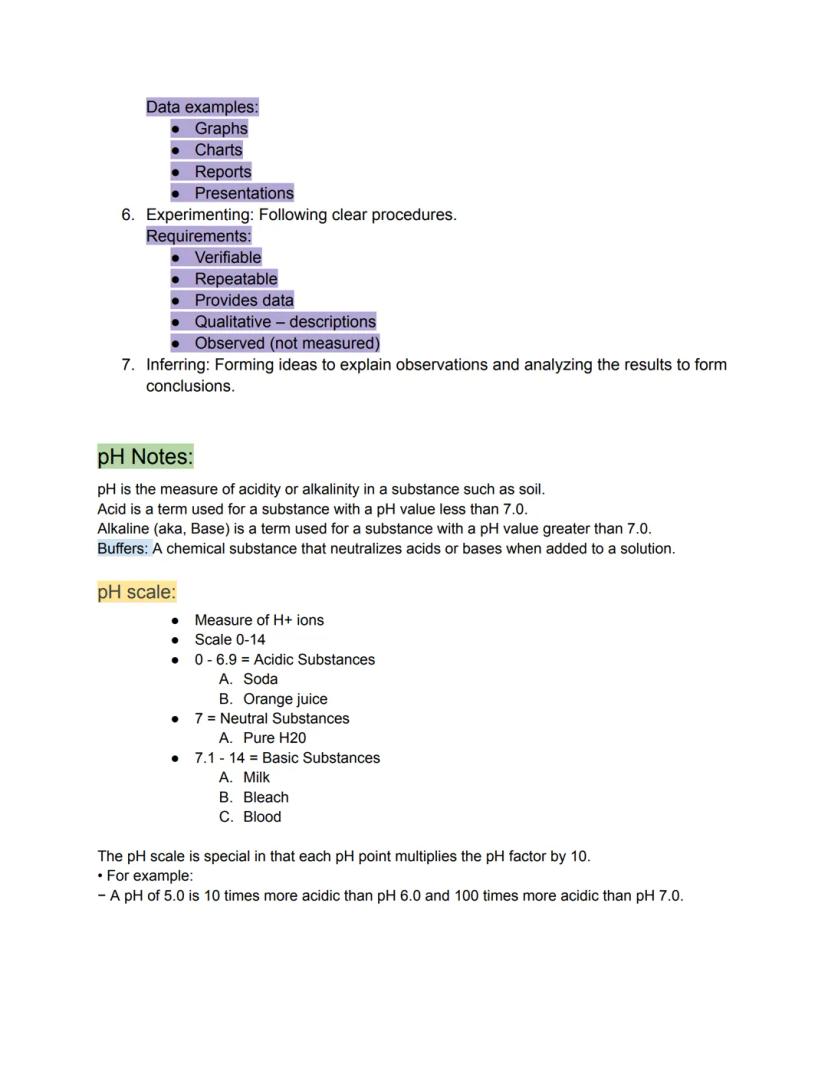
After collecting data, communicating your findings through graphs, charts, reports, or presentations is essential. Experimenting involves following clear procedures that are verifiable, repeatable, and provide data. Finally, inferring means forming ideas to explain your observations and drawing conclusions.
Science Skill Builder: When observing, try to use multiple senses—not just sight! The smell of soil, the texture of leaves, or the sound of insects can provide valuable scientific information.
These scientific processes aren't just for professional scientists—you'll use them in school labs, SAE projects, and even everyday agricultural activities. Mastering these skills will help you solve problems and make better decisions in any agricultural career you choose.
6
of 9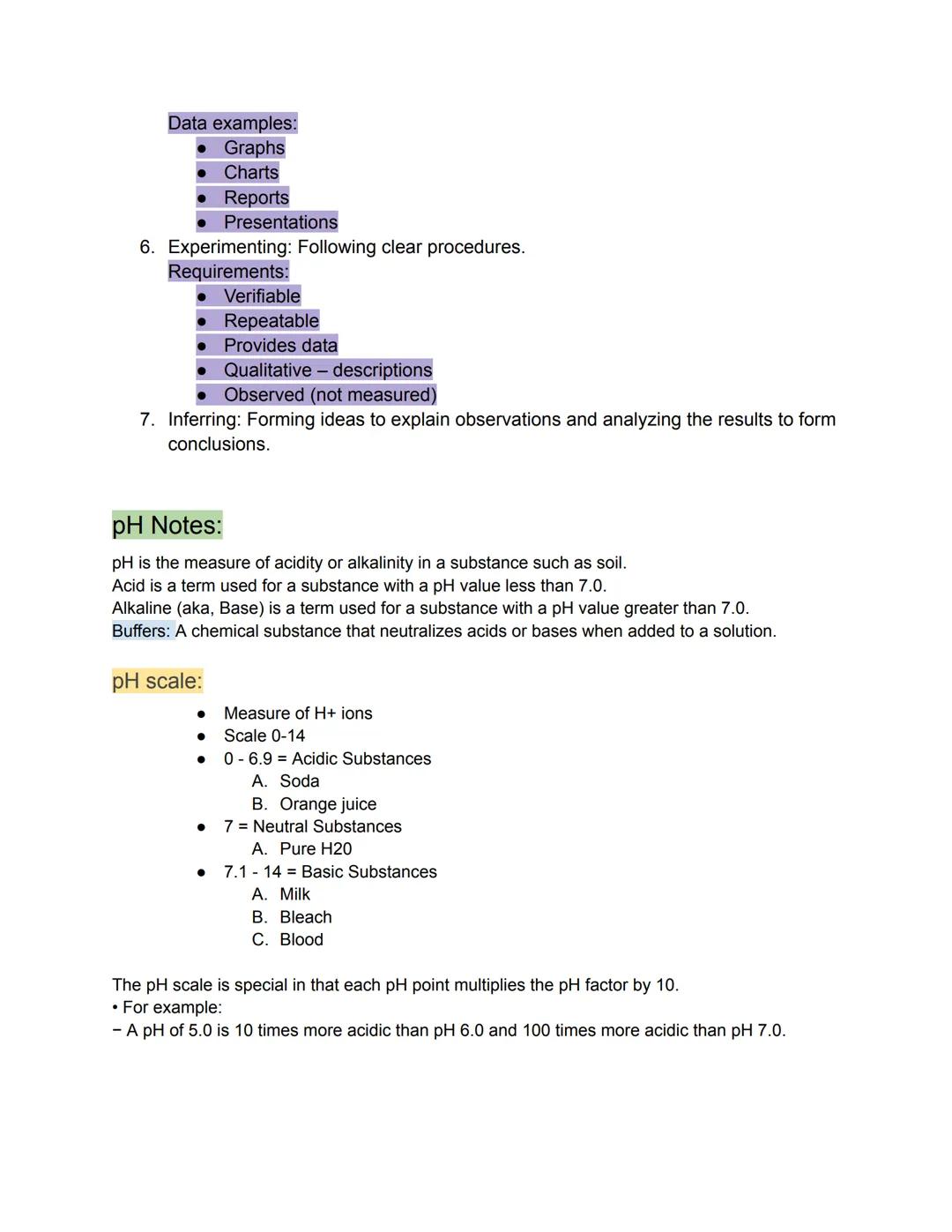
pH and Its Importance in Agriculture
Did you know that something as simple as pH can make or break a farm? pH measures how acidic or alkaline (basic) a substance is, and it's crucial in agriculture.
The pH scale runs from 0 to 14. Anything below 7.0 is acidic (like soda or orange juice), while anything above 7.0 is alkaline or basic (like milk or bleach). Pure water sits right at 7.0—perfectly neutral. What makes this scale special is that each point represents a 10-fold difference in acidity. That means pH 5 is 100 times more acidic than pH 7!
For plant producers, soil pH determines whether plants can access the nutrients they need. If the pH is wrong, plants might be surrounded by nutrients but still starve! Animal producers monitor pH for proper digestion in livestock, while agricultural scientists use pH in food preservation.
pH Power: If your garden plants are yellowish and struggling despite fertilizing, check your soil's pH! Even the best fertilizer won't help if the pH prevents plants from absorbing nutrients.
Buffers are special substances that can neutralize acids or bases when added to a solution. They're used in agriculture to adjust soil pH or stabilize certain products. Understanding pH and how to control it is a fundamental skill for success in many agricultural careers.
7
of 9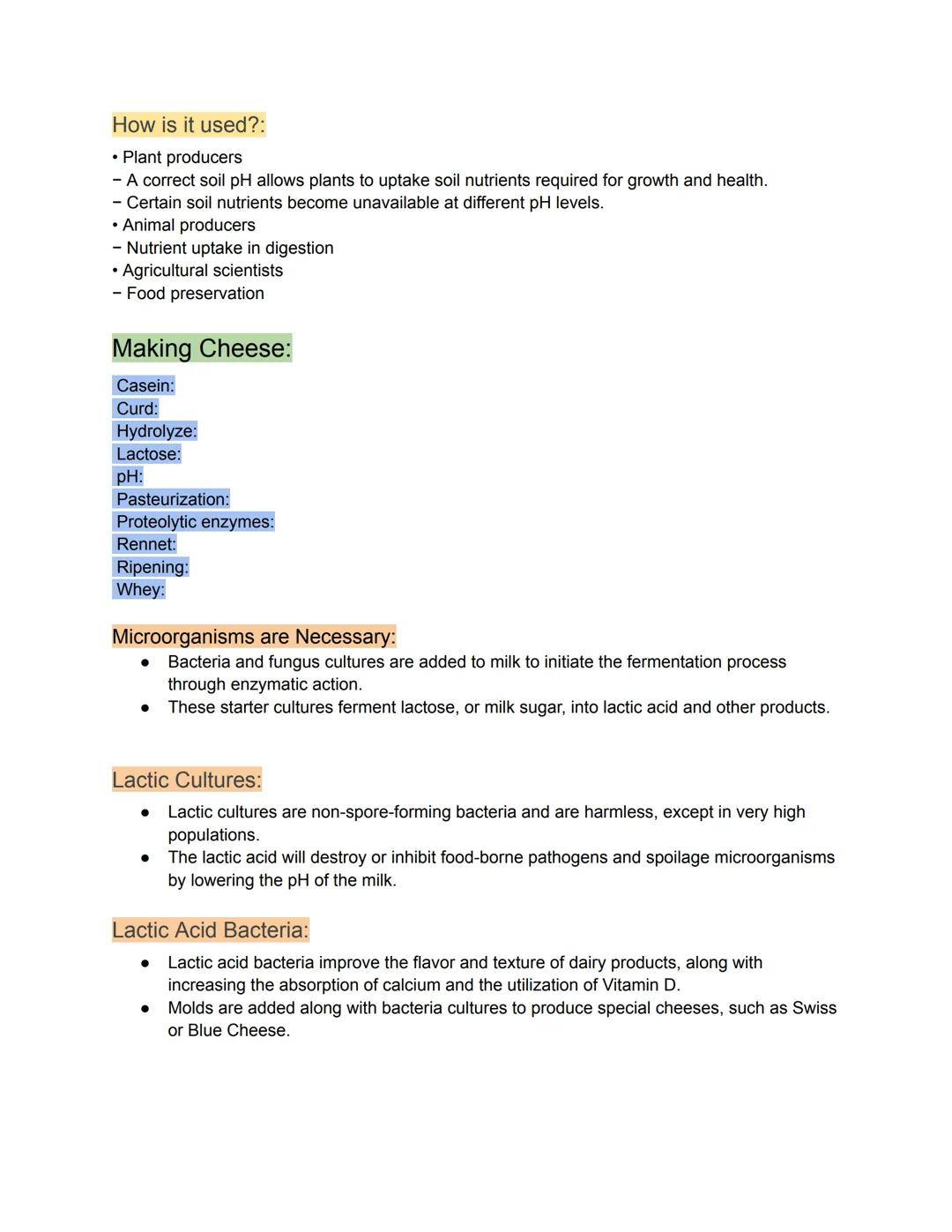
The Science of Cheese-Making
Cheese-making is agriculture and science in action! It transforms milk into countless delicious varieties through controlled biological processes.
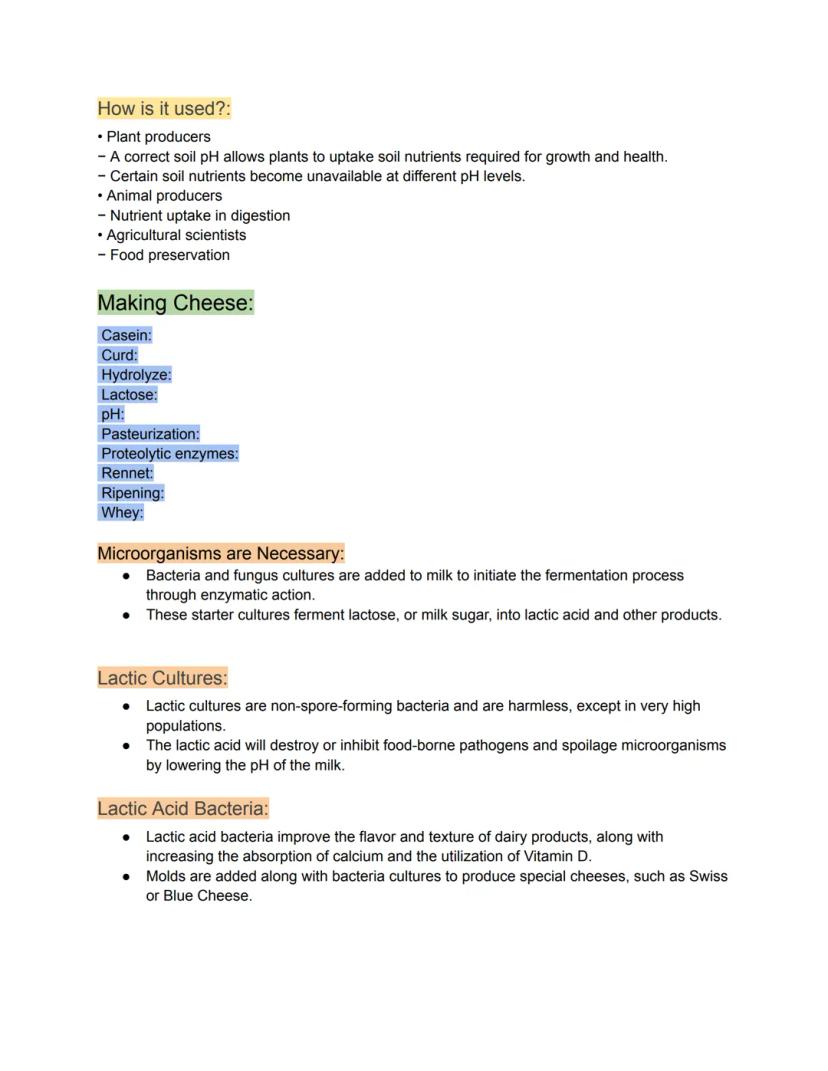
The process begins with microorganisms—specifically bacteria and fungus cultures that are added to milk. These starter cultures ferment lactose (milk sugar) into lactic acid through enzymatic action. Lactic cultures are non-harmful bacteria that produce acid, which lowers the pH of milk and helps destroy harmful pathogens.
Lactic acid bacteria do more than just preserve the milk—they improve flavor and texture while increasing calcium absorption and vitamin utilization. For specialty cheeses like Swiss or Blue Cheese, specific molds are added alongside bacteria to develop their distinctive characteristics.
Cheese Science: Next time you enjoy cheese, remember you're tasting the work of billions of microscopic organisms that transformed liquid milk into a solid, flavorful food!
The magic happens when milk begins to curdle or ferment. Milk contains about 3.5% protein, with approximately 80% being casein. This casein is formed into curds (the solid part) by acid buildup from bacteria, leaving behind whey (the liquid part). The separation of curds from whey is the fundamental step in all cheese-making.
8
of 9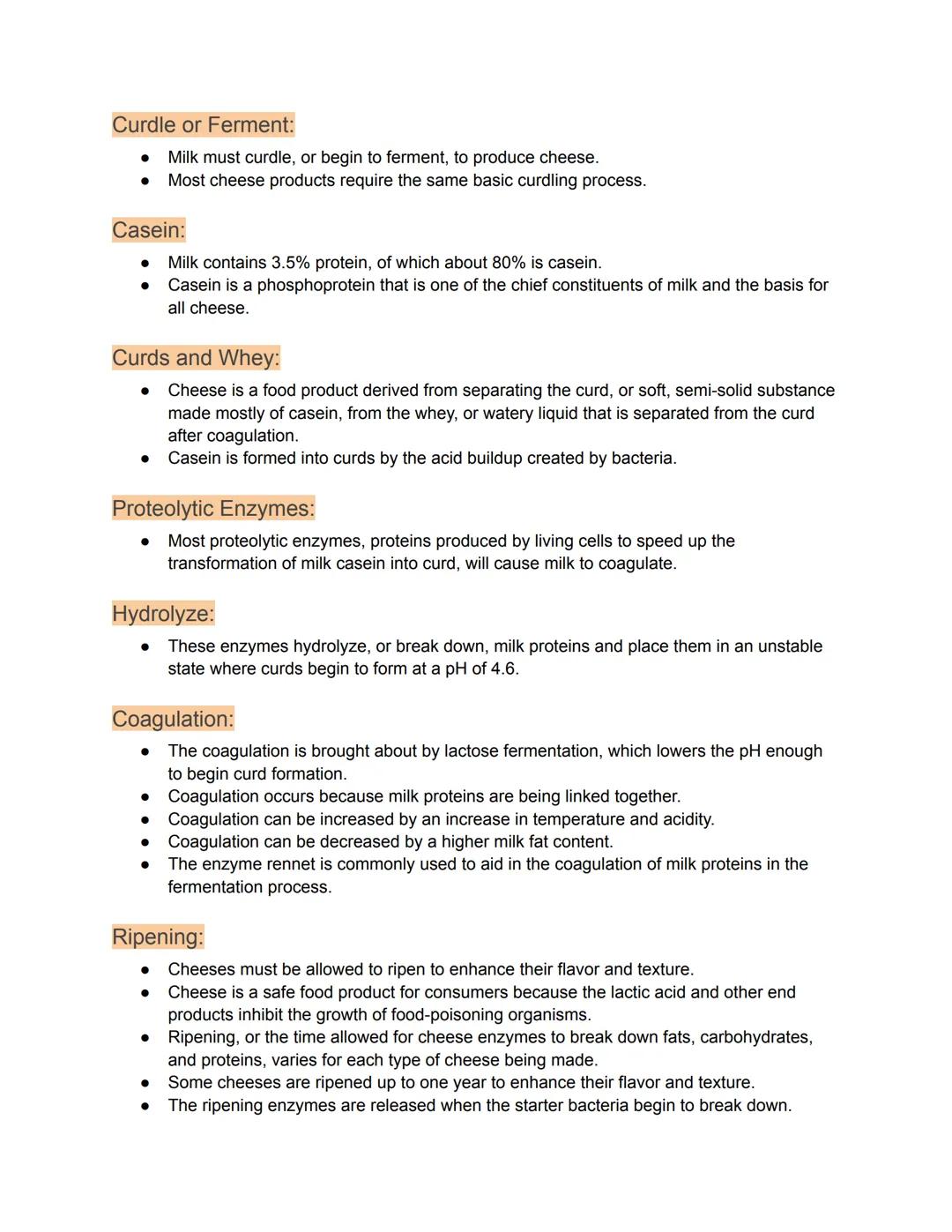
Cheese Production Process
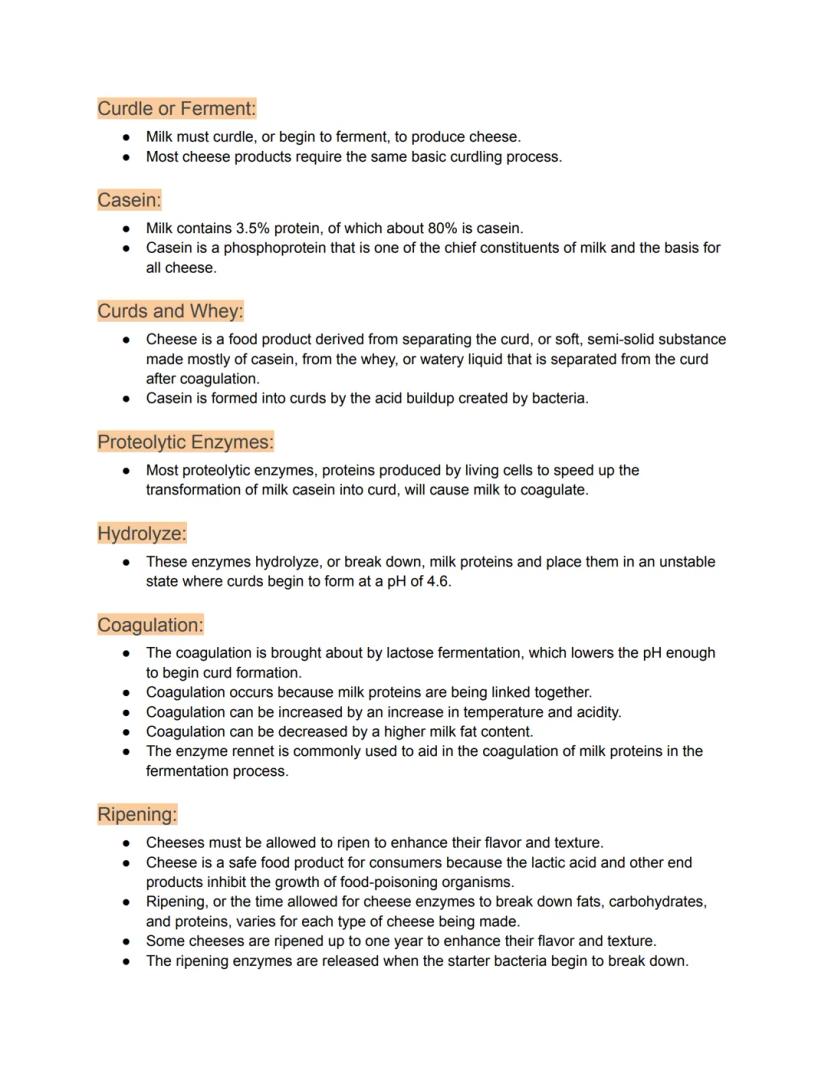
Turning milk into cheese requires careful control of biological and chemical reactions. The transformation begins with proteolytic enzymes—proteins that speed up the breakdown of milk casein into curds.
These enzymes hydrolyze (break down) milk proteins, making them unstable enough to begin forming curds at a pH of 4.6. This process, called coagulation, happens as milk proteins link together. Coagulation speeds up with higher temperatures and acidity but slows down with higher fat content. The enzyme rennet is commonly added to help this process along.
After coagulation, cheese must undergo ripening to develop its flavor and texture. During ripening, enzymes break down fats, carbohydrates, and proteins in the cheese. The ripening period varies dramatically—some cheeses ripen for up to a year! These ripening enzymes are released when the starter bacteria begin to break down.
Cheese Chemistry: The same basic ingredients (milk, cultures, enzymes) can create thousands of different cheeses. The differences come from variations in temperature, ripening conditions, and specific microorganisms used!
Safety is built into cheese-making. The lactic acid produced naturally inhibits harmful bacteria, and pasteurization (heating milk to kill microorganisms) further ensures safety. The type of cheese produced depends on specific steps in the process, environmental conditions during ripening, and the microorganisms added for fermentation.
9
of 9
Flowers and Plant Reproduction
Flowers are much more than just pretty decorations—they're the reproductive powerhouses of plants! These colorful structures have evolved specifically for one purpose: to ensure the next generation of plants can grow.
The importance of flowers goes far beyond their beauty. They're essential for plant reproduction, producing fruits and seeds that feed both humans and wildlife. Without flowering plants, our food supply would be drastically reduced—no apples, oranges, tomatoes, or countless other fruits and vegetables.
Agriculture depends heavily on flowering plants. Farmers and scientists work to understand flower development, pollination requirements, and how to optimize conditions for better yields. Even seemingly minor factors like day length, temperature, and nutrient levels can affect whether plants flower successfully.
Bloom Basics: Some plants flower once and die (annuals), some flower for multiple years (perennials), and some wait years before flowering once (like bamboo or century plants)!
Many agricultural techniques focus on controlling when and how plants flower. From greenhouse lighting systems that trick plants into flowering out of season to breeding programs that develop varieties with specific flowering traits, understanding flowers is crucial for modern agriculture.
We thought you’d never ask...
What is the Knowunity AI companion?
Our AI companion is specifically built for the needs of students. Based on the millions of content pieces we have on the platform we can provide truly meaningful and relevant answers to students. But its not only about answers, the companion is even more about guiding students through their daily learning challenges, with personalised study plans, quizzes or content pieces in the chat and 100% personalisation based on the students skills and developments.
Where can I download the Knowunity app?
You can download the app in the Google Play Store and in the Apple App Store.
Is Knowunity really free of charge?
That's right! Enjoy free access to study content, connect with fellow students, and get instant help – all at your fingertips.
Similar Content
Most popular content in Biology
9Most popular content
9Can't find what you're looking for? Explore other subjects.
Students love us — and so will you.
4.6/5App Store
4.7/5Google Play
The app is very easy to use and well designed. I have found everything I was looking for so far and have been able to learn a lot from the presentations! I will definitely use the app for a class assignment! And of course it also helps a lot as an inspiration.
Stefan SiOS user
This app is really great. There are so many study notes and help [...]. My problem subject is French, for example, and the app has so many options for help. Thanks to this app, I have improved my French. I would recommend it to anyone.
Samantha KlichAndroid user
Wow, I am really amazed. I just tried the app because I've seen it advertised many times and was absolutely stunned. This app is THE HELP you want for school and above all, it offers so many things, such as workouts and fact sheets, which have been VERY helpful to me personally.
AnnaiOS user
Biology243 views·Updated Jun 13, 2026·9 pagesGrade 9 Agriscience Notes
Lány Santiago@datlatinabi14
Welcome to your Agricultural Science guide! In this summary, we'll explore essential lab equipment, agricultural models, career opportunities, and scientific processes used in agriculture. Whether you're curious about FFA, cheese-making, or how pH affects farming, you'll find easy-to-understand explanations that... Show more
1
of 9Sign up to see the content. It's free!
- Access to all documents
- Improve your grades
- Join milions of students
Laboratory Equipment in Agricultural Science
Ever wondered what all those strange tools in the science lab are for? Lab equipment helps scientists conduct experiments safely and accurately. Let's explore the essentials!
Safety equipment includes aprons to protect your clothes from chemicals and safety glasses to shield your eyes from splashes. For handling materials, you'll use gloves to protect your skin and various tools to measure liquids like droppers, pipettes, and graduated cylinders.
Heating equipment includes alcohol burners (glass jars with wicks) for warming liquids. For containing substances, you'll use beakers (glass mugs with measurement markings), test tubes (skinny clear tubes for small amounts), and Petri dishes (shallow containers for growing bacteria).
Pro Tip: Always check your equipment before starting an experiment. Damaged glassware like cracked beakers or test tubes can be dangerous when heated!
Measuring tools are crucial in agricultural science. The electronic balance helps you accurately measure mass, while tools like the lab quest device collect and analyze data efficiently. For observing tiny specimens, the microscope lets you see what's invisible to the naked eye.
2
of 9Sign up to see the content. It's free!
- Access to all documents
- Improve your grades
- Join milions of students
Agricultural Models and Supervised Experiences
Agriculture isn't just farming—it's applying science and math to grow plants and raise animals! In agricultural education, you'll learn through both classroom instruction and hands-on projects.
Supervised Agricultural Experiences (SAE) are student-designed projects that let you explore agriculture in ways that interest you. Think of them as test-driving a career! You can choose from several types of SAEs including exploratory programs (learning about agricultural careers), research projects (conducting experiments), service learning (helping your community), entrepreneurship (starting your own ag business), or placement (working for an agricultural company).
Your SAE project gives you real-world experience that classroom learning alone can't provide. Whether you're breeding rabbits, researching plant diseases, or working at a local farm, you'll develop valuable skills that colleges and employers look for.
Remember: Choose an SAE that matches your interests—when you enjoy what you're doing, learning happens naturally!
The agricultural education model has three connected parts: classroom learning, SAE projects, and FFA participation. Each component strengthens the others, giving you a complete agricultural education experience.
3
of 9Sign up to see the content. It's free!
- Access to all documents
- Improve your grades
- Join milions of students
FFA and Agricultural Careers
The FFA (formerly Future Farmers of America) isn't just for students planning to be farmers! It's a national organization that helps develop leadership, personal growth, and career skills for anyone interested in agriculture and natural resources.
Through FFA, you can compete in Leadership Development Events (like public speaking competitions) and Career Development Events (like food science or livestock judging contests). These competitions help you build skills that will serve you in any career. FFA also offers recognition through proficiency awards, degrees, and scholarships.
Agriculture is a massive industry with incredible career opportunities! Did you know that agriculture employs 24 million Americans (17% of the workforce) across over 300 different careers? Only 2% of these jobs involve actual farming—the rest are in science, business, and technology.
Career Insight: The difference between a job and a career matters! A job is a specific task (like being a stable hand), while a career is your profession (like becoming an animal trainer). Throughout your career, you might have several different jobs.
Agricultural careers span diverse fields including agribusiness, animal systems, environmental services, food processing, plant systems, natural resources management, and agricultural technology. With the industry growing and evolving, there's likely a perfect fit for your interests and talents!
4
of 9Sign up to see the content. It's free!
- Access to all documents
- Improve your grades
- Join milions of students
The Agricultural Industry
Agriculture is much bigger than just farming! While production agriculture (raising plants and animals for food, fiber, and fuel) is what most people think of, it's only a small part of the industry—less than 2% of Americans work directly in farming.
The agricultural products we grow are called commodities, and they require many steps after harvest before reaching consumers. All the businesses, services, and processes involved in getting agricultural products from the farm to your table are part of agribusiness—where over 45% of all Americans work!
Agriculture has many facets beyond farming. These include agricultural education, law and policy, animal science, aquaculture, biotechnology, communications, food science, forestry, marketing, natural resources management, plant science, and soil science. Each area offers unique career opportunities.
Fun Fact: One American farmer produces enough food and fiber for 155 people! This incredible productivity is possible because of advances in agricultural science and technology.
The production side of agriculture includes services (mechanics, irrigation managers, loan officers), supplies (fertilizers, chemicals, machinery), and research (geneticists, scientists). Post-harvest activities include processing (packaging, canning, freezing), marketing, research (food scientists, chemists), and transportation of products around the world.
5
of 9Sign up to see the content. It's free!
- Access to all documents
- Improve your grades
- Join milions of students
The Scientific Process in Agriculture
Science is at the heart of modern agriculture! To become a good agricultural scientist, you need to master seven basic scientific processes.
First is observing—using your five senses to gather information about objects and phenomena. Next comes predicting, where you form a hypothesis about what might happen. Classifying helps you organize objects by their characteristics, while measuring lets you compare unknown quantities to standard references.
After collecting data, communicating your findings through graphs, charts, reports, or presentations is essential. Experimenting involves following clear procedures that are verifiable, repeatable, and provide data. Finally, inferring means forming ideas to explain your observations and drawing conclusions.
Science Skill Builder: When observing, try to use multiple senses—not just sight! The smell of soil, the texture of leaves, or the sound of insects can provide valuable scientific information.
These scientific processes aren't just for professional scientists—you'll use them in school labs, SAE projects, and even everyday agricultural activities. Mastering these skills will help you solve problems and make better decisions in any agricultural career you choose.
6
of 9Sign up to see the content. It's free!
- Access to all documents
- Improve your grades
- Join milions of students
pH and Its Importance in Agriculture
Did you know that something as simple as pH can make or break a farm? pH measures how acidic or alkaline (basic) a substance is, and it's crucial in agriculture.
The pH scale runs from 0 to 14. Anything below 7.0 is acidic (like soda or orange juice), while anything above 7.0 is alkaline or basic (like milk or bleach). Pure water sits right at 7.0—perfectly neutral. What makes this scale special is that each point represents a 10-fold difference in acidity. That means pH 5 is 100 times more acidic than pH 7!
For plant producers, soil pH determines whether plants can access the nutrients they need. If the pH is wrong, plants might be surrounded by nutrients but still starve! Animal producers monitor pH for proper digestion in livestock, while agricultural scientists use pH in food preservation.
pH Power: If your garden plants are yellowish and struggling despite fertilizing, check your soil's pH! Even the best fertilizer won't help if the pH prevents plants from absorbing nutrients.
Buffers are special substances that can neutralize acids or bases when added to a solution. They're used in agriculture to adjust soil pH or stabilize certain products. Understanding pH and how to control it is a fundamental skill for success in many agricultural careers.
7
of 9Sign up to see the content. It's free!
- Access to all documents
- Improve your grades
- Join milions of students
The Science of Cheese-Making
Cheese-making is agriculture and science in action! It transforms milk into countless delicious varieties through controlled biological processes.
The process begins with microorganisms—specifically bacteria and fungus cultures that are added to milk. These starter cultures ferment lactose (milk sugar) into lactic acid through enzymatic action. Lactic cultures are non-harmful bacteria that produce acid, which lowers the pH of milk and helps destroy harmful pathogens.
Lactic acid bacteria do more than just preserve the milk—they improve flavor and texture while increasing calcium absorption and vitamin utilization. For specialty cheeses like Swiss or Blue Cheese, specific molds are added alongside bacteria to develop their distinctive characteristics.
Cheese Science: Next time you enjoy cheese, remember you're tasting the work of billions of microscopic organisms that transformed liquid milk into a solid, flavorful food!
The magic happens when milk begins to curdle or ferment. Milk contains about 3.5% protein, with approximately 80% being casein. This casein is formed into curds (the solid part) by acid buildup from bacteria, leaving behind whey (the liquid part). The separation of curds from whey is the fundamental step in all cheese-making.
8
of 9Sign up to see the content. It's free!
- Access to all documents
- Improve your grades
- Join milions of students
Cheese Production Process
Turning milk into cheese requires careful control of biological and chemical reactions. The transformation begins with proteolytic enzymes—proteins that speed up the breakdown of milk casein into curds.
These enzymes hydrolyze (break down) milk proteins, making them unstable enough to begin forming curds at a pH of 4.6. This process, called coagulation, happens as milk proteins link together. Coagulation speeds up with higher temperatures and acidity but slows down with higher fat content. The enzyme rennet is commonly added to help this process along.
After coagulation, cheese must undergo ripening to develop its flavor and texture. During ripening, enzymes break down fats, carbohydrates, and proteins in the cheese. The ripening period varies dramatically—some cheeses ripen for up to a year! These ripening enzymes are released when the starter bacteria begin to break down.
Cheese Chemistry: The same basic ingredients (milk, cultures, enzymes) can create thousands of different cheeses. The differences come from variations in temperature, ripening conditions, and specific microorganisms used!
Safety is built into cheese-making. The lactic acid produced naturally inhibits harmful bacteria, and pasteurization (heating milk to kill microorganisms) further ensures safety. The type of cheese produced depends on specific steps in the process, environmental conditions during ripening, and the microorganisms added for fermentation.
9
of 9Sign up to see the content. It's free!
- Access to all documents
- Improve your grades
- Join milions of students
Flowers and Plant Reproduction
Flowers are much more than just pretty decorations—they're the reproductive powerhouses of plants! These colorful structures have evolved specifically for one purpose: to ensure the next generation of plants can grow.
The importance of flowers goes far beyond their beauty. They're essential for plant reproduction, producing fruits and seeds that feed both humans and wildlife. Without flowering plants, our food supply would be drastically reduced—no apples, oranges, tomatoes, or countless other fruits and vegetables.
Agriculture depends heavily on flowering plants. Farmers and scientists work to understand flower development, pollination requirements, and how to optimize conditions for better yields. Even seemingly minor factors like day length, temperature, and nutrient levels can affect whether plants flower successfully.
Bloom Basics: Some plants flower once and die (annuals), some flower for multiple years (perennials), and some wait years before flowering once (like bamboo or century plants)!
Many agricultural techniques focus on controlling when and how plants flower. From greenhouse lighting systems that trick plants into flowering out of season to breeding programs that develop varieties with specific flowering traits, understanding flowers is crucial for modern agriculture.
We thought you’d never ask...
What is the Knowunity AI companion?
Our AI companion is specifically built for the needs of students. Based on the millions of content pieces we have on the platform we can provide truly meaningful and relevant answers to students. But its not only about answers, the companion is even more about guiding students through their daily learning challenges, with personalised study plans, quizzes or content pieces in the chat and 100% personalisation based on the students skills and developments.
Where can I download the Knowunity app?
You can download the app in the Google Play Store and in the Apple App Store.
Is Knowunity really free of charge?
That's right! Enjoy free access to study content, connect with fellow students, and get instant help – all at your fingertips.
Similar Content
Most popular content in Biology
9Most popular content
9Can't find what you're looking for? Explore other subjects.
Students love us — and so will you.
4.6/5App Store
4.7/5Google Play
The app is very easy to use and well designed. I have found everything I was looking for so far and have been able to learn a lot from the presentations! I will definitely use the app for a class assignment! And of course it also helps a lot as an inspiration.
Stefan SiOS user
This app is really great. There are so many study notes and help [...]. My problem subject is French, for example, and the app has so many options for help. Thanks to this app, I have improved my French. I would recommend it to anyone.
Samantha KlichAndroid user
Wow, I am really amazed. I just tried the app because I've seen it advertised many times and was absolutely stunned. This app is THE HELP you want for school and above all, it offers so many things, such as workouts and fact sheets, which have been VERY helpful to me personally.
AnnaiOS user