Animal Cells and Plant Cells
Think of cells like tiny factories with different departments doing specific jobs. These departments are called subcellular structures, and each one has a crucial role in keeping the cell alive and functioning.
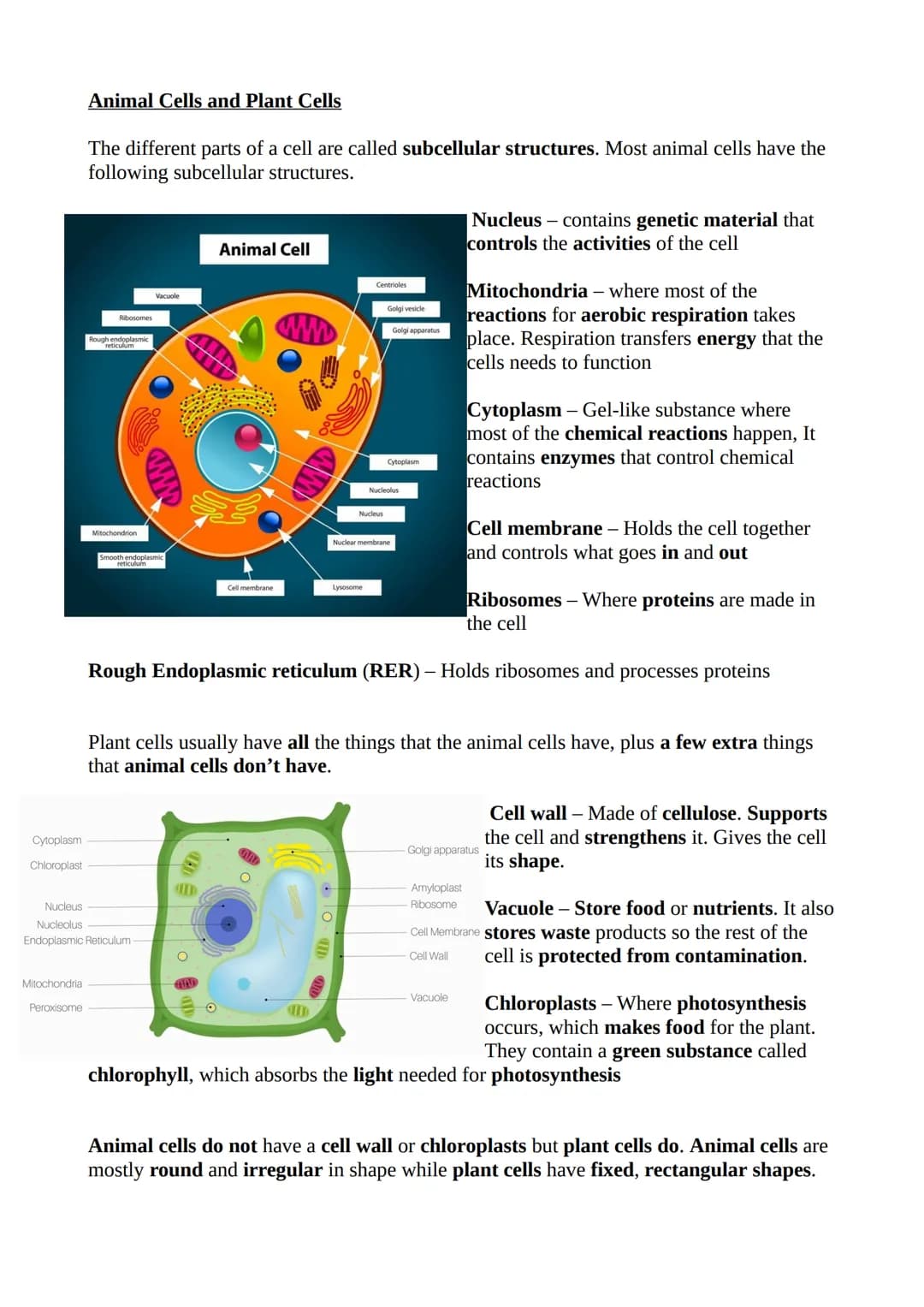
Animal cells contain several essential parts that work together. The nucleus acts like the cell's control centre, containing all the genetic material that tells the cell what to do. Mitochondria are the powerhouses where aerobic respiration happens - this process transfers the energy cells need to survive.
The cytoplasm is a gel-like substance filling the cell where most chemical reactions take place, controlled by special proteins called enzymes. The cell membrane works like a security guard, holding everything together whilst deciding what can enter or leave the cell. Finally, ribosomes are tiny protein factories, often found attached to the rough endoplasmic reticulum (RER), which helps process these proteins.
Plant cells have all the same structures as animal cells, but they've got some extra features. The cell wall made of cellulose provides extra support and gives plant cells their rigid, rectangular shape. Chloroplasts contain chlorophyll (the green stuff) and carry out photosynthesis to make food from sunlight. The large vacuole stores nutrients and waste products, keeping the cell clean and healthy.
Quick Tip: Remember that animal cells are typically round and flexible, whilst plant cells are rectangular and rigid due to their cell walls!


 Sociology