The Five Kingdoms of Life
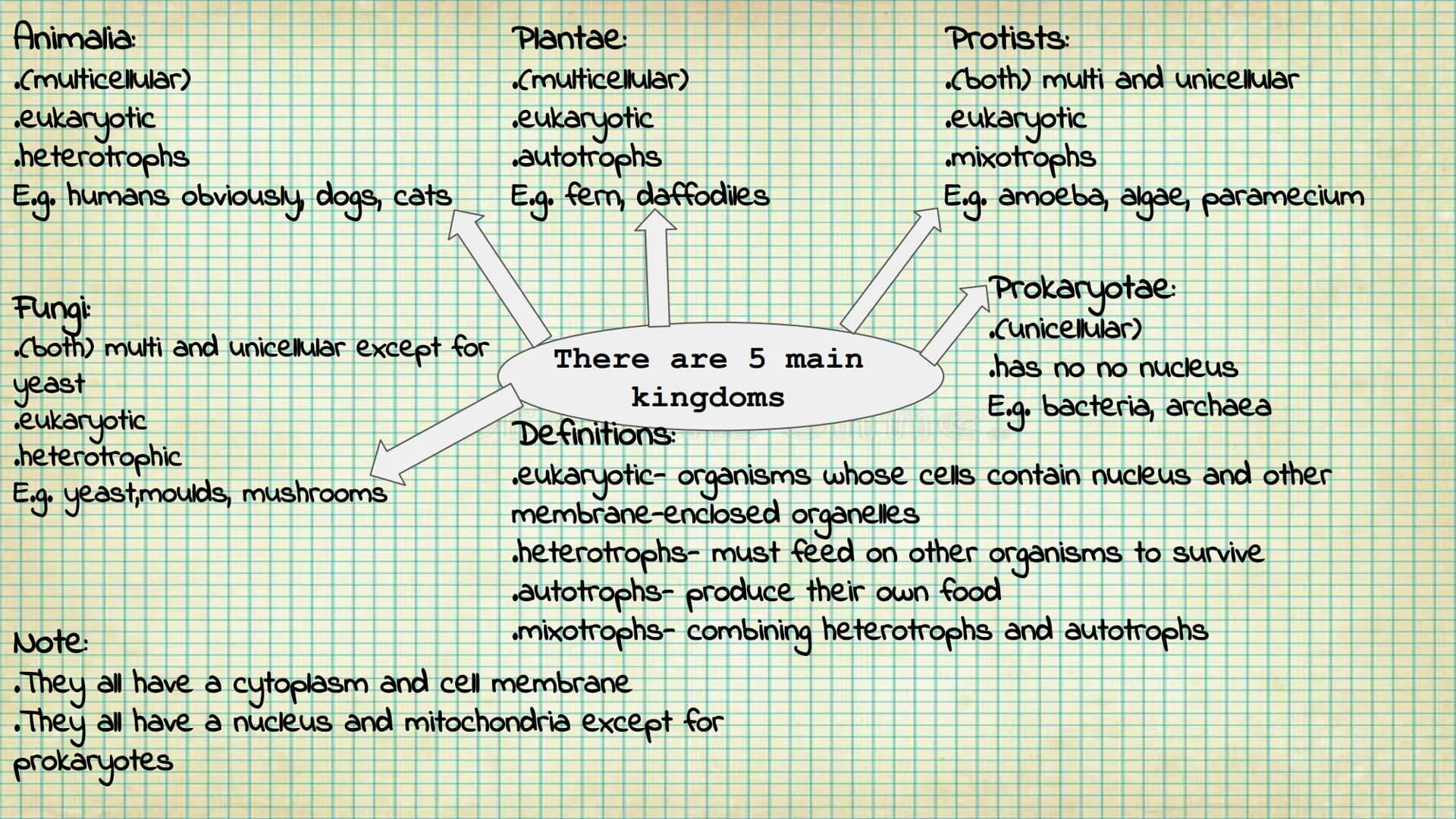
Scientists organise all life on Earth into five main kingdoms based on how organisms are built and how they get their food. Think of it like sorting everything alive into five massive categories - from tiny bacteria to massive elephants!
The key differences between kingdoms come down to a few important features. Eukaryotic organisms have cells with a proper nucleus (like a control centre), whilst prokaryotic organisms don't have this organised structure. How organisms feed themselves also matters - autotrophs make their own food like plants do, heterotrophs must eat other things to survive, and mixotrophs can do both depending on what's available.
Animalia includes all the creatures you'd expect - humans, dogs, cats, and millions of other species. These are all multicellular, eukaryotic heterotrophs that need to consume other organisms to stay alive. Plantae covers everything from tiny ferns to massive oak trees - they're multicellular, eukaryotic autotrophs that create their own food through photosynthesis.
Fungi might surprise you - this kingdom includes both unicellular yeasts and multicellular mushrooms and moulds. They're eukaryotic heterotrophs that break down dead material. Protists are the mixed bag - some are unicellular like amoeba, others are multicellular like certain algae, and they can be mixotrophs. Finally, Prokaryotae includes bacteria and archaea - simple, unicellular organisms without a nucleus.
Quick tip: Remember that all living things share some basics - they all have cytoplasm and cell membranes, and all except prokaryotes have a nucleus and mitochondria!


 Sociology