
Homeostasis is your body's way of keeping everything balanced and... Show more
 Health & Medicine
 Algebra
Sign up to see the contentIt's free!
Access to all documents
Improve your grades
Join milions of students
Knowunity AI
Subjects
Triangle Congruence and Similarity Theorems
Triangle Properties and Classification
Linear Equations and Graphs
Geometric Angle Relationships
Trigonometric Functions and Identities
Equation Solving Techniques
Circle Geometry Fundamentals
Division Operations and Methods
Basic Differentiation Rules
Exponent and Logarithm Properties
Show all topics
Human Organ Systems
Reproductive Cell Cycles
Biological Sciences Subdisciplines
Cellular Energy Metabolism
Autotrophic Energy Processes
Inheritance Patterns and Principles
Biomolecular Structure and Organization
Cell Cycle and Division Mechanics
Cellular Organization and Development
Biological Structural Organization
Show all topics
Chemical Sciences and Applications
Atomic Structure and Composition
Molecular Electron Structure Representation
Atomic Electron Behavior
Matter Properties and Water
Mole Concept and Calculations
Gas Laws and Behavior
Periodic Table Organization
Chemical Thermodynamics Fundamentals
Chemical Bond Types and Properties
Show all topics
European Renaissance and Enlightenment
European Cultural Movements 800-1920
American Revolution Era 1763-1797
American Civil War 1861-1865
Global Imperial Systems
Mongol and Chinese Dynasties
U.S. Presidents and World Leaders
Historical Sources and Documentation
World Wars Era and Impact
World Religious Systems
Show all topics
Classic and Contemporary Novels
Literary Character Analysis
Rhetorical Theory and Practice
Classic Literary Narratives
Reading Analysis and Interpretation
Narrative Structure and Techniques
English Language Components
Influential English-Language Authors
Basic Sentence Structure
Narrative Voice and Perspective
Show all topics
110
•
Updated Mar 3, 2026
•
Ahmed Nour ✓™
@ahmednour
Homeostasis is your body's way of keeping everything balanced and... Show more
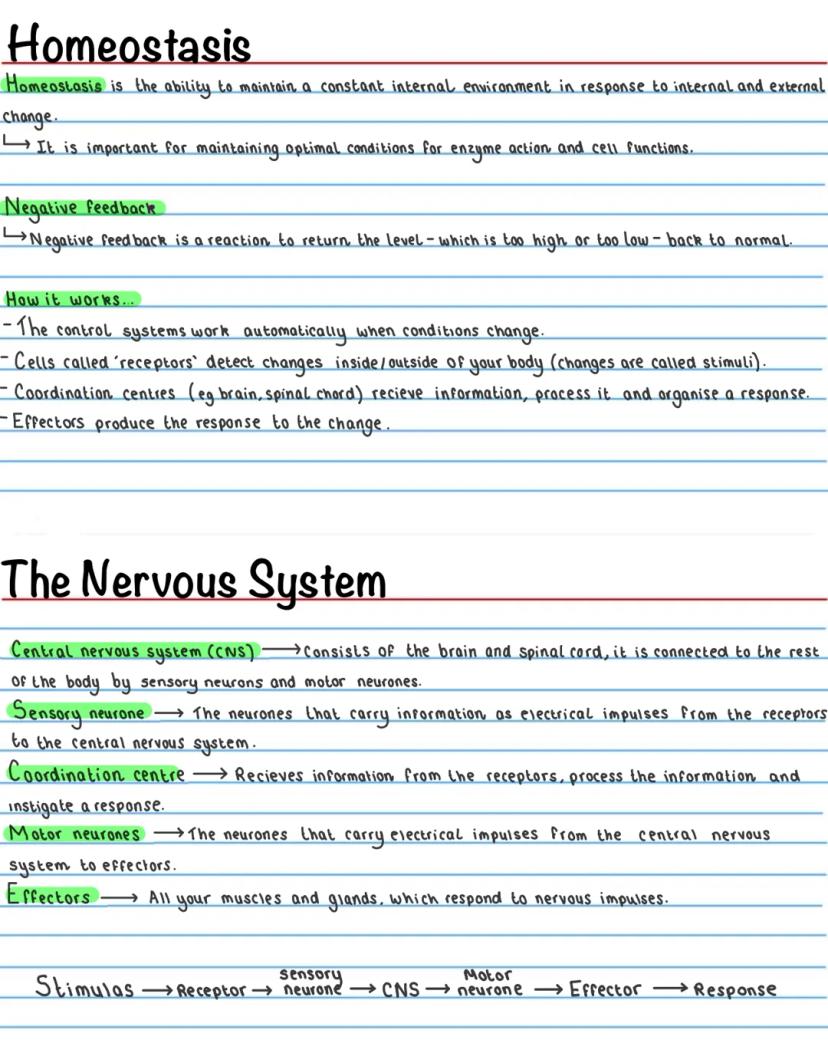
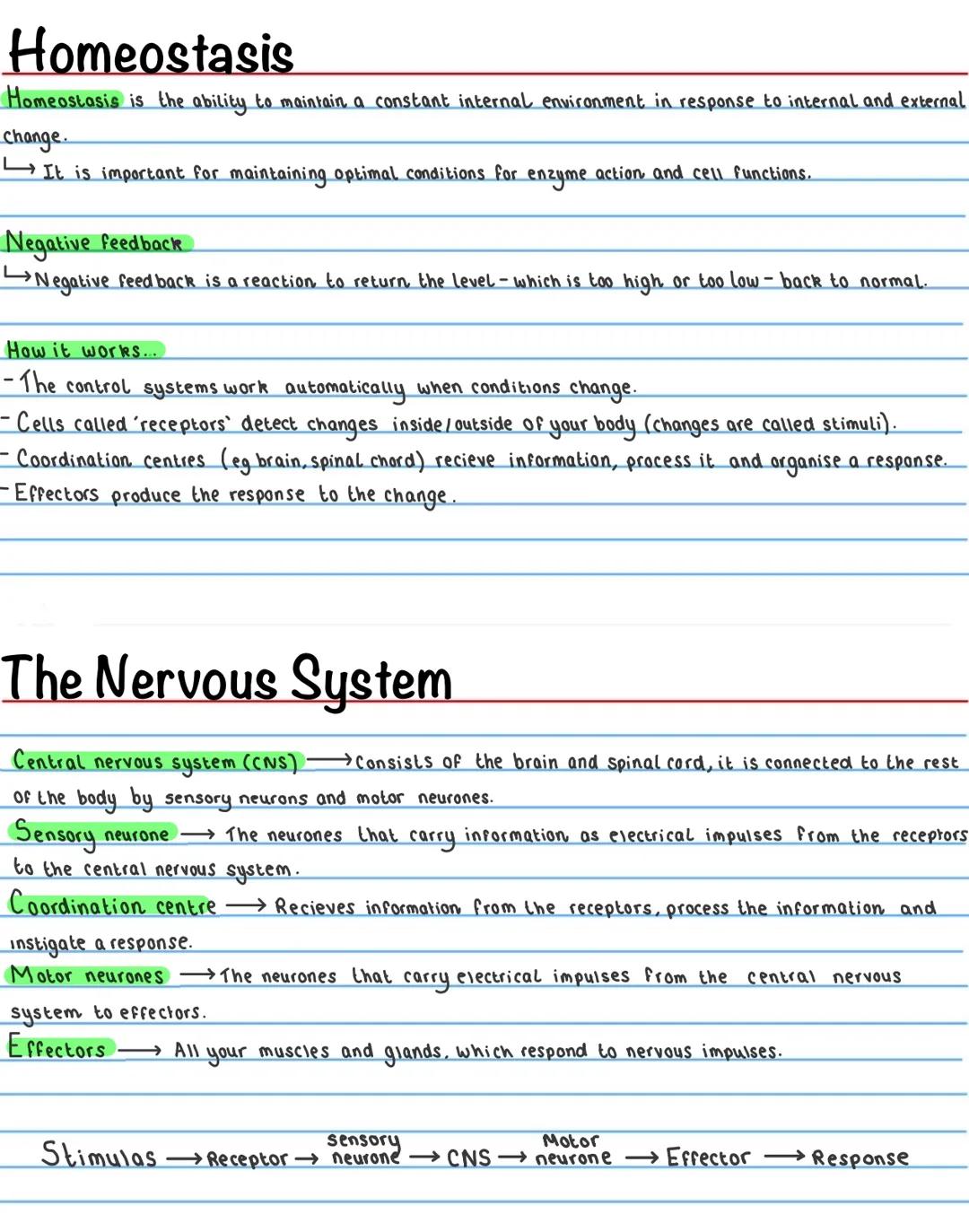
Homeostasis is your body's ability to maintain a constant internal environment despite changes happening inside or outside your body. This balance is crucial for enzymes to work properly and for your cells to function.
When something gets out of balance, negative feedback kicks in to bring levels back to normal. Think of it like your body's automatic correction system!
Your body's control systems work automatically through a series of steps: receptors detect changes (stimuli), coordination centers (like your brain) receive this information, and effectors (muscles and glands) produce responses to fix the imbalance.
💡 The next time you pull your hand away from something hot without thinking, that's your nervous system's homeostasis at work - protecting you automatically!
Your central nervous system (CNS) includes your brain and spinal cord. Sensory neurons carry information from receptors to your CNS, which then sends signals through motor neurons to your muscles and glands (effectors) to create a response.
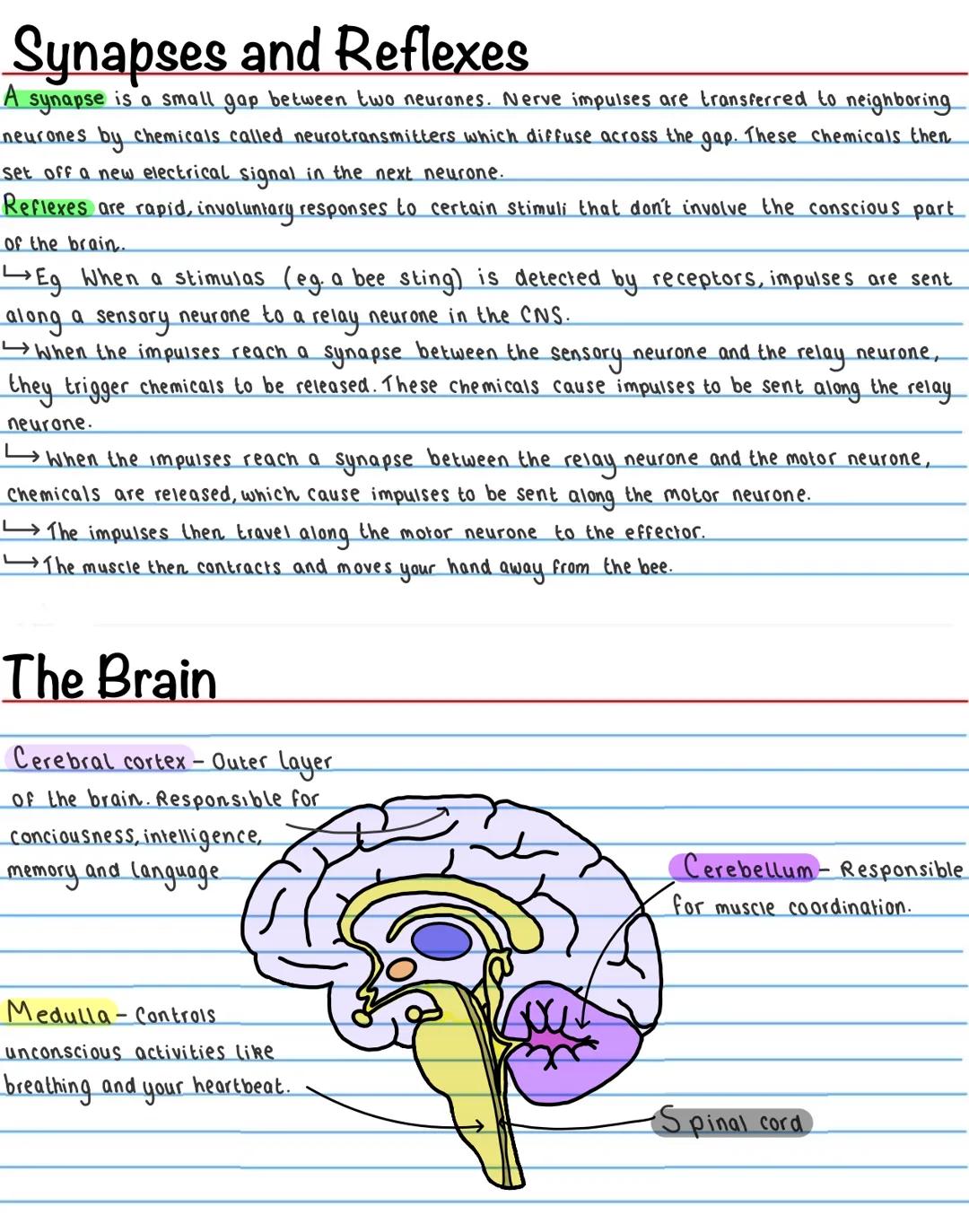
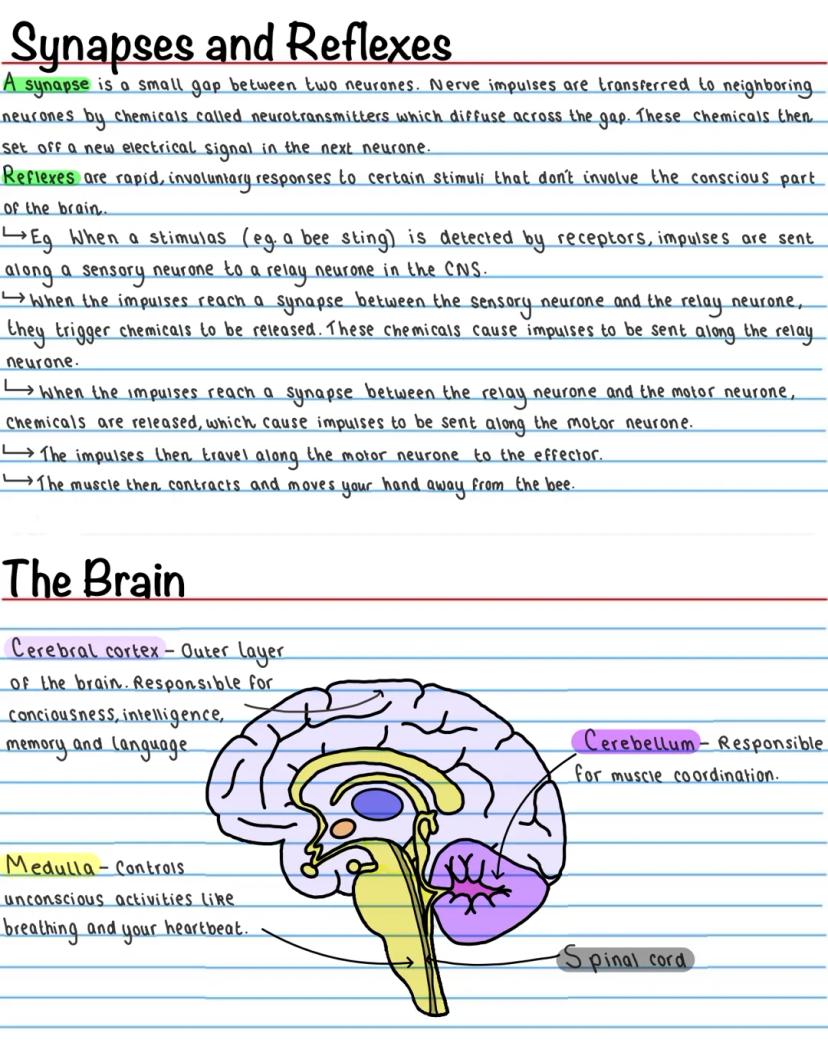
Synapses are tiny gaps between neurons where information jumps from one nerve cell to another. When a nerve impulse reaches a synapse, neurotransmitters (chemical messengers) are released and cross this gap to trigger a new electrical signal in the next neuron.
Reflexes are super-fast, automatic responses that don't require conscious thought. They're your body's way of protecting you before your brain has time to think!
When you touch something painful (like a bee sting), this triggers a reflex arc: receptors in your skin detect the pain and send impulses along sensory neurons to your spinal cord. There, the signal transfers to a relay neuron, then to a motor neuron which tells your muscles to contract and pull away—all in a fraction of a second!
🧠 Your brain has three main parts with different jobs: the cerebral cortex handles conscious thinking, memory and language; the cerebellum coordinates your movements; and the medulla controls automatic functions like breathing and heartbeat.
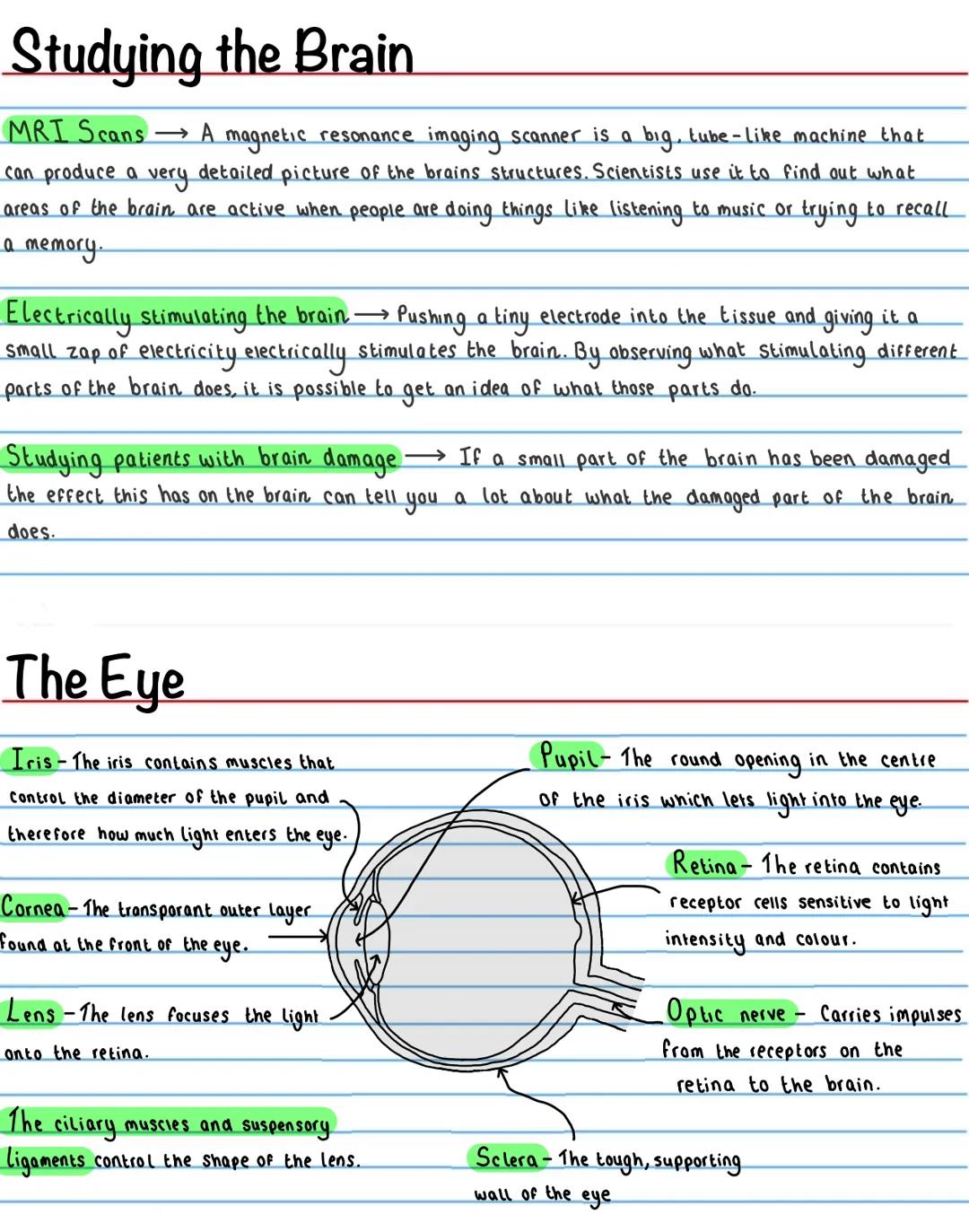
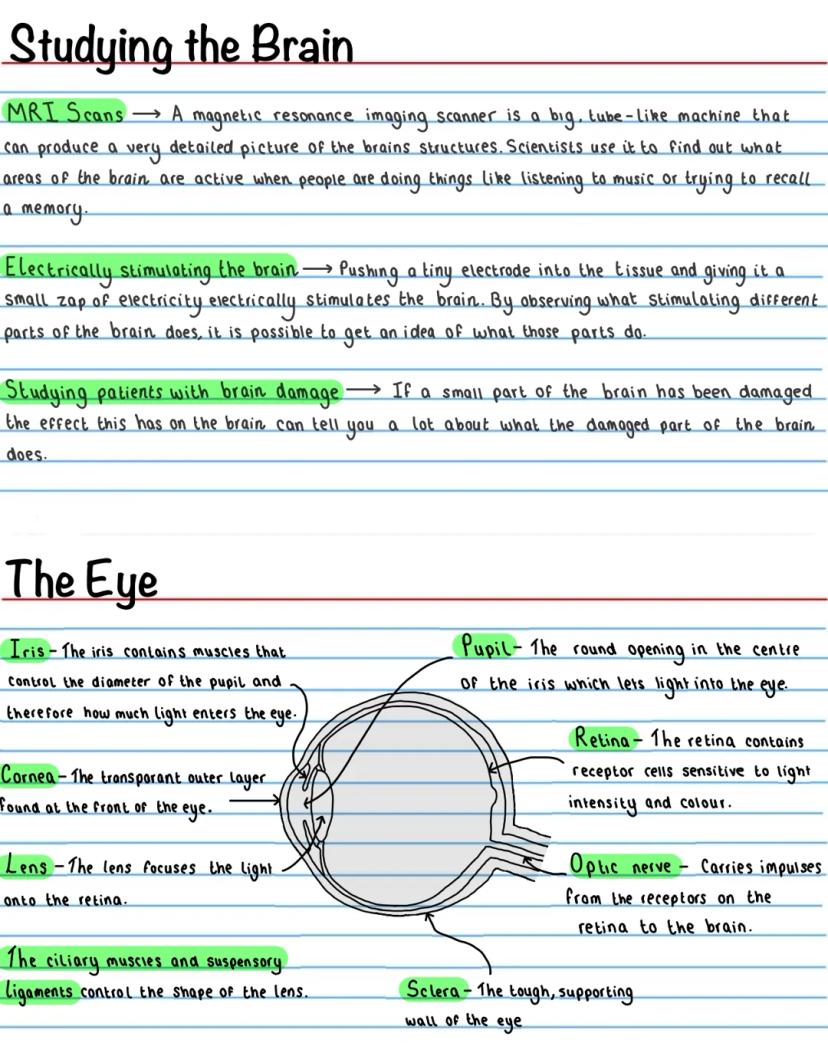
Scientists use several techniques to understand the brain's complex functions. MRI scans produce detailed images showing which areas are active during different activities. Electrical stimulation involves giving tiny zaps to different brain regions to see what happens. Studying patients with brain damage helps identify what specific brain areas do.
Your eye is an amazing sensory organ with many specialized parts. The cornea and lens focus light onto the retina, which contains light-sensitive receptor cells. The iris controls how much light enters through the pupil, adjusting to different lighting conditions.
When light hits the retina's receptors, they send signals through the optic nerve to your brain, which interprets what you're seeing. The tough sclera forms the white part of your eye and provides protection and support.
👁️ Your eye is like a living camera, but way more advanced—it can adjust to different lighting conditions and distances almost instantly!
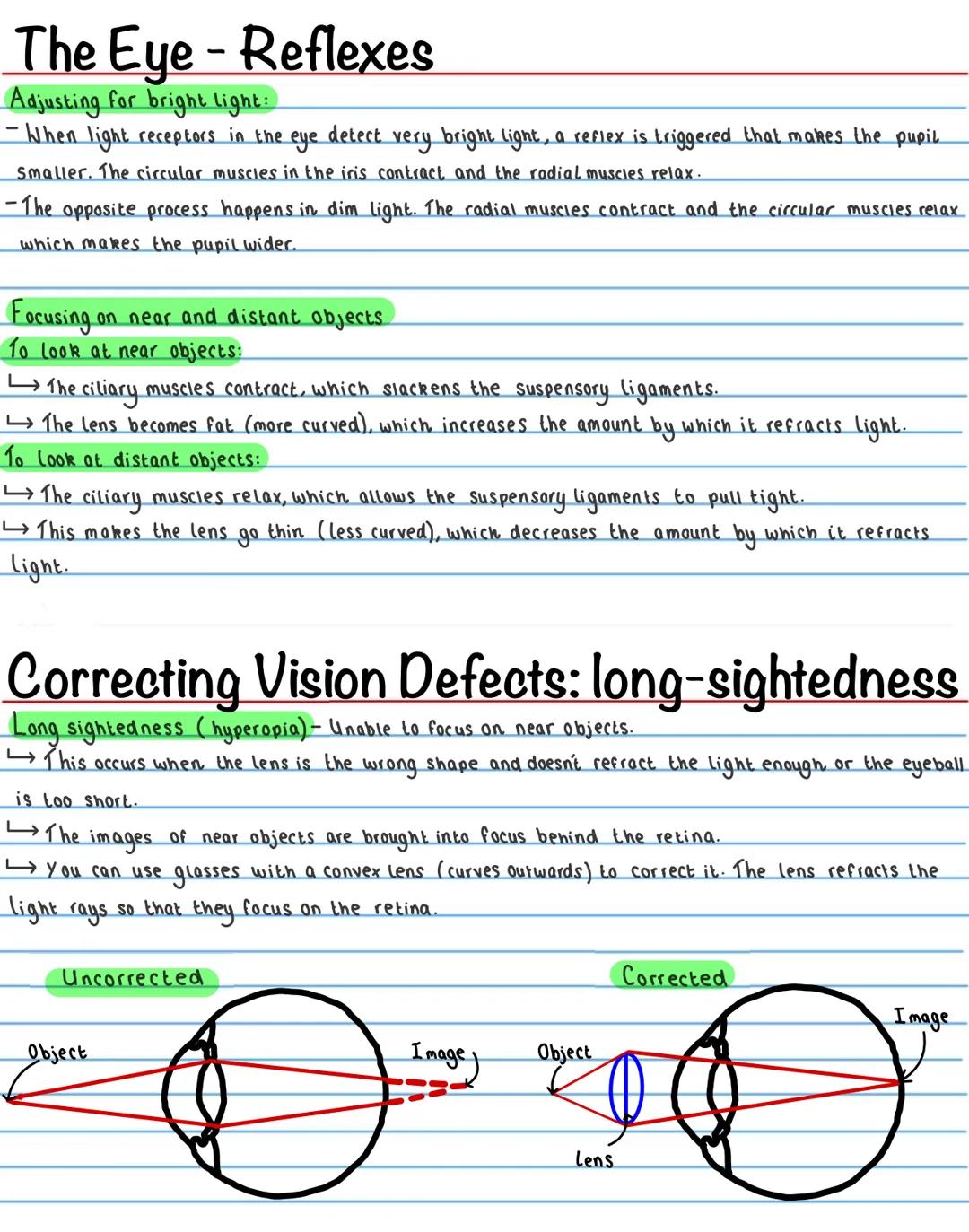
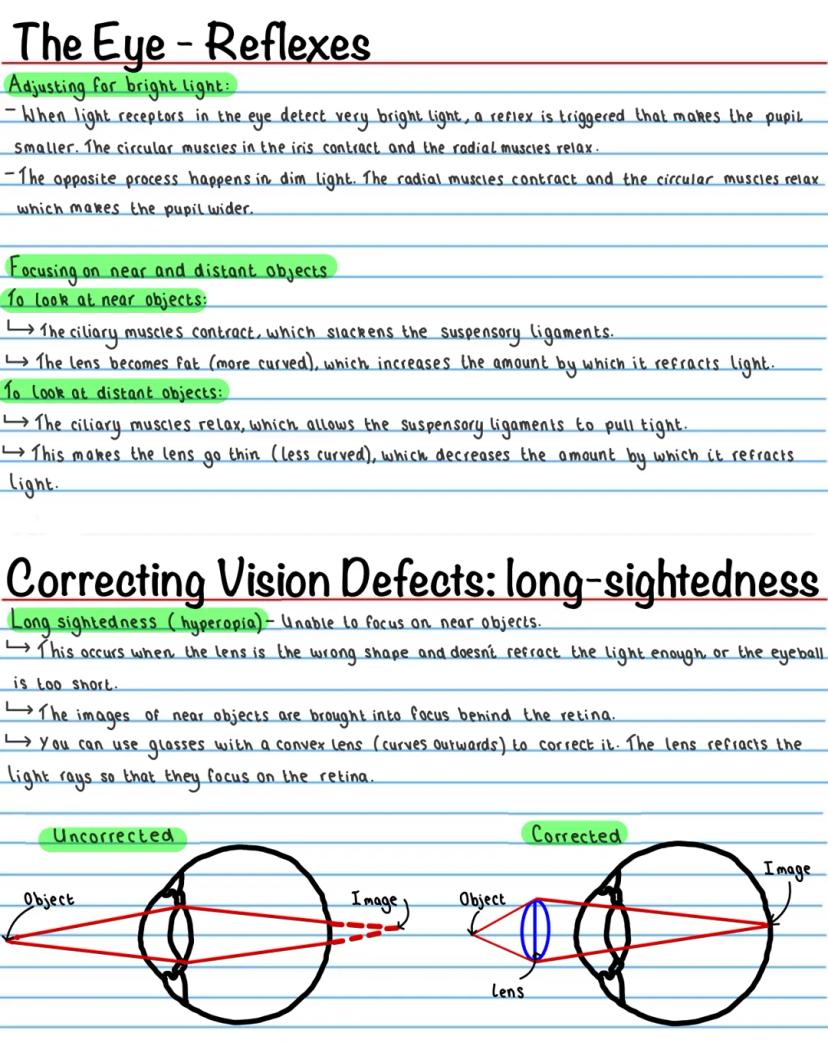
Your eyes automatically adjust to different conditions. In bright light, the circular muscles in your iris contract to make your pupil smaller, while in dim light, radial muscles contract to widen your pupil. This reflex helps protect your retina and ensures you get just the right amount of light.
To focus on objects at different distances, your ciliary muscles adjust the shape of your lens. For nearby objects, these muscles contract to make your lens fatter and more curved. For distant objects, they relax, allowing your lens to become thinner and less curved.
Long-sightedness (hyperopia) happens when you can see distant objects clearly but struggle with near ones. This occurs when your eyeball is too short or your lens doesn't refract light enough. The image forms behind your retina instead of on it. Convex lenses (curved outward) in glasses help correct this by bending light rays more.
👓 Vision problems are super common—nearly 75% of Americans use some form of vision correction. Fortunately, there are several effective solutions available!
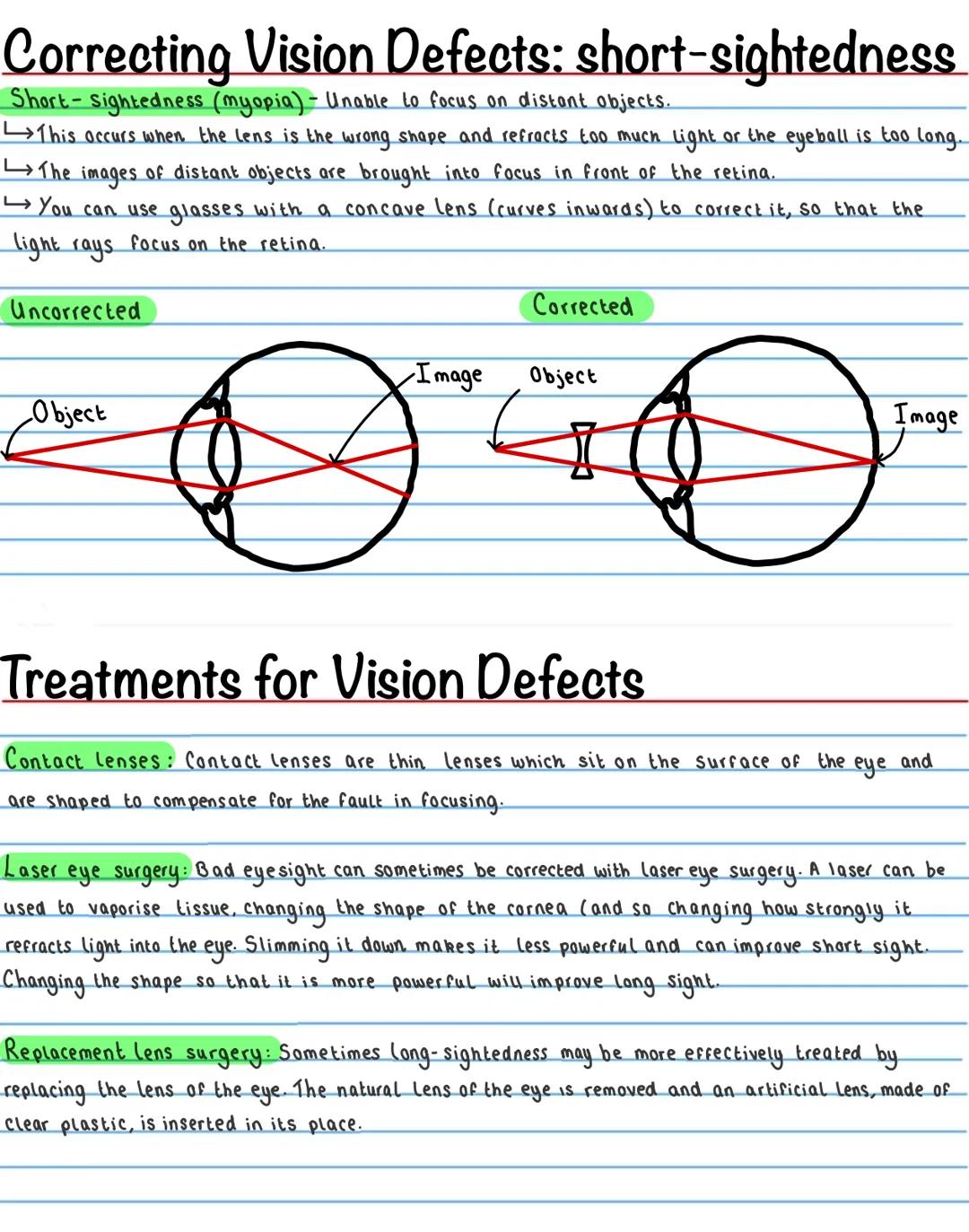
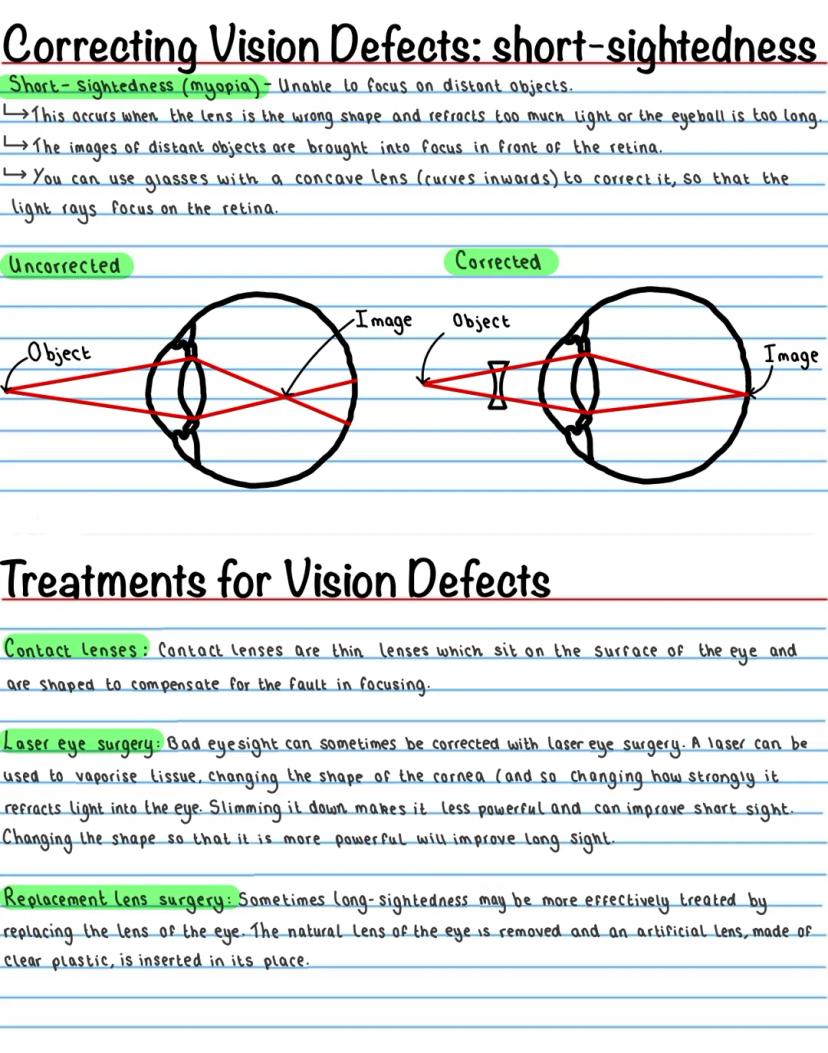
Short-sightedness (myopia) makes distant objects appear blurry while near objects remain clear. This happens when your eyeball is too long or your lens refracts too much light, causing images to focus in front of your retina. Concave lenses (curved inward) solve this by spreading light rays out slightly.
There are several ways to correct vision problems beyond traditional glasses:
Contact lenses sit directly on your eye's surface and are shaped to fix specific vision problems. They're less noticeable than glasses and don't fog up or get in the way during activities.
Laser eye surgery reshapes your cornea to correct vision issues. For short-sightedness, the laser makes the cornea flatter, while for long-sightedness, it makes the cornea steeper. Results can be dramatic and long-lasting.
Replacement lens surgery involves removing your natural lens and replacing it with an artificial one. This is especially useful for treating severe long-sightedness or cataracts.
💡 Many vision correction procedures are quick—laser eye surgery often takes less than 15 minutes per eye, though recovery takes longer.
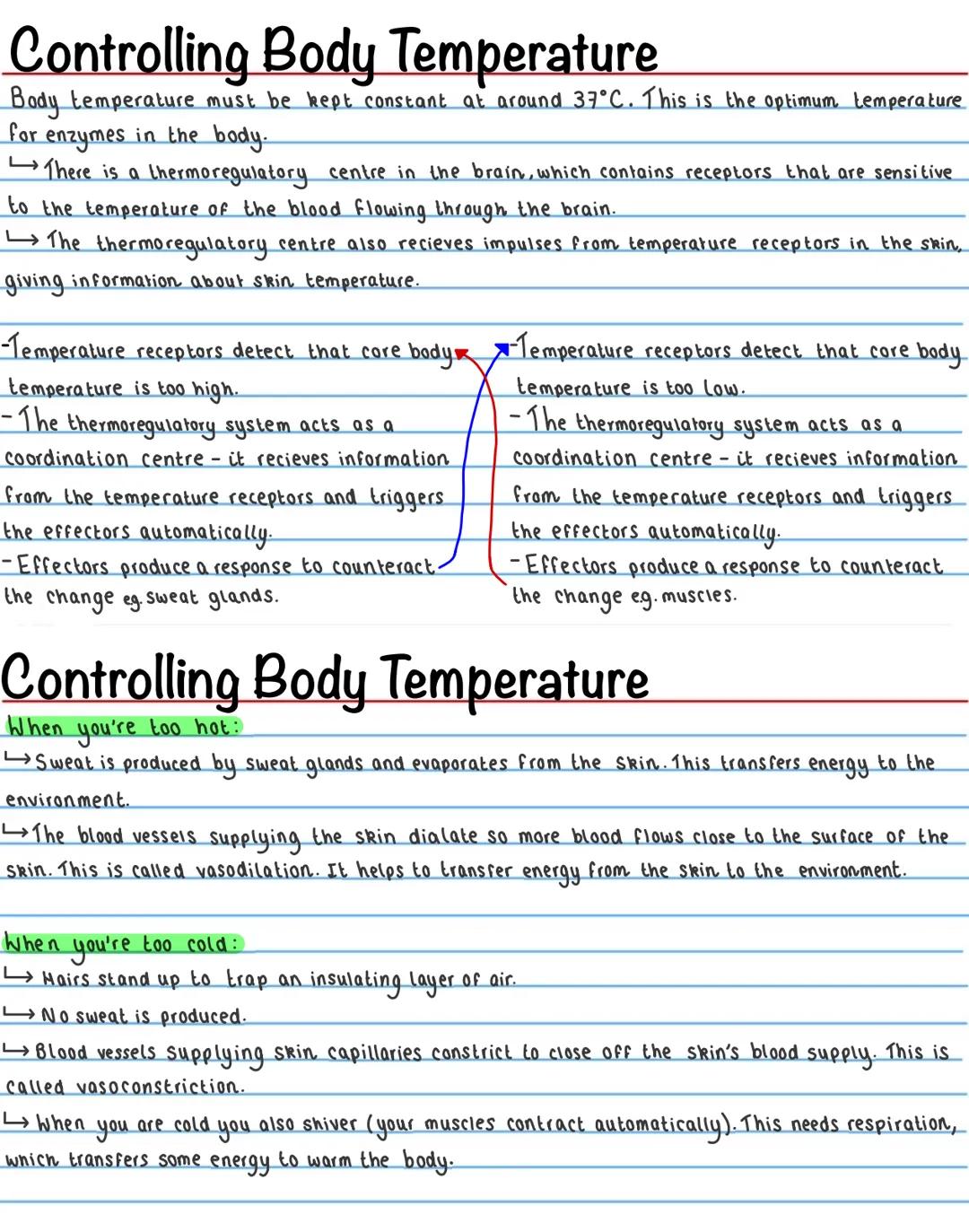
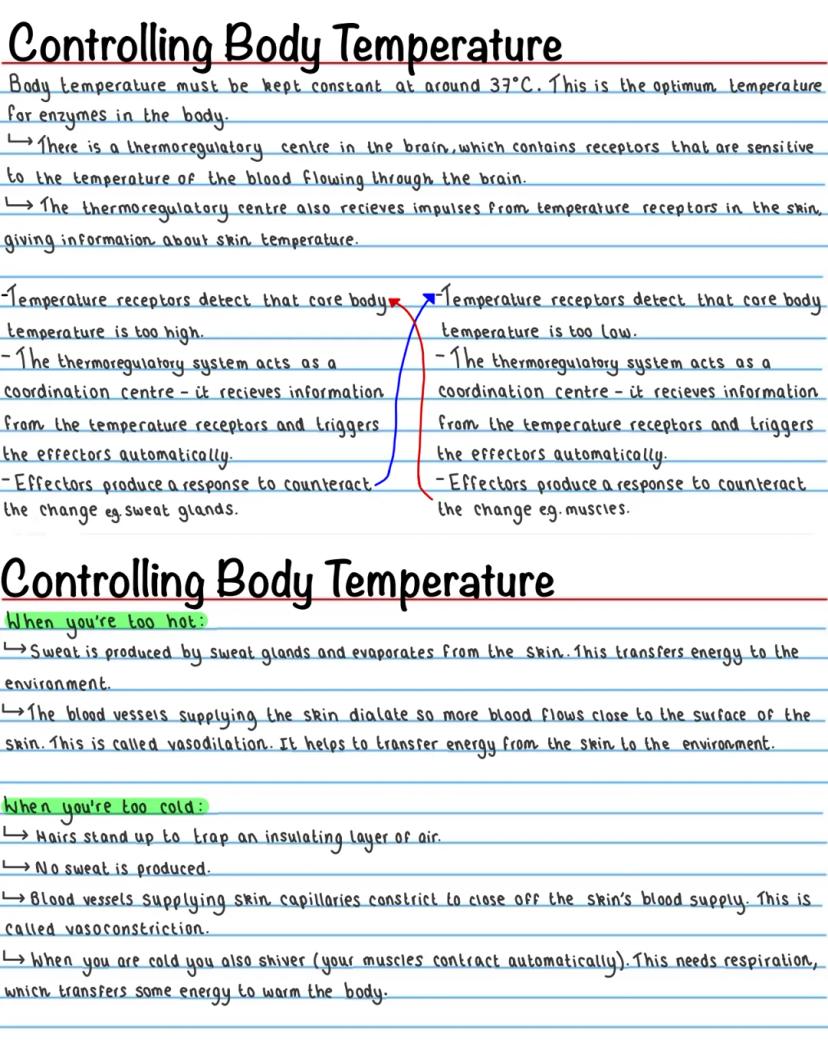
Your body temperature must stay around 37°C (98.6°F) for your enzymes to work properly. The thermoregulatory center in your brain monitors your blood temperature and receives information from temperature receptors in your skin.
This system works through negative feedback: when your temperature rises above normal, receptors detect this change and trigger responses to cool you down. Similarly, when your temperature drops, different responses warm you up.
When you're too hot, your body activates cooling mechanisms. Sweat glands produce sweat that evaporates from your skin, transferring heat away from your body. Blood vessels near your skin vasodilate (widen), bringing more warm blood to the surface where heat can escape.
When you're too cold, your body conserves and generates heat. Hairs stand up to trap a layer of insulating air, sweat production stops, and blood vessels vasoconstrict (narrow), reducing heat loss. You might also shiver—rapid muscle contractions that generate heat through respiration.
🔥 Your body's temperature control system is incredibly precise—it can maintain your core temperature within about 1°C despite outside temperatures ranging from freezing to sweltering!
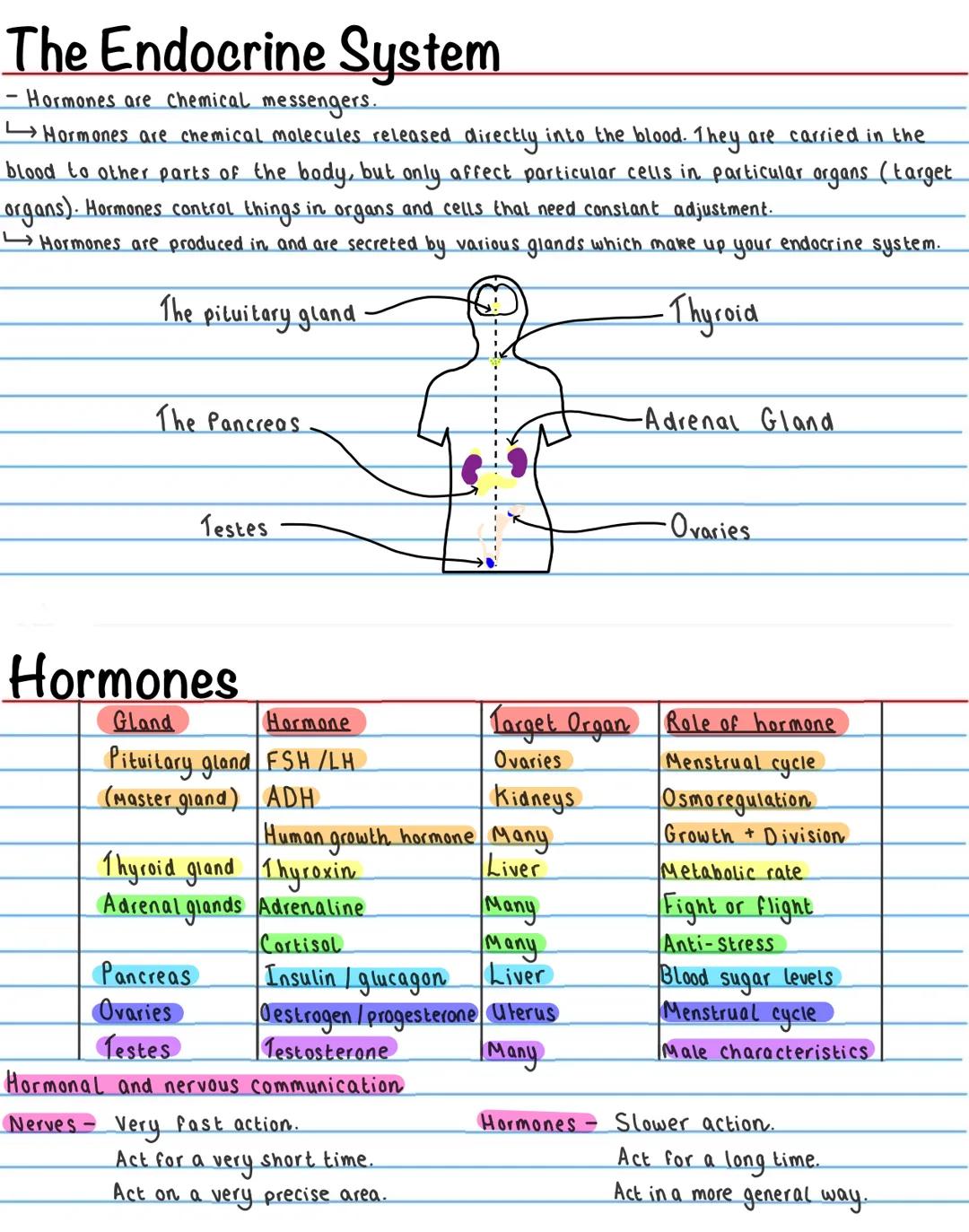
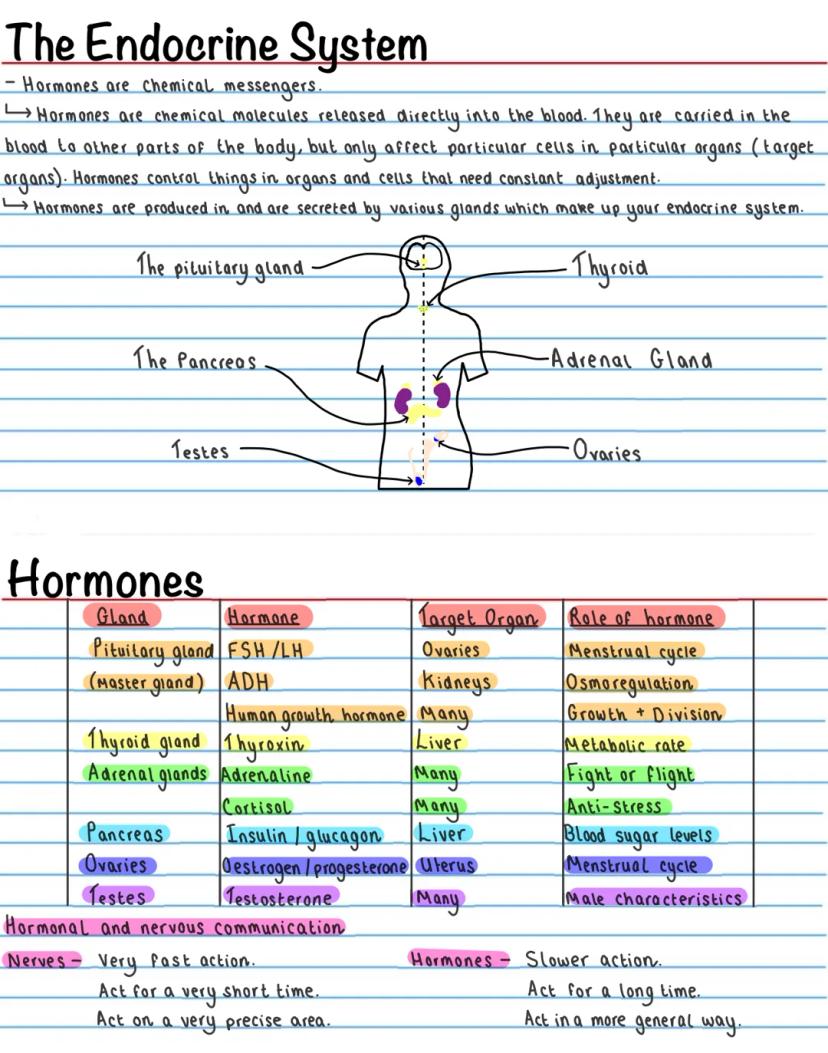
While your nervous system uses electrical signals, your endocrine system communicates using hormones—chemical messengers released directly into your bloodstream. These hormones travel throughout your body but only affect specific target organs with the right receptors.
Various glands make up your endocrine system. The pituitary gland (the "master gland") controls many other glands and produces hormones like FSH/LH (for reproduction) and ADH (for water balance). The thyroid produces thyroxin to regulate metabolism, the pancreas makes insulin and glucagon to control blood sugar, and the adrenal glands release adrenaline for "fight or flight" responses.
Nervous and hormonal communication serve different purposes. Nerves send very fast, precise signals that act for a short time (like jerking your hand away from something hot). Hormones work more slowly but have longer-lasting, more widespread effects (like preparing your body for prolonged stress).
🧪 Your endocrine system is incredibly powerful—just a tiny amount of hormone can cause major changes throughout your body. Some hormones are effective at concentrations of just one part per billion!
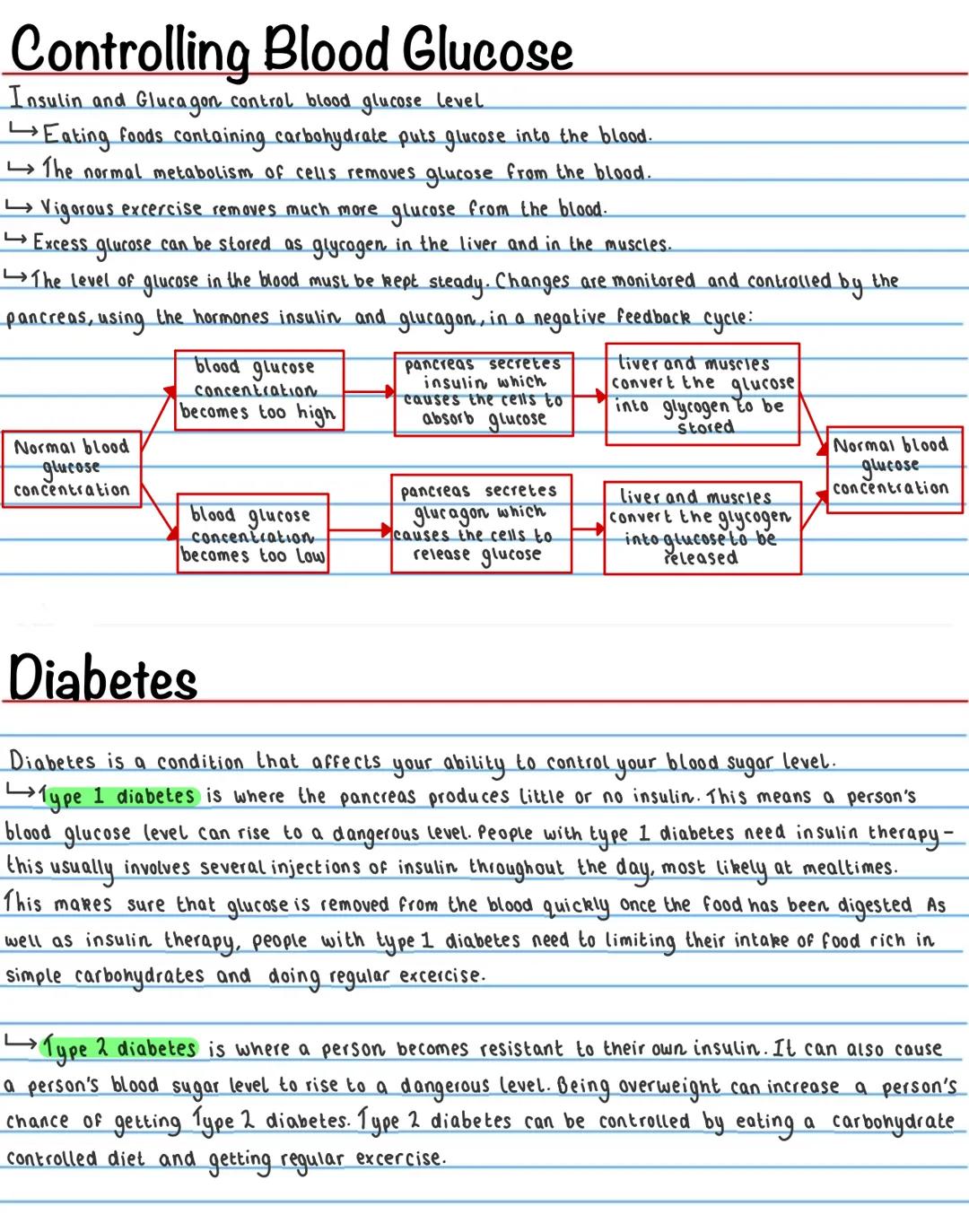
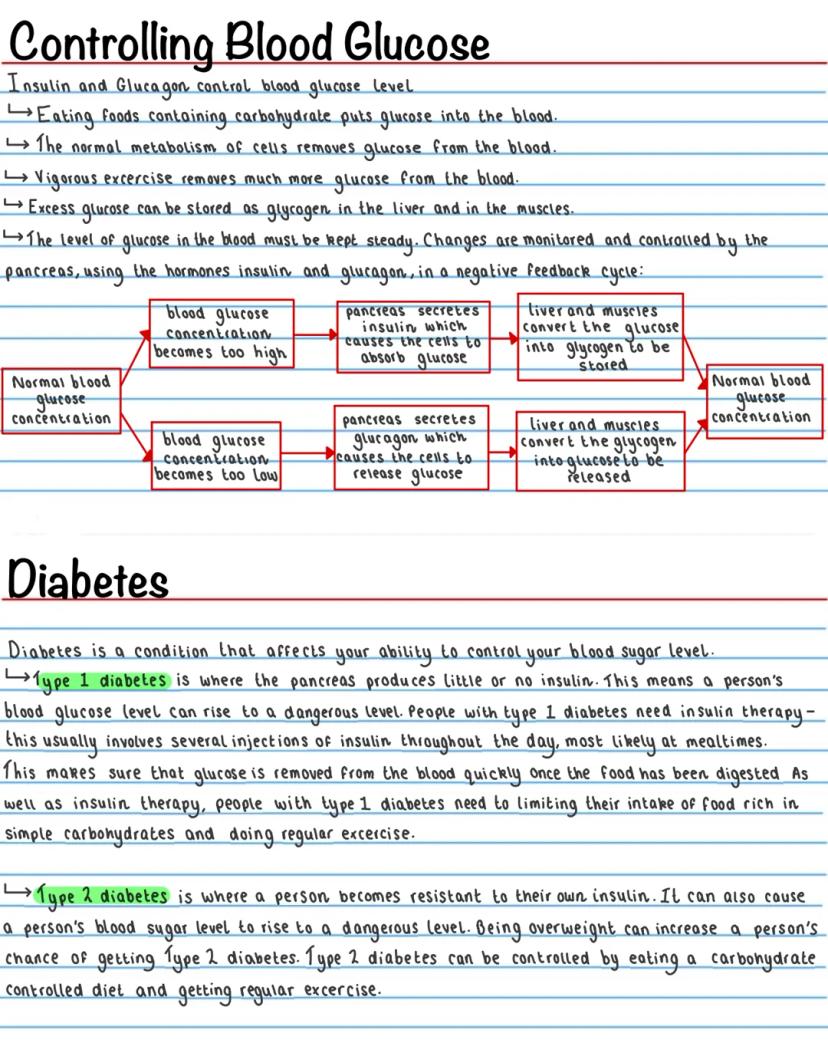
Your body carefully regulates blood glucose levels through a negative feedback system. When you eat carbohydrates, glucose enters your bloodstream. Too much glucose can be harmful, while too little means cells don't have enough energy.
The pancreas monitors your blood glucose and releases two hormones to keep levels balanced:
Diabetes occurs when this control system doesn't work properly. In Type 1 diabetes, the pancreas produces little or no insulin. People with this condition need insulin therapy (regular injections) and must monitor their carbohydrate intake. In Type 2 diabetes, cells become resistant to insulin's effects. This type is often linked to being overweight and can sometimes be managed with diet and exercise.
⚕️ About 34 million Americans have diabetes, but many don't know they have it. Regular check-ups can help catch it early when it's easier to manage!
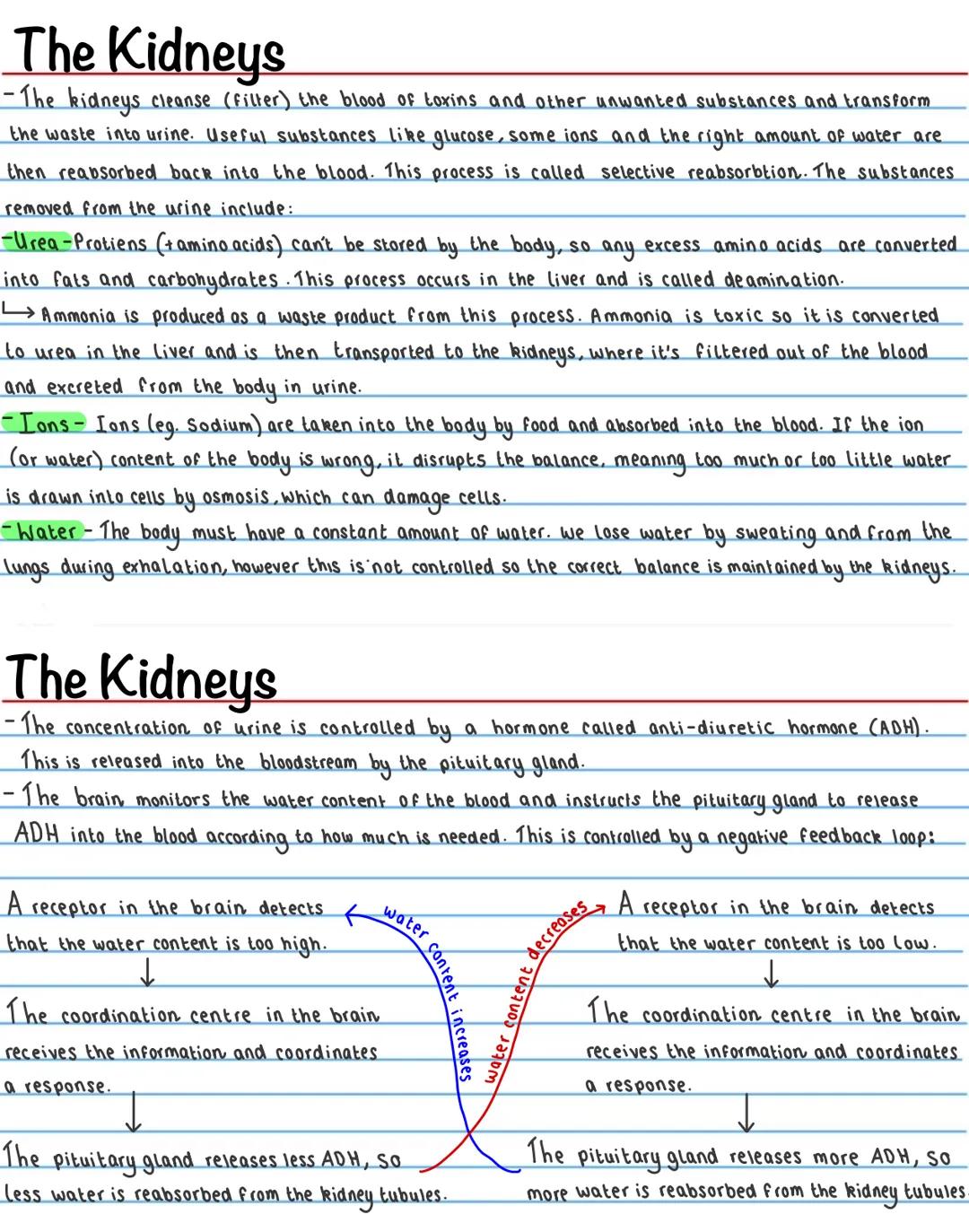
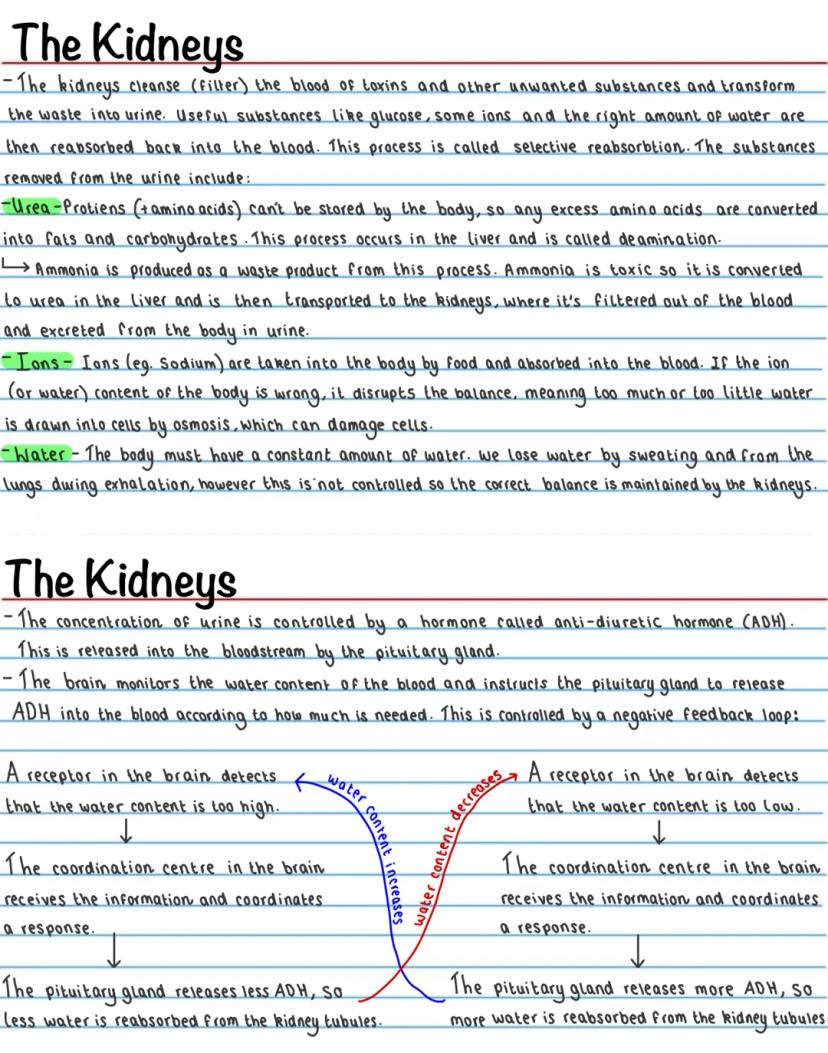
Your kidneys are amazing filtration organs that clean your blood by removing waste products while keeping useful substances. They filter out urea (a waste product from protein breakdown), excess ions, and water, while reabsorbing valuable materials back into the bloodstream through selective reabsorption.
Water balance is critical—too much or too little water in your cells can damage them. Your kidneys play a key role in maintaining this balance through a hormone-controlled process. The pituitary gland releases anti-diuretic hormone (ADH) based on your blood's water content.
This process works through negative feedback: When your blood has too little water, your brain signals the pituitary to release more ADH. This makes your kidneys reabsorb more water back into your blood. When your blood has excess water, less ADH is released, so more water passes into your urine.
💧 Your kidneys filter about 180 liters of fluid daily—that's enough to fill a bathtub! But through reabsorption, you only produce 1-2 liters of urine, saving the rest of that valuable water.
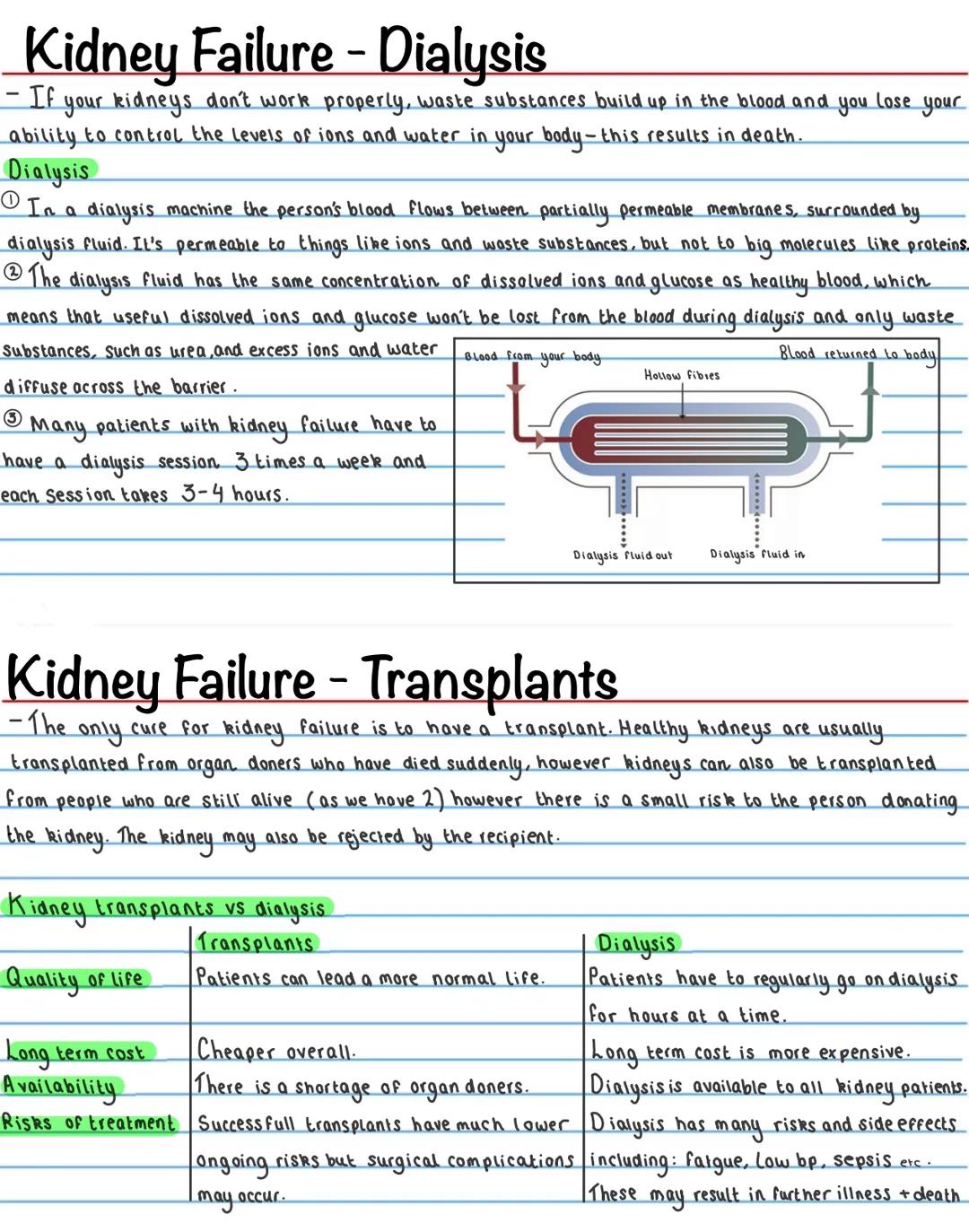
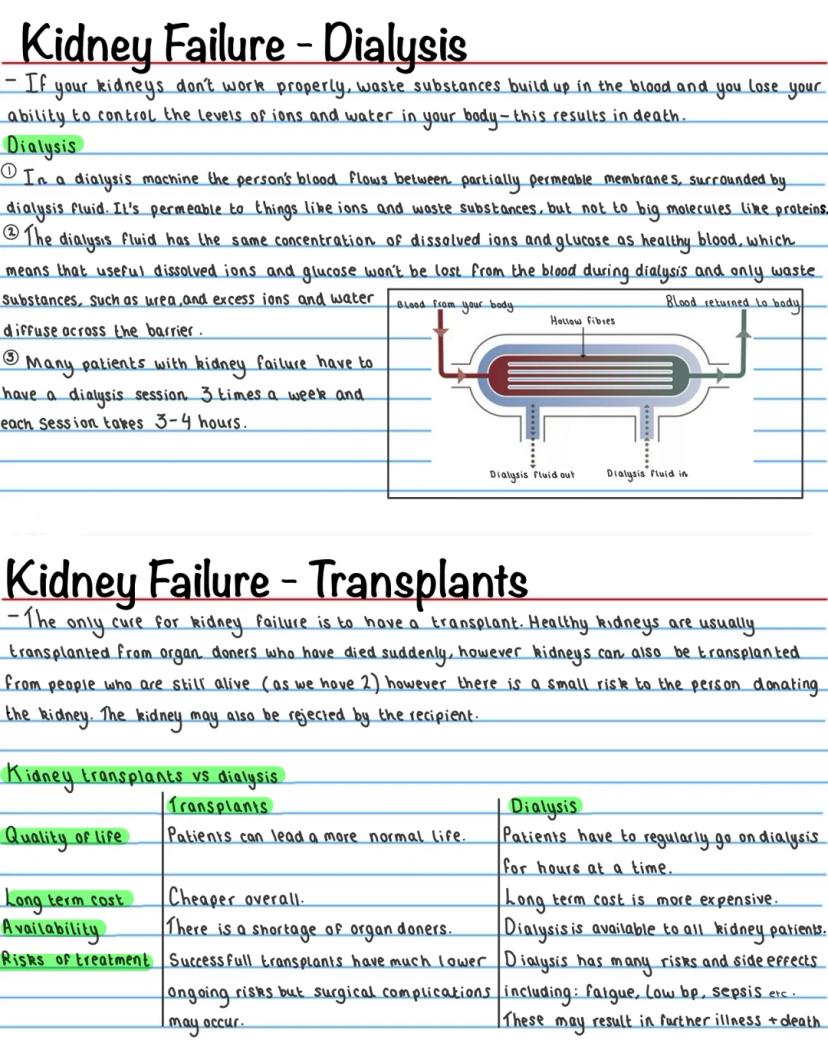
If your kidneys fail, waste substances build up in your blood, and you lose the ability to regulate water and ion levels—which is life-threatening. Fortunately, there are treatments available.
Dialysis is a treatment that filters your blood artificially. During dialysis, your blood flows between partially permeable membranes surrounded by dialysis fluid. This fluid contains the same concentration of useful substances as healthy blood, so only wastes and excess water diffuse out. Many patients need three 3-4 hour sessions weekly.
A kidney transplant is the only permanent cure for kidney failure. Healthy kidneys can come from deceased donors or living donors (since we have two kidneys, a healthy person can donate one).
Transplants provide a better quality of life than dialysis and are cheaper in the long run. However, there's a shortage of donor organs, and recipients must take medication to prevent rejection. Dialysis is more readily available but requires ongoing treatment, has more side effects, and significantly impacts daily life.
🩺 While waiting for a transplant, some patients can use home dialysis machines that allow them to receive treatment while sleeping, giving them more freedom during the day.
Our AI companion is specifically built for the needs of students. Based on the millions of content pieces we have on the platform we can provide truly meaningful and relevant answers to students. But its not only about answers, the companion is even more about guiding students through their daily learning challenges, with personalised study plans, quizzes or content pieces in the chat and 100% personalisation based on the students skills and developments.
You can download the app in the Google Play Store and in the Apple App Store.
That's right! Enjoy free access to study content, connect with fellow students, and get instant help – all at your fingertips.
App Store
Google Play
The app is very easy to use and well designed. I have found everything I was looking for so far and have been able to learn a lot from the presentations! I will definitely use the app for a class assignment! And of course it also helps a lot as an inspiration.
Stefan S
iOS user
This app is really great. There are so many study notes and help [...]. My problem subject is French, for example, and the app has so many options for help. Thanks to this app, I have improved my French. I would recommend it to anyone.
Samantha Klich
Android user
Wow, I am really amazed. I just tried the app because I've seen it advertised many times and was absolutely stunned. This app is THE HELP you want for school and above all, it offers so many things, such as workouts and fact sheets, which have been VERY helpful to me personally.
Anna
iOS user
I think it’s very much worth it and you’ll end up using it a lot once you get the hang of it and even after looking at others notes you can still ask your Artificial intelligence buddy the question and ask to simplify it if you still don’t get it!!! In the end I think it’s worth it 😊👍 ⚠️Also DID I MENTION ITS FREEE YOU DON’T HAVE TO PAY FOR ANYTHING AND STILL GET YOUR GRADES IN PERFECTLY❗️❗️⚠️
Thomas R
iOS user
Knowunity is the BEST app I’ve used in a minute. This is not an ai review or anything this is genuinely coming from a 7th grade student (I know 2011 im young) but dude this app is a 10/10 i have maintained a 3.8 gpa and have plenty of time for gaming. I love it and my mom is just happy I got good grades
Brad T
Android user
Not only did it help me find the answer but it also showed me alternative ways to solve it. I was horrible in math and science but now I have an a in both subjects. Thanks for the help🤍🤍
David K
iOS user
The app's just great! All I have to do is enter the topic in the search bar and I get the response real fast. I don't have to watch 10 YouTube videos to understand something, so I'm saving my time. Highly recommended!
Sudenaz Ocak
Android user
In school I was really bad at maths but thanks to the app, I am doing better now. I am so grateful that you made the app.
Greenlight Bonnie
Android user
I found this app a couple years ago and it has only gotten better since then. I really love it because it can help with written questions and photo questions. Also, it can find study guides that other people have made as well as flashcard sets and practice tests. The free version is also amazing for students who might not be able to afford it. Would 100% recommend
Aubrey
iOS user
Best app if you're in Highschool or Junior high. I have been using this app for 2 school years and it's the best, it's good if you don't have anyone to help you with school work.😋🩷🎀
Marco B
iOS user
THE QUIZES AND FLASHCARDS ARE SO USEFUL AND I LOVE Knowunity AI. IT ALSO IS LITREALLY LIKE CHATGPT BUT SMARTER!! HELPED ME WITH MY MASCARA PROBLEMS TOO!! AS WELL AS MY REAL SUBJECTS ! DUHHH 😍😁😲🤑💗✨🎀😮
Elisha
iOS user
This app is phenomenal down to the correct info and the various topics you can study! I greatly recommend it for people who struggle with procrastination and those who need homework help. It has been perfectly accurate for world 1 history as far as I’ve seen! Geometry too!
Paul T
iOS user
The app is very easy to use and well designed. I have found everything I was looking for so far and have been able to learn a lot from the presentations! I will definitely use the app for a class assignment! And of course it also helps a lot as an inspiration.
Stefan S
iOS user
This app is really great. There are so many study notes and help [...]. My problem subject is French, for example, and the app has so many options for help. Thanks to this app, I have improved my French. I would recommend it to anyone.
Samantha Klich
Android user
Wow, I am really amazed. I just tried the app because I've seen it advertised many times and was absolutely stunned. This app is THE HELP you want for school and above all, it offers so many things, such as workouts and fact sheets, which have been VERY helpful to me personally.
Anna
iOS user
I think it’s very much worth it and you’ll end up using it a lot once you get the hang of it and even after looking at others notes you can still ask your Artificial intelligence buddy the question and ask to simplify it if you still don’t get it!!! In the end I think it’s worth it 😊👍 ⚠️Also DID I MENTION ITS FREEE YOU DON’T HAVE TO PAY FOR ANYTHING AND STILL GET YOUR GRADES IN PERFECTLY❗️❗️⚠️
Thomas R
iOS user
Knowunity is the BEST app I’ve used in a minute. This is not an ai review or anything this is genuinely coming from a 7th grade student (I know 2011 im young) but dude this app is a 10/10 i have maintained a 3.8 gpa and have plenty of time for gaming. I love it and my mom is just happy I got good grades
Brad T
Android user
Not only did it help me find the answer but it also showed me alternative ways to solve it. I was horrible in math and science but now I have an a in both subjects. Thanks for the help🤍🤍
David K
iOS user
The app's just great! All I have to do is enter the topic in the search bar and I get the response real fast. I don't have to watch 10 YouTube videos to understand something, so I'm saving my time. Highly recommended!
Sudenaz Ocak
Android user
In school I was really bad at maths but thanks to the app, I am doing better now. I am so grateful that you made the app.
Greenlight Bonnie
Android user
I found this app a couple years ago and it has only gotten better since then. I really love it because it can help with written questions and photo questions. Also, it can find study guides that other people have made as well as flashcard sets and practice tests. The free version is also amazing for students who might not be able to afford it. Would 100% recommend
Aubrey
iOS user
Best app if you're in Highschool or Junior high. I have been using this app for 2 school years and it's the best, it's good if you don't have anyone to help you with school work.😋🩷🎀
Marco B
iOS user
THE QUIZES AND FLASHCARDS ARE SO USEFUL AND I LOVE Knowunity AI. IT ALSO IS LITREALLY LIKE CHATGPT BUT SMARTER!! HELPED ME WITH MY MASCARA PROBLEMS TOO!! AS WELL AS MY REAL SUBJECTS ! DUHHH 😍😁😲🤑💗✨🎀😮
Elisha
iOS user
This app is phenomenal down to the correct info and the various topics you can study! I greatly recommend it for people who struggle with procrastination and those who need homework help. It has been perfectly accurate for world 1 history as far as I’ve seen! Geometry too!
Paul T
iOS user
Ahmed Nour ✓™
@ahmednour
Homeostasis is your body's way of keeping everything balanced and functioning optimally. It's like your body's automatic control system that maintains stable internal conditions even when the external environment changes. Understanding how these systems work helps explain why your body... Show more
Access to all documents
Improve your grades
Join milions of students
Homeostasis is your body's ability to maintain a constant internal environment despite changes happening inside or outside your body. This balance is crucial for enzymes to work properly and for your cells to function.
When something gets out of balance, negative feedback kicks in to bring levels back to normal. Think of it like your body's automatic correction system!
Your body's control systems work automatically through a series of steps: receptors detect changes (stimuli), coordination centers (like your brain) receive this information, and effectors (muscles and glands) produce responses to fix the imbalance.
💡 The next time you pull your hand away from something hot without thinking, that's your nervous system's homeostasis at work - protecting you automatically!
Your central nervous system (CNS) includes your brain and spinal cord. Sensory neurons carry information from receptors to your CNS, which then sends signals through motor neurons to your muscles and glands (effectors) to create a response.
Access to all documents
Improve your grades
Join milions of students
Synapses are tiny gaps between neurons where information jumps from one nerve cell to another. When a nerve impulse reaches a synapse, neurotransmitters (chemical messengers) are released and cross this gap to trigger a new electrical signal in the next neuron.
Reflexes are super-fast, automatic responses that don't require conscious thought. They're your body's way of protecting you before your brain has time to think!
When you touch something painful (like a bee sting), this triggers a reflex arc: receptors in your skin detect the pain and send impulses along sensory neurons to your spinal cord. There, the signal transfers to a relay neuron, then to a motor neuron which tells your muscles to contract and pull away—all in a fraction of a second!
🧠 Your brain has three main parts with different jobs: the cerebral cortex handles conscious thinking, memory and language; the cerebellum coordinates your movements; and the medulla controls automatic functions like breathing and heartbeat.
Access to all documents
Improve your grades
Join milions of students
Scientists use several techniques to understand the brain's complex functions. MRI scans produce detailed images showing which areas are active during different activities. Electrical stimulation involves giving tiny zaps to different brain regions to see what happens. Studying patients with brain damage helps identify what specific brain areas do.
Your eye is an amazing sensory organ with many specialized parts. The cornea and lens focus light onto the retina, which contains light-sensitive receptor cells. The iris controls how much light enters through the pupil, adjusting to different lighting conditions.
When light hits the retina's receptors, they send signals through the optic nerve to your brain, which interprets what you're seeing. The tough sclera forms the white part of your eye and provides protection and support.
👁️ Your eye is like a living camera, but way more advanced—it can adjust to different lighting conditions and distances almost instantly!
Access to all documents
Improve your grades
Join milions of students
Your eyes automatically adjust to different conditions. In bright light, the circular muscles in your iris contract to make your pupil smaller, while in dim light, radial muscles contract to widen your pupil. This reflex helps protect your retina and ensures you get just the right amount of light.
To focus on objects at different distances, your ciliary muscles adjust the shape of your lens. For nearby objects, these muscles contract to make your lens fatter and more curved. For distant objects, they relax, allowing your lens to become thinner and less curved.
Long-sightedness (hyperopia) happens when you can see distant objects clearly but struggle with near ones. This occurs when your eyeball is too short or your lens doesn't refract light enough. The image forms behind your retina instead of on it. Convex lenses (curved outward) in glasses help correct this by bending light rays more.
👓 Vision problems are super common—nearly 75% of Americans use some form of vision correction. Fortunately, there are several effective solutions available!
Access to all documents
Improve your grades
Join milions of students
Short-sightedness (myopia) makes distant objects appear blurry while near objects remain clear. This happens when your eyeball is too long or your lens refracts too much light, causing images to focus in front of your retina. Concave lenses (curved inward) solve this by spreading light rays out slightly.
There are several ways to correct vision problems beyond traditional glasses:
Contact lenses sit directly on your eye's surface and are shaped to fix specific vision problems. They're less noticeable than glasses and don't fog up or get in the way during activities.
Laser eye surgery reshapes your cornea to correct vision issues. For short-sightedness, the laser makes the cornea flatter, while for long-sightedness, it makes the cornea steeper. Results can be dramatic and long-lasting.
Replacement lens surgery involves removing your natural lens and replacing it with an artificial one. This is especially useful for treating severe long-sightedness or cataracts.
💡 Many vision correction procedures are quick—laser eye surgery often takes less than 15 minutes per eye, though recovery takes longer.
Access to all documents
Improve your grades
Join milions of students
Your body temperature must stay around 37°C (98.6°F) for your enzymes to work properly. The thermoregulatory center in your brain monitors your blood temperature and receives information from temperature receptors in your skin.
This system works through negative feedback: when your temperature rises above normal, receptors detect this change and trigger responses to cool you down. Similarly, when your temperature drops, different responses warm you up.
When you're too hot, your body activates cooling mechanisms. Sweat glands produce sweat that evaporates from your skin, transferring heat away from your body. Blood vessels near your skin vasodilate (widen), bringing more warm blood to the surface where heat can escape.
When you're too cold, your body conserves and generates heat. Hairs stand up to trap a layer of insulating air, sweat production stops, and blood vessels vasoconstrict (narrow), reducing heat loss. You might also shiver—rapid muscle contractions that generate heat through respiration.
🔥 Your body's temperature control system is incredibly precise—it can maintain your core temperature within about 1°C despite outside temperatures ranging from freezing to sweltering!
Access to all documents
Improve your grades
Join milions of students
While your nervous system uses electrical signals, your endocrine system communicates using hormones—chemical messengers released directly into your bloodstream. These hormones travel throughout your body but only affect specific target organs with the right receptors.
Various glands make up your endocrine system. The pituitary gland (the "master gland") controls many other glands and produces hormones like FSH/LH (for reproduction) and ADH (for water balance). The thyroid produces thyroxin to regulate metabolism, the pancreas makes insulin and glucagon to control blood sugar, and the adrenal glands release adrenaline for "fight or flight" responses.
Nervous and hormonal communication serve different purposes. Nerves send very fast, precise signals that act for a short time (like jerking your hand away from something hot). Hormones work more slowly but have longer-lasting, more widespread effects (like preparing your body for prolonged stress).
🧪 Your endocrine system is incredibly powerful—just a tiny amount of hormone can cause major changes throughout your body. Some hormones are effective at concentrations of just one part per billion!
Access to all documents
Improve your grades
Join milions of students
Your body carefully regulates blood glucose levels through a negative feedback system. When you eat carbohydrates, glucose enters your bloodstream. Too much glucose can be harmful, while too little means cells don't have enough energy.
The pancreas monitors your blood glucose and releases two hormones to keep levels balanced:
Diabetes occurs when this control system doesn't work properly. In Type 1 diabetes, the pancreas produces little or no insulin. People with this condition need insulin therapy (regular injections) and must monitor their carbohydrate intake. In Type 2 diabetes, cells become resistant to insulin's effects. This type is often linked to being overweight and can sometimes be managed with diet and exercise.
⚕️ About 34 million Americans have diabetes, but many don't know they have it. Regular check-ups can help catch it early when it's easier to manage!
Access to all documents
Improve your grades
Join milions of students
Your kidneys are amazing filtration organs that clean your blood by removing waste products while keeping useful substances. They filter out urea (a waste product from protein breakdown), excess ions, and water, while reabsorbing valuable materials back into the bloodstream through selective reabsorption.
Water balance is critical—too much or too little water in your cells can damage them. Your kidneys play a key role in maintaining this balance through a hormone-controlled process. The pituitary gland releases anti-diuretic hormone (ADH) based on your blood's water content.
This process works through negative feedback: When your blood has too little water, your brain signals the pituitary to release more ADH. This makes your kidneys reabsorb more water back into your blood. When your blood has excess water, less ADH is released, so more water passes into your urine.
💧 Your kidneys filter about 180 liters of fluid daily—that's enough to fill a bathtub! But through reabsorption, you only produce 1-2 liters of urine, saving the rest of that valuable water.
Access to all documents
Improve your grades
Join milions of students
If your kidneys fail, waste substances build up in your blood, and you lose the ability to regulate water and ion levels—which is life-threatening. Fortunately, there are treatments available.
Dialysis is a treatment that filters your blood artificially. During dialysis, your blood flows between partially permeable membranes surrounded by dialysis fluid. This fluid contains the same concentration of useful substances as healthy blood, so only wastes and excess water diffuse out. Many patients need three 3-4 hour sessions weekly.
A kidney transplant is the only permanent cure for kidney failure. Healthy kidneys can come from deceased donors or living donors (since we have two kidneys, a healthy person can donate one).
Transplants provide a better quality of life than dialysis and are cheaper in the long run. However, there's a shortage of donor organs, and recipients must take medication to prevent rejection. Dialysis is more readily available but requires ongoing treatment, has more side effects, and significantly impacts daily life.
🩺 While waiting for a transplant, some patients can use home dialysis machines that allow them to receive treatment while sleeping, giving them more freedom during the day.
Our AI companion is specifically built for the needs of students. Based on the millions of content pieces we have on the platform we can provide truly meaningful and relevant answers to students. But its not only about answers, the companion is even more about guiding students through their daily learning challenges, with personalised study plans, quizzes or content pieces in the chat and 100% personalisation based on the students skills and developments.
You can download the app in the Google Play Store and in the Apple App Store.
That's right! Enjoy free access to study content, connect with fellow students, and get instant help – all at your fingertips.
5
Smart Tools NEW
Transform this note into: ✓ 50+ Practice Questions ✓ Interactive Flashcards ✓ Full Practice Test ✓ Essay Outlines
Covers: vocabulary, biomass, thermodynamics, food chains v.s. food webs v.s. energy pyramids, 9/10 rule
 Biology
Explore effective strategies for managing land use conflicts in glaciated areas, including the implementation of one-way systems, zoning, and the role of National Park Rangers. This summary covers solutions like farmers' field parking, speed limits on Loch Lomond, and natural forestry practices, aimed at reducing congestion and preserving the environment. Ideal for higher geography students studying rural land use and environmental management.
BiologyExplore the dynamics of energy flow in ecosystems with this comprehensive overview. Understand the 10% rule, the roles of producers and consumers, and the significance of energy and number pyramids in food chains. This summary covers key concepts such as trophic levels, energy transfer, and the impact of energy loss at each stage. Ideal for N5 Biology students preparing for exams.
 Biology
Explore the conflicts between farmers and tourists at Loch Lomond, including issues like livestock safety, traffic disruptions, and environmental impacts. This summary outlines effective solutions such as installing kissing gates, creating diversion paths during lambing season, and improving parking facilities to mitigate these challenges. Ideal for students studying rural land-use and environmental management.
Biology9 grade Ag science notes
Biologyenvironmental science
BiologyApp Store
Google Play
The app is very easy to use and well designed. I have found everything I was looking for so far and have been able to learn a lot from the presentations! I will definitely use the app for a class assignment! And of course it also helps a lot as an inspiration.
Stefan S
iOS user
This app is really great. There are so many study notes and help [...]. My problem subject is French, for example, and the app has so many options for help. Thanks to this app, I have improved my French. I would recommend it to anyone.
Samantha Klich
Android user
Wow, I am really amazed. I just tried the app because I've seen it advertised many times and was absolutely stunned. This app is THE HELP you want for school and above all, it offers so many things, such as workouts and fact sheets, which have been VERY helpful to me personally.
Anna
iOS user
I think it’s very much worth it and you’ll end up using it a lot once you get the hang of it and even after looking at others notes you can still ask your Artificial intelligence buddy the question and ask to simplify it if you still don’t get it!!! In the end I think it’s worth it 😊👍 ⚠️Also DID I MENTION ITS FREEE YOU DON’T HAVE TO PAY FOR ANYTHING AND STILL GET YOUR GRADES IN PERFECTLY❗️❗️⚠️
Thomas R
iOS user
Knowunity is the BEST app I’ve used in a minute. This is not an ai review or anything this is genuinely coming from a 7th grade student (I know 2011 im young) but dude this app is a 10/10 i have maintained a 3.8 gpa and have plenty of time for gaming. I love it and my mom is just happy I got good grades
Brad T
Android user
Not only did it help me find the answer but it also showed me alternative ways to solve it. I was horrible in math and science but now I have an a in both subjects. Thanks for the help🤍🤍
David K
iOS user
The app's just great! All I have to do is enter the topic in the search bar and I get the response real fast. I don't have to watch 10 YouTube videos to understand something, so I'm saving my time. Highly recommended!
Sudenaz Ocak
Android user
In school I was really bad at maths but thanks to the app, I am doing better now. I am so grateful that you made the app.
Greenlight Bonnie
Android user
I found this app a couple years ago and it has only gotten better since then. I really love it because it can help with written questions and photo questions. Also, it can find study guides that other people have made as well as flashcard sets and practice tests. The free version is also amazing for students who might not be able to afford it. Would 100% recommend
Aubrey
iOS user
Best app if you're in Highschool or Junior high. I have been using this app for 2 school years and it's the best, it's good if you don't have anyone to help you with school work.😋🩷🎀
Marco B
iOS user
THE QUIZES AND FLASHCARDS ARE SO USEFUL AND I LOVE Knowunity AI. IT ALSO IS LITREALLY LIKE CHATGPT BUT SMARTER!! HELPED ME WITH MY MASCARA PROBLEMS TOO!! AS WELL AS MY REAL SUBJECTS ! DUHHH 😍😁😲🤑💗✨🎀😮
Elisha
iOS user
This app is phenomenal down to the correct info and the various topics you can study! I greatly recommend it for people who struggle with procrastination and those who need homework help. It has been perfectly accurate for world 1 history as far as I’ve seen! Geometry too!
Paul T
iOS user
The app is very easy to use and well designed. I have found everything I was looking for so far and have been able to learn a lot from the presentations! I will definitely use the app for a class assignment! And of course it also helps a lot as an inspiration.
Stefan S
iOS user
This app is really great. There are so many study notes and help [...]. My problem subject is French, for example, and the app has so many options for help. Thanks to this app, I have improved my French. I would recommend it to anyone.
Samantha Klich
Android user
Wow, I am really amazed. I just tried the app because I've seen it advertised many times and was absolutely stunned. This app is THE HELP you want for school and above all, it offers so many things, such as workouts and fact sheets, which have been VERY helpful to me personally.
Anna
iOS user
I think it’s very much worth it and you’ll end up using it a lot once you get the hang of it and even after looking at others notes you can still ask your Artificial intelligence buddy the question and ask to simplify it if you still don’t get it!!! In the end I think it’s worth it 😊👍 ⚠️Also DID I MENTION ITS FREEE YOU DON’T HAVE TO PAY FOR ANYTHING AND STILL GET YOUR GRADES IN PERFECTLY❗️❗️⚠️
Thomas R
iOS user
Knowunity is the BEST app I’ve used in a minute. This is not an ai review or anything this is genuinely coming from a 7th grade student (I know 2011 im young) but dude this app is a 10/10 i have maintained a 3.8 gpa and have plenty of time for gaming. I love it and my mom is just happy I got good grades
Brad T
Android user
Not only did it help me find the answer but it also showed me alternative ways to solve it. I was horrible in math and science but now I have an a in both subjects. Thanks for the help🤍🤍
David K
iOS user
The app's just great! All I have to do is enter the topic in the search bar and I get the response real fast. I don't have to watch 10 YouTube videos to understand something, so I'm saving my time. Highly recommended!
Sudenaz Ocak
Android user
In school I was really bad at maths but thanks to the app, I am doing better now. I am so grateful that you made the app.
Greenlight Bonnie
Android user
I found this app a couple years ago and it has only gotten better since then. I really love it because it can help with written questions and photo questions. Also, it can find study guides that other people have made as well as flashcard sets and practice tests. The free version is also amazing for students who might not be able to afford it. Would 100% recommend
Aubrey
iOS user
Best app if you're in Highschool or Junior high. I have been using this app for 2 school years and it's the best, it's good if you don't have anyone to help you with school work.😋🩷🎀
Marco B
iOS user
THE QUIZES AND FLASHCARDS ARE SO USEFUL AND I LOVE Knowunity AI. IT ALSO IS LITREALLY LIKE CHATGPT BUT SMARTER!! HELPED ME WITH MY MASCARA PROBLEMS TOO!! AS WELL AS MY REAL SUBJECTS ! DUHHH 😍😁😲🤑💗✨🎀😮
Elisha
iOS user
This app is phenomenal down to the correct info and the various topics you can study! I greatly recommend it for people who struggle with procrastination and those who need homework help. It has been perfectly accurate for world 1 history as far as I’ve seen! Geometry too!
Paul T
iOS user