Photosynthesis: How Plants Feed Themselves
Photosynthesis is basically a plant's way of cooking dinner using sunlight as the heat source. This chemical reaction happens inside tiny structures called chloroplasts, which contain a green substance called chlorophyll that captures light energy.
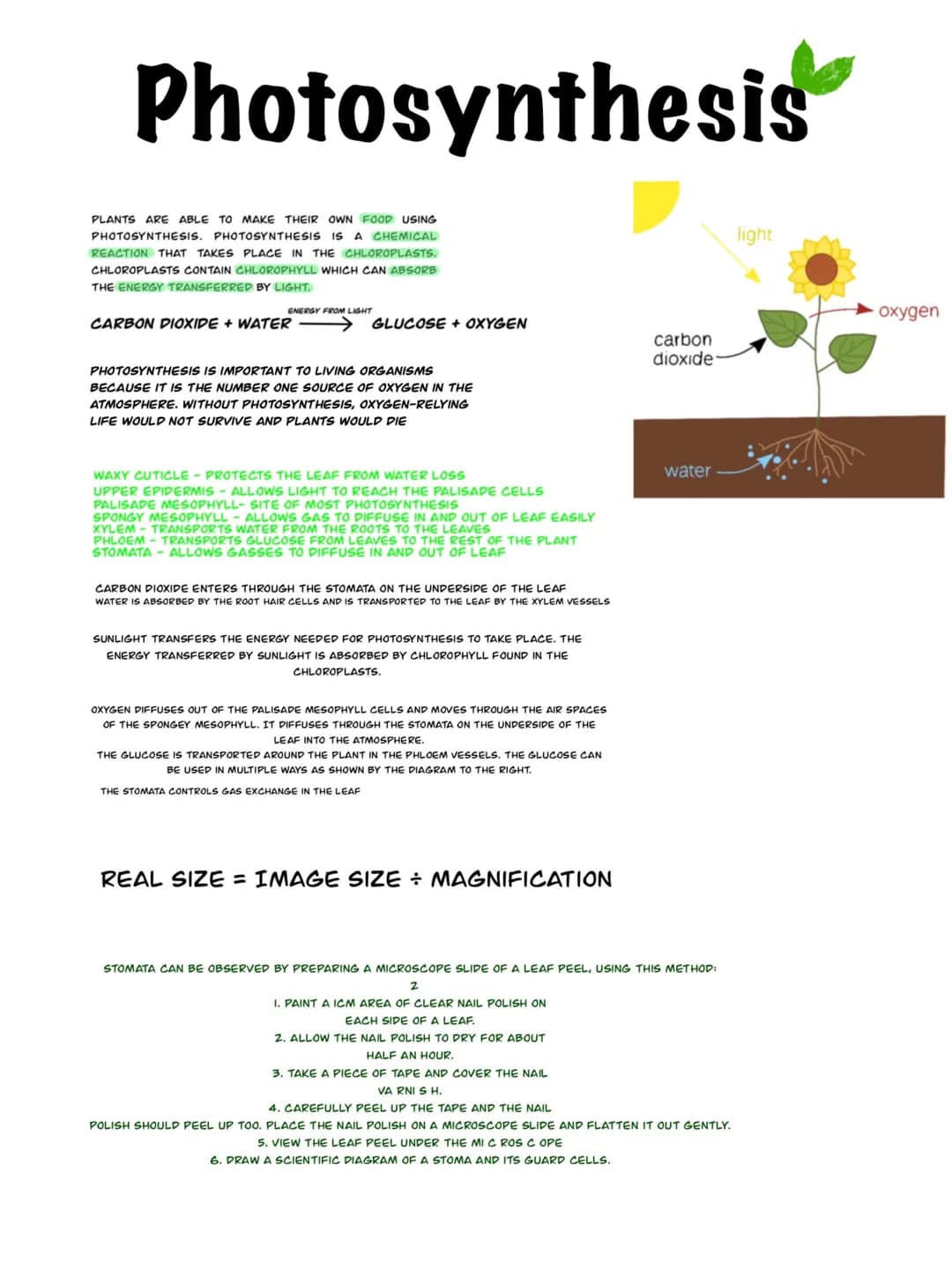
The recipe is surprisingly simple: carbon dioxide + water + light energy = glucose + oxygen. Plants get their carbon dioxide through tiny pores called stomata on the undersides of leaves, whilst water travels up from the roots through tubes called xylem vessels.
This process is absolutely vital for life on Earth. Without photosynthesis, there'd be no oxygen in our atmosphere, which means no breathing for us! Plants are essentially the planet's oxygen factories.
Quick Tip: Remember that photosynthesis happens mainly in the palisade mesophyll - the layer of cells just under the leaf's upper surface where most chloroplasts are packed in.
The leaf is perfectly designed for this job. The waxy cuticle prevents water loss, whilst the spongy mesophyll creates air spaces for gases to move about easily. Once glucose is made, it travels around the plant through phloem vessels - think of them as the plant's food delivery system.
You can actually observe stomata yourself by creating a leaf peel using clear nail polish, letting it dry, then carefully removing it with tape to view under a microscope. It's quite brilliant seeing these tiny biological gates that control gas exchange!


 Sociology