Early Modern Crimes
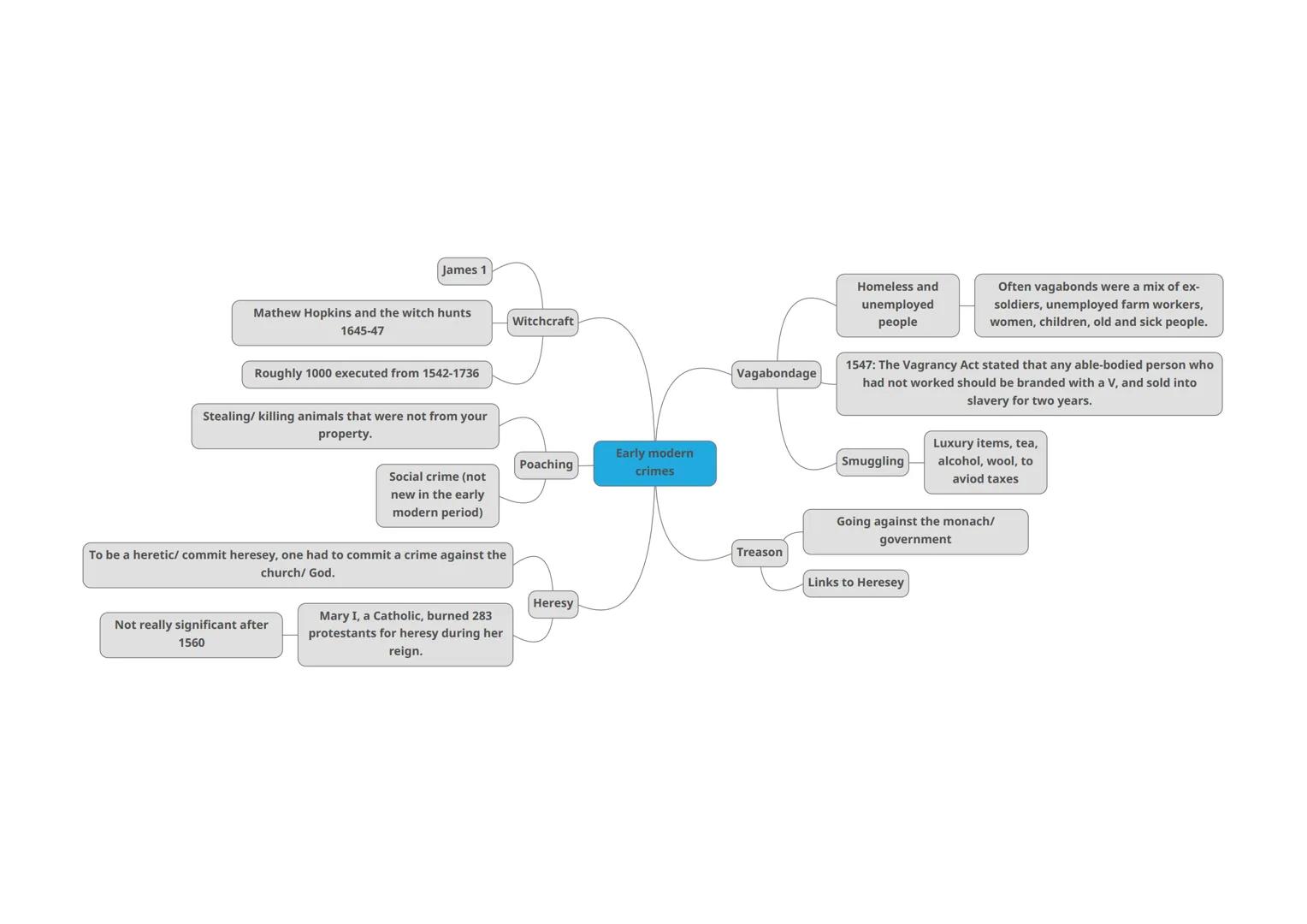
The early modern period introduced distinctive types of crimes that revealed much about the period's priorities and fears. Witchcraft became a serious concern during this time, with Mathew Hopkins leading infamous witch hunts from 1645-47. These hunts contributed to approximately 1000 executions between 1542-1736, showing how deeply supernatural fears affected justice.
Social crimes like poaching (stealing animals from another's property) were common offences that ordinary people might commit out of necessity. Meanwhile, heresy - crimes against the church or God - carried severe punishments, especially under Catholic Mary I who burned 283 Protestants, though this crime declined in significance after 1560.
The period also targeted the vulnerable through laws against vagabondage - homelessness and unemployment. These vagabonds typically included former soldiers, unemployed farm workers, women, children, and the elderly or sick. The 1547 Vagrancy Act was particularly harsh, demanding that able-bodied people without work be branded with a "V" and sold into slavery for two years.
Did you know? Smuggling wasn't just about pirates! Ordinary people smuggled luxury items like tea, alcohol and wool to avoid taxes, making it a common way of resisting economic control.
Other serious crimes included treason - acts against the monarch or government - which often connected to heresy charges as both represented challenges to established authority.


 World/Global History
 Sociology
 Biology