Page 1: Study Framework and Methodology
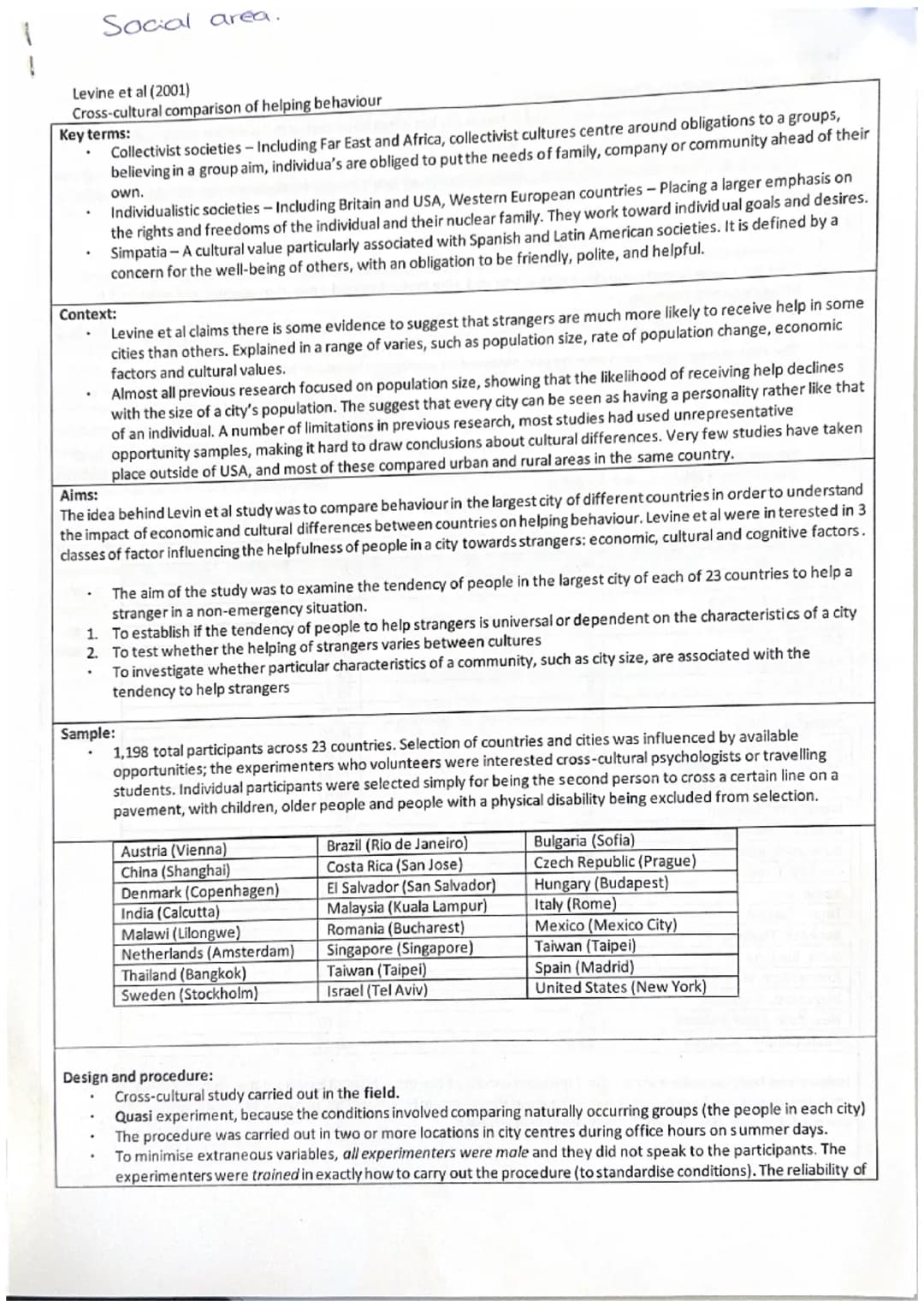
The first page outlines the fundamental structure and context of Levine et al.'s 2001 cross-cultural study on helping behavior. The research spans 23 countries, examining how strangers assist others in non-emergency situations across different cultural contexts.
Definition: Collectivist societies, predominantly found in the Far East and Africa, prioritize group needs over individual desires, emphasizing community obligations.
Definition: Individualistic societies, common in Western nations, focus on personal rights and individual achievements, prioritizing nuclear family and personal goals.
Vocabulary: Simpatia - A cultural value in Spanish and Latin American societies emphasizing politeness, friendliness, and helpfulness towards others.
Highlight: The study aimed to overcome previous research limitations by including a diverse range of cities and standardizing experimental conditions across all locations.
The research methodology carefully selected participants across major global cities, excluding children, elderly, and physically disabled individuals to maintain consistency. The study employed trained male experimenters who followed standardized procedures to minimize experimental bias.


 Sociology
 Biology