Filament Lamp Resistance
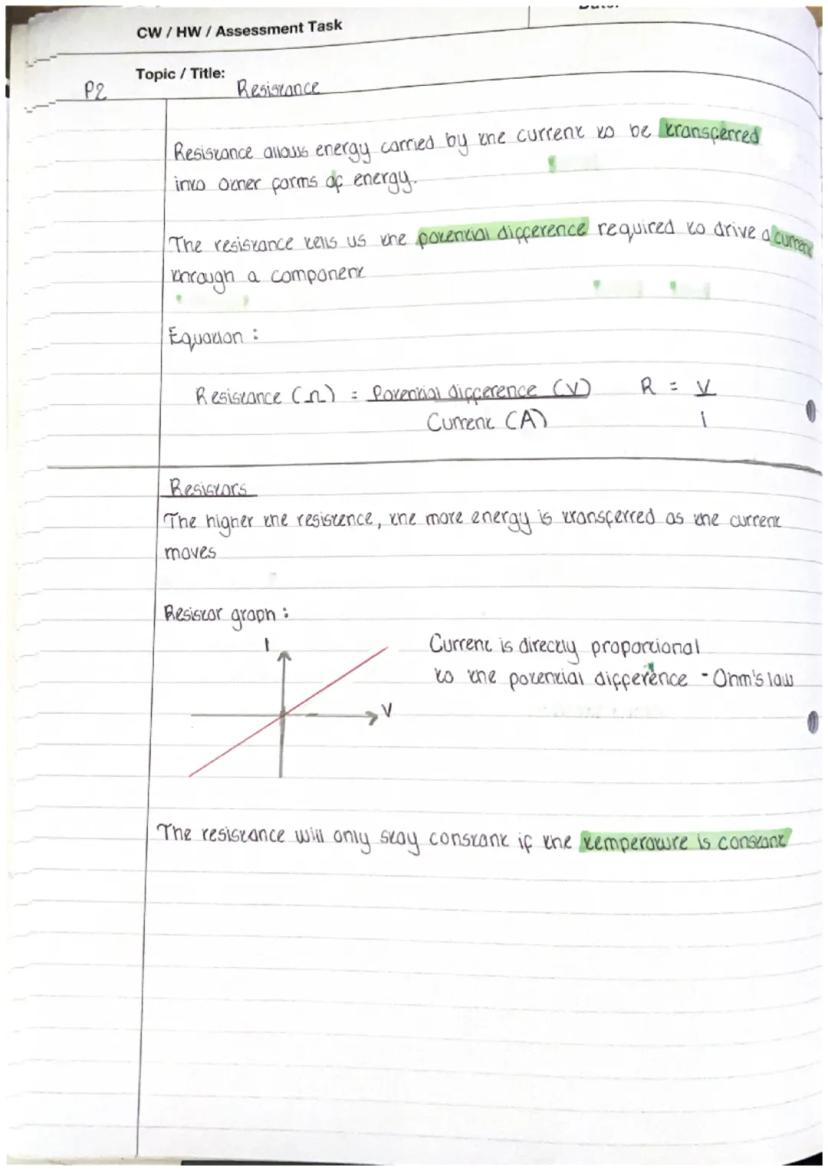
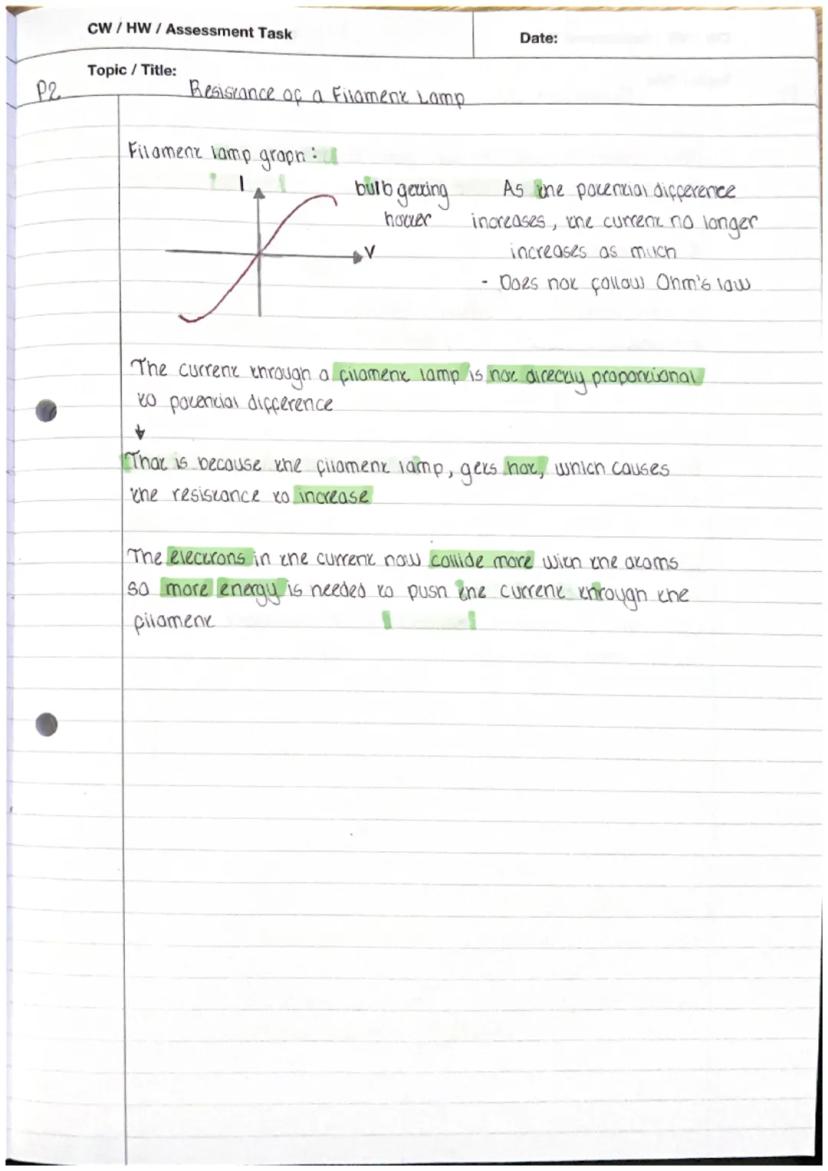
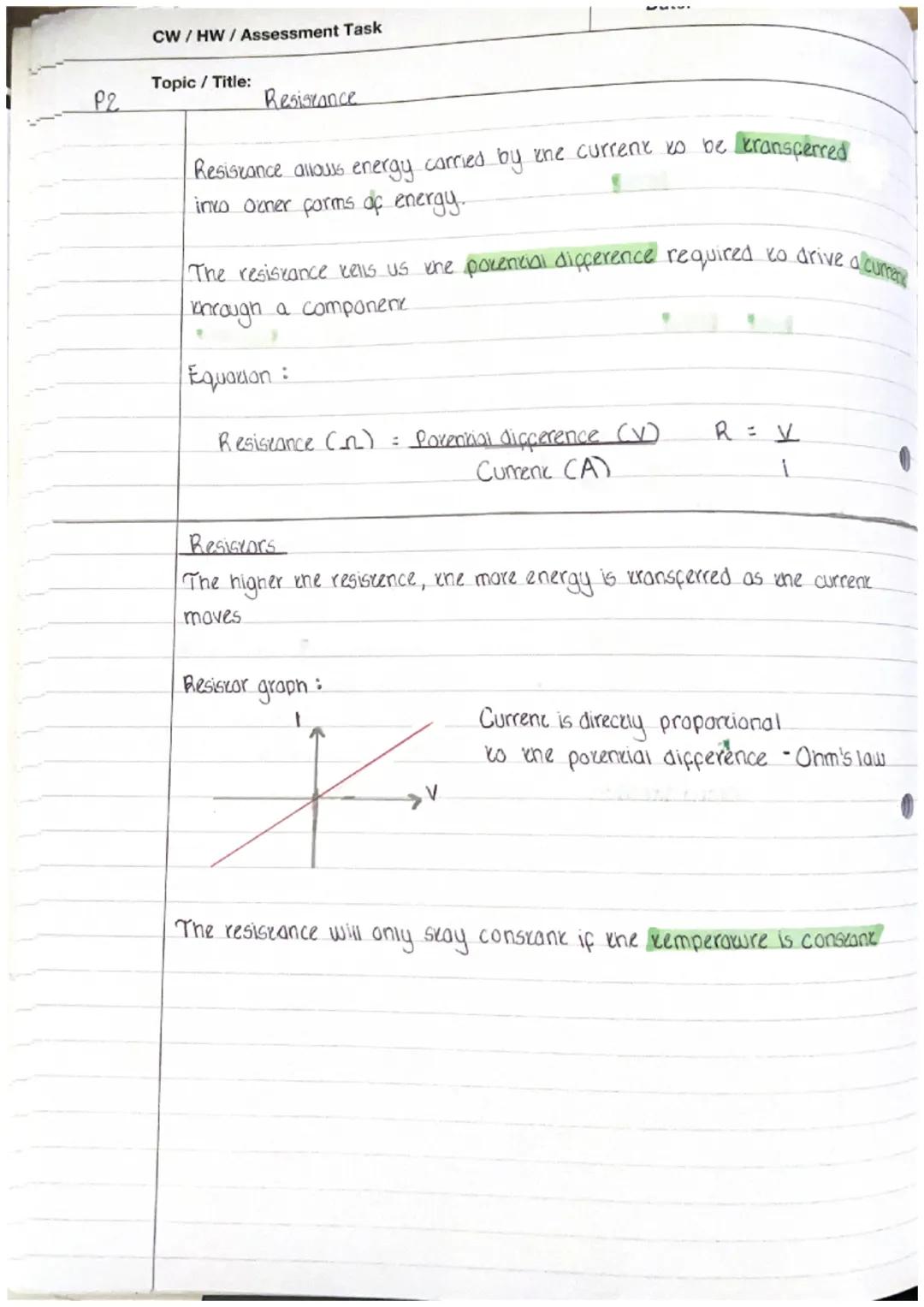
Filament lamps break the rules you've just learned about resistors, and that's what makes them interesting! Unlike fixed resistors, their resistance changes as they heat up.
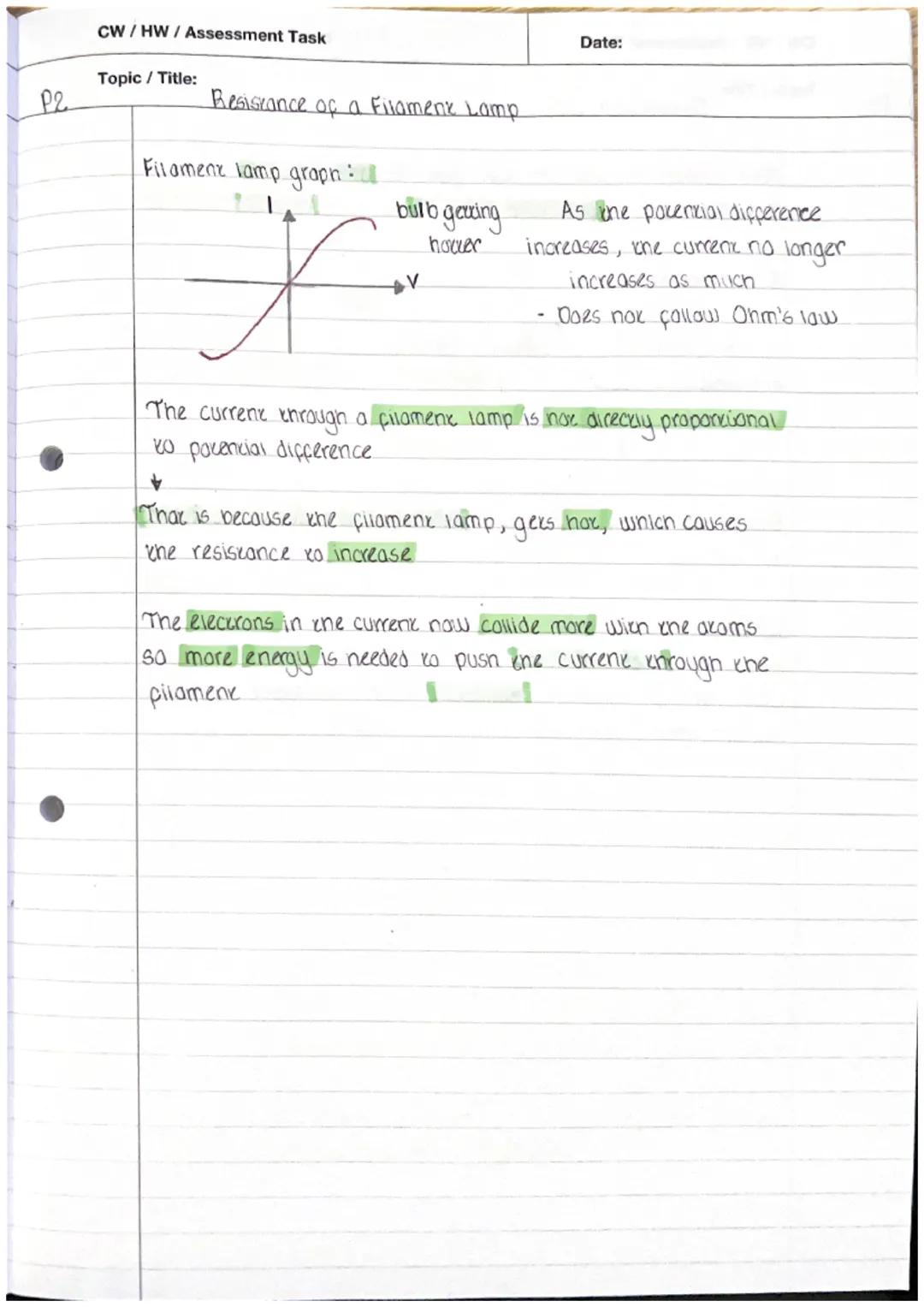
When you increase the potential difference across a filament bulb, it gets hotter and brighter. However, this heat causes the resistance to increase, which means less current flows than you'd expect from Ohm's Law.
The reason is simple: as the filament heats up, electrons collide more frequently with the hot metal atoms. These extra collisions make it harder for current to flow, effectively increasing the resistance. This is why a filament lamp's current-voltage graph curves rather than forming a straight line.
Physics Insight: This heating effect is actually useful - it's how the bulb produces light, converting electrical energy into heat and light energy!



 Physics
 Biology
 Sociology