
The electromagnetic spectrum is like a giant family of waves... Show more
 Science (ACT®)88 views·Updated May 19, 2026·22 pages
Understanding the Electromagnetic Spectrum
J
Josiah Reed@osiaheed_mylu3nkej4v
1 / 10
1
of 10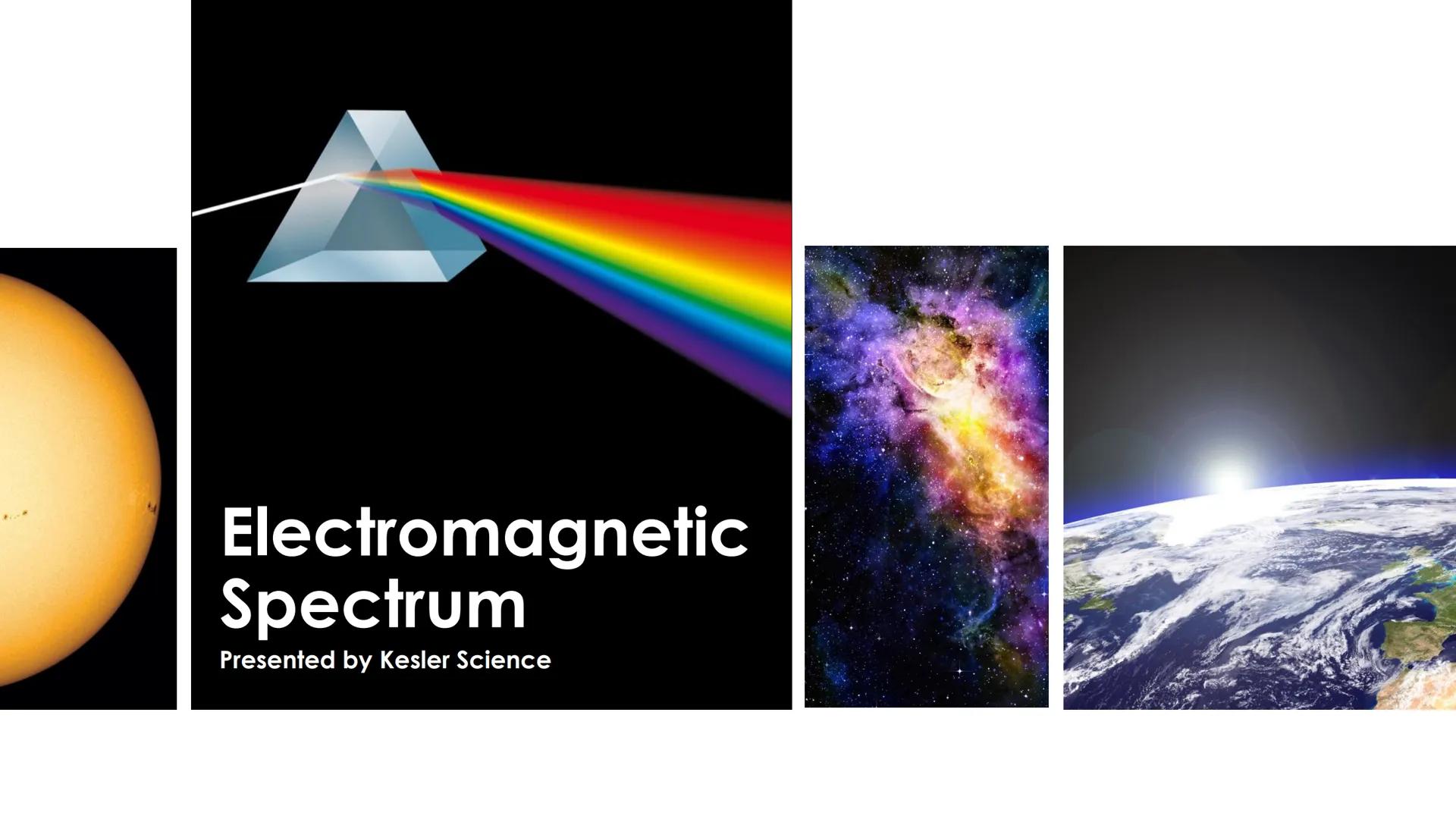
Understanding the Electromagnetic Spectrum
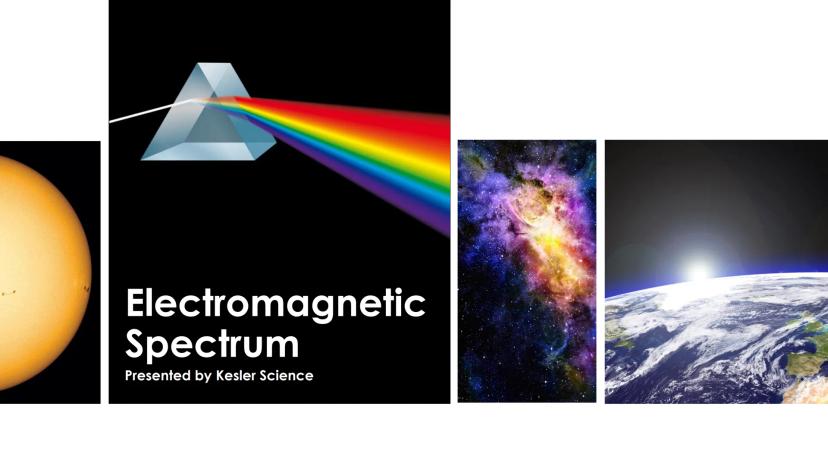
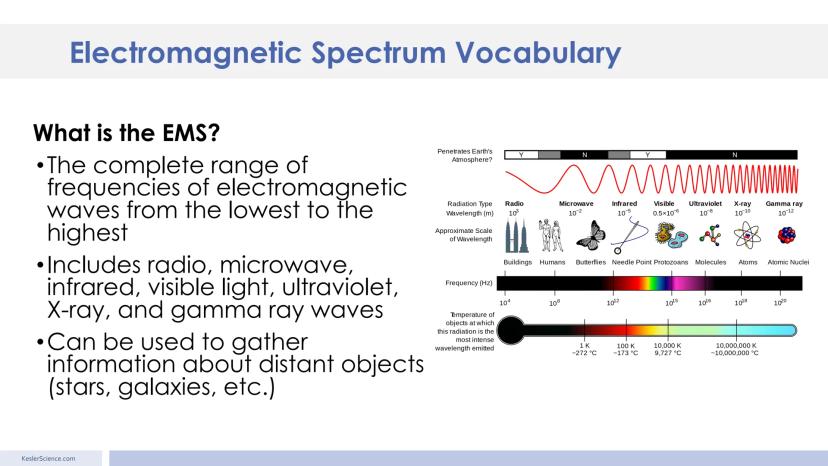
The electromagnetic spectrum (EMS) is the complete range of electromagnetic waves, from the longest to the shortest wavelengths. It includes radio waves, microwaves, infrared, visible light, ultraviolet, X-rays, and gamma rays.
Scientists use these different types of waves to gather information about distant objects like stars and galaxies. Some of these waves can pass through Earth's atmosphere, while others are blocked before reaching us.
Each type of wave has its own unique properties that make it useful for different purposes. For example, radio waves help us communicate, while X-rays let doctors see inside our bodies.
Cool Fact: Did you know that stars emit all types of electromagnetic waves? By studying these emissions, scientists can figure out what stars are made of without ever visiting them!
2
of 10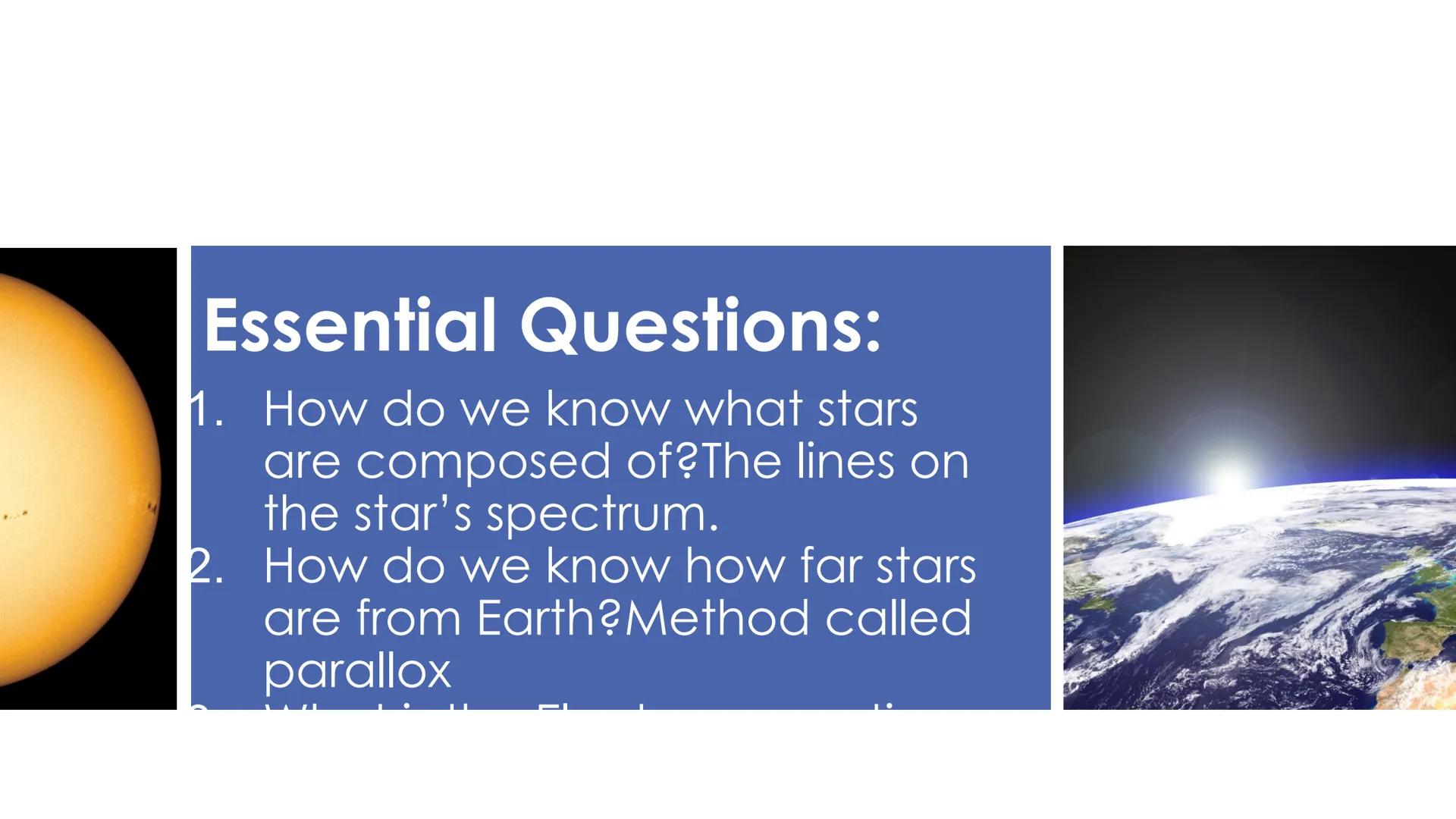
Wave Basics
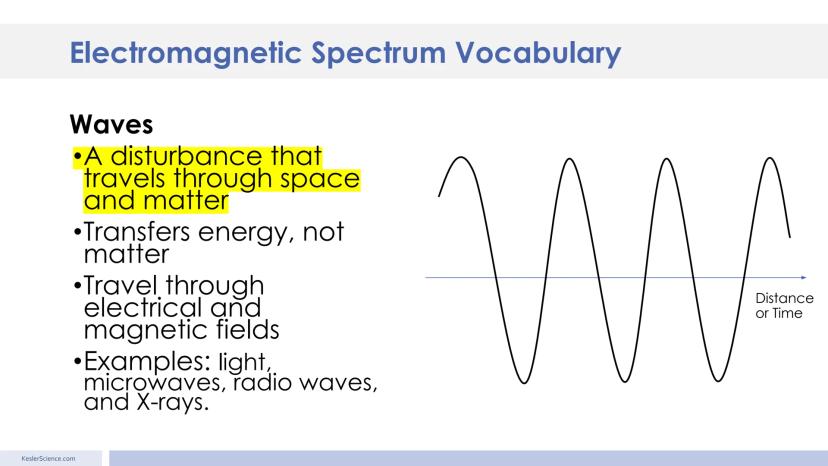
Waves are disturbances that travel through space and matter. Unlike throwing a ball, waves transfer energy without moving matter from place to place. Electromagnetic waves travel through electrical and magnetic fields.
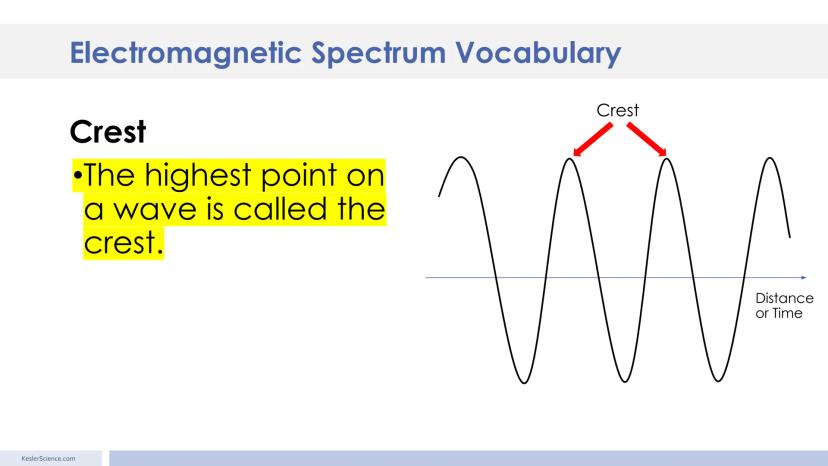
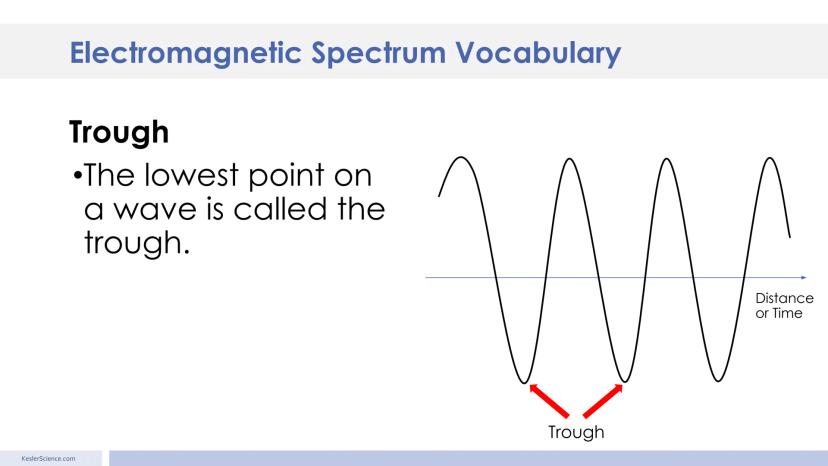
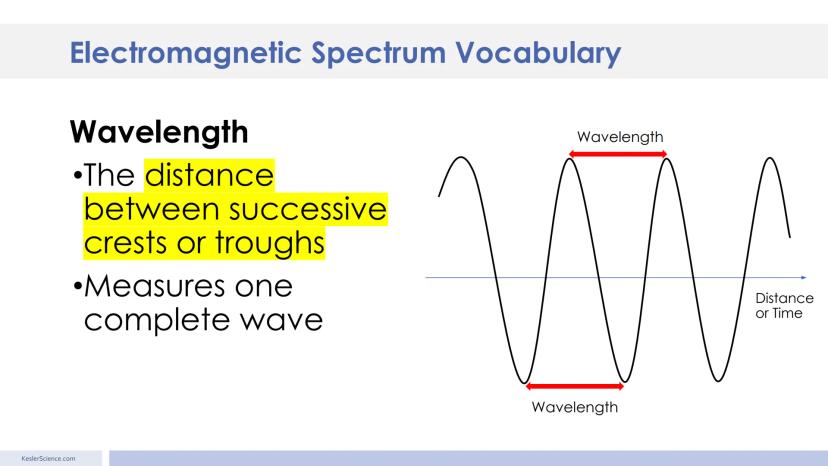
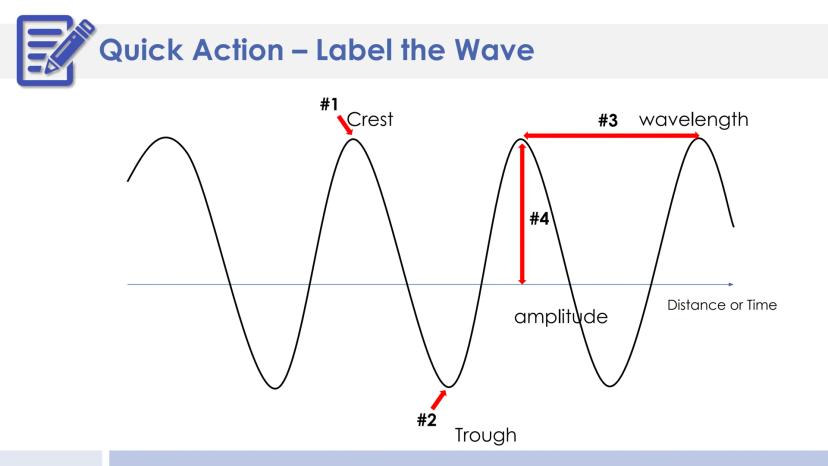
The crest is the highest point of a wave, while the trough is the lowest point. The wavelength measures the distance between two consecutive crests (or troughs) - basically the length of one complete wave.
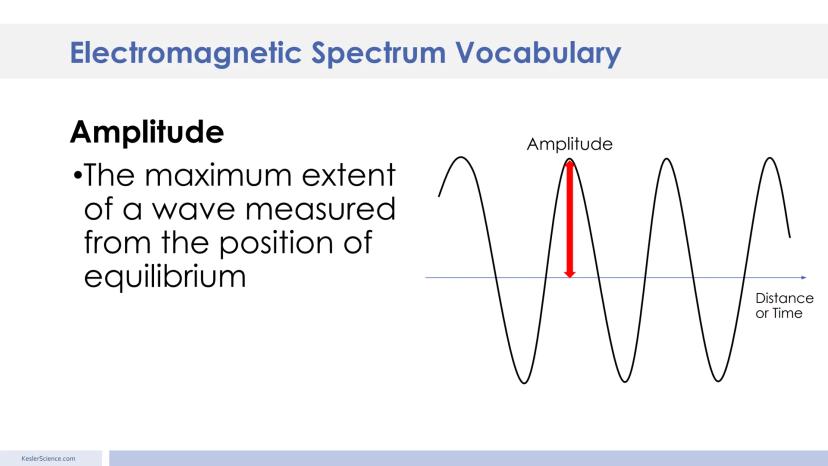
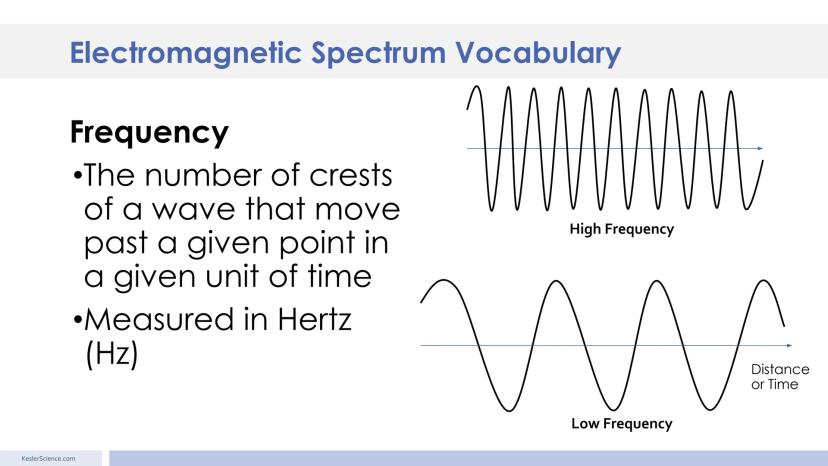
The amplitude is how tall a wave is, measured from the middle position to the crest. The frequency tells us how many wave crests pass a point in a certain amount of time, measured in Hertz (Hz).
Remember this: Higher frequency waves have more energy than lower frequency waves. This is why gamma rays (highest frequency) can be dangerous, while radio waves (lowest frequency) are safe for everyday use.
3
of 10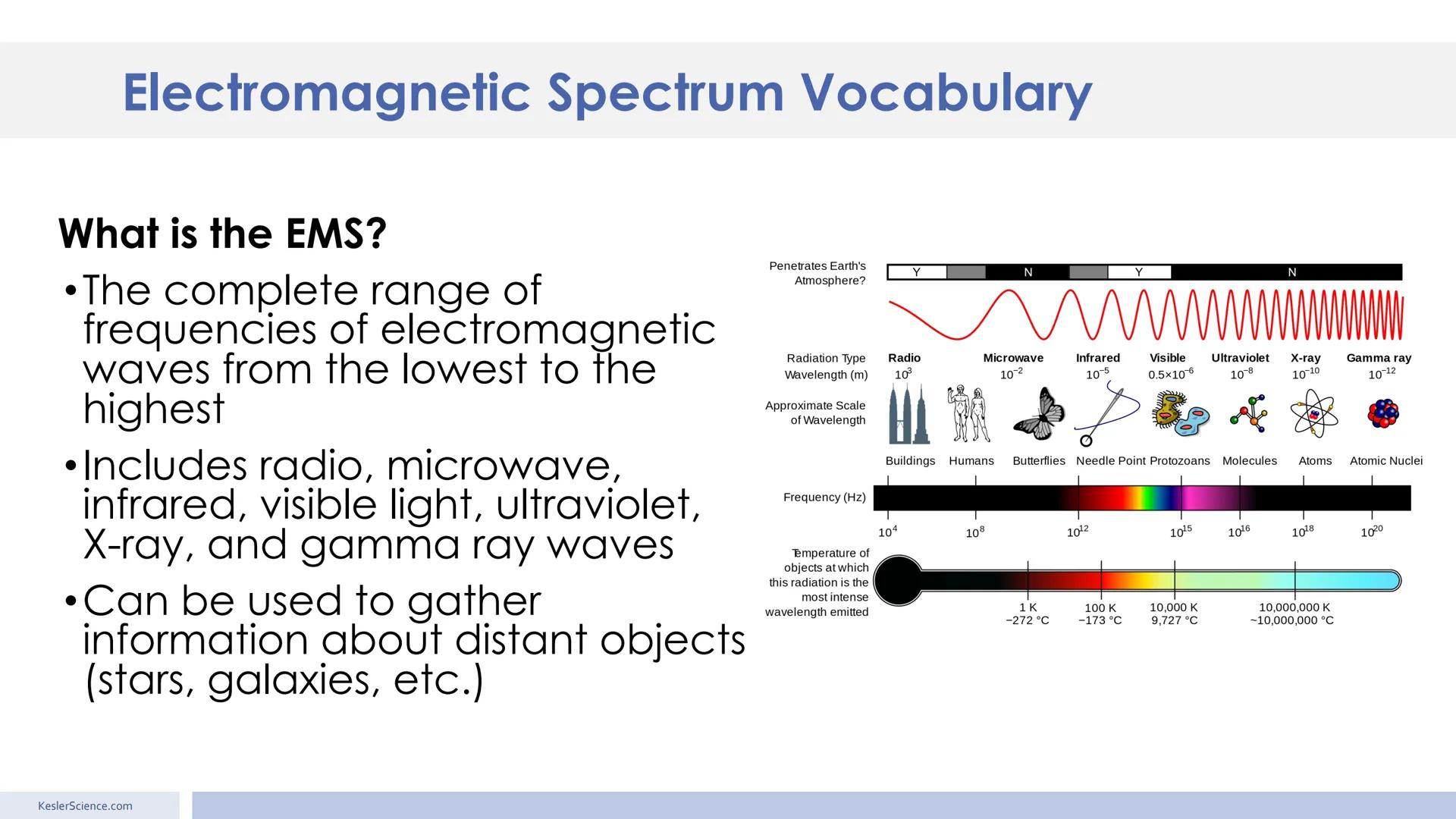
Radio Waves & Microwaves
Radio waves have the longest wavelengths and lowest frequencies in the electromagnetic spectrum. They're about the size of buildings! These waves easily penetrate Earth's atmosphere, which is why we can receive radio signals from space.
Radio waves are used for AM/FM radio stations and can even help astronomers study stars. They're produced by objects with very cool temperatures .
Microwaves have shorter wavelengths, about the size of humans. Your home Wi-Fi router, cell phone, and microwave oven all use these waves. Astronomers also detect microwaves from stars and other cosmic objects.
Try this: Next time you're in a car, notice how radio stations change as you drive. This happens because radio waves can only travel so far before they get too weak to detect!
4
of 10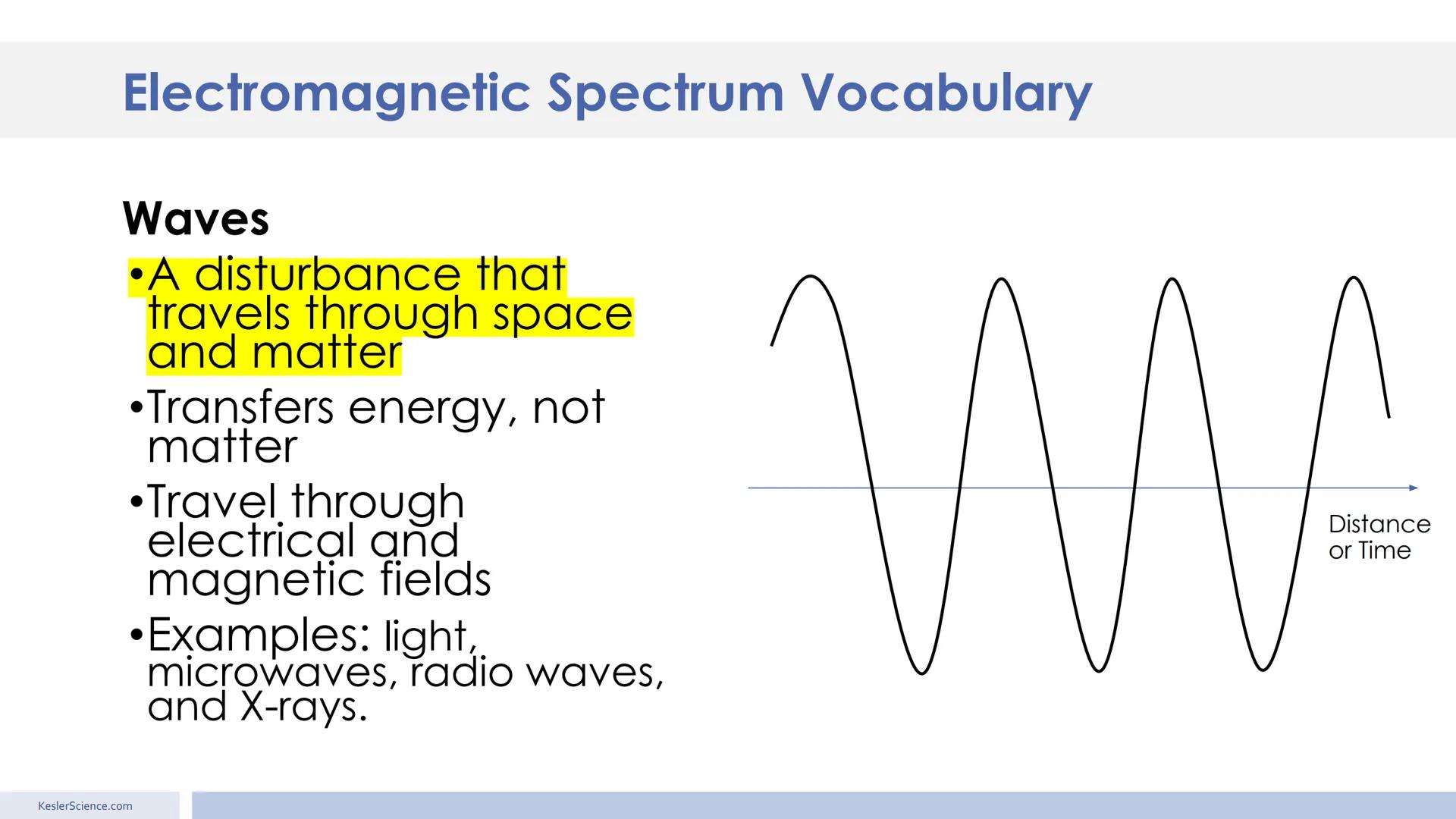
Infrared & Visible Light
Infrared waves sit just below the visible light range . These waves are about the size of butterflies and are what makes you feel warmth from a fire or the sun.
Your TV remote uses infrared to send signals, and night vision goggles detect the infrared heat coming off people and animals. Astronomers use infrared telescopes to see through cosmic dust clouds.
Visible light is the only part of the spectrum we can see with our eyes. It includes all the colors of the rainbow . Stars like our sun produce massive amounts of visible light.
Think about it: When you see a rainbow, you're actually seeing visible light split into its different wavelengths. Red has the longest wavelength, and violet has the shortest.
5
of 10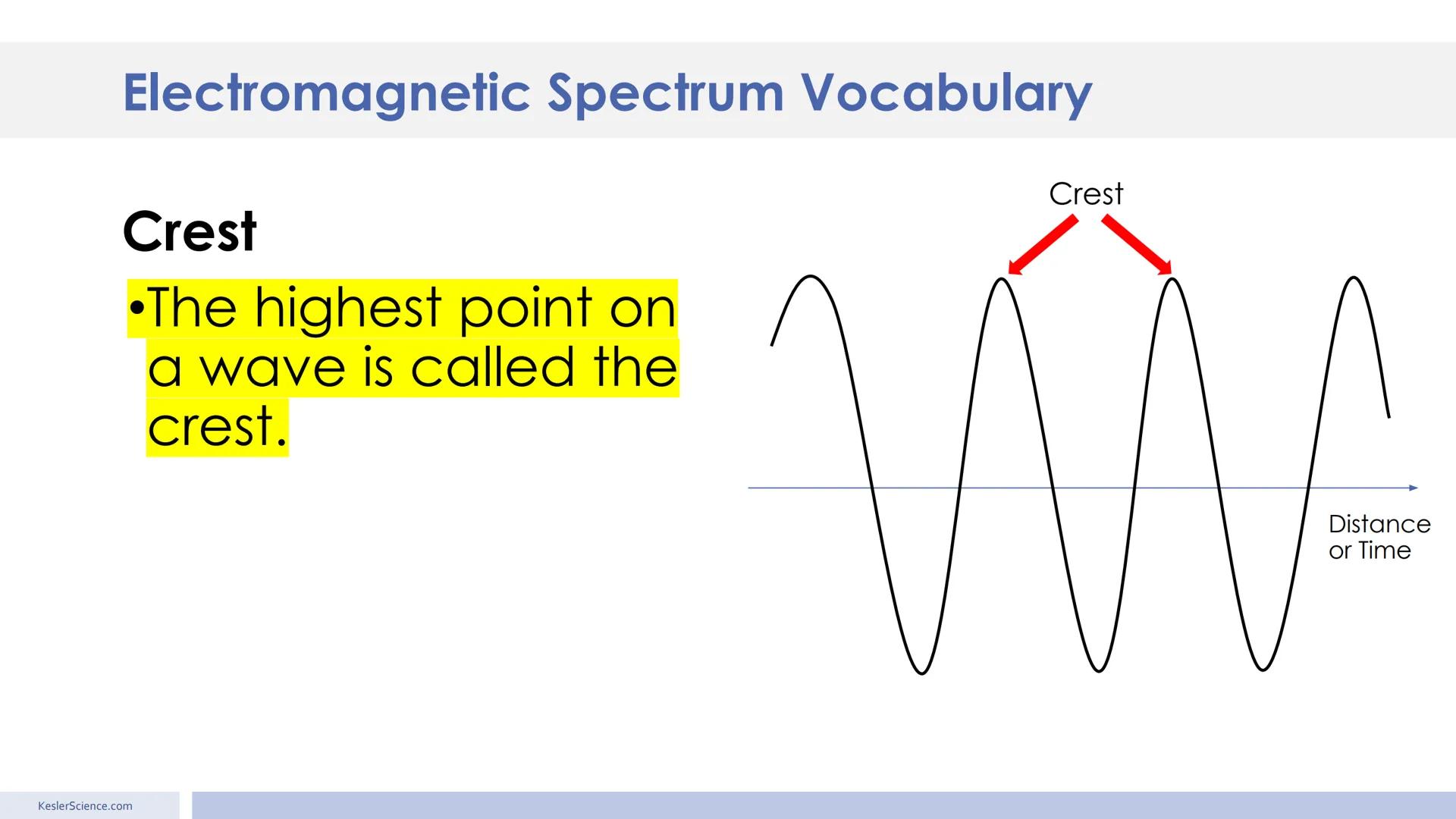
Ultraviolet, X-rays, & Gamma Rays
Ultraviolet (UV) light sits just beyond violet in the spectrum . These waves cause sunburns and make certain materials glow under "black lights" at haunted houses. The Earth's atmosphere blocks most UV rays from space.
X-rays have much shorter wavelengths, about the size of atoms. They can pass through soft tissues but are stopped by denser materials like bone, which is why doctors use them to see inside your body. Astronomers use X-ray telescopes to study extremely hot objects in space.
Gamma rays have the shortest wavelengths and highest energy in the spectrum. They're produced by the hottest objects in space (around 10 million degrees Celsius!) and by radioactive materials on Earth. They're used in cancer treatments and to sterilize medical equipment.
Mind-blowing fact: If you could see gamma rays, the night sky would look completely different, with certain stars and galaxies appearing much brighter than they do in visible light!
6
of 10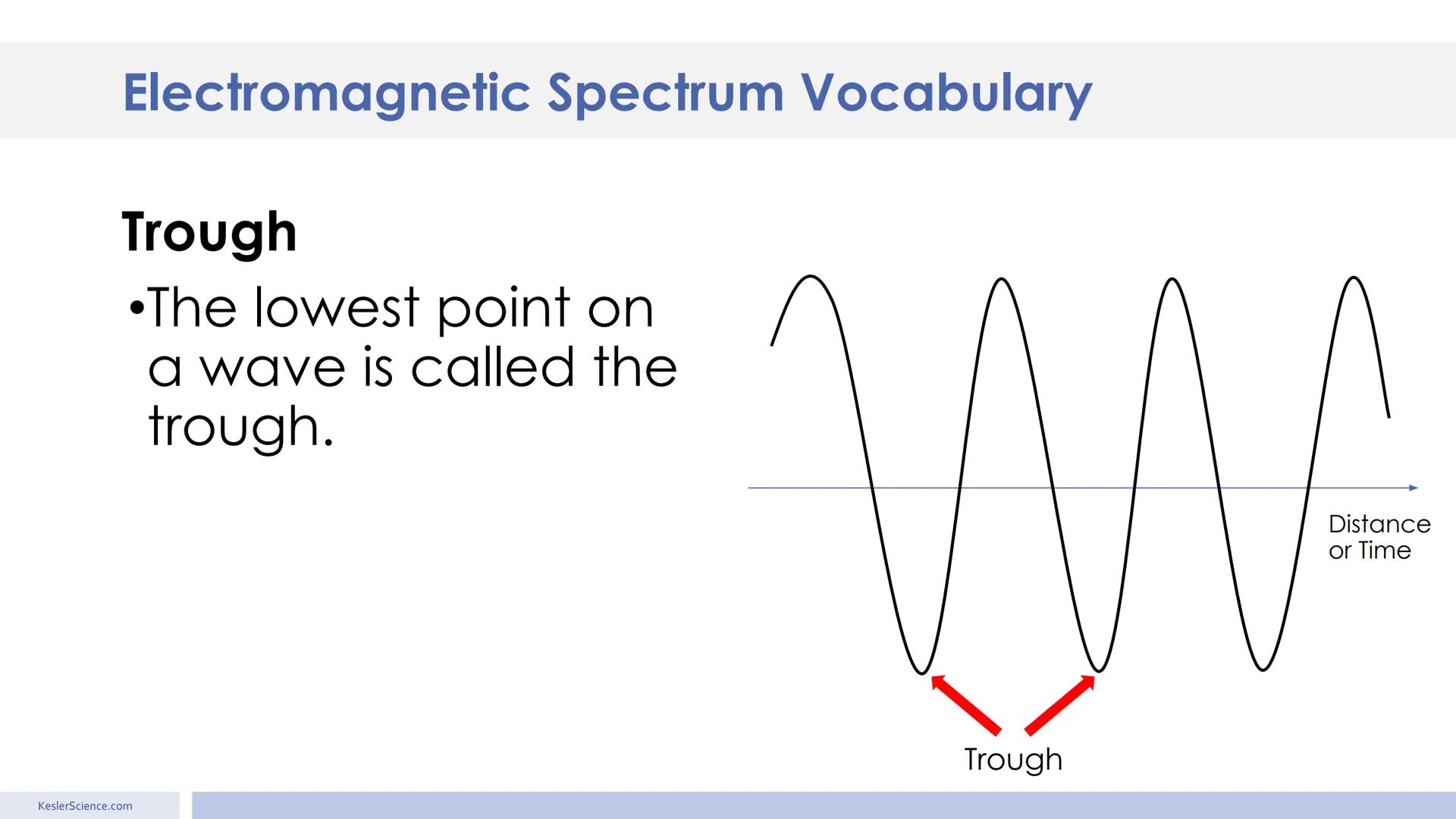
Studying the Universe with the EMS
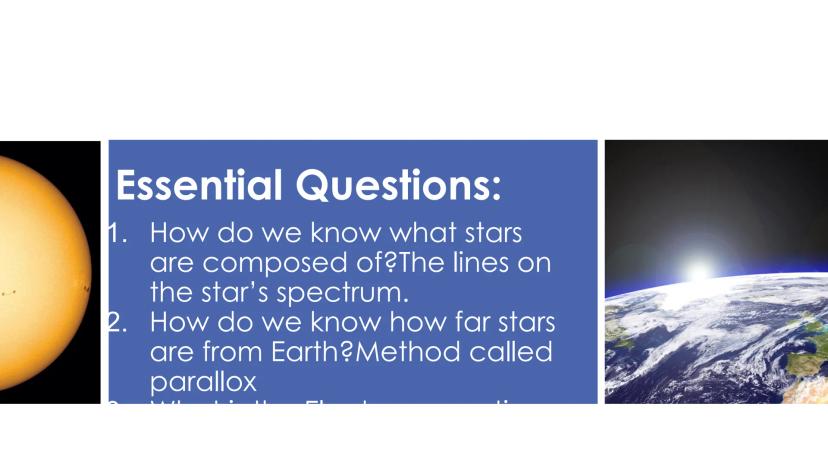
Scientists can determine what stars are made of through spectroscopy - studying the unique patterns of light absorbed or emitted by different elements. Each element has a distinct "fingerprint" in the spectrum.
When astronomers spread out starlight into its component wavelengths, they see dark lines where certain elements absorbed specific wavelengths. By matching these patterns to known elements, they can identify what's in distant stars without ever visiting them.
To measure the distance to stars, astronomers use a method called parallax. They observe a star's position, wait six months until Earth has moved to the opposite side of its orbit (186 million miles away), and measure again. The apparent shift in the star's position helps calculate its distance.
Try it yourself: Hold your thumb at arm's length and look at it with one eye closed, then switch eyes. Your thumb appears to "move" against the background. That's parallax - the same principle astronomers use to measure star distances!
7
of 10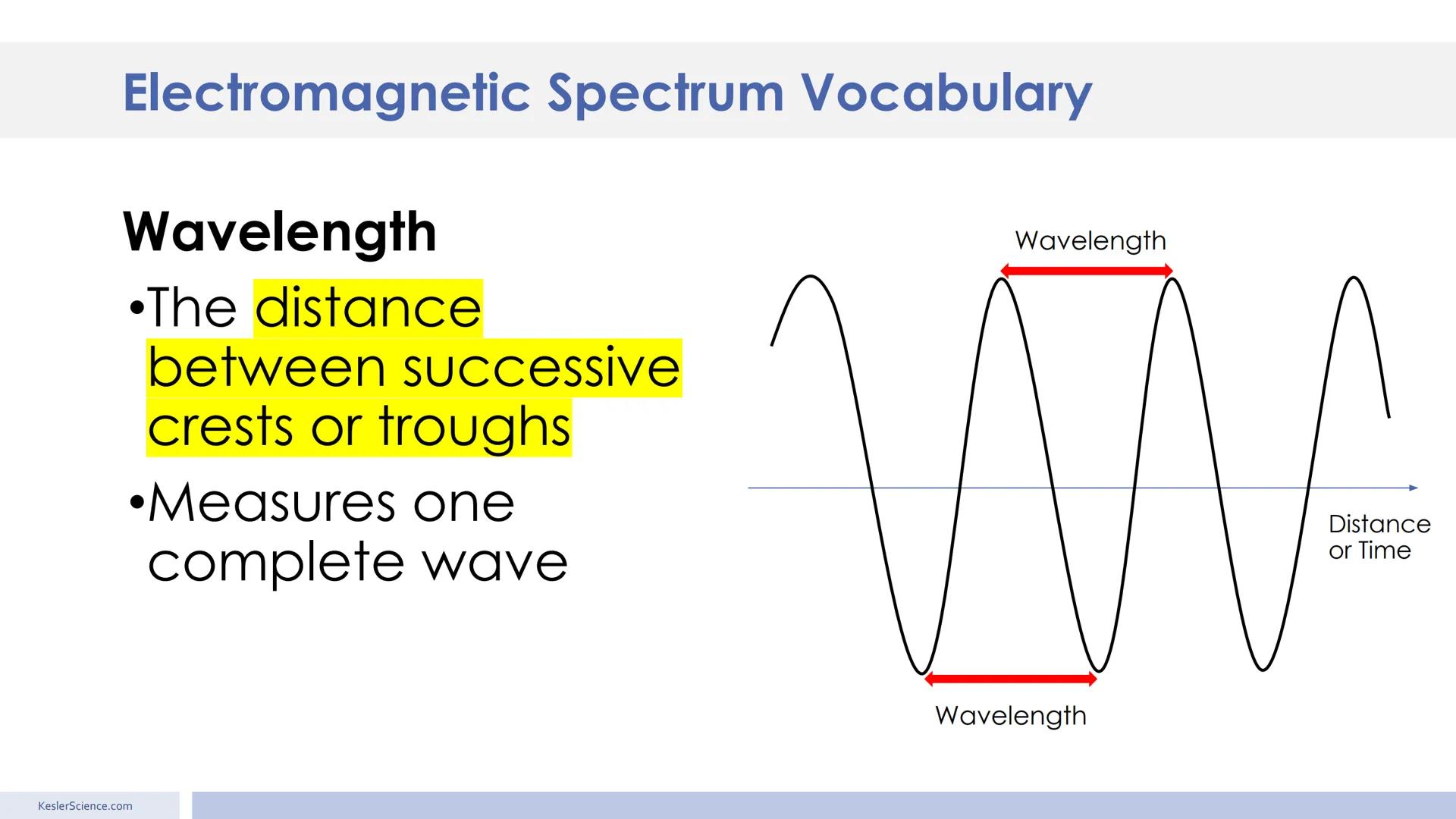
8
of 10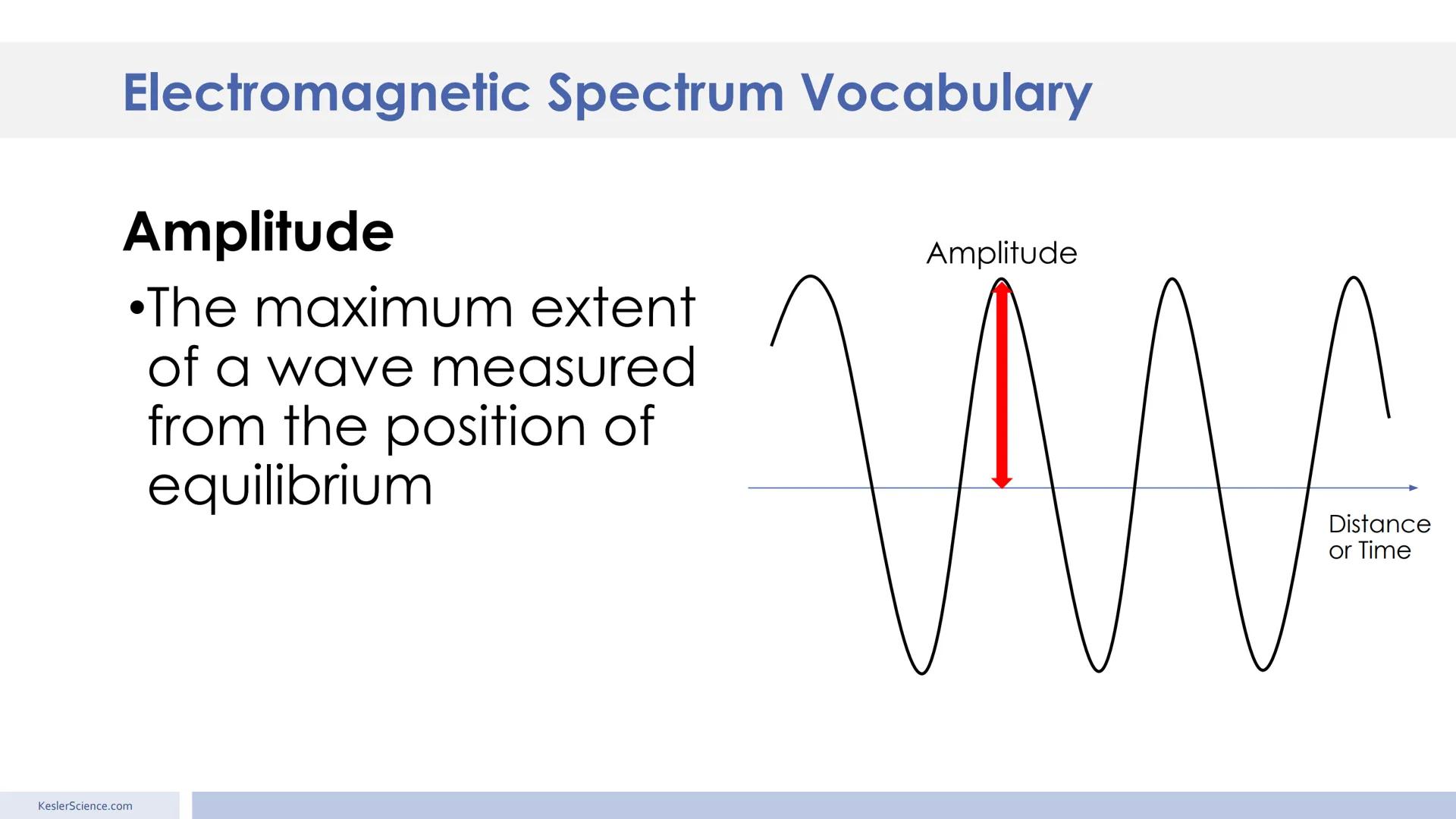
9
of 10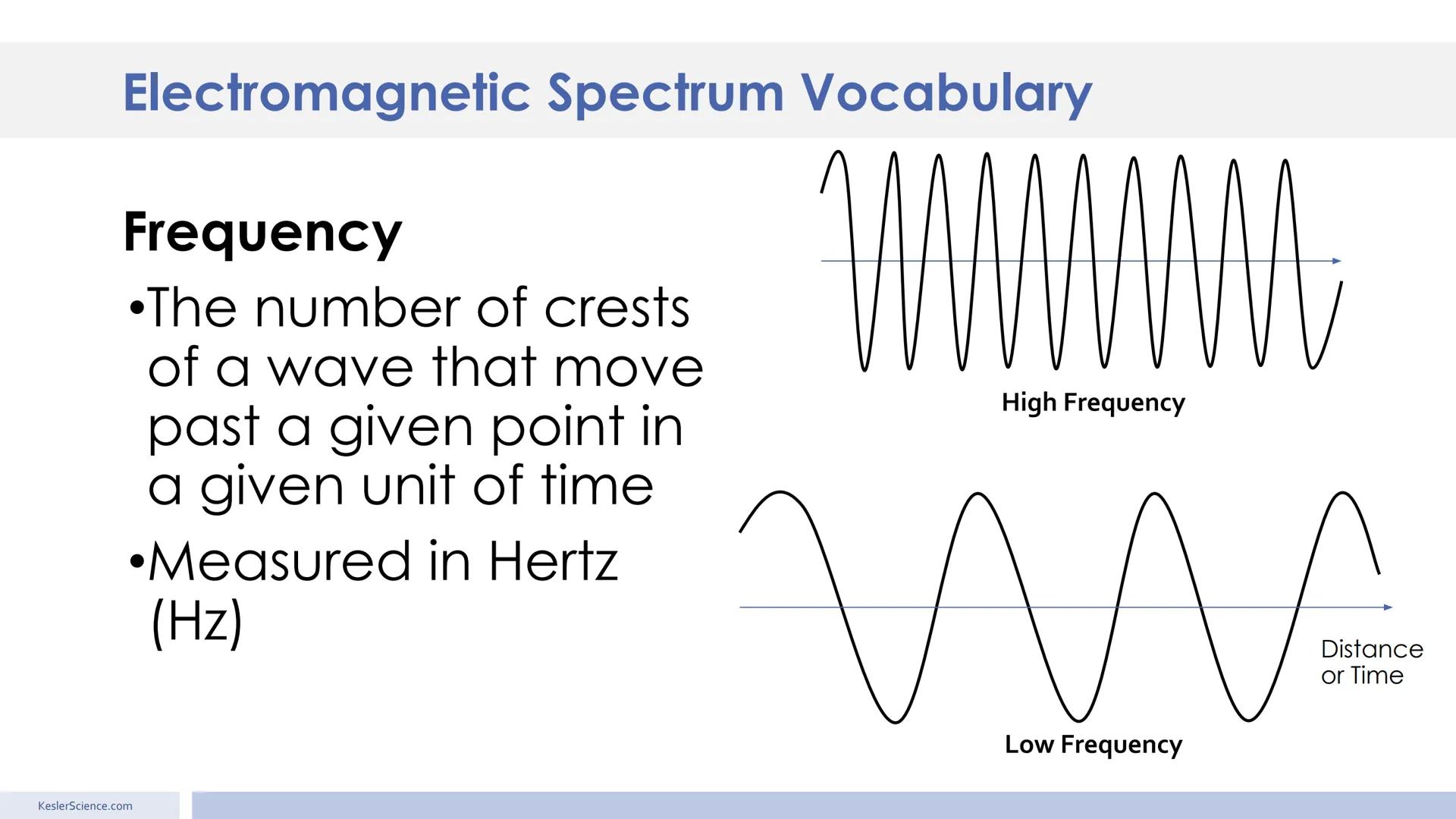
10
of 10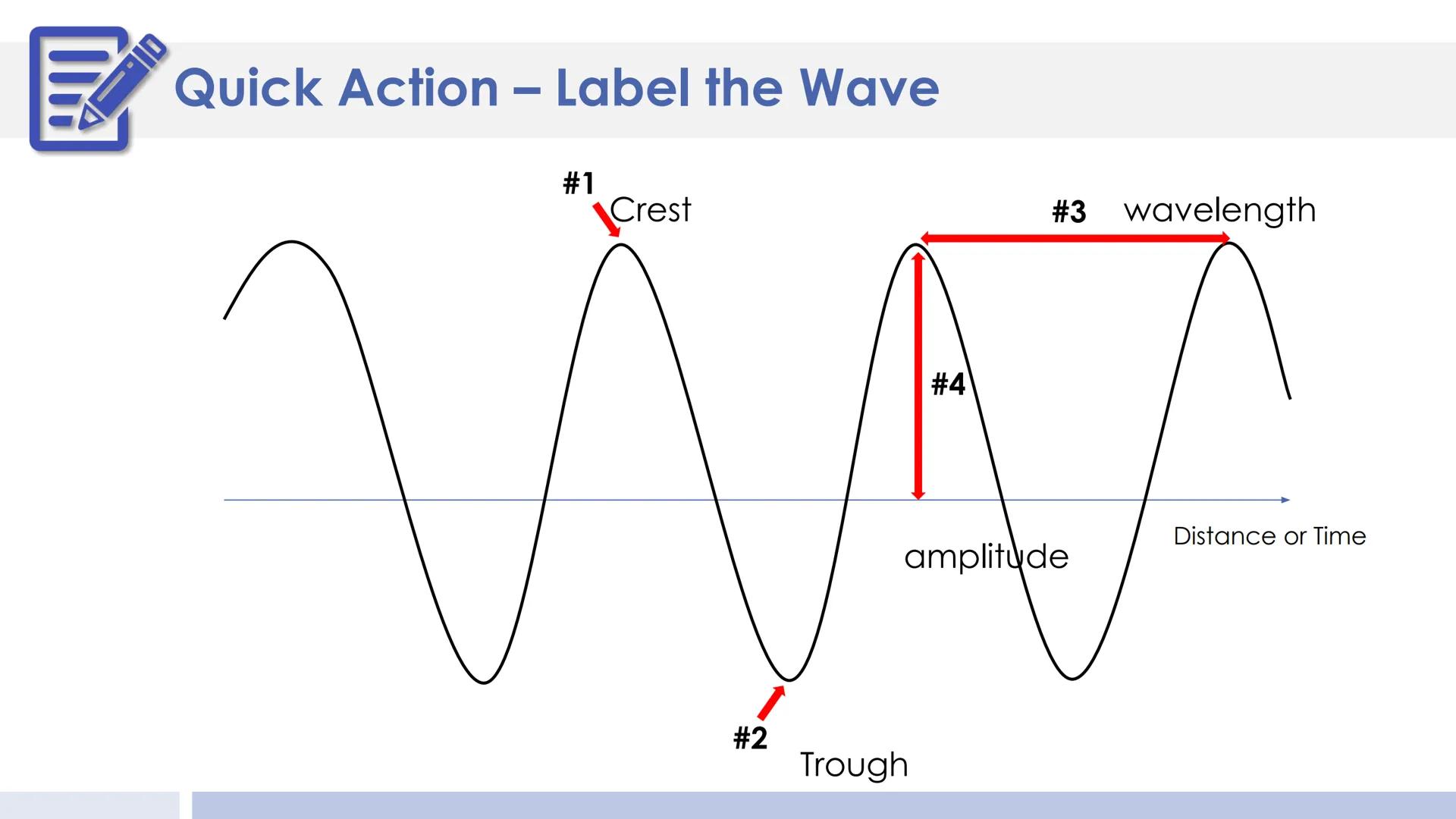
We thought you’d never ask...
What is the Knowunity AI companion?
Our AI companion is specifically built for the needs of students. Based on the millions of content pieces we have on the platform we can provide truly meaningful and relevant answers to students. But its not only about answers, the companion is even more about guiding students through their daily learning challenges, with personalised study plans, quizzes or content pieces in the chat and 100% personalisation based on the students skills and developments.
Where can I download the Knowunity app?
You can download the app in the Google Play Store and in the Apple App Store.
Is Knowunity really free of charge?
That's right! Enjoy free access to study content, connect with fellow students, and get instant help – all at your fingertips.
Most popular content: Key Concepts
3 Fun Stuff
Most popular content in Science (ACT®)
9Science (ACT®)DNA & Protein Synthesis: Replication, Transcription, & Translation
A concise overview of DNA replication and protein synthesis. Learn about the central dogma and the steps of transcription and translation that create proteins from genetic code.
9th3788
Science (ACT®)Cell Theory & Types: History and Prokaryotic vs. Eukaryotic Cells
Learn about the scientists behind the cell theory history. Review the key structural differences defining prokaryotic versus eukaryotic cells.
9th2222
I
Science (ACT®)Introduction to Biomolecule Types
Identify the four main types of biomolecules and their corresponding monomers: carbohydrates, lipids, proteins, and nucleic acids.
9th1510
S
Science (ACT®)Structure and Function of Biomolecules
Examine the chemical structures and biological roles of biomolecules in cellular processes and energy storage.
9th880
Science (ACT®)Seasons
Seasons
College390
Science (ACT®)Chemistry Important Notes
This includes the intermolecular forces, chemical nomenclature and formula writing, gas laws and solutions.
1123
Science (ACT®)OB LECTURE 1
Study set
College320
Science (ACT®)Speed-time graphs
Speed-time graphs
College513
 AP Environmental Science
BIOGEOCHEMICAL CYCLES
Gives an overview about chemical elements and movement of elements.
1348
Most popular content
9O
 AP US History
Origins and Dynamics of the Columbian Exchange
Analyze the ecological and economic motivations behind the initial transfer of goods, people, and diseases between the Old and New Worlds.
9th3,1280
I
AP US HistoryIntroduction to Early Cultural Interactions
Analyze the initial social and religious encounters between Europeans, Africans, and Indigenous peoples in the colonial Americas.
9th2,7730
O
 AP World History
Origins of Ancient River Civilizations
Analyze the environmental factors and technological innovations that led to the rise of early states in Mesopotamia, Egypt, and the Indus Valley.
9th3,1860
M
AP US HistoryMotivations for European Exploration
Analyze the economic, religious, and political factors that drove European powers to the Americas during the 15th and 16th centuries.
9th1,7780
F
 AP Psychology
Foundations of Ethical Guidelines in Research
Practice the core principles of the APA ethical code including informed consent, debriefing, and the role of Institutional Review Boards.
9th1,3360
I
AP US HistoryIntroduction to Native American Societies
Examine the diverse social, political, and economic structures of North American indigenous groups prior to European contact.
9th1,1100
I
AP BiologyIntroduction to Biological Elements of Life
Practice identifying the essential elements including carbon, nitrogen, phosphorus, and sulfur that compose biological macromolecules.
9th1,7360
I
AP US HistoryIntroduction to the Spanish Encomienda System
Explore the fundamental economic and social structures of the Spanish colonial system, focusing on the encomienda and the casta social hierarchy.
9th8890
O
AP World HistoryOrigins and Continuity of the Byzantine Empire
Analyze the political and cultural transitions from the Roman Empire to the Byzantine Empire, focusing on the reign of Justinian I and his code.
9th1,6320
Can't find what you're looking for? Explore other subjects.
Students love us — and so will you.
4.6/5App Store
4.7/5Google Play
The app is very easy to use and well designed. I have found everything I was looking for so far and have been able to learn a lot from the presentations! I will definitely use the app for a class assignment! And of course it also helps a lot as an inspiration.
Stefan SiOS user
This app is really great. There are so many study notes and help [...]. My problem subject is French, for example, and the app has so many options for help. Thanks to this app, I have improved my French. I would recommend it to anyone.
Samantha KlichAndroid user
Wow, I am really amazed. I just tried the app because I've seen it advertised many times and was absolutely stunned. This app is THE HELP you want for school and above all, it offers so many things, such as workouts and fact sheets, which have been VERY helpful to me personally.
AnnaiOS user
Science (ACT®)88 views·Updated May 19, 2026·22 pagesUnderstanding the Electromagnetic Spectrum
J
Josiah Reed@osiaheed_mylu3nkej4v
The electromagnetic spectrum is like a giant family of waves that surrounds us every day. From the radio waves that bring music to your car to the X-rays at the doctor's office, these waves help us understand both our everyday... Show more
1
of 10Sign up to see the content. It's free!
- Access to all documents
- Improve your grades
- Join milions of students
Understanding the Electromagnetic Spectrum
The electromagnetic spectrum (EMS) is the complete range of electromagnetic waves, from the longest to the shortest wavelengths. It includes radio waves, microwaves, infrared, visible light, ultraviolet, X-rays, and gamma rays.
Scientists use these different types of waves to gather information about distant objects like stars and galaxies. Some of these waves can pass through Earth's atmosphere, while others are blocked before reaching us.
Each type of wave has its own unique properties that make it useful for different purposes. For example, radio waves help us communicate, while X-rays let doctors see inside our bodies.
Cool Fact: Did you know that stars emit all types of electromagnetic waves? By studying these emissions, scientists can figure out what stars are made of without ever visiting them!
2
of 10Sign up to see the content. It's free!
- Access to all documents
- Improve your grades
- Join milions of students
Wave Basics
Waves are disturbances that travel through space and matter. Unlike throwing a ball, waves transfer energy without moving matter from place to place. Electromagnetic waves travel through electrical and magnetic fields.
The crest is the highest point of a wave, while the trough is the lowest point. The wavelength measures the distance between two consecutive crests (or troughs) - basically the length of one complete wave.
The amplitude is how tall a wave is, measured from the middle position to the crest. The frequency tells us how many wave crests pass a point in a certain amount of time, measured in Hertz (Hz).
Remember this: Higher frequency waves have more energy than lower frequency waves. This is why gamma rays (highest frequency) can be dangerous, while radio waves (lowest frequency) are safe for everyday use.
3
of 10Sign up to see the content. It's free!
- Access to all documents
- Improve your grades
- Join milions of students
Radio Waves & Microwaves
Radio waves have the longest wavelengths and lowest frequencies in the electromagnetic spectrum. They're about the size of buildings! These waves easily penetrate Earth's atmosphere, which is why we can receive radio signals from space.
Radio waves are used for AM/FM radio stations and can even help astronomers study stars. They're produced by objects with very cool temperatures .
Microwaves have shorter wavelengths, about the size of humans. Your home Wi-Fi router, cell phone, and microwave oven all use these waves. Astronomers also detect microwaves from stars and other cosmic objects.
Try this: Next time you're in a car, notice how radio stations change as you drive. This happens because radio waves can only travel so far before they get too weak to detect!
4
of 10Sign up to see the content. It's free!
- Access to all documents
- Improve your grades
- Join milions of students
Infrared & Visible Light
Infrared waves sit just below the visible light range . These waves are about the size of butterflies and are what makes you feel warmth from a fire or the sun.
Your TV remote uses infrared to send signals, and night vision goggles detect the infrared heat coming off people and animals. Astronomers use infrared telescopes to see through cosmic dust clouds.
Visible light is the only part of the spectrum we can see with our eyes. It includes all the colors of the rainbow . Stars like our sun produce massive amounts of visible light.
Think about it: When you see a rainbow, you're actually seeing visible light split into its different wavelengths. Red has the longest wavelength, and violet has the shortest.
5
of 10Sign up to see the content. It's free!
- Access to all documents
- Improve your grades
- Join milions of students
Ultraviolet, X-rays, & Gamma Rays
Ultraviolet (UV) light sits just beyond violet in the spectrum . These waves cause sunburns and make certain materials glow under "black lights" at haunted houses. The Earth's atmosphere blocks most UV rays from space.
X-rays have much shorter wavelengths, about the size of atoms. They can pass through soft tissues but are stopped by denser materials like bone, which is why doctors use them to see inside your body. Astronomers use X-ray telescopes to study extremely hot objects in space.
Gamma rays have the shortest wavelengths and highest energy in the spectrum. They're produced by the hottest objects in space (around 10 million degrees Celsius!) and by radioactive materials on Earth. They're used in cancer treatments and to sterilize medical equipment.
Mind-blowing fact: If you could see gamma rays, the night sky would look completely different, with certain stars and galaxies appearing much brighter than they do in visible light!
6
of 10Sign up to see the content. It's free!
- Access to all documents
- Improve your grades
- Join milions of students
Studying the Universe with the EMS
Scientists can determine what stars are made of through spectroscopy - studying the unique patterns of light absorbed or emitted by different elements. Each element has a distinct "fingerprint" in the spectrum.
When astronomers spread out starlight into its component wavelengths, they see dark lines where certain elements absorbed specific wavelengths. By matching these patterns to known elements, they can identify what's in distant stars without ever visiting them.
To measure the distance to stars, astronomers use a method called parallax. They observe a star's position, wait six months until Earth has moved to the opposite side of its orbit (186 million miles away), and measure again. The apparent shift in the star's position helps calculate its distance.
Try it yourself: Hold your thumb at arm's length and look at it with one eye closed, then switch eyes. Your thumb appears to "move" against the background. That's parallax - the same principle astronomers use to measure star distances!
7
of 10Sign up to see the content. It's free!
- Access to all documents
- Improve your grades
- Join milions of students
8
of 10Sign up to see the content. It's free!
- Access to all documents
- Improve your grades
- Join milions of students
9
of 10Sign up to see the content. It's free!
- Access to all documents
- Improve your grades
- Join milions of students
10
of 10Sign up to see the content. It's free!
- Access to all documents
- Improve your grades
- Join milions of students
We thought you’d never ask...
What is the Knowunity AI companion?
Our AI companion is specifically built for the needs of students. Based on the millions of content pieces we have on the platform we can provide truly meaningful and relevant answers to students. But its not only about answers, the companion is even more about guiding students through their daily learning challenges, with personalised study plans, quizzes or content pieces in the chat and 100% personalisation based on the students skills and developments.
Where can I download the Knowunity app?
You can download the app in the Google Play Store and in the Apple App Store.
Is Knowunity really free of charge?
That's right! Enjoy free access to study content, connect with fellow students, and get instant help – all at your fingertips.
Most popular content: Key Concepts
3Most popular content in Science (ACT®)
9Science (ACT®)DNA & Protein Synthesis: Replication, Transcription, & Translation
A concise overview of DNA replication and protein synthesis. Learn about the central dogma and the steps of transcription and translation that create proteins from genetic code.
9th3788
Science (ACT®)Cell Theory & Types: History and Prokaryotic vs. Eukaryotic Cells
Learn about the scientists behind the cell theory history. Review the key structural differences defining prokaryotic versus eukaryotic cells.
9th2222
I
Science (ACT®)Introduction to Biomolecule Types
Identify the four main types of biomolecules and their corresponding monomers: carbohydrates, lipids, proteins, and nucleic acids.
9th1510
S
Science (ACT®)Structure and Function of Biomolecules
Examine the chemical structures and biological roles of biomolecules in cellular processes and energy storage.
9th880
Science (ACT®)Seasons
Seasons
College390
Science (ACT®)Chemistry Important Notes
This includes the intermolecular forces, chemical nomenclature and formula writing, gas laws and solutions.
1123
Science (ACT®)OB LECTURE 1
Study set
College320
Science (ACT®)Speed-time graphs
Speed-time graphs
College513
AP Environmental ScienceBIOGEOCHEMICAL CYCLES
Gives an overview about chemical elements and movement of elements.
1348
Most popular content
9O
AP US HistoryOrigins and Dynamics of the Columbian Exchange
Analyze the ecological and economic motivations behind the initial transfer of goods, people, and diseases between the Old and New Worlds.
9th3,1280
I
AP US HistoryIntroduction to Early Cultural Interactions
Analyze the initial social and religious encounters between Europeans, Africans, and Indigenous peoples in the colonial Americas.
9th2,7730
O
AP World HistoryOrigins of Ancient River Civilizations
Analyze the environmental factors and technological innovations that led to the rise of early states in Mesopotamia, Egypt, and the Indus Valley.
9th3,1860
M
AP US HistoryMotivations for European Exploration
Analyze the economic, religious, and political factors that drove European powers to the Americas during the 15th and 16th centuries.
9th1,7780
F
AP PsychologyFoundations of Ethical Guidelines in Research
Practice the core principles of the APA ethical code including informed consent, debriefing, and the role of Institutional Review Boards.
9th1,3360
I
AP US HistoryIntroduction to Native American Societies
Examine the diverse social, political, and economic structures of North American indigenous groups prior to European contact.
9th1,1100
I
AP BiologyIntroduction to Biological Elements of Life
Practice identifying the essential elements including carbon, nitrogen, phosphorus, and sulfur that compose biological macromolecules.
9th1,7360
I
AP US HistoryIntroduction to the Spanish Encomienda System
Explore the fundamental economic and social structures of the Spanish colonial system, focusing on the encomienda and the casta social hierarchy.
9th8890
O
AP World HistoryOrigins and Continuity of the Byzantine Empire
Analyze the political and cultural transitions from the Roman Empire to the Byzantine Empire, focusing on the reign of Justinian I and his code.
9th1,6320
Can't find what you're looking for? Explore other subjects.
Students love us — and so will you.
4.6/5App Store
4.7/5Google Play
The app is very easy to use and well designed. I have found everything I was looking for so far and have been able to learn a lot from the presentations! I will definitely use the app for a class assignment! And of course it also helps a lot as an inspiration.
Stefan SiOS user
This app is really great. There are so many study notes and help [...]. My problem subject is French, for example, and the app has so many options for help. Thanks to this app, I have improved my French. I would recommend it to anyone.
Samantha KlichAndroid user
Wow, I am really amazed. I just tried the app because I've seen it advertised many times and was absolutely stunned. This app is THE HELP you want for school and above all, it offers so many things, such as workouts and fact sheets, which have been VERY helpful to me personally.
AnnaiOS user